文档文本内容
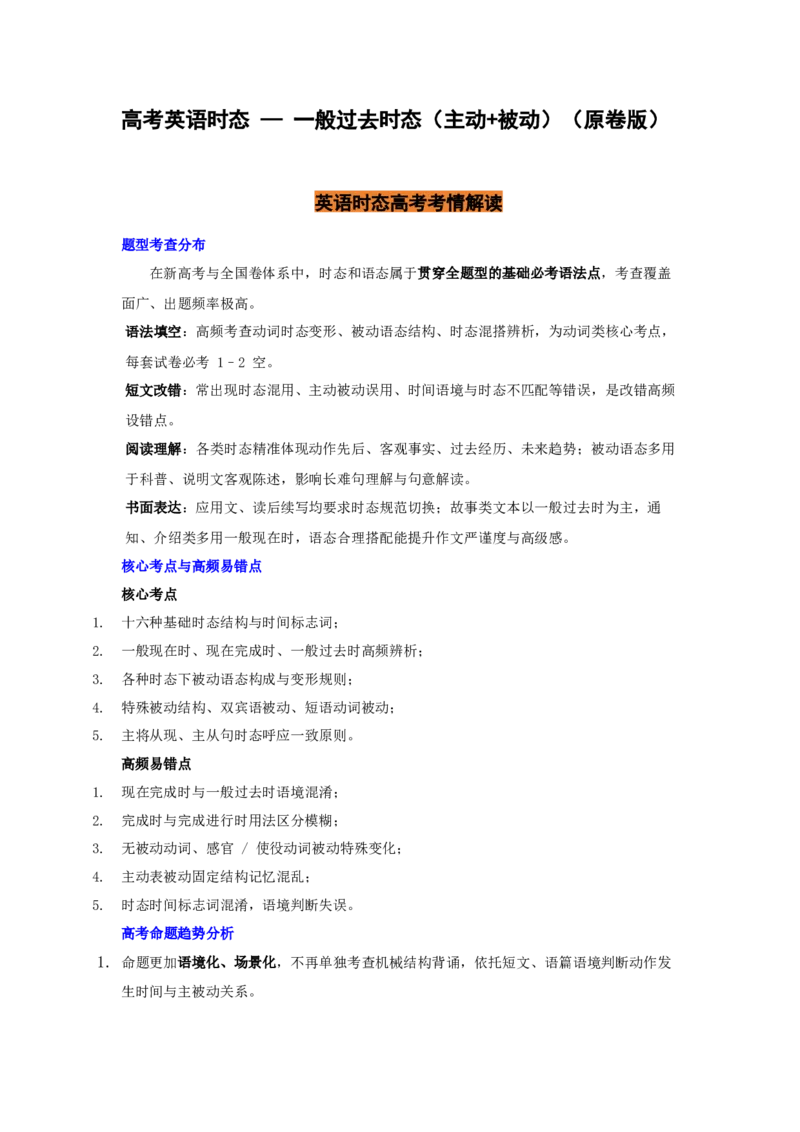
高考英语时态 — 一般过去时态(主动+被动)(原卷版)
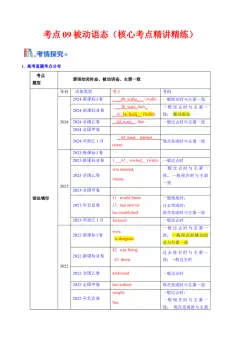
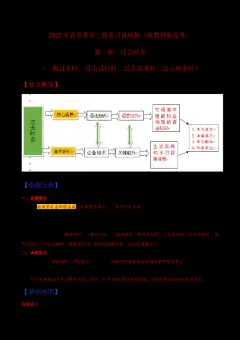
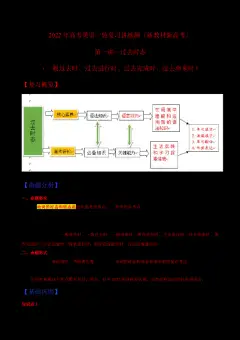
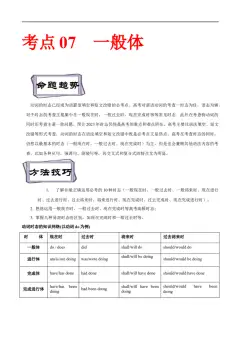
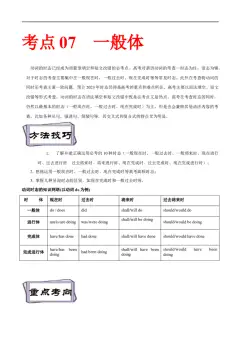
英语时态高考考情解读
题型考查分布
在新高考与全国卷体系中,时态和语态属于贯穿全题型的基础必考语法点,考查覆盖
面广、出题频率极高。
语法填空:高频考查动词时态变形、被动语态结构、时态混搭辨析,为动词类核心考点,
每套试卷必考 1–2 空。
短文改错:常出现时态混用、主动被动误用、时间语境与时态不匹配等错误,是改错高频
设错点。
阅读理解:各类时态精准体现动作先后、客观事实、过去经历、未来趋势;被动语态多用
于科普、说明文客观陈述,影响长难句理解与句意解读。
书面表达:应用文、读后续写均要求时态规范切换;故事类文本以一般过去时为主,通
知、介绍类多用一般现在时,语态合理搭配能提升作文严谨度与高级感。
核心考点与高频易错点
核心考点
1.
十六种基础时态结构与时间标志词;
2.
一般现在时、现在完成时、一般过去时高频辨析;
3.
各种时态下被动语态构成与变形规则;
4.
特殊被动结构、双宾语被动、短语动词被动;
5.
主将从现、主从句时态呼应一致原则。
高频易错点
1.
现在完成时与一般过去时语境混淆;
2.
完成时与完成进行时用法区分模糊;
3.
无被动动词、感官 / 使役动词被动特殊变化;
4.
主动表被动固定结构记忆混乱;
5.
时态时间标志词混淆,语境判断失误。
高考命题趋势分析
1. 命题更加语境化、场景化,不再单独考查机械结构背诵,依托短文、语篇语境判断动作发
生时间与主被动关系。
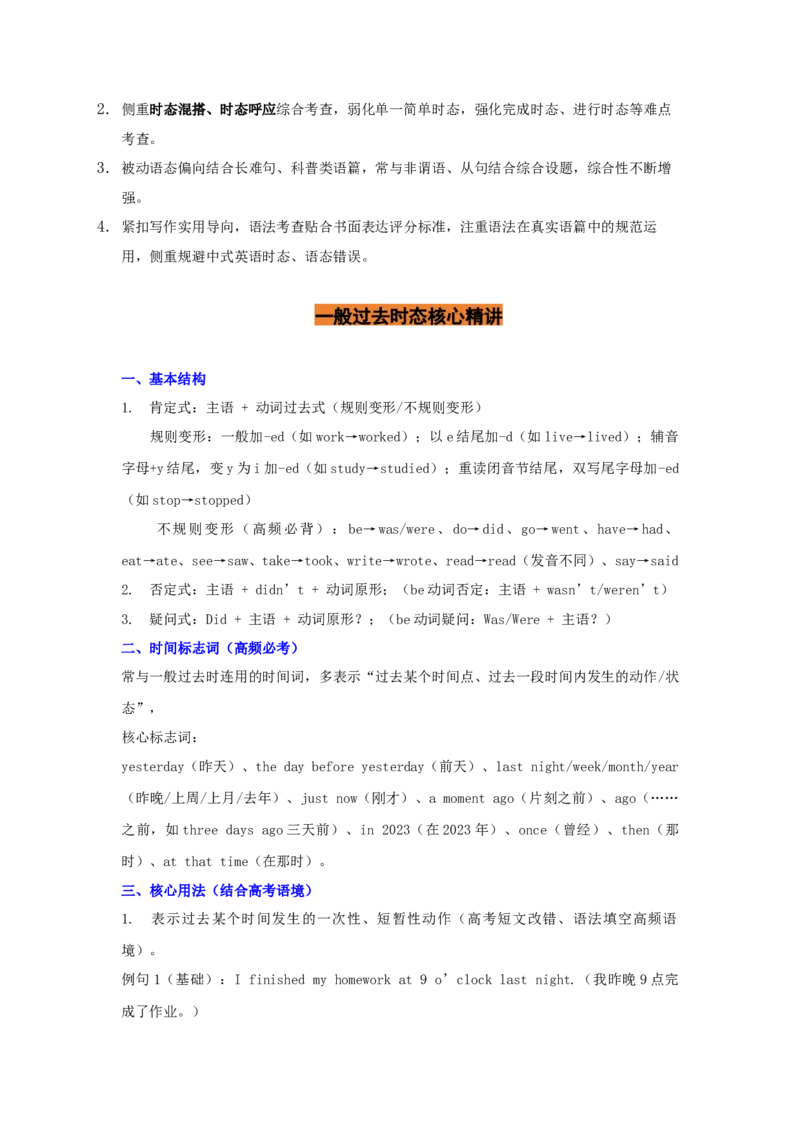
2. 侧重时态混搭、时态呼应综合考查,弱化单一简单时态,强化完成时态、进行时态等难点
考查。
3. 被动语态偏向结合长难句、科普类语篇,常与非谓语、从句结合综合设题,综合性不断增
强。
4. 紧扣写作实用导向,语法考查贴合书面表达评分标准,注重语法在真实语篇中的规范运
用,侧重规避中式英语时态、语态错误。
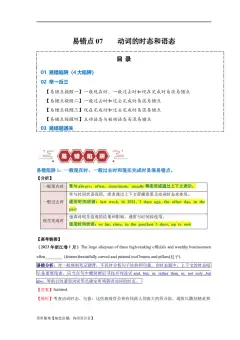
一般过去时态核心精讲
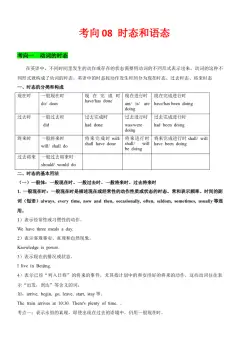
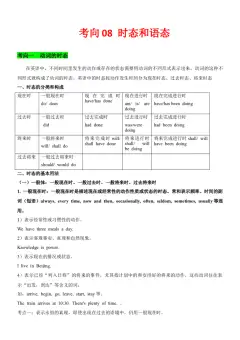
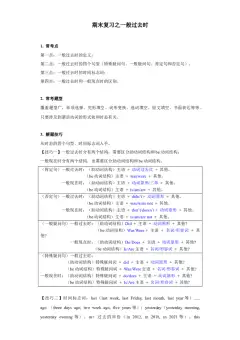
一、基本结构
1.  肯定式:主语 + 动词过去式(规则变形/不规则变形)
    规则变形:一般加-ed(如work→worked);以e 结尾加-d(如live→lived);辅音
字母+y 结尾,变y 为i 加-ed(如study→studied);重读闭音节结尾,双写尾字母加-ed
(如stop→stopped)
    不规则变形(高频必背):be→was/were、do→did、go→went、have→had、
eat→ate、see→saw、take→took、write→wrote、read→read(发音不同)、say→said
2.  否定式:主语 + didn’t + 动词原形;(be 动词否定:主语 + wasn’t/weren’t)
3.  疑问式:Did + 主语 + 动词原形?;(be 动词疑问:Was/Were + 主语?)
二、时间标志词(高频必考)
常与一般过去时连用的时间词,多表示“过去某个时间点、过去一段时间内发生的动作/状
态”,
核心标志词:
yesterday(昨天)、the day before yesterday(前天)、last night/week/month/year
(昨晚/上周/上月/去年)、just now(刚才)、a moment ago(片刻之前)、ago(……
之前,如three days ago 三天前)、in 2023(在2023 年)、once(曾经)、then(那
时)、at that time(在那时)。
三、核心用法(结合高考语境)
1.  表示过去某个时间发生的一次性、短暂性动作(高考短文改错、语法填空高频语
境)。
例句1(基础):I finished my homework at 9 o’clock last night.(我昨晚9 点完
成了作业。)
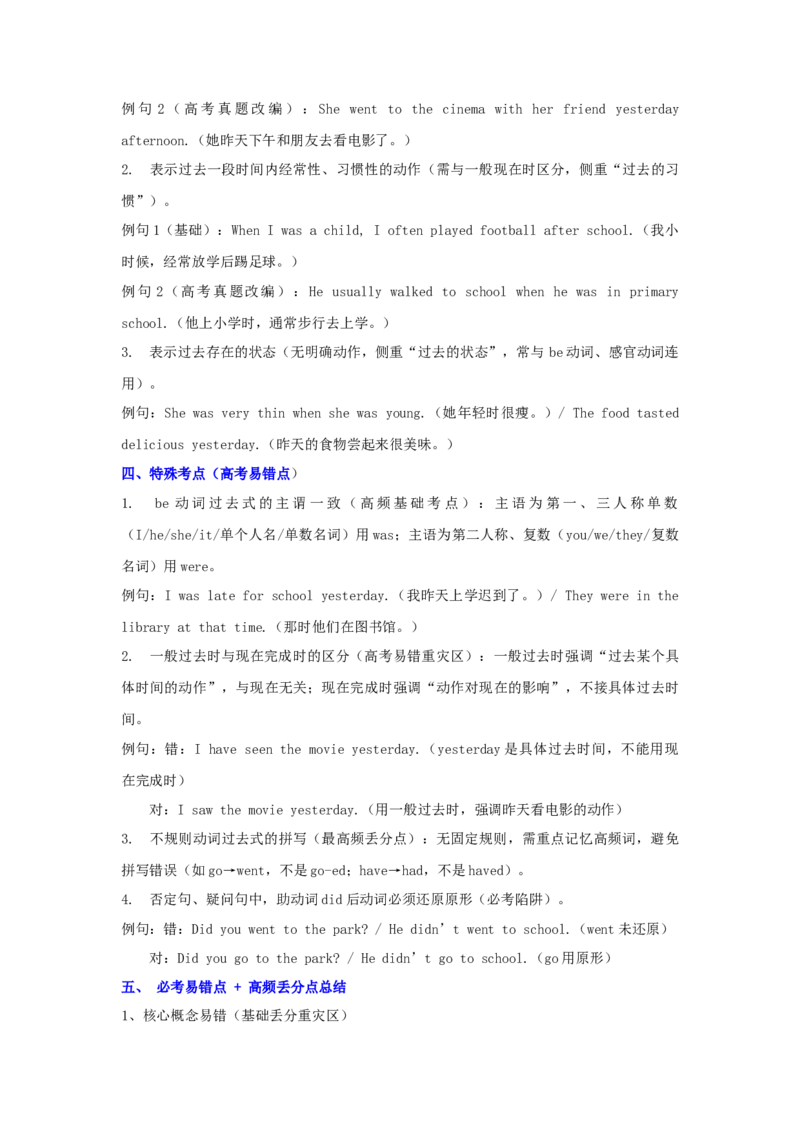
例句2 (高考真题改编):She went to the cinema with her friend yesterday
afternoon.(她昨天下午和朋友去看电影了。)
2.  表示过去一段时间内经常性、习惯性的动作(需与一般现在时区分,侧重“过去的习
惯”)。
例句1(基础):When I was a child, I often played football after school.(我小
时候,经常放学后踢足球。)
例句2(高考真题改编):He usually walked to school when he was in primary
school.(他上小学时,通常步行去上学。)
3.  表示过去存在的状态(无明确动作,侧重“过去的状态”,常与be 动词、感官动词连
用)。
例句:She was very thin when she was young.(她年轻时很瘦。)/ The food tasted
delicious yesterday.(昨天的食物尝起来很美味。)
四、特殊考点(高考易错点)
1.  be 动词过去式的主谓一致(高频基础考点):主语为第一、三人称单数
(I/he/she/it/单个人名/单数名词)用was;主语为第二人称、复数(you/we/they/复数
名词)用were。
例句:I was late for school yesterday.(我昨天上学迟到了。)/ They were in the
library at that time.(那时他们在图书馆。)
2.  一般过去时与现在完成时的区分(高考易错重灾区):一般过去时强调“过去某个具
体时间的动作”,与现在无关;现在完成时强调“动作对现在的影响”,不接具体过去时
间。
例句:错:I have seen the movie yesterday.(yesterday 是具体过去时间,不能用现
在完成时)
    对:I saw the movie yesterday.(用一般过去时,强调昨天看电影的动作)
3.  不规则动词过去式的拼写(最高频丢分点):无固定规则,需重点记忆高频词,避免
拼写错误(如go→went,不是go-ed;have→had,不是haved)。
4.  否定句、疑问句中,助动词did 后动词必须还原原形(必考陷阱)。
例句:错:Did you went to the park? / He didn’t went to school.(went 未还原)
    对:Did you go to the park? / He didn’t go to school.(go 用原形)
五、 必考易错点 + 高频丢分点总结
1、核心概念易错(基础丢分重灾区)
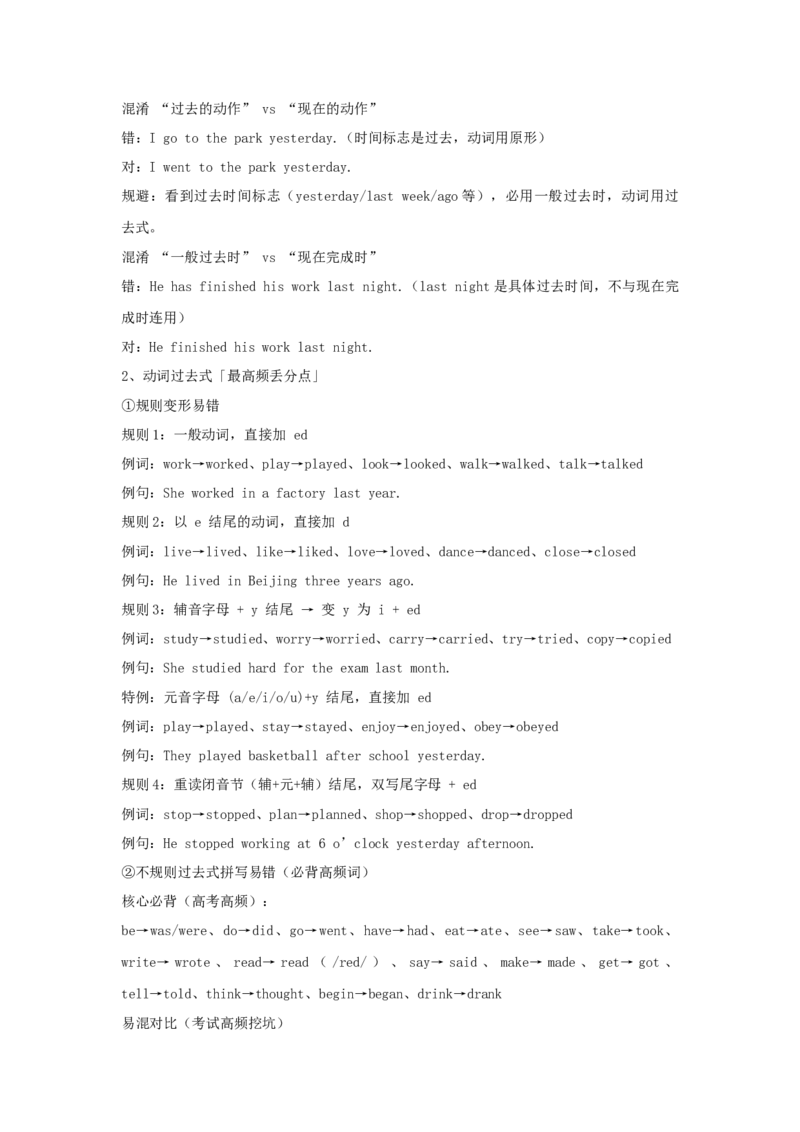
混淆 “过去的动作” vs “现在的动作”
错:I go to the park yesterday.(时间标志是过去,动词用原形)
对:I went to the park yesterday.
规避:看到过去时间标志(yesterday/last week/ago 等),必用一般过去时,动词用过
去式。
混淆 “一般过去时” vs “现在完成时”
错:He has finished his work last night.(last night 是具体过去时间,不与现在完
成时连用)
对:He finished his work last night.
2、动词过去式「最高频丢分点」
①规则变形易错
规则1:一般动词,直接加 ed
例词:work→worked、play→played、look→looked、walk→walked、talk→talked
例句:She worked in a factory last year.
规则2:以 e 结尾的动词,直接加 d
例词:live→lived、like→liked、love→loved、dance→danced、close→closed
例句:He lived in Beijing three years ago.
规则3:辅音字母 + y 结尾 → 变 y 为 i + ed
例词:study→studied、worry→worried、carry→carried、try→tried、copy→copied
例句:She studied hard for the exam last month.
特例:元音字母 (a/e/i/o/u)+y 结尾,直接加 ed
例词:play→played、stay→stayed、enjoy→enjoyed、obey→obeyed
例句:They played basketball after school yesterday.
规则4:重读闭音节(辅+元+辅)结尾,双写尾字母 + ed
例词:stop→stopped、plan→planned、shop→shopped、drop→dropped
例句:He stopped working at 6 o’clock yesterday afternoon.
②不规则过去式拼写易错(必背高频词)
核心必背(高考高频):
be→was/were、do→did、go→went、have→had、eat→ate、see→saw、take→took、
write→wrote 、read→read (/red/ )、say→said 、make→made 、get→got 、
tell→told、think→thought、begin→began、drink→drank
易混对比(考试高频挖坑)
live→lived(e 结尾加d) vs leave→left(不规则)
play→played(元+y 加ed) vs study→studied(辅+y 变i 加ed)
stop→stopped(双写尾字母) vs work→worked(直接加ed)
3、否定 / 疑问句结构易错(考试高频挖坑)
实义动词否定/疑问,未用助动词did,直接变过去式
错:I not went to school. / He went not to the park. / Went you to the zoo?
对:I didn’t go to school. / He didn’t go to the park. / Did you go to the
zoo?
be 动词和实义动词混用(过去时)
错:She was go to school yesterday.(多了was,实义动词用过去式went 即可)
区分:

✔be + 表语(状态):She was happy yesterday.
 实义动词单独用(动作):
✔
She went to school yesterday.
4、特殊句式 & 固定场景易错
①used to do sth(过去常常做某事,现在不做了)与一般过去时的区分

✅He used to play football.(过去常踢,现在不踢了,侧重“过去的习惯,现在改
变”)

✅He played football every day last year.(去年每天踢,仅陈述过去的动作,不涉
及现在)
②时间状语从句中,主句、从句均用过去时(主过从过),与“主将从现”区分
错:When he arrives, we went out.(主句过去时,从句用现在时,时态不一致)
对:When he arrived, we went out.(从句、主句均用过去时,表过去同时/先后发生)
引导词:when/while/before/after 等(引导过去的时间)
③there be 句型的过去式:there was(单数/不可数)/ there were(复数)

✅There was a book on the desk yesterday.

✅There were some students in the classroom just now.
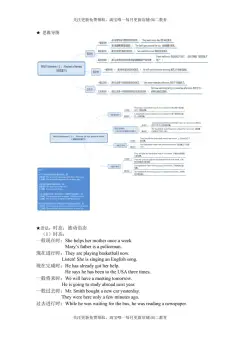
六、一般过去时万能做题步骤
1、判时态
看到这些标志 → 直接锁定一般过去时
yesterday、last 系列、ago、just now、a moment ago、in+过去年份、at that time、
once、then
2、定动词形式
肯定句:实义动词用过去式(规则/不规则);be 动词用was/were(看主语单复数)
否定句:实义动词用didn’t + 动词原形;be 动词用wasn’t/weren’t
疑问句:实义动词用Did + 主语 + 动词原形;be 动词用Was/Were + 主语
3、查细节
检查动词过去式拼写(尤其是不规则动词);检查助动词did 后是否还原动词原形;检查
be 动词与主语的主谓一致。
七、四大高频考点答题模板
模板 1:过去一次性动作(最基础)
结构:主语 + 动词过去式 + 过去时间标志 + 其他
例:She bought a new bag yesterday.
模板 2:过去经常性动作
结构:主语 + often/usually + 动词过去式 + 过去时间范围 + 其他
例:He usually drank milk before going to bed when he was a child.
模板 3:主过从过(时间/条件状语从句)
when/while/before/after 引导从句
从句:主语 + 动词过去式
主句:主语 + 动词过去式
例:After he finished his homework, he watched TV.
模板 4:否定 & 疑问万能公式
① 实义动词
否定:主语 + didn’t + 动词原形 + 其他
疑问:Did + 主语 + 动词原形 + 其他?
② be 动词
否定:主语 + wasn’t/weren’t + 其他
疑问:Was/Were + 主语 + 其他?
八、核心避坑复盘
1、看到过去时间标志(yesterday/last/ago 等),动词必用过去式,不用现在时。
2、规则动词过去式:e 结尾加d,辅y 变i 加ed,重读闭音节双写尾字母加ed。
3、不规则动词过去式(高频)必须熟记,避免拼写错误(如go→went、have→had)。
4、助动词铁律:did/didn’t 后,动词必用原形,不能用过去式。
5、主过从过:when/while 等引导过去的时间从句,主句和从句均用过去时。
6、be 动词过去式主谓一致:单数/不可数用was,复数/第二人称用were。
7、there be 过去式:there was(单数)/ there were(复数),与后面名词单复数一
致。
8、used to do 表“过去常常”,侧重现在不做;一般过去时仅陈述过去的动作/习惯,不
涉及现在。
9、具体过去时间(如yesterday)不与现在完成时连用,只能用一般过去时。
10、感官动词(smell/taste/look 等)表过去的感受,用过去式(如tasted、looked)。
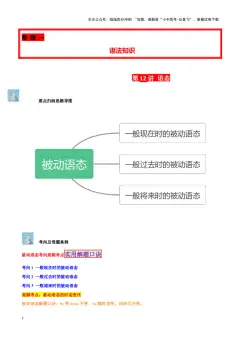
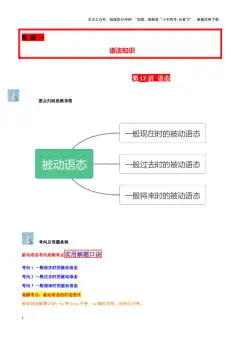
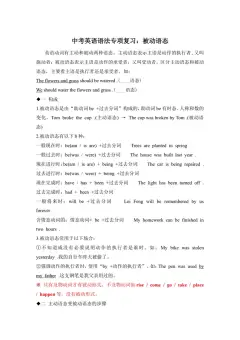
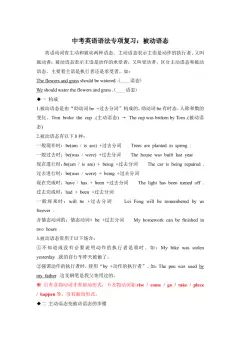
九、一般过去时态的被动语态
1、核心构成
结构:was /were + 过去分词(done)人称搭配:I / He / She / It / 单数名词 / 不可
数名词 → was + doneWe / You / They / 复数名词 → were + done
2、基本句式
1. 肯定句
主语 + was/were + 过去分词例:Rice was grown in the south in the past.水稻过去
在南方种植。
2. 否定句
主语 + was/were + not + 过去分词例:Rules were not broken by students
yesterday.昨天学生没有违反规则。
3. 一般疑问句
Was/Were + 主语 + 过去分词?回答:Yes, 主语 + was/were./ No, 主语 + was/were
not.例:Was English spoken here just now?— Yes, it was.
4. 特殊疑问句
特殊疑问词 + was/were + 主语 + 过去分词?例:When were flowers watered
yesterday?昨天花什么时候被浇灌的?
3、核心用法
过去一次性、过去经常性的被动动作常配标志词:yesterday, last night, just now, in
the past, ago, yesterday evening 等例:Homework was finished last night.
过去的客观事实、过去存在的状态例:The city was covered by thick forests long
ago.Thousands of letters were sent last year.
强调过去动作的承受者不知道动作执行者、无需说出执行者,或重点突出承受对象例:
This old house was built in 1990.
4、主动变被动 转换规则
主动宾语 → 被动主语
主动谓语 → was/were + 过去分词
主动主语 → 置于 by 后(可省略)
时态保持不变(本题限定:一般过去时)主动:People made paper long ago.被动:
Paper was made by people long ago.
5、重点补充
by 短语 用来引出过去动作的执行者,书面可保留,口语常省略。例:These toys were
made (by workers) last month.
感官 / 使役动词主动变被动make/let/have、see/hear/watch 等,主动省 to,被动必须
加 to。主动:He made me cry.被动:I was made to cry by him.
高频易错
单复数严格匹配:单数 / 不可数用 was,复数用 were
统一使用过去分词,不可误用为过去式
时间标志词为过去时间,必用一般过去时被动
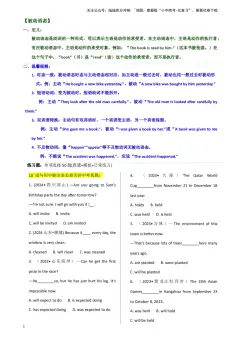
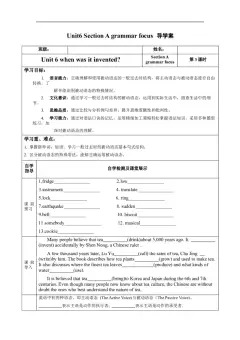
6、单句语法填空
① Many trees ________ (plant) in our city last spring.
② English ________ (use) widely in ancient times too.
③ These windows ________ (not, clean) yesterday.
④ When ________ the sports meeting ________ (hold) last week?
⑤ A lot of daily things ________ (make) by workers last year.
7、不用变被动 / 形式不变 特殊情况
(语态特殊规则不受时态影响,一般过去时同样适用)
1、主动形式表被动含义,无被动语态
① 感官系动词 + 形容词look/sound/smell/taste/feel,无 was/were done 例:The
flower
smelt
sweet
at
that
time.②

物
性
动
词
表
物
品
属
性sell/wash/write/read/lock/wear 等,主语为物,表本身特质例:This book sold
well last year.
2、永远无被动的动词 / 短语(过去时依然无被动)
不及物动词:happen /take place /break out /appear/last /rise 固定短语:come
out、belong to、take place、consist of 等例:A big accident happened last week.
(无被动)This bag belonged to me before.
3、主动结构表被动含义(过去时用法不变)
① need /want/require + doing 主动表被动= need to be done 例:The old house
needed cleaning last year.
② be worth doing 固定搭配,只用主动例:The book was worth reading.
4、特殊被动结构
get + 过去分词(过去时:got + done)表过去状态、偶然动作例:He got hurt in the
accident yesterday.
5、使役动词被动特例
过去时被动同样需要还原 to 主动:saw/heard/made sb do 被动:was/were
seen/heard/made to do
8、单句语法填空
① This kind of apple ________ (taste) sweet and ________ (sell) well last
year.
② Great changes ________ (take) place in our school last term.
③ The old bag ________ (belong) to me before.
④ The small room needed ________ (clean) last month.
⑤ That old novel was worth ________ (read).
一般过去时态核心精练
基础版
用所给动词的正确形式填空,直击:过去式、否定、疑问、主过从过、there be 句型、主
谓一致高频考点。
1.I ______ (go) to the park with my parents yesterday.
2.She ______ (not finish) her homework last night.
3.They ______ (play) football on the playground just now.
4.______ (be) you late for school yesterday morning?
5.There ______ (be) a big tree in front of our house five years ago.
6.When he ______ (arrive) at school, the bell ______ (ring).
7.My mother ______ (cook) dinner for us yesterday evening.
8.He ______ (have) a good time at the party last weekend.
9.Did your brother ______ (watch) TV last night?
10.She ______ (study) for the test the day before yesterday.
11.The food ______ (taste) great yesterday.
12.We ______ (not go) to the cinema last Sunday.
13.He usually ______ (walk) to school when he was in Grade 7.
14、This kind of flower ________ (water) yesterday afternoon.
15、Strict rules ________ (require) to follow by students in the past.
进阶版
(完全贴合高考题型,聚焦:不规则过去式、主过从过、there be、否定疑问、动词变
形,全是高频扣分点)
一、单句语法填空
1.She ______ (see) a movie with her sister last Saturday.
2.My father ______ (not take) a walk yesterday evening.
3.When I ______ (be) young, I ______ (like) eating candy very much.
4.There ______ (not be) any water in the bottle a moment ago.
5.He ______ (write) a letter to his pen pal last month.
6.After she ______ (eat) breakfast, she ______ (go) to work.
7.Did they ______ (have) a meeting yesterday afternoon?
8.The children ______ (play) games in the park last Sunday.
9、A big fire ________ (happen) in this area last night.
10、This old pen ________ (write) very well in the past.
二、语法填空
Last Sunday, our school 1.______ (hold) a sports meeting. Many students
2.______ (take) an active part in it.Lots of colorful flags 3.______ (put) up
around the playground in the morning. Some snacks and drinks 4.______ (prepare)
by teachers before the meeting.Tom 5.______ (win) the first prize in the
running race. He 6.______ (praise) by our head teacher later.
In the afternoon, some flowers 7.______ (give) to excellent players. We
8.______ (enjoy) the great time together.All the activities 9.______ (finish)
at 5:00 p.m. We all 10.______ (feel) happy that day.
核心总结
1.
看见 last… / yesterday / just now / in the past → 优先用一般过去时;
2.
人 / 物主动发出动作 → 过去时主动(动词变过去式);
3.
事物承受动作、含 by、无自主行为 → 一般过去时被动:was/were + 过去分词;
4.
熟记高频不规则动词:hold/take/ win/give/ feel 变形。
一般过去时态过关达标练习
单句语法填空 用所给动词的适当形式填空
1. He ______ (work) in a big hospital years ago.
2. My mother ______ (wash) clothes yesterday evening.
3. The bird ______ (fly) in the sky every morning last week.
4. She ______ (go) to the library last weekend.
5. Tea ________ (grow) in this area many years ago.
6. Students ________ (ask) not to run in the hallways yesterday.
7. The old books ________ (send) to poor schools last year.
8. The flowers ________ (look) beautiful last spring.
9. This magazine ________ (come) out last month.
10.Workers ________ (make) ________ (work) long hours by the boss yesterday.
二、语法填空
阅读短文,用所给动词的适当形式填空。
Last term, our school 1_________ (run) in good order. Many strict rules
2_________ (set) for all students. Teachers 3 _________(treat) us patiently
every day at that time.Homework 4 _________(finish) on time by most students.
This kind of notebook 5_________ (sell) well at that time, so many students
bought it. Clean classrooms 6 __________(need) for our study.
 Our classroom 7_________ (clean) by us every morning last term. Everyone
8 _________(know) the importance of manners.Luckily, bad things 9_________
(not, happen) often here in the past. And no rubbish 10 _______(throw)
everywhere in our school last term.
你都答对了吗?恭喜你成功晋级!下一关,解
锁一般将来时态吧。