考向 时态和语态
08
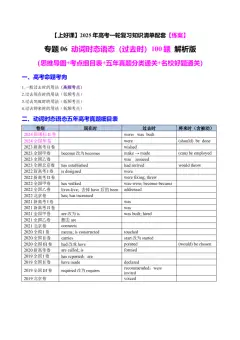
考向一 动词的时态
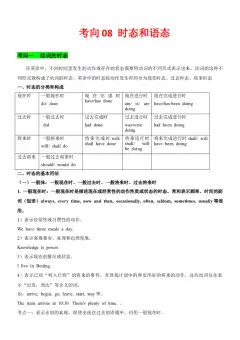
在英语中,不同时间里发生的动作或存在的状态需要用动词的不同形式表示出来,动词的这种不
同形式就构成了动词的时态。英语中的时态按动作发生时间分为现在时态、过去时态、将来时态
一、时态的分类和构成
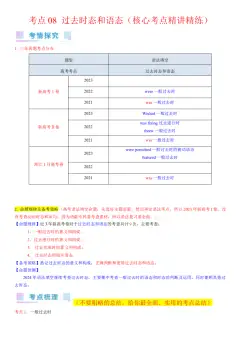
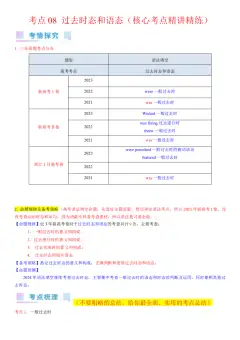
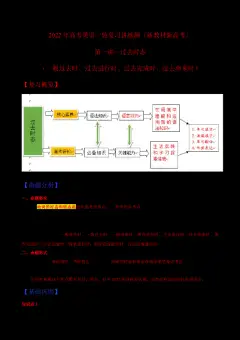
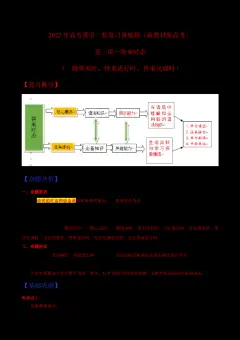
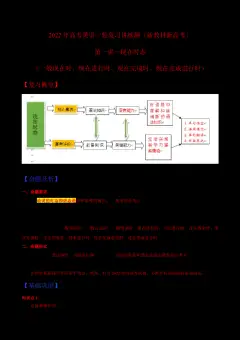
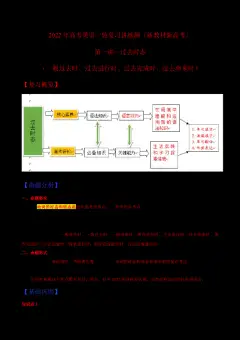
现在时 一般现在时 现 在 完 成 时 现在进行时 现在完成进行时
have/has done
do/ does am/ is/ are have/has been doing
doing
过去时 一般过去时 过去完成时 过去进行时 过去完成进行时
did had done was/were had been doing
doing
将来时 一般将来时 将来完成时 will/ 将来进行时 将来完成进行时shall/ will
shall have done shall/ will have been doing
will/ shall do
be doing
过去将来 一般过去将来时
should/ would do
二、时态的基本用法
(一)一般体:一般现在时、一般过去时、一般将来时、过去将来时
1. 一般现在时:一般现在时是描述现在或经常性的动作性质或状态的时态。常和表示频率、时间的副
词(短语)always, every time, now and then, occasionally, often, seldom, sometimes, usually等连
用。
1)表示经常性或习惯性的动作。
We have three meals a day.
2)表示客观事实、真理和自然现象。
Knowledge is power.
3)表示现在的情况或状态。
I live in Beijing.
4)表示已经“列入日程”的将来的事件,尤其指计划中的和安排好的将来的动作,这些动词往往表
示“出发,到达”等含义的词,
如,arrive, begin, go, leave, start, stay等。
The train arrives at 10:30. There's plenty of time. 。
考点一:表示永恒的真理,即使出现在过去的语境中,仍用一般现在时。如:I learned that the earth goes around the sun when I was in primary school.
考点二:在时间和条件状语从句中,代替一般将来时;常用的引导词有:时间:when, until, after,
before, as soon as, once, the moment/the minute, the day; 条件:if, unless, provided.
If he accepts the job, he will get more money soon.
考点三:在make sure (certain), see to it, mind, care, matter +宾语从句, 从句用一般现在时代替一般将
来时。
So long as he works hard, I don’t mind when he finishes the experiment.
考点四:在the more… the more … (越……越……) 句型中, 若主句是一般将来时, 从句通常用一般现
在时。
The harder you study, the better results you will get.
2. 一般过去时:一般过去时表示过去发生的动作、存在的状态,或反复发生的动作,句中一般都有表
示过去具体时间的时间状语。
1)在确定的过去时间里所发生的动作或状态。此时与表示过去的时间状语连用,如 yesterday, last
week, an hour ago, the other day, in1998等。
Where did you go yesterday??
2)表示在过去一段时间内,经常性或习惯性的动作。
When I was a child, I often played football in the street.
3)用在条件句中表示与现在或将来事实不符的虚拟语气。
If he were here now, we could turn to him for help.
4)句中有延续性时间状语,但表示与现在没有关联的过去某段时间做了某事,此时用一般过去时。
This is the primary school where our manager Mr. Smith studied for six years.
3. 一般将来时:一般将来时用来表示将要发生的事。
1)shall用于第一人称,常被will代替。will在陈述句中用于各人称,在征求意见时常用于第二人称。
will (shall) + 动词原形
There is still much to discuss. We shall return to this item at our next meeting.
2)be going to + 动词原形,表示将来。
(1)主语的意图,即将做某事或打算做某事。
What are you going to do this Sunday morning?
(2)计划、安排要发生的事。
I'm going to the airport to pick up my aunt from America this afternoon.
(3)有迹象要发生的事。Look at the dark clouds; there is going to be a storm.
注意:be going to与will的区别
be going to既可指主观打算做某事,也可指客观迹象表明将要发生某事;
will往往指没有经过计划而临时出现的意图,常伴有说话者的主观意识或表示将来必然发生的事。
I'm going to quit my present job. (现在的打算,事先经过思考,指向将来)
I'll answer the door. (未经事先考虑的意图)
The little boy is going to fall over. (根据客观迹象判断)
I hope it will be fine tomorrow. (主观意愿)
3)“be + 不定式”表将来,表示按计划安排的事或按职责、义务或要求必须去做的事等。
We are to discuss the report next Saturday.
The meeting is to take place at 8:00 tomorrow morning.
注意:be to 和be going to的用法比较
be to表示客观安排或受人指示而做某事。
I am to play football tomorrow afternoon. (客观安排)
be going to则表示主观的打算或计划。
I am going to play football tomorrow afternoon. (主观安排)
4)“be about to do”意为“马上做某事”,表示即将发生某事,该事将发生在很近的将来,不能与
tomorrow, next week等表示明确将来的时间状语连用。
He is about to leave for Beijing.
考点一:一般将来时总是用在一些时间状语从句或条件状语从句的主句中:We will begin our class as
soon as the teacher comes.
(主句用一般将来时,从句中一定要用一般现在时替代一般将来时。)
考点二:某些表示短暂性动作的动词如arrive, come, go, leave, start等,用现在进行时形式表示将来。
I am leaving for Beijing tomorrow.
考点三:“祈使句 + and/or + 句子”,这种结构中and后面的句子谓语用一般将来时。
Use your head and you will find a way.
4. 过去将来时:过去将来时表示从过去某一时间看将要发生的动作或存在的状态。
注意:这种时态常用于主句是一般过去时的宾语从句中,表示从句的动作发生在主句之后。过去将来
时同一般将来时类似,除了用would do 表示外,也可以用be going to do, be to do, be about to do
及过去进行时等方式表示。
He was sixty-eight and in two years, he would be seventy.You were going to give me your address but you didn't.
I was about to turn on the power of the computer when the electricity was cut off.
(二)完成体:现在完成时、过去完成时、将来完成时和过去将来完成时
1. 现在完成时:常用的时间状语有:so far, recently, lately, before, ever, by now, in the
last/ past few years, over a long time, up to now,yet, already, just, since, for+ 一段时间等。
1)表示说话之前已经完成的动作,常与 already, yet, just, by this time,so far, by now等时间状语连
用。此时句子中的谓语动词一般为非延续性动词且句子一般不与表示“一段时间”的时间状语连用。
Have you finished your task yet?
注意:have gone to与have been to的区别
have gone to 表示“到某地去了”,人可能还在路上,也可能已经到达,但一定不在说话者这里。
have been to 表示“去过某地”,是回来之后再谈论去过某地的情况。
2)表示过去发生的某一动作对现在造成的影响或结果。
He has lost his wallet and can't find it.
3)表示从过去某一时间开始一直持续到现在的动作或状态。
They have been good friends since they met at a meeting.
4)表示动作反复发生,句中常用once/ twice/ three... times 等。
You needn't describe her. I have met her many times.
5)在时间或条件状语从句中表示在将来某个时间之前要完成某个动作。
Don't get off until the bus has stopped.
注意:常用现在完成时的句型有:
1)It is/has been + 一段时间 + since 从句;
2)This/ That/ It is the first/ second... Time + that从句(从句用现在完成时);
3)It/ This is the best/ worst/ most interesting + 名词 + that从句(从句用现在完成时)
关于现在完成时的时间状语问题:
A.现在完成时的句子里,不可以带有表示具体过去时间的状语,
比较: We have bought a new typewriter .
We bought a new typewriter yesterday.
B. 在以when提问的特殊疑问中不能用现在完成时。另外,ago不能用于现在完成时的句子,但是可
以用before来表示"以前"的意义。
C.非延续性动词用于现在完成时态的时候,通常不与表示时间段的时间状语连用,在这种情况下,应该
用"It has been … since…"的句式来表达。如: He has been in the army for three years.
= He has been a soldier for three years.
= It's three years since he joined the army. √
He has joined the army for three years. ×
.D非延续性动词的否定式可以和表示一段时间的状语连用,
表示这种动作的否定状态的延续。
I haven't heard from you for a month.
2. 过去完成时:由“had + 过去分词”构成,表示在过去某一时间或动作以前已经完成的动作,即
“过去的过去”。在使用过去完成时时,一定要有过去的时间或动作作为参照。
By nine o'clock last night, we had got 200 pictures from the spaceship.
考点一:用于 hardly/scarcely...when; no sooner ...than 句型中,主句用过去完成时,从句用一般过去
时。,并且no sooner 与hardly等位于句首时,此部分须用部分倒装。
I had no sooner got into the room than it began to snow.
No sooner had I arrived home than the telephone rang. (注意主谓倒装)
考点二:表示“第几次做某事”,主句用过去时,从句用过去完成时。
That was the second time that she had seen her grandfather.
考点三:动词hope, expect, think, intend, mean, want, suppose, plan 表
示主观想法的动词,可用于过去完成时表示过去未曾实现的想法、希望、打算或意图,意为“本来
想......”
They had wanted to help, but they could not get there in time.
3. 将来完成时:主要用于表示在将来某一时间点上会完成的动作,并对将来
某一时间产生影响。常与将来时间状语连用。
We shall have fulfilled the work by the end of next week.
考点一:常用的时间状语一般用 by+将来的时间。如:by the end of this year, by 8 o’clock this
evening, by March next year以及由by the time…, before或when等引导的副词从句。
By the end of next month, he will have traveled 1000 miles on foot.
By the time you reach the station, the train will have left.
By next Tuesday, I will have got ready for the exams.
考点二:在时间和条件状语从句中,将来完成时则由现在完成时表示。
The children will do their homework the moment they have arrived back from school.
(三)进行体:现在进行时、过去进行时、将来进行时和过去将来进行时1. 现在进行时
1)表示说话时正在进行的动作或存在的状态。这种用法往往表示发生在过去,说话时没完成,仍在
继续进行的动作或存在的状态。常与now, right now, at this moment, atpresent等时间状语连用。
What are they quarreling about?
2)表示现阶段某动作正在进行,但说话时未必正在进行。
I'm teaching part-time in a middle school.
3)表示马上就要发生。
非延续性动词用于进行时态,往往表示“马上就,即将,逐渐
地,反复地”等意思,这类动词主要有come, go, leave, start,
begin, stop, arrive, return等。
Are you staying here for a long time?(即将)
Someone is knocking at the door. (反复地)
4)表示某种感情色彩或对某一心理的生动描述。
现在进行时与always, constantly, continually, forever (for ever),
usually等副词连用时,往往表示生气、不满、同情、赞美、好
奇等情感或对某一心理的生动描述。
The children are constantly disturbing us. (讨厌、不满)
注意:下列动词一般不能用于进行时态。
1)表示心理活动的动词一般不用于进行时态。常见的此类动词有 love, like, hate, know,
understand,realize, remember, believe, want, hope, wish, need,agree等。
She understands you better now.
2)表示属性或拥有的动词不能用于进行时态。常见的此类动词有 have(有),own, possess, belong
to,have on, consist of 等。
This dictionary belongs to Peter.
3)表示感官的连系动词不能用于进行时态。常见的此类动词有 seen, appear, look, sound, taste等。
feel用于进行时态表示一时的感觉。
The music sounds beautiful.
I'm not feeling well today.
4)表示行为结果的动词一般不用于进行时态。常见的此类动词有 accept, admit, receive, allow,decide,
promise等。
I accept your advice.考点一:在时间状语或条件状语从句中表示将来正在进行的动作。
Look out when you are crossing the street.
考点二: 表示在最近按计划或安排要进行的动作(这时多有表示将来的时间状语)。
Marry is leaving on Friday
2. 过去进行时
1)表示过去某一时间正在进行的动作。此时句中往往有表示过去的时间状语then, at that
moment, at that time, at the time, this time yesterday等。没有时间状语时,需要根据上下文的语境
体会。
I was writing a letter when you phoned.
2)表示从过去某一时间看将要发生的动作,常表示“渐渐”“快要”“越来越”“马上”。
常见的此列动词有come, go, start, begin, leave, arrive,get, become, turn等非持续性动词,偶尔有些持
续性动词如do, stay, take等也常表示过去“将要”。
We were running out of the gas.
She told me that she was leaving for Italy the next day.
3)表示特定的情感。
与现在进行时相似,过去进行时也可与 always,forever, constantly等时间状语连用,表示厌烦、惊讶、
褒扬等特殊情感。
She was always ringing me up when I was in London. (表示厌烦)
3.将来进行时
指从现在算起的将来某时间点正在进行的动作或将要进行的动作。常与表示将来时间的短语 this
time ,tomorrow, at 10 o'clock next Monday等连用。
This time tomorrow we'll be flying to Pairs..
(四)完成进行体
1. 现在完成进行时
表示动作从过去某一时间开始一直延续到现在或离现在不远的时间。其动作是否继续下去,由上
下文语意决定。
1)表示动作从过去某一时间开始一直延续到现在或离现
在不远的时间。多用延续性动词。
Have you been waiting long for me?
2)表示“刚才,近来”发生的动作,一般不再继续。
My hands are dirty. I've been cleaning the room.3)表示动作的重复性。
You have been asking the same question these days.
注意:现在完成进行时态多用持续性动词,如live, learn,lie, stay, sit, wait, stand, rest, study等,并常
和allthe time, this week, this month, all night, all the morning, recently等状态以及since(自从)和
for(历经)所引导的状语从句或短语连用(与since和for连用时,动作常会继续下去)。
三、几个易混时态的用法区别
1. 一般过去时和过去完成时的区别
一般过去时是相对现在说话时刻而言的,过去完成时则是相对过去某一时刻而言,强调“过去的
过去”发生的动作对过去某一时间的影响或持续到过去某一时间为止。
两种时态建立的时间参照点不同,对过去完成时来说,这个时间参照点十分重要,它是过去完成
时概念赖以建立的基础,也是和一般过去时进行区别的重要标准。
She looked well when I last saw her. (过去动作或状态)
When I got there, the football match had already started. (对过去的影响或产生的结果)
The train had waited there for half an hour by the time we arrived. (“过去的过去”动作持续到过
去某一时刻为止)
2.一般过去时和现在完成时的区别
这两个时态都是谈论已经发生的事情,但是二者的差别是,一般过去时只是单独谈论过去的事情,
与现在没有联系,因此只要有过去时间状语的句子只能用过去时来表达;而现在完成时所表示的动作
对现在有影响,或是与现在有关,或是谈论现在以前这一段时间里发生的事情。
We bought the fruit and flowers in the supermarket just now.
They haven't seen the teacher today.
四、时态的一致问题
在英语的复合句(尤其是宾语从句)中,从句谓语动词的时态往往受主句谓语动词时态的限制或
影响,即主句与从句时态基本一致。
1. 名词性从句与主句时态
在一些名词性从句中,如果主句谓语是现在时或将来时,则从句的谓语可根据所要表达的内容要求运
用各种时态;若主句谓语用过去的某种时态,则从句的谓语时态要作相应的调整。
1)主句是现在的某种时态或将来的某种时态时,宾语从句里的动词可按其所涉及的时间运用任何适
当的时态。
I think Molly went to the doctor's yesterday.。
2) 主句中的动词是过去时,宾语从句中的动词一般用过去的某种时态,但如果从句叙述的是某种真理不变的事实或对现在或将来仍然有效的事情,则从句用现在的某种时态。
Alva told me that he had known the news already。
In his country children under 18 cannot buy alcohol.
2. 状语从句与主句时态
表示时间、原因、目的、条件、结果、让步等的状语从句一般要和主句的时态一致,即主句为现
在(过去、将来)的某种时态,从句一般也为现在(过去、将来)的某种时态。
You'll make progress if you keep working hard. 。
3. 定语从句
定语从句中的动词应依照动词本身所涉及的时间选用适当的时态,不受主句的约束和限制。
This is the man I saw yesterday. 。
【典例示例】
1.(2020﹒江苏)If you look at all sides of the situation, you’ll find probably a solution that ______ everyone.
A. suit B. suited C. suits D. has suited
【答案】C
【解析】考查动词时态。句意:如果你从各个方面看问题,你可能会找到一个适合每个人的解决方案。句子描
述的客观事实,应使用一般现在时;此处是定语从句谓语动词,先行词是a solution,从句谓语动词应使用第三
人称单数形式。故选C。
2.(2020﹒天津)—You are a great swimmer.
—Thanks. It’s because I ______ a lot these days.
A. have been practising B. was practising
C. would practise D. had practised
【答案】A
【解析】考查时态。句意:-你游泳很棒。-谢谢。这是因为这些天我一直在练习。根据时间状语 these days(这些
天)可知,”练习游泳”从数天前开始,一直持续到现在,因此该句应用现在完成进行时态。故选A。
3.(2020﹒天津)The number of medical schools reached 18 in the early 1990s and ______ around that level since.
A. are remaining B. have remained
C. is remaining D. has remained
【答案】D
【解析】考查时态和主谓一致。句意:20世纪90年代初,医学院的数量达到了18所,此后一直保持在这个水平。
ever since”从那以后”作时间状语,句子用现在完成时态。主语为 the number of medical schools,the number of
表示”……的数目”,中心词是number,所以是单数,作主语时,谓语动词应用第三人称单数形式。综上,故
选D。4.(2019﹒江苏)The musician along with his band members ___________ ten performances in the last three months.
A. gives B. has given C. have given D. give
【答案】B
【解析】考查现在完成时与主谓一致。句意:在过去的三个月里,这名音乐家与他的乐队成员已经完成了十场
演出。由“in the last three months”可知,这句话的时态为现在完成时,故排除 AD 选项。本句主语为 the
musician,为第三人称单数形式,句中的“along with his band members”是附加成分,故谓语动词要用第三人称
单数形式。故选B。
5.(2019﹒江苏)A few months after he had arrived in China, Mr. Smith ___________ in love with the people and culture
there.
A. would fall B. had fallen C. has fallen D. fell
【答案】D
【解析】考查动词的时态。句意:他到中国几个月后,就喜欢上了那里的人和文化。发生在had arrived之后的
动作或状态应用一般过去时。故选D。
考向二 动词的语态
语态是动词的一种形式,表示主语和谓语动词之间的具体关系。语态分为主动语态和被动语态:
主动语态表示主语是谓语动词所表示的动作的发出者和执行者;被动语态表示主语是谓语动词所表示
的动作的承受者。
注意:英语中的及物动词一般都有主动语态和被动语态两种形式。主动语态是无标记的,而被动
语态则是有标记的。被动语态由助动词 be加及物动词的过去分词构成。助动词 be随着主语的人称、
数、时态和语气的不同而变化。
一、被动语态的各种形式 be+done
被动语态的时态、人称和数的变化主要体现在be的变化上,其变化形式与系动词be的完全一样。
1. 一般现在时:"am/ is/ are + 过去分词"
Mary is loved by all her family.
2. 一般过去时:"was/ were + 过去分词"
The letter was written in Spanish. 。
3. 一般将来时:"will/ shall/ be going to/ be to be + 过去分词"(shall主要用于第一人称;will可用
于各人称)
When will the work be finished?
4. 现在进行时:"am/ is/ are being + 过去分词"
The car accident is being looken into.5. 过去进行时:"was/ were being + 过去分词"
The library was being built last year. I'm not sure if it is completed.
6. 现在完成时:"have/ has been + 过去分词"
All the work has been finished by now.。
7. 过去完成时:"had been + 过去分词"
The fire had been put out when the firefighters arrived.
8. 将来完成时:"will/ shall have been + 过去分词"
Will all the photos have been developed by tomorrow?
9. 过去将来时:"would/ should be + 过去分词"
The headmaster said he would be met by the mayor.
二、含情态动词的常用被动句式
主语+ 情态动词+ be + 过去分词 +...
The computer might be repaired by tomorrow.
三、常用的被动语态句式结构
1. “get + 过去分词”结构
英语中"get + 过去分词"也构成被动语态。其中get 与"be + 过去分词"结构中的be一样,都起助
动词的作用。但get多用于口语,并且其后不能跟"by + 执行者",这种结构常用于谈论突然发生的、
出乎意料的事件,如get dressed, get killed等。
He got/ was drunk for the first time in his life that night.
2. 非谓语动词的被动形式
高考重点考察动名词和不定式的被动形式。找准非谓语动词的逻辑主语是做题的关健。
The girl is afraid of being scolded by her mother.
(scold和它的逻辑主语the girl之间存在着被动关系)
The book seems to have been published last year.
(publish和它的逻辑主语the book 之间存在被动关系)
四、被动语态的用法
1. 强调动作的承受者:当强调动作的承受者,将承受者作为谈话的中心时用被动语态。这
类句子常有一个by引导的短语说明动作的执行者,有时也可没有。
This poem was written by Whitman.
2. 淡化动作的执行者:当动作的执行者是泛指时(如people, one等),常用被动语态。
He is suspected robbing the bank.3. 动作的执行者是无生命的事物:
He was seriously wounded by a rolling stone.
4. 某些习惯用法:有些习惯用法常以被动语态的形式出现。
I am determined to do better than Mike.
五 使用被动语态的注意事项
(一)主动形式表示被动意义
1. 某些连系动词,如look, feel, sound, taste, smell, appear, seem, prove等,可用主动形式表示被动
意义。
The trip to the beautiful island this summer sounds really exciting. 。
His plan proved (to be) practical.
2. 有一类经常用作及物动词的词,如burn, wash, wear, close, read, write, sell, open, lock, shut,clean,
draw, cut, translate等, 用于强调事物本身的特点、特征、性能等,常用主动形式表被动含义。(to
blame, to let等也用主动形式表被动含义)
The pen writes smoothly.
Officials believe that more than one person may be to blame for the fire.
3. be worth后常接动名词的主动形式表被动意义。
A lot of small towns in the area are definitely worth visiting.
4. need, want, require, deserve等动词后用动名词的主动形式表被动意义。
(句中主语是动名词意义上的宾语。若动名词是不及物的,其后应加相应的介词。
Most house plants require regular watering.
The boy is always ready to help others and deserves making friends with.
5. 有些形容词后接不定式作状语时,常用主动形式表被动意义。此类形容词有easy, hard,
difficult, cheap, expensive, fit, nice, good, funny, exciting, light, heavy, dangerous,
comfortable,delicious等.若不定式动词是不及物的,其后要加相应多的介词。
The man is difficult to deal with.
6. 有些介词短语作表语,其主动形式含有被动意义。
under construction 在施工中 beyond belief 令人难以置信
beyond one's reach 鞭长莫及 beyond one's control 失控
beyond our hope 我们始料不及 for sale 出售for rent 出租 in print 在印刷中
The question is now under discussion.
The rumor is beyond belief. ( can't be believed).(二)不用于被动语态的情形
系动词、不及物动词(短语)无被动语态,常见的有appear, disappear, die, end (vi. 结束),fail,
happen, take place, break out, occur, last, lie, remain, sit, spread, come true, fall asleep,keep silence,
lose heart等。
The meeting lasted five hours before it ended.
被动形式表示主动意义,这些 done的形态的动词形容词性化。例如,be seated, be lost, be drunk,
be dressed, be devoted,be determined, be worried, be located, be exposed , be involved等表示状态
【典例示例】
1.(2019﹒江苏)They are trying to make sure that 5G terminals_________ by 2022 for the Beijing Winer Olympics.
A. will install B. will have been installed C. are installed D. have been installed
【答案】B
【解析】考查时态和语态。句意:他们正努力确保在2022年北京冬奥会之前安装5G终端。表示在将来某一时
间以前已经完成或一直持续的动作,用将来完成时。“5G终端”和“安装”之间是被动关系,用被动语态,故
选B。
2.(2017﹒天津)Nowadays, cycling, along with jogging and swimming, _________ as one of the best all-round forms of
exercise.
A. regard B. is regarded C. are regarded D. regards
【答案】B
【解析】试题分析:句意:现在骑自行车、慢跑和游泳被认为是最全面的锻炼方式之一。根据动词短语
regard...as… (把……看做……)和句意确定应该用被动语态,排除A和D;由介词短语along with 连接的三个名
词作主语,谓语动词应该就前一致,即用单数,排除C。故选B。
3.(2017﹒北京)In the 1950s in the USA, most families had just one phone at home, and wireless phones _______ yet.
A. haven’t invented B. haven’t been invented
C. hadn’t invented D. hadn’t been invented
【答案】D
【解析】考查时态。句意:在美国20世纪50年代的时候,大多数的家庭家里只有一部电话,并且无线电话还
根本没有发明出来。根据句意可知用被动语态,排除A和C,事情发生在过去,与现在无关,排除B,故选
D。
4.(2015﹒湖南)I had a strong desire to reach in and play with the toy, but ________ thankfully by the shop window.
A. am held back B. held back C.hold back D.was held back
【答案】D【解析】考查动词的时态和语态。根据主句中的 had可知时态是一般过去时;hold与主语构成逻辑上的被动关
系,因此用一般过去时的被动语态,故选D。句意:我极其渴望进到商店去玩那个玩具,但是幸亏被橱窗挡住
了。
5.(2015﹒安徽)It is reported that a space station ______ on the moon in years to come.
A. will be building B. will be built C. has been building D. has been built
【答案】B
【解析】试题分析:句意:据报道,人们在接下来的几年里将在月球上建一个空间站。根据“in years to come”
可知用将来时,space station和build是动宾关系,应该使用被动语态,故选B。
【检测过关】
1. Everyone wants to live on the top of the mountain, but growth occurs while you _____ it.
A. climbed B. have climbed C. are climbing D. have been climbing
2. The works of Du Fu, China’s greatest poet, _____ a precious cultural heritage for the entire world, not just for China.
A. represented B. represent C. will represent D. have represented
3. — Do you like your new place?
— Yes,I do.But it's a little far from my college,and the traffic____________me.
A. killed B. has killed C. had killed D. is killing
4. — Fancy meeting you here! Are you a librarian?
— Not really. I________my volunteer effort until the new term begins.
A. will just contribute B. have just contributedC. just contribute D. am just contributing
5. —What about your trip to Nantong Printed Blue Nankeen Museum?
—It displays traditional Chinese art and craft and we ____ a great time there.
A. had B. have C. would have D. had had
6. — What’s wrong? You look really stressed out.
—I ________ the whole week preparing for my graduation paper.
A. work B. have worked
C. have been working D. worked
7. --Did you enjoy yourself in watching the film Frozen II last night?
--You bet! I ______ it for 6 years.
A. was to anticipate B. have been anticipating
C. was anticipating D. had been anticipating
8. --- Hi, it's time we worked out a plan for the research project.---Sorry, I'm not available right now. I _____ for the upcoming final exam.
A. am preparing B. prepared C. have prepared D. will be preparing
9. By the time your habit of managing time is developed, you better decisions about how to spend your time
in your future career.
A. will have made B. will be made
C. are to make D. have been making
10. ―Why are you so excited?
—I met Tommy just now. We _____ each other for ages.
A. haven’t seen B. didn't see C. hadn't seen D. don't see
11. —Where is my phone? I can’t find it.
—Oh, you must have left it in the library where we ________ the novel.
A. are reading B. read C. have read D. had read
12. - -Did you watch the news about the success story of a farmer in Longhu last night?
Yes. By using an e-commerce platform, his fruit business ____ nationwide.
A. is expanding B. has expanded C. would expand D. was expanding
13. —Have you finished your research essay?
—I haven’t started yet. I ________ relevant materials the whole of last week.
A. have collected B. was collecting
C. would collect D. had collected
14. -Is your father still teaching at Tsinghua University?
-No, he retired three months ago. But he ______________ at the school for thirty years.
A. has taught B. has been teaching
C. taught D. teaches
15. —What do you think of the Great Wall of China?
—Splendid! When I was in Beijing, I ________ it twice.
A. had visited B. visited
C. have visited D. would visit
16. —What an amazing picture!
—The little boy ____the soldiers, and I caught them in an unguarded moment.
A. was saluting B. saluted C. had saluted D. would salute
17. Don't give up half way, and you will find the scenery is more beautiful when you reach the destination than when
you _______.A. start off B. have started off
C. started off D. will start off
18. —Have you found the new flat advertised in the newspaper?
— Yes. But the community____ very large and I nearly got lost just now.
A. had been B. was C. will be D. is
19. —Why are you so upset?
—I had my computer repaired yesterday, but it ________ work again.
A. doesn’t B. didn’t
C. won’t D. wouldn’t
20. ---Jenny is becoming slimmer and slimmer.
---- It is said that she hired a fitness instructor last year and _____ since.
A. is working out B. worked out C. has been working outD. had worked out
21. ---Professor Li is wanted on the phone. Where is he?
--- I saw him coming, but in a minute, he _____.
A. will disappear B. has disappeared C. disappears D. disappeared
22. After nine years working to protect Siberian tigers, Yang Jun _____ his efforts recognized at the annual award
ceremony in Beijing where he was named a "wildlife protector".
A. had B. had had
C. has had D. has
23. —I heard Mr. Morgan would be here at 4:00 pm. next Thursday.
—No, he _____ at that time.
A. was boarding B. would be boarding
C. will be boarding D. is boarding
24. —Ted has never been so rude!
—He ______something he shouldn’t have, but I guess he didn’t mean that.
A. has said B. had said
C. said D. was saying
25. Evelyn is supposed to attend church soon, but nobody is sure whether she or not.
A. does B. is C. had D. will
26. —Mr. Smith _____ in Russia for 10 years.
—No wonder he can speak Russian fluently and now teaches Russian in a Chinese college.
A. had stayed B. has stayed C. stayed D. stays27. —Did you have difficulty finding Ann'house?
—Not really.She___us clear directions and we were able to find it easily。
A. was to give B. had given
C. was giving D. would give
28. I’ve finally finished my paper and it________ me an entire month.
A. was taken B. takes
C. took D. had taken
29. In Beijing, more than 21,100 people ________ to donate their bodies by the end of 2017, as the city promoted
a body donation campaign from 1999.
A. have applied B. had applied
C. would have applied D. applied
30. —Did your father enjoy seeing his old friends yesterday?
—Yes, he did. They each other for ages.
A. didn’t see B. wouldn’t see
C. haven’t seen D. hadn’t seen
31. As things didn’t work out the way we ________, we found ourselves trying to force them and struggling to finish
them.
A. plan B. are planning C. had planned D. will be planning
32. Your donation greatly appreciated and the money will be used to help the students from poor families.
A. has been B. is
C. was D. had been
33. Usually Beijing Roast Duck _____ together with special pancakes, green onions and sweet sauce.
A. was served B. will serve
C. is served D. served
34. Rosa _____ this washing machine for more than ten years. She is thinking about buying a new one.
A. is using B. used
C. had used D. has been using
35. —Where was I?
—You ________ you didn’t like your job.
A. had said B. said
C. were saying D. has said
36. —Is there a hospital nearby? I hurt my ankle, and cannot move now.—It’s about 3 blocks away. I _____ you there.
A. took B. take
C. will take D. have taken
37. —Dad, you should have taken me to the football match this morning.
—I had intended to, but I couldn’t spare any time, I _____ a report.
A. had written B. wrote
C. was writing D. would write
38. I’m not sure of the reason for the dog’s illness, but it ____ by eating too much.
A. may have been caused B. need have been caused
C. should have been caused D. must have been caused
39. —Do you like the mobile game Traveling Frog?
—Yes, the posts about the virtual green frog ________ over 4 million times.
A. have read B. have been read
C. would be read D. are reading
40. Our country has launched a campaign to ban smoking in public places, which with some heavy smokers.
A. concerns B. was concerned
C. concerned D. is concerned
41. I think Ana ______ her packing since she started getting things ready early this morning.
A. finishes B. has finished
C. had finished D. would finish
42. ––Cathy is not coming to your birthday party tonight.
––But she ______!
A. promised B. promises
C. will promise D. had promised
43. ––Are the repairs finished yet?
––Yes, they ______ when I came back home.
A. would be completed B. would complete
C. had completed D. had been completed
44. That was not the first time he ____ us. I think it's high time we ____ strong actions against him.
A. betrayed, take B. had betrayed, took
C. has betrayed, took D. has betrayed, take
45. — Hello, I ________ to ask if I can book a flight ticket to Hainan tomorrow?— Sorry, we’ve already sold out.
A. phone B. will phone
C. am phoning D. have phoned
46. Since the middle of the last year, the bike-sharing market _____in Beijing.
A. boomed B. was booming C. will boom D. has boomed
47. —Got your driving license?
—No. I too busy to have enough practice, so I didn’t take the driving test last week.
A. was B. am
C. have been D. had been
48. ----So Jack failed to be admitted by his dream university and is feeling quite depressed these days.
----It serves him right. I ____him more than once to take his study seriously.
A. reminded B. have reminded
C. have been reminding D. had reminded
49. Jane went to her teacher just now. She ________ about the solution to the problem.
A. wondered B. was wondering C. had wondered D. would wonder
50. Li Hua ____ his money for dollars before he went on a holiday in America.
A. exchanges B. has exchanged
C. will exchange D. had exchanged
51. World Food Day is held each year to underline the progress that ________ against hunger and that still needs to be
made.
A. is made B. was made
C. has been made D. will be made
52. --- Did you watch the final match of China Open yesterday?
---Sure. I it so attentively that I forgot to cook supper.
A. watched B. had watched
C. was watching D. was to watch
53. ––Did you have to do much for the dinner party?
––Helen ________ everything by the time I got home.
A. finished B. was finishing C. would finish D. had finished
54. I thought it hard to complete the project then, but I ________ my mind.
A. will change B. would changed
C. have changed D. had changed55. Please wear your best clothes on Monday, as your class photos ______ then.
A. will take B. will be taken C. have taken D. have been taken
56. —I think the paper is taking you a long time to write.
—I ______ on it for almost a month now.
A. worked B. was working
C. am working D. have been working
57. —All the containers have been unloaded! Can it have been done by Frank?
—Impossible! He ________ his car last night.
A. has fixed B. had fixed C. would fix D. was fixing
58. —Would you mind if I smoked here?
—Sorry, you’d better not. Your smoking in the office ________me!
A. bothered B. is bothering
C. has bothered D. will bother
59. Quantities of soil ________ in the area, resulting in the increasing number of natural disasters.
A. is washed away B. have washed away
C. have washed away D. have been washed away
60. —You’ve agreed to go, so why aren’t you getting ready?
—But I ________ that I was expected to set off at once.
A. don’t realize B. didn’t realize
C. haven’t realized D. hadn’t realized