1 / 9
学科网(北京)股份有限公司
学科网(北京)股份有限公司
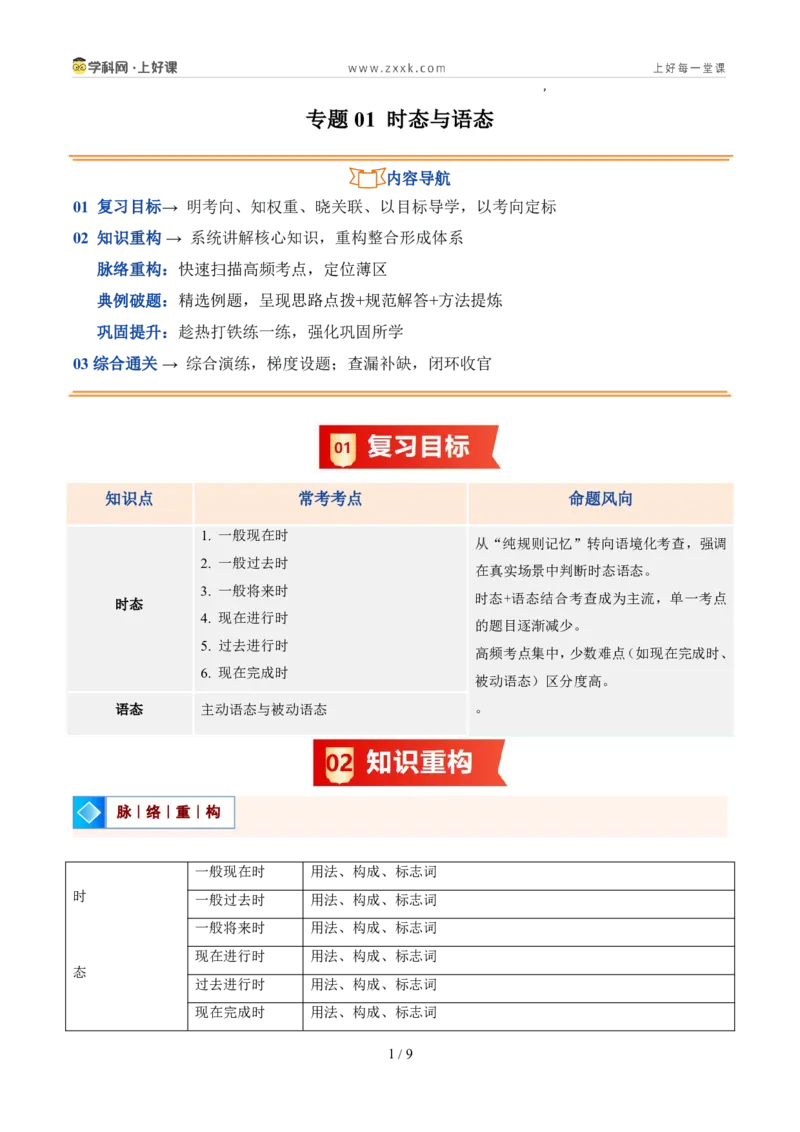
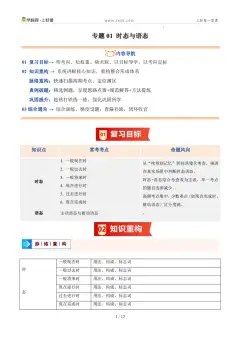
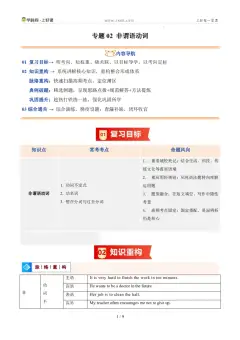
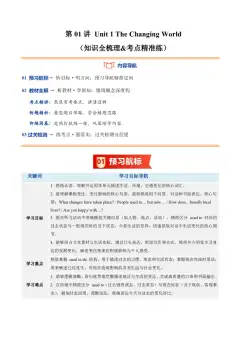
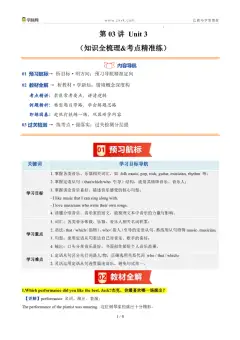
专题01 时态与语态
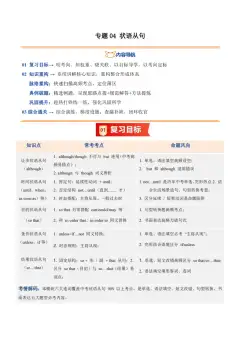
内容导航
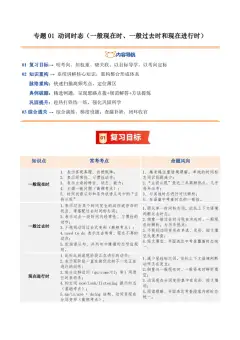
01 复习目标→明考向、知权重、晓关联、以目标导学,以考向定标
02 知识重构→系统讲解核心知识,重构整合形成体系
脉络重构:快速扫描高频考点,定位薄区
典例破题:精选例题,呈现思路点拨+规范解答+方法提炼
巩固提升:趁热打铁练一练,强化巩固所学
03 综合通关→综合演练,梯度设题;查漏补缺,闭环收官
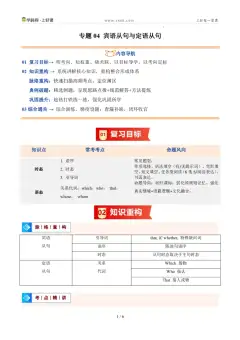
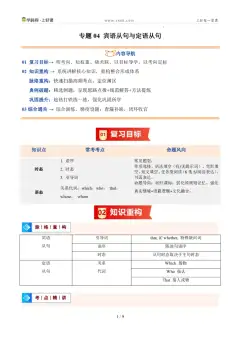
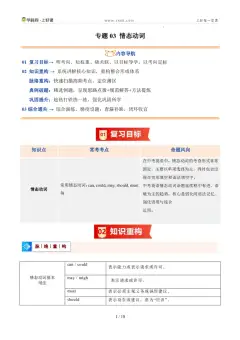
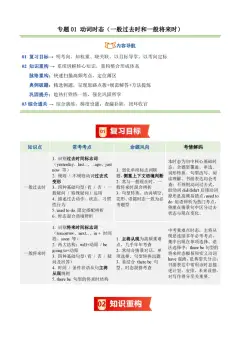
知识点
常考考点
命题风向
时态
1. 一般现在时
2. 一般过去时
3. 一般将来时
4. 现在进行时
5. 过去进行时
6. 现在完成时
从“纯规则记忆”转向语境化考查,强调
在真实场景中判断时态语态。
时态+语态结合考查成为主流,单一考点
的题目逐渐减少。
高频考点集中,少数难点(如现在完成时、
被动语态)区分度高。
。
语态
主动语态与被动语态
脉|络|重|构
时
态
一般现在时
用法、构成、标志词
一般过去时
用法、构成、标志词
一般将来时
用法、构成、标志词
现在进行时
用法、构成、标志词
过去进行时
用法、构成、标志词
现在完成时
用法、构成、标志词
2 / 9
学科网(北京)股份有限公司
学科网(北京)股份有限公司
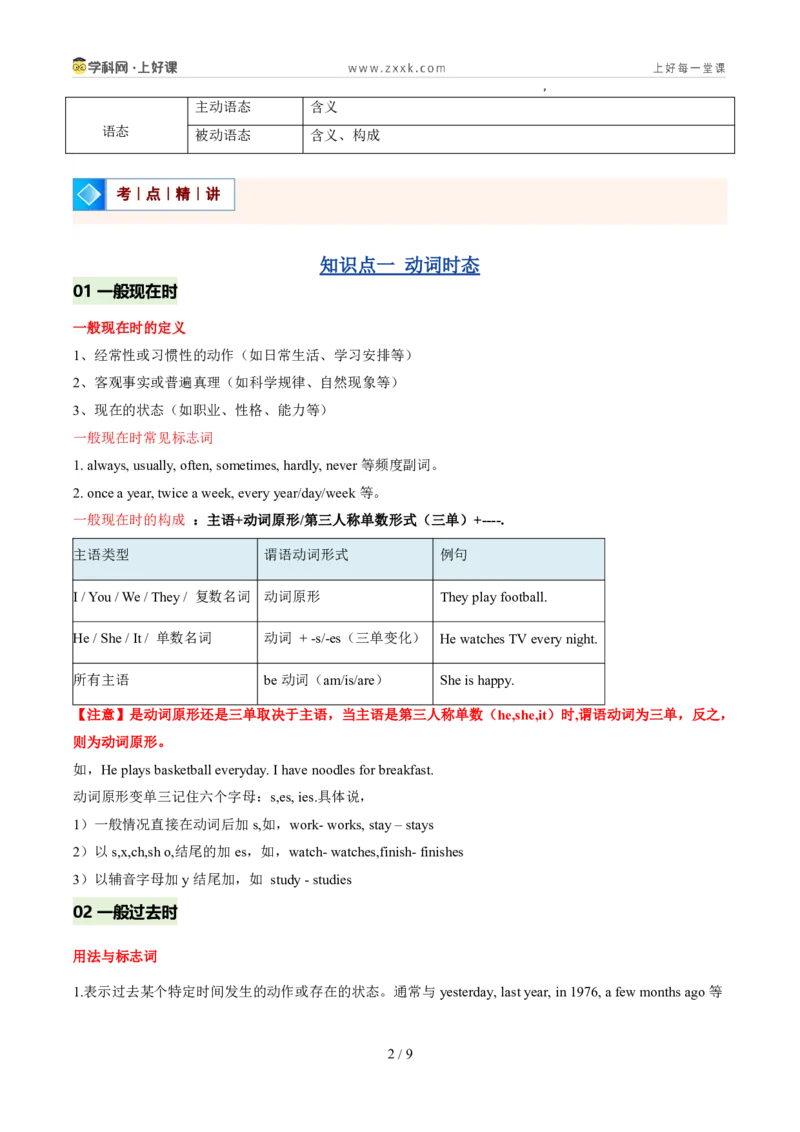
语态
主动语态
含义
被动语态
含义、构成
考|点|精|讲
知识点一动词时态
01 一般现在时
一般现在时的定义
1、经常性或习惯性的动作(如日常生活、学习安排等)
2、客观事实或普遍真理(如科学规律、自然现象等)
3、现在的状态(如职业、性格、能力等)
一般现在时常见标志词
1. always, usually, often, sometimes, hardly, never 等频度副词。
2. once a year, twice a week, every year/day/week 等。
一般现在时的构成:主语+动词原形/第三人称单数形式(三单)+----.
主语类型
谓语动词形式
例句
I / You / We / They / 复数名词
动词原形
They play football.
He / She / It / 单数名词
动词+ -s/-es(三单变化)
He watches TV every night.
所有主语
be 动词(am/is/are)
She is happy.
【注意】是动词原形还是三单取决于主语,当主语是第三人称单数(he,she,it)时,谓语动词为三单,反之,
则为动词原形。
如,He plays basketball everyday. I have noodles for breakfast.
动词原形变单三记住六个字母:s,es, ies.具体说,
1)一般情况直接在动词后加s,如,work- works, stay – stays
2)以s,x,ch,sh o,结尾的加es,如,watch- watches,finish- finishes
3)以辅音字母加y 结尾加,如study - studies
02 一般过去时
用法与标志词
1.表示过去某个特定时间发生的动作或存在的状态。通常与yesterday, last year, in 1976, a few months ago 等
3 / 9
学科网(北京)股份有限公司
学科网(北京)股份有限公司
表示过去的时间状语连用。
2. 表示过去某一段时间内经常或反复发生的动作。
通常与often, usually, seldom 等表示频率的副词连用, 但这种用法是以一个过去时间为前提的。
谓语动词的构成形式:
主语+动词的过去式+---。过去式的构成分为规则变化和不规则变化(见不规则变化表)。
规则变化主要是加ed,具体变化如下:
1) 一般情况加ed,如,stay - stayed
2)词尾有e 的加d,如,like – liked
3)重度闭音节词,如末尾只有一个辅音字母(辅-元-辅),先双写该辅音字母,再加-ed.如,stop - stopped
4)以辅音字母加y 结尾的,先改y 为i,再加-ed. 如,study - studied
03 一般将来时
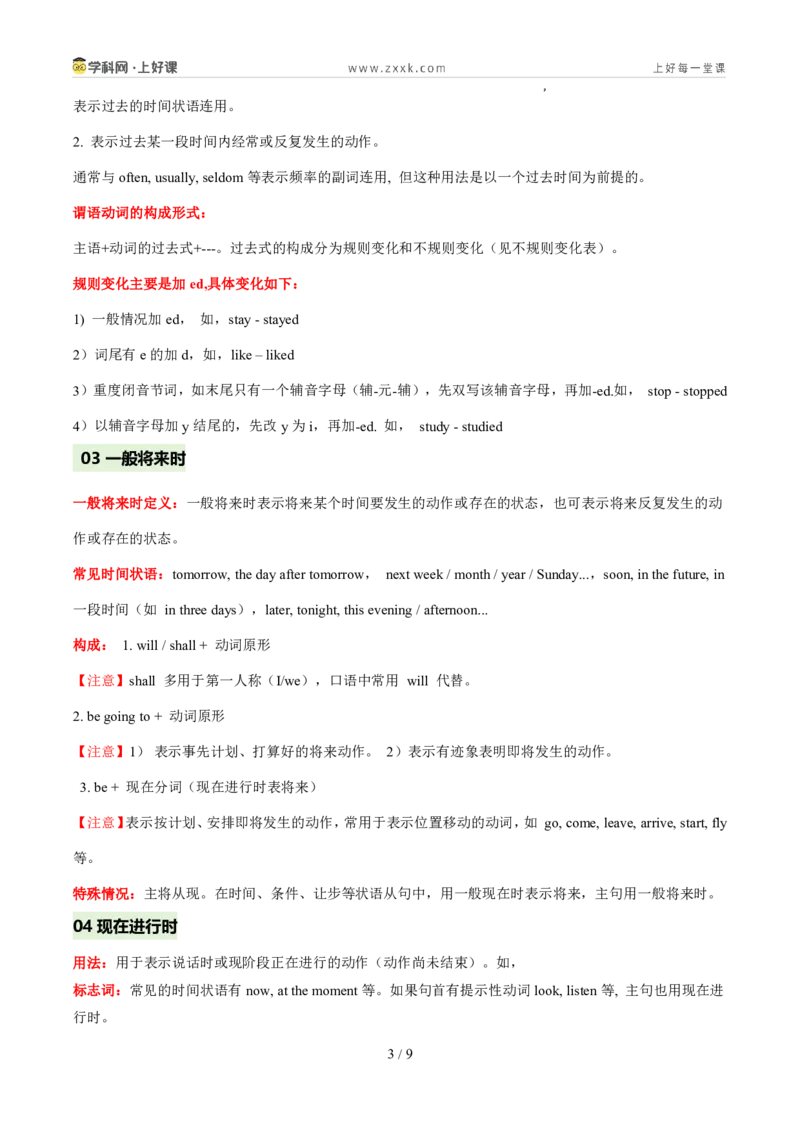
一般将来时定义:一般将来时表示将来某个时间要发生的动作或存在的状态,也可表示将来反复发生的动
作或存在的状态。
常见时间状语:tomorrow, the day after tomorrow,next week / month / year / Sunday...,soon, in the future, in
一段时间(如in three days),later, tonight, this evening / afternoon...
构成:1. will / shall + 动词原形
【注意】shall 多用于第一人称(I/we),口语中常用will 代替。
2. be going to + 动词原形
【注意】1)表示事先计划、打算好的将来动作。2)表示有迹象表明即将发生的动作。
3. be + 现在分词(现在进行时表将来)
【注意】表示按计划、安排即将发生的动作,常用于表示位置移动的动词,如go, come, leave, arrive, start, fly
等。
特殊情况:主将从现。在时间、条件、让步等状语从句中,用一般现在时表示将来,主句用一般将来时。
04 现在进行时
用法:用于表示说话时或现阶段正在进行的动作(动作尚未结束)。如,
标志词:常见的时间状语有now, at the moment 等。如果句首有提示性动词look, listen 等, 主句也用现在进
行时。
4 / 9
学科网(北京)股份有限公司
学科网(北京)股份有限公司
构成:主语+ is/am/are + ving +---
ving 的构成形式:
1.一般情况下直接加-ing,如study – studying
2.以辅音字母加不发音的e 结尾的,去e 加-ing,如,make – making.
3. 重度闭音节词,如末尾只有一个辅音字母,先双写该辅音字母,再加-ing. 如,swim – swimming.
05 过去进行时
过去进行时的用法:表示过去某一时刻或某一段时间内,正在进行或发生的动作。
构成:主语+ was/were + 现在分词(doing)
常见时间标志词: at that time, at this time yesterday, at + 时刻+ 过去时间, then, while, when, all night 等。
【注意】
1. when 从句: 过去进行时/ 一般过去时,主句: 过去进行时
2.while 从句: 过去进行时,主句,一般过去时/ 过去进行时
06 现在完成时
现在完成时用法及标志词:现在完成时的用法主要有两个:
1)已完成性用法:过去发生的某一动作对现在造成的影响或结果,常用的时间状语有:already(多用于肯定
句), yet(多用于否定句和疑问句), ever, never, just,before 等。
2), 持续性用法(现在完成进行时):
用来表达在过去开始的动作持续到现在,常和一段时间状语连用,
for + 时间段,since + 过去时间点或从句(从句时态:一般过去时)。常见标志词还有so far, in the last/ past
+ 一段时间等。
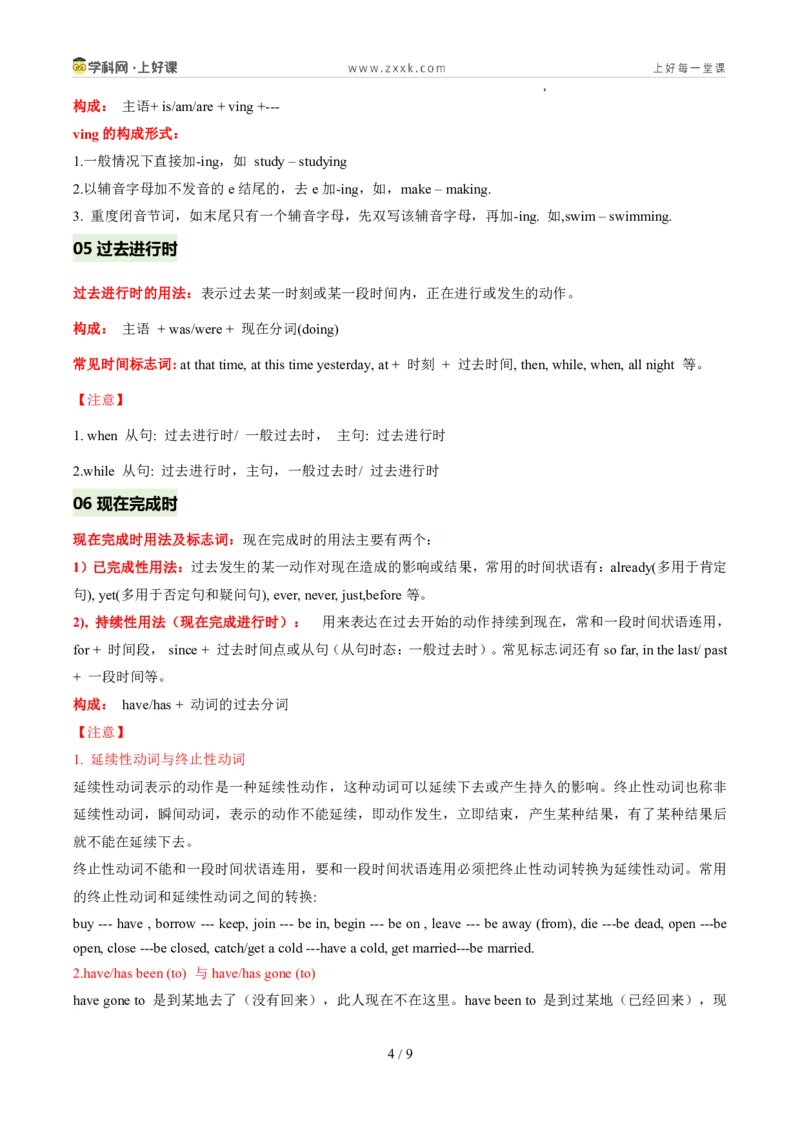
构成:have/has + 动词的过去分词
【注意】
1. 延续性动词与终止性动词
延续性动词表示的动作是一种延续性动作,这种动词可以延续下去或产生持久的影响。终止性动词也称非
延续性动词,瞬间动词,表示的动作不能延续,即动作发生,立即结束,产生某种结果,有了某种结果后
就不能在延续下去。
终止性动词不能和一段时间状语连用,要和一段时间状语连用必须把终止性动词转换为延续性动词。常用
的终止性动词和延续性动词之间的转换:
buy --- have , borrow --- keep, join --- be in, begin --- be on , leave --- be away (from), die ---be dead, open ---be
open, close ---be closed, catch/get a cold ---have a cold, get married---be married.
2.have/has been (to) 与have/has gone (to)
have gone to 是到某地去了(没有回来),此人现在不在这里。have been to 是到过某地(已经回来),现
5 / 9
学科网(北京)股份有限公司
学科网(北京)股份有限公司
在此人在说话现场。
【典例破题1】I bet Mrs. Black
_________(come) to help us with the celebration if she isn’t too busy
tomorrow.
【答案】will come
【详解】tomorrow 表将来,主句用一般将来时will do,if 引导条件状语从句遵循主将从现,故填will come。
【典例破题2】--- Would you like to go and see the film with me tonight?
--- Thank you, but I ______(see) it already.
【答案】have seen
【详解】already 是现在完成时标志词,主语为I,助动词用have,see 的过去分词是seen。
【典例破题3】-- I didn’t see your father yesterday when I went to your house.
-- Oh, he __________(pick) strawberries on the farm.
【答案】was picking
【详解】句意:昨天我去你家时没见到你爸爸,那时他正在农场摘草莓。过去某一时刻正在发生的动作用
过去进行时,主语he 搭配was,pick 变picking。
思路点拨:1. 圈出句中时间标志词,初步锁定时态;
2. 无标志词,翻译句子判断动作发生时间;
3. 观察主语人称单复数,确定助动词/动词变形;
4. 写出对应动词形式(原形/三单/过去式/doing/done);
5. 检查固定搭配、特殊句型时态规则。
【巩固提升1】
Since last year, our school ______ free breakfasts to students in need.
A. offered
B. has offered
C. was offering
D. had officed
【巩固提升2】
It ______ heavily. We are going to get all wet walking outside.
A. is raining
B. rains
C. rained
D. was raining
【巩固提升3】
The mobile phone ______ when I was making a cake with my mother.
A. rang
B. rings
C. is ringing
D. is going to ring
【巩固提升4】
—Cindy, my sunglasses are on the floor and they are broken. What happened?
—Sorry, dear. I don't know. I ______ in the kitchen then.
A. cook
B. was cooking
C. have cooked
D. will cook
【巩固提升5】
Look! There ______ a notebook and three keys on the desk.
A. is
B. was
C. are
D. were
【巩固提升6】
6 / 9
学科网(北京)股份有限公司
学科网(北京)股份有限公司
As people pay more and more attention to cultural treasures, the industry of ancient book repairing ______ fast in
China now.
A. developed
B. was developing
C. is developing
D. will develop
知识点二动词语态
英语动词只有两种语态:主动语态、被动语态。
一、主动语态
用法:主语是动作的执行者(谁做)
结构:主语+ 谓语+ 宾语
例:I clean the room. 我打扫房间。
二、被动语态
用法:主语承受动作,动作是谁做的不重要/不知道/不用提。
谓语动词构成:be + 及物动词过去分词
(be 助动词,随时态、人称、数变化)
常用时态被动结构:
1. 一般现在时:am / is / are + done
2. 一般过去时:was / were + done
3. 一般将来时:will be + done
4. 含情态动词:情态动词(can/must/should…) + be + done
【注意】
1. 不及物动词无被动:happen, take place, appear, belong to, last 等
2. 感官/使役动词(make/let/have/see/hear/watch):主动:省to →被动:要加to
He was seen to enter the room.
3. 主动表被动(表物品性质)如,wash, sell, write, read, clean 等
The book sells well. 这本书卖得好。
【典例破题1】.—Will you go to Lisa's housewarming party next Sunday?
—Well, if I__________, I will go on time.
A. invite
B. will invite
C. am invited
D. will be invited
【答案】C
【解析】句意:——下周日你会去丽莎的乔迁派对吗?——嗯,如果我被邀请,我会准时去的。
考查条件状语从句与被动语态。if 引导条件状语从句,遵循“主将从现”原则,主句用一般将来时,从句用
一般现在时;主语I 与invite 是被动关系,表示“被邀请”,用一般现在时的被动语态am invited。故选C。
【典例破题2】—I hear that Jingdezhen Porcelain (瓷器) ______ in Paris last month.
—Wow! Good news.
A. shows
B. has shown
C. is shown
D. was shown
【答案】D
【解析】句意:——我听说景德镇瓷器上个月在巴黎展出了。——哇!好消息。考查动词时态及被动语态。
7 / 9
学科网(北京)股份有限公司
学科网(北京)股份有限公司
last month 提示用一般过去时,瓷器被展出,应用被动语态。故选D。
思路点拨:1. 判断主谓逻辑:主语是动作承受者,而非发出者,确定要用被动语态;
2. 圈时间标志词/读语境,确定句子对应时态;
3. 依据主语单复数、人称,匹配be 动词正确形式;
4. 动词变为过去分词done(规则加ed,不规则单独记忆);
5. 检查固定搭配、情态动词、特殊句型被动结构。
【巩固提升1】
My father is too tired. Something should
______ (do)to keep him relaxed.
【巩固提升2】AI tools ______(be) in more fields in the future.
一、单项选择
1.More schools in Jinan
to provide children with better education in a few years.
A. built
B. are built
C. were built
D. will be built
2.—Oh,no! We are too late.The train _____.
—Well,we'll have to catch the next train to Beijing.
A.leaves
B.left
C.will leave
D.has left
3.—I'11 go for a picnic if it _____tomorrow.Will you go with me?7
—Yes,of course.
A.doesn't rain
B.isn't raining
C.won't rain D.didn't rain
4.Teenagers have to be 18 years old before they
to drive a car.
A.are allowed
B.will be allowed
C.allow
D. allows
5.With the development of science and technology,robot cooks ______ in our families in the future.
A.appear
B.appeared C.will appear
D.is appearing
6.As China grows stronger and stronger,Chinese ______ in more and more schools out of our country.
A.teaches
B.is taught
C.has taught D.was taught
7.—Look at my new smart phone.
—Wow,its so cool! When and where
you
it?.
A.do,buy B.have,bought C.did,buy D.have,had
8.A little effort every day, you ______ a big difference.
A. makes
B. made
C. have made
D. will make
9.New media, like WeChat, _______ the way of communications nowadays.
8 / 9
学科网(北京)股份有限公司
学科网(北京)股份有限公司
A. are changing
B. will change
C. changed
D. were changing
10.They have collected more than 14,000 books since the library,
last month.
A. built
B. was built
C. builds
D. is built
二、用所给动词适当形式填空。
1.
—He is a doctor and his brother is a doctor, too.
–You mean both he and his brother________ (be)doctors, right?
2.These experiences have influenced his life. Now David ________ (study)space science. He has made up his
mind to be a space engineer in the future.
3. She ________(run) over to him and said with a smile, “Here, sir. Let me give you a hand.”
4.I've just got two tickets! I ______(go)to see the new movie with Tony.
5.It ______ (rain)heavily when I left the cinema.
6.For thousands of years, they ____________ (celebrate) the Grain Rain Festival,
7.—We planted lots of trees on Tree Planting Day.
—That’s quite meaningful. To have a greener world, more trees should ________(plant)every year.
8.Around the world, 300 million tons of plastic________(creat)each year, of which about 10 percent ends up in
the sea.
9.Her wonderful performance ___________ (praise) by many people.
10.—It’s said that a new bridge_______(build)in our village.
--It’s ture.That’s what we are getting excited about these days.
三、语法填空
Last summer, I began the biggest adventure(冒险)of my life. I moved from a tiny city in England to one of the
largest cities in the world.
As the plane landed in Beijing, I 1._______ (feel) excited — I finally arrived after months of planning! One of the
first things I did was to visit one of the city’s hutongs. Strolling(闲逛)around the hutongs, the warm air was filled
with the smell of delicious food. I was amazed to see that many people 2. _______ (ride) their old—fashioned
tricycles (老式三轮脚踏车). Just at this time, I thought, “ Wow, I’m in China. ”
Beijing is very different from my home city, Preston. Preston has only one shopping street and on Sunday, all the
shops close at 4:00 pm. There 3._______ (not be) much choice when eating out, either. As a fan of food, I couldn’t
wait 4. _______ (see) what Beijing can offer.
But after I have tasted so many kinds food here, I still don’t have a favorite dish yet. I 5._____still happily
5._______ (look) for my favorite through the city’s restaurants.
I am slowly getting used to the different way of life, but I still find some habits here quite strange and humorous.
British people 6. _______ (tell) not to make any kind of bodily noise at the dinner table when they are still children,
so it is a funny culture shock (冲击)to hear the loud noise of Chinese diners.
Since I came here, I 7._______ (discover) something else interesting. As a foreigner, I always draw people’s
attention. On the subway or in streets and restaurants, I always find some people staring at me and 8. _______ (try)
9 / 9
学科网(北京)股份有限公司
学科网(北京)股份有限公司
to take secret photos of me. It seems that I am a famous person or a popular star.
In the future, I 9._______ (go) to many other parts of China. I hope I 10. _______(travel) from one end to the other
of this beautiful country, taking photos and meeting new people along the way.
My adventure in China is only just beginning, and I wonder how it will be.