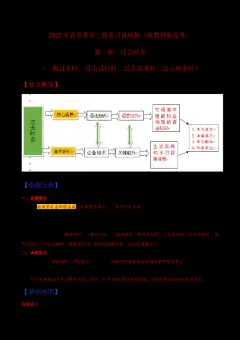
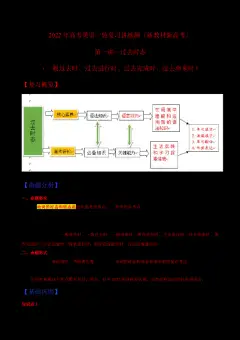
专题01 动词时态(一般现在时、一般过去时和现在进行时)
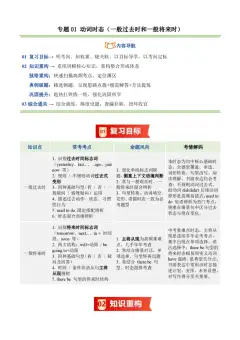
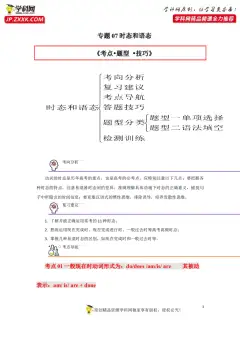
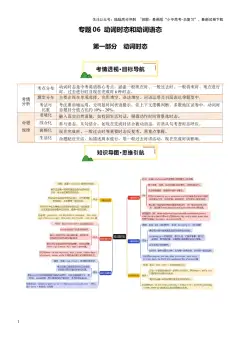
内容导航
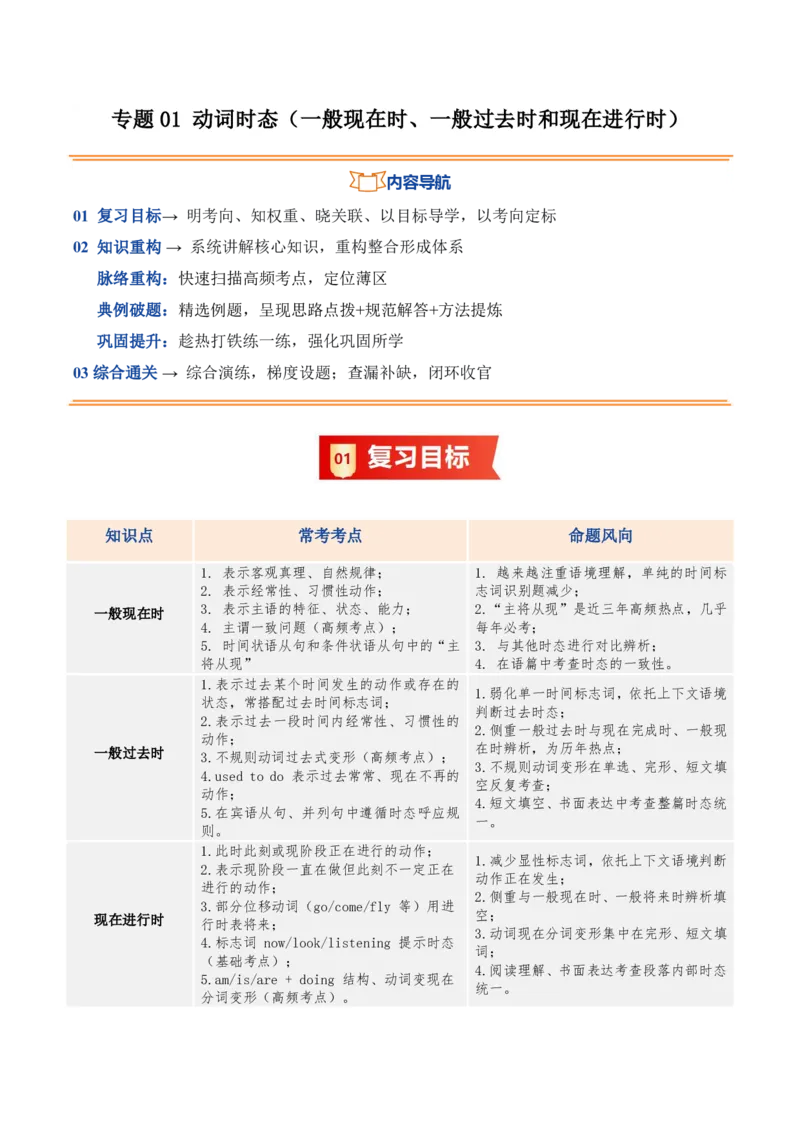
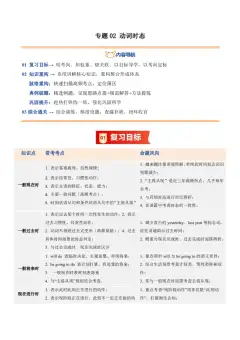
01 复习目标→明考向、知权重、晓关联、以目标导学,以考向定标
02 知识重构→系统讲解核心知识,重构整合形成体系
脉络重构:快速扫描高频考点,定位薄区
典例破题:精选例题,呈现思路点拨+规范解答+方法提炼
巩固提升:趁热打铁练一练,强化巩固所学
03 综合通关→综合演练,梯度设题;查漏补缺,闭环收官
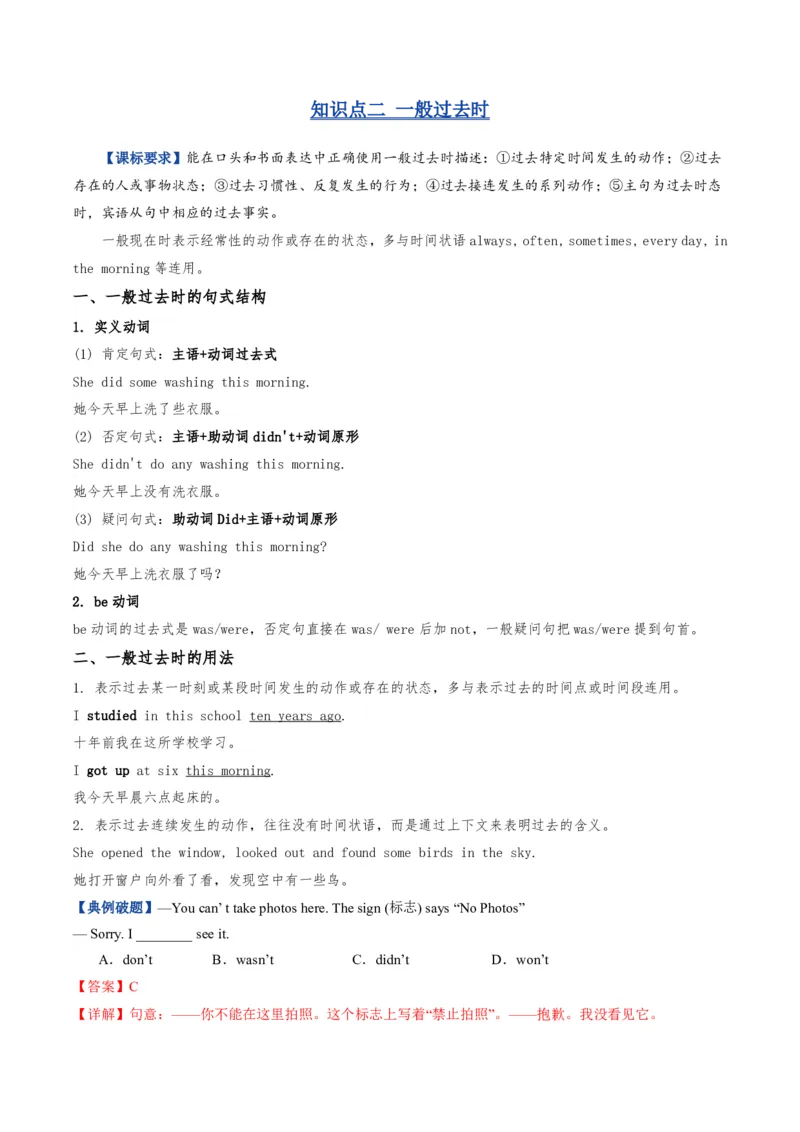
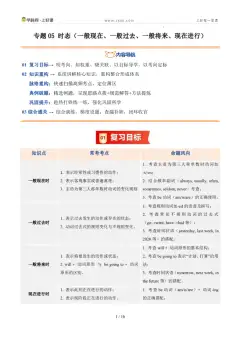
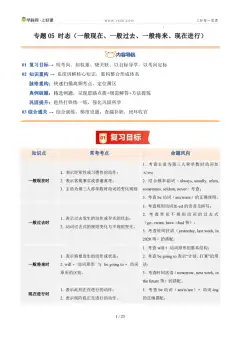
知识点
常考考点
命题风向
一般现在时
1. 表示客观真理、自然规律;
2. 表示经常性、习惯性动作;
3. 表示主语的特征、状态、能力;
4. 主谓一致问题(高频考点);
5. 时间状语从句和条件状语从句中的“主
将从现”
1. 越来越注重语境理解,单纯的时间标
志词识别题减少;
2.“主将从现”是近三年高频热点,几乎
每年必考;
3. 与其他时态进行对比辨析;
4. 在语篇中考查时态的一致性。
一般过去时
1.表示过去某个时间发生的动作或存在的
状态,常搭配过去时间标志词;
2.表示过去一段时间内经常性、习惯性的
动作;
3.不规则动词过去式变形(高频考点);
4.used to do 表示过去常常、现在不再的
动作;
5.在宾语从句、并列句中遵循时态呼应规
则。
1.弱化单一时间标志词,依托上下文语境
判断过去时态;
2.侧重一般过去时与现在完成时、一般现
在时辨析,为历年热点;
3.不规则动词变形在单选、完形、短文填
空反复考查;
4.短文填空、书面表达中考查整篇时态统
一。
现在进行时
1.此时此刻或现阶段正在进行的动作;
2.表示现阶段一直在做但此刻不一定正在
进行的动作;
3.部分位移动词(go/come/fly 等)用进
行时表将来;
4.标志词now/look/listening 提示时态
(基础考点);
5.am/is/are + doing 结构、动词变现在
分词变形(高频考点)。
1.减少显性标志词,依托上下文语境判断
动作正在发生;
2.侧重与一般现在时、一般将来时辨析填
空;
3.动词现在分词变形集中在完形、短文填
词;
4.阅读理解、书面表达考查段落内部时态
统一。
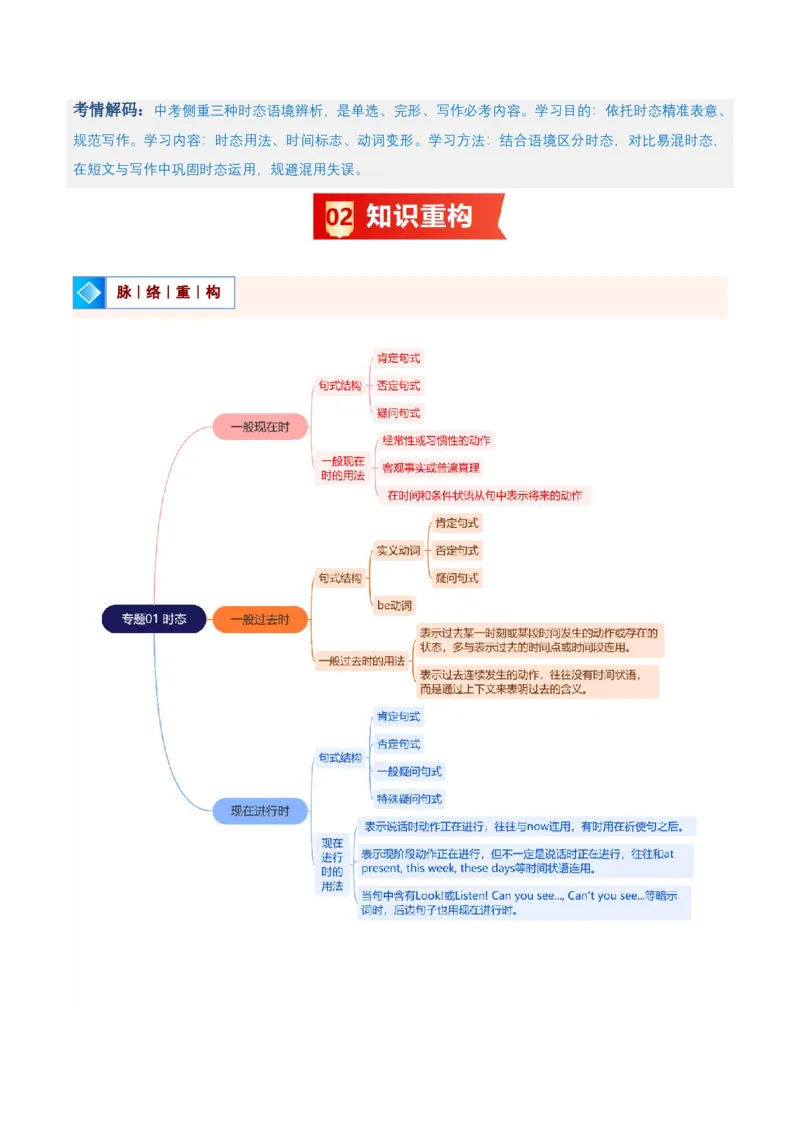
考情解码:中考侧重三种时态语境辨析,是单选、完形、写作必考内容。学习目的:依托时态精准表意、
规范写作。学习内容:时态用法、时间标志、动词变形。学习方法:结合语境区分时态,对比易混时态,
在短文与写作中巩固时态运用,规避混用失误。
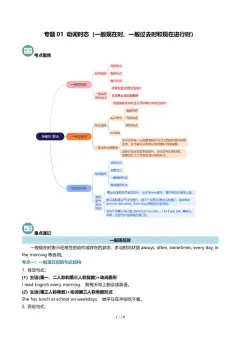
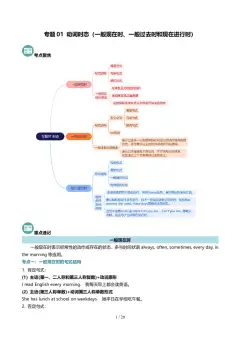
脉|络|重|构
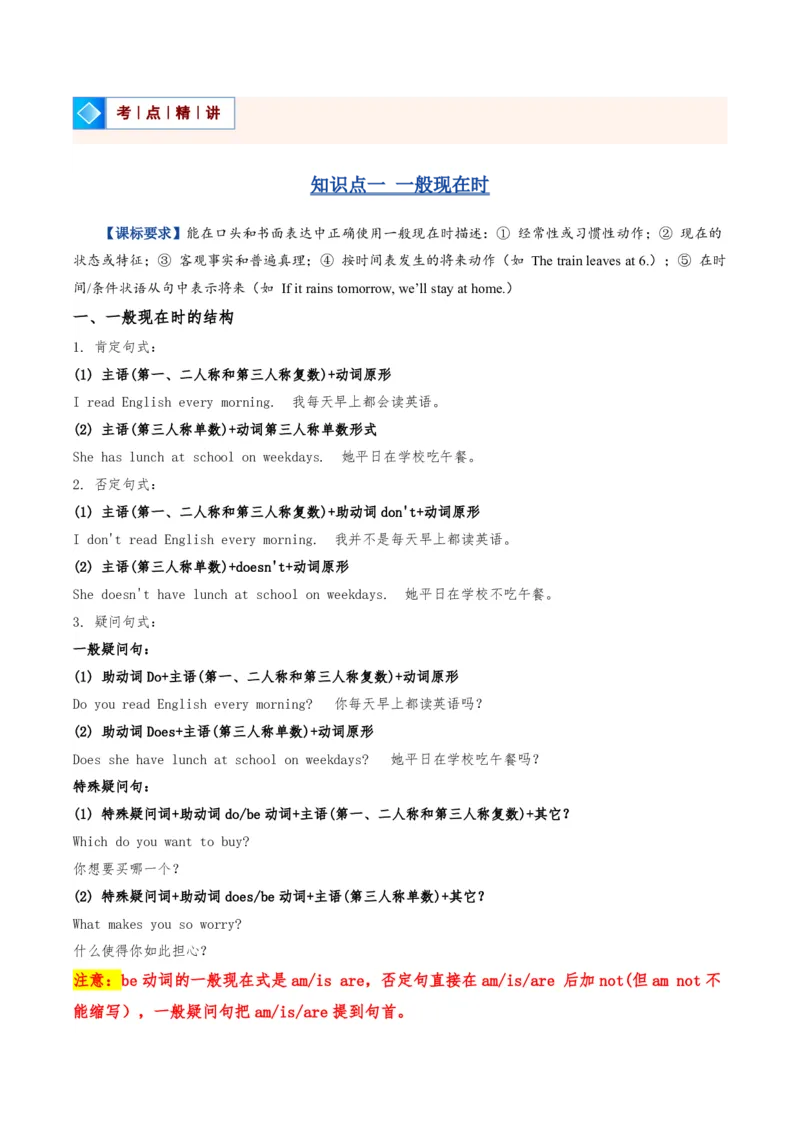
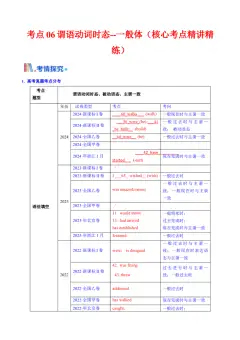
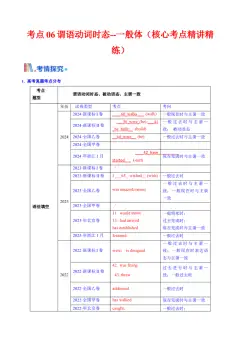
考|点|精|讲
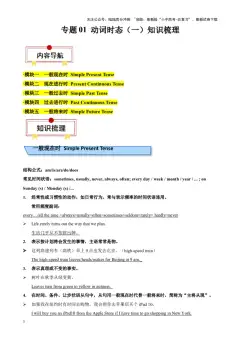
知识点一一般现在时
【课标要求】能在口头和书面表达中正确使用一般现在时描述:①经常性或习惯性动作;②现在的
状态或特征;③客观事实和普遍真理;④按时间表发生的将来动作(如The train leaves at 6.);⑤在时
间/条件状语从句中表示将来(如If it rains tomorrow, we’ll stay at home.)
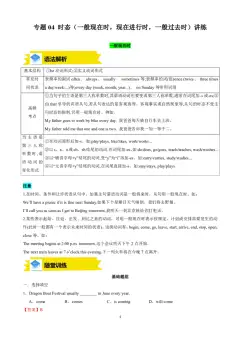
一、一般现在时的结构
1. 肯定句式:
(1) 主语(第一、二人称和第三人称复数)+动词原形
I read English every morning.
我每天早上都会读英语。
(2) 主语(第三人称单数)+动词第三人称单数形式
She has lunch at school on weekdays.
她平日在学校吃午餐。
2. 否定句式:
(1) 主语(第一、二人称和第三人称复数)+助动词don't+动词原形
I don't read English every morning.
我并不是每天早上都读英语。
(2) 主语(第三人称单数)+doesn't+动词原形
She doesn't have lunch at school on weekdays.
她平日在学校不吃午餐。
3. 疑问句式:
一般疑问句:
(1) 助动词Do+主语(第一、二人称和第三人称复数)+动词原形
Do you read English every morning?
你每天早上都读英语吗?
(2) 助动词Does+主语(第三人称单数)+动词原形
Does she have lunch at school on weekdays?
她平日在学校吃午餐吗?
特殊疑问句:
(1) 特殊疑问词+助动词do/be 动词+主语(第一、二人称和第三人称复数)+其它?
Which do you want to buy?
你想要买哪一个?
(2) 特殊疑问词+助动词does/be 动词+主语(第三人称单数)+其它?
What makes you so worry?
什么使得你如此担心?
注意:be 动词的一般现在式是am/is are,否定句直接在am/is/are 后加not(但am not 不
能缩写),一般疑问句把am/is/are 提到句首。
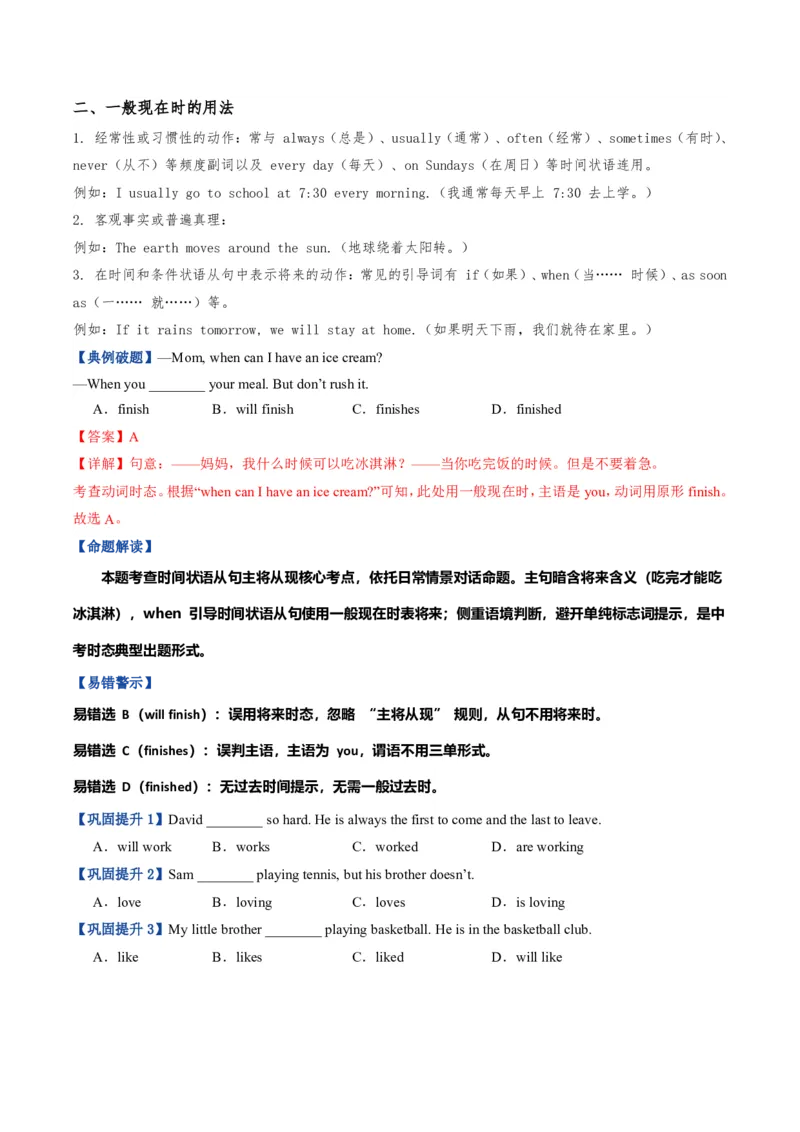
二、一般现在时的用法
1. 经常性或习惯性的动作:常与always(总是)、usually(通常)、often(经常)、sometimes(有时)、
never(从不)等频度副词以及every day(每天)、on Sundays(在周日)等时间状语连用。
例如:I usually go to school at 7:30 every morning.(我通常每天早上7:30 去上学。)
2. 客观事实或普遍真理:
例如:The earth moves around the sun.(地球绕着太阳转。)
3. 在时间和条件状语从句中表示将来的动作:常见的引导词有if(如果)、when(当…… 时候)、as soon
as(一…… 就……)等。
例如:If it rains tomorrow, we will stay at home.(如果明天下雨,我们就待在家里。)
【典例破题】—Mom, when can I have an ice cream?
—When you ________ your meal. But don’t rush it.
A.finish
B.will finish
C.finishes
D.finished
【答案】A
【详解】句意:——妈妈,我什么时候可以吃冰淇淋?——当你吃完饭的时候。但是不要着急。
考查动词时态。根据“when can I have an ice cream?”可知,此处用一般现在时,主语是you,动词用原形finish。
故选A。
【命题解读】
本题考查时间状语从句主将从现核心考点,依托日常情景对话命题。主句暗含将来含义(吃完才能吃
冰淇淋),when 引导时间状语从句使用一般现在时表将来;侧重语境判断,避开单纯标志词提示,是中
考时态典型出题形式。
【易错警示】
易错选B(will finish):误用将来时态,忽略“主将从现” 规则,从句不用将来时。
易错选C(finishes):误判主语,主语为you,谓语不用三单形式。
易错选D(finished):无过去时间提示,无需一般过去时。
【巩固提升1】David ________ so hard. He is always the first to come and the last to leave.
A.will work
B.works
C.worked
D.are working
【巩固提升2】Sam ________ playing tennis, but his brother doesn’t.
A.love
B.loving
C.loves
D.is loving
【巩固提升3】My little brother ________ playing basketball. He is in the basketball club.
A.like
B.likes
C.liked
D.will like
知识点二一般过去时
【课标要求】能在口头和书面表达中正确使用一般过去时描述:①过去特定时间发生的动作;②过去
存在的人或事物状态;③过去习惯性、反复发生的行为;④过去接连发生的系列动作;⑤主句为过去时态
时,宾语从句中相应的过去事实。
一般现在时表示经常性的动作或存在的状态,多与时间状语always, often, sometimes, every day, in
the morning 等连用。
一、一般过去时的句式结构
1. 实义动词
(1) 肯定句式:主语+动词过去式
She did some washing this morning.
她今天早上洗了些衣服。
(2) 否定句式:主语+助动词didn't+动词原形
She didn't do any washing this morning.
她今天早上没有洗衣服。
(3) 疑问句式:助动词Did+主语+动词原形
Did she do any washing this morning?
她今天早上洗衣服了吗?
2. be 动词
be 动词的过去式是was/were,否定句直接在was/ were 后加not,一般疑问句把was/were 提到句首。
二、一般过去时的用法
1. 表示过去某一时刻或某段时间发生的动作或存在的状态,多与表示过去的时间点或时间段连用。
I studied in this school ten years ago.
十年前我在这所学校学习。
I got up at six this morning.
我今天早晨六点起床的。
2. 表示过去连续发生的动作,往往没有时间状语,而是通过上下文来表明过去的含义。
She opened the window, looked out and found some birds in the sky.
她打开窗户向外看了看,发现空中有一些鸟。
【典例破题】—You can’ t take photos here. The sign (标志) says “No Photos”
— Sorry. I ________ see it.
A.don’t
B.wasn’t
C.didn’t
D.won’t
【答案】C
【详解】句意:——你不能在这里拍照。这个标志上写着“禁止拍照”。——抱歉。我没看见它。
考查时态。根据语境可知,是在对方告知之前没看见标志,动作发生在过去,且“see”为实义动词原形,所
以要用一般过去时的助动词否定形式“didn’t”,表示过去没有发生的动作,故选C。
【命题解读】
本题依托生活场景考查一般过去时语境运用,无显性过去时间词,依靠语义判断时态:没看见标志是
对话之前的过去动作。区分实义动词与be 动词的否定结构,是中考单选高频考法。
【易错警示】
易错选A:误用一般现在时,误以为是现在看不见,忽视动作发生在过去。
易错选B:wasn’t 后不能接动词原形see,be 动词否定搭配错误。
易错选D:won’t 是一般将来时,不符合过去没看见的语境。
【巩固提升1】— How ________ your trip to Australia?
— Great. I’ll go there again next year.
A.was
B.did
C.are
D.were
【巩固提升2】—Who carried the idea of making Binglao to Europe?
—Marco Polo ________.
A.is
B.was
C.does
D.did
【巩固提升3】—Haven’t you seen that film? That’s the funniest one I’ve ever seen!
——Really? When _______ you _______ it?
A.have; seen
B.were; seeing
C.will; see
D.did; see
知识点三现在进行时
【课标要求】能在口头和书面表达中正确使用现在进行时描述:①此时此刻正在发生的动作;②现阶
段持续进行但此刻不一定正在做的动作;③come/go/fly 等移位动词表即将发生的将来动作;④带有赞叹、
埋怨等感情色彩的反复动作;⑤图片、提示语境里画面正在发生的场景动作。
现在进行时表示即刻或现在正在发生或进行着的某一动作,多与时间状语now, at the moment, at
present 等连用。
一、现在进行时的句式结构
1. 肯定句式:主语+助动词be(am, is, are)+现在分词+...... .
The students are listening to their teacher now.
学生们正在听老师讲课。
2. 否定句式:主语+助动词be(am, is, are)+not+现在分词+...... .
The students aren't listening to their teacher now.
学生们现在都不听老师的话了。
3. 一般疑问句式:助动词Be(Am, Is, Are)+主语+现在分词+......?
Are the students listening to their teacher now?
学生们现在听老师的话了吗?
4.特殊疑问句式:特殊疑问词+ be(am/is/ are) +主语+ 现在分词+...... ?
What are you doing now ? 你现在正在干什么?
二、现在进行时的用法
1. 表示说话时动作正在进行,往往与now 连用,有时用在祈使句之后。
What are you doing now?
你现在在做什么?
Don't make any noise. Mother is sleeping.
不要吵。妈妈在睡觉呢。
2. 表示现阶段动作正在进行,但不一定是说话时正在进行,往往和at present, this week, these days
等时间状语连用。
What lessons are you learning this week?
你们这个星期学哪些课了?
3. 当句中含有Look!或Listen! Can you see..., Can't you see...等暗示词时,后边句子也用现在进行
时。
Listen! Who is crying in the next room?
听!谁在隔壁房间哭呢?
【典例破题】—Tom, can you help me carry these books? I’m busy cleaning the shelf.
—Dad, wait a moment. I _______ on my jacket.
A.puts
B.put
C.am putting
D.to put
【答案】C
【详解】句意:——汤姆,你能帮我搬这些书吗?我正忙着打扫架子。——爸爸,等一下。我正在穿夹克。
考查时态。根据“Tom, can you help me carry these books?”以及“Dad, wait a moment.”可知,此处应用现在进行
时,表示自己正在穿夹克,所以让爸爸稍等片刻。故选C。
【命题解读】
本题考查现在进行时语境运用,无now、look 等显性提示词,借助wait a moment 语境体现此
刻正在进行的动作,是中考主流出题方式;区分四种选项的词性与时态结构,侧重情景辨析。
【易错警示】
易错选A:puts 是一般现在时三单,表习惯性动作,不符合当下正在穿衣的语境。
易错选B:put 为一般过去时,动作发生在过去,和此刻场景不符。
易错选D:to put 是非谓语,不能单独作句子谓语。
【巩固提升1】—Sam, come downstairs, please. I need your help.
—I don’t think I can, Mom. I ________ on the phone.
A.talk
B.talked
C.talking
D.am talking
【巩固提升2】—Tom, can you help me carry these books? I’m busy cleaning the shelf.
—Dad, wait a moment. I _______ on my jacket.
A.puts
B.put
C.am putting
D.to put
【巩固提升3】It’s 3:30 p.m. now. All the students ________ on the playground.
A.exercise
B.is exercising
C.are exercising
D.exercises
一、、单项选择
1.The little boy often _________ things _________ because it’s a good way to learn science.
A.take...apart
B.talk...apart
C.takes...apart
D.talks...apart
2.Mr Green will take his daughter to the zoo if he ________ the tickets.
A.got
B.gets
C.will get
D.is getting
3.The teacher told us that the Earth ________ around the Sun.
A.goes
B.went
C.will go
D.is going
4.My mother ________ me to finish my homework before dinner yesterday.
A.tells
B.told
C.is telling
D.will tell
5.— You can’t take photos here. Look at the sign. It says “NO PHOTOS”.
— Sorry, I ________ see it.
A.don’t
B.didn’t
C.won’t
D.am going to
6.— How does your brother usually go to school?
— He usually ________ to school, but he ________ his bike to school yesterday.
A.walks; rode
B.walked; rides
C.walks; rides
D.walk; rode
7.—Who cleaned the room?
—Mike ________.
A.was
B.does
C.cleaned
D.did
8.—I can’t find Tony. Where is he now?
—He ________ the piano in the hall.
A.practises
B.practised
C.is practising
D.will practise
9.Don’t turn ________ the TV. Grandma ________ now.
A.on; is sleeping B.up; will sleep
C.on; slept
D.up; sleeps
10.He always _______ in his room every morning. Listen! He _______ an English song.
A.sings; is singing
B.is singing; is singing C.sings; sings
D.is singing; sings
二、单词拼写
1.My father ________ (like) running by the lake in the evening,because he wants to be healthy.
2.My father ________ (leave) for Beijing on business tomorrow morning.
3.He didn’t go to bed until his mother ________ (come) back.
4.Is that Kate? I ________ (call) from my new home in Wuxi.
5.—What _________ you _________ (look) for?
—I _________ (look) for my schoolbag.
三、短文填空
Does it snow in your hometown? In my place, it
1
(snow) every winter and many people like
snow very much. They can play outside and skate.
2
snow is fun, it can also make things difficult.
Snow brings much fun to people. Look
3
these children! Some are very
4
(excite)
when they see snowflakes (雪花) falling from the sky. Others
5
(make) snowmen happily. A lot of
people are going sledding (乘雪橇) or skating on such a beautiful snowy day. These outdoor
6
(activity)
are popular during winter.
However, snow makes things harder. It is not easy to walk in deep snow. It is hard to see things clearly when
it snows. People need to drive
7
(slow) and carefully if they don’t want to hit anything in front of
8
(they) cars. Sometimes it snows a lot, and too much snow might be very dangerous. Heavy snow can break
branches (树枝). Sometimes snow can destroy roofs (屋顶). If there is too much snow
9
a roof, it may
break easily.
People can do many things
10
(keep) safe on snowy days. For example, they can sweep away
snow. After all, nobody wants to slip and fall.