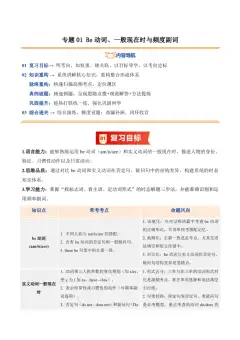
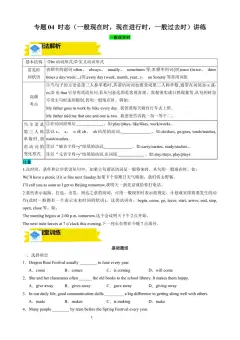
专题01 Be 动词、一般现在时与频度副词
内容导航
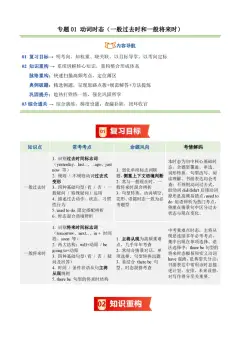
01 复习目标→明考向、知权重、晓关联、以目标导学,以考向定标
02 知识重构→系统讲解核心知识,重构整合形成体系
脉络重构:快速扫描高频考点,定位薄区
典例破题:精选例题,呈现思路点拨+规范解答+方法提炼
巩固提升:趁热打铁练一练,强化巩固所学
03 综合通关→综合演练,梯度设题;查漏补缺,闭环收官
1.语言能力:能够熟练运用be 动词(am/is/are)和实义动词的一般现在时,描述人物的身份、
特征、习惯性动作以及日常活动。
2.思维品质:通过对比be 动词和实义动词在否定句、疑问句中的结构差异,构建系统的时态
知识体系。
3.学习能力:掌握“找标志词、看主语、定动词形式”的时态解题三步法,并能准确识别和运
用频率副词。
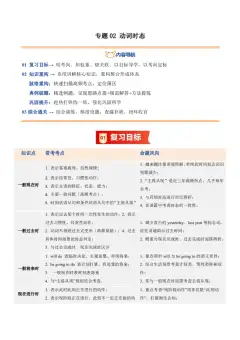
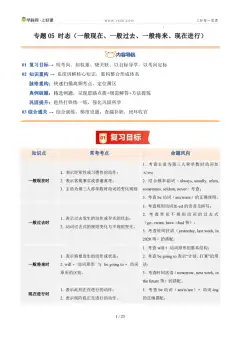
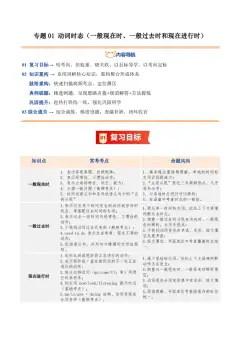
知识点
常考考点
命题风向
be 动词
(am/is/are)
1. 不同人称与am/is/are 的搭配。
2. 含有be 动词的否定句和一般疑问句。
3. there be 句型中的主谓一致。
1. 语境化:在对话和语篇中考查be 动词
的正确形式,不再单纯考搭配记忆。
2. 高频化:主谓一致是必考点,尤其在语
法填空和短文改错中。
3. 对比化:be 动词与实义动词的否定句、
疑问句结构差异是易错点。
实义动词一般现在
时
1. 动词第三人称单数的变化规则(加s/es、
变y 为i 加es、have→has)。
2. 表示经常性或习惯性的动作(与频率副
词连用)。
3. 否定句(do not / does not)和疑问句(Do
1. 形式区分:三单与非三单的动词形式对
比是高频考点,常在单项选择和语法填空
中出现。
2. 句型转换:肯定句变否定句、变疑问句
是必考题型,重点考查助动词do/does 的
/ Does)的结构。
4. 时间/条件状语从句中的“主将从现”。
5. 主谓一致问题(主语为三单时动词必须
变形)。
使用及动词还原。
3. 主将从现:在if 条件句和when 时间状
语从句中的应用是近三年高频热点,几乎
每年必考。
4. 语篇考查:在完形填空和短文填空中,
需要通过上下文语境判断时态,考查时态
的一致性。
5. 易错点集中:否定句中忘记将三单动词
还原(如He does not likes it ❌)是学生的
典型错误,中考常设陷阱。
频率副词
1. 频率副词的含义与排序(always >
usually > often > sometimes > seldom >
never)。
2. 频率副词在句中的位置(be 动词之后,
实义动词之前)。
3. 根据语境选择正确的频率副词。
1. 逻辑推断:根据上下文逻辑选择合适的
频率副词,考查学生的语义理解能力。
2. 位置判断:在改错题或选择题中考查频
率副词的正确位置。
3. 与一般现在时结合:频率副词是一般现
在时的标志词,常与时态填空题结合考
查。
考情解码:本专题是七年级英语的重中之重,是后续学习其他时态的基础。中考对一般现在时
的考查呈现以下趋势:①不再单纯考查时间标志词识别,而是注重在具体语境中的理解和运
用;②主谓一致和动词三单形式是基础但高频的考点,必须熟练掌握;③否定句和疑问句的
结构,特别是借用了do/does 后动词必须还原,是学生的易错点,也是考试的设题点;④主
将从现在八年级以后会成为重点,七年级需打好概念基础。掌握好be 动词和实义动词的结构
差异,熟练运用“主语定be”和“三单变形”原则,将是你取得高分的关键。
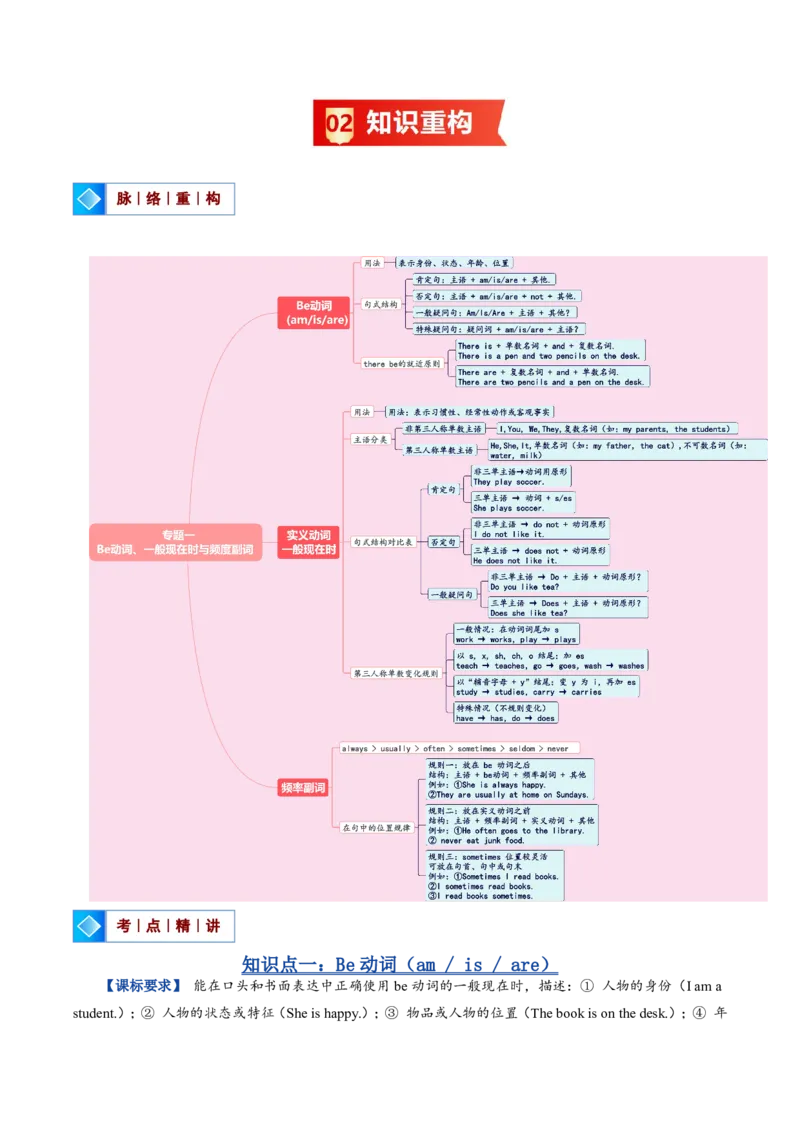
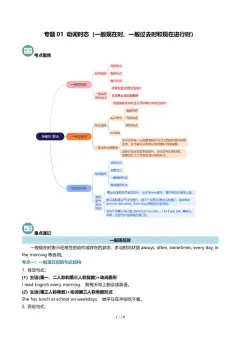
脉|络|重|构
考|点|精|讲
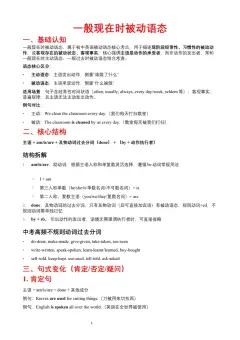
知识点一:Be 动词(am / is / are)
【课标要求】能在口头和书面表达中正确使用be 动词的一般现在时,描述:①人物的身份(I am a
student.);②人物的状态或特征(She is happy.);③物品或人物的位置(The book is on the desk.);④年
龄(He is twelve.)。
一、Be 动词的基本用法
Be 动词在英语中相当于中文的“是”,但根据主语的不同,有三种不同的形式:
主语
Be 动词形式
例句
I
am
I am a student.
You
are
You are my best friend.
He / She / It
is
She is a teacher.
单数名词(my father, the cat)
is
My father is tall.
We / They
are
We are happy.
复数名词(my parents)
are
My parents are busy.
【巧记】
我用am,你用are,
is 连着他、她、它。
单数主语用is,
复数主语全用are。
二、Be 动词的句式变化
句式
结构
例句
肯定句
主语+ am/is/are + 其他
I am a doctor. / She is kind.
否定句
主语+ am/is/are + not + 其他
I am not late. / He is not tall. / They are not friends.
一般疑问句
Am/Is/Are + 主语+ 其他?
Are you OK? / Is she your sister?
特殊疑问句
疑问词+ am/is/are + 主语?
Where is my hat? / How old are you?
【注意】
1. “am not” 没有缩写形式,不能说“I amn't”。
2. “is not = isn't”,“are not = aren't”。
3. 肯定回答:Yes, 主语+ am/is/are. 否定回答:No, 主语+ am/is/are + not.
【易错警示】
特殊疑问句不能用Yes 或No 回答,要问什么答什么。
错误示例:— Where is the book? — Yes, it is. ❌
正确示例:— Where is the book? — It is on the desk. ✅
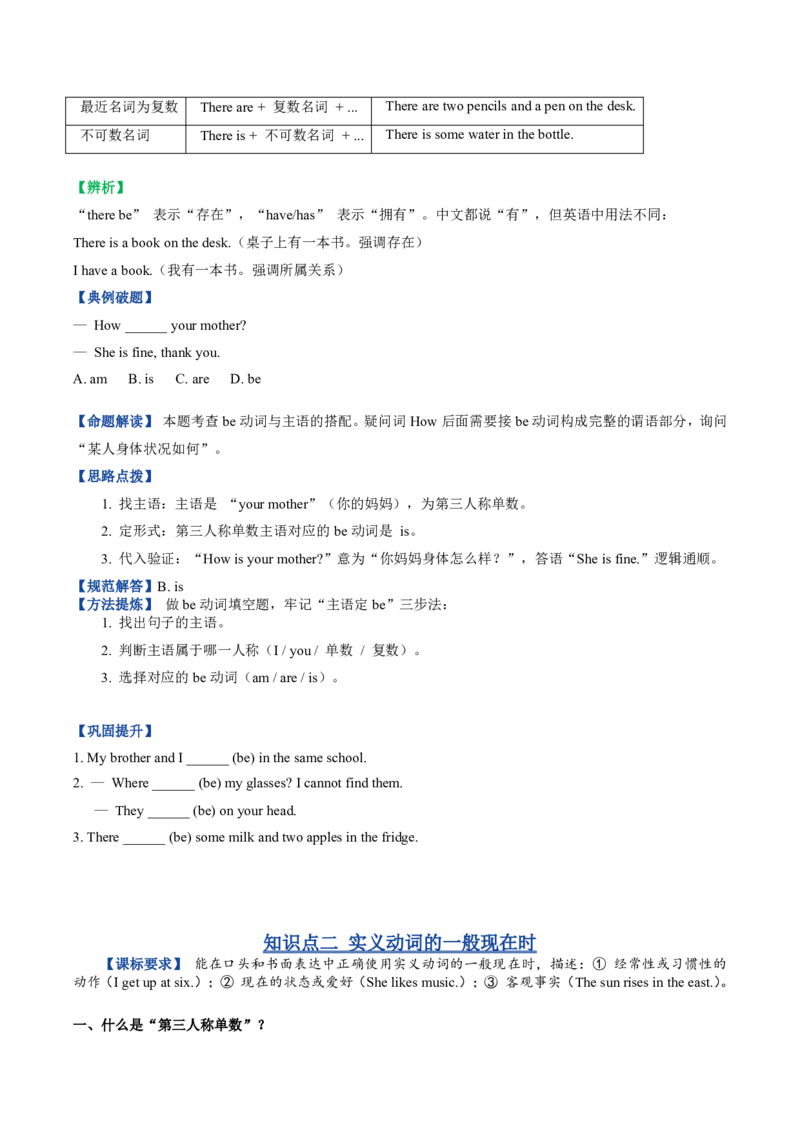
三、There be 结构
There be 句型表示“某处存在某物”,be 动词的形式由离它最近的名词决定,这就是“就近原则”。
情况
结构
例句
最近名词为单数
There is + 单数名词+ ...
There is a pen and two pencils on the desk.
最近名词为复数
There are + 复数名词+ ...
There are two pencils and a pen on the desk.
不可数名词
There is + 不可数名词+ ...
There is some water in the bottle.
【辨析】
“there be” 表示“存在”,“have/has” 表示“拥有”。中文都说“有”,但英语中用法不同:
There is a book on the desk.(桌子上有一本书。强调存在)
I have a book.(我有一本书。强调所属关系)
【典例破题】
— How ______ your mother?
— She is fine, thank you.
A. am
B. is
C. are
D. be
【命题解读】本题考查be 动词与主语的搭配。疑问词How 后面需要接be 动词构成完整的谓语部分,询问
“某人身体状况如何”。
【思路点拨】
1. 找主语:主语是“your mother”(你的妈妈),为第三人称单数。
2. 定形式:第三人称单数主语对应的be 动词是is。
3. 代入验证:“How is your mother?”意为“你妈妈身体怎么样?”,答语“She is fine.”逻辑通顺。
【规范解答】B. is
【方法提炼】做be 动词填空题,牢记“主语定be”三步法:
1. 找出句子的主语。
2. 判断主语属于哪一人称(I / you / 单数/ 复数)。
3. 选择对应的be 动词(am / are / is)。
【巩固提升】
1. My brother and I ______ (be) in the same school.
2. — Where ______ (be) my glasses? I cannot find them.
— They ______ (be) on your head.
3. There ______ (be) some milk and two apples in the fridge.
知识点二实义动词的一般现在时
【课标要求】能在口头和书面表达中正确使用实义动词的一般现在时,描述:①经常性或习惯性的
动作(I get up at six.);②现在的状态或爱好(She likes music.);③客观事实(The sun rises in the east.)。
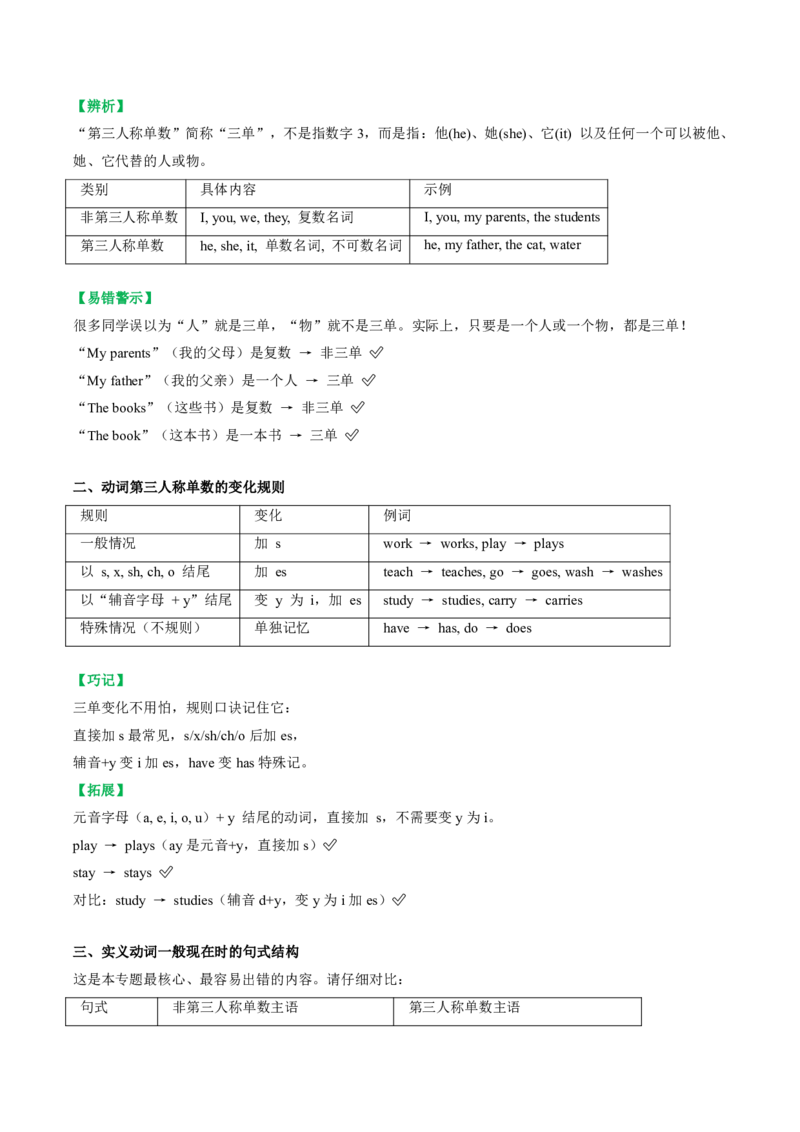
一、什么是“第三人称单数”?
【辨析】
“第三人称单数”简称“三单”,不是指数字3,而是指:他(he)、她(she)、它(it) 以及任何一个可以被他、
她、它代替的人或物。
类别
具体内容
示例
非第三人称单数
I, you, we, they, 复数名词
I, you, my parents, the students
第三人称单数
he, she, it, 单数名词, 不可数名词
he, my father, the cat, water
【易错警示】
很多同学误以为“人”就是三单,“物”就不是三单。实际上,只要是一个人或一个物,都是三单!
“My parents”(我的父母)是复数→非三单✅
“My father”(我的父亲)是一个人→三单✅
“The books”(这些书)是复数→非三单✅
“The book”(这本书)是一本书→三单✅
二、动词第三人称单数的变化规则
规则
变化
例词
一般情况
加s
work →works, play →plays
以s, x, sh, ch, o 结尾
加es
teach →teaches, go →goes, wash →washes
以“辅音字母+ y”结尾
变y 为i,加es
study →studies, carry →carries
特殊情况(不规则)
单独记忆
have →has, do →does
【巧记】
三单变化不用怕,规则口诀记住它:
直接加s 最常见,s/x/sh/ch/o 后加es,
辅音+y 变i 加es,have 变has 特殊记。
【拓展】
元音字母(a, e, i, o, u)+ y 结尾的动词,直接加s,不需要变y 为i。
play →plays(ay 是元音+y,直接加s)✅
stay →stays ✅
对比:study →studies(辅音d+y,变y 为i 加es)✅
三、实义动词一般现在时的句式结构
这是本专题最核心、最容易出错的内容。请仔细对比:
句式
非第三人称单数主语
第三人称单数主语
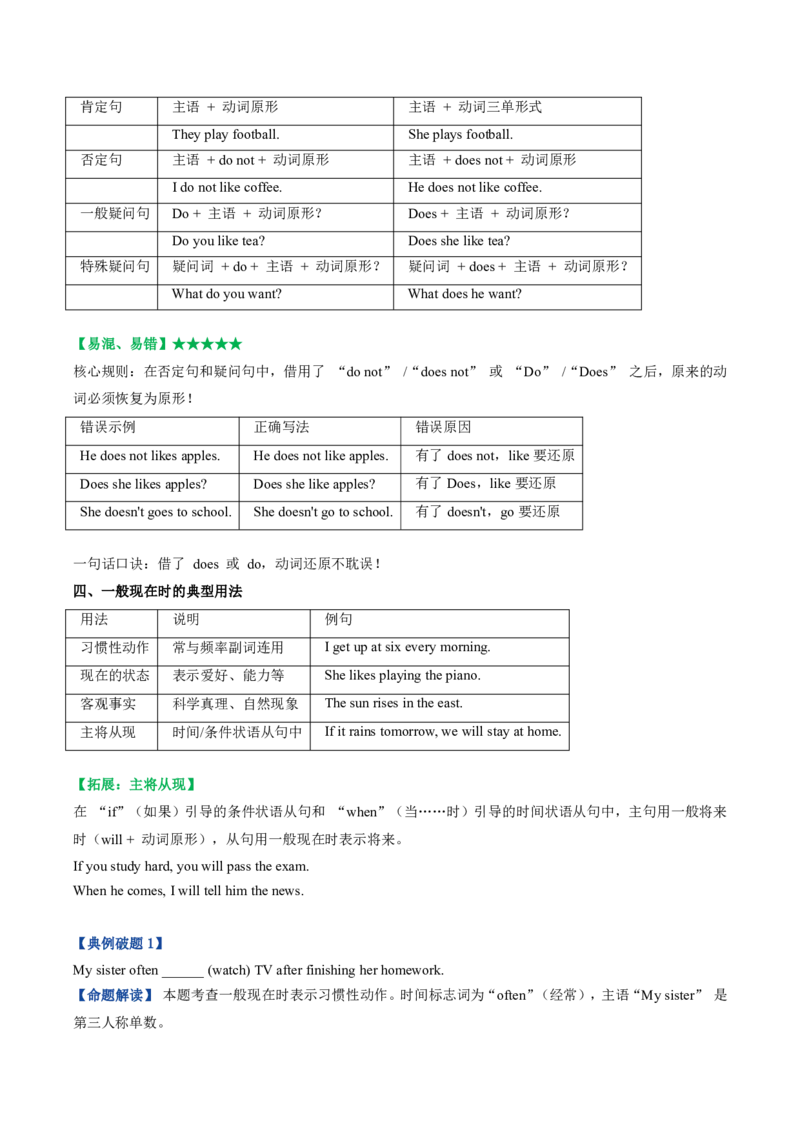
肯定句
主语+ 动词原形
主语+ 动词三单形式
They play football.
She plays football.
否定句
主语+ do not + 动词原形
主语+ does not + 动词原形
I do not like coffee.
He does not like coffee.
一般疑问句
Do + 主语+ 动词原形?
Does + 主语+ 动词原形?
Do you like tea?
Does she like tea?
特殊疑问句
疑问词+ do + 主语+ 动词原形?
疑问词+ does + 主语+ 动词原形?
What do you want?
What does he want?
【易混、易错】★★★★★
核心规则:在否定句和疑问句中,借用了“do not” /“does not” 或“Do” /“Does” 之后,原来的动
词必须恢复为原形!
错误示例
正确写法
错误原因
He does not likes apples.
He does not like apples.
有了does not,like 要还原
Does she likes apples?
Does she like apples?
有了Does,like 要还原
She doesn't goes to school.
She doesn't go to school.
有了doesn't,go 要还原
一句话口诀:借了does 或do,动词还原不耽误!
四、一般现在时的典型用法
用法
说明
例句
习惯性动作
常与频率副词连用
I get up at six every morning.
现在的状态
表示爱好、能力等
She likes playing the piano.
客观事实
科学真理、自然现象
The sun rises in the east.
主将从现
时间/条件状语从句中
If it rains tomorrow, we will stay at home.
【拓展:主将从现】
在“if”(如果)引导的条件状语从句和“when”(当……时)引导的时间状语从句中,主句用一般将来
时(will + 动词原形),从句用一般现在时表示将来。
If you study hard, you will pass the exam.
When he comes, I will tell him the news.
【典例破题1】
My sister often ______ (watch) TV after finishing her homework.
【命题解读】本题考查一般现在时表示习惯性动作。时间标志词为“often”(经常),主语“My sister” 是
第三人称单数。
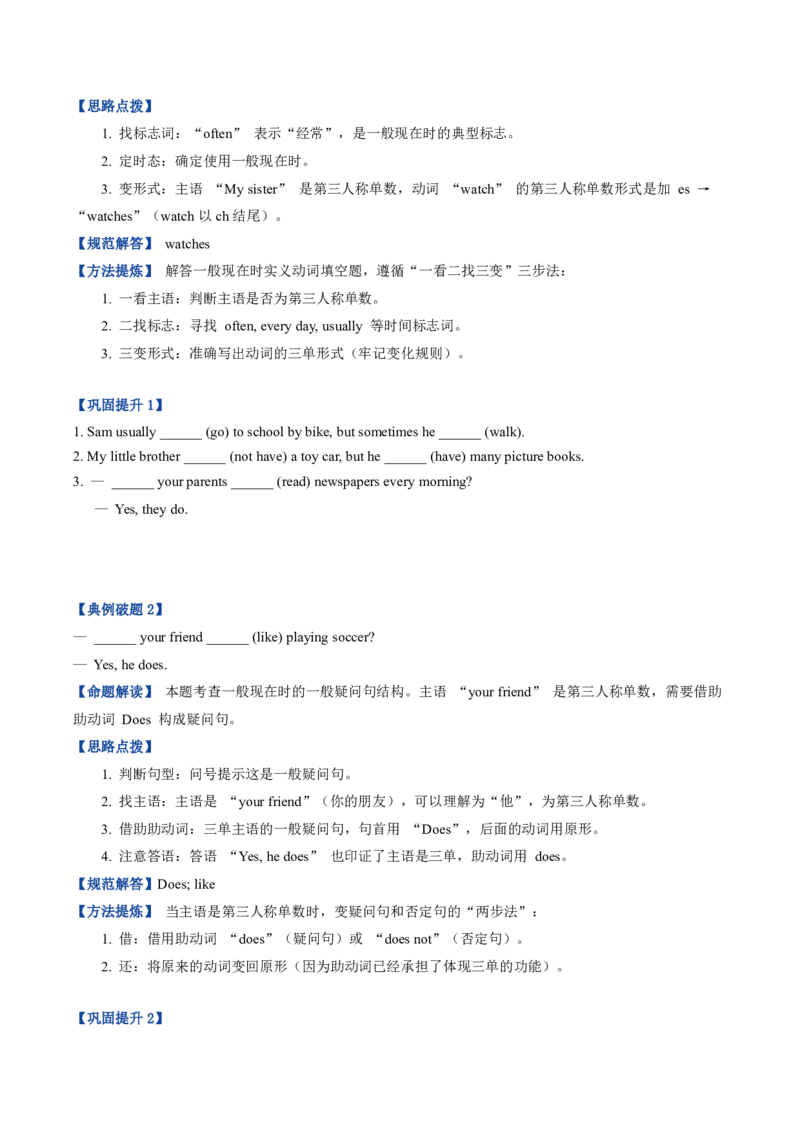
【思路点拨】
1. 找标志词:“often” 表示“经常”,是一般现在时的典型标志。
2. 定时态:确定使用一般现在时。
3. 变形式:主语“My sister” 是第三人称单数,动词“watch” 的第三人称单数形式是加es →
“watches”(watch 以ch 结尾)。
【规范解答】watches
【方法提炼】解答一般现在时实义动词填空题,遵循“一看二找三变”三步法:
1. 一看主语:判断主语是否为第三人称单数。
2. 二找标志:寻找often, every day, usually 等时间标志词。
3. 三变形式:准确写出动词的三单形式(牢记变化规则)。
【巩固提升1】
1. Sam usually ______ (go) to school by bike, but sometimes he ______ (walk).
2. My little brother ______ (not have) a toy car, but he ______ (have) many picture books.
3. — ______ your parents ______ (read) newspapers every morning?
— Yes, they do.
【典例破题2】
— ______ your friend ______ (like) playing soccer?
— Yes, he does.
【命题解读】本题考查一般现在时的一般疑问句结构。主语“your friend” 是第三人称单数,需要借助
助动词Does 构成疑问句。
【思路点拨】
1. 判断句型:问号提示这是一般疑问句。
2. 找主语:主语是“your friend”(你的朋友),可以理解为“他”,为第三人称单数。
3. 借助助动词:三单主语的一般疑问句,句首用“Does”,后面的动词用原形。
4. 注意答语:答语“Yes, he does” 也印证了主语是三单,助动词用does。
【规范解答】Does; like
【方法提炼】当主语是第三人称单数时,变疑问句和否定句的“两步法”:
1. 借:借用助动词“does”(疑问句)或“does not”(否定句)。
2. 还:将原来的动词变回原形(因为助动词已经承担了体现三单的功能)。
【巩固提升2】
1. ______ your brother ______ (play) the guitar well?
— No, he doesn't.
2. ______ Lucy and Lily ______ (like) eating ice-cream?
— Yes, they do.
3. What time ______ your father usually ______ (get) up in the morning?
知识点三频率副词
【课标要求】能在句子中正确使用频率副词,表达动作发生的频率高低。
一、频率副词的含义与排序
频率副词表示动作发生的频繁程度。按频率从高到低排列如下:
频率副词
中文含义
大致频率
always
总是
100%
usually
通常
80%
often
经常
60%
sometimes
有时
40%
seldom
很少
20%
never
从不
0%
二、频率副词在句中的位置
【巧记】
频率副词位置固定:be 后实前。
位置规则
结构
例句
放在be 动词之后
主语+ be 动词+ 频率副词
+ 其他
She is always happy.
放在实义动词之
前
主语+ 频率副词+ 实义动
词+ 其他
He often plays soccer.
sometimes 位置灵
活
可放句首、句中、句末
Sometimes I read books. / I sometimes read books. / I read
books sometimes.
【易错警示】
频率副词不能放在实义动词之后!
错误示例:I play often basketball. ❌
正确示例:I often play basketball. ✅
否定句中,频率副词通常放在助动词之后、实义动词之前:
She does not often go to the cinema.
They do not usually eat out.
三、根据语境选择频率副词
不同的频率副词表达不同的语义,需要根据上下文逻辑来判断:
语境
选择的频率副词
强调动作发生的规律性、无例外
always
描述一般情况,偶尔有例外
usually / often
表示有时发生,有时不发生
sometimes
表示几乎不发生,带否定含义
seldom
表示完全不发生,彻底否定
never
【辨析】
“seldom” 和“never” 本身已经带有否定含义,所以句中不能再出现否定词“not”。
正确:He seldom goes out. (他很少外出。)
错误:He does not seldom go out. ❌
【典例破题3】
Mike ______ gets up early, so he is never late for class.
A. always
B. sometimes
C. seldom
D. never
【命题解读】本题考查根据语境选择正确的频率副词。后文说“他上课从不迟到”,需要找出与前文逻辑
一致的选项。
【思路点拨】
1. 分析逻辑关系:后文说“he is never late”(他从不迟到),这需要一个原因来解释。
2. 寻找因果关系:如果一个人“从不迟到”,那么他应该是“总是”或“通常”早起。
3. 排除干扰项:
“sometimes”(有时)→有时早起,无法保证从不迟到❌
“seldom”(很少)→很少早起,应该会迟到❌
“never”(从不)→从不早起,完全矛盾❌
“always”(总是)→总是早起,所以从不迟到✅
4. 代入验证:Mike “总是”早起,所以他上课从不迟到。语义通顺,逻辑合理。
【规范解答】A. always
【方法提炼】选择频率副词时,遵循“逻辑一致”原则:
1. 读懂上下文,理解句子要表达的意思。
2. 判断动作发生的频率是高还是低。
3. 选择符合逻辑的频率副词,代入验证。
【巩固提升3】
1. She is a good student. She ______ (总是) helps others.
2. I do not like math, so I ______ (几乎从不) do math exercises after class.
3. — Do you ______ (通常) go to the library on weekends?
— Yes, I do.
知识点四Be 动词与实义动词的对比总结
对比项
Be 动词
实义动词
含义
是
做(具体的动作)
肯定句
主语+ am/is/are + ...
主语+ 动词原形/三单+ ...
否定句
主语+ am/is/are + not + ...
主语+ do/does + not + 动词原形
疑问句
Am/Is/Are + 主语+ ...?
Do/Does + 主语+ 动词原形?
是否需要助动词
不需要
否定句和疑问句需要
【易混、易错】★★★★★
很多同学分不清什么时候用be 动词,什么时候用实义动词。判断方法很简单:
1. 如果句子中已经有实义动词,就不能再加be 动词。
2. 如果句子中没有实义动词,就需要be 动词来连接主语和表语。
错误示例
正确写法
错误原因
She is like music.
She likes music.
已有实义动词like,去掉is
He does not is a teacher.
He is not a teacher.
没有实义动词,用be 动词否定
They are play football.
They play football.
已有实义动词play,去掉are
【典例破题4】
— What ______ your brother usually do after school?
— He usually ______ basketball with his classmates.
A. do; play
B. does; play
C. do; plays
D. does; plays
【命题解读】本题考查一般现在时的综合运用,涉及疑问句中助动词的使用和答句中动词的三单形式。
【思路点拨】
1. 第一空:主语是“your brother”(第三人称单数),疑问句需要借助助动词“does”,动词“do”
还原为原形→“does...do”。
2. 第二空:主语是“He”(第三人称单数),肯定句中动词要用第三人称单数形式“plays”。
3. 注意:疑问句中用了“does”后,后面的实义动词必须用原形;答句中没有助动词,主语三单直接
加s。
【规范解答】D. does; plays
【方法提炼】解答be 动词与实义动词混合题型,遵循“三步判断法”:
1. 看句式:是肯定句、否定句还是疑问句?
2. 看主语:主语是第几人称?是单数还是复数?
3. 定结构:根据句式+主语,确定正确的动词形式和助动词。
【巩固提升4】
1. — What ______ your father usually ______ (do) on weekends?
— He often ______ (go) fishing.
2. My sister ______ (not like) math, but she ______ (be) very good at English.
3. ______ Tom ______ (have) a basketball?
— No, he ______ (do not). But his brother ______ (have) one.
一、单项选择
1.(25-26 七年级上·山东济南·期末)My brother usually ________ up at 6:30 a.m. and then brushes his teeth.
A.get
B.gets
C.got
D.getting
2.(25-26 七年级上·河南周口·期末)He ________ watch TV in the evening. He usually does his homework.
A.don’t
B.doesn’t
C.isn’t
D.aren’t
3.(25-26 八年级上·西藏昌都·期末)The pen and the ruler ________ green.
A.am
B.is
C.are
D.be
4.(25-26 八年级上·陕西汉中·期末)—How much ________ this bag?
—It’s 50 yuan.
A.is
B.are
C.am
D.be
5.(25-26 七年级上·安徽阜阳·期末)— ________ your classmates like ping-pong?
— Yes, they ________.
A.Do; do
B.Does; does
C.Do; does
D.Does; do
6.(25-26 七年级上·黑龙江大庆·期末)I often go to work by car. ________I go to work on foot.
A.Usually
B.Sometimes
C.Often
D.Always
7.(25-26 七年级上·安徽合肥·期末)— Would you like some coffee?
— No, thanks. I ________ drink coffee.
A.usually
B.always
C.never
D.sometimes
8.(25-26 七年级上·广东广州·期末)There ________ a computer and some chairs in the library. They are for
students.
A.is
B.are
C.was
D.were
9.(25-26 七年级上·江苏扬州·期中)—________ your father free on Saturdays?
—No, he always has much to do at weekends.
A.Do
B.Does
C.Are
D.Is
10.(25-26 七年级上·北京·期末)John’s father often ________ to work by bus on workdays.
A.go
B.goes
C.going
D.went
二、用所给单词的适当形式填空
11.(25-26 六年级上·上海浦东新·期末)— What ________ (do) your mother do?
— She’s a teacher.
12.(25-26 七年级上·吉林长春·期末)There ________ (be) many ducks on the farm.
13.
(25-26 六年级上·上海浦东新·期末)My mother ________ (not watch) TV every night. She reads newspapers.
14.
(25-26 七年级上·山东济南·期末)Lily is very hard-working, and she always ________ (finish) her homework
early.
15.(25-26 八年级上·江苏无锡·期末)Everyone except the twins ________ (not be) able to solve the problem
easily.
16.(25-26 七年级上·内蒙古兴安·期末)My sister ________ (have) a nice volleyball.
17.(25-26 七年级上·内蒙古兴安·期末)—Where ________ (be) your parents?
—They are in the room.
三、句型转换
18.(25-26 七年级上·福建漳州·期末)The woman in red is my mother.(就划线部分提问)
________ ________ the woman in red?
19.(25-26 七年级上·山东烟台·期末)There is a library next to the office building. (改为一般疑问句)
________________________
20.(25-26 七年级上·宁夏银川·期末)The student usually goes to school at 7:30. (对划线部分提问)
________ ________ does the student usually go to school?
21.(25-26 七年级上·上海·期末)Dabbawalas travel more than 100 kilometers every day. (对划线部分提问)
________ ________ do dabbawalas travel every day?
22.(25-26 七年级上·浙江绍兴·期末)He has an orange in his schoolbag. (改为一般疑问句)
________ he ________ an orange in his schoolbag?
23.(25-26 七年级上·浙江绍兴·期末)There are some special things in my classroom. (改为否定句)
There ________ ________ special things in my classroom.
24.(25-26 八年级上·上海浦东新·期末)We need to finish the project at the end of this week. (改为否定句)
We ________ ________ to finish the project at the end of this week.
25.(25-26 六年级上·吉林长春·期末)He wants to go to Shanghai. (对划线部分提问)
________ ________ he ________ ________ go?