第02 讲Unit 2 Home sweet Home
(知识全梳理&考点精准练)
内容导航
01 预习航标→析目标·明方向:预习导航精准定向
02 教材全解→析教材·学新知:情境概念深度构
考点精讲:聚焦常考要点,讲清逻辑
例题精析:典型题目带路,学会解题思路
即练固基:趁热打铁练一练,巩固刚学内容
03 过关检测→练考点·强落实:过关检测分层提
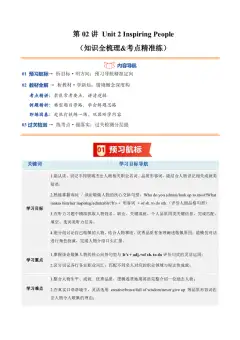
关键词
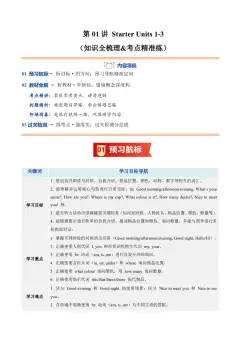
学习目标导航
学习目标
1.能认读、拼写并运用与居家、日常活动、感受相关的重点词汇与短语,熟练朗读单元对话
和短文。
2.能掌握本单元核心交际句型,熟练运用句型谈论居家生活、日常行为与个人感受。
3.能听懂围绕居家活动展开的对话,精准抓取听力中的人物、活动、情绪等关键信息。
4.能读懂介绍居家生活、日常趣事的简短语篇,理解文章主旨与细节内容。
5.能运用所学词汇和句型,口头、书面描述自己的居家日常与生活感受,完成情景对话、短
文写作等任务。
学习重点
1.掌握谈论居家生活、日常活动及表达感受的核心句型,并能灵活问答、转述。
2.熟记单元重点词汇、短语,掌握频度副词(always, usually, often, sometimes, hardly ever,
never)的含义与基本用法。
3.掌握一般现在时在描述日常起居、习惯性动作中的运用。
学习难点
1.准确区分不同频度副词的语义差别,结合语境正确摆放频度副词在句中的位置。
2.结合生活场景,连贯、完整地用英语描述一天的居家活动,做到语句通顺、逻辑连贯。
3.在口语和写作中,综合运用词汇、句型与时态,自然表达个人生活状态与内心感受。
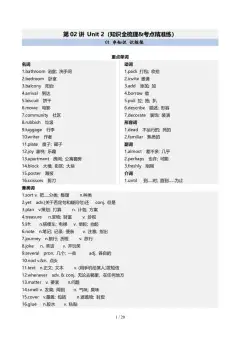
1、pack up things 收拾东西
【详解】“pack”有多种词性和用法,以下是一些常见的情况:
(1)作动词
①表示“收拾(行李);打包”:
I need to pack my bags for the trip.(我需要为旅行收拾行李。)
②表示“将……装入(箱、盒等)”:
Pack the books into the box.(把书装进盒子里。)
(2)作名词;意为“包;捆;背包”:
He carried a pack on his back.(他背着一个背包。)
【常用短语】
pack up:意为“把……打包;收拾行李”。
It's time to pack up and go home.(是时候收拾东西回家了。)
【典例】Remember to ________ all your books ________ the wooden box.
A. pack; into
B. pack; up
C. to pack; in
D. packing; into
答案:A
详解:remember to do 后用动词原形;pack sth into… 固定搭配:把某物装入……;pack up 表示收拾行李,
不符合“装进箱子” 语境。
【即练1】He carries a light ________ when he goes climbing every weekend.
A. pack
B. packed
C. packing
D. packs
【即练2】It’s late, so we must ________ and set off for home.
A. pack up
B. pack into
C. packed up
D. packing up
2、feed the fish 喂鱼
【详解】“feed”的用法如下:
(1)作动词
①表示“喂养;饲养”:
She feeds the cat every day.(她每天喂猫。)
②表示“为……提供食物;养活”:
The farmer feeds his family by growing crops.(农民靠种庄稼养活家人。)
(2)作名词;意为“饲料;食物”:
The pigs are eating the feed.(猪在吃饲料。)
【常用短语】
feed on:表示“以……为食”。
Cows feed on grass.(奶牛以草为食。)
【典例】My grandma ________ chickens three times every day.
A. feed
B. feeds
C. feeding
D. fed
答案:B
详解:every day 为一般现在时,主语grandma 是第三人称单数,谓语用feeds,feed sth 表示喂养某物。
【即练1】Pandas mainly ________ bamboo in the wild.
A. feed
B. feed on
C. feeds on
D. feeds
【即练2】Farmers prepare lots of ________ for their sheep in winter.
A. feed
B. feeds
C. feeding
D. fed
3、hang up photos 挂上照片
【详解】“hang”作动词讲
(1)表示“悬挂;吊”:
She hung the picture on the wall.(她把画挂在墙上。)
(2)表示“绞死;吊死”:
The criminal was hung for his crimes.(这个罪犯因犯罪被绞死了。)
注意:当表示“绞死;吊死”时,其过去式是“hanged”;当表示“悬挂;吊”等其他意思时,过去式是
“hung”。
【常用短语】
hang out:意为“闲逛;逗留”
hang up:表示“挂断电话;悬挂起来”
hang on:有“坚持;不挂断(电话);紧紧抓住”等意思。
【典例】She ________ her new dress behind the door just now.
A. hanged
B. hung
C. hang
D. hangs
答案:B
详解:表示“悬挂”,过去式用hung;hanged 只用于“绞死”;just now 为过去时。
【即练1】We often ________ with our friends after school on weekends.
A. hang out
B. hang up
C. hang on
D. hung out
【即练2】Please ________ a minute. I’ll go and ask him.
A. hang out
B. hang up
C. hang on
D. hung on
4、invite friends to the new house 邀请朋友到新房子
【详解】invite 作动词讲,“邀请”,其用法如下
(1)invite sb to +地点
邀请某人到某地
I want to invite Tom to my party. (我想邀请Tom 到我的派对。)
(2)invite sb to do sth 邀请某人干某事
She invited me to attend her birthday party. (她邀请我参加她的生日派对)
【拓展】
invite 的名词invitation “邀请函”
【典例】I want to invite my best friend ________ my new house this Sunday.
A. visit
B. to visiting
C. to
D. for
答案:C
详解:invite sb. to + 地点,邀请某人去某地;to do 后面接动作,本空后是地点,用介词to。
【即练1】Mr. Li invited us ________ a movie together after class.
A. watch
B. to watch
C. watching
D. watched
【即练2】She sent me an ________ for her birthday party yesterday.
A. invite
B. invites
C. invitation
D. inviting
5、Would you like to mop the floor or clean the windows?你想拖地还是擦窗户?
【详解】(1)would like 的基本用法
①would like sth 想要某物
I would like some apples
我想要一些苹果
②would like to do sh 想要/愿意做某事
My parents would like to meet you.我父母想见见你。
③would like sb. to dosh 想要某人做某事
I'd like you to join us
我想让你加入我们。
(2)would like 的疑问句及其回答
①Would you like a/an/some...? 你想要......吗?
肯定回答:Yes, please.
否定回答:No, thanks.
②Would you like to do...? 你想/愿意做......吗?
肯定回答:Yes/Sure,I'd like/love to.
否定回答:Sorry/I'd love to, but...
【典例】I would like ________ a cup of tea.
A. have
B. to have
C. having
D. has
【答案】B
【详解】句意:我想要喝一杯茶。
would like to do sth. 为固定用法,表示“想要做某事”,此处应使用动词不定式,故选to have。
【即练1】—Would you like some bread?
—________
A. Yes, I would.
B. Yes, please.
C. No, I don't.
D. No, I wouldn't.
【即练2】She'd like me ________ her with her English.
A. help
B. helping
C. to help
D. helps
6、I can’t wait to show them our new house.我迫不及待地想向他们展示我们的新房子。
【详解】(1)wait 意思是“等候、等待”
①wait for sb./sth.表示“等待某人/某物”。
I'm waiting for my friend at the school gate.(我正在学校门口等我的朋友。)
②wait to do sth.:意为“等着做某事”。
They are waiting to have a meeting.(他们在等着开会。)
③wait one's turn:表示“等待轮到某人”。
We should wait our turn when we queue up for the bus.(我们排队等公交车时应该等待轮到自己。)
④wait a moment:意为“等一会儿”。
Wait a moment, please. I have something important to tell you.(请等一会儿,我有重要的事情要告诉你。)
⑤can't wait to do sth.:表示“迫不及待地做某事”。
The children can't wait to open their presents.(孩子们迫不及待地想打开他们的礼物。)
【典例】The kids can't wait ________ the amusement park.
A. visit
B. to visit
C. visiting
D. visited
答案:B
详解:can't wait to do sth. 迫不及待做某事,后接动词不定式。
【即练1】I have to wait ________ my sister outside the classroom.
A. /
B. for
C. to
D. at
【即练2】Please ________. I will get my bag right now.
A. wait for
B. wait to
C. wait a moment
D. wait our turn
(2)show 意思是“展示;显示”
①show sth. to sb. 或show sb. sth.:意为“给某人看某物”。
She showed her new dress to her mother. = She showed her mother her new dress.(她给她妈妈看她的新裙子。)
②show sb. around:表示“带领某人参观”。
The guide showed us around the museum.(导游带领我们参观博物馆。)
③show off:意为“炫耀”。
He always shows off his knowledge in class.(他总是在课堂上炫耀他的知识。)
【拓展】作名词;意为“演出;节目”。构成短语“on show”,表示“在展览中”。
【典例】Our teacher will ________ us ________ the new school library this afternoon.
A. show; around
B. show; off
C. show; to
D. show; for
答案:A
详解:show sb. around 带领某人参观,符合句意;show off 意为炫耀,不符合语境。
【即练1】Lots of old paintings are ________ in the hall now.
A. on show
B. show off
C. show around
D. show to
【即练2】He showed his new bike ________ me just now.
A. for
B. to
C. at
D. with
7、...but now we need to get ready for their arrival.但现在我们需要为他们的到来做好准备。
【详解】arrival 名词;到达
常与介词“at”或“in”搭配,“arrival at”后接小地点,“arrival in”后接大地点。
The train's arrival at the station was delayed.(火车到达车站晚点了。)
His arrival in Beijing was greeted with great excitement.(他抵达北京时人们激动万分。)
【拓展】arrival 的动词是arrive .
【典例】The ________ of the bus made all passengers relaxed.
A. arrive
B. arrival
C. arrives
D. arriving
答案:B
详解:定冠词The 后接名词作主语,arrival 是名词“到达”;arrive 为动词,不符合语法。
【即练1】We were all happy about his arrival ________ the small village.
A. in
B. at
C. to
D. on
【即练2】People cheered for their arrival ________ Shanghai yesterday.
A. at
B. for
C. in
D. with
8、But their room is already clean! Well, it’s not “grandma clean” yet.但是他们的房间已经很干净了!不过,还
没有达到“奶奶级别的干净”。
【详解】yet & already
①already:意为“已经”,强调动作已经完成,通常用于肯定句,一般放在助动词之后、实义动词之前。
I have already finished my homework.(我已经完成了我的作业。)
②yet:意为“还;尚;仍然”,用于否定句和疑问句,通常放在句末。在否定句中,表示动作尚未发生;
在疑问句中,用于询问动作是否已经发生。
He hasn't come back yet.(他还没有回来。)
Has she arrived yet?(她到了吗?)
【典例】I have ________ cleaned my room. You can come in now.
A. yet
B. already
C. ever
D. never
答案:B
详解:本句为肯定句,用already 表示“已经”;yet 多用于否定句和疑问句。
【即练1】He hasn't finished his homework ________.
A. already
B. still
C. yet
D. too
【即练2】—Have you read this storybook ________?
—No, not yet.
A. already
B. yet
C. just
D. once
9、Can I put some flowers by the window?我可以把一些花放在窗边吗?
【详解】by 用法:作为介词,有多种含义。
①“表示交通方式;通常用于“by+交通工具”结构中,表示“乘坐某种交通工具”,I go to school by bus.
(我坐公交车去上学。);
②“在……旁边”,sit by the window(坐在窗户旁边);
③还能用于被动语态中,引出动作的执行者,The book was written by him.(这本书是他写的。)
④
表示方式、手段;意为“通过;靠;用”,后接名词、代词或动名词。
I learn English by listening to English songs.(我通过听英文歌学习英语。)
常见搭配:by the way(顺便说一下);by oneself(独自);by the time(到……时候)。
【典例】We can improve our English ________ reading more passages.
A. by
B. with
C. for
D. to
答案:A
详解:by + 动名词,表“通过某种方式/ 手段”,本句指通过阅读提升英语。
【即练1】My father goes to work ________ bike every day.
A. in
B. on
C. by
D. at
【即练2】This beautiful picture was drawn ________ a young artist.
A. with
B. by
C. from
D. in
10、make grandparents feel at home 让祖父母感到宾至如归
【详解】make sb feel at home 让某人感到宾至如归
【拓展】make 的用法主要有以下几种:
①make + 宾语+ 形容词:意为“使……处于某种状态”。
The news made her happy.(这个消息使她很高兴。)
②make + 宾语+ 省略to 的不定式:表示“使某人做某事”。
My mother makes me clean my room.(我妈妈让我打扫我的房间。)
【固定搭配】
make a decision:意为“做决定”
make friends (with):表示“(和……)交朋友”
make mistakes:意为“犯错误”。
make up:有“编造;组成;化妆”等意思。
【注意】表示“制作;制造”
The workers make cars in the factory.(工人们在工厂制造汽车。)
【典例】The funny story made all of us ________.
A. laugh
B. to laugh
C. laughing
D. laughed
答案:A
详解:make sb. do sth. 使某人做某事,后接不带to 的动词不定式。
【即练1】Don't be afraid to ________ when you learn English.
A. make friend
B. make friends
C. make a friend
D. make the friend
【即练2】The warm sunshine makes us ________.
A. happily
B. happy
C. happiness
D. to happy
11、add things to their room 给他们房间添加物品
【详解】①add 表示“添加;增加”常与介词to 搭配,构成“add...to...”结构,意为“把……加到……上”。
Add some sugar to the coffee.(在咖啡里加些糖。)
②表示“补充说;又说”
“I'm very tired,” she added.(“我很累,”她补充说道。)
【固定搭配】
①“add up”表示“把……加起来”。
Add up all the numbers and tell me the result.(把所有的数字加起来,然后告诉我结果。)
②“add up to”意为“总计达;总共是”。
The bills add up to $100.(这些账单总计达100 美元。)
【典例】Please add some salt ________ the soup.
A. in
B. to
C. on
D. at
答案:B
详解:固定搭配add...to... 把…… 加到…… 里。
【即练1】Let's ________ these scores and see who wins.
A. add up
B. add to
C. add up to
D. add for
【即练2】The costs add up ________ over 500 yuan.
A. in
B. to
C. with
D. for
12、plan a treasure hunt 策划一次寻宝活动
【详解】(1)plan 作动词讲;计划(后接不定式或名词);plan to do sth
We are planning to visit the museum next weekend.
(我们计划下周末去参观博物馆。)
(2)plan 作名词讲;计划
【词组】make a plan 制定计划;plan for sth ……的计划
【典例】They plan ________ a picnic this Saturday.
A. have
B. to have
C. having
D. had
答案:B
详解:固定搭配plan to do sth. 计划做某事。
【即练1】This is a good plan ________ the coming sports meeting.
A. to
B. for
C. with
D. at
【即练2】This is a good plan ________ the coming sports meeting.
A. to
B. for
C. with
D. at
13、Helen, can I borrow your chess set?海伦,我可以借用你的棋盘吗?
【详解】borrow 动词:借入,
【辨析】borrow, lend 和keep 的区别
borrow, lend 和keep 都与“借”有关,但在用法上存在区别:
①borrow:意为“借入”,表示从别人那里借来东西,常用搭配为“borrow sth. from sb.”。
I borrowed a book from the library.(我从图书馆借了一本书。)
②lend:意为“借出”,是把自己的东西借给别人,常用搭配为“lend sth. to sb.”或“lend sb. sth.”。
He lent his bike to me. = He lent me his bike.(他把自行车借给了我。)
③keep:意为“保存;保留”,用于表示借东西的时间长度,常与一段时间连用。
You can keep the book for two weeks.(这本书你可以借两周。)
【典例】I want to ________ a storybook ________ my deskmate.
A. borrow; from
B. lend; from
C. borrow; to
D. lend; for
答案:A
详解:borrow sth. from sb. 表示“向某人借入某物”,为固定搭配。
【即练1】Could you ________ your pen ________ me? I left mine at home.
A. borrow; to
B. lend; to
C. lend; from
D. borrow; for
【即练2】You can ________ the magazine for three days.
A. borrow
B. lend
C. keep
D. take
14、Can I stay out until eleven?我可以在外面待到十一点吗?
【详解】until(后接时间点或从句)直到……为止
(1)作介词;表示“直到……为止”,后接时间点。
He waited until 5 o'clock.(他一直等到5 点。)
(2)作连词
①引导时间状语从句,从句中的动词如果是短暂性动词,要用否定形式,即“not...until...”,表示“直到……
才……”。
He didn't leave until his mother came back.(直到他妈妈回来,他才离开。)
②若从句中的动词是延续性动词,则用肯定形式,此时until 表示“直到……为止”。
I will stay here until you come back.(我会一直待在这里,直到你回来。)
【典例】She worked ________ midnight yesterday.
A. if
B. until
C. though
D. because
【答案】B
【详解】句意:昨天她一直工作到午夜。
until 直到…… 为止;if 如果;though 虽然;because 因为。结合句意,此处用until。
【即练1】He ________ go to bed ________ his father finished his work.
A. didn't; until
B. doesn't; until
C. won't; until
D. wasn't; until
【即练2】I will wait for you ________ you finish your homework.
A. since
B. when
C. until
D. after
15、You want to call your parents, but your phone is dead.你想给父母打电话,但手机没电了。
【详解】dead 形容词,意为“不运行的,死的,无生命的”。表示“死的;失去生命的”,常用来描述人、
动物或植物等。
The tree is dead.(这棵树死了。)
【拓展】
“death”是名词,意为“死亡”。His death made us very sad.(他的去世让我们非常难过。)
“die”是动词,意为“死;去世”,强调动作。My pet dog died last week.(我的宠物狗上周死了。)
【典例】The old man ________ in a small village last year.
A. die
B. died
C. dead
D. death
【答案】B
【详解】句意:这位老人去年在一个小村庄里去世了。
die 是动词,表示“去世”,last year 为一般过去时,动词用过去式died;dead 是形容词,death 是名词,
均不能作谓语。
【即练1】The little bird is ________. We feel very sorry for it.
A. die
B. died
C. dead
D. death
【即练2】His ________ made all his friends sad.
A. die
B. dead
C. died
D. death
16、You are holding a large box.你手里拿着一个大箱子。
【详解】hold 为动词,
①表示“拿着;握住”
Hold the book in your left hand.(用你的左手拿着这本书。)
②意为“举办;举行”
We will hold a sports meeting next week.(我们下周将举办一场运动会。)
③表示“容纳;包含”
This box can hold many things.(这个盒子能容纳很多东西。)
【常见搭配】hold on(等一下;坚持);hold up(举起;阻挡)。
【典例】We will ________ a big party for our teacher tomorrow.
A. hold
B. take
C. bring
D. carry
【答案】A
【详解】句意:我们明天会为老师举办一场盛大的派对。
hold 有“举办” 的含义;take 带走,bring 带来,carry 搬运,均不符合句意,故选hold。
【即练1】Please ________ the picture high so that everyone can see it.
A. hold on
B. hold up
C. hold out
D. hold back
【即练2】This big hall can ________ over one thousand people.
A. catch
B. keep
C. hold
D. get
17、Ask your classmates to bring gloves and rubbish bags.请同学们带手套和垃圾袋。
【详解】①ask 表示“询问;打听”可接双宾语,即“ask sb. sth.”结构,问某人某东西。
She asked him a question.(她问了他一个问题。)
②ask 意为“请求;要求”,用于“ask sb. to do sth.”结构,意为“要求某人做某事”,其否定形式是ask sb not
to do sth(要求某人不要做某事)。“ask for”表示“请求;要求得到”。
My mother asks me to clean my room.(我妈妈要求我打扫我的房间。)
He asked for help.(他请求帮助。)
③ask 表示“邀请”
They asked us to their party.(他们邀请我们参加他们的聚会。)
【典例】My teacher asks me ________ late for school again.
A. don't be
B. not be
C. not to be
D. to not be
【答案】C
【详解】句意:我的老师要求我上学不要再迟到。
ask sb. not to do sth. 为固定用法,表示“要求某人不要做某事”,故选not to be。
【即练1】The little boy went to the police and asked ________ help.
A. to
B. for
C. with
D. at
【即练2】He ________ me a lot of questions about English just now.
A. asked
B. told
C. spoke
D. said
18、We got up very early in the morning to catch the train.我们一大早就起床去赶火车。
【详解】catch
①表示“抓住;接住”
Catch the ball!(接住球!)
②意为“赶上(车、船等)”
You should get up early to catch the early bus.(你应该早起赶上早班车。)
③表示“染上(疾病);感染”
He caught a cold last week.(他上周感冒了。)
【固定搭配】
①用于“catch sb. doing sth.”结构,意为“发现某人正在做某事”。
The teacher caught him sleeping in class.(老师发现他在课堂上睡觉。)
②“catch up with”表示“赶上;追上”。
I have to work hard to catch up with my classmates.(我必须努力学习以赶上我的同学们。)
【典例】Hurry up! Or we can't ________ the last train.
A.catch
B. take
C. get
D. make
【答案】A
【详解】句意:快点!否则我们赶不上最后一班火车了。
catch 有“赶上(交通工具)” 的含义;take 乘坐,get 得到,make 制作,结合句意选catch。
【即练1】The teacher caught the boy ________ in the classroom.
A. run
B. ran
C. running
D. runs
【即练2】If you don't study hard, you can't ________ your classmates.
A. catch up
B. catch up with
C. catch on
D. catch at
19、At the end of the road, I saw Grandpa and my little cousin standing in the cold wind waiting for us.在路的尽头,
我看到爷爷和我的小表弟站在寒风中等我们。
【详解】(1)at the end of 在……末尾/尽头(时间或地点)。
There is a bookstore at the end of the street.(在街道的尽头有一家书店。)
【拓展】与end 有关的词组
①in the end:最后,终于。
②by the end of:到……结束时,到……为止。
③end up:最终成为,最后处于。这里end 为动词,意思是结束;end up 后接名词或动名词。
【典例】You can find a park ________ the road.
A. at the end of
B. in the end
C. by the end of
D. end up
【答案】A
【详解】句意:在这条路的尽头你能看到一个公园。
at the end of 意为“在…… 尽头”,可接地点;in the end 最后,单独使用;by the end of 到…… 为止;end
up 最终成为。结合地点语境选at the end of。
【即练1】________, all the students passed the exam.
A. At the end of
B. In the end
C. By the end of
D. End up
【即练2】We had learned eight units ________ last month.
A. at the end of
B. in the end
C. by the end of
D. end up
(2)see sb. doing 看见某人正在做某事(所描述的动作处于正在进行的状态。)。
I saw him reading a book when I came in.(我进来时看到他正在读书,强调在我进来这个时间点,他正在进行
读书这个动作。)
see sb do sth 看见某人做了某事(强调看到动作的全过程)
I saw him cross the road.(我看到他过了马路,强调看到他过马路这个完整的过程。)
【典例】Did you see them ________ basketball on the playground just now?
A. play
B. playing
C. to play
D. played
【答案】B
【详解】句意:你刚才看见他们正在操场上打篮球吗?
just now 结合语境侧重强调当时动作正在进行,应用see sb. doing sth.,故选playing。
【即练1】We saw the little boy ________ across the street safely.
A. walk
B. walking
C. walks
D. walked
【即练2】I saw her ________ flowers in the garden when I passed by.
A. water
B. watering
C. waters
D. watered
20、In the text, what words are used to describe people’s feelings?在这段文章中,哪些词语用来描述人们的情
感?
【详解】(1)be used to do 被用来做某事(被动语态)。
【拓展】关于use 的用法
①作动词:意为“使用;利用”,还表示“耗费;消耗”。
I use a pen to write.(我用钢笔写字。)
The car uses a lot of petrol.(这辆车很费油。)
②作名词:表示“使用;用途”,也可表示“用处;益处”
The use of this tool is very simple.(这个工具的使用方法很简单。)
What's the use of crying?(哭有什么用呢?)
【固定搭配】
①be used to do sth:被用来做某事,相当于be used for doing sth.
Wood is used to make tables.(木头被用来制作桌子。)
②be used to doing sth:习惯于做某事;He is used to getting up early.(他习惯于早起。)
③used to do sth:过去常常做某事。She used to go to school on foot.(她过去常常步行去上学。)
④make use of:利用。We should make good use of our time.(我们应该充分利用我们的时间。)
(2)describe 动词,描述。搭配:describe sth. to sb.(向某人描述某物)。
Can you describe what the thief looked like?
你能描述一下小偷长什么样子吗?
【拓展】describe 的名词description。
【典例】Bamboo ________ make many kinds of things in our daily life.
A. used to
B. is used to
C. is used for
D. used for
【答案】B
【详解】句意:竹子在日常生活中被用来制作各种各样的物品。
be used to do sth. 表示“被用来做某事”;used to do 意为“过去常常做某事”,结合句意和句式结构,选is
used to。
【即练1】My father ________ drink coffee, but now he likes tea.
A. used to
B. is used to
C. was used to
D. is used for
【即练2】She ________ getting up early every morning now.
A. used to
B. is used to
C. was used to
D. uses to
21、No matter how long I’m away, home is always glad to see me again.无论我离开多久,家总是欢迎我回来。
【详解】(1)no matter 无论……(引导让步状语从句)。
结构:no matter + 疑问词(what/when/where/how)= 疑问词+ ever
No matter where you go, I will find you.
(无论你去哪里,我都会找到你。)=Wherever you go, I will find you.
(2)be glad to do 很高兴做某事。
I'm glad to help you with your homework. (我很高兴在作业方面帮助你。)
【典例】________ you do, you must do it carefully.
A. No matter what
B. No matter how
C. No matter where
D. No matter when
【答案】A
【详解】句意:无论你做什么,都必须认真去做。
no matter what 无论什么;no matter how 无论怎样;no matter where 无论哪里;no matter when 无论何时。
句中do 后缺少宾语,结合句意选No matter what。
【即练1】________ you travel, remember to keep safe.
A. No matter what
B. No matter where
C. No matter how
D. No matter who
【即练2】Whenever you come, you are welcome.(同义句)
_________ ____________when you come, you are welcome.
22、something important or with a high price 重要或价格昂贵的东西
【详解】price 名词,价格。
①询问价格句型:What's the price of...?=How much is/are...?
What's the price of this computer?(这台电脑的价格是多少?)
How much is this dress?(这条裙子多少钱?)
②描述价格高低句型:The price of... is high/low.= ... is/are expensive/cheap.
The price of the house is high.(这房子的价格很高。)
These shoes are expensive.(这些鞋子很贵。)
③表示以某种价格购买或出售句型:buy/sell... at a price of...
He bought the book at a price of 20 yuan.(他以20 元的价格买了这本书。)
【典例】________ the price of this new watch?
A. How much
B. What's
C. How many
D. How old
【答案】B
【详解】句意:这块新手表的价格是多少?
询问价格可用What's the price of...,How much 后直接接物品,不搭配the price of,故选What's。
【即练1】The price of the vegetables is ________ these days.
A. expensive
B. cheap
C. high
D. big
【即练2】She bought the bag ________ a price of 80 yuan.
A. in
B. on
C. at
D. for
23、Could you please take out the rubbish? It’s starting to smell.你能把垃圾拿出去吗?已经开始有发臭了。
【详解】(1)smell 作动词
①表示嗅觉动作:意为“嗅;闻”。She smelled the flower carefully.(她仔细地闻了闻这朵花。)
②表示气味特征:可作系动词,意为“闻起来”,后接形容词作表语。The food smells delicious.(这食物闻
起来很美味。)
(2)作名词
表示气味:是可数名词。There is a strange smell in the room.(房间里有一股奇怪的气味。)
【典例】The flowers ________ sweet. I like them very much.
A. smell
B. smells
C. smelling
D. smelt
【答案】A
【详解】句意:这些花闻起来很香,我非常喜欢它们。
smell 此处为系动词,后接形容词作表语;主语flowers 是复数,谓语动词用原形,故选smell。
【即练1】There is a terrible ________ in the kitchen. What happened?
A. smell
B. smells
C. smelt
D. smelling
【即练2】Please ________ the fruit and tell me if it is fresh.
A. smell
B. to smell
C. smelling
D. smelt
24、We want to cover the animals and paint the walls light green.我们想给动物们盖上东西,并把墙壁涂成浅绿
色。
【详解】cover v. 覆盖;包括;n. 覆盖物;封皮
(1)作动词
①覆盖:Snow covered the ground.(雪覆盖了地面。)
②涉及,包含:The course covers a wide range of topics.(这门课程涉及广泛的主题。)
(2)作名词
①封面,封皮:The cover of the book is very attractive.(这本书的封面很吸引人。)
②掩护物,遮盖物:They took cover behind a wall.(他们在墙后躲避。)
【拓展】固定词组
①cover A with B
用B 覆盖A 的上面
Please cover the table with this cloth. (请用这块布覆盖在桌子上面。)
②be covered with 被......覆盖
The mountain was covered with white snow. (山上被覆盖着洁白的雪。)
light
①名词:光;光线;光亮:The light in the room is very bright.(房间里的光线非常明亮。)
灯:There are many lights on the street.(街上有很多灯。)
②形容词:明亮的:The room is light and airy.(房间明亮又通风。)
浅色的;淡色的:She likes to wear light - colored clothes.(她喜欢穿浅色的衣服。)
③动词:点燃;使燃烧过去式和过去分词是“lit” 或“lighted”。:He lit a candle.(他点燃了一支蜡烛。)
照亮;使发光:The sun lights the earth.(太阳照亮了地球。)
【典例】Please cover the food ________ a clean plate.
A. with
B. in
C. on
D. by
【答案】A
【详解】句意:请用干净的盘子盖住食物。
固定搭配cover A with B 表示“用B 覆盖A”,结合用法此处选with。
【即练1】The ground ________ fallen leaves in autumn.
A. covers with
B. is covered with
C. covered by
D. is covered to
【即练2】I like the ________ of this storybook very much. It looks beautiful.
A. cover
B. covers
C. covering
D. covered
一、单项选择
1.I have ________ finished my homework, but I haven’t washed my clothes ________.
A.yet; already
B.already; yet
C.already; just
D.yet; just
2.—Who else would you like to ________ to our party?
—Some of my old school friends.
A.invite
B.follow
C.compare
D.thank
3.— More subways are running in our city, and traffic is much better now.
— Yes. The changes really ________ our fast development.
A.guess
B.repeat
C.describe
D.accept
4.—Could you please help me ________ the picture on the wall?
—No problem.
A.put on
B.think of
C.hang up
D.listen to
5.—Can I _________ your English book?
—Sorry, I’m using it. I can’t ________ it to you.
A.lend; lend
B.borrow; lend
C.lend; borrow
D.borrow; borrow
6._________ you go, I will always be there to support you.
A.Whatever
B.Whenever
C.Wherever
D.However
7.Don’t be afraid of making mistakes. Every mistake is a great ________ for our growth.
A.difficulty
B.treasure
C.quality
D.honour
8.—It’s time to ________ our camping things and go home.
—OK. I’ll fold the tent while you collect the cooking tools.
A.clean up
B.hang up
C.pick up
D.pack up
二、根据汉语填空
1.She was kind and ________ her umbrella ________ me when it rained.(把……与……分享)
2.After coming home, she took off her coat and ________ it ________ (挂起) in the closet.
3.Don’t forget to ________ ________ (做笔记) during the meeting. We need to discuss the key points later.
4.Please ________ ________ ________ (当心) the glass—it’s very fragile (脆弱的)!
5.Please ________ some sugar ________ the coffee. It tastes too bitter. (把……加入……)
6.Could you ______ ______ ______ ________? My car broke down. (让我搭个便车)
三、用所给词的适当形式填空
1.Our lovely cat was ________ (die) last week and my little sister is sad about it.
2.The famous singer’s ________ (arrive)made all of us excited.
3.My sister put on a ________ (fresh) washed dress for the school party.
4.My uncle is a famous ________ (write).
5.The ________ (invite) I received yesterday was for a science fair, which really excited me.
四、完形填空
One rainy Saturday afternoon, my family was at home with
1
special to do. Then my dad said,
“Let’s make popcorn (爆米花)!” My younger sister and I jumped up excitedly.
We all came to the kitchen. Dad took out a pan and a bag of corn (玉米). Mum poured oil into the
2
and added a spoon of sugar. Then I
3
put the corn into the pan. My sister stood next to me, holding a big
bowl and
4
for the first popcorn to jump out.
Soon the corn began to dance. Pop! Pop! Some corn jumped with an exciting sound. The sweet smell of the
5
filled the air.
Suddenly, smoke (烟) rose from the pan
6
we forgot to lower the heat! “Don’t be afraid!” Dad
said calmly. He quickly took the pan away from the fire. Luckily, most popcorn was okay, golden and delicious.
We poured the popcorn into a big bowl. A few pieces stuck together and looked funny. “Look, this one
7
like a cloud!” my sister laughed. We sat on the sofa, watching a movie and sharing the popcorn. It tasted
even
8
because we made it together.
That day, I learned that mistakes could become happy memories, and simple moments with family were the
most
9
. Now, whenever I smell popcorn, I
10
our teamwork, our smoky kitchen, and the joy
of being together.
1.A.something
B.anything
C.everything
D.nothing
2.A.pan
B.bottle
C.plate
D.spoon
3.A.seriously
B.carefully
C.wisely
D.sincerely
4.A.waiting
B.asking
C.searching
D.reaching
5.A.bread
B.noodles
C.hamburgers
D.popcorn
6.A.and
B.but
C.because
D.so
7.A.tastes
B.sounds
C.looks
D.smells
8.A.hotter
B.softer
C.sourer
D.sweeter
9.A.reasonable
B.valuable
C.difficult
D.boring
10.A.think of
B.am tired of
C.worry about
D.find out
五、阅读理解
Home is a special place for everyone. What makes your home “sweet home”? For different people, the
answer is different.
For 13-year-old Li Mei, her home is sweet because of her family. Every evening, her family sit in the living
room together—her dad reads books, her mom watches TV, and she does her homework.
For 14-year-old Tom, his home is sweet because of his bedroom. He decorated it himself—he put up posters
of his favourite football players on the walls, and made paper-cuts with his grandma’s help. “My bedroom is my
favourite place. I can listen to music, read books or just relax there,” Tom says.
For Mrs Wang, a neighbour of Li Mei, her home is sweet because of the community. Every Saturday
morning, she and her friends clean up the community together. They also help old people carry their shopping bags.
“We are like a big family. Everyone helps each other,” Mrs Wang says.
No matter what your home is like, it’s the people and the love inside that make it “sweet home”.
1.What do Li Mei’s family do every evening?
A.They go shopping together.
B.They sit in the living room together.
C.They clean up the community.
D.They visit old people.
2.How did Tom decorate his bedroom?
A.He put up posters and paper-cuts on the walls.B.He put a big TV in it.
C.He painted the walls blue.
D.He bought a new bed.
3.Who is Mrs Wang?
A.Li Mei’s mother.
B.Li Mei’s neighbour. C.Tom’s grandma. D.Tom’s friend.
4.What does Mrs Wang do every Saturday morning?
A.She reads books at home.
B.She plays games with her grandchildren.
C.She cleans up the community with her friends.
D.She cooks for her family.
5.What is the best title for the passage?
A.My Happy Vacation
B.How to Decorate Your Bedroom
C.What Makes a Sweet Home?
D.My Community Life
六、短文填空
There is a special jug (罐) on our kitchen table. I put some small pieces of paper and a pen next to the jug.
Everyone in my family has
1
chance to write down something good in our daily life. With pieces of
paper inside, we call the jug “Good Things Jug”.
Our family faced many
2
(difficulty) and challenges last year,
3
the “Good Things
Jug” gave us confidence and hope. Here are a few things from the “Good Things Jug”: “My wife
4
(buy)
me a new tie yesterday. I like it very much.” “Last week, I was
5
(serious) ill, but with my parents’ care,
I feel better now. I’m so thankful for their love.” “In the final exam, I got an A in maths! I achieved
6
(I)
goal.” “On my birthday, my daughter made a birthday cake for me. I’m
7
(happy) mother in the world.”
Our “Good Things Jug” is full
8
love, hope and happiness. The little messages remind us that we
can always expect good things
9
(come), even during difficult times. If you create your “Good Things
Jug” today, it
10
(make) a big difference in your future life.