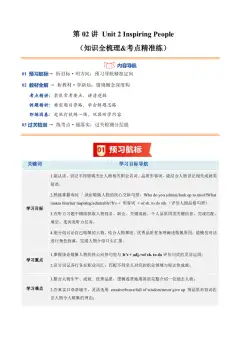
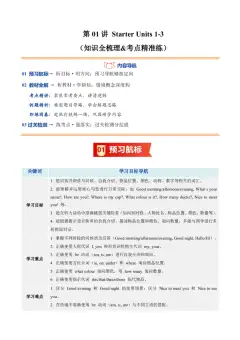
第03 讲Unit 3 Smart Learning
(知识全梳理&考点精准练)
内容导航
01 预习航标→析目标·明方向:预习导航精准定向
02 教材全解→析教材·学新知:情境概念深度构
考点精讲:聚焦常考要点,讲清逻辑
例题精析:典型题目带路,学会解题思路
即练固基:趁热打铁练一练,巩固刚学内容
03 过关检测→练考点·强落实:过关检测分层提
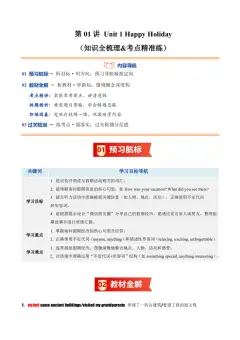
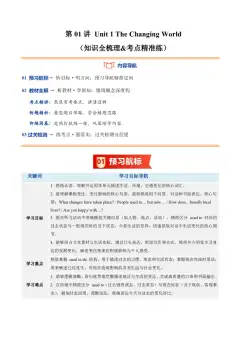
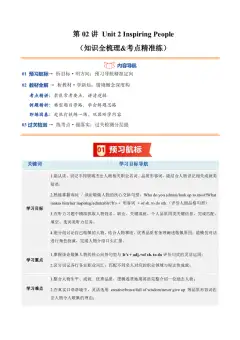
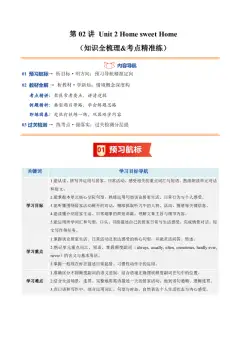
关键词
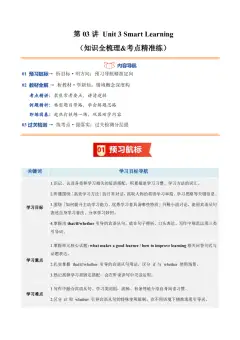
学习目标导航
学习目标
1.识记、认读各类和学习相关的短语搭配,积累描述学习习惯、学习方法的词汇。
2.听懂围绕「高效学习方法」的日常对话,抓取人物的英语学习举措、学习思路等关键信息。
3.围绕「如何提升主动学习能力、优秀学习者具备哪些特质」开展小组讨论,能用宾语从句
表述自身学习看法、分享学习妙招。
4.掌握由that/if/whether 引导的宾语从句,能在句子辨析、口头表达、写作中规范运用三类
引导词。
学习重点
1.掌握单元核心话题:what makes a good learner / how to improve learning 相关问答句式与
话题表达。
2.扎实掌握that/if/whether 引导的宾语从句用法,区分if 与whether 使用场景。
3.熟记高频学习类固定搭配,会在听说读写中灵活运用。
学习难点
1 写作中融合宾语从句、学习类词组,流畅、有条理地介绍自身阅读习惯。
2.区分if 和whether 引导宾语从句的特殊使用限制,在不同语境下精准选用引导词。
1.But you see, I started out at zero and came across problems. 但你看,我从零开始学习,途中遇到过不少难
题。
【详解】
1. start out 短语:动身;起步,开启(学习/事业),过去式started out;
2. come across 固定短语:偶然碰到、遭遇(困难/人);
例句:I came across an old friend in the street yesterday. 昨天我在街上偶遇一位老朋友。
3. and 并列连词,连接两个并列谓语(started、came across),前后两个谓语动词时态保持一致(一般过去时)。
【典例1】
When he ______ as a writer, he often came across hard things.
A. start out
B. started out
C. starts out
【答案】B
【解析】后半句came across 为一般过去时,and 并列时态统一,start 变过去式started out;A 原形,不符合、
C 三单时态错误。故答案选择B。
【典例2】
I ______ an old friend on my way home yesterday.
A. came across
B. come across
C. will come across
【答案】A
【解析】句子中时间标志词yesterday 昨天,为过去时间,谓语用过去式came across。
【即练1】
She ______ at learning piano at five and met many troubles.(用start 变形)
【即练2】
He started out small, and ______ lots of challenges later.
A. come across B. comes across C. came across
2. I mean you just have to take things step by step. Start simple and build up.我的意思是你必须循序渐进,从
简单内容入手慢慢积累。
【详解】
1. have to do sth. 不得不、必须做(客观需要,有人称时态变化);
2. step by step 副词短语:一步步地,循序渐进;类似的短语还有:
little by little(一点一点地、逐渐地)
stage by stage(分阶段地、一步步地)
one by one(一个接一个地、依次地)
side by side(并肩地、一起地)
day by day(日复一日地、一天天逐渐)
bit by bit(一点一滴地、逐步地)
step for step(步调一致地、同步地)
3. build up 意思为:逐步积累、逐步增强。例句:We should build up our bodies.我们应该增强体魄。
【典例1】
I mean that we ______ finish homework before dinner.
A. have to
B. has to
C. having to
【答案】A
【解析】主语we,一般现在时,have to 用原形;B 三单搭配单数主语,C 不能作谓语。
【典例2】
We can build up our vocabulary ______.
A. step by step B. step to step C. steps by steps
【答案】A
【解析】根据句意:我们能够一步一步的积累词汇。固定搭配step by step(一步步),无B、C 两种写法。
【即练1】
She means that she ______ give up her dream.
A. doesn’t have to B. haven’t to C. don’t have to
【即练2】
It takes time to ______ good habits.(build 短语)
【即练3】
You learn grammar ______ instead of learning all at once.
A. step by step B. a step by a step
3. A book starts heavy and thick but becomes thinner as you understand it better. 书本刚开始厚重难懂,随
着理解加深,就慢慢变薄了。
【详解】
1. start/become + 形容词:表达“变得如何”;此时,start/become 为系动词,意思:变得……;
2. 比较级thinner:thin 单音节,且为重读闭音节单词,变比较级双写n+er;than/as 提示暗含对比的意思;
其他常见的需要双写的形容词比较级:
big — bigger(更大的)
fat — fatter(更胖的)
hot — hotter(更热的)
red — redder(更红的)
wet — wetter(更湿的)
sad — sadder(更难过的)
glad — gladder(更高兴的)
flat — flatter(更平的)
【典例1】
The weather ______ warm as spring comes.
A. Become
B. becomes
C. becoming
D. to become
【答案】B
【解析】weather 属于不可数名词,按第三人称单数,谓语三单becomes。
【典例2】
He gets ______ after doing sports every day.
A. thin
B. thinner
C. thinnest
D. more thin
【答案】B
【解析】“在每天做了运动之后,他变的更瘦了”暗含和从前对比,用比较级thinner。
【即练1】
As you read more, your knowledge ______ richer.
A. become
B. becomes
C. becoming
D. to become
【即练2】
The box was thick but gets ______ after taking things out.(thin 变形)
4. As an active learner, Hua Luogeng stayed positive no matter what difficulties he met in his life and studies.
作为积极的学习者,无论生活和学习遇到什么困难,华罗庚始终保持乐观。
【详解】
1. as + 身份名词:意为“作为……”,多用于句首,用来界定人物身份、职业、角色。
2. stay + 形容词:stay 此处为系动词,而非实义动词,含义为“保持某种状态”,后接形容词作表语;过去
式和过去分词均为stayed,同类系动词还有keep、remain。
3. no matter what = whatever:意为“无论什么”,引导让步状语从句,可互换使用;no matter what 后接名
词,在从句中可作主语、宾语,从句常用陈述语序。
例句:Whatever happens, I will always support you. 无论发生什么,我都会一直支持你。
=No matter what happens, I will always support you.
【典例1】
______ a student, you should finish your tasks on time.
A. As
B. Because
C. For
D. Since
答案:A
解析:As 此处意为“作为”,后接身份名词student,符合句意“作为一名学生,你应该按时完成任务”;Because、
For、Since 均表“因为”,用于引导原因状语从句,逻辑和用法均不符合本题语境,故排除。
【典例2】
No matter ______ happens, never give up your dream.
A. what
B. that
C. how
D. which
答案:A
解析:固定结构no matter what 意为“无论何事”,在从句中作主语,符合句子结构和句意;that 不能与no
matter 搭配,no matter how 后需接形容词/副词,no matter which 需指代特定事物,三者均不符合本题结构。
【即练1】
He ______ calm when facing trouble last year.(stay 变形)
【即练2】
______ (No matter what/No matter how) problems you have, ask teachers for help.
5. Everyone has the ability to learn.每个人都拥有学习的能力。
【详解】
1. everyone/everybody/nobody/someone 等不定代词作主语时,谓语动词必须用第三人称单数形式,是语法
必考易错点。
2. the ability to do sth. 做某事的能力:固定万能搭配,动词不定式to do 作后置定语,专门修饰抽象名词
ability,无the ability doing 用法。
例句:Everyone has the ability to learn new things. 每个人都拥有学习新事物的能力。
He loses the ability to walk after the accident. 这场事故后他丧失了行走的能力。
【典例1】
Everyone ______ his own dream.
A. have B. has C. having D. is
答案:B
解析:everyone 为不定代词,作主语视为单数,谓语动词用三单形式has;have 为原形,having 是非谓语
不能单独作谓语,is 语义不符,只有has 符合语法规则。
【典例2】
I have the ability ______ English well.
A. learn B. to learn C. learning D. learns
答案:B
解析:固定搭配the ability to do sth.(做某事的能力),不定式作后置定语修饰ability,为固定语法结构;
learn、learning、learns 均无此搭配用法。
【即练1】
Nobody ______ the ability to finish it alone.
A. has B. have C. having D. had
【即练1】
She shows the ability ______ draw beautiful pictures.
6. Experts on the science of learning will tell you that anyone can become a successful learner.学习科学领域
的专家会告诉你,任何人都能成为优秀的学习者。
【详解】
1. tell sb. + that 宾语从句:that 仅起连接作用,无实际含义,在口语和写作中可以省略,从句为完整陈述
句。
2. anyone/anybody 不定代词,在宾语从句中作主语时,谓语动词、be 动词均用单数形式。
3. 词性变形必考组:success(n. 成功)→succeed(v. 成功)→successful(adj. 成功的);形容词专门用
于修饰名词。
例句:
It's a great success.(n.)这是巨大的成功。
He succeeded in passing the exam.(v.)他成功通过了考试。
He is a successful writer.(adj. 修饰名词)他是一名成功的作家。
【典例1】
He is a ______ writer.(success 变形)
A. successful
B. success
C. succeed
D. successfully
答案:A
解析:空格后为名词writer(作家),需要形容词修饰名词;successful 是形容词(成功的),符合用法;
success 名词、succeed 动词、successfully 副词,均不能修饰名词,故排除。
【即练1】
She tells us that anybody ______ make progress.
A. is able to
B. are able to
C. can able to
D. be able to
【即练2】
It’s hard to ______ without practice.(succeed 变形)
7. However, many students do not realize this, and they have trouble learning.但很多学生意识不到这点,所
以在学习上遇到困难。
【详解】
1. however 副词:表转折“然而、但是”,使用时必须用逗号与主句隔开,可放句首、句中、句末;区别于but
(连词,无逗号,直接连接句子)。
2.realize 实义动词:意为“意识到、领会”,否定形式需借助助动词don’t/doesn’t/didn’t,后接动词原形。
3. have trouble (in) doing sth.:做某事有困难,固定搭配,介词in 可省略,后面只能接动名词doing,不
接to do、动词原形。
同类型用法:have problems/difficulty (in) doing sth.
【典例1】
I have trouble ______ new words.
A. memorize B. memorizing C. to memorize D. memorizes
答案:B
解析:固定搭配have trouble doing sth.(做某事有困难),是中考必考固定句型,其后只能接动名词形式;
memorize 原形、to memorize 不定式、memorizes 三单形式均不符合固定用法。
【典例2】
______, he still finished the task.
A. However
B. But
C. So
D. Because
答案:A
解析:空格后有逗号,however 是副词,可单独使用、用逗号隔开,表转折;but 连词后无逗号,so 表结
果,because 表原因,三者均不符合句式结构和语境。
【即练1】
Do you have trouble ______ (speak) English?
【即练2】
Many people don’t ______ the importance of reading.
A. realize B. realizes C. realizing D. realized
【即练3】
He has no trouble ______ finish the game.
A. to
B. /
C. of
D. with
8. The more we practise, the better we learn.练习越多,学得越好。
【详解】
The + 比较级,the + 比较级:固定句型,意为“越……,越……”,前后两个比较级前必须都加The,缺一
不可;可搭配形容词、副词比较级,根据修饰对象选择。
【典例1】
______ you read, ______ more knowledge you get.
A. The more; the
B. More; the
C. The more; /
D. More; /
答案:A
解析:严格遵循“the+比较级,the+比较级”固定句型,前后均需要加定冠词The,构成完整句式,缺一不
可,其余选项均不满足固定结构。
【典例2】
The ______ (careful) you write, the fewer mistakes you make.
答案:more carefully
解析:空格后修饰动词write(书写),需要用副词;careful 是形容词,副词形式为carefully,比较级为
more carefully,符合句式和修饰规则。
【即练1】
The harder you work, the ______ (happy) you will be.
【即练2】
______ earlier you go to bed, ______ healthier you feel.
9. Since there are so many learning materials on the internet, it is important to think carefully and choose
wisely to take advantage of the best tools and resources to learn wisely and efficiently.网上学习资料繁多,因
此要慎重思考、理性挑选,充分利用优质工具和资源高效学习。
【详解】
1. since 连词:意为“由于、因为”,引导原因状语从句,侧重已知、显而易见的原因,语气比because 弱。
2. It is + adj. + to do sth.:形式主语固定句型,it 为形式主语,真正的主语是后面的不定式to do sth.。
3. take advantage of sth.:固定短语,意为“利用、充分运用”,介词固定搭配of,不可替换。
例句:We should take advantage of the good weather to go hiking. 翻译:我们应该趁着好天气去徒步
【典例1】
______ it rained, we put off the trip.
A. Since
B. But
C. So
D. Though
答案:A
解析:前半句“下雨”是后半句“推迟旅行”的原因,since 引导原因状语从句,符合因果逻辑;but 转折、so 结
果、though 让步,逻辑均矛盾,直接排除。
【典例2】
It is important ______ time well.
A. to take advantage of B. take advantage of C. taking advantage of D. takes advantage of
答案:A
解析:本题适配It is + adj. + to do sth. 形式主语句型,必须用不定式to do 结构作真正主语;动词原形、动
名词、三单形式均不符合句型结构。
【即练1】
Since he is busy, he ______ come to the party.
A. can’t B. can C. could D. couldn’t
【即练2】
We should take advantage ______ every chance to study.
【即练1】
It’s wise ______ use online resources.
A. to
B. for
C. of
D. with
10. Because of my mother’s love of reading, our home is full of books on different subjects.因为妈妈酷爱阅
读,家里摆满了各类学科的书籍。
【详解】
1. because vs because of 核心区别:because + 完整句子(连词);because of + 名词/代词/名词短语(介词
短语),不可混用。
2. be full of = be filled with:同义固定搭配,均意为“充满……”,注意介词搭配区别:full 配of,filled 配
with。
例句:
The box is full of books. = The box is filled with books. 这个箱子装满了书。
Her eyes are full of tears. = Her eyes are filled with tears. 她眼里饱含泪水。
【典例1】
He stayed at home ______ bad weather.
A. because of B. because C. so D. since
答案:A
解析:空格后bad weather 是名词短语,非完整句子,用because of;because 后接完整句子,so 表结果、since
后接句子,三者均不符合本题结构。
【典例2】
The room ______ all kinds of books.
A. is full of
B. full of
C. fills of
D. is filled of
答案:A
解析:句子缺少谓语动词,be full of 是完整谓语结构;full of 无be 动词不能作谓语,fills of、is filled of 均
为搭配错误,正确搭配为be filled with。
【即练1】
He cried ______ he failed the exam.
A. because B. because of C. for D. with
【即练2】
The bag is filled ______ fruits.
A. with B. of C. in D. on
11. Soon, I was reading by myself, and I found children’s books no longer kept me interested. 很快我开始自
主阅读,渐渐对儿童读物失去了兴趣。
【详解】
1. by oneself:固定反身代词短语,意为“独自、单独、靠自己”,oneself 需随主语人称变化。
例句:She can cook by herself. 她能自己做饭。
2. find + (that) 宾语从句:that 可省略,从句时态需与主句时态保持一致。
例句:He found (that) the room was clean.(主过从过)他发现房间很干净。
3. keep sb. + 形容词:使某人保持某种状态;-ed 形容词修饰人,-ing 形容词修饰物,为中考核心辨析点。
例句:The funny story keeps me excited.(excited 修饰人)这个有趣的故事让我很兴奋。
【典例1】
She finished the work ______.
A. by herself
B. her
C. herself
D. by her
答案:A
解析:by herself 为固定短语,表“她独自完成”;her 不能作状语,herself 单独使用无“独自”含义,by her 为
错误搭配,均不符合句意。
【典例2】
The movie kept us ______.
A. interested B. interesting C. interest D. interests
答案:A
解析:us 指代人,修饰人用-ed 形容词interested(感到有趣的);interesting 修饰事物,interest/interests 是
名词,均不符合keep sb.+adj.的固定结构。
【即练1】
I can do my homework ______ (我自己).
【即练2】
The story keeps me ______ all day.
A. excited
B. exciting
C. excite
D. excitement
【即练3】
I found that the game ______ (keep) me busy last Sunday.
一、单词拼写
1. It’s a good learning ______(策略) to read English aloud every morning.
2. Could you ______(总结) the main idea of this passage?
3. This new ______(方法) helps me improve my pronunciation quickly.
4. The teacher gives us useful ______(指导) on how to learn grammar well.
5. We have plenty of learning ______(资源) on the Internet now.
6. It’s an ______(优势) to speak English well in modern society.
7. Please ______(推迟) our English experiment till next Friday.
8. Can you tell me the correct ______(发音) of this new word?
9. The ______(最新的) textbook has many practical learning activities.
10. It’s an ______(有趣的) way to learn English by listening to podcasts.
二、单项选择
1. ______ bad weather, they put off the outdoor activity.
A. Because
B. Because of
C. Since
D. As
2. The ______ you practise English, the ______ progress you will make.
A. more; more
B. much; many
C. most; most
D. more; many
3. I have trouble ______ new English words every morning.
A. memorize
B. memorizing
C. to memorize
D. memorized
4. As ______ learner, you should stay positive all the time.
A. an active
B. active
C. a active
D. actively
5. Everyone ______ the ability to learn new things well.
A. has
B. have
C. having
D. had
6. It is important ______ take advantage of learning resources online.
A. to
B. for
C. of
D. at
7. No matter ______ difficulty you meet, never give up easily.
A. what
B. how
C. which
D. when
8. She finished all the tasks ______ after three months’ hard work.
A. step by step
B. step to step
C. steps by steps
D. a step a step
9. He ______ an old friend when he walked to the library yesterday.
A. came across
B. comes across
C. come across
D. will come across
10. The funny show kept all of us ______.
A. interested
B. interesting
C. interest
D. interests
三、完形填空
阅读下面短文,从每题所给的A、B、C、D 四个选项中,选出一个能填入文中相应空白处的最佳答案。
One windy spring afternoon, a father and his daughter went to Longtan Park. When they ___11___ there were
already many adults and their children playing in the park. When the daughter saw the sky filled with colourful
kites in different shapes, she was ___12___ and wanted to get one too. Her father agreed to buy one for her. So they
went to a kite ___13___ and chose a beautiful one.
With the string (线) in hand, the daughter started flying the kite. Soon, the kite was high up in the sky. After a
while, the daughter said, “Dad, it ___14___ that the string is stopping the kite from flying higher. If we cut it, it will
be free and fly even ___15___. Can we cut it?” The father didn’t ___16___, but just cut the string off. Suddenly,
the kite began to go higher and it made the daughter much happier.
However, to her surprise, the kite was coming down. They waited for quite some time. Slowly, it fell onto the
ground. The daughter felt upset and asked, “I thought that after cutting the string, the kite would fly higher.
___17___ did it fall down?” The father smiled and said, “Dear, the string was not stopping the kite ___18___ flying
higher, but helping it stay in the sky, because the kite itself can’t fly up. By using the string we help the kite go up
in the right direction. When we cut the string, it could not support the kite.”
So in our life, we may ___19___ feel like there are certain things that are holding us back and stopping us
from growing. But in fact, these might be the things that ___20___ us instead. We really grow up and become
stronger by realizing the importance of them.
11. A. passed
B. got
C. played
D. arrived
12. A. worried
B. angry
C. excited
D. afraid
13. A. shop
B. station
C. classroom
D. company
14. A. looks
B. seems
C. sounds
D. finds
15. A. high
B. more high
C. higher
D. highest
16. A. hear
B. see
C. ask
D. reply
17. A. How
B. Where
C. Why
D. When
18. A. in
B. to
C. at
D. from
19. A. sometimes
B. hardly
C. never
D. seldom
20. A. limit
B. support
C. refuse
D. disagree