第04 讲Unit 4 Our Memory
(知识全梳理&考点精准练)
内容导航
01 预习航标→析目标·明方向:预习导航精准定向
02 教材全解→析教材·学新知:情境概念深度构
考点精讲:聚焦常考要点,讲清逻辑
例题精析:典型题目带路,学会解题思路
即练固基:趁热打铁练一练,巩固刚学内容
03 过关检测→练考点·强落实:过关检测分层提
关键词
学习目标导航
学习目标
1.
掌握记忆、遗忘、学习复盘相关话题词汇与短语。
2.
熟练掌握特殊疑问词引导的宾语从句(陈述语序为核心考点)。
3.
掌握短期记忆、长期记忆区别及科学记忆方法。
4.
能描述自身记忆难题、分享记忆技巧、完成记忆主题日记写作。
学习重点
1.
宾语从句:疑问词引导、陈述语序、时态一致。
2.
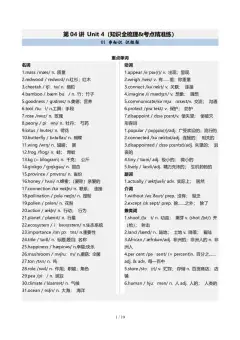
高频短语:keep in mind、run out、go through、link…with…。
学习难点
1.
宾语从句语序辨析(考试最高频易错点)。
2.
结合生活实际,写出逻辑完整的记忆方法、成长感悟短文。
1. We used to fly kites in the park. 我们从前常在公园里放风筝。
【详解】
1. used to do sth. 过去常常做某事
意思就是:以前经常干这件事,现在已经不做了。这个短语只用于描述过去,没有现在时态。
✅否定形式:didn’t use to do / used not to do(两种都对,前者日常更常用)
✅疑问形式:Did + 主语+ use to do...?
�例句:I used to walk to school. 我以前常常步行去上学。
2. be used to doing sth. 习惯于做某事
这里重点注意:末尾的to 是介词,不是不定式符号,所以后面必须加动词ing 形式。时态跟着主语变,现
在习惯、过去习惯都能用。
�例句:She is used to drinking milk every morning. 她习惯每天早上喝牛奶。
3. be used to do sth. = be used for doing sth. 被用来做某事
这是被动语态,专门用来讲物品的用途,翻译为“某物被用来做什么”。
�例句:Knives are used to cut things. 刀子是用来切东西的。
【典例】
He ______ live in the countryside, but now he lives in the city.
A. used to
B. is used to
C. was used to
答案:A
解析:
句子里有明显的对比词but now(但是现在),说明前后是“过去”和“现在”的状态对比。
• A 选项used to + 动词原形,表“过去常常”,完全符合句意;
• B 选项is used to 后面必须接动词ing,而空后是动词原形live,搭配直接错误;
• C 选项was used to 是被动结构,表“被用来”,主语是人,语义完全不通。
【即练1】
She ______ getting up early every day.
A. used to
B. is used to
C. was used to
答案:B
解析:
首先看两个关键线索:①空后是getting(动词ing);②every day(每天),表示现在的常态。
• A used to 后接动词原形,不能接ing,排除;
• B is used to doing 表“现在习惯于做某事”,时态、搭配全匹配;
• C was used to 是过去时态,和“every day 现在常态”矛盾,排除。
【即练2】
Wood ______ make paper.
A. used to
B. is used to
C. is used to do
答案:C
解析:
翻译:木头被用来造纸。这是在说物品的用途,要用被动结构。
• A used to 表“过去常常”,主语一般是人,木头不能“常常做某事”,语义错误;
• B is used to 后要接ing 形式,空后是动词原形make,搭配错误;
• C is used to do 是标准被动结构“被用来做某事”,符合要求。
【即练3】
I ______ swim, but now I can swim very well.
A. didn’t use to
B. used not
C. don’t use to
答案:A
解析:
but now 提示对比:过去不会游泳,现在游得很好,需要用used to 的否定形式。
• A didn’t use to do 是used to 最常用的过去式否定形式,正确;
• B used not 结构残缺,后面必须加to,完整写法是used not to do,选项少了to,错误;
• C don’t 是一般现在时的否定,而本句描述的是过去的情况,时态错误。
2 You know some people’s memory gets worse as they get older. 你知道有些人的记忆力会随着变老不断衰
退。
【详解】
1. get + 形容词比较级
get 在这里是系动词,意思是“变得”,后面加上形容词比较级,表达“慢慢地变得越来越……”,强调一个变
化的过程。get 的形式要跟着主语变:主语单数/不可数名词用gets,主语复数用原形get。
�例句:The flowers get more beautiful in spring. 花儿在春天变得越来越美。
2. as 连词
这个词有三个常用意思,本句里是“随着”,引导时间状语从句;另外还能表示“因为”(表原因)、“当……
的时候”(表时间),做题结合句意判断就行。
�例句:As time goes by, we grow up. 随着时间流逝,我们慢慢长大。
3. 名词所有格people’s
复数名词变所有格,一般直接在后面加’s,用来表示“……的”,本句people’s memory 就是“人们的记忆力”。
�例句:These are students’ books. 这些是学生们的书。
【典例】
The days ______ in summer.
A. get long
B. get longer
C. gets longer
答案:B
解析:
第一步看主语:the days(白天)是复数,所以动词要用原形get,排除C(gets 是三单形式,对应单数主语);
第二步看句意:夏天的白天和其他季节对比,是“变得更长”,需要用形容词比较级longer,A 用的是原级
long,没有对比含义,排除。最终选B。
【即练1】
The weather ______ when autumn comes.
A. get cool
B. gets cooler
C. get cooler
答案:B
解析:
主语the weather(天气)是不可数名词,相当于单数,所以动词要用三单形式gets,排除A、C;
入秋之后天气是慢慢变凉,存在对比,要用比较级cooler,综合判断选B。
【即练2】
______ he grew older, he became wiser.
A. Because
B. As
C. If
答案:B
解析:
翻译:随着他年纪变大,他也变得更加睿智。
• A Because 意思是“因为”,用来解释原因,逻辑不符;
• B As 此处翻译为“随着”,贴合句子语境;
• C If 意思是“如果”,表假设,句意不通。
【即练3】
Our life is ______ than before.
A. getting better
B. get better
C. gets good
答案:A
解析:
首先看到标志词than(比),必须用形容词比较级,C 选项是原级good,直接排除;
其次句子里有be 动词is,be 动词后面不能直接接动词原形get/三单gets,is + 动词ing 构成现在进行时,
表示“正在变得”,所以选getting better。
3 In your case, your grandma still remembers that you love cookies! 就你的情况来说,你奶奶依然记得你爱
吃饼干!
【详解】
1. in one’s case 固定短语
翻译为“就某人而言、针对某人的情况”。这里的one’s 必须用形容词性物主代词(my/your/his/her 等),不
能用人称代词或者名词性物主代词。
�例句:In her case, reading helps her relax. 就她而言,阅读能帮她放松。
2. remember + that 引导宾语从句
that 只是引导词,没有实际意思,口语和写作里还可以省略。
�例句:I remember (that) you like apples. 我记得你喜欢苹果。
3. 宾语从句时态规则:主现从任意
当主句的动词是一般现在时(本句remembers),从句的时态不用受主句限制,根据从句自己的时间、事实
来变:过去的事用过去时,现在的事用现在时,客观真理永远用一般现在时。
4. remember 的两个易混搭配
◦remember doing sth.:记得做过某事(事情已经做完了)
�例句:I remember closing the door. 我记得我关过门了。
◦remember to do sth.:记得要去做某事(事情还没做)
�例句:Remember to close the door. 记得要去关门。
【典例】
I remember that he ______ to Beijing last year.
A. go
B. went
C. goes
答案:B
解析:
主句动词remember 是一般现在时,遵循“主现从任意”。从句里有时间状语last year(去年),明确是过去
发生的动作,所以动词要用一般过去式went。A 原形、C 三单都不符合过去时态,排除。
【即练1】
She remembers that we ______ friends since 2020.
A. are
B. have been
C. were
答案:B
解析:
看到关键词since 2020(自从2020 年以来),这是现在完成时的典型标志,结构是have/has + 动词过去分
词。
主语是we,搭配have,所以用have been;A 一般现在时、C 一般过去时,都不能和since 连用。
【即练2】
In ______ case, practicing every day is helpful.
A. you
B. your
C. yours
答案:B
解析:
固定短语in one’s case,后面有名词case,需要用形容词性物主代词来修饰名词。
• A you 是人称代词,不能修饰名词;
• B your 形容词性物主代词,正确;
• C yours 是名词性物主代词,后面不能再接名词,排除。
【即练3】
I still remember ______ (meet) you once.
答案:meeting
解析:
句中once 意思是“曾经”,说明“见面”这件事已经发生过了。对应搭配remember doing sth.(记得做过某事),
所以动词meet 要变成动名词meeting。
4. Could you tell me why it is easy to forget a word? 你能告诉我为什么很容易忘掉一个单词吗?
【详解】
1. Could you tell me...? 委婉请求句型
这里的could 只是为了语气更礼貌、客气,不代表过去时态。这个句式后面接宾语从句,有一个硬性规则:
从句必须用陈述语序(主语在前,谓语在后),不能用疑问语序。
�例句:Could you tell me where the library is? 你能告诉我图书馆在哪里吗?
2. It is + 形容词+ to do sth. 形式主语句型
it 是形式主语,只是用来占位,避免句子头重脚轻;真正的主语是后面的不定式to do(做某事)。这个句
型翻译:做某事是……的。
�例句:It is happy to play with friends. 和朋友玩耍很开心。
3. why 引导宾语从句
why 是疑问副词,在从句里用来表示原因,同样要遵守陈述语序。
【典例】
Could you tell me ______?
A. where is the bank
B. where the bank is
C. where was the bank
答案:B
解析:
Could you tell me 后面接宾语从句,必须用陈述语序(主语+谓语)。
• A 是疑问语序(谓语is 在主语the bank 前面),错误;
• B 陈述语序,时态也为一般现在时,符合要求;
• C 不仅语序错误,还用了过去式was,本句没有过去的时间提示,时态也错。
【即练1】
It is difficult ______ English well.
A. learn
B. to learn
C. learning
答案:B
解析:
直接套用固定句型It is + 形容词+ to do sth.,空格处需要填不定式to do,所以选to learn。动词原形、现
在分词都不符合这个句型结构。
【即练2】
Could you tell me ______ tomorrow?
A. when will the train leave
B. when the train will leave
答案:B
解析:
首先,tomorrow(明天)表示将来,要用will;其次宾语从句必须用陈述语序:主语the train + 助动词will
+ 谓语。
A 是疑问语序(will 放在主语前),B 是标准陈述语序,所以选B。
【即练3】
It is ______ for us ______ enough sleep.
A. important; have
B. important; to have
答案:B
解析:
第一空填形容词important 没问题;第二空依旧是It is + 形容词+ to do 句型,必须用不定式to have,不
能用动词原形have,因此选B。
5. This was why she dropped the grapes. 这就是她掉落葡萄的原因。
【详解】
1. This/That is/was why + 句子
翻译:这就是……的原因。why 后面接的是事情带来的结果。
�例句:I got sick. That was why I stayed at home. 我生病了,这就是我待在家里的原因。
2. This/That is/was because + 句子
翻译:这是因为……。because 后面接的是造成某件事的缘由。
�例句:I stayed at home. That was because I got sick. 我待在家里,那是因为我生病了。
3. 时态统一:主句用现在时is,就描述现在的事;主句用过去时was,就描述过去发生的事,前后时态保
持一致即可。
【典例】
He got up late. That is ______ he missed the bus.
A. because
B. why
C.that
答案:B
解析:
梳理逻辑:“起床晚”是原因,“错过公交车”是最终结果。
句型规则:why 后面接结果,because 后面接原因。本空后面是结果,所以用why。
【即练1】
He missed the bus. That is ______ he got up late.
答案:because
详细解析:
逻辑分析:“错过公交车”是结果,“起床晚”是背后的原因。because 专门用来引导原因,因此填because。
【即练2】
This was ______ I succeeded at last.
A. why
B. because
C.that
答案:A
解析:
succeeded(成功)是一件事的最终结果,同时主句用了过去式was,搭配This was why 表示“这就是我最
终成功的原因”,选A。
【即练3】
This is ______ people love peaceful life.
A. why
B. so
C.that
答案:A
解析:
本句想表达:这就是人们喜爱平静生活的原因。符合This is why 固定句式;so 是并列连词,不能用在这
个结构里,排除。
6. It is easier to remember a summary than every word in a passage. 相比记住整篇文章每个单词,记住摘要
会更容易。
【详解】
1. It’s + 形容词比较级+ to do A than (to do) B
意思:做A 这件事比做B 这件事更……。than 前后的结构要对称,前面是to do,后面原本也该是to do,
不过后面的to 可以省略。
�例句:It is faster to walk than to run. 走路比跑步更慢。
2. 形容词比较级变化
单音节词一般直接加er(easy →easier);多音节词(长单词)前面加more。
3. than:只要句子里出现than,就代表两者在对比,必须使用形容词/副词的比较级。
【典例】
It is ______ to study hard than waste time.
A. good
B. better
C. best
答案:B
解析:
看到关键词than,确定要用比较级。
• good 是原级;better 是good 的比较级;best 是最高级。结合规则,选比较级better。
【即练1】
It’s harder ______ (finish) the work alone than with help.
答案:to finish
解析:
套用句型It’s + 比较级+ to do sth.,空格处需要填不定式结构,所以填to finish。
【即练2】
It is ______ (easy) to forgive than to hate.
答案:easier
解析:
than 表对比,要求用比较级。easy 是以“辅音字母+y”结尾的单词,变比较级要把y 变i,再加er,即easier。
【即练3】
It is more important ______ keep healthy than ______ make money.
答案:to;to
解析:
than 前后结构要完全对称,完整结构是to do A than to do B,两个动作都是不定式,所以两个空都填to。
7 .The more you review what you learn, the more likely you will remember it. 复习学到的内容越多,记住它
的概率就越大。
【详解】
1. The + 比较级,the + 比较级
超级经典的句型,翻译为:越……,就越……。两个the 一个都不能少,前后都必须搭配形容词/副词的比
较级。
�例句:The more you eat, the fatter you will be. 你吃得越多,就会越胖。
2. likely 是形容词,意为“有可能的”,the more likely 就是“可能性越大”。
3. 本句中what 引导宾语从句,作动词review(复习)的宾语。
【典例】
______ you practice, ______ better you will be.
A. More; the
B. The more; the
C. More; more
答案:B
解析:
固定句型The + 比较级,the + 比较级,前后都必须加定冠词the。只有B 选项符合这个结构。
【即练1】
The ______ (hard) he works, the ______ (happy) he is.
答案:harder;happier
解析:
套用“the+比较级,the+比较级”句型。
hard 直接加er 变成harder;happy 变比较级,变y 为i 再加er,变成happier。
【即练2】
The more you read, the ______ knowledge you will get.
A. much
B. more
答案:B
解析:
依旧是固定句型,必须使用比较级。much 是原级,more 是比较级,the more knowledge 表示“更多的知识”,
选B。
【即练3】
______ earlier you sleep, ______ healthier you feel.
答案:The;the
解析:
句型要求两处都加The,句首单词首字母需要大写,所以两个空都填The。
8. Listening to recorded information can be very effective. 听录音资料(辅助记忆)效果很不错。
【详解】
1. 动名词(doing)作主语
把动词变成ing 形式,放在句子开头当主语,一般用来表示经常性、习惯性的动作。重点规则:动名词作
主语,整体看成单数,后面的谓语动词要用单数形式。
补充:不定式to do 也能作主语,多表示一次性动作。
�例句:Running is good exercise. 跑步是很好的运动。
2. can be + 形容词
can 是情态动词,情态动词后面永远接动词原形,所以这里用be 原形,再接形容词构成系表结构。
【典例】
______ (read) books is helpful.
答案:Reading
解析:
空格在句首,作整个句子的主语。动词原形不能直接作主语,要变成动名词Reading,首字母大写。
【即练1】
______ English songs ______ good for listening.
A. Sing; is
B. Singing; is
答案:B
解析:
第一空作主语,动词sing 要变为动名词Singing;动名词作主语视为单数,所以后面的系动词用is。动词
原形Sing 不能单独作主语,排除A。
【即练2】
______ (exercise) every day keeps you healthy.
答案:Exercising
解析:
every day 表示日常习惯,用动名词作主语,exercise 变为Exercising,首字母大写。
【即练3】
Learning new skills ______ (make) us smarter.
答案:makes
解析:
主语Learning 是动名词,算作单数。句子是一般现在时,主语单数,谓语动词要用第三人称单数形式,
make 变makes。
9 Many more memory techniques can be found in books or online. 在书本和网上能找到更多记忆技巧。
【详解】
1. 情态动词的被动语态:can/may/must + be + 动词过去分词
翻译:能够/可以/必须被……。当句子主语是“物”,且这个物是“被人做某个动作”时,就要用被动语态。
�例句:This room can be cleaned today. 这个房间今天可以被打扫。
2. 主动语态vs 被动语态:
主动:find sth.(某人找到某物)
被动:sth. can be found(某物能被找到)
3. many more + 可数名词复数:表示“更多的、额外的”,用来修饰可数名词。
【详解】
Trees can ______ (plant) in spring.
答案:be planted
解析:
树是“被人们种植”的,主语和动词是被动关系。情态动词can 后面接被动结构be + 过去分词,plant 的过
去分词是planted,所以填be planted。
【即练1】
Work can ______ (finish) in two hours.
答案:be finished
解析:
工作是“被完成”,用被动语态。can + be + 过去分词,finish 过去分词为finished,故填be finished。
【即练2】
Cars must ______ (check) every year.
答案:be checked
解析:
汽车是“被检查”,被动语态。情态动词must 后接be + 过去分词,check 变为checked,填be checked。
【即练3】
Problems can ______ if we try our best.
A. solve
B. be solved
C.solving
答案:B
解析:
主语Problems(问题)不能自己“解决”自己,只能“被解决”,需要用被动语态。A 是主动形式,B 是情态
动词被动结构,选B。
10 When squirrels run out of food, they go straight to the place where they hid nuts. 当松鼠食物耗尽时,它
们会径直前往储存坚果的地方。
【详解】
1. run out of 和run out 区分(必考)
◦run out of + 宾语:人作主语,表示“某人用完了某物”,后面必须加东西(宾语)。
�例句:I ran out of water. 我把水喝完了。
◦run out:物作主语,表示“某物耗尽了”,后面不能加宾语,也没有被动形式。
�例句:My water ran out. 我的水喝完了。
2. where 引导定语从句
先行词是表示地点的名词(本句the place),从句里不缺主语、宾语,只缺地点状语时,就用where 引导。
�例句:This is the park where we played. 这就是我们玩耍过的公园。
3. go straight to... 径直去往……
straight 本身既是形容词也是副词,不需要再加ly,固定用法。
�例句:Go straight to the classroom. 径直走向教室。
【典例】
We have ______ oil. We need more.
A. run out of
B. run out
答案:A
解析:
主语是We(人),且空格后有宾语oil(油)。根据规则:人作主语、后面有宾语,用run out of,选A。run
out 只能物作主语,且后面不能接宾语。
【即练1】
My money ______ yesterday.
A. ran out
B. ran out of
C.running out
答案:A
解析:
主语My money(钱)是物品,同时空格后面没有宾语。物作主语、无宾语,用run out,过去式ran out,
选A。
【即练2】
This is the room ______ I live.
A. where
B. that
C.why
答案:A
解析:
先行词room 是地点名词,从句I live 意思完整,不缺主语和宾语,只缺“在这个房间里”这个地点状语,
所以用where。that 在定语从句中只能充当主语或宾语,不适用。
【即练3】
I have ______ my patience.
A. run out of
B. run out
C.running out
答案:A
解析:
主语I(人),空格后有宾语patience(耐心),符合run out of 的用法,选A。
11 Humans do not know for sure what goes through their minds during the journey. 人类无法确切知晓大雁
在旅途中心里在想什么。
【详解】
1. what 引导宾语从句
what 是连接代词,在从句里可以充当主语或者宾语,从句依旧要使用陈述语序。注意:that 和what 不能
连用。
�例句:I don’t know what you want. 我不知道你想要什么。
2. for sure 固定短语
副词短语,意思是“确切地、毫无疑问地”,放在句中或句末都可以。
�例句:I know for sure he will come. 我确定他会来。
3. during + 时间段:介词,翻译为“在……期间”。
�例句:I read books during the holiday. 我假期里看书。
【典例】
I don’t know ______ he wants.
A. what
B. that
C.what
答案:A
解析:
从句里动词wants 缺少宾语,用what 指代事物作宾语。that 和what 两个引导词不能叠加使用,B 结构
错误,选A。
【即练1】
No one knows ______ is waiting outside.
A. who
B. whose
C. which
答案:A
解析:
从句缺少主语,who 表示“谁”,可以单独在从句中作主语;whose 意为“谁的”,后面必须接名词,不能单
独作主语,选A。
【即练2】
We can’t tell ______ will happen later for sure.
A. what
B. how
C.what
答案:A
详细解析:
从句缺少主语,happen 前面需要有名词/代词作主语。what 指代“事情”,可作主语;how 是副词,只能作
状语,不能当主语,选A。
【即练3】
I know for ______ that he will come.(选词:sure/certain)
答案:sure
解析:
固定搭配for sure,是英语里的常用短语,表示“确定、肯定”,所以填sure。
12 If I do forget some words, I shouldn’t panic. Just remember the key words and continue! 如果我忘词了,
不必慌张,记住关键词继续往下讲就好。
【详解】
1. if 引导真实条件状语从句:主将从现
规则:if 引导的从句用一般现在时,主句可以用将来时、情态动词(can/should/shouldn’t 等)。
�例句:If it rains tomorrow, we will stay home. 如果明天下雨,我们就待在家里。
2. do/does/did + 动词原形
这是强调用法,翻译为“确实、真的”。do/does 用于现在时,did 用于过去时,不管用哪个,后面都必须加
动词原形。
�例句:I do like music. 我真的很喜欢音乐。
3. shouldn’t + 动词原形
shouldn’t 是情态动词should 的否定形式,后面永远接动词原形,意为“不应该……”。
【典例】
I do ______(love) summer.
答案:love
解析:
do 在这里用来加强语气,表“确实”。助动词do 后面必须搭配动词原形,所以填love。
【即练1】
He does ______(like) reading in his free time.
答案:like
解析:
does 是三单形式的助动词,用来强调,后面统一接动词原形like。
【即练2】
If it ______(rain) tomorrow, we will stay at home.
答案:rains
解析:
if 条件状语从句,遵循“主将从现”。主句用了will(将来时),从句用一般现在时;主语it 是单数,动词rain
变三单rains。
【即练3】
They did ______(finish) their homework on time yesterday.(强调确实完成)
答案:finish
解析:
did 是过去式的强调助动词,按照规则,后面必须使用动词原形,所以填finish。
一、单词拼写
1. When you are in a new place, you should ______ (安置;使处于) yourself carefully.
答案:position
2. It’s common to feel ______ (悲伤) when you lose something important.
答案:sadness
3. Don’t ______ (用完;耗尽) all your energy too early in the game.
答案:run out of
4. He didn’t ______ (作出反应;回应) to my message at all.
答案:react
5. Please don’t ______ (弄乱) the papers on my desk.
答案:mix up
6. You should ______ (复述) the story in your own words.
答案:retell
7. Can you ______ (记忆;记住) all these new words in a week?
答案:memorize
8. Let’s ______ (仔细察看;经历) the plan step by step.
答案:go through
9. You must ______ (记住;记在心中) these safety rules.
答案:keep (…) in mind
10. Can you give me a ______ (实例;事例) to explain your idea?
答案:case
二、单项选择
1. —My grandpa ______ walk after supper, but now he likes staying at home.
A. used to
B. is used to
C. was used to
【答案】A
【解析】used to do 过去常常;be used to doing 习惯于;be used to do 被用来。but now 表示今昔对比,过去
饭后散步现在不做,选A。B 后面要加doing,C 表被动用途,语义搭配全错。
2. The weather ______ colder and colder when winter comes.
A. get
B. gets
C. getting
【答案】B
【解析】weather 为不可数名词,谓语动词用三单;get+比较级表示“变得越来越……”,A 原形主谓不一致,
C 不能单独作谓语。
3. Could you tell me ______? I want to buy some cookies.
A. where is the supermarket
B. where the supermarket is
C. where was the supermarket
【答案】B
【解析】宾语从句必须陈述语序:连接词+主语+谓语;A 疑问语序,C 时态+语序双重错误。could 表委婉
提问,不代表过去时态。
4. He failed the exam. That is ______ he didn’t review lessons carefully.
A. why
B. because
C. so
【答案】B
【解析】because 后接原因,why 后接结果。“没认真复习”是考试失利的原因,用because。
5. It is easier ______ short articles than ______ long passages.
A. to read; to write
B. read; write
C. reading; writing
【答案】A
【解析】固定句型:It’s+比较级+to do A than to do B,than 前后不定式结构对称,不定式作真正主语。
6. ______ you check your notes, ______ fewer mistakes you’ll make.
A. More; the
B. The more; the
C. The much; the more
【答案】B
【解析】固定结构The+比较级,the+比较级:越……就越……。much 原级,more 是比较级。
7. ______ English every day helps us improve quickly.
A. Speak
B. Speaking
C. To speaking
【答案】B
【解析】动名词doing 放句首作主语,谓语用单数;动词原形不能单独作主语,C 搭配错误。
8. These useful memory methods ______ in our daily study.
A. can use
B. can be used
C. are use
【答案】B
【解析】情态动词被动语态:can be + done。方法“被使用”,A 主动语态,主语不能主动发出use;C 语法
形式错误。
9. I’ve ______ my ink, so I need to buy another bottle.
A. run out
B. run out of
C. ran out of
【答案】B
【解析】人作主语+宾语用run out of;物作主语无宾语用run out。have+过去分词,run 原形→过去分词run。
A 后面不能接宾语ink。
10. He did ______ finish all tasks though he felt tired.(本句did 用来加强语气)
A. finished
B. finish
C. to finish
【答案】B
【解析】do/does/did+动词原形用来强调语气,无论何种时态,后面一律用动词原形。
三、语法填空
We know that people’s memory 1.______ (get) worse as they grow older. So we need some good ways
2.______ (improve) our memory.
First, it is easier to remember a summary 3.______ every single word in a passage. Second, review what you
learn often. 4.______ more you review, the better you will remember things.
Many memory skills can be found 5.______ books or online. When you learn new words, don’t panic
6.______ you forget them sometimes. I 7.______ (use) to forget words quickly, but now I can keep them in mind
well.
Listening to recordings is also 8.______ useful way. It helps a lot. In 9.______ (I) case, these methods have
brought me great changes. I believe everyone can become good at 10.______ (remember) things with proper skills.
1. 答案:gets
考点:一般现在时+ 主谓一致
解析:本句讲述客观常识,用一般现在时。主语people’s memory 为单数,谓语动词要用第三人称单数形
式,get 变为gets。
2. 答案:to improve
考点:动词不定式(非谓语动词)
解析:固定搭配ways to do sth. 意为“做某事的方法”,此处用动词不定式作后置定语,故填to improve。
3. 答案:rather
考点:连词(纯空)
解析:固定短语rather than 表示“而不是”。句意:记住摘要比记住文章里的每一个单词要更容易。
4. 答案:The
考点:定冠词(纯空)
解析:本题考查经典句型The + 比较级,the + 比较级,意为“越……,就越……”。空格位于句首,单词首
字母需大写,故填The。
5. 答案:in
考点:介词(纯空)
解析:固定搭配in books 表示“在书本中”,与后面online(在网上)并列,故填介词in。
6. 答案:if
考点:连词(引导条件状语从句)
解析:if 意为“如果”,引导条件状语从句。句意:当你学习新单词时,如果偶尔忘记了也不要慌张。
7. 答案:used
考点:一般过去时+ 固定短语
解析:后半句but now 表示今昔对比,说明前半句描述过去的状态。used to do sth. 是固定用法,表示“过
去常常做某事”,故填used。
8. 答案:a
考点:不定冠词
解析:way 为可数名词单数,此处表泛指“一种方法”。useful 发音以辅音音素开头,因此用不定冠词a。
9. 答案:my
考点:代词转换(人称代词→形容词性物主代词)
解析:固定短语in one’s case 意为“就某人而言”,空格后有名词case,需要用形容词性物主代词修饰,人
称代词I 对应的物主代词为my。
10. 答案:remembering
考点:动名词(非谓语动词)
解析:固定搭配be good at doing sth. 意为“擅长做某事”,介词at 后面要接动名词形式,故remember 变
为remembering。
四、阅读理解
阅读短文,从每题所给的A、B、C、D 四个选项中选出最佳答案。
The word “kai he” (“开盒”), first from online game groups, has become a hot word on Chinese internet. It
means the bad act of showing others’ personal information, like real names, home addresses or phone numbers, in
illegal ways. This often happens because of online fights or conflicts between fans. It has made many people worry
about privacy protection and online violence.
In 2023, a well-known case about a teenager spread quickly online. The teen was said to use foreign databases
to “kai he” on strangers. This made the public very angry. The case showed that more young people are taking part
in online bullying. Some kids are the ones doing the bad things, while others are the victims (受害者).
Law experts say “kai he” breaks China’s Personal Information Protection Law. People who organize or join
such acts may face criminal punishment. For serious cases, they could even stay in prison for up to seven years.
The word “kai he” tells us: what you do online has real-world results. Everyone must be responsible for what
they do on the internet.
1. What does “kai he” mean according to the passage?
A.
Sharing others’ personal information illegally
B.
Fighting with other fans online
C.
Protecting people’s personal information
D.
Using foreign databases to study
答案:A
解析:根据文章第一段第二句“It means the bad act of showing others’ personal information... in illegal ways.”可
知,“开盒”指非法泄露他人个人信息的行为,和A 选项完全对应。B 是导致“开盒”的原因之一,不是含义;
C 和D 与原文意思相反或无关。
2. Why does “kai he” often happen?
A.
To protect privacy
B.
Because of online fights or conflicts
C.
To spread positive information
D.
Because people want to make friends
答案:B
解析:根据文章第一段“This often happens because of online fights or conflicts between fans.”直接对应B 选项。
A、C、D 都和原文提到的原因不符。
3. What can we learn from the passage?
A.
“Kai he” is a safe way to solve conflicts
B.
Teenagers are never the victims of “kai he”
C.
“Kai he” may lead to criminal punishment
D.
What you do online has no real-world influence
答案:C
解析:根据文章第三段“People who organize or join such acts may face criminal punishment.”可知,参与“开盒”
行为可能面临刑事处罚,C 选项正确。A 错误,原文明确这是不良行为;B 错误,文中提到青少年既可能是
施暴者也可能是受害者;D 错误,最后一段明确说明网络行为会有现实后果。
4. What is the main purpose of the passage?
A.
To introduce a popular online game
B.
To warn people against the harm of “kai he”
C.
To teach people how to protect their personal information
D.
To show the fun of online activities
答案:B
解析:全文介绍了“开盒”的定义、危害和法律后果,目的是警示人们这种行为的风险,B 选项符合主旨。A、
D 和文章主题无关;C 不是文章的主要目的,文章侧重警示而非教保护方法。