文档文本内容
──────────────────────────────
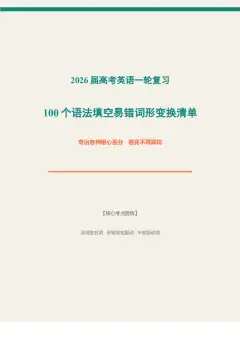
2026 高考英语
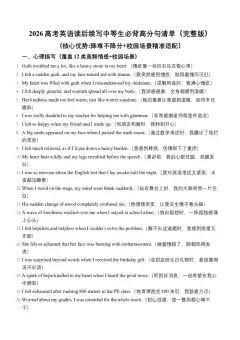
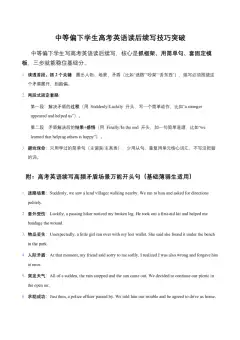
读后续写与写作高分短语替换库
──────────────────────────────
基础词汇→高级短语一站式替换指南
覆盖情感描写 · 动作描写 · 环境描写 三大类别
资深高三英语教研组编写
2026 年版
前言
教了这么多年高三英语,我见过最多的就是这种情况——学生写作文,一开头就是“I
am very happy”“She is very sad”“The weather is very good”,整篇作文读下来,全是“very + 形
容词”的套路,干巴巴的,没有一点层次感。这不是学生不努力,而是他们手里没有“弹
药”。词汇贫乏是写作低分的根本原因,而“very + 形容词”这种幼稚表达就是作文干瘦的
罪魁祸首。当你还在用very happy 的时候,别人已经写出on cloud nine,分数差距就拉开
了。
这份资料的核心思路就是“替换”。我们不是让你从零背一堆新短语,而是把你已经
会的基础词汇,直接替换成高级短语。比如very sad 换成heart-broken,very angry 换成fly
into a rage,very tired 换成worn out。这种替换是立竿见影的,因为你已经知道基础词的意
思,只需要把“外壳”升级一下就行。这比你另外背一百个从没见过的短语效率高得多,
而且写作时能马上用上,不会出现“背了但写不出来”的尴尬。
这份替换库分了三大类:情感描写、动作描写、环境描写,基本覆盖了读后续写和书
面表达的所有场景。每个替换都标注了适用语境和例句,让你知道什么时候用、怎么用。
建议大家不要贪多,每个类别先挑三五个最顺手的练熟,写作时能自然用出来就行。与其
背了一百个写不出来,不如精通二十个能随手用的。记住,写作提分不靠花哨,靠的是把
简单词换成高级表达这个动作做到位。
一、情感描写短语替换
情感描写是读后续写和书面表达的重头戏。高考写作中,情感描写占了很大比例,但
很多同学写情感就只会用happy、sad、angry 这几个词,写出来的东西干篇一律。下面这些
替换能让你的情感描写立马有层次、有画面感。
① 喜悦类

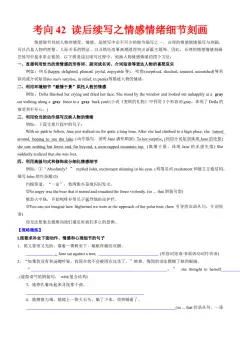
➤very happy  →  on cloud nine
【适用语境】强烈喜悦,兴奋不已,常用于获得好消息或得奖时
【例句】When she heard the admission letter had arrived, she was on cloud nine and couldn’t stop
smiling.

➤very happy  →  over the moon
【适用语境】开心到极点,常用于意外惊喜的场合
【例句】He was over the moon when he learned he had won the scholarship.

➤very happy  →  in high spirits
【适用语境】情绪高涨,常用于描写群体氛围
【例句】The whole class was in high spirits after winning the basketball match.
② 悲伤类

➤very sad  →  heart-broken
【适用语境】心碎的,常用于失去亲人或感情破裂
【例句】She was heart-broken when her pet dog passed away.

➤very sad  →  down in the dumps
【适用语境】情绪低落,常用于考试失利或受挫折
【例句】After failing the exam, he was down in the dumps for days.

➤very sad  →  in tears
【适用语境】泣不成声,常用于当场哭泣的场景
【例句】The little girl was in tears when she couldn’t find her mother in the crowd.
③ 愤怒类

➤very angry  →  fly into a rage
【适用语境】勃然大怒,常用于突然发火的场合
【例句】The teacher flew into a rage when he saw the students cheating.

➤very angry  →  see red
【适用语境】气得发犯,常用于被触怒的场合
【例句】When he was accused of lying, he saw red and slammed the door.

➤very angry  →  lose one’s temper
【适用语境】发脾气,常用于描写形容失控
【例句】She rarely loses her temper, but this time she couldn’t hold back.
④ 恐惧类

➤very scared  →  scared stiff
【适用语境】吓得僵住,常用于突发恐惧场景
【例句】When the earthquake struck, she was scared stiff and couldn’t move.

➤very scared  →  tremble with fear
【适用语境】吓得发抖,常用于身体反应描写
【例句】The boy trembled with fear when he saw the fierce dog running toward him.

➤very scared  →  have butterflies in one’s stomach
【适用语境】紧张得不行,常用于考试或比赛前
【例句】I had butterflies in my stomach before giving the speech.
⑤ 惊讶类

➤very surprised  →  be taken aback
【适用语境】大吃一惊,常用于意外消息
【例句】She was taken aback by the unexpected news of her promotion.

➤very surprised  →  be struck dumb
【适用语境】惊得说不出话,常用于极度震惊
【例句】When he saw the score, he was struck dumb for a moment.
⑥ 紧张类

➤very nervous  →  on edge
【适用语境】神经紧张,常用于等待结果时
【例句】The whole family was on edge waiting for the doctor’s report.

➤very nervous  →  bite one’s nails
【适用语境】焦虑不安,常用于等待时的动作描写
【例句】She was biting her nails while waiting for the interview result.
⑦ 激动类

➤very excited  →  can’t wait
【适用语境】迫不及待,常用于期待某事
【例句】The children couldn’t wait to open their Christmas presents.

➤very excited  →  thrilled to bits
【适用语境】激动万分,常用于得到期盼之物
【例句】She was thrilled to bits when she got the concert tickets.
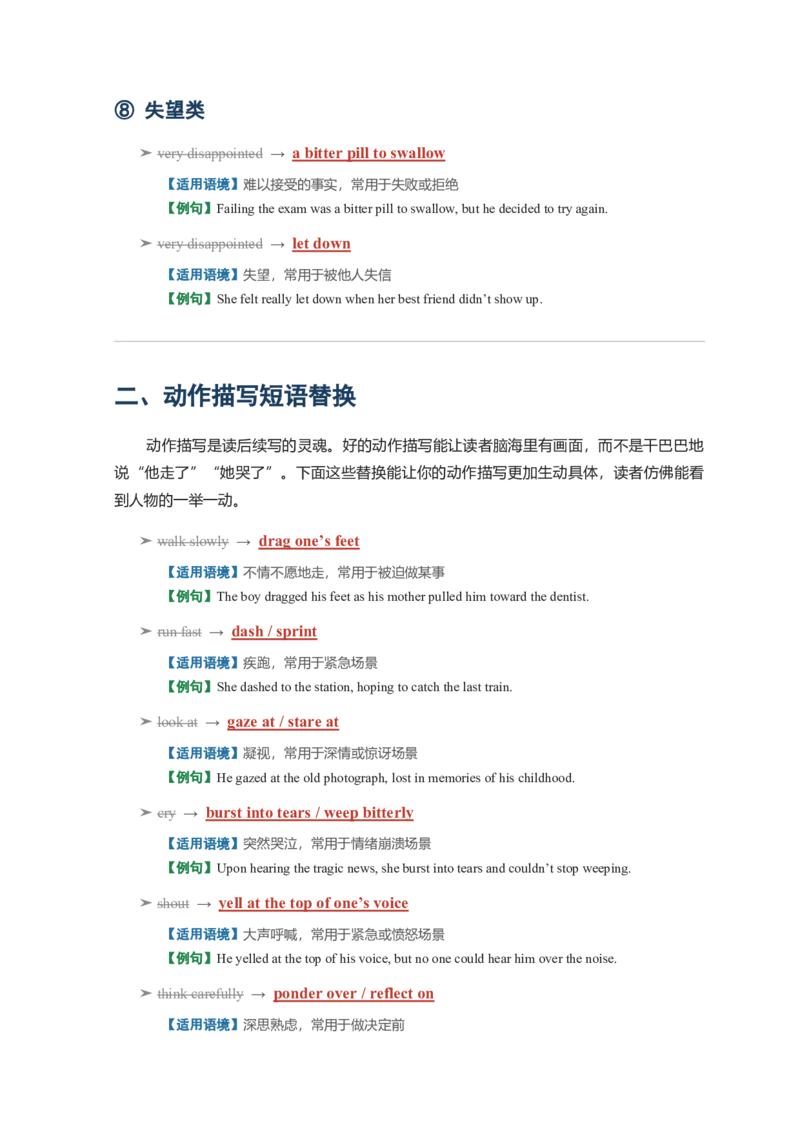
⑧ 失望类

➤very disappointed  →  a bitter pill to swallow
【适用语境】难以接受的事实,常用于失败或拒绝
【例句】Failing the exam was a bitter pill to swallow, but he decided to try again.

➤very disappointed  →  let down
【适用语境】失望,常用于被他人失信
【例句】She felt really let down when her best friend didn’t show up.
二、动作描写短语替换
动作描写是读后续写的灵魂。好的动作描写能让读者脑海里有画面,而不是干巴巴地
说“他走了”“她哭了”。下面这些替换能让你的动作描写更加生动具体,读者仿佛能看
到人物的一举一动。

➤walk slowly  →  drag one’s feet
【适用语境】不情不愿地走,常用于被迫做某事
【例句】The boy dragged his feet as his mother pulled him toward the dentist.

➤run fast  →  dash / sprint
【适用语境】疾跑,常用于紧急场景
【例句】She dashed to the station, hoping to catch the last train.

➤look at  →  gaze at / stare at
【适用语境】凝视,常用于深情或惊讶场景
【例句】He gazed at the old photograph, lost in memories of his childhood.

➤cry  →  burst into tears / weep bitterly
【适用语境】突然哭泣,常用于情绪崩溃场景
【例句】Upon hearing the tragic news, she burst into tears and couldn’t stop weeping.

➤shout  →  yell at the top of one’s voice
【适用语境】大声呼喊,常用于紧急或愤怒场景
【例句】He yelled at the top of his voice, but no one could hear him over the noise.

➤think carefully  →  ponder over / reflect on
【适用语境】深思熟虑,常用于做决定前
【例句】She pondered over the offer for days before making a decision.

➤try hard  →  spare no effort / go all out
【适用语境】全力以赴,常用于努力奋斗场景
【例句】The team spared no effort in preparing for the competition.

➤give up  →  throw in the towel / call it quits
【适用语境】放弃,常用于坚持后仍失败
【例句】After three failed attempts, he was tempted to throw in the towel.

➤help  →  lend a helping hand / come to one’s aid
【适用语境】伸出援手,常用于主动帮助场景
【例句】When the old man fell, several passers-by came to his aid immediately.

➤remember  →  bear in mind / keep in mind
【适用语境】记住,常用于忠告或提醒
【例句】Please bear in mind that the deadline is next Friday.

➤decide  →  make up one’s mind / resolve to
【适用语境】下定决心,常用于重要决定
【例句】She made up her mind to study abroad, no matter how hard it would be.

➤wait  →  wait anxiously / count the days
【适用语境】焦急等待,常用于期盼场景
【例句】She counted the days until her father would come back from abroad.

➤hide  →  conceal oneself / take shelter
【适用语境】藏身,常用于躲避危险场景
【例句】The children took shelter under the big tree when the rain started.

➤leave  →  head for / set off for
【适用语境】出发前往,常用于旅行或离开场景
【例句】They headed for the airport early in the morning to catch the flight.

➤refuse  →  turn down / shake one’s head
【适用语境】拒绝,常用于委婉拒绝场景
【例句】She shook her head firmly, turning down the unfair proposal.
三、环境描写短语替换
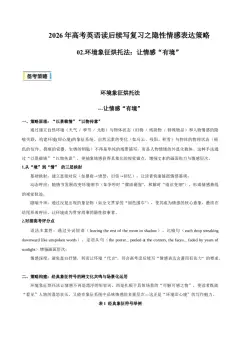
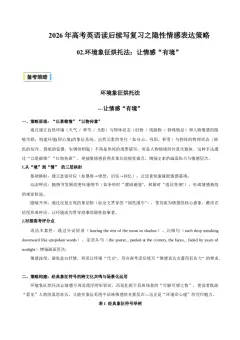
环境描写看似是“配角”,实际上在读后续写里往往起到烘托氛围、推动情节的作
用。一个好的环境描写能让读者身临其境,跟着作者的笔触走进故事。下面这些替换能让
你的环境描写从“天很黑”升级到“夜幕如墨”,立马拉开档次。

➤very dark  →  pitch-black / as dark as ink
【适用语境】漆黑一片,常用于夜晚或室内场景
【例句】The room was pitch-black, and she had to grope her way to the window.

➤very quiet  →  as silent as the grave / dead silent
【适用语境】死一般安静,常用于紧张或恐惧氛围
【例句】The forest was as silent as the grave, which made her even more nervous.

➤very cold  →  freezing cold / bitterly cold
【适用语境】寒刺骨髓,常用于冬天户外场景
【例句】It was bitterly cold outside, and the wind cut through his thin jacket.

➤very hot  →  boiling hot / scorching
【适用语境】酷热难当,常用于夏天高温场景
【例句】The sun was scorching, and the road seemed to melt under their feet.

➤very beautiful  →  breathtaking / picturesque
【适用语境】美不胜收,常用于自然风光描写
【例句】The view from the hilltop was breathtaking, with golden fields stretching to the horizon.

➤very dirty  →  filthy / covered in dirt
【适用语境】脏乱不堪,常用于环境恶劣场景
【例句】The abandoned house was filthy, with dust covering every surface.

➤very noisy  →  deafening / ear-splitting
【适用语境】震耳欲聋,常用于嘈杂场景
【例句】The deafening sound of the explosion made everyone cover their ears.

➤very windy  →  howling wind / gusting wind
【适用语境】狂风呼啸,常用于暴风雨场景
【例句】The howling wind rattled the windows all night long.

➤very rainy  →  pouring rain / raining cats and dogs
【适用语境】大雨倾盆,常用于暴雨场景
【例句】It was raining cats and dogs, and they had to take shelter in a café.

➤very bright  →  dazzling / blinding light
【适用语境】耀眼刺目,常用于阳光或灯光场景
【例句】The dazzling sunlight reflected off the snow, making her squint.

➤very foggy  →  shrouded in mist / thick fog
【适用语境】大雾弥漫,常用于早晨或山区场景
【例句】The valley was shrouded in mist, and nothing could be seen beyond ten meters.

➤very old (building)  →  dilapidated / run-down
【适用语境】破旧不堪,常用于废弃建筑场景
【例句】The dilapidated warehouse looked like it might collapse at any moment.
四、过渡与逻辑连接短语替换
很多同学写作文的时候,句子和句子之间就是用but、so、and 三个词一笔带过,读起
来就像小学生写的。过渡词和逻辑连接词的升级,是写作提分最简单的一步。下面这些替
换不需要你改变写作思路,只需要把but 换成however,so 换成therefore,整篇作文的档次
感立马就上来了。

➤but  →  however / nevertheless / on the contrary
【说明】转折词替换,让逻辑更清晰

➤so  →  therefore / consequently / as a result
【说明】因果词替换,让说理更有力

➤and  →  moreover / furthermore / in addition
【说明】递进词替换,让层次更丰富

➤in fact  →  as a matter of fact / indeed
【说明】强调词替换,让语气更肯定

➤for example  →  for instance / to illustrate / take ... for example
【说明】举例词替换,让论证更具体

➤at last  →  eventually / ultimately / in the end
【说明】结果词替换,让结尾更有力

➤I think  →  from my perspective / in my view / as far as I am concerned
【说明】观点词替换,让表达更正式

➤very  →  extremely / remarkably / exceptionally
【说明】程度副词替换,让语气更强烈
五、使用建议
第一,不要贪多。这份资料里的替换很多,但你不需要全部记住。每个类别先挑三到
五个最顺手的,写作时能自然用出来就行。背了太多反而会混淆,写作时想不起来等于白
背。
第二,用对地方比用得多更重要。on cloud nine 是表示开心,但你不能在任何开心的场
合都用。它更适合“突然的、强烈的喜悦”,比如收到录取通知、得知比赛获奖。如果只
是普通的心情不错,用in a good mood 就够了。每个短语的适用语境我都标注了,一定要
看。
第三,练的时候要写完整句子。光看例句不够,自己要动笔写三到五个句子,把新短
语用进去。写完之后再对照例句看看用得对不对。只有写过的短语,考场上才能真正用出
来。
第四,读后续写和书面表达的重点不一样。读后续写重视叙事和描写,情感和动作类
短语更常用;书面表达重视论证和说理,过渡和逻辑连接词更常用。大家可以根据自己的
薄弱环节重点突破。