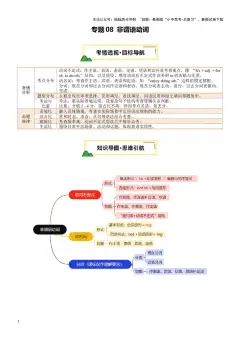
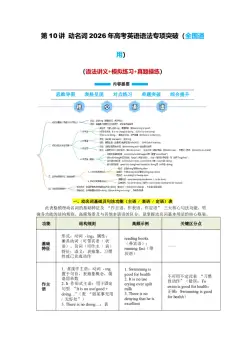
第19 讲 动词不定式
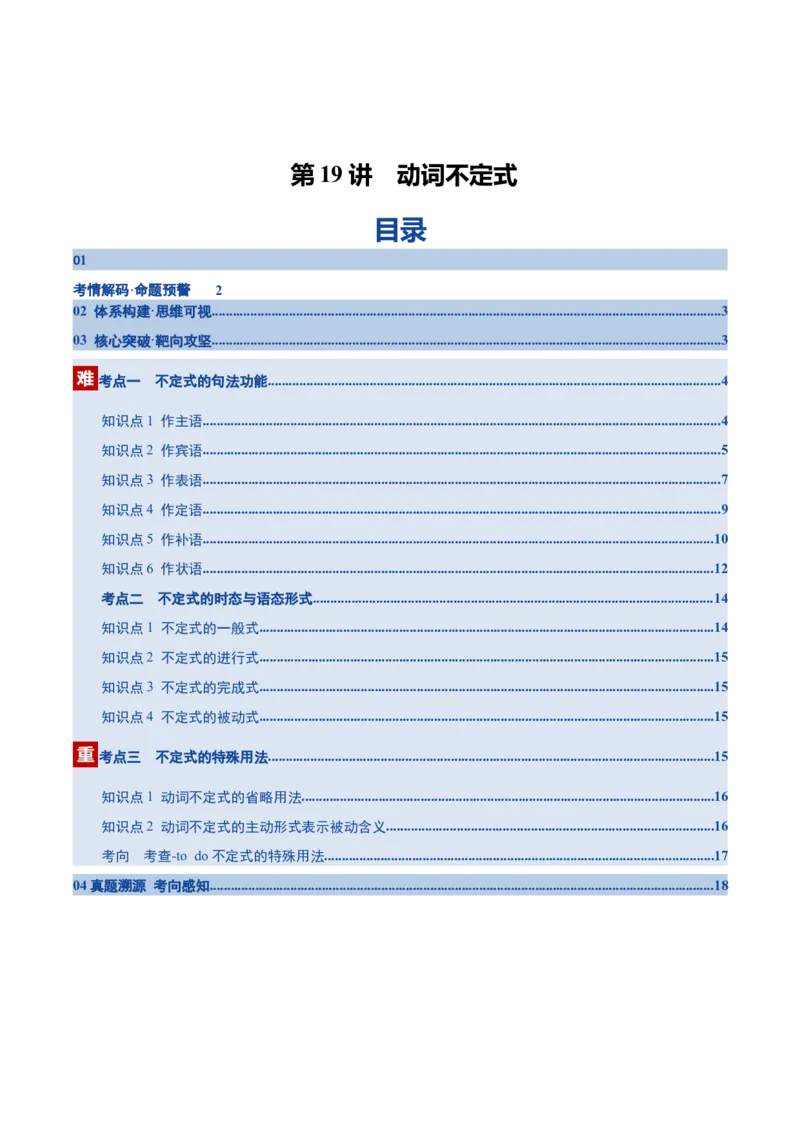
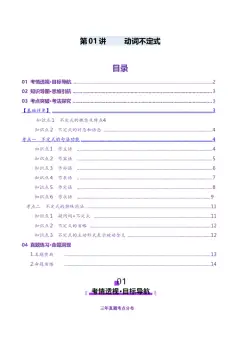
目录
01
考情解码·命题预警
2
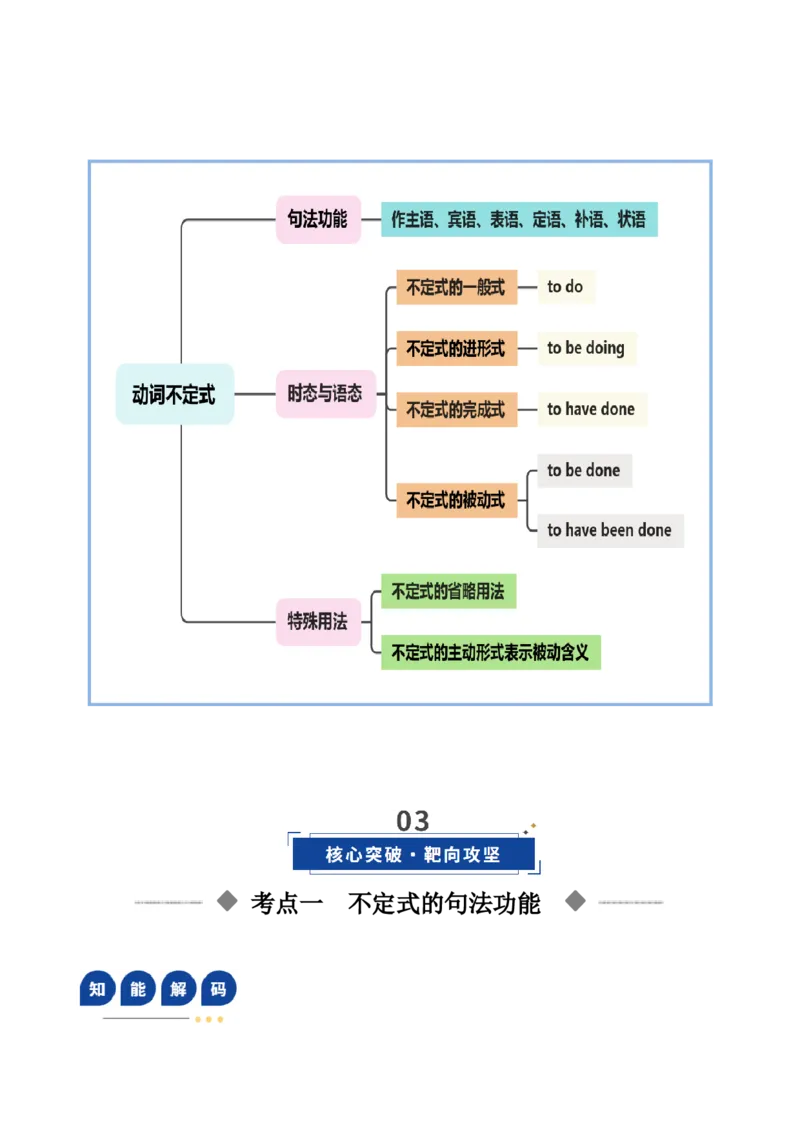
02 体系构建·思维可视.................................................................................................................................................3
03 核心突破·靶向攻坚.................................................................................................................................................3
考点一 不定式的句法功能.................................................................................................................................4
知识点1 作主语....................................................................................................................................................4
知识点2 作宾语....................................................................................................................................................5
知识点3 作表语....................................................................................................................................................7
知识点4 作定语....................................................................................................................................................9
知识点5 作补语..................................................................................................................................................10
知识点6 作状语..................................................................................................................................................12
考点二 不定式的时态与语态形式..................................................................................................................14
知识点1 不定式的一般式..................................................................................................................................14
知识点2 不定式的进行式..................................................................................................................................15
知识点3 不定式的完成式..................................................................................................................................15
知识点4 不定式的被动式..................................................................................................................................15
考点三 不定式的特殊用法...............................................................................................................................15
知识点1 动词不定式的省略用法......................................................................................................................16
知识点2 动词不定式的主动形式表示被动含义.............................................................................................16
考向 考查-to do 不定式的特殊用法...............................................................................................................17
04 真题溯源 考向感知................................................................................................................................................18
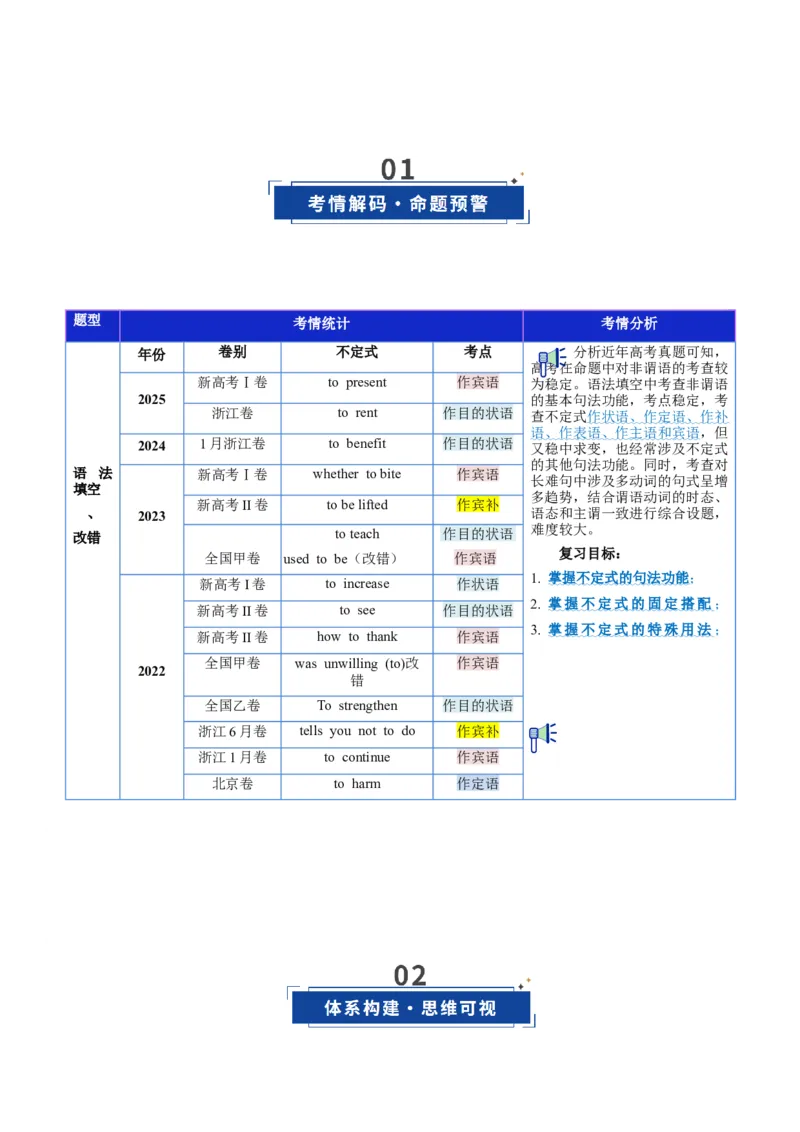
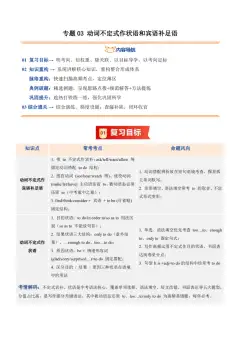
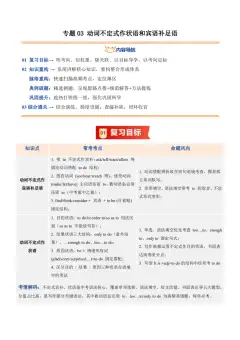
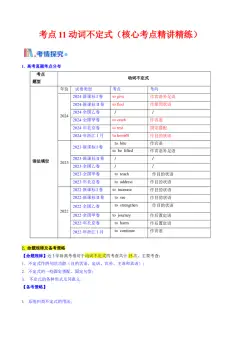
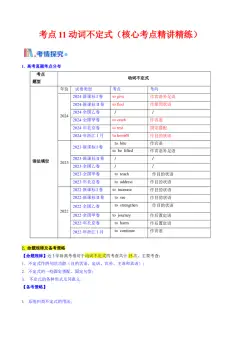
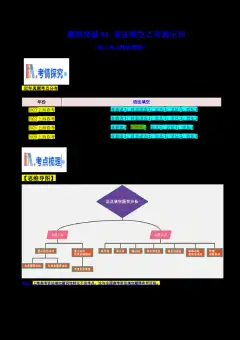
题型
考情统计
考情分析
语
法
填空
、
改错
年份
卷别
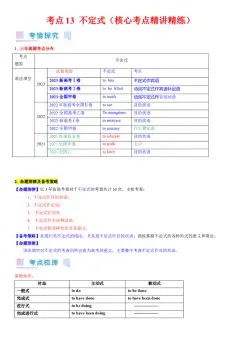
不定式
考点
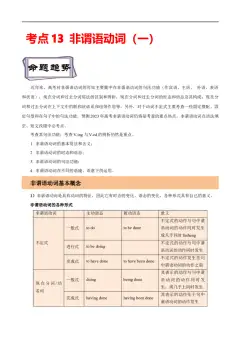
分析近年高考真题可知,
高考在命题中对非谓语的考查较
为稳定。语法填空中考查非谓语
的基本句法功能,考点稳定,考
查不定式作状语、作定语、作补
语、作表语、作主语和宾语,但
又稳中求变,也经常涉及不定式
的其他句法功能。同时,考查对
长难句中涉及多动词的句式呈增
多趋势,结合谓语动词的时态、
语态和主谓一致进行综合设题,
难度较大。
复习目标:
1. 掌握不定式的句法功能
;
2. 掌握不定式的固定搭配
;
3. 掌握不定式的特殊用法
;
2025
新高考Ⅰ卷
to present
作宾语
浙江卷
to rent
作目的状语
2024
1 月浙江卷
to benefit
作目的状语
2023
新高考Ⅰ卷
whether to bite
作宾语
新高考II 卷
to be lifted
作宾补
全国甲卷
to teach
used to be(改错)
作目的状语
作宾语
2022
新高考I 卷
to increase
作状语
新高考II 卷
to see
作目的状语
新高考II 卷
how to thank
作宾语
全国甲卷
was unwilling (to)改
错
作宾语
全国乙卷
To strengthen
作目的状语
浙江6 月卷
tells you not to do
作宾补
浙江1 月卷
to continue
作宾语
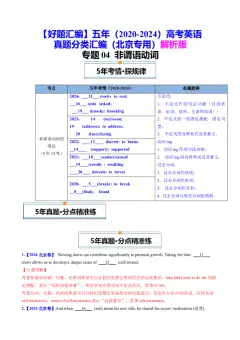
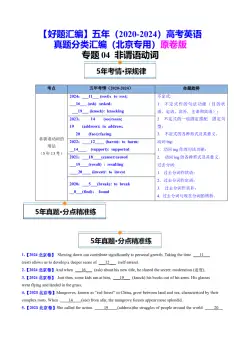
北京卷
to harm
作定语
考点一 不定式的句法功能
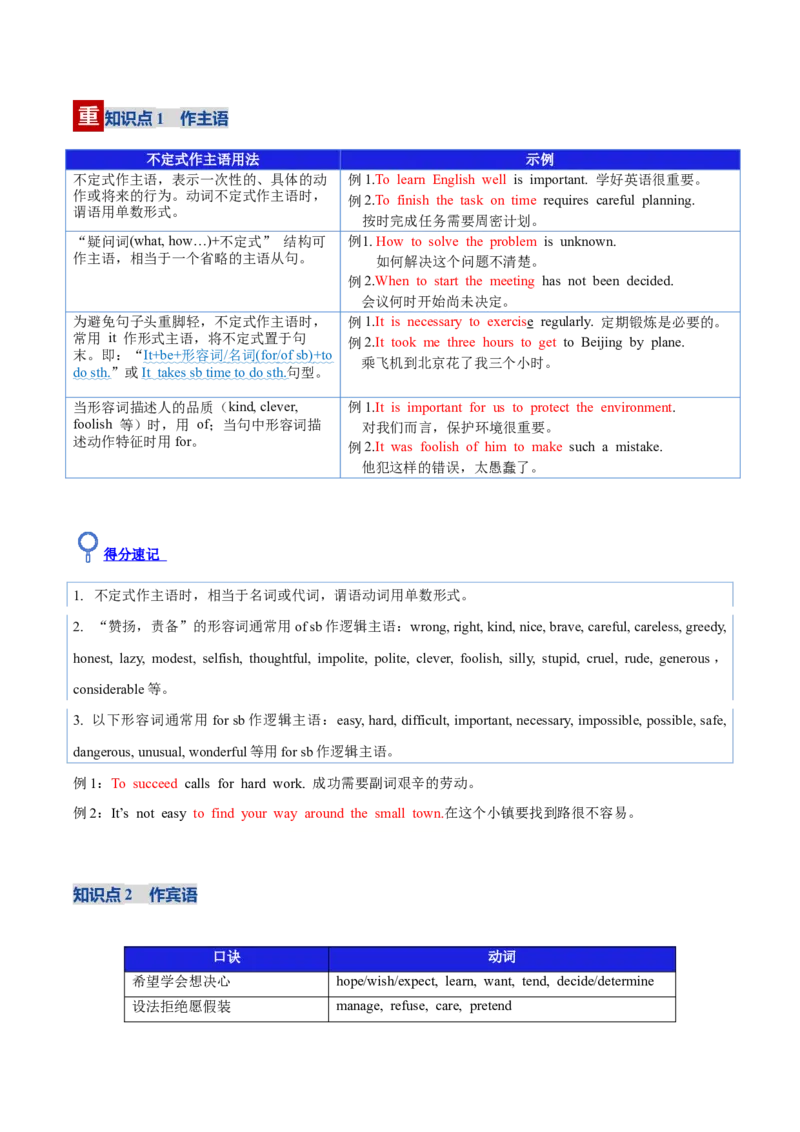
知识点1 作主语
不定式作主语用法
示例
不定式作主语,表示一次性的、具体的动
作或将来的行为。动词不定式作主语时,
谓语用单数形式。
例1.To learn English well is important. 学好英语很重要。
例2.To finish the task on time requires careful planning.
按时完成任务需要周密计划。
“疑问词(what, how…)+不定式” 结构可
作主语,相当于一个省略的主语从句。
例1. How to solve the problem is unknown.
如何解决这个问题不清楚。
例2.When to start the meeting has not been decided.
会议何时开始尚未决定。
为避免句子头重脚轻,不定式作主语时,
常用 it 作形式主语,将不定式置于句
末。即:“It+be+
形容词
/ 名词
(for
/of sb
) +to
do sth.”或It takes sb time to do sth.
句型。
例1.It is necessary to exercise regularly. 定期锻炼是必要的。
例2.It took me three hours to get to Beijing by plane.
乘飞机到北京花了我三个小时。
当形容词描述人的品质(kind, clever,
foolish 等)时,用 of;当句中形容词描
述动作特征时用for。
例1.It is important for us to protect the environment.
对我们而言,保护环境很重要。
例2.It was foolish of him to make such a mistake.
他犯这样的错误,太愚蠢了。
得分速记
1. 不定式作主语时,相当于名词或代词,谓语动词用单数形式。
2. “赞扬,责备”的形容词通常用of sb 作逻辑主语:wrong, right, kind, nice, brave, careful, careless, greedy,
honest, lazy, modest, selfish, thoughtful, impolite, polite, clever, foolish, silly, stupid, cruel, rude, generous ,
considerable 等。
3. 以下形容词通常用for sb 作逻辑主语:easy, hard, difficult, important, necessary, impossible, possible, safe,
dangerous, unusual, wonderful 等用for sb 作逻辑主语。
例1:To succeed calls for hard work. 成功需要副词艰辛的劳动。
例2:It’s not easy to find your way around the small town.在这个小镇要找到路很不容易。
知识点2 作宾语
口诀
动词
希望学会想决心
hope/wish/expect, learn, want, tend, decide/determine
设法拒绝愿假装
manage, refuse, care, pretend
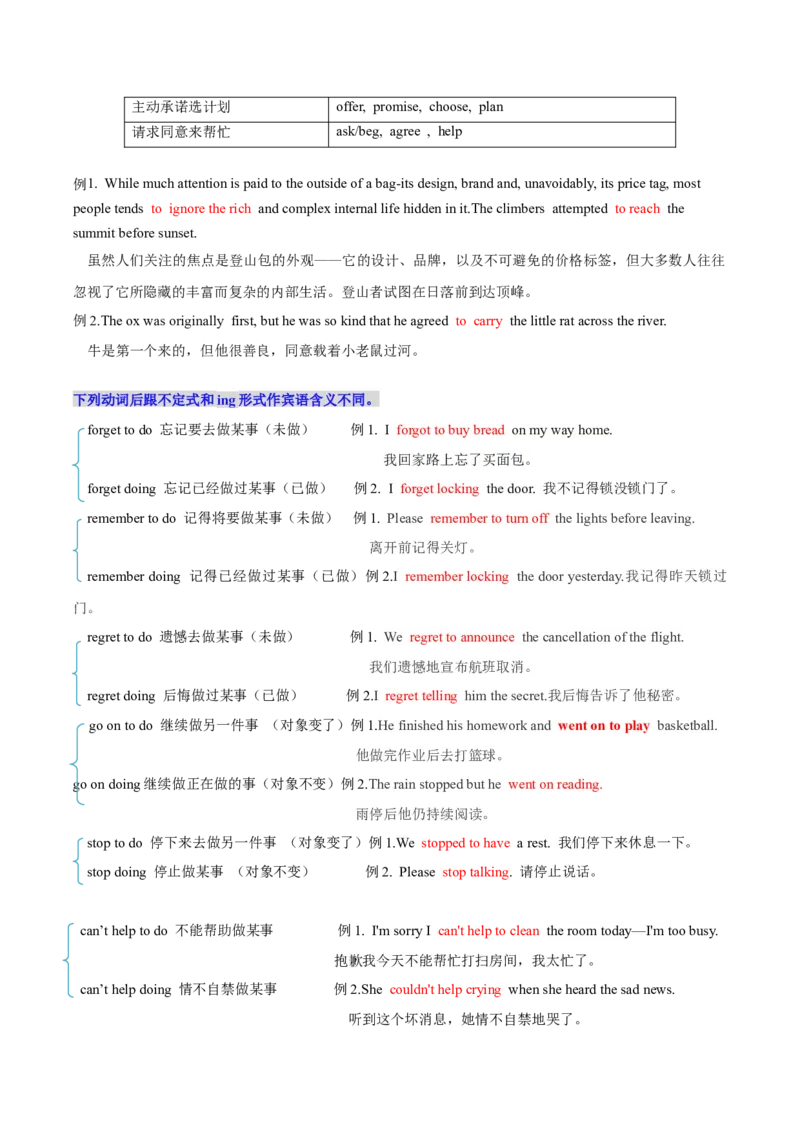
主动承诺选计划
offer, promise, choose, plan
请求同意来帮忙
ask/beg, agree , help
例1. While much attention is paid to the outside of a bag-its design, brand and, unavoidably, its price tag, most
people tends to ignore the rich and complex internal life hidden in it.The climbers attempted to reach the
summit before sunset.
虽然人们关注的焦点是登山包的外观——它的设计、品牌,以及不可避免的价格标签,但大多数人往往
忽视了它所隐藏的丰富而复杂的内部生活。登山者试图在日落前到达顶峰。
例2.The ox was originally first, but he was so kind that he agreed to carry the little rat across the river.
牛是第一个来的,但他很善良,同意载着小老鼠过河。
下列动词后跟不定式和ing 形式作宾语含义不同。
forget to do 忘记要去做某事(未做) 例1. I forgot to buy bread on my way home.
我回家路上忘了买面包。
forget doing 忘记已经做过某事(已做) 例2. I forget locking the door. 我不记得锁没锁门了。
remember to do 记得将要做某事(未做) 例1. Please remember to turn off the lights before leaving.
离开前记得关灯。
remember doing 记得已经做过某事(已做)例2.I remember locking the door yesterday.我记得昨天锁过
门。
regret to do 遗憾去做某事(未做) 例1. We regret to announce the cancellation of the flight.
我们遗憾地宣布航班取消。
regret doing 后悔做过某事(已做) 例2.I regret telling him the secret.我后悔告诉了他秘密。
go on to do 继续做另一件事 (对象变了)例1.He finished his homework and went on to play basketball.
他做完作业后去打篮球。
go on doing 继续做正在做的事(对象不变)例2.The rain stopped but he went on reading.
雨停后他仍持续阅读。
stop to do 停下来去做另一件事 (对象变了)例1.We stopped to have a rest. 我们停下来休息一下。
stop doing 停止做某事 (对象不变) 例2. Please stop talking. 请停止说话。
can’t help to do 不能帮助做某事 例1. I'm sorry I can't help to clean the room today—I'm too busy.
抱歉我今天不能帮忙打扫房间,我太忙了。
can’t help doing 情不自禁做某事 例2.She couldn't help crying when she heard the sad news.
听到这个坏消息,她情不自禁地哭了。
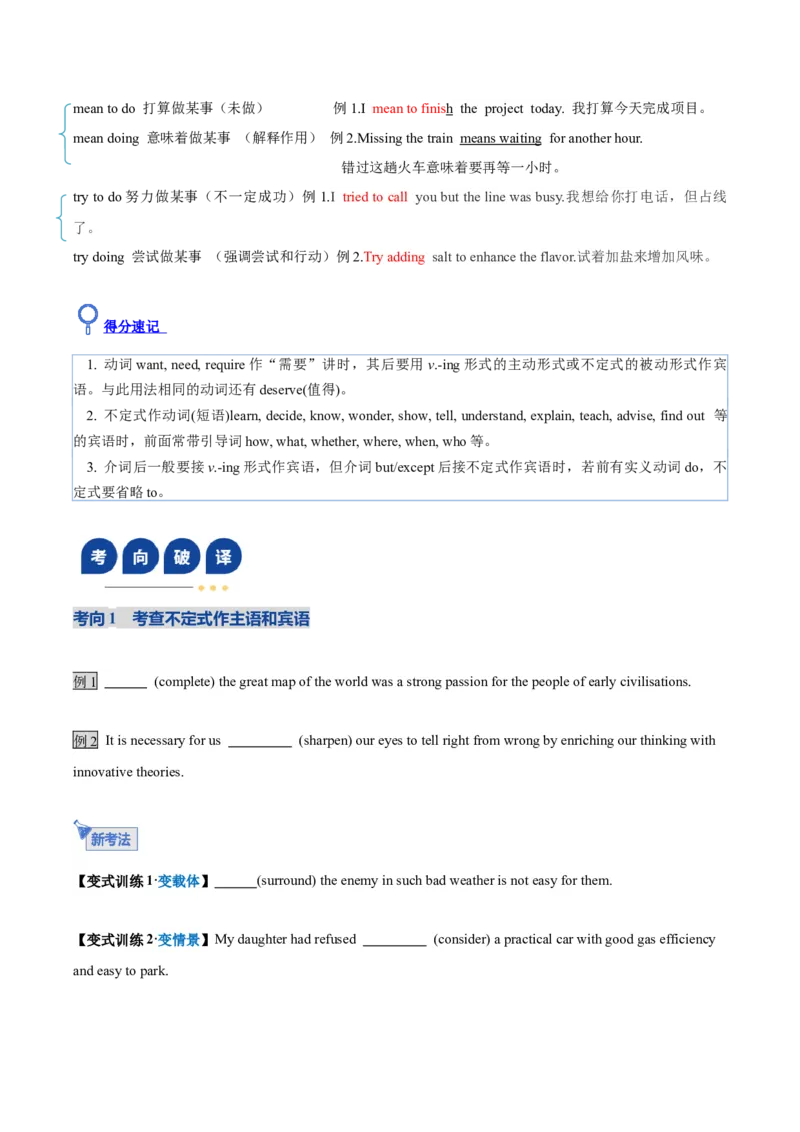
mean to do 打算做某事(未做) 例1.I mean to finish the project today. 我打算今天完成项目。
mean doing 意味着做某事 (解释作用) 例2.Missing the train means waiting for another hour.
错过这趟火车意味着要再等一小时。
try to do 努力做某事(不一定成功)例1.I tried to call you but the line was busy.我想给你打电话,但占线
了。
try doing 尝试做某事 (强调尝试和行动)例2.Try adding salt to enhance the flavor.试着加盐来增加风味。
得分速记
1. 动词want, need, require 作“需要”讲时,其后要用v.-ing 形式的主动形式或不定式的被动形式作宾
语。与此用法相同的动词还有deserve(值得)。
2. 不定式作动词(短语)learn, decide, know, wonder, show, tell, understand, explain, teach, advise, find out 等
的宾语时,前面常带引导词how, what, whether, where, when, who 等。
3. 介词后一般要接v.-ing 形式作宾语,但介词but/except 后接不定式作宾语时,若前有实义动词do,不
定式要省略to。
考向1 考查不定式作主语和宾语
例1 (complete) the great map of the world was a strong passion for the people of early civilisations.
例2 It is necessary for us (sharpen) our eyes to tell right from wrong by enriching our thinking with
innovative theories.
【变式训练1·变载体】 (surround) the enemy in such bad weather is not easy for them.
【变式训练2·变情景】My daughter had refused (consider) a practical car with good gas efficiency
and easy to park.
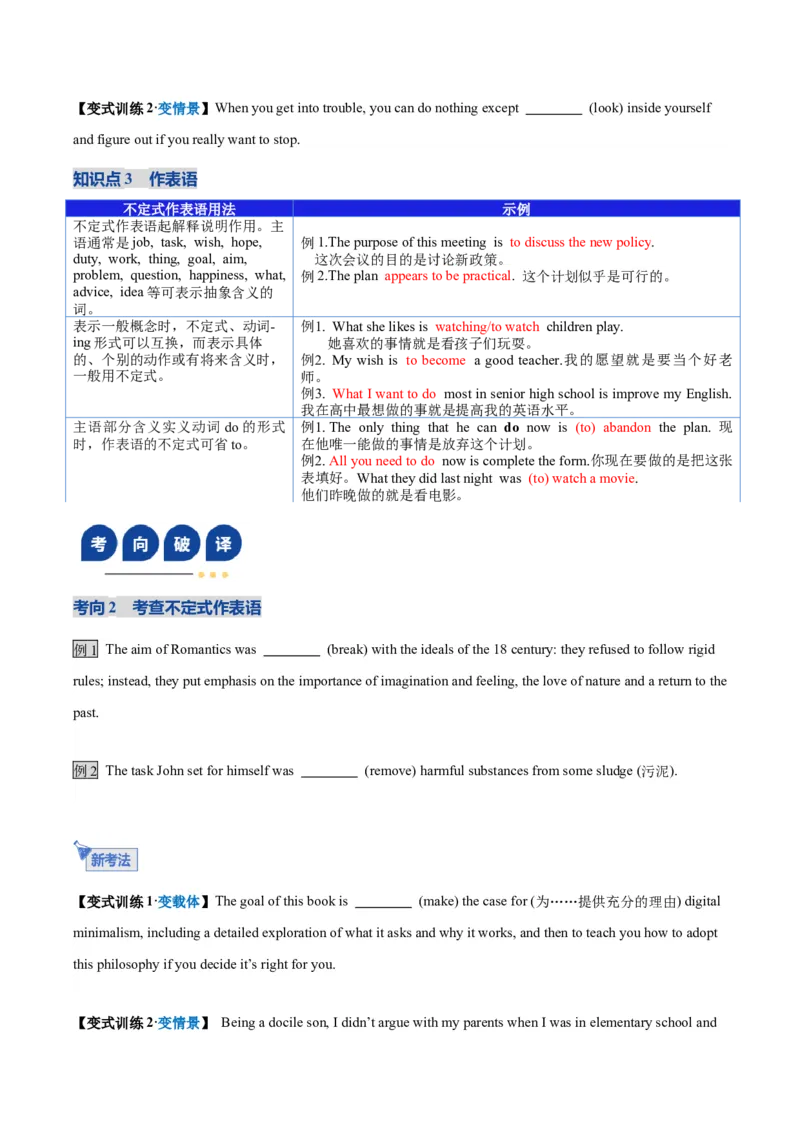
【变式训练2·变情景】When you get into trouble, you can do nothing except (look) inside yourself
and figure out if you really want to stop.
知识点3 作表语
不定式作表语用法
示例
不定式作表语起解释说明作用。主
语通常是job, task, wish, hope,
duty, work, thing, goal, aim,
problem, question, happiness, what,
advice, idea 等可表示抽象含义的
词。
例1.The purpose of this meeting is to discuss the new policy.
这次会议的目的是讨论新政策。
例2.The plan appears to be practical. 这个计划似乎是可行的。
表示一般概念时,不定式、动词
ing 形式可以互换,而表示具体
的、个别的动作或有将来含义时,
一般用不定式。
例1. What she likes is watching/to watch children play.
她喜欢的事情就是看孩子们玩耍。
例2. My wish is to become a good teacher.我的愿望就是要当个好老
师。
例3. What I want to do most in senior high school is improve my English.
我在高中最想做的事就是提高我的英语水平。
主语部分含义实义动词do 的形式
时,作表语的不定式可省to。
例1. The only thing that he can do now is (to) abandon the plan. 现
在他唯一能做的事情是放弃这个计划。
例2. All you need to do now is complete the form.你现在要做的是把这张
表填好。What they did last night was (to) watch a movie.
他们昨晚做的就是看电影。
考向2 考查不定式作表语
例1 The aim of Romantics was (break) with the ideals of the 18 century: they refused to follow rigid
rules; instead, they put emphasis on the importance of imagination and feeling, the love of nature and a return to the
past.
例2 The task John set for himself was (remove) harmful substances from some sludge (污泥).
【变式训练1·变载体】The goal of this book is (make) the case for (为……提供充分的理由) digital
minimalism, including a detailed exploration of what it asks and why it works, and then to teach you how to adopt
this philosophy if you decide it’s right for you.
【变式训练2·变情景】 Being a docile son, I didn’t argue with my parents when I was in elementary school and
all I had to do was (keep) my room tidy every time at their suggestion.
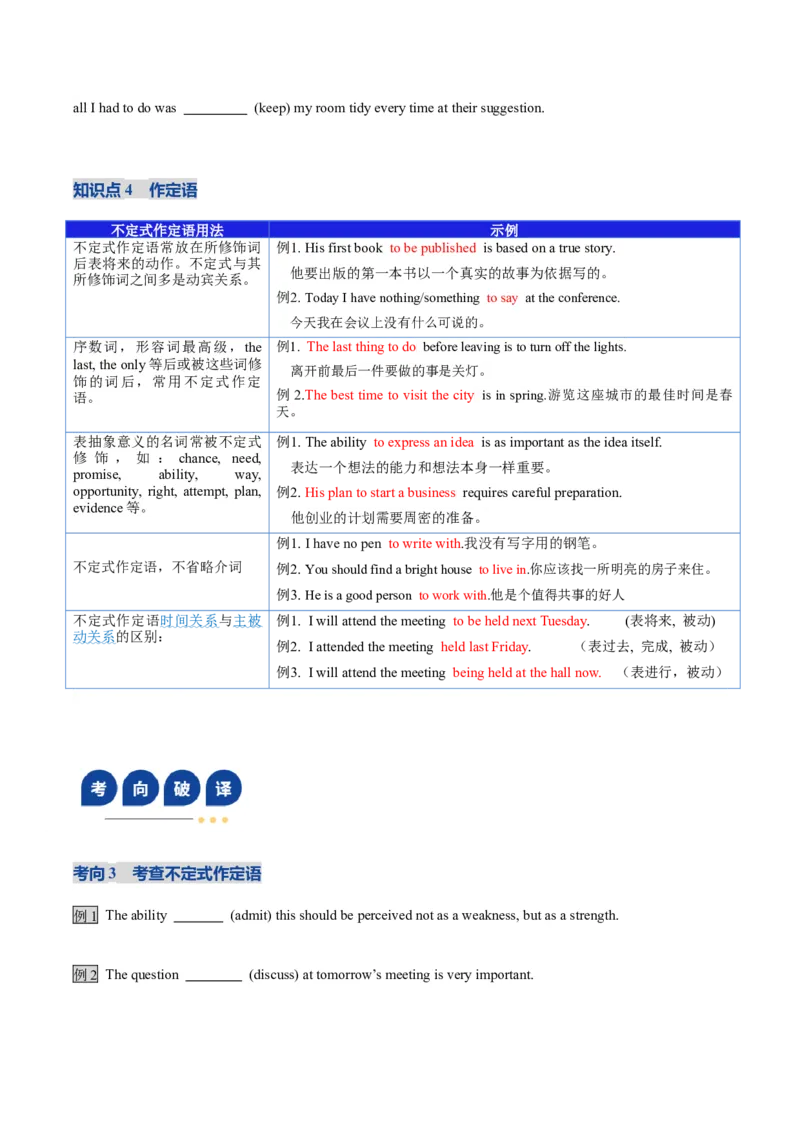
知识点4 作定语
不定式作定语用法
示例
不定式作定语常放在所修饰词
后表将来的动作。不定式与其
所修饰词之间多是动宾关系。
例1. His first book to be published is based on a true story.
他要出版的第一本书以一个真实的故事为依据写的。
例2. Today I have nothing/something to say at the conference.
今天我在会议上没有什么可说的。
序数词,形容词最高级,the
last, the only 等后或被这些词修
饰的词后,常用不定式作定
语。
例1. The last thing to do before leaving is to turn off the lights.
离开前最后一件要做的事是关灯。
例2.The best time to visit the city is in spring.游览这座城市的最佳时间是春
天。
表抽象意义的名词常被不定式
修饰,如:chance, need,
promise,
ability,
way,
opportunity, right, attempt, plan,
evidence 等。
例1. The ability to express an idea is as important as the idea itself.
表达一个想法的能力和想法本身一样重要。
例2. His plan to start a business requires careful preparation.
他创业的计划需要周密的准备。
不定式作定语,不省略介词
例1. I have no pen to write with.我没有写字用的钢笔。
例2. You should find a bright house to live in.你应该找一所明亮的房子来住。
例3. He is a good person to work with.他是个值得共事的好人
不定式作定语时间关系与主被
动关系的区别:
例1. I will attend the meeting to be held next Tuesday. (表将来, 被动)
例2. I attended the meeting held last Friday. (表过去, 完成, 被动)
例3. I will attend the meeting being held at the hall now. (表进行,被动)
考向3 考查不定式作定语
例1 The ability (admit) this should be perceived not as a weakness, but as a strength.
例2 The question (discuss) at tomorrow’s meeting is very important.
【变式训练1·变载体】7.I’m going to Xi’an next week. Have you anything (take) to your parents?
【变式训练2·变情景】8.His failure (defend) quickly enough led to losing the match.
知识点5 作补语
不定式作补语用法
示例
感官动词、使役类动词跟省to 的不定
式,let, make, notice, hear, listen to,
see, observe, watch, feel, have
例1. He made his workers work 12 hours a day.(主动)
他让他的工人们每天工作12 个小时。
例2.He was made to rewrite the essay.(被动加-to)
他被要求重写作文。
ask/beg/require/request/tell/advise/allow/
permit/cause/encourage/expect/wish/force/
oblige/invite/need/order/persuade/remind/
teach/urge/want/get/like/hate/warn/help/
prefer 等动词后只接to do 作宾补 sb to
do……:
例1. If we expect people to give up the habit of driving,we must
give them an alternative they can rely on.如果我们期望人们放弃开
车的习惯,我们必须给他们可以依赖的选择。
例2. The sign warns drivers not to park here.
标识警告司机不要在这里停车。
用于“with+名词+不定式”,表示主动
的、将要发生的动作。
例.With a lot of work to do, I can’t go to the park with you.
有很多工作要做,我不能和你一起去公园。
be said/believed/reported/known to do 类句
型,可以转化为It is said that…
例.The president was reported to have visited China.
据报道,那位总统已经访问了中国。
think, consider, believe, suppose, feel, find,
understand 等后常用to be 作宾补或主补。
例.Chinese people are considered to be the most hard-working
people in the world.中国人被认为是世界上最勤劳的人民。
得分速记
有些动词用带to 的不定式作补足语,但使役动词(make, let, have 等)与感官动词(watch, hear, feel,
notice, see 等)用于主动语态时,作其宾语补足语的不定式省略to;但当这些词用于被动语态时,to 不能
省略(let 除外)。
考向4 考查不定式作补语
例1 Fitness apps can be useful tools for motivating you (stick) to an exercise plan.
例2 New policies permit families (have) as many as three children.
【变式训练1·变载体】The trade war is said (impact) people’s life negatively in many countries
up to now.
【变式训练2·变情景】The scientist’s new theory, which is based on years of research, is expected
(change) people’s understanding of the universe.
知识点6 作状语
1.不定式作目的状语:
1. To complete the project in time, the workers will have to work day and night.
为了及时完成这个项目,工人们必须日夜不停地工作。
2. To be a winner, you need to give all you have and try your best.
要成为一个赢家,你需要付出你所拥有的一切,并尽力而为。
3. Many airlines now allow passengers to print their boarding passes online to save their valuable time.
许多航空公司现在允许乘客在网上打印登机牌,以节省宝贵的时间。
4. You must set out at once in order not (so as not ) to be late for school.你必须马上出发,以免上学迟到。
5. Many people have to wear glasses to/in order to/so as to see distant objects clearly.
= To/in order to see distant objects clearly, many people have to wear glasses.
许多人不得不戴眼镜才能看清楚远处的东西。
2 .不定式作结果状语:
常用于so/such…as to…(如此…以致…);enough …to …(足够);only to …(结果);never to…(结果再也没有)
; too… to…(太…而不能…)等结构中。
1. She was so late as to miss half of the lecture.她来得如此晚以至于错过了一半的演讲。
2. The house is large enough to hold two hundred people.这座房子足够大,可以容纳两百人。
3. The boy is too young to attend school. 这男孩年纪太小,不能上学。
only to do/be done: 表示一种预料之外的结果。常含有 “ 惊讶,失望,放心 ”之意。
4.She hurried to the station, only to be told that the 9:45 train had left.
她急忙赶到车站,却被告知9 点45 分的火车已经走了。
5.Tom took a taxi to the airport, only to find his plane high up in the sky.
汤姆乘出租车去了机场,却发现他的飞机高高升在空中。
3 .不定式作原因状语:
以下情感类形容词后常接不定式的主动形式:hard, difficult, easy, light, heavy, nice, good, clear, dangerous,
pleasant, interesting, fit, bitter, exciting, comfortable, convenient, amusing, impossible 等。在该结构中构成不定
式的动词和句子的主语构成逻辑上的动宾关系,不定式通常用主动形式表示被动含义。不定式中的动词必
须是及物动词,若为不及物动词,则要在其后加上适当的介词,使之构成及物动词短语。
例1. She was sorry to have kept us waiting so long.她很抱歉让我们等了这么久。
例2. This book is difficult to understand.这本书很难懂。
例3. Chongqing is hard/difficult/easy to find on this map.重庆在这张地图上很难/很难/容易找到。
例4. The picture is pleasant to look at.这张画很好看。
例5.This building is dangerous/pleasant/comfortable to live in.这栋建筑住起来很危险,很舒适。
得分速记
1. 不定式作目的状语,多用于to do, so as to do, in order to do 结构。注意逻辑主语一致性,位于句末前边不
能有逗号。so as to 一般不可置于句首,意为“为了;想要”。
2. 不定式作结果状语,多用于too…to, enough to do, only to do, so…as to, such as to 等结构。
3. 不定式作原因状语,常用在“主语+系动词+形容词+to do”结构中。这类形容词有easy, difficult, hard,
cheap ,expensive ,fit ,comfortable ,dangerous ,heavy ,good ,important ,impossible ,surprised ,
astonished, delighted, disappointed 等。
思维建模 根据不定式的基本知识解题
考向5 考查不定式作状语
例1 (2025 年八省联考卷)The goal was two-fold: (celebrate) cultural diversity as well as to promote
the equal use of all six tongues.
例2 Your cat will likely smell your face and store the smell in its memory and use it to (recognition)
you in the future.
【变式训练1·变载体】14.If you study festivals carefully, you may be surprised (find) that
different cultures have a lot in common after all.
【变式训练2·变情景】15.So we should say they are fortunate enough (have) a hometown to return
to when faced with difficulties.
考点二 不定式的时态与语态
核对
答案
对照
检验
1. 判断设空处的句子成分是否是谓语动词。
2. 分析非谓语动词的句法功能。
3. 根据非谓语的句法功能判断非谓语的正确形式。
4. 根据不定式的句法功能和时态与语态形式及特殊句式解题。
信息
提取
确定
动词
知识点1 动词不定式的一般式
不定式的一般式表示的动作通常与谓语动词表示的动作同时发生或在谓语动词表示的动作之后发生。不定
式的否定形式在-to 前面加not.
例1. He wants to see you again. 他想要再见到你。
例2. I often see John dance in the next room. 我经常看到约翰在隔壁跳舞。
知识点2 动词不定式的进行式
不定式的进行式表示的动作一般与谓语动词所表示的动作同时发生。
例1. He seems to be reading books.他似乎正在看书。
例2. Don’t pretend to be working hard. Just do what you should.
不要假装努力工作。做你应该做的事情。
知识点3 动词不定式的完成式
不定式的完成式表示的动作发生在谓语动词表示的动作之前。
例1. She seems to have known everything.她似乎好像已经知道了所有的事情。
例2. She is well known to have been to many countries, lecturing about animal protection.
大家都知道她去了很多国家做过保护动物的讲座。
知识点4 动词不定式的被动式
不定式被动用法
示例
当不定式的逻辑主语是不定式
所表示的动作的承受者时,一般
要用被动语态。
A lot of graduates ask to be sent to work where they are most needed
every year.
每年都有毕业生要求被派往最需要他们的地方工作。
不定式的被动语态一般式通常
表示将来的动作。
The topic to be discussed tomorrow is about climate change
明天要讨论的主题是关于气候变化的。
不定式的被动语态完成式表示
的动作发生在谓语动词动作之
前。
The novel is said to have been translated into several languages.
这部小说据说被翻译成了种语言。
考点三 不定式的特殊用法
知识点1 动词不定式的省略用法
1. 感官动词和使役动词接不定式作宾补时省略to(注意被动语态中to 应加上);
2. 在介词but, except 表示“除了......”之意的单词前,若有实义动词do, 作宾语的不定式则省略to;若无
do, 则to 不能省略。
3. 两个或多个不定式短语表示并列关系时,后面的to 可以省略;如果两个或多个不定式短语表示对比关
系时,则保留to。
4.下列句型常省略to:
may as well do sth 最好还是做……
had better do 最好做某事
do nothing but do sth 别无选择只好做某事
can’t help but do sth. 禁不住做某事
Why not do sth? 何不做某事?
prefer to do…rather than do sth, 宁愿做……而不愿
做……
would rather do…than do… 宁愿做……而不愿
做……
例1. I watched the girl enter the hall.我看着那个小女孩走进了大厅。
例2. The girl was watched to
enter
the hall.有人监视着那个女孩进入大厅。
例3. He refuses to
spend
time with us or do
as we tell him.(并列关系,do 前省略了to)
他拒绝花时间和我们在一起,也拒绝照我们说的做。
例4. They came not
to
save us, but to
conquer
us.(对比关系,不能省to)
他们不是来救我们的,而是来征服我们的。
知识点2 动词不定式的主动形式表示被动含义
不定式主动形式表被动含义
示例
不定式作定语与被修饰名词构成动宾关系
时
例.That flying bird is impossible to catch.
那只会飞的鸟是不可能被抓住的。
在“be+性质形容词+不定式”中,如
easy,
hard,difficult,safe,interesting,heavy,pleasant,
comfortable,dangerous,impossible 等。
例1. He is not easy to get along with. 他不易相处。
例2. The book is very interesting to read.这本书读一读是很有
趣的。
不定式与疑问代词连用时。
例.I don't know which to choose because there isn’ t any
difference between the two.两者之间毫无差别,所以我真不知道
该选哪个。
某些动词不定式与be 连用时,如to
blame(责备),to seek(寻找),to let(出租)
等。
例1. He is to blame for this.他因这件事该受责备。
例2. The answer is not hard to seek.答案不难寻找。
考向 考查-to do 不定式的特殊用法
例1 We will have an exam next week, but I still don't know how (review) the grammar.
例2 Jan was so inspired by the people she met online that she decided to start an IT club to teach older people how
(use) computers and the Internet.
【变式训练1·变载体】If you want to learn to paint, my advice is to know the relevant painting
knowledge at first and then practice.
【变式训练2·变载体】 So what (do) with all those perfectly-good-but-you’re-maybe-a-little-sick-of-
them clothes piled on your bedroom floor?
1.(2025 年新高考I 卷)We hope (present)the rather abstract Go game and AI in a visual context,
and initiate dialogues with minimalist art, conceptual art and expressionism.
2.(2025 年浙江I 月卷)Tanya’s shop offers fashion clothes for women
____
(rent) rather than purchase
them outright, providing a less expensive solution to one-time event dressing.
3. (2024 年新高考II 卷)Those cultural elements have increased Stratford’s international visibility, said
Edmondson, adding that visitors walking through the Birthplace Garden were often amazed ___
____
___
(find)the
connection between the two great writers.
4.(2024 年全国甲卷)Although parks of all sizes and types exist at any level the national parks, in particular,
tend ________(catch)our attention because of their large size and variety.
5.(2023 年新高考I 卷)To eat one, you have to decide whether ________(bite) a small hole in it first,
releasing the stream and risking a spill ( 溢出), or to put the whole dumpling in your mouth, letting the
hot soup explode on your tongue.
6.(2023 年全国甲卷)For thousands of years, people have told fables (寓言)
__
(teach) a lesson or to
pass on wisdom.
7.(2023 年全国乙卷)________ (visit) several times over the last 10 years, I was amazed by the co-existence
of old and new, and how a city was able to keep such a rich heritage (遗产) while constantly growing.
8.(2023 年北京卷语法填空)She called for action (address)the struggles of people around the world
facing “too little water or too dirty water”.
9.(2022 年新高考I 卷)The plan will extend protection to a significant number of areas that were previously
unprotected, bringing many of the existing protected areas for giant pandas under one authority ______
(increase)effectiveness and reduce inconsistencies in management.
10.(2022 年新高考II 卷)Eric woke up a little later when he heard children playing outside. He pushed a chair onto
the balcony, and climbed up ____
__
__
(see) them.