专题21 代词
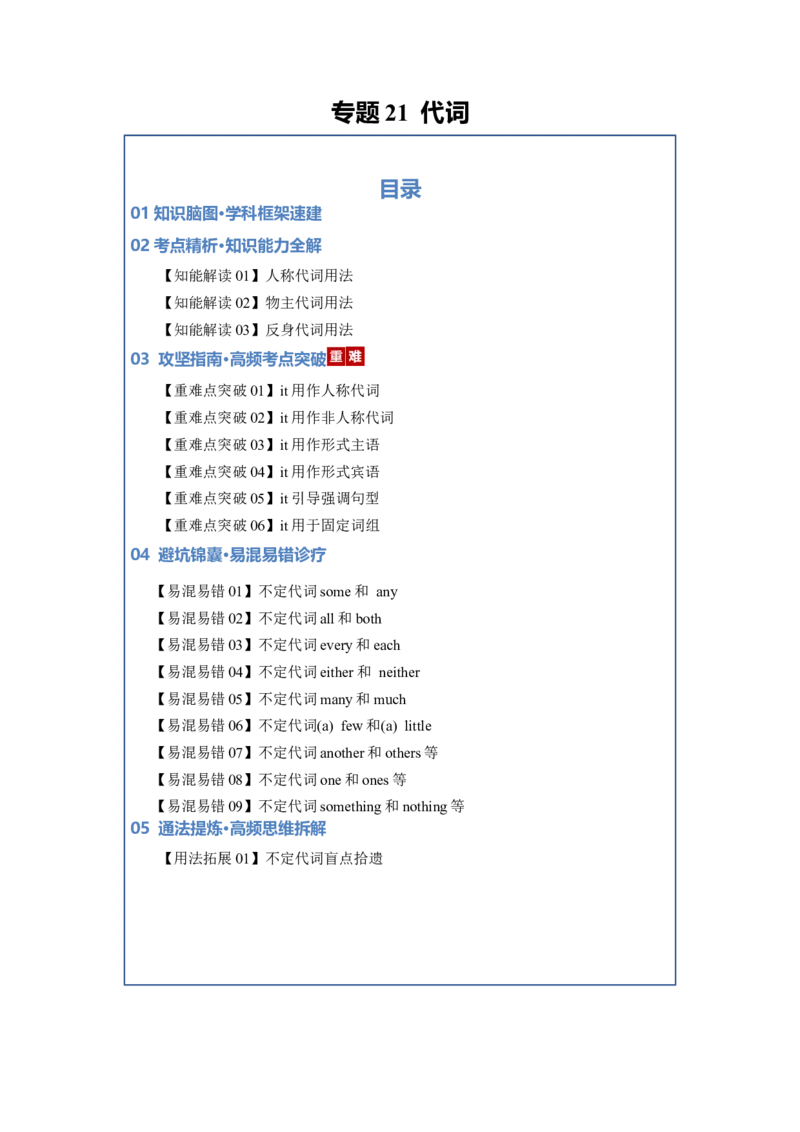
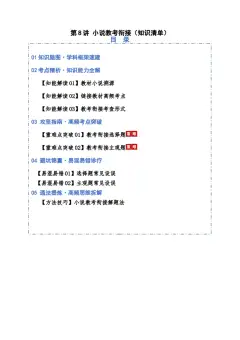
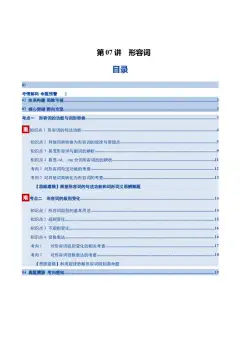
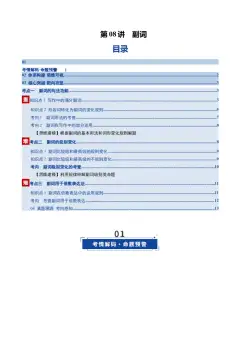
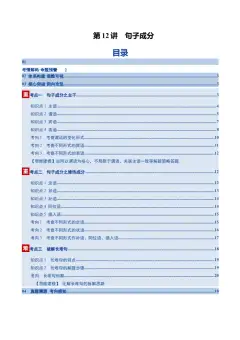
目录
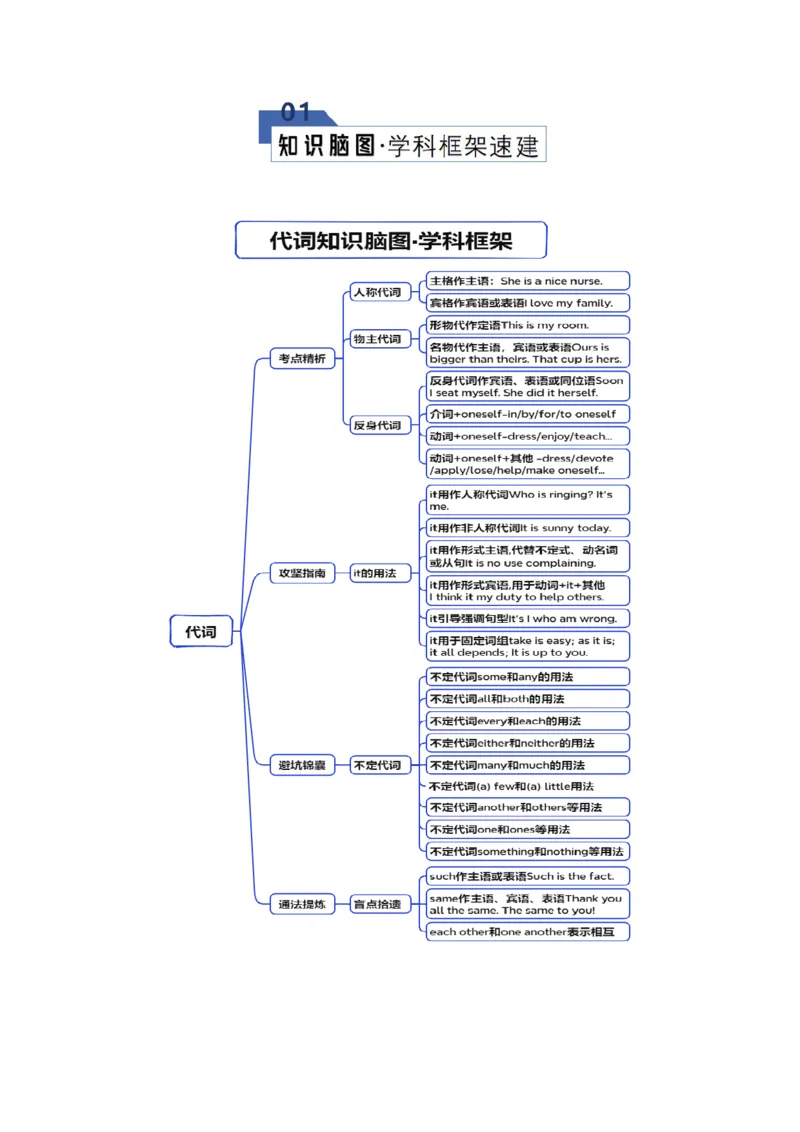
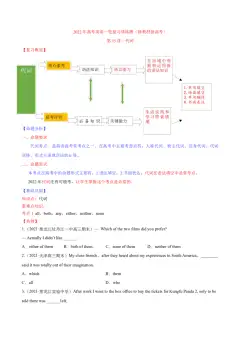
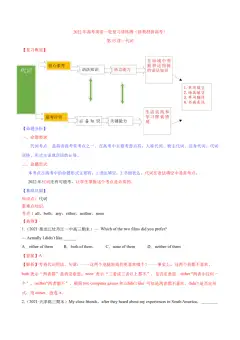
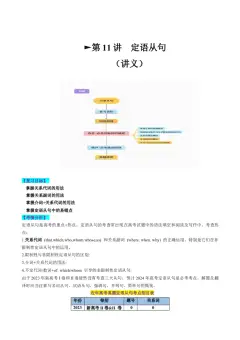
01 知识脑图·学科框架速建
02 考点精析·知识能力全解
【知能解读01】人称代词用法
【知能解读02】物主代词用法
【知能解读03】反身代词用法
03 攻坚指南·高频考点突破
【重难点突破01】it 用作人称代词
【重难点突破02】it 用作非人称代词
【重难点突破03】it 用作形式主语
【重难点突破04】it 用作形式宾语
【重难点突破05】it 引导强调句型
【重难点突破06】it 用于固定词组
04 避坑锦囊·易混易错诊疗
【易混易错01】不定代词some 和 any
【易混易错02】不定代词all 和both
【易混易错03】不定代词every 和each
【易混易错04】不定代词either 和 neither
【易混易错05】不定代词many 和much
【易混易错06】不定代词(a) few 和(a) little
【易混易错07】不定代词another 和others 等
【易混易错08】不定代词one 和ones 等
【易混易错09】不定代词something 和nothing 等
05 通法提炼·高频思维拆解
【用法拓展01】不定代词盲点拾遗
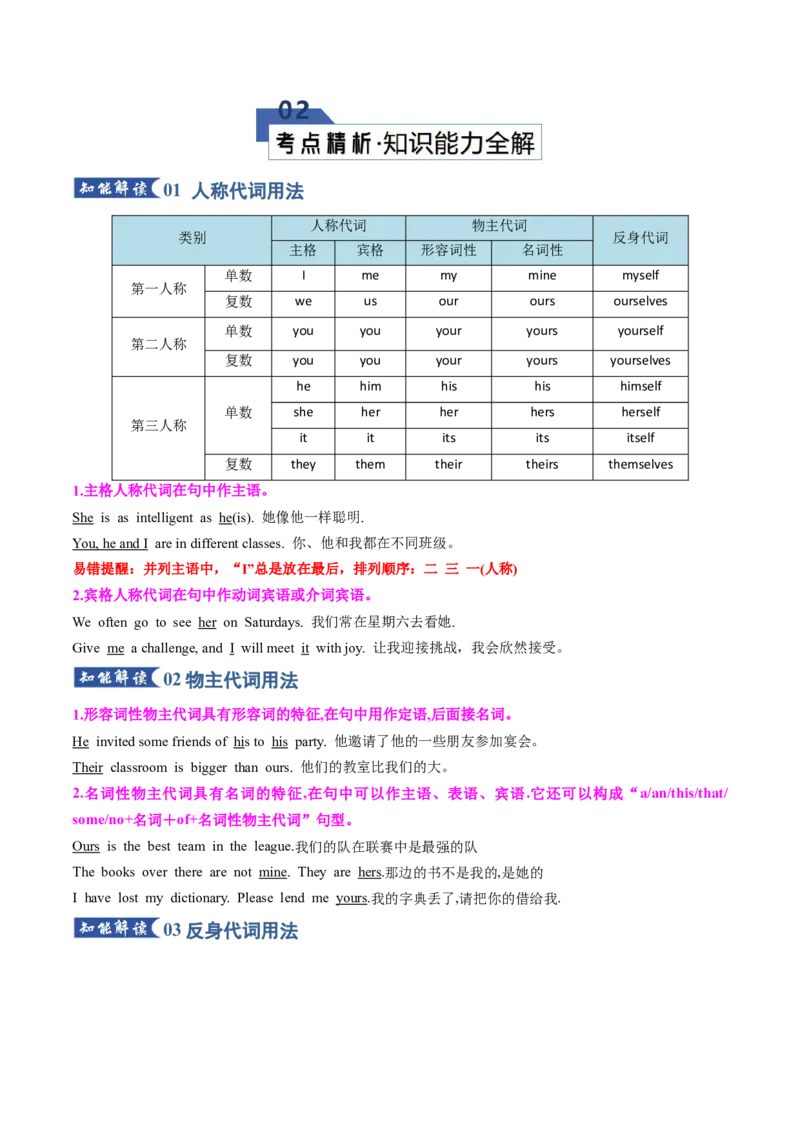
01 人称代词用法
类别
人称代词
物主代词
反身代词
主格
宾格
形容词性
名词性
第一人称
单数
I
me
my
mine
myself
复数
we
us
our
ours
ourselves
第二人称
单数
you
you
your
yours
yourself
复数
you
you
your
yours
yourselves
第三人称
单数
he
him
his
his
himself
she
her
her
hers
herself
it
it
its
its
itself
复数
they
them
their
theirs
themselves
1.主格人称代词在句中作主语。
She is as intelligent as he(is). 她像他一样聪明.
You, he and I are in different classes. 你、他和我都在不同班级。
易错提醒:并列主语中,“I”总是放在最后,排列顺序:二 三 一(人称)
2.宾格人称代词在句中作动词宾语或介词宾语。
We often go to see her on Saturdays. 我们常在星期六去看她.
Give me a challenge, and I will meet it with joy. 让我迎接挑战,我会欣然接受。
02 物主代词用法
1.形容词性物主代词具有形容词的特征,在句中用作定语,后面接名词。
He invited some friends of his to his party. 他邀请了他的一些朋友参加宴会。
Their classroom is bigger than ours. 他们的教室比我们的大。
2.名词性物主代词具有名词的特征,在句中可以作主语、表语、宾语.它还可以构成“a/an/this/that/
some/no+名词+of+名词性物主代词”句型。
Ours is the best team in the league.我们的队在联赛中是最强的队
The books over there are not mine. They are hers.那边的书不是我的,是她的
I have lost my dictionary. Please lend me yours.我的字典丢了,请把你的借给我.
03 反身代词用法
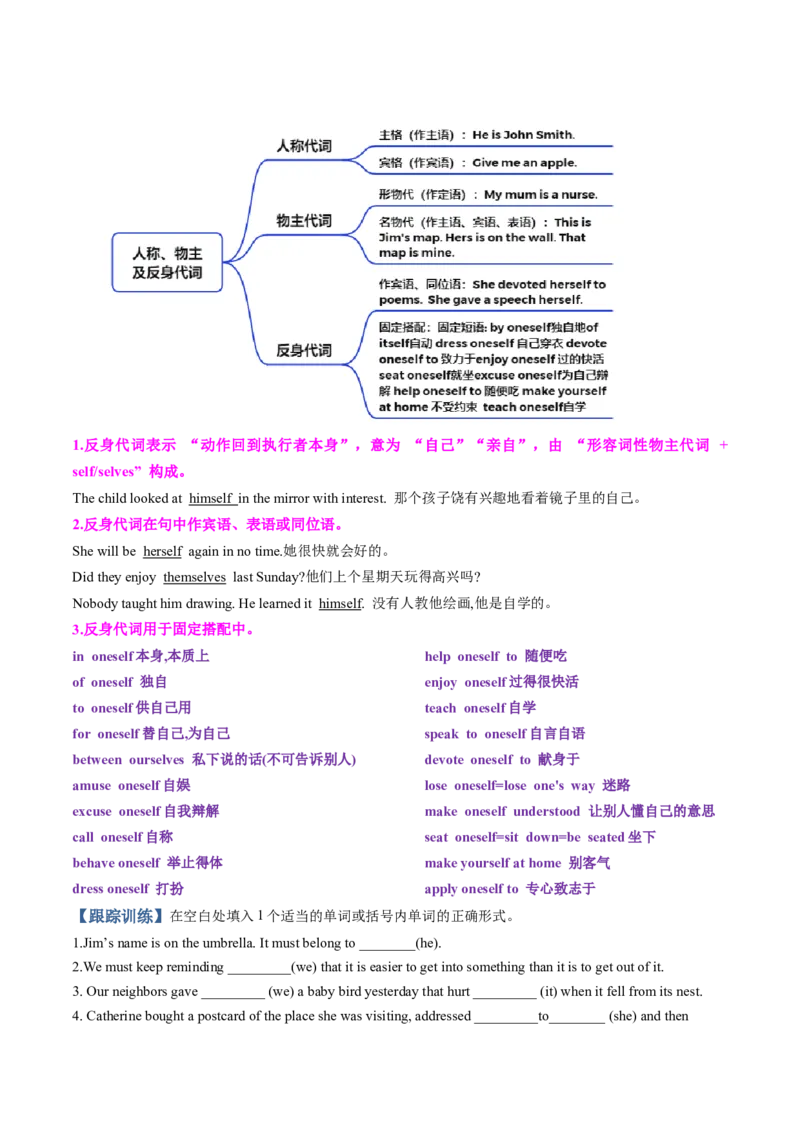
1.反身代词表示 “动作回到执行者本身”,意为 “自己”“亲自”,由 “形容词性物主代词 +
self/selves” 构成。
The child looked at himself

   in the mirror with interest. 那个孩子饶有兴趣地看着镜子里的自己。
2.反身代词在句中作宾语、表语或同位语。
She will be herself again in no time.她很快就会好的。
Did they enjoy themselves last Sunday?他们上个星期天玩得高兴吗?
Nobody taught him drawing. He learned it himself. 没有人教他绘画,他是自学的。
3.反身代词用于固定搭配中。
in oneself 本身,本质上
of oneself 独自
to oneself 供自己用
for oneself 替自己,为自己
between ourselves 私下说的话(不可告诉别人)
amuse oneself 自娱
excuse oneself 自我辩解
call oneself 自称
help oneself to 随便吃
enjoy oneself 过得很快活
teach oneself 自学
speak to oneself 自言自语
devote oneself to 献身于
lose oneself=lose one's way 迷路
make oneself understood 让别人懂自己的意思
seat oneself=sit down=be seated 坐下
behave oneself 举止得体
dress oneself 打扮
make yourself at home 别客气
apply oneself to 专心致志于
【跟踪训练】在空白处填入1 个适当的单词或括号内单词的正确形式。
1.Jim’s name is on the umbrella. It must belong to ________(he).
2.We must keep reminding _________(we) that it is easier to get into something than it is to get out of it.
3. Our neighbors gave _________ (we) a baby bird yesterday that hurt _________ (it) when it fell from its nest.
4. Catherine bought a postcard of the place she was visiting, addressed _________to________ (she) and then
posted it at the nearby post office.
5. Treat _________to a glass of wine to help you relax at the end of the day.
6. It's time somebody taught you how to behave ______________(you).
7. Help ______________(you) to some shrimp. It's fresh.
8. Won't you take a seat and make ______________(you) at home?
9. You take everything too seriously! Relax and enjoy ______________(you).
10. After he has retired, he will devote ______________(he) to gardening.
01 it 用作人称代词
1. it 用作人称代词,主要限于指代性别不明的婴儿或身份不明的人。
Someone is knocking at the door. Who can it be? 有人在敲门,他是谁呢?
2. it 用于代替指示代词this, that 以及复合不定代词 something, anything, nothing 等。
This is a new car. It has a powerful engine. 这是一辆新车。它有强劲的发动机。
She has something important to say.  It   will affect everyone. 她有重要的事要说。这事会影响所有人。
02 it 用作非人称代词
1. it 用作非人称代词,指代时间,季节,天气,距离,环境等。
时间:It is 8 o’clock now.  现在8 点了。
天气:It is raining heavily outside.  外面雨下得很大。
距离:It is 5 kilometers from here to the park.  从这里到公园有5 公里。
温度:It is 30 degrees today.  今天30 度。
2. 用于某些句型 :
It’s time for sth. 该做某事了。
It’s time to do sth. 该做某事的时候了。
It’s time for sb to do sth. 某人该干某事了。
It’s about / high time + that …从句. 某人该做某事了。
It is the first time + that…从句。这是某人第一次做某事。(从句用现在完成时)
That was the first time + that…从句。那是某人第一次做某事。(从句用过去完成时)
It's+时间段+since...自从……有一段时间了。
It's+时间段+before...过多长时间才……。
It’s high time you apologized to her. 你早就该向她道歉了。
It is the first time she has tried skydiving. 这是她第一次尝试跳伞。
That was the first time he had failed an exam. 那是他第一次考试不及格。
It's a long time since we last met. 自从我们上次见面已经过了很长时间了。
It was three days before he recovered from the illness. 过了三天他才从病中康复。
03 it 用作形式主语
不定式、动名词、从句等复杂成分用作句子主语时,为保持句子平衡,通常把真正的主语放在句末,而在
句首使用形式主语it。
1. It + be + adj. for (of) sb to do sth 某人做某事…… 。
It    is    hard

   for
    him

   to    make

   up his mind. 他很难下定决心。
It    was

   foolish

   of
    her
    to    say

  such a thing. 她说那样的话,真是太蠢了。
【说明】of 用于指某人的性格、属性、特征等,介词for 表示对象,意为“对„„来说”。
2. It takes sb +时间段 + to do sth. 某人做某事花了……时间。
It    takes

   years

   to    master

   a new language. 要花多年的时间才能掌握一门新的语言。
3. It is up to sb to do sth. 该由某人做某事。
It’s up to you to make the choice. 得由你来作选择。
4. It looks (seems, appears, happens, occurs) that …. 似乎……。
It happened

   that

 I was out when he called. 他打电话时,我恰巧出去了。
It seemed as though he didn’t recognize me. 他似乎没认出我来。
5. It is a pity/shame that ... 真可惜……。
It’s a shame that you missed the wonderful performance. 你错过了那场精彩的演出,太遗憾了。
6. It is clear/important that………很明显/重要。
It is clear

   that

  he is telling the truth.很明显,他在说真话。
7. It is reported/known that….据报道/都知道……。
It is reported that the new hospital will open next month. 据报道,这家新医院将于下个月开业。
8. It is no use/good doing ... 做……没有用/好处。
It is no good

   staying

  up late every night — it harms your health. 每晚熬夜没好处,会损害健康。
9. It is a waste of time doing sth….……是在浪费时间。
It is a waste of time

   playing

  computer games all day.整天玩电脑游戏是浪费时间。
10.It is no wonder that ... 难怪……。
It’s no wonder that you’re cold — you’re only wearing a T-shirt in winter! 难怪你冷 —— 冬天你只穿了件 T
恤!
11. It remains to be seen whether …是否……还有待观察。
It remains to be seen

   whether

  the plan will work. 这个计划是否可行,还有待观察。
04 it 用作形式宾语
1. think/ find/ feel/ consider/ make+it+n./adj.+不定式/动名词/从句。
She thinks it a pity that you missed the meeting. 她认为你错过会议很可惜。
We think it no use complaining. 我们认为抱怨是没有用的。
We found it strange that he didn’t reply to our email.我们觉得他没回邮件很奇怪。
2. like/dislike/hate+ it + when…从句。
She likes it when her students ask thoughtful questions in class.
她喜欢学生在课堂上提出有深度的问题。
They dislike it when the neighbors play loud music late at night.
他们不喜欢邻居深夜大声播放音乐。
3. depend on/rely on/see to+it+ that 从句。
We depend on it that the weather will be fine for the outdoor concert.
我们指望天气会变好,以便举办户外音乐会。
The manager sees to it that the team meets the deadline.
经理确保团队在截止日期前完成任务。
【跟踪训练】在空白处填入1 个适当的单词或括号内单词的正确形式。
1. Do you think _________ a good habit to read in bed?
2. We find it difficult _________ (learn) English well in such a short time.
3. We made _________ clear when and where we were going to have the meeting.
4. I don’t think _________ possible to master a foreign language without much memory work.
5. He felt it no good _________ (access) the Internet.
6. The new method makes it possible _________ (complete) the task faster.
7. I hate _________ when people talk with their mouths full.
8. I would appreciate _________ if you could take my suggestions into account.
9. She depends on _________ that her team will support her during the project.
10. We hate _________when the bus is delayed during rush hour.
05 it 引导强调句型
It is/was+被强调部分+ that(who)… 强调句型用来强调谓语动词以外的任何句子成 分。当被强调部分
是人时也可以用 who。
When


  was


  it
  that


  he changed his mind to take part in the activity? (特殊疑问句式)
It
  was


  because


  he

  was


  ill

  that


  he didn't come to school yesterday. (陈述句式)
It    was

   not
    until

   she

   took

   off

  her
    dark

   glasses

   that

  I realized she was my brother. (含not until…句
式)
06 it 用于固定词组
1.take it easy
take it easy 意为 “别紧张;放松点;慢慢来”,用于劝人保持轻松心态。
Take it easy—there’s no need to rush. 放松点,没必要这么急。
2.make it
make it 意为 “成功;做到;及时赶到”,可指达成目标、克服困难或赶上时间。
He finally made it to the top of the mountain.他最终成功登上了山顶。
3.take it seriously
take it seriously 意为 “认真对待某事”,it 指代前文提到的事情。
You should take his warning seriously—it’s not a joke. 你应该认真对待他的警告,那不是玩笑。
4.as it is
as it is 意为 “事实上;照目前情况”,强调现状。
We can’t afford a new car, and as it is, our old one still works.我们买不起新车,事实上,旧车还能用。
5.put it another way
put it another way 意为 “换句话说;换个方式说”。
He’s not interested in the project. Put it another way—he won’t join us.他对这个项目没兴趣。换句话说,他不
会加入我们。
6. Believe it or not
Believe it or not 意为“信不信由你”,用作插入语。
Believe it or not, I’ve never eaten pizza in my life. 信不信由你,我这辈子从没吃过披萨。
 7. It all depends
 It/That all depends 在口语中,表示“那 得看情况,还没有定下来 ”。
--Do you like spicy food? 你喜欢辣的食物吗?
--It all depends. Sometimes I enjoy it, but not every day. 这要看情况。有时我喜欢,但不会每天吃。
8.call it a day
call it a day 意为 “收工;结束当天的工作”,指停止正在做的事。
Let’s call it a day—we’ve worked enough. 我们收工吧,已经做得够多了。
【跟踪训练】在空白处填入1 个适当的单词或括号内单词的正确形式。
1.For the next meeting, let’s make      the day after tomorrow.
2.           is going to be sunny in the morning and not very windy, so I'm having a picnic with my friends.
3.To put         simply, potential is your natural ability that can be developed.
4.We always carry the bamboo basket when we work in the field. We all regard          as a symbolic farming
tool of the Wa ethnic group.
5.I’d appreciate            if could give me a bit of good advice.
6.To the users,             seems as if the camera is actually a part of their application.
7.They live in a small house, and in front of        stands an orange tree.
8.He lives on the second floor and hates         when those who live upstairs make lots of noise.
9.He may depend on          that his son will succeed.
10.Anyway,        is time to get outside to experience summer together with fun family activities.
01 不定代词some 和 any
1.some 一般用于肯定句中,意思是“几个”、“一些”、“某个”作定语时可修饰可数名词或不可数
名词。
I have some work to do today.  今天我有些事情要做。
They will go there some day. 他们有朝一日会去那儿。
2.some 用于疑问句时,表示建议、请求或希望得到肯定回答。
Would you like some coffee with sugar? 你要加糖的咖啡吗?
3.any 一般用于疑问句或否定句中,意思是“任何一些”、“任何一个”,作定语时可修饰可数或不可数
名词。
They didn’t have any friends here.  他们在这里没有朋友.
Have you got any questions to ask? 你有问题要问吗?
02 不定代词all 和both
1.all 指三者或三者以上的人或物,用来代替或修饰可数名词,在句子中作主语、宾语、表语、定语等。
I know all
    of
    the
    four

   British

   students

  in their school. 他们学校里四个英国学生我全认识。
All water on the earth is important for life. 地球上所有的水对生命都很重要。
2.both 指两个人或物,用来代替或修饰可数名词, 在句子中作主语、宾语、表语、定语等。
I have two pens, and both of them work well. 我有两支笔,都很好用。
Both she and her brother like swimming. 她和她弟弟都喜欢游泳。
03 不定代词every 和each
1.every 是形容词,只能作定语修饰单数名词,意思是“每一个”,表示整体概念。
She goes to the park every Sunday.(她每个周日都去公园。
2.“every+数词+名词”表示“每,每隔”。
She visits her grandparents every two weeks.她每两周去看望一次祖父母。
We have a meeting every other week. 我们每隔一周开一次会。
3. each 是形容词、代词,可用作主语、宾语、定语等,意思是“每个”或者“各个”,表示单个概念。
There is a tree on each side of the road. 路的每一边都有一棵树。
There are two books. Each is interesting. 有两本书,每本都很有趣。
4.each 可以放在名词前,可以后跟of 短语,与动词同时出现时要放在“be 动词、助动词、情态动词”之
后或者行为动词之前。
Each of the girls has a different hobby. 每个女孩都有不同的爱好。
They each have a bike. 他们每个人都有一辆自行车。
04 不定代词either 和 neither
1.either 意思是“两个中间的任何一个”, 在句子中可作主语、宾语和定语等,都用作单数。either…
or…表示 “要么…… 要么……”。
I don’t care much for what to drink. Either of the two will do. 我不介意喝些什么,两个之中随便哪个都行。
We can either go to the park or stay at home. 我们要么去公园,要么待在家里。
2.neither 在句子中可作主语、宾语和定语等,都用作单数,neither...nor... 表示 “既不…… 也
不……”。
I asked both of them, but neither knew the answer. 我问了他们俩,但两人都不知道答案。
Neither he nor I am going to the party. 他不去派对,我也不去。
【跟踪训练】在空白处填入1 个适当的单词或括号内单词的正确形式。
1.One day, he talked with me and hoped to mend our relations. With the efforts made by          sides, we
began to understand each other better.
2.Henry offered me several solutions to the problem, but          seemed practical in my eyes.
3.         side prepared to talk to the other unless we can smooth things over between them.
4 .“ Where there is a will, there is a way” is an old proverb which almost everyone knows, but not

understand it so well.
5.Unfortunately,          of the two boys has passed the geography examination.
6.To know more about the British Museum, you can use the Internet or go to the library, or        .
7.Although Rosemary had suffered from a serious illness for years, she lost         of her enthusiasm for life.
8.Additionally, from time to time I will assign group work to be completed in class or short assignments to be
completed at home,           of which will be graded.
9.She'd lived in London and Manchester,but she liked          and moved to Cambridge.
10.It’s an either-or situation-we can buy a new car this year or we can go on holiday but we can’t do        .
05 不定代词many 和much
1.many 意思是“很多”,与可数名词复数连用;还有 many a+单数名词;a good many+复数名词等用法。
Many a student has passed the exam. 许多学生通过了考试。
A good many of the students are from the south. 相当多的学生来自南方。
2.much 意思是“很多”,与不可数名词连用,much 作主语、宾语、定语等。
She spent much time on this project. 她在这个项目上花了许多时间。
There isn’t much milk in the fridge. 冰箱里没有多少牛奶了。
06 不定代词(a) few 和(a) little
1. few 修饰可数名词,否定含义,“几乎没有”, a few 修饰可数名词,肯定含义,“几个;一些”。
The last few winters have been very cold. 过去几个冬天都很冷。
I have a    few

   friends, but my younger sister has very few. 我有一些朋友,但我妹妹几乎没有朋友。
2.little 修饰不可数名词,否定含义,“几乎没有”; 修饰不可数名词,肯定含义,“一点”。
There is little time left.几乎没剩下什么时间了。a little 修饰不可数名词,肯定含义,“一点”.
She can speak a    little

  French, but she knows little English.她能讲点法语,但她几乎不懂英语。
07 不定代词another 和others 等
1.other 泛指“其余的”,只作定语。
She likes this book, but not other books.她喜欢这本书,但不喜欢其他的书。
2.others 泛指 “其他的人或事物”,不能修饰名词,常与 some 搭配使用(some...others... 表示 “一
些…… 另一些……”)。
I don’t like these shoes. Do you have any others?我不喜欢这双鞋,你有其他的吗?
3.another 表示三者及以上中的 “另一个”; “another + 数词 + 名词复数”。
I don’t like this shirt. Can you show me another one?我不喜欢这件衬衫,能再给我看一件吗?
We need another three days to prepare.我们还需要三天时间准备。
4.the other 特指两者之中的另一个,常用于one...the other...句型,表示“两者中一个…… 另一个……”。
I have two pens: one is red, and the other is blue.我有两支笔:一支红色,另一支蓝色。
5.the others 指“其余的人/物”,指全部。
There are 10 students in the group. Three are from Beijing, and the others are from Shanghai.
小组里有 10 个学生,3 个来自北京,其余的都来自上海。
【跟踪训练】在空白处填入1 个适当的单词或括号内单词的正确形式。
1.Perhaps some people can get motivation from the need for success, but          (other) are motivated by a
fear of failure.
2.You are a team star! Working with        ( other ) is really your cup of tea.
3.Dancing with your feet is one thing, but dancing with your heart is quite         .
4.Some people buy cloth shoes out of nostalgia (怀旧), while        (other) trust their quality.
5.To warm himself, the sailor sat in front of the fire rubbing one bare foot against the         .
08 不定代词one 和ones 等
1.one 指代单数可数名词,表泛指,前面可加形容词、冠词或限定词(如 this, that, another 等)。
I need a pen. Can you lend me one? 我需要一支笔,你能借我一支吗?
This book is boring. I want an interesting one.这本书很无聊,我想要一本有趣的。
2.ones 指代“同类不同物” 的复数可数名词,表泛指,前面可加形容词或限定词(如 these, those, some
等)。
These apples are too small. I want big ones.这些苹果太小了,我想要大的。
Some students prefer math, and others like ones related to art.有些学生喜欢数学,另一些喜欢和艺术相关
的学科。
3.the one 指代“同类不同物”的单数可数名词,表特指,有明确的范围或上文限定。
There are two cups on the table. The

   one

  with a flower pattern is mine.桌上有两个杯子,带花纹的那个
是我的。
4.the ones 指代“同类不同物”的复数可数名词,表特指,有明确的范围或上文限定。
She has many dolls. The

   ones

  in the box are her favorites.她有很多玩偶,盒子里的那些是她最喜欢的。
5.it 指代前文提到的 “同一事物”(单数可数名词或不可数名词),即 “同名同物”。
The water is cold. Don’t drink it.水太凉了,别喝。
6.that 指代单数可数名词或不可数名词,常用于比较结构中,避免重复;复数形式为 those。
The weather in Beijing is drier than that in Guangzhou. 北京的天气比广州的干燥。
The streets in Shanghai are wider than those in my hometown. 上海的街道比我家乡的宽。
【跟踪训练3】在空白处填入1 个适当的单词或括号内单词的正确形式。
1.In my opinion, when in trouble, we should seek help from           we trust most.
2.Those tomatoes had a taste that reminded me of the           (one) my uncle used to grow when I was a
child.
3.—Silly me! I forget what my luggage looks like.
—What do you think of        over there?
4.My pen is missing. I still haven’t found          . I want to buy a new        .
5.Is this museum the              they visited last month?
09 不定代词something 和nothing 等
1.something 用于肯定句,表示“不确定的某事”;用于疑问句时,表示请求、建议或希望得到肯定回答。
There’s something wrong with my phone. 我的手机出了点问题。
2.anything 用于否定句和疑问句,表示 “任何事物”;用于肯定句时,强调 “无论什么事物”。
Do you have anything important to tell me? 你有什么重要的事要告诉我吗?
3.nothing 带有否定含义,相当于“not...anything”;表示 “没有任何事物”,可单独作主语、宾语等。
She said nothing about her trip. 她没提任何关于旅行的事。
4.everything 表示“全部事物”,强调整体;作主语时,谓语动词用单数。
She knows everything important about the project.她知道这个项目所有重要的事。
【跟踪训练1】在空白处填入1 个适当的单词或括号内单词的正确形式。
1.We don’t have enough books for                 ; some of you will have to share.
2.There isn’t        in the classroom. All the students are having a PE lesson in the playground.
3.Swimming is my favorite sport. There is          like swimming as a means of keeping fit.
4.            who leaves the room last ought to turn off the lights.
5.You can ask anyone for help.        here is willing to lend you a hand.
01 不定代词盲点拾遗
1.指示代词such 表示“如此的,如此的事物”,具有名词和形容词的性质,在句子中可用作主语、定语、表语、
宾语等。
Such were his words. 这就是他讲的话。
The problems are such that we can't solve by ourselves.这样的问题,我们自己是解决不了的。
If you act like a child, you will be treated as such. 你要是这样孩子气,人家就把你当孩子看待了。
2. same 的用法same(同样的)也是指示代词,使用时same 之前必须用定冠词the.它也具有名词和形容词的性
质,在句中作主语、宾语、表语、定语、状语等。
The same can be said of the other article.另一篇文章也是同样情况。
She went to swim and I did the same.她去游泳,我也去了。
Our ideas are exactly the same.我们的想法完全一个样。
3. each other 和one another 意为“相互,互相”,each other 主要用于两者之间,one another 主要用于三
者或三者以上之间。
The two girls help each other in their lessons.这两个女孩在功课上互相帮助
During the hike, we helped one another climb the steep trail. 徒步过程中,我们互相帮助攀登陡峭的小路。
【跟踪训练】
1.She loves reading, and such ________(be) her hobby.
2.He lives in ________ same neighborhood as me.
3.He bought a new car, but his brother wanted ________ same.
4.---Happy New Year! ---The same________ you!
5. Honesty, kindness and courage—such ________(be) the qualities we should all try to develop.
一、单句填空 在空白处填入1 个适当的单词或括号内单词的正确形式。
1. (2024 九省联考卷)However, he believes that the practice with fountain pens helps students to focus, to write
faster, and they can feel proud of            (they).
2.(2022 北京卷)Since people can’t always eat out or cook for ____________  (they), they get takeout or order
delivery.
3.(2021 浙江卷)She was extremely pretty, and her house was a reflection of ____________ (she), everything in
good taste and in perfect order.
4.(2025 全国一卷)Over time, I’ve found     60     (I) feeling extremely at home here. And in the process,
I’ve experienced things that really surprise me at times.
5. (2024 全国甲卷)This area, with    66    (it) unique and breathtaking natural beauty, must be well
preserved for all people of the nation to enjoy - as a national park.
6.(2024 全国甲卷)Last week, I saw a program about Chongqing hotpot on TV. I was curious but planned a
special one-day trip there with a friend of me.
7.(2023 新课标I 卷)Nanxiang aside, the best Xiao long bao have a fine skin, allowing them to be lifted out of
the steamer basket without allowing them tearing or spilling any of    42     (they) contents.
8.(2023 全国甲卷)In that class, Miss Zhao, our biology teacher, showed we insects on stamps.
9.(2023 全国乙卷)Last Friday my mom decided to color his hair.
10.(2022 全国乙卷)The Chinese Ancient Tea Museum was officially unveiled (揭幕) at the ceremony, opening
代词综合能力提升
____________ (it)first exhibition: The Avenue of Truth—A Special Exhibition of Pu’er Tea.
11.(2021 新课标I 卷)As the song goes, this long and winding road “will never disappear”, and it will always
stick in the visitor’s memory. It sure does in ____________ (I). While you’re in China, Mount Huangshan is a
must to
12.(2021 全国乙卷)Ecotourism has ____________ (it) origin with the environmental movement of the 1970s. It
was not widely accepted as a travel concept until the late 1980s.
13.(2020 全国I 卷)Data about the moon’s composition, such as how much ice and other treasures it contains,
could help China decide whether ____________ (it) plans for a future lunar (月球的) base are practical.
14. (2024 浙江1 月卷)Who knows, perhaps some of the more forward-looking    65     (one) may yet come
out with a whole range of “just for you” pack sizes with special offers as well.
15.(2024 天津3 月卷)I really want to go to a place for the summer vacation, ________ especially with beautiful
scenery and unique culture.
二、代词与语法填空
(25-26 高一上·全国·课后作业)阅读下面短文,在空白处填入1 个适当的单词或括号内单词的正确形式。
Kunqu Opera is one of the oldest forms of opera still     1     (exist) in China. It is famous for the skills
of its rhythmic patterns and has a dominant influence     2     all the more recent forms of opera in China.     3
(it) characteristic melody, dynamic structure and skilled performers have also been borrowed by the other forms of
opera. The Peony Pavilion and The Hall of Longevity are classic pieces. Kunqu combines songs, recitals (叙说),
body movement and dance, and plays a key role in the training of the     4     (actor) of Peking Opera. Kunqu
is accompanied by stringed, wind and percussion ( 打击乐器) instruments. There are two major types of dance
movements and     5     variety of other movements to express specific emotions.
Kunqu Opera     6     (suffer) a decline since the 18th century because it requires a high level of
technical knowledge from the audience. Today, it is facing     7     (compete) from mass culture and a lack of
interest among the young. The government funds seven permanent theatres     8     specialise in Kunqu and
include a total of 500 practitioners (从业者). Two of these theatres also offer classes. The action plan aims     9
(publish) a complete edition of the texts of Kunqu Opera.     10     (additional), a promotional programme will
be launched through the media and the organisation of a festival of Kunqu Opera will be held every two years.