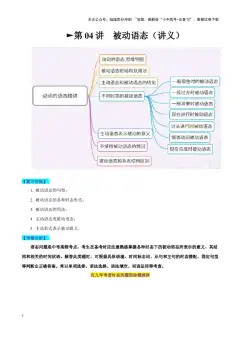
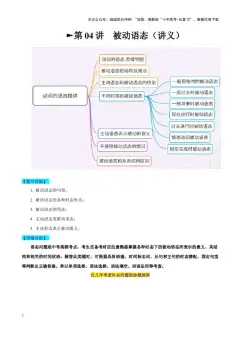
第16 讲  被动语态
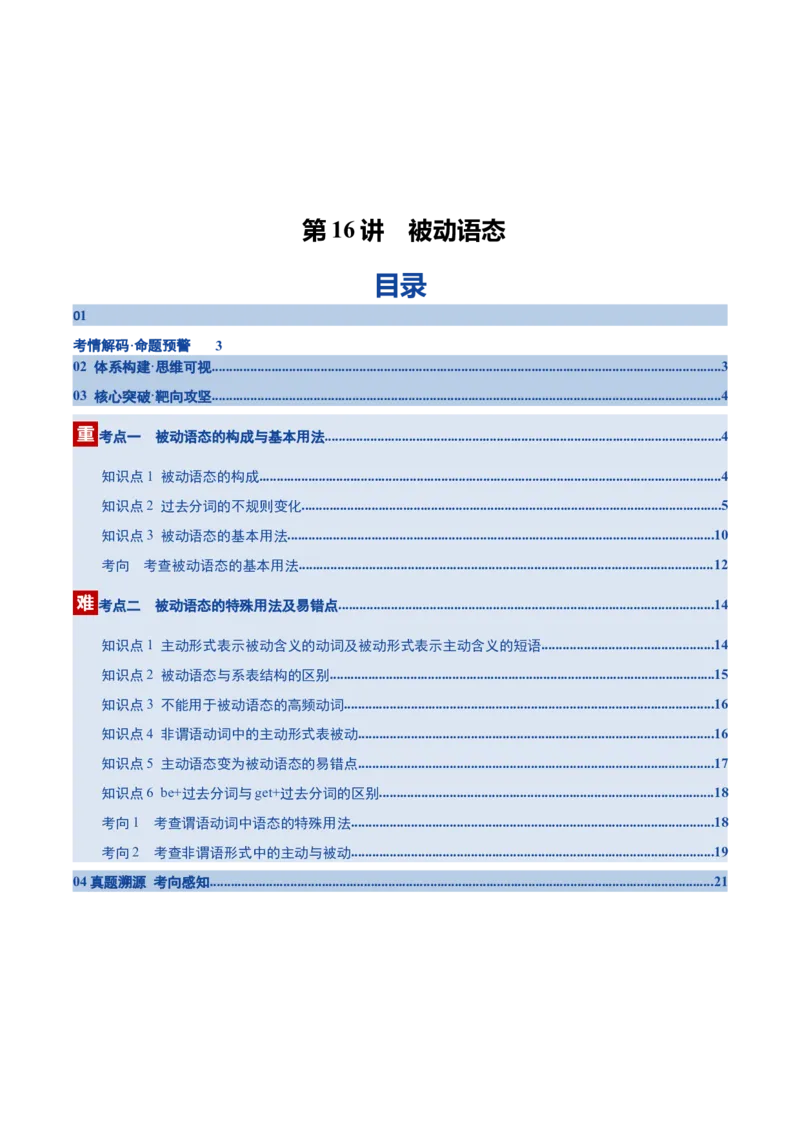
目录
01
考情解码·命题预警
3
02 体系构建·思维可视.................................................................................................................................................3
03 核心突破·靶向攻坚.................................................................................................................................................4
考点一  被动语态的构成与基本用法.................................................................................................................4
知识点1 被动语态的构成....................................................................................................................................4
知识点2 过去分词的不规则变化........................................................................................................................5
知识点3 被动语态的基本用法..........................................................................................................................10
考向  考查被动语态的基本用法......................................................................................................................12
考点二  被动语态的特殊用法及易错点...........................................................................................................14
知识点1 主动形式表示被动含义的动词及被动形式表示主动含义的短语.................................................14
知识点2 被动语态与系表结构的区别..............................................................................................................15
知识点3 不能用于被动语态的高频动词.........................................................................................................16
知识点4 非谓语动词中的主动形式表被动.....................................................................................................16
知识点5 主动语态变为被动语态的易错点.....................................................................................................17
知识点6 be+过去分词与get+过去分词的区别...............................................................................................18
考向1  考查谓语动词中语态的特殊用法.......................................................................................................18
考向2  考查非谓语形式中的主动与被动.......................................................................................................19
04 真题溯源 考向感知................................................................................................................................................21
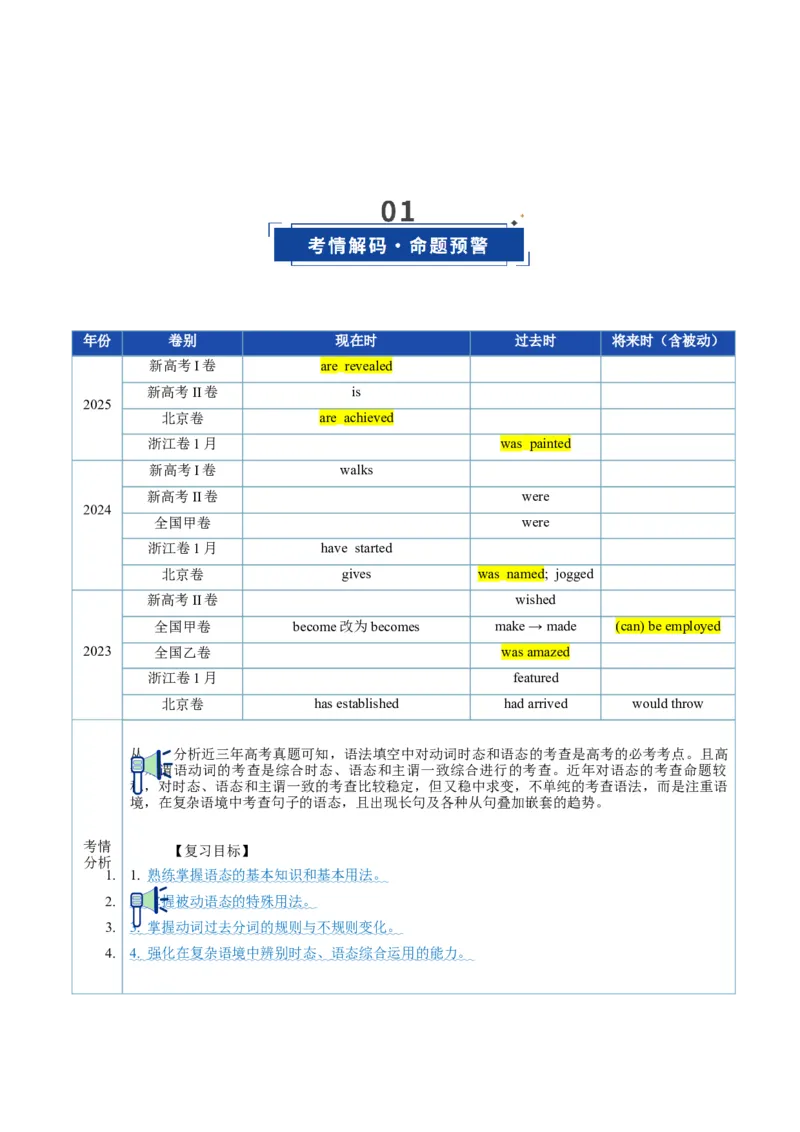
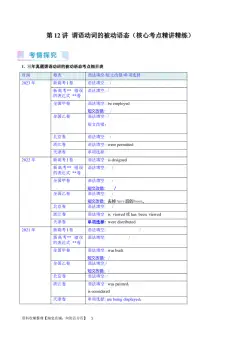
年份
卷别
现在时
过去时
将来时(含被动)
2025
新高考I 卷
are revealed
新高考II 卷
is
北京卷
are achieved
浙江卷1 月
was painted
2024
新高考I 卷
walks
新高考II 卷
were
全国甲卷
were
浙江卷1 月
have started
北京卷
gives
was named; jogged
2023
新高考II 卷
wished
全国甲卷
become 改为becomes
make → made
(can) be employed
全国乙卷
was amazed
浙江卷1 月
featured
北京卷
has established
had arrived
would throw
考情
分析
从    分析近三年高考真题可知,语法填空中对动词时态和语态的考查是高考的必考考点。且高
考对谓语动词的考查是综合时态、语态和主谓一致综合进行的考查。近年对语态的考查命题较
稳,对时态、语态和主谓一致的考查比较稳定,但又稳中求变,不单纯的考查语法,而是注重语
境,在复杂语境中考查句子的语态,且出现长句及各种从句叠加嵌套的趋势。
【复习目标】
1.
1. 熟练

 掌握

 语
  态的基本知识

 和基本用法。


2.
2.   掌握被动

 语态

 的特殊用法

 。

3.
3.   掌握动词过去分词的规则与不规则变化。


4.
4.    强化在复杂语境中辨别

 时态、

 语态

 综合运用

 的能力。


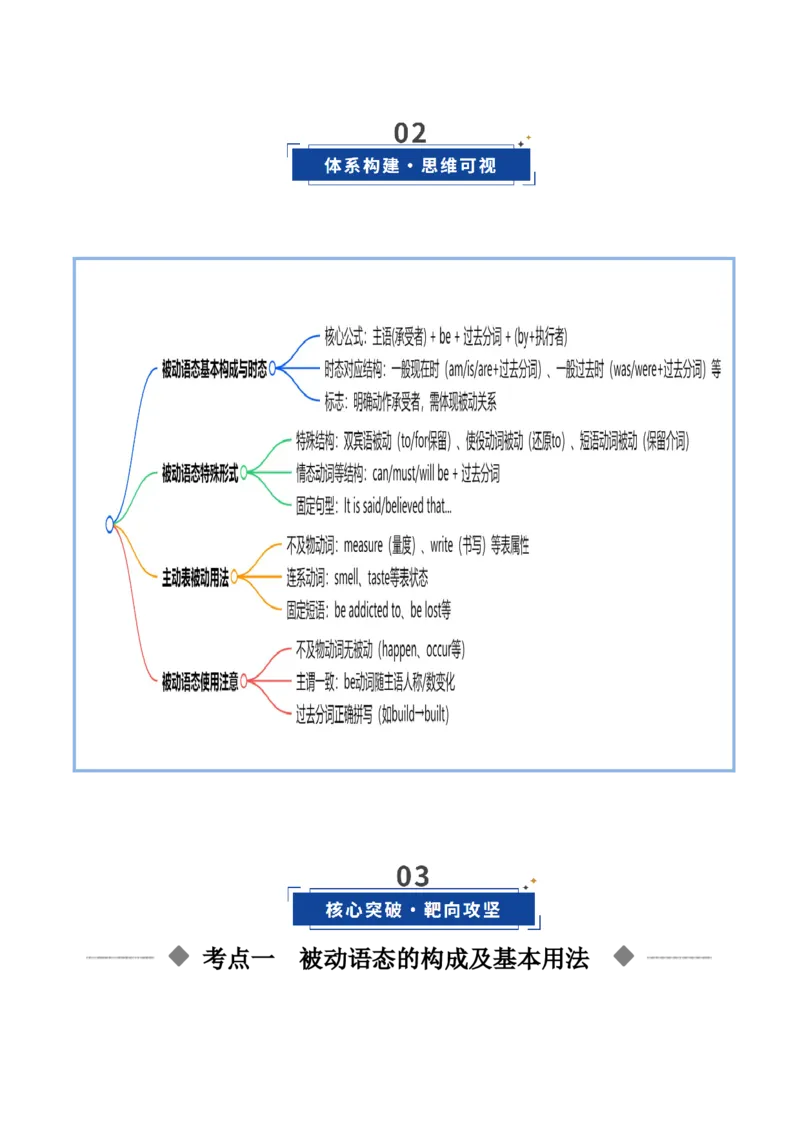
 考点一  被动语态的构成及基本用法

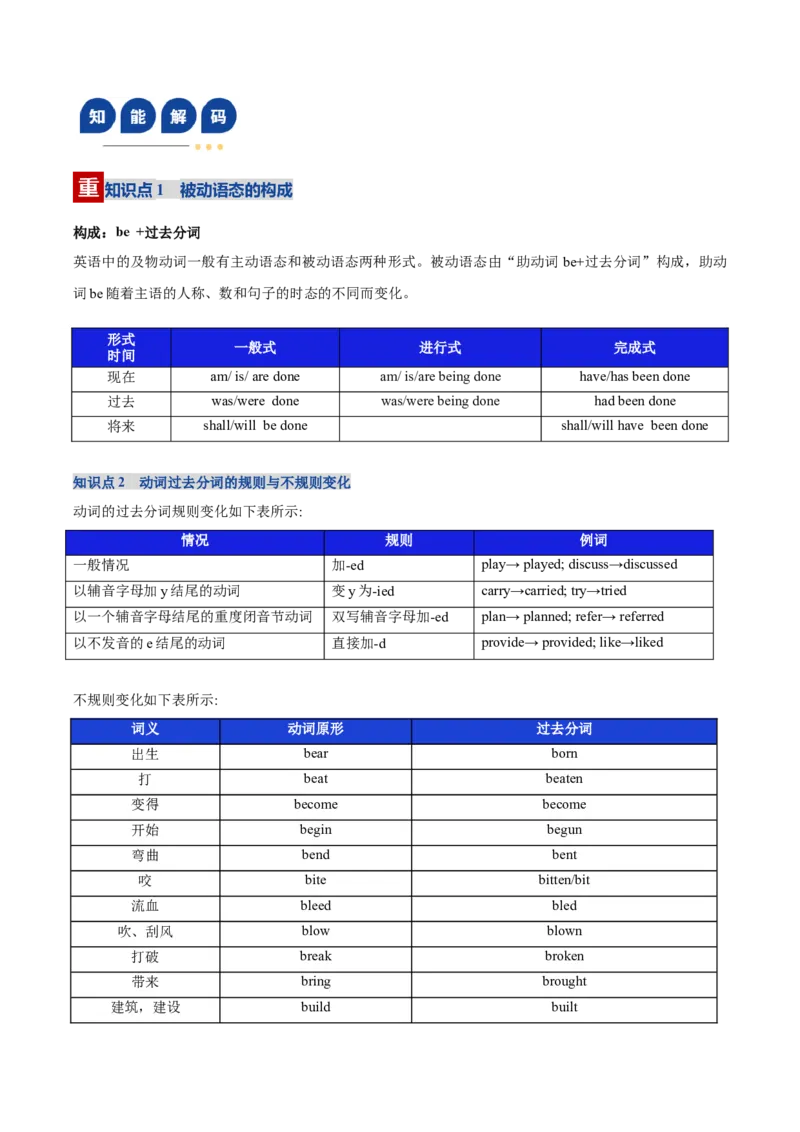
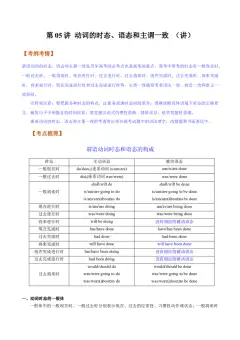
知识点1  被动语态的构成
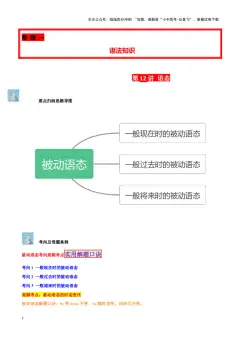
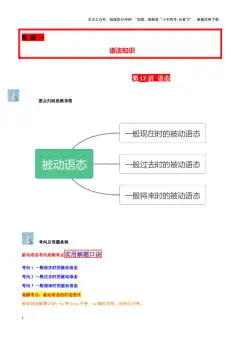
构成:be +过去分词
英语中的及物动词一般有主动语态和被动语态两种形式。被动语态由“助动词be+过去分词”构成,助动
词be 随着主语的人称、数和句子的时态的不同而变化。
形式
时间
一般式
进行式
完成式
现在
am/ is/ are done
am/ is/are being done
have/has been done
过去
was/were done
was/were being done
had been done
将来
shall/will be done
shall/will have been done
知识点2  动词过去分词的规则与不规则变化
动词的过去分词规则变化如下表所示:
情况
规则
例词
一般情况
加-ed
play→ played; discuss→discussed
以辅音字母加y 结尾的动词
变y 为-ied
carry→carried; try→tried
以一个辅音字母结尾的重度闭音节动词
双写辅音字母加-ed
plan→ planned; refer→ referred
以不发音的e 结尾的动词
直接加-d
provide→ provided; like→liked
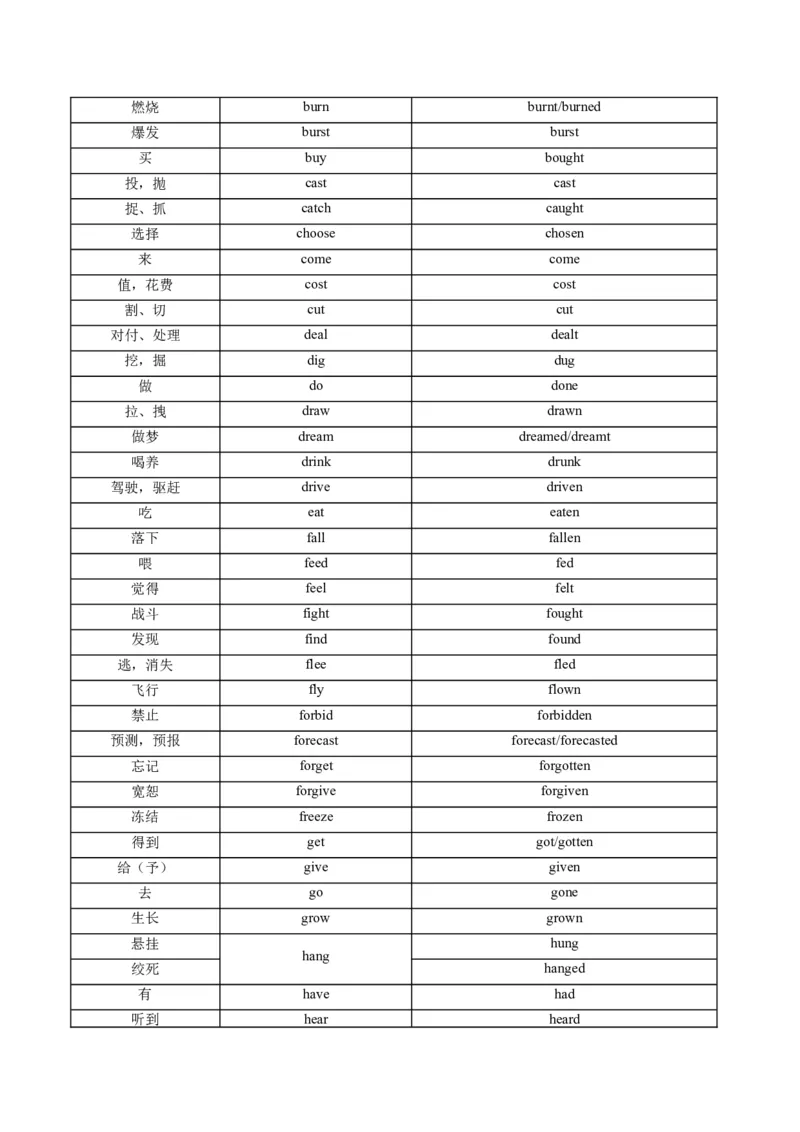
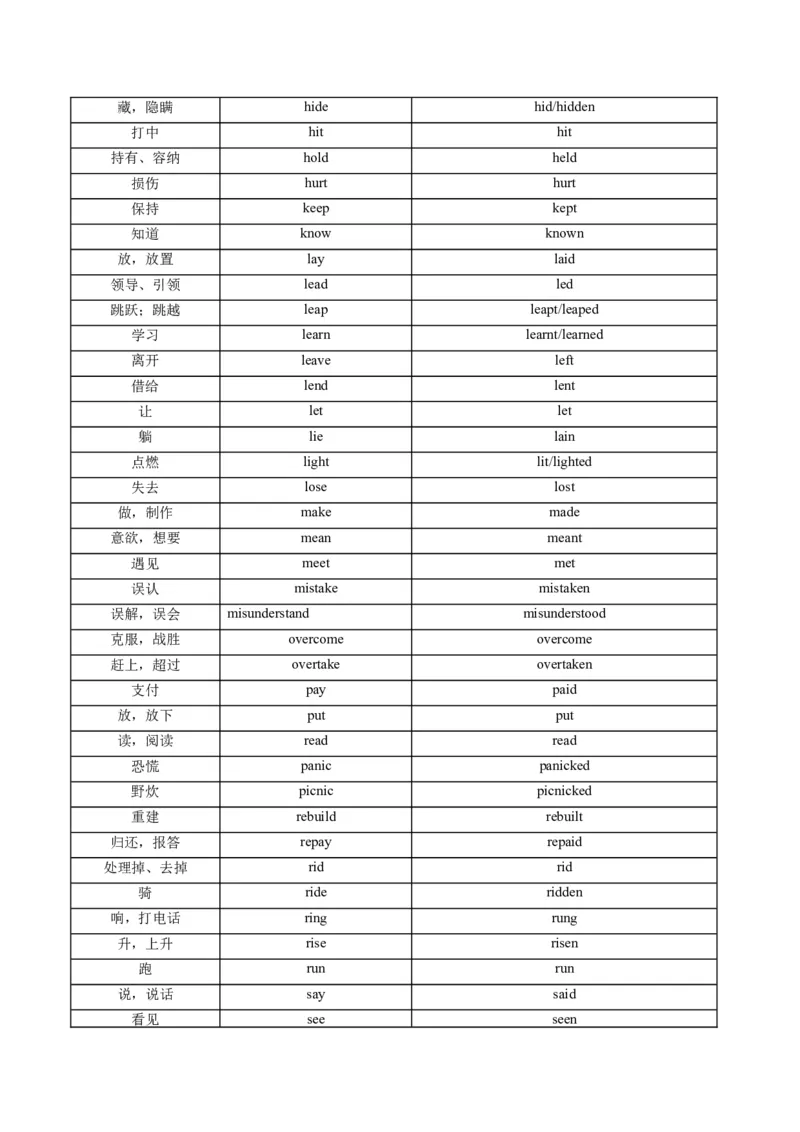
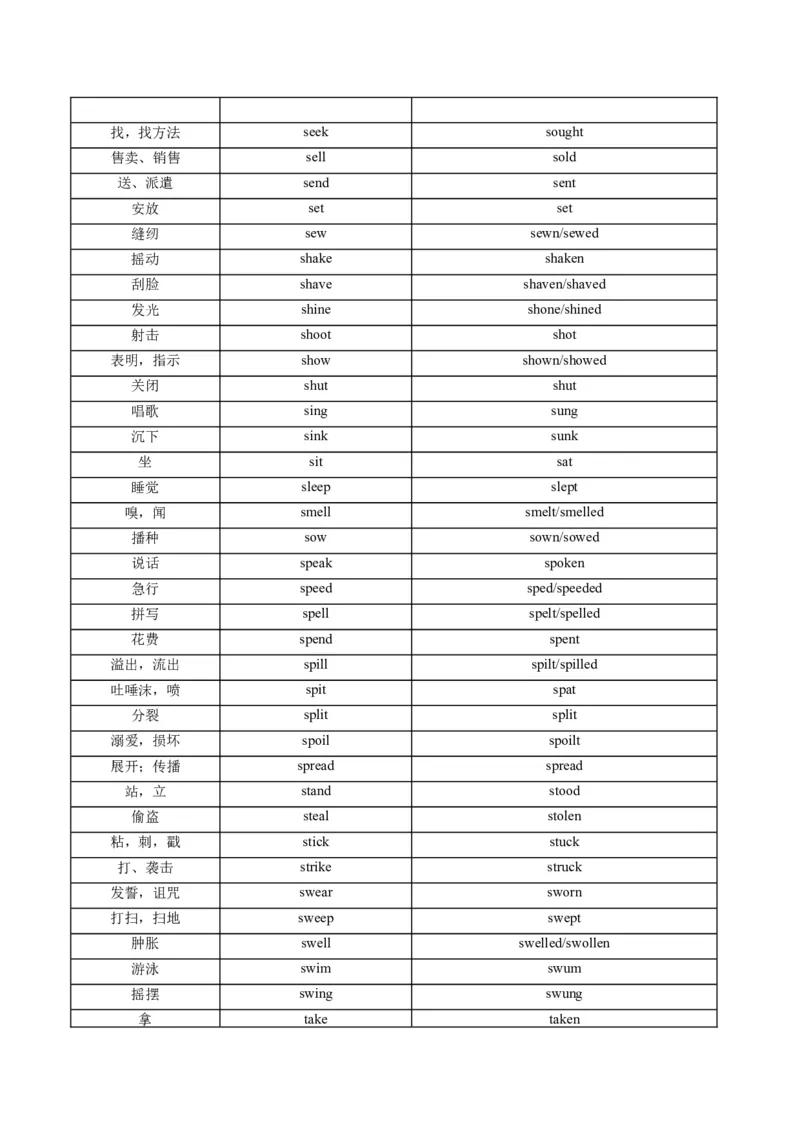
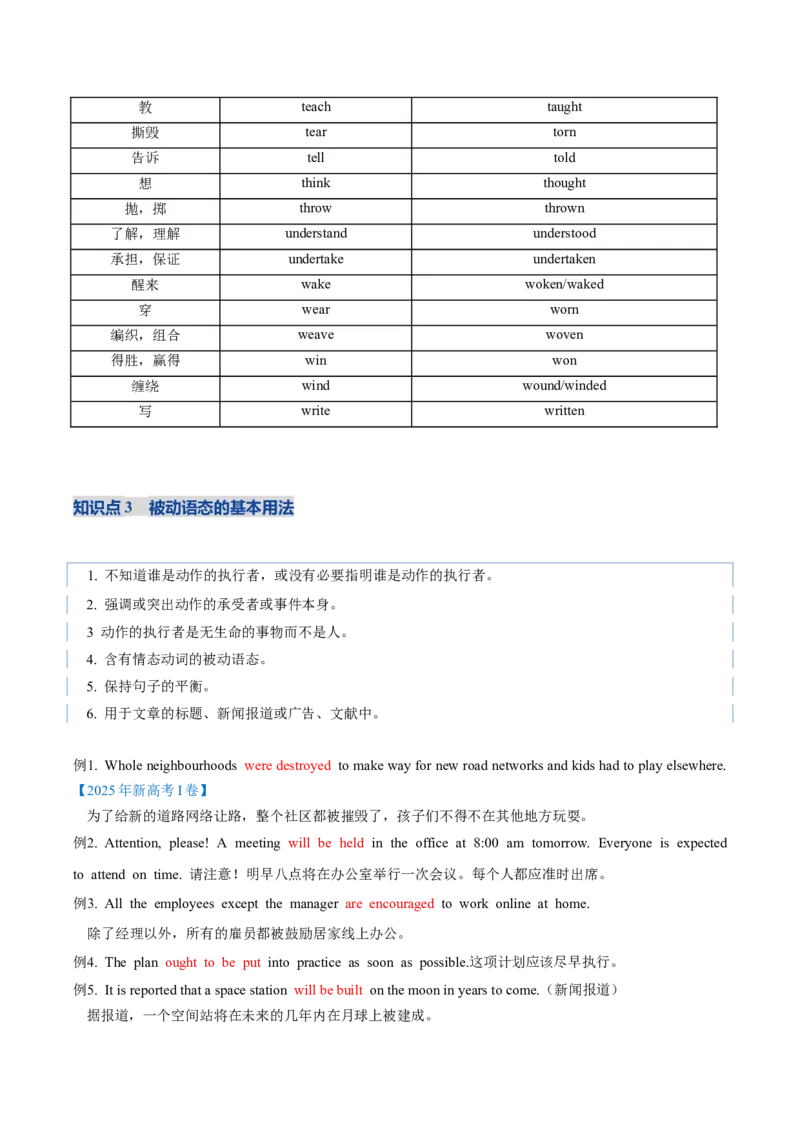
不规则变化如下表所示:
词义
动词原形
过去分词
出生
bear
born
打
beat
beaten
变得
become
become
开始
begin
begun
弯曲
bend
bent
咬
bite
bitten/bit
流血
bleed
bled
吹、刮风
blow
blown
打破
break
broken
带来
bring
brought
建筑,建设
build
built
燃烧
burn
burnt/burned
爆发
burst
burst
买
buy
bought
投,抛
cast
cast
捉、抓
catch
caught
选择
choose
chosen
来
come
come
值,花费
cost
cost
割、切
cut
cut
对付、处理
deal
dealt
挖,掘
dig
dug
做
do
done
拉、拽
draw
drawn
做梦
dream
dreamed/dreamt
喝养
drink
drunk
驾驶,驱赶
drive
driven
吃
eat
eaten
落下
fall
fallen
喂
feed
fed
觉得
feel
felt
战斗
fight
fought
发现
find
found
逃,消失
flee
fled
飞行
fly
flown
禁止
forbid
forbidden
预测,预报
forecast
forecast/forecasted
忘记
forget
forgotten
宽恕
forgive
forgiven
冻结
freeze
frozen
得到
get
got/gotten
给(予)
give
given
去
go
gone
生长
grow
grown
悬挂
hang
hung
绞死
hanged
有
have
had
听到
hear
heard
藏,隐瞒
hide
hid/hidden
打中
hit
hit
持有、容纳
hold
held
损伤
hurt
hurt
保持
keep
kept
知道
know
known
放,放置
lay
laid
领导、引领
lead
led
跳跃;跳越
leap
leapt/leaped
学习
learn
learnt/learned
离开
leave
left
借给
lend
lent
让
let
let
躺
lie
lain
点燃
light
lit/lighted
失去
lose
lost
做,制作
make
made
意欲,想要
mean
meant
遇见
meet
met
误认
mistake
mistaken
误解,误会
misunderstand
misunderstood
克服,战胜
overcome
overcome
赶上,超过
overtake
overtaken
支付
pay
paid
放,放下
put
put
读,阅读
read
read
恐慌
panic
panicked
野炊
picnic
picnicked
重建
rebuild
rebuilt
归还,报答
repay
repaid
处理掉、去掉
rid
rid
骑
ride
ridden
响,打电话
ring
rung
升,上升
rise
risen
跑
run
run
说,说话
say
said
看见
see
seen
找,找方法
seek
sought
售卖、销售
sell
sold
送、派遣
send
sent
安放
set
set
缝纫
sew
sewn/sewed
摇动
shake
shaken
刮脸
shave
shaven/shaved
发光
shine
shone/shined
射击
shoot
shot
表明,指示
show
shown/showed
关闭
shut
shut
唱歌
sing
sung
沉下
sink
sunk
坐
sit
sat
睡觉
sleep
slept
嗅,闻
smell
smelt/smelled
播种
sow
sown/sowed
说话
speak
spoken
急行
speed
sped/speeded
拼写
spell
spelt/spelled
花费
spend
spent
溢出,流出
spill
spilt/spilled
吐唾沫,喷
spit
spat
分裂
split
split
溺爱,损坏
spoil
spoilt
展开;传播
spread
spread
站,立
stand
stood
偷盗
steal
stolen
粘,刺,戳
stick
stuck
打、袭击
strike
struck
发誓,诅咒
swear
sworn
打扫,扫地
sweep
swept
肿胀
swell
swelled/swollen
游泳
swim
swum
摇摆
swing
swung
拿
take
taken
教
teach
taught
撕毁
tear
torn
告诉
tell
told
想
think
thought
抛,掷
throw
thrown
了解,理解
understand
understood
承担,保证
undertake
undertaken
醒来
wake
woken/waked
穿
wear
worn
编织,组合
weave
woven
得胜,赢得
win
won
缠绕
wind
wound/winded
写
write
written
知识点3  被动语态的基本用法
1. 不知道谁是动作的执行者,或没有必要指明谁是动作的执行者。
2. 强调或突出动作的承受者或事件本身。
3 动作的执行者是无生命的事物而不是人。
4. 含有情态动词的被动语态。
5. 保持句子的平衡。
6. 用于文章的标题、新闻报道或广告、文献中。
例1. Whole neighbourhoods were destroyed to make way for new road networks and kids had to play elsewhere.
【2025 年新高考I 卷】
为了给新的道路网络让路,整个社区都被摧毁了,孩子们不得不在其他地方玩耍。
例2. Attention, please! A meeting will be held in the office at 8:00 am tomorrow. Everyone is expected
to attend on time. 请注意!明早八点将在办公室举行一次会议。每个人都应准时出席。
例3. All the employees except the manager are encouraged to work online at home.
除了经理以外,所有的雇员都被鼓励居家线上办公。
例4. The plan ought to be put into practice as soon as possible.这项计划应该尽早执行。
例5. It is reported that a space station will be built on the moon in years to come.(新闻报道)
据报道,一个空间站将在未来的几年内在月球上被建成。
例6. Eight-year-old boy was kidnapped! 8 岁男孩遭绑架?
例7. The lecture will be made by Mr James, who is a young artist from London.(保持句子平衡)
詹姆斯先生讲作这次报告,他是一位来自伦敦的年轻艺术家。
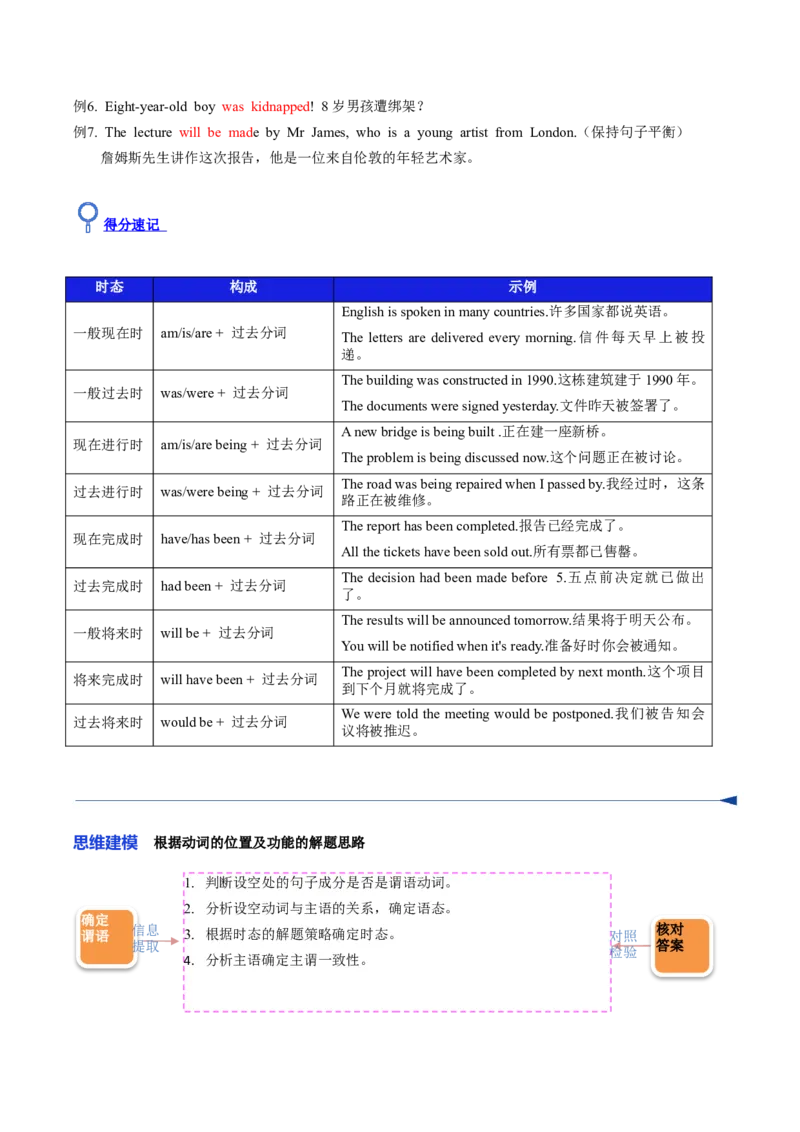
得分速记
时态
构成
示例
一般现在时
am/is/are + 过去分词
English is spoken in many countries.许多国家都说英语。
The letters are delivered every morning. 信件每天早上被投
递。
一般过去时
was/were + 过去分词
The building was constructed in 1990.这栋建筑建于1990 年。
The documents were signed yesterday.文件昨天被签署了。
现在进行时
am/is/are being + 过去分词
A new bridge is being built .正在建一座新桥。
The problem is being discussed now.这个问题正在被讨论。
过去进行时
was/were being + 过去分词
The road was being repaired when I passed by.我经过时,这条
路正在被维修。
现在完成时
have/has been + 过去分词
The report has been completed.报告已经完成了。
All the tickets have been sold out.所有票都已售罄。
过去完成时
had been + 过去分词
The decision had been made before 5.五点前决定就已做出
了。
一般将来时
will be + 过去分词
The results will be announced tomorrow.结果将于明天公布。
You will be notified when it's ready.准备好时你会被通知。
将来完成时
will have been + 过去分词
The project will have been completed by next month.这个项目
到下个月就将完成了。
过去将来时
would be + 过去分词
We were told the meeting would be postponed.我们被告知会
议将被推迟。
思维建模  根据动词的位置及功能的解题思路
核对
答案
对照
检验
1. 判断设空处的句子成分是否是谓语动词。
2. 分析设空动词与主语的关系,确定语态。
3. 根据时态的解题策略确定时态。
4. 分析主语确定主谓一致性。
信息
提取
确定
谓语
考向   考查被动语态的基本用法
例1 (2025 年重庆·阶段练习)Instead, shoppers          (greet) by tables furnished with vases of
wildflowers, and modernist armchairs where people actually sit and chat.
【答案】are greeted
【解析】考查动词时态和语态。句意:相反,迎接购物者的是摆满野花花瓶的桌子,以及人们可以坐下来
聊天的现代主义扶手椅。此处陈述客观事实,使用一般现在时,主语shoppers 和greet 为被动关系,需用被
动语态,主语为复数名词,be 动词用are。故填are greeted。
例2 (2025 年重庆北碚· 阶段练习)On the occasion of the celebration for the 40th anniversary of the
establishment of diplomatic relations betweenChina and France in 2004, Sommier         (invite) to collaborate
on a joint project with the Beijing VocationalCollege of Opera and Arts (BVCOA) to perform Beijing Opera in
France.
【答案】was invited
【解析】考查谓语动词。句意:2004 年,在中法建交40 周年庆祝活动之际,Sommier 受邀与北京戏曲艺
术职业学院合作开展一个项目,在法国表演京剧。空处为本句谓语动词;根据“in 2004”可知,本句时态
为一般过去时;主语为“Sommier”,单数,和动词“invite”之间为被动关系。故填was invited。
【变式训练1·变载体】(24-25 高三下·重庆万州·期中) But his remarkable deeds and unwavering spirit will
always       (engrave) in our hearts and continue to illuminate China’s path forward.
【答案】be engraved
【解析】考查被动语态。句意:同上。此空位于助动词will 之后,所以使用动词原形,engrave 与主语之间
为被动关系,所以该句为一般将来时的被动语态,谓语动词为will be engraved,will 已在原句中。故填be
engraved。
【变式训练2·变情景】(2025 届浙江省杭州市高三上学期一模英语试题) In 2021, UNESCO added the city
of Nice to its World Heritage List. “Our candidacy for UNESCO          (support) by China, for which we are
so grateful,” says Salles.
【答案】was supported
【解析】考查时态语态。句意:我们竞选联合国教科文组织成员得到了中国的支持,对此我们深表感谢。
这里考查谓语动词,主语Our candidacy for UNESCO 与动词support 为被动关系,再由In 2021 可知,这里
时态应用一般过去时。故填was supported。

  考点二  被动语态的特殊用法

知识点1  主动形式表示被动含义的动词及被动形式表示主动含义的短语
主动形式表示被动含义的动词
1.系动词类(look、seem、feel、taste、sound、prove、appear 等)。
2.表示主语特征或性能的词(read、wash、write、sell、wear、lock 等),常与not、hardly、well、easily、
badly、nicely 等副词连用。
This kind of cloth washes easily. 这种布料容易清洗。
3.open、close、lock、move 等动词常与won't、can't、wouldn't 连用。
例1. No matter what he did to the door,it wouldn't open.
不论他怎么对付这个门,它就是打不开。
例2. Now, these may just sound like statistics.
这些听上去仅仅是些数据。
例3. If AI does eventually prove to be our downfall, it is unlikely to be at the hands of human-shaped forms like
these, with recognisably human motivations such as aggression.【2020·北京卷·阅读理解】
尽管最终证实,人工智能意味着人类的没落,我们也不太可能受到这些人形的机器控制,他们带有鲜明
的人类动机,比如敌对性。
例4. The fish smells good.鱼闻起来味道不错。
例5. This kind of cloth washes easily.这种布料很好洗。
例6. These novels won't sell well.这些小说不畅销。
例7. My pen writes smoothly.我的钢笔书写流畅。
例8. The door won't lock.这门无法关上。
被动形式表示主动含义的短语
be addicted to 沉溺于;    be seated 坐着;      be hidden 躲藏;
be lost 迷路;            be drunk 喝醉;      be dressed 穿着;
be devoted to 致力于;
例1. What some teenagers don’t realize is how difficult life can be after they get addicted to drugs.
 一些青少年没有意识到一旦他们染上毒瘾,生活会变得多么困难。
例2. Excuse me, I got lost. I took a bus to city hall, but I can’t find the place.【2021 年全国乙卷听力】
 你好,我迷路了。我乘公共汽车去市政厅,但我找不到地方。
知识点2  被动语态与系表结构的区别
1. 被动语态中的过去分词强调动作;系表结构中的过去分词相当于形容词,强调主语的特点或状态。
例1.The book was sold by a certain bookstore. (被动语态)
这本书在某一家书店出售。
例2. The book is well sold. (系表结构)
这本书卖得好。
2. 被动语态常由greatly, much 等词修饰;系表结构常由very, quite, rather, too, so, more, most 等词修
饰。
例1.I was greatly moved by her kindness.(系表结构)
   我被她的善良深深地打动了。
例2.He is very satisfied with your paper. (系表结构)
他对你的论文非常满意。
3. 被动语态一般由“be+过去分词”构成;系表结构除了与be 动词连用外,还可以用其他系动词,
如,become,  get, turn, sound, lie, remain, seem, appear 等。
例1.These English songs have been taught many times on the radio.(被动语态)
 这些英文歌曲在收音机里已经教过很多遍了。
例2.  She suddenly became interested in the picture. (系表结构)
   她突然变得对这幅画有兴趣了。
知识点3  不能用于被动语态的高频动词与短语

1. 有些及物动词(短语)不能用于被动语态。常见的有have、cost、lack、own、belong to、take part in
等。
2. 不及物动词(短语)不能用于被动语态。常见的有happen/take place/occur、remain、break out、last、
come out、come up、lose heart、date from (back to)、run out 等。
例1.The war broke out in 1937. 战争爆发于1937 年。
例2. The plan worked out successfully. 计划成功实施了。
知识点4  非谓语形式中的主动形式表被动含义
1. 在need、want、require、deserve、bear, worth 等动词后用动词-ing 形式的主动形式表示被动意义,其含
义相当于动词不定式的被动形式。
例1. The house needs repairing/to be repaired. 这栋房子需要修缮。
例2. A dog’s eating habit requires training before it is properly established.【天津卷知识运用】
在狗的饮食习惯被正确地建立之前,需要进行定期的训练。
例3.The place is worth visiting.
=The place is worthy to be visited.这个地方值得游览。
2. 在某些“主语(人/物)+be+形容词+动词不定式”结构中,动词不定式的主动形式表示被动意义。这些
形容词有nice、easy、fit、hard、difficult、important、impossible、pleasant、interesting 等。
例1. The problem is difficult to work out. 这个问题很难解决。
例2. This kind of water isn't fit to drink.这种水不适合饮用。
例3. The room is comfortable to live in.这个房间住起来很舒适。
3. be to blame(受谴责), be to rent(待出租)结构中用主动形式表被动意义。
例1. Who is to blame for the mistake?谁应该为这个错误负责?
例2. The truck driver was to blame. 卡车司机应受谴责。
例3. If anyone is to blame, it’s me. 如果有人该承担责任,那就是我。
4. 在“have+宾语+to do”结构中,句子主语是不定式的逻辑主语时。
例1. I have some clothes to wash. (动作由我发出,我来洗)
例2. Sir, do you have any clothes to be washed?(衣服不是由主语you 来洗)
5. 名师提醒:在too...to 结构和enough to 结构中,可以用不定式的主动形式表示被动含义。
例1. Now mobile phones are cheap enough to buy. 现在买手机很便宜。
例2.The box is too heavy to carry.这个箱子太重,搬不动。
知识点5  主动语态变为被动语态的易错点
1. 主动变为被动时双宾语的变化。
My friend gave me an interesting book on my birthday.我的朋友在我生日时给了我一本有趣的书。
→An interesting book was given to me (by my friend) on my birthday.
→I was given an interesting book (by my friend) on my birthday.
2. 主动变为被动时,宾语成主语;作宾补的不定式如果省略了to,变成被动语态时,需加上to。
The boss made him work all day long.→He was made to work all day long (by the boss).
老板让他整天都工作。
3. 短语动词变被动语态时,注意介词短语的完整性。
Your pronunciation and spelling should be paid attention to. 你应该注意你的发音和拼写。
They have sent for a doctor.→A doctor has been sent for.他们已经请了一位医生。
4. 情态动词, be going to, be to, be sure to, have to 等结构变为被动语态时,只需将它们后面的动词原形变
为“be+过去分词”。
We can repair this watch in two days.→This watch can be repaired in two days.
我们可以在两天内修好这块手表。
5. 当句子的谓语为say, believe, expect, think, know, write, consider, report 等时,被动语态有两种形式:
a.谓语动词用被动语态,动词不定式作主补。
b.用it 作形式主语,真正的主语用主语从句来表示。
People know paper was made in China first.众所周知,纸最先在中国被制造。
→Paper was known to be made in China first.
→It is known that paper was made in China first.
类似句型有:It is said/known/suggested/believed/hoped/thought that ...
知识点6  be+过去分词与get+过去分词的区别
1.“be+过去分词”既可以表示动作,也可以表示状态,多表示一般的动作或状态。
2.“be+过去分词”多表示经过安排、考虑的动作。
3.“get+过去分词”多用于表示动作的结果或动作变化的逐渐性。只能表示动作。
4.“get+过去分词”可表示出乎意料的动作。且构成疑问句时,需借助助动词do 的适当形式。
例1.  The tree is broken. 树断了。
例2. The tree got broken in the snow. 这颗树在大雪中被弄断了。
例3. The bridge was built in 1866 and in now still in a good state.这座古老的桥是1866 年建造的,现在
还完好。
例4. How did the painting get damaged?这幅画怎么被破坏的?
例5. Many animals got killed in the wild when searching for food.许多动物在野外觅食时被杀死。
考向1  考查谓语动词中语态的特殊用法
例1 (2025 年四川巴中一模试题)By combining traditional cultural elements with modern technology, Black
Myth: Wukong effectively          (bridge) the gap between Eastern and Western artistic expressions.
【答案】bridges
【解析】考查动词时态和主谓一致。句意:《黑神话:悟空》将传统文化元素与现代科技相结合,有效地
弥合了东西方艺术表现之间的鸿沟。句子主语是“Black Myth: Wukong”,为单数,此处描述一般事实,用
一般现在时,所以谓语动词bridge 用第三人称单数形式 bridges。故填bridges。
例2(2025 年江苏模拟试题)It has been recognized as a national intangible cultural heritage since May 2021.
Originating in Nuanquan town, it        (date) back to the Ming Dynasty (1368—1644) and evolved from
weapon casting practices.
【答案】dates
【解析】考查动词时态。句意:它起源于暖泉镇,可追溯到明朝(1368—1644 年),是由武器铸造实践
演变而来的。date back to 意为“追溯到”,此处为谓语动词,描述客观事实,时态用一般现在时,主语it
是第三人称单数,所以谓语用动词date 的第三人称单数形式dates。故填dates。
【变式训练1·变载体】Mrs. Lee wants that kind of cloth because she has been told that it       (wash) very
well.
【答案】washes
【解析】考查时态和主谓一致。句意:李太太想要那种布,因为有人告诉她那种布很耐洗。空前的it 指代
前面的that kind of cloth,由very well 可知,此处表示“那种布很耐洗”,描述的是主语内在的性质、性
能,应用一般现在时的主动形式表示被动意义,且主语it 是第三人称单数,因此wash 应用单数形式。故
填washes。
【变式训练2·变载体】Deservedly, Black Myth: Wukong has been enormously successful. Journey to the West is
a tale with a proven track record, but in the late decades no other adaptations of the novel            (sell) 10
million copies in the span of just a few days.
【答案】have sold
【解析】考查现在完成时。句意:《西游记》是一个有良好记录的故事,但在最近几十年里,没有其他改
编版本的小说能在短短几天内卖出1000 万册。in the late decades 是现在完成时的标志,no other adaptations
作主语,谓语动词用复数形式。故填have sold。
考向2  考查非谓语动词中的主动与被动
例1 The school uniforms require            (iron) to maintain a neat appearance.
【答案】ironing/to be ironed
【解析】考查动名词和不定式。句意:校服需要熨烫才能保持整洁的外观。物作主语时,require 作需要讲
一般接动名词作宾语,用主动形式表被动,为require doing,相当于require to be done,故填ironing/ to be
ironed。
例2 For English learners, there’s no doubt that China Daily is well worth_________ (read).
【答案】reading
【解析】考查非谓语动词。句意:对于学习英语的人来说,《中国日报》毫无疑问值得一读。分析句子可
知,设空处在句中作非谓语,be worth doing 为固定搭配,表示“值得做某事”,设空处应填doing 形式。
故填reading。
【变式训练1·变情景】Cultural expectations may also be        (blame)—girls may be more likely to catch
maths anxiety, perhaps because of stereotypes (刻板印象)that giris are naturally not very good at maths.
【答案】to blame
【解析】考查非谓语动词。句意:文化期望也可能是罪魁祸首——女孩可能更容易患上数学焦虑症,也许
是因为女孩天生不擅长数学的刻板印象,短语 be to blame 表示“该受责备”主动表达被动。故填 to
blame。
【变式训练2·变载体】The difference in thickness and weight from the earlier version makes the iPad 2 more
comfortable ________(hold).
【答案】to hold
【解析】考查动词不定式作状语。句意:厚度和重量与先前版本的不同使得iPad 2 拿着更舒服。形容词
easy,hard,difficult,comfortable 后用不定式作原因状语,且不定式与逻辑主语the iPad 是动宾关系,需
用不定式的主动形式表被动含义。故填to hold。
1. (2025 全国一卷)“The players’ personalities     60      (reveal) during the game, and one’s weaknesses are
exposed to the opponent,” she adds.
【答案】are revealed
【解析】考查动词语态。句意:她补充说:“玩家的个性在游戏中显露出来,一个人的弱点会暴露给对
手。”本句描述一般事实,时态用一般现在时,且主语The players’ personalities 与动词reveal“揭示,显
示”为被动关系,所以空处需用一般现在时态的被动语态,主语为复数,be 动词用are。故填are
revealed。
2.(2025 浙江1 月卷)The concept    62    (be) certainly not new – men have been renting good suits for
decades – but for female shoppers, it is just taking off.
【答案】 is
【解析】考查系表结构的正确形式。由but 后的并列分句可知,本句描述的是现在的情况,且主语The
concept 为单数,故填is。
3.(2024 年全国甲卷)What should ________(do)with such a beautiful place?
【答案】be done
【解析】考查被动语态。句意:对于这样一个美丽的地方,我们应该做些什么呢?主语what 指物,与谓语
动词do 是被动关系,情态动词should 后接be done 构成被动语态,故填be done。
4.(2023 年浙江卷)Citizens of higher social classes          (permit)to live closer to the center of the circles.
【答案】were permitted
【解析】考查动词的被动语态。句意:高等阶层的公民被允许住在离中心地带更近的地方。分析句子结构
可知,空格处在句中作谓语,和主语Citizens of higher social classes 构成被动关系,因为是对过去事实的陈
述应用一般过去时。故填were permitted。