第18 讲  过去分词
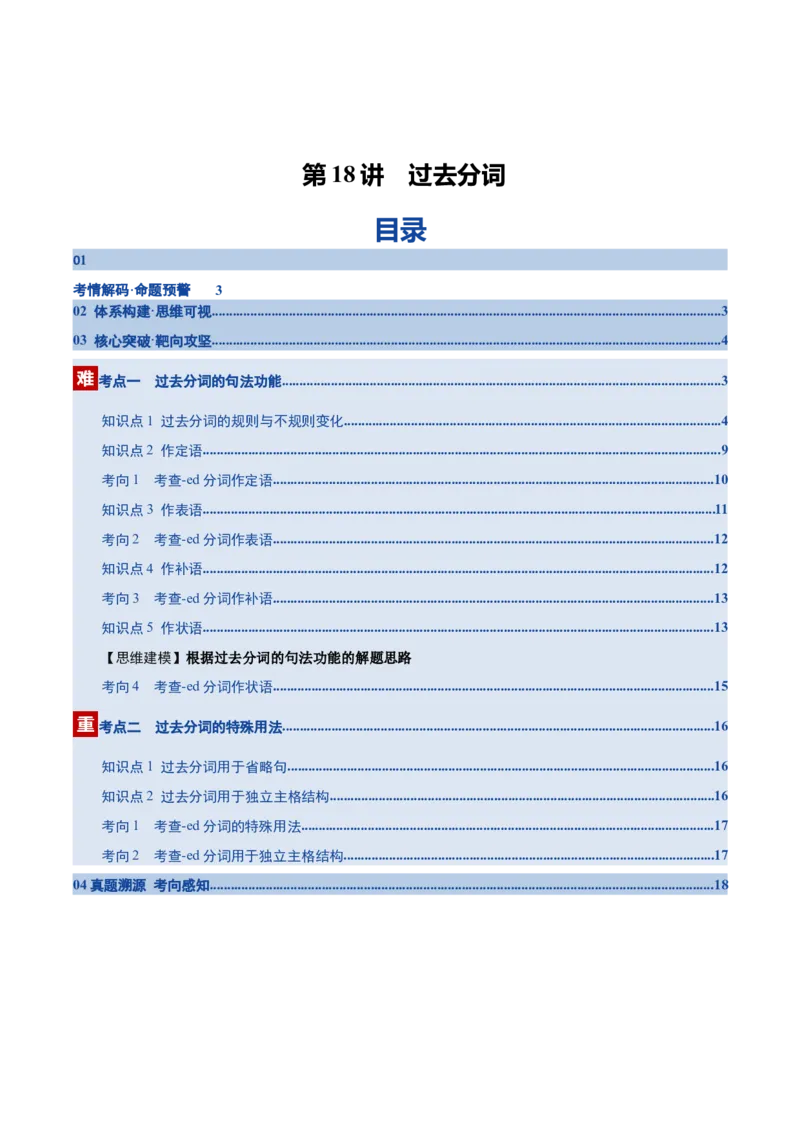
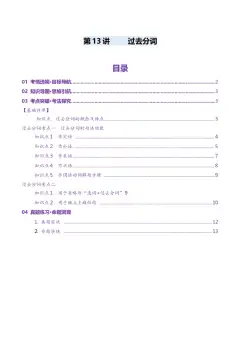
目录
01
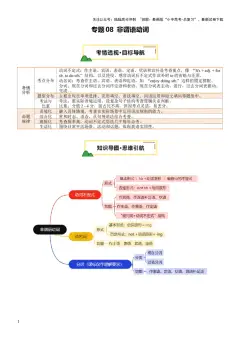
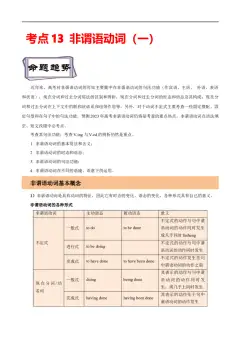
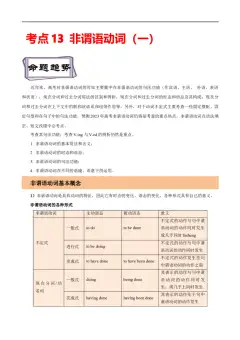
考情解码·命题预警
3
02 体系构建·思维可视.................................................................................................................................................3
03 核心突破·靶向攻坚.................................................................................................................................................4
考点一  过去分词的句法功能.............................................................................................................................3
知识点1 过去分词的规则与不规则变化...........................................................................................................4
知识点2 作定语....................................................................................................................................................9
考向1  考查-ed 分词作定语..............................................................................................................................10
知识点3 作表语..................................................................................................................................................11
考向2  考查-ed 分词作表语..............................................................................................................................12
知识点4 作补语..................................................................................................................................................12
考向3  考查-ed 分词作补语..............................................................................................................................13
知识点5 作状语..................................................................................................................................................13
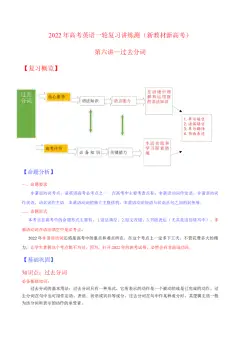
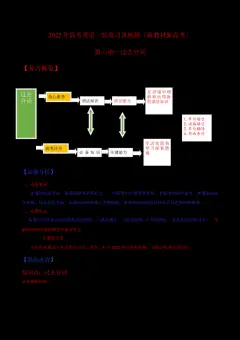
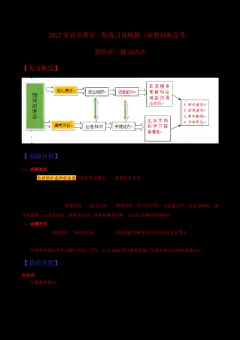
【思维建模】根据过去分词的句法功能的解题思路
考向4  考查-ed 分词作状语..............................................................................................................................15
考点二  过去分词的特殊用法...........................................................................................................................16
知识点1 过去分词用于省略句..........................................................................................................................16
知识点2 过去分词用于独立主格结构..............................................................................................................16
考向1  考查-ed 分词的特殊用法......................................................................................................................17
考向2  考查-ed 分词用于独立主格结构..........................................................................................................17
04 真题溯源 考向感知................................................................................................................................................18
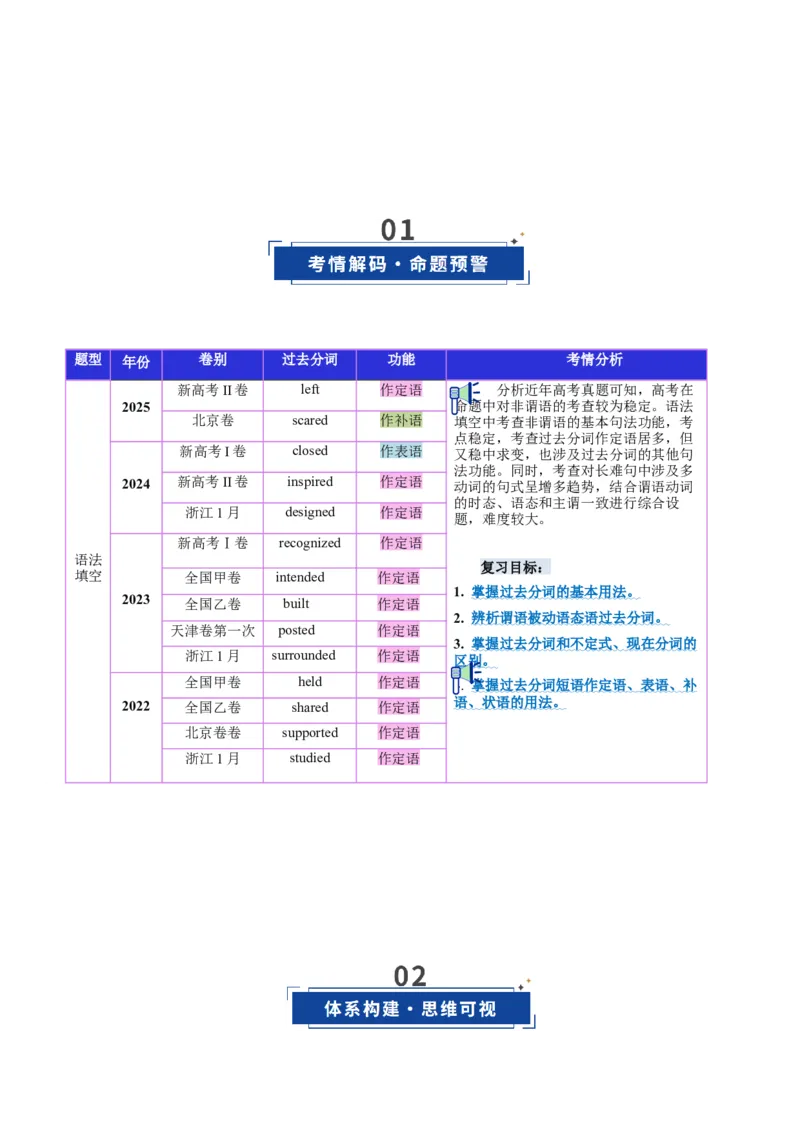
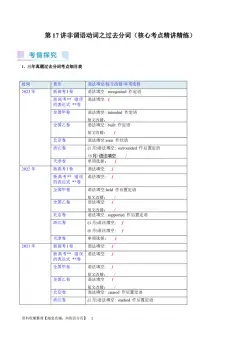
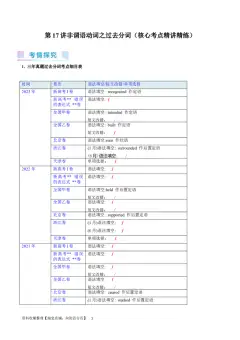
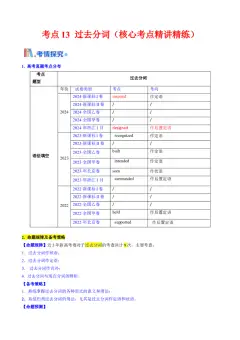
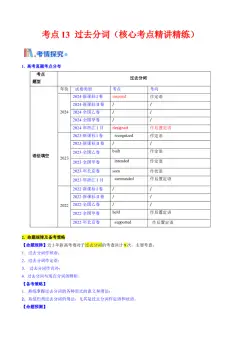
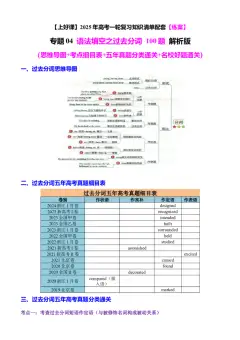
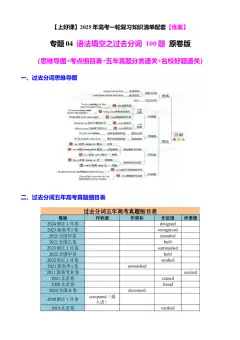
题型
年份
卷别
过去分词
功能
考情分析
语法
填空
2025
新高考II 卷
left
作定语
      分析近年高考真题可知,高考在
命题中对非谓语的考查较为稳定。语法
填空中考查非谓语的基本句法功能,考
点稳定,考查过去分词作定语居多,但
又稳中求变,也涉及过去分词的其他句
法功能。同时,考查对长难句中涉及多
动词的句式呈增多趋势,结合谓语动词
的时态、语态和主谓一致进行综合设
题,难度较大。
复习目标:
1. 掌握过去分词的基本用法。


2. 辨析谓语被动语态语过去分词。


3. 掌握过去分词和不定式、现在分词的


区别

 。

4. 掌握过去分词短语作定语

 、
  表语、补


语、状语

 的用法。


北京卷
scared
作补语
2024
新高考I 卷
closed
作表语
新高考II 卷
inspired
作定语
浙江1 月
designed
作定语
2023
新高考Ⅰ卷
recognized
作定语
全国甲卷
 intended
   作定语
全国乙卷
built
   作定语
天津卷第一次
posted
   作定语
浙江1 月
  surrounded
   作定语
2022
全国甲卷
held
作定语
全国乙卷
shared
作定语
北京卷卷
supported
作定语
浙江1 月
studied
作定语

 考点一  过去分词的句法功能

动词的-ed 形式保留动词的许多特征,在句中可以作表语、定语、补足语、状语等。其否定式是在其前加
not。在句中可有自己的状语和逻辑主语,带双宾语的及物动词的-ed 形式还可以有自己的宾语。
知识点1  过去分词的规则与不规则变化
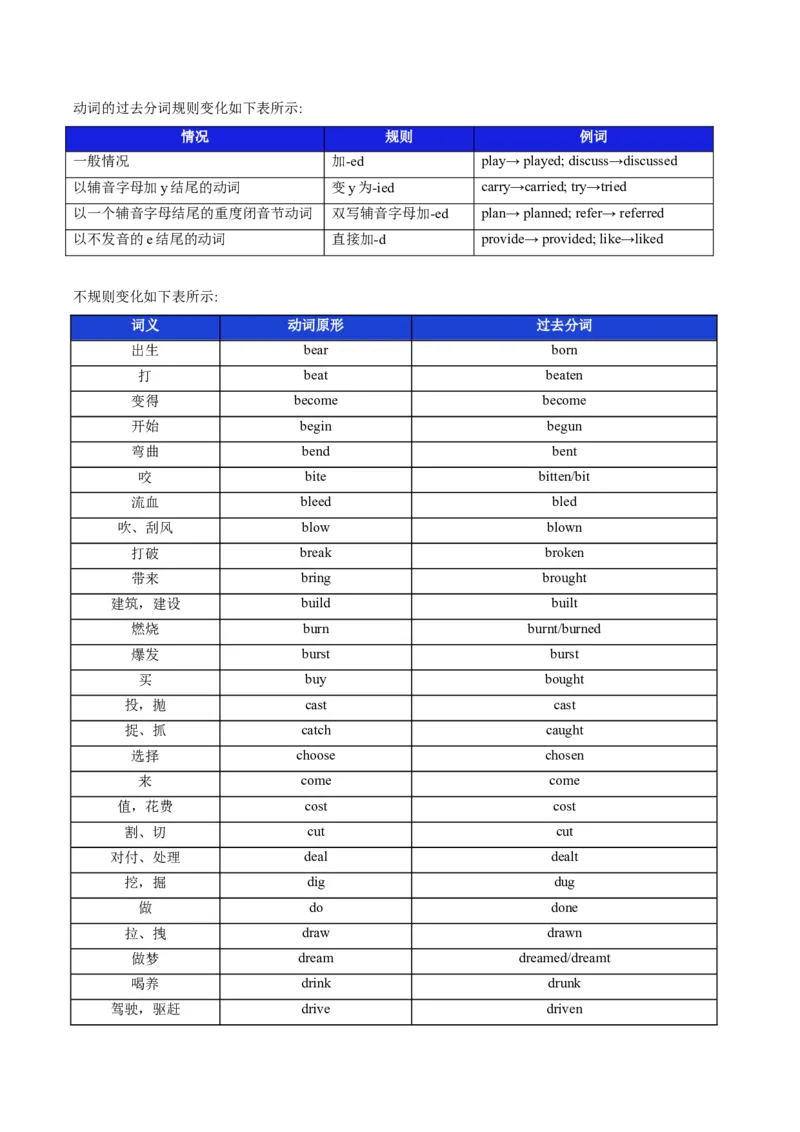
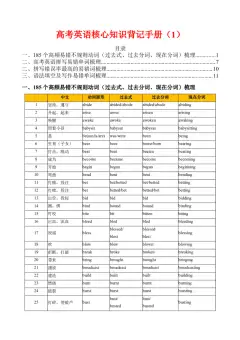
动词的过去分词规则变化如下表所示:
情况
规则
例词
一般情况
加-ed
play→ played; discuss→discussed
以辅音字母加y 结尾的动词
变y 为-ied
carry→carried; try→tried
以一个辅音字母结尾的重度闭音节动词
双写辅音字母加-ed
plan→ planned; refer→ referred
以不发音的e 结尾的动词
直接加-d
provide→ provided; like→liked
不规则变化如下表所示:
词义
动词原形
过去分词
出生
bear
born
打
beat
beaten
变得
become
become
开始
begin
begun
弯曲
bend
bent
咬
bite
bitten/bit
流血
bleed
bled
吹、刮风
blow
blown
打破
break
broken
带来
bring
brought
建筑,建设
build
built
燃烧
burn
burnt/burned
爆发
burst
burst
买
buy
bought
投,抛
cast
cast
捉、抓
catch
caught
选择
choose
chosen
来
come
come
值,花费
cost
cost
割、切
cut
cut
对付、处理
deal
dealt
挖,掘
dig
dug
做
do
done
拉、拽
draw
drawn
做梦
dream
dreamed/dreamt
喝养
drink
drunk
驾驶,驱赶
drive
driven
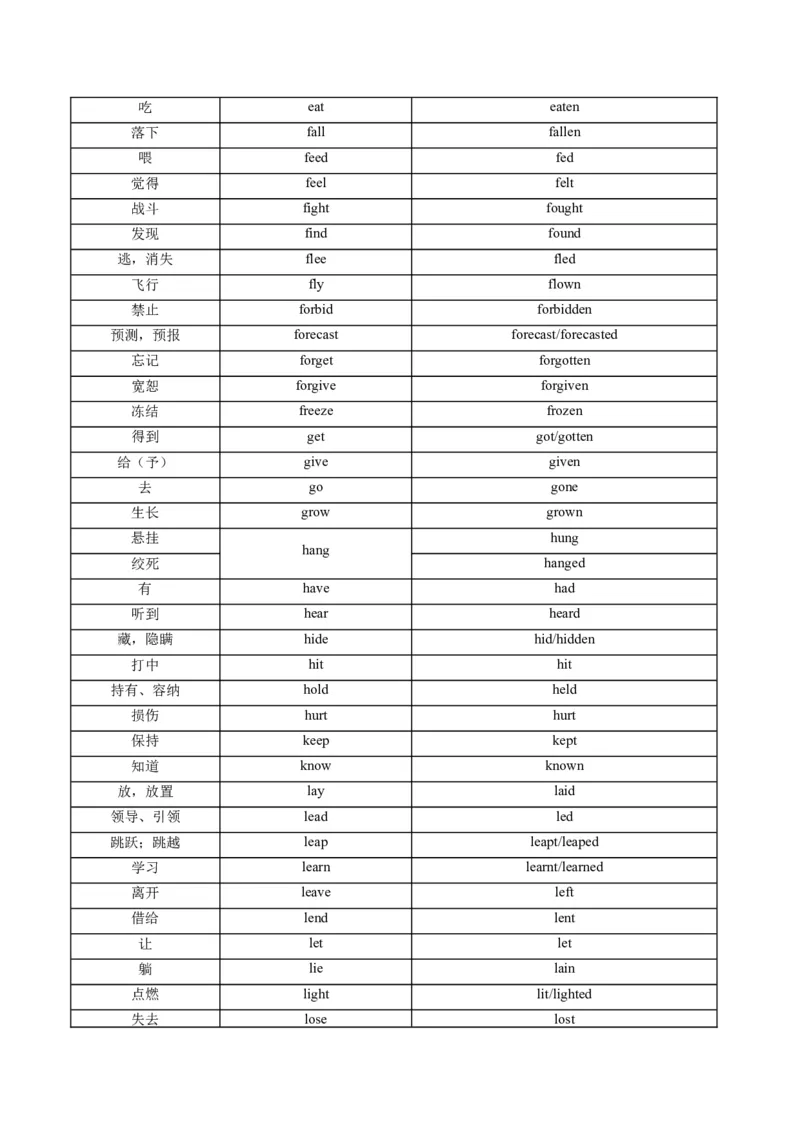
吃
eat
eaten
落下
fall
fallen
喂
feed
fed
觉得
feel
felt
战斗
fight
fought
发现
find
found
逃,消失
flee
fled
飞行
fly
flown
禁止
forbid
forbidden
预测,预报
forecast
forecast/forecasted
忘记
forget
forgotten
宽恕
forgive
forgiven
冻结
freeze
frozen
得到
get
got/gotten
给(予)
give
given
去
go
gone
生长
grow
grown
悬挂
hang
hung
绞死
hanged
有
have
had
听到
hear
heard
藏,隐瞒
hide
hid/hidden
打中
hit
hit
持有、容纳
hold
held
损伤
hurt
hurt
保持
keep
kept
知道
know
known
放,放置
lay
laid
领导、引领
lead
led
跳跃;跳越
leap
leapt/leaped
学习
learn
learnt/learned
离开
leave
left
借给
lend
lent
让
let
let
躺
lie
lain
点燃
light
lit/lighted
失去
lose
lost
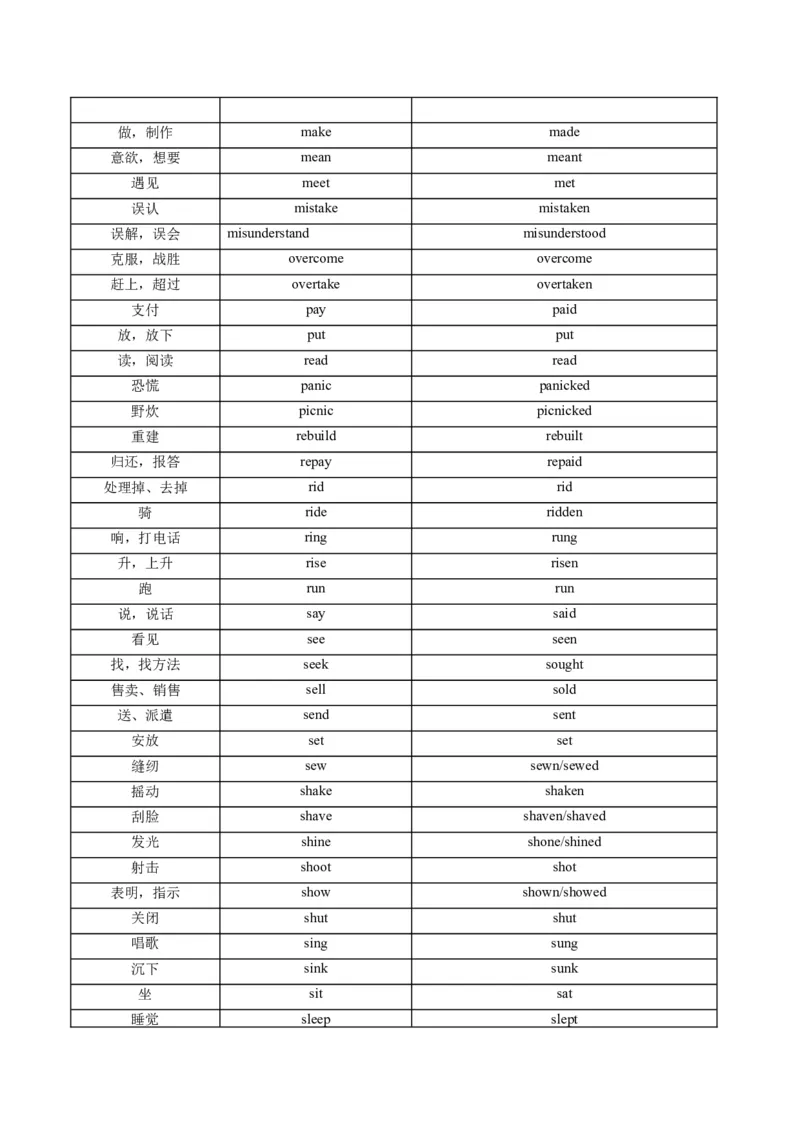
做,制作
make
made
意欲,想要
mean
meant
遇见
meet
met
误认
mistake
mistaken
误解,误会
misunderstand
misunderstood
克服,战胜
overcome
overcome
赶上,超过
overtake
overtaken
支付
pay
paid
放,放下
put
put
读,阅读
read
read
恐慌
panic
panicked
野炊
picnic
picnicked
重建
rebuild
rebuilt
归还,报答
repay
repaid
处理掉、去掉
rid
rid
骑
ride
ridden
响,打电话
ring
rung
升,上升
rise
risen
跑
run
run
说,说话
say
said
看见
see
seen
找,找方法
seek
sought
售卖、销售
sell
sold
送、派遣
send
sent
安放
set
set
缝纫
sew
sewn/sewed
摇动
shake
shaken
刮脸
shave
shaven/shaved
发光
shine
shone/shined
射击
shoot
shot
表明,指示
show
shown/showed
关闭
shut
shut
唱歌
sing
sung
沉下
sink
sunk
坐
sit
sat
睡觉
sleep
slept
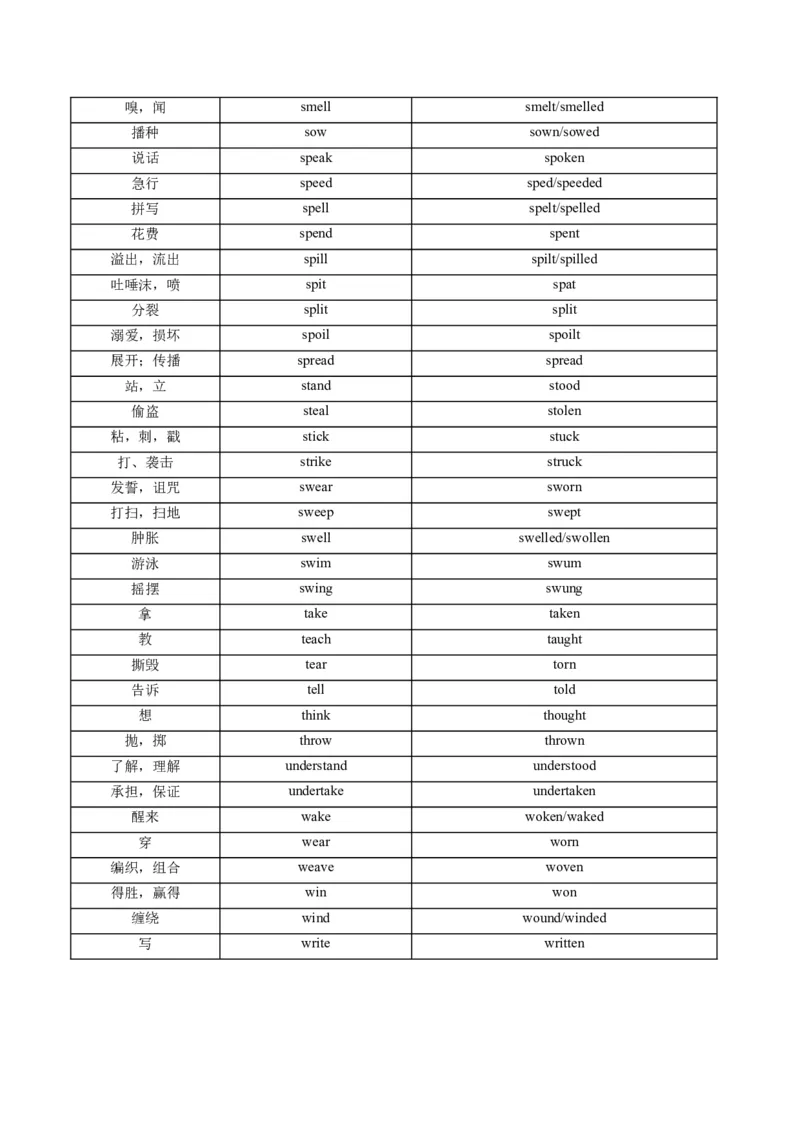
嗅,闻
smell
smelt/smelled
播种
sow
sown/sowed
说话
speak
spoken
急行
speed
sped/speeded
拼写
spell
spelt/spelled
花费
spend
spent
溢出,流出
spill
spilt/spilled
吐唾沫,喷
spit
spat
分裂
split
split
溺爱,损坏
spoil
spoilt
展开;传播
spread
spread
站,立
stand
stood
偷盗
steal
stolen
粘,刺,戳
stick
stuck
打、袭击
strike
struck
发誓,诅咒
swear
sworn
打扫,扫地
sweep
swept
肿胀
swell
swelled/swollen
游泳
swim
swum
摇摆
swing
swung
拿
take
taken
教
teach
taught
撕毁
tear
torn
告诉
tell
told
想
think
thought
抛,掷
throw
thrown
了解,理解
understand
understood
承担,保证
undertake
undertaken
醒来
wake
woken/waked
穿
wear
worn
编织,组合
weave
woven
得胜,赢得
win
won
缠绕
wind
wound/winded
写
write
written
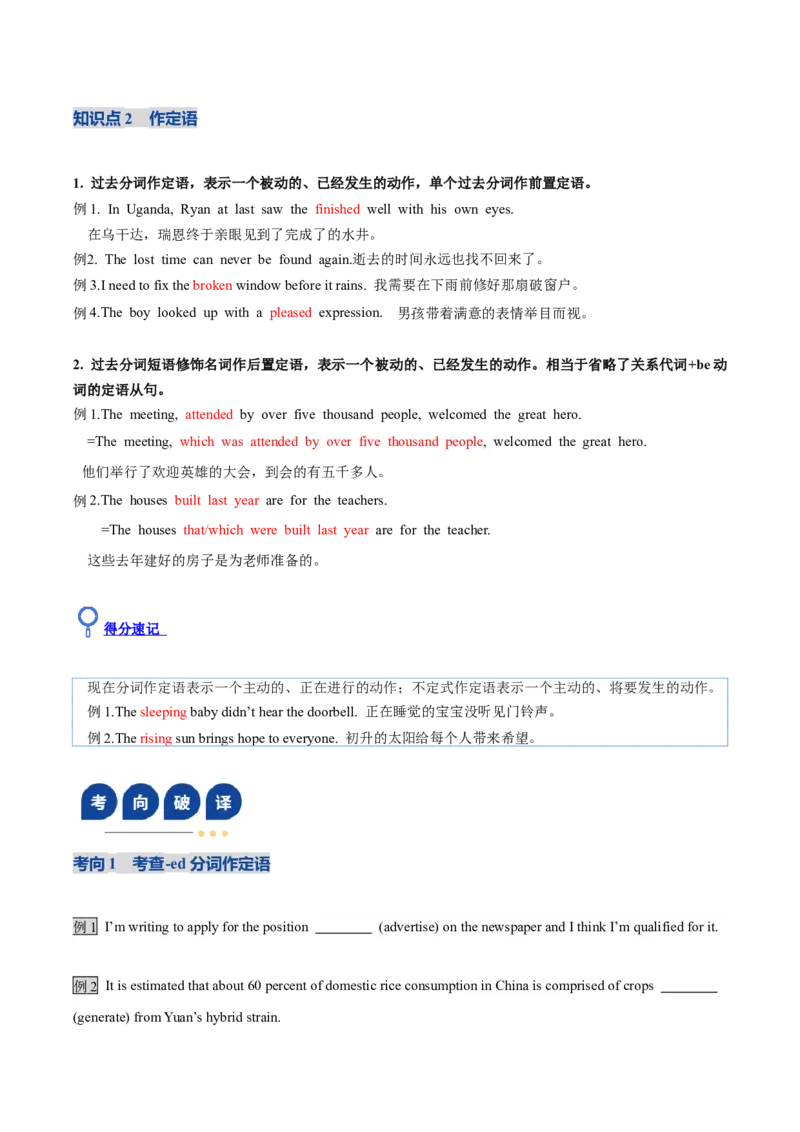
知识点2  作定语
1. 过去分词作定语,表示一个被动的、已经发生的动作,单个过去分词作前置定语。
例1. In Uganda, Ryan at last saw the finished well with his own eyes.
在乌干达,瑞恩终于亲眼见到了完成了的水井。
例2. The lost time can never be found again.逝去的时间永远也找不回来了。
例3.I need to fix the broken window before it rains. 我需要在下雨前修好那扇破窗户。
例4.The boy looked up with a pleased expression.  男孩带着满意的表情举目而视。
2. 过去分词短语修饰名词作后置定语,表示一个被动的、已经发生的动作。相当于省略了关系代词+be 动
词的定语从句。
例1.The meeting, attended by over five thousand people, welcomed the great hero.
=The meeting, which was attended by over five thousand people, welcomed the great hero.
     他们举行了欢迎英雄的大会,到会的有五千多人。
例2.The houses built last year are for the teachers.
=The houses that/which were built last year are for the teacher.
这些去年建好的房子是为老师准备的。
得分速记
现在分词作定语表示一个主动的、正在进行的动作;不定式作定语表示一个主动的、将要发生的动作。
例1.The sleeping baby didn’t hear the doorbell. 正在睡觉的宝宝没听见门铃声。
例2.The rising sun brings hope to everyone. 初升的太阳给每个人带来希望。
考向1  考查-ed 分词作定语
例1 I’m writing to apply for the position          (advertise) on the newspaper and I think I’m qualified for it.
例2 It is estimated that about 60 percent of domestic rice consumption in China is comprised of crops
(generate) from Yuan’s hybrid strain.
【变式训练1·变载体】1.5 degree of global warming in the future is already in progress, which makes the goals
of keeping warming below 2 degrees          (outline) in the 2015 Paris Agreement (巴黎气候协议)
unattainable.
【变式训练2·变情景】The newly          (elect) Prime Minister said: “I will unite our country, not with
words, but with action.”
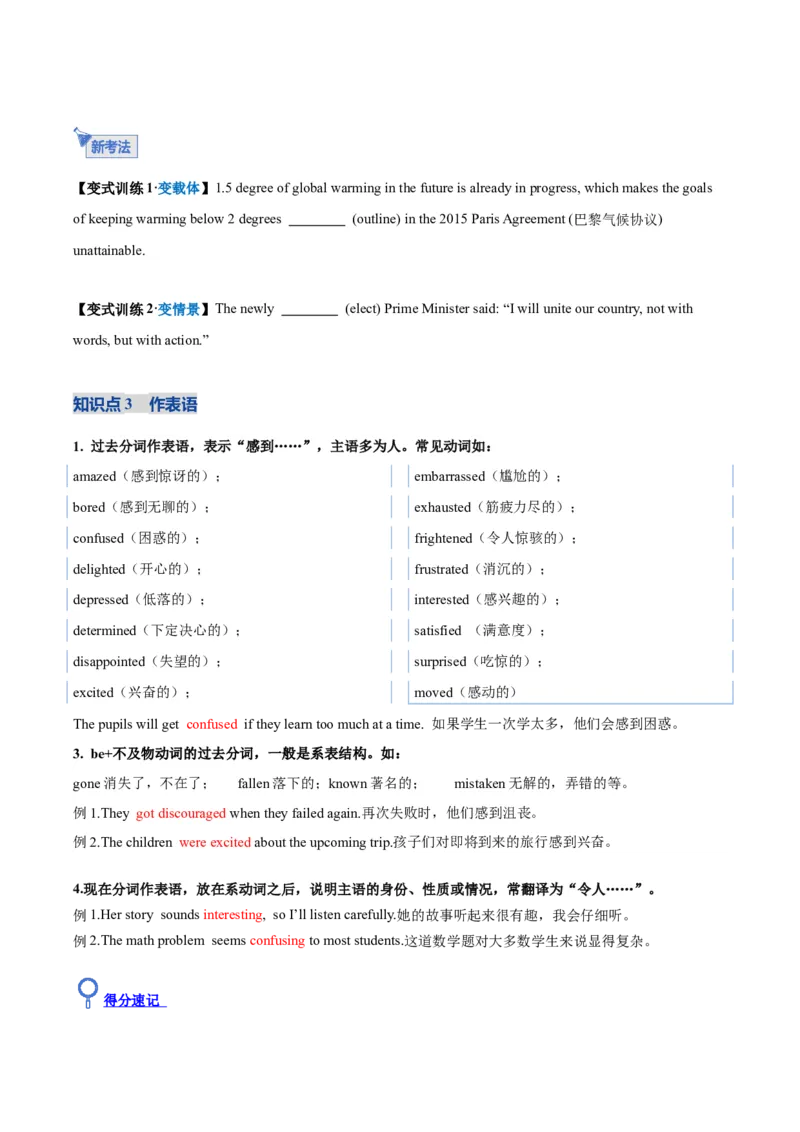
知识点3  作表语
1. 过去分词作表语,表示“感到……”,主语多为人。常见动词如:
amazed(感到惊讶的);
bored(感到无聊的);
confused(困惑的);
delighted(开心的);
depressed(低落的);
determined(下定决心的);
disappointed(失望的);
excited(兴奋的);
embarrassed(尴尬的);
exhausted(筋疲力尽的);
frightened(令人惊骇的);
frustrated(消沉的);
interested(感兴趣的);
satisfied (满意度);
surprised(吃惊的);
moved(感动的)
The pupils will get confused if they learn too much at a time. 如果学生一次学太多,他们会感到困惑。
3. be+不及物动词的过去分词,一般是系表结构。如:
gone 消失了,不在了;   fallen 落下的;known 著名的;    mistaken 无解的,弄错的等。
例1.They got discouraged when they failed again.再次失败时,他们感到沮丧。
例2.The children were excited about the upcoming trip.孩子们对即将到来的旅行感到兴奋。
4.现在分词作表语,放在系动词之后,说明主语的身份、性质或情况,常翻译为“令人……”。
例1.Her story sounds interesting, so I’ll listen carefully.她的故事听起来很有趣,我会仔细听。
例2.The math problem seems confusing to most students.这道数学题对大多数学生来说显得复杂。
得分速记
1.作表语的过去分词与被动语态中的过去分词容易混淆。但被动语态表示主语的动作,作表语的过去分词
表示主语所处的状态。
例1. The book is interesting and I’m interested in it. 这本书很有趣,我对它很感兴趣。
2.现在分词作表语,说名主语的身份、性质或情况,主语大多是物。表示“令人......的”。
例2. The window is broken.(系表结构,表示主语the window 所处的状态broken)这扇窗户碎了。
例3. The window was broken by Tim.(被动语态,表示动作)这扇窗户是Tim 打碎的。
考向2  考查-ed 分词作表语
例1 I am afraid there is not much time remaining for you to get          ( dress ) for the party.
例2 When Bob got           (absorb) in his world of music, he felt as if he could “see” the beauty of the world
around him, like he had in his previous life.
【变式训练1·变载体】Although it has been buried underground for over 1,000 years, the ancient queen’s body
remains well             (preserve).
【变式训练2·变情景】I get          (refresh) through rock climbing, spend more time with my dad and get to
meet new friends.
知识点4  作补语
1. 表感觉或心理状态的动词如notice, let, make, hear, listen to, see, observe, watch, have, feel。
2. 表示“致使”等使役意义的动词如have, get, keep, leave, make 等后。
例1. I heard the song sung in English.我听到有人用英语唱过这首歌。
例2. I’ll have my hair cut tomorrow. 明天我要理发。
例3. He spoke in a loud voice in order to make himself heard.他大声讲话,以便让别人听到。
3. with 的复合结构中。
A.过去分词作宾语补足语表示一个被动的、已完成的动作;
B.对比:该结构中动词不定式表示将要发生的动作;现在分词表示一个主动动作;
C.省略with 则该结构变为独立主格结构。
例1. With his homework finished, he went to the park to play. 作业写完了,他便去公园玩了。
例2.She had to walk home with her bike stolen. 自行车被偷,她只好步行回家。
例3.With the problem solved, we all felt relieved.问题解决了,我们都松了口气。
得分速记
1. 过去分词作宾补时,句中的宾语往往就是其逻辑宾语,该动词与宾语之间有动宾关系。
2. 观感使役类动词接过去分词作补足语,表示与宾语之间被动关系。
3. 过去分词用于“with+名词/代词+ done”结构,表示与宾语之间被动关系。有时,该结构省略介词with,
形成“名词/代词+ done”独立主格结构。
4. with 复合结构中动词不定式表示将要发生的动作;现在分词表示一个主动动作。
考向3  考查-ed 分词作补语
例1 They have already had some everyday words          (add) to the new edition of the dictionary.
·
例2 I was very upset to find my application          (rejection) by the company that I am fond of.
【变式训练1·变载体】Mrs Brown was much disappointed to see the washing machine that she had had

(repair) went wrong again.
【变式训练2·变情景】To keep myself          (remind) of the exam in law, I set the alarm clock.
知识点5  作状语
1. 过去分词作状语,逻辑主语是句子的主语,用作时间、原因、条件、让步、伴随状语,强调该动作与句
子主语之间的被动关系;为了强调,还可以与while, when, once, if, unless 等连词连用。
例1.Warned of the danger, he still went skating on the thin ice.(=Though he was warned...)虽然被警告
危险,他仍旧到薄冰上滑冰。
例2.The professor came into the classroom, followed by some students.教授走进教室,几个学生跟在后
例3. Given more time, I can finish the work.(=If I am given...)
例4. Seen from the hill, the city looks more beautiful.从山顶看,这座城市显得格外美丽。
2. “be+过去分词+介词”短语作状语时,be 动词省略,直接用过去分词作状语。如:
“be+过去分词+in”类短语:
be lost in 陷入,
be located in 坐落在,
be occupied in 专心于,
 be absorbed in 专心致志于,
be stuck in 被困在,
be trapped in 被困在,
be involved in 参与,
be buried in 埋头于,
be dressed in 穿着…
“be+过去分词+with”类短语:
be satisfied with 对…… 满意,
be equipped with 配备有,
be loaded with 装载着,
be burdened with 负担着,
be faced with 面临着…
“be+过去分词+to”类短语:
be accustomed to 习惯于,
be addicted to 沉迷于,
be devoted/committed to 致力于,
be exposed to 暴露于,
be used to 习惯余…
例1. Absorbed in painting, he spent the whole afternoon in the studio.
他全神贯注于绘画,在画室里度过了整个下午。
例2. Faced with the emergency, she immediately called for help.
面对紧急情况,她立刻呼救。
例3. Exposed to loud noise daily, workers here often have hearing problems.
每天暴露在噪音中,这里的工人常出现听力问题。
思维建模  根据过去分词的句法功能的解题思路
考向4  考查-ed 分词作状语
例1            (strike) by his uplifting speech, the teacher awarded the first prize to him.
例2          (trap) in the dark building for more than 5 hours, the thief looked pale and terrified.
【变式训练1·变载体】         (commit) to the conservation of heritage sites, we are sure to make great
achievements.
【变式训练2·变情景】The film star appeared,          (accompany) by a team of strong bodyguards.

  考点二  过去分词的特殊用法

核对
答案
对照
检验
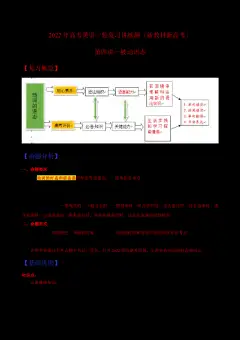
1.  1. 寻找到谓语,以便区分所填空是否为非谓语。
2. 判断非谓语动词所作的成分。
3. 找出非谓语动词的逻辑主语。
4.作主语或宾语,常用动名词表示习惯或一般情况,用不定式表示具体
情况;
5.作目的状语或在形容词后作状语,一般用不定式;
  6.作伴随状语、时间、方式等状语,常用分词,若与逻辑主语是主动关
系,用现在分词,若是被动关系,用过去分词。
信息
提取
分析成
分
知识点1  过去分词用于省略句
1. 状语从句含有it is 或者主从句主语一致且含有be 动词时,可以省略状语从句中的主语和be 动词。如果
用“从属连词+现在分词”,强调从句谓语动词与句子主语之间的主动关系;“从属连词+过去分词”强调
二者之间被动关系。
例1. When(it is )completed, the road will be open to public. 当这条铁路修好后,将会对公众开放。
例2. Though( he was )warned danger,  he still went skating on the thin ice.
虽然有人警告他小心点,他还是在薄冰上滑冰。
例3. When (I was) walking in the park, I found a lost cat.在公园散步时,我发现了一只迷路的猫。
例4. Unless (it is) repaired immediately, the machine may break down.除非立即被修理,否则机器可能故障.
2.易错提醒:before 和after 后接动词,只能接动名词作宾语。
例1.They had a short discussion before making the final decision.做最终决定前,他们进行了简短讨论。
例2.After finishing his homework, he went out to play.完成作业后,他出去玩了。
例3.The contract will be signed by both parties before being made public.这份合同在被公开之前将由双方签
署。
知识点2  过去分词用于独立主格结构
“名词/代词+过去分词”中,名词或代词是过去分词的逻辑主语,与分词之间有逻辑上的动宾关系,是分
词动作的承受者,在句中作时间状语、原因状语、伴随状语、条件状语等。
例1. All our savings gone, we started looking for jobs.积蓄全部用完了,我们就开始找工作。
    = Because all our savings had been gone...
例2. Jim was listening attentively to the lecture, all his attention fixed upon it.
专心致志地听着讲座,所有注意力全用在上面了。
例3. Many things settled, the manager looks relaxed.
很多事情处理好了,经理看上去很轻松。
考向1  考查-ed 分词的特殊用法
例1 If             (leave) untreated, the condition will eventually result in blindness.
例2 Once              (complete), this power station will supply all the neighboring towns and villages with
electricity.
【变式训练1·变载体】Though        (award) the National Teacher of the Year, she feels guilty at spending so
little time with her kids.
【变式训练2·变载体】Patients with severe allergies are warned not to try new medications unless
(accompany) by a healthcare professional.
考向2  考查-ed 分词用于独立主格结构
例1 Hu performed a series of Chinese music pieces, Hundreds of Birds Paying Homage to Phoenix________
(include), and also played with local musicians adaptations of Cuban music pieces.
例2 He made numerous contributions to the world, the most well-known        (be) the general theory of
relativity.
【变式训练1·变情景】              (judge) from the current situation, a new plan should be put forward as
soon as possible.
【变式训练2·变载体】As the sun began to rise, casting a golden hue on the park’s traditional architecture, the
volunteers gathered at the Zhuzi Cultural Park Square, their red and blue vests             (contrast) vividly
with the lush green mountains for the opening ceremony.
【变式训练3·变考法】With so many things              (bother) me, I hope you can offer me some practical
advice.
1.(2025 全国二卷)If you’ve never experienced the “sunshine scent” from a sheet or shirt     65     (leave)
to sun for a day, well, you’re missing out on one of life’s wonders.
2.(2024 年新高考I 卷) In cold weather, the structure stays ________ (close) to protect the plants.
3.(2024 年全国甲卷改错)Our fast train was packing with passengers.
4. (2023 天津3 月卷)The hero’s touching story ________ online has drawn thousands of “likes” and hundreds of
comments from the public.
A.posting
B.to post
C.posted
D.to be posted
5.(2023 年全国乙卷)It is home to more than 3,000 years of glorious history even down to its layout, with the
city keeping its carefully ________ (build) system of ring roads.
6.(2022 年全国乙卷)The chairman of the China Culture Promotion Society addressed the opening ceremony.
"... It can help to build a community with a      (share)future for mankind," he said.
7.(2021 浙江卷1 月)In 1985,urban men and women in more than three quarters of the countries ________
(study) had higher BMIs than men and women in rural areas.
8.(2022 年北京卷) One theory, increasingly ________  (support) by experts, suggests that smell preferences
are learned.