文档文本内容
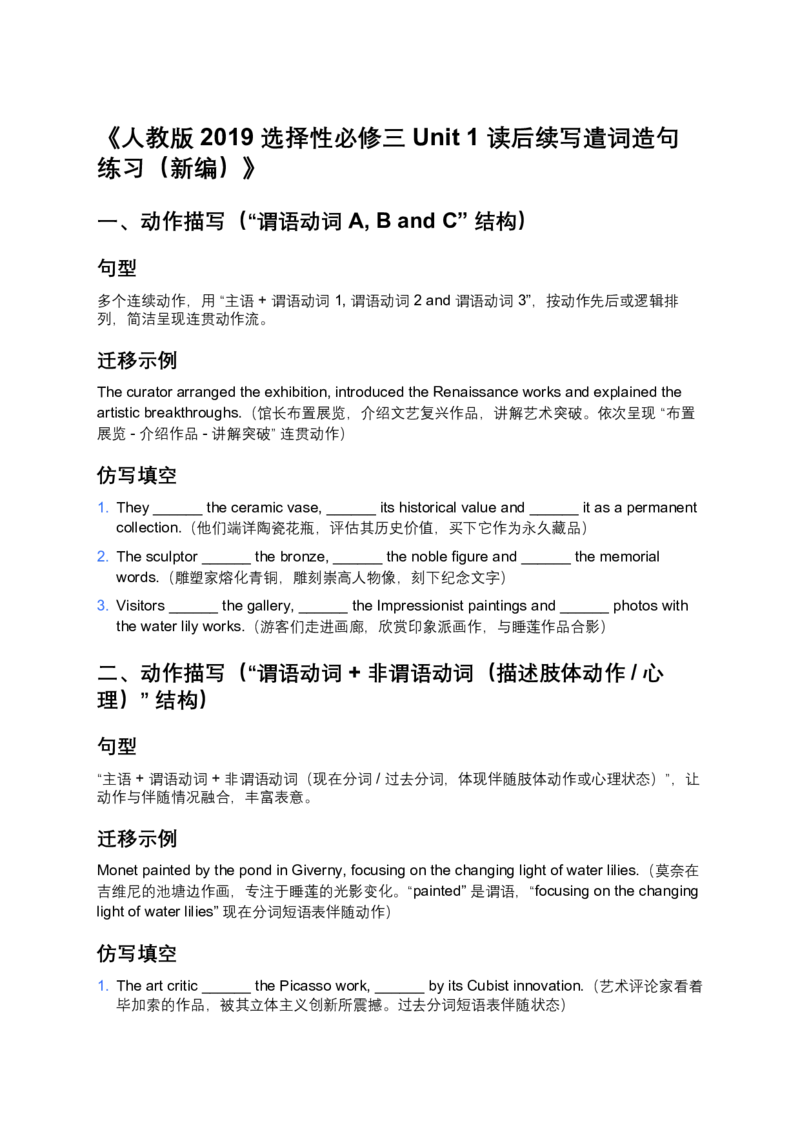
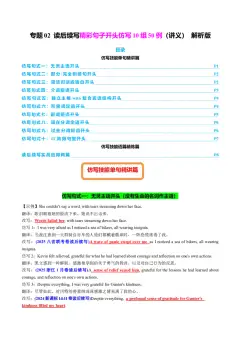
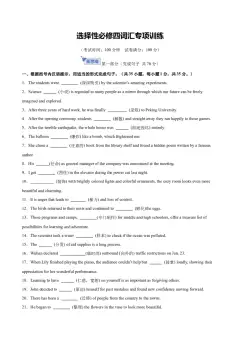
《人教版 2019 选择性必修三 Unit 1 读后续写遣词造句
练习(新编)》
一、动作描写(“谓语动词 A, B and C” 结构)
句型
多个连续动作,用 “主语 + 谓语动词 1, 谓语动词 2 and 谓语动词 3”,按动作先后或逻辑排
列,简洁呈现连贯动作流。
迁移示例
The curator arranged the exhibition, introduced the Renaissance works and explained the
artistic breakthroughs.(馆长布置展览,介绍文艺复兴作品,讲解艺术突破。依次呈现 “布置
展览 - 介绍作品 - 讲解突破” 连贯动作)
仿写填空
1. They ______ the ceramic vase, ______ its historical value and ______ it as a permanent
collection.(他们端详陶瓷花瓶,评估其历史价值,买下它作为永久藏品)
2. The sculptor ______ the bronze, ______ the noble figure and ______ the memorial
words.(雕塑家熔化青铜,雕刻崇高人物像,刻下纪念文字)
3. Visitors ______ the gallery, ______ the Impressionist paintings and ______ photos with
the water lily works.(游客们走进画廊,欣赏印象派画作,与睡莲作品合影)
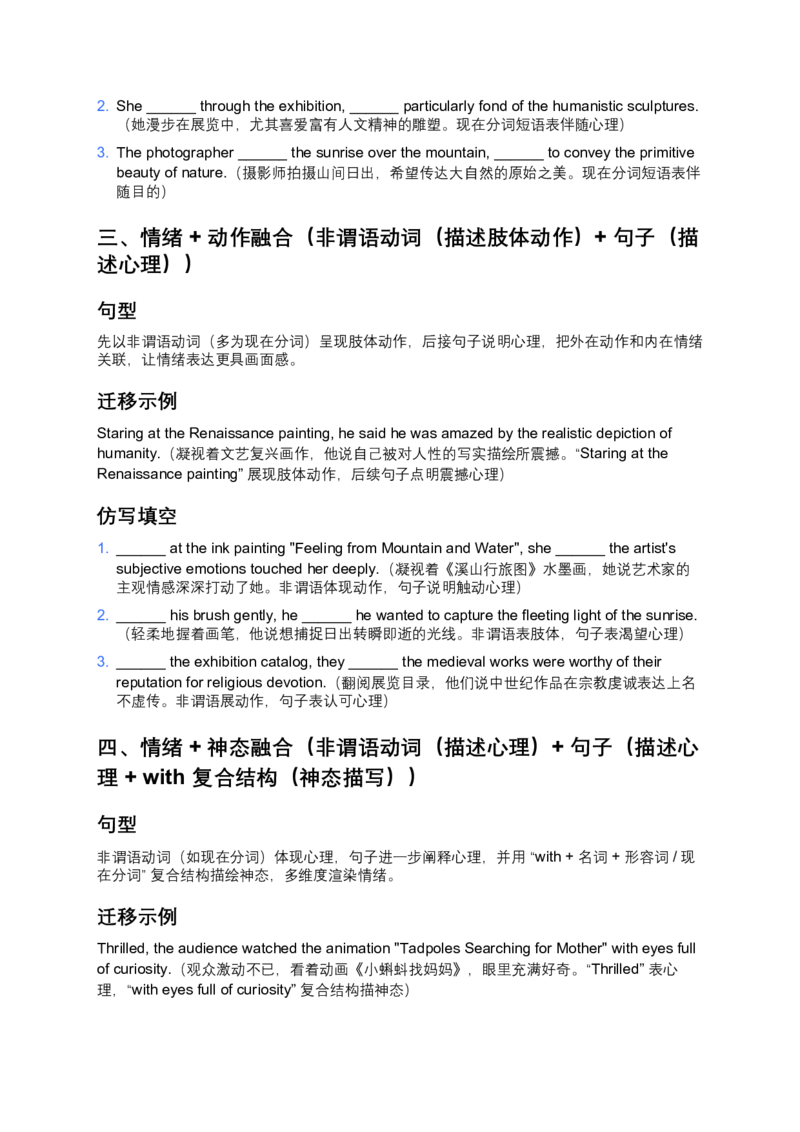
二、动作描写(“谓语动词 + 非谓语动词(描述肢体动作 / 心
理)” 结构)
句型
“主语 + 谓语动词 + 非谓语动词(现在分词 / 过去分词,体现伴随肢体动作或心理状态)”,让
动作与伴随情况融合,丰富表意。
迁移示例
Monet painted by the pond in Giverny, focusing on the changing light of water lilies.(莫奈在
吉维尼的池塘边作画,专注于睡莲的光影变化。“painted” 是谓语,“focusing on the changing
light of water lilies” 现在分词短语表伴随动作)
仿写填空
1. The art critic ______ the Picasso work, ______ by its Cubist innovation.(艺术评论家看着
毕加索的作品,被其立体主义创新所震撼。过去分词短语表伴随状态)
2. She ______ through the exhibition, ______ particularly fond of the humanistic sculptures.
(她漫步在展览中,尤其喜爱富有人文精神的雕塑。现在分词短语表伴随心理)
3. The photographer ______ the sunrise over the mountain, ______ to convey the primitive
beauty of nature.(摄影师拍摄山间日出,希望传达大自然的原始之美。现在分词短语表伴
随目的)
三、情绪 + 动作融合(非谓语动词(描述肢体动作)+ 句子(描
述心理))
句型
先以非谓语动词(多为现在分词)呈现肢体动作,后接句子说明心理,把外在动作和内在情绪
关联,让情绪表达更具画面感。
迁移示例
Staring at the Renaissance painting, he said he was amazed by the realistic depiction of
humanity.(凝视着文艺复兴画作,他说自己被对人性的写实描绘所震撼。“Staring at the
Renaissance painting” 展现肢体动作,后续句子点明震撼心理)
仿写填空
1. ______ at the ink painting "Feeling from Mountain and Water", she ______ the artist's
subjective emotions touched her deeply.(凝视着《溪山行旅图》水墨画,她说艺术家的
主观情感深深打动了她。非谓语体现动作,句子说明触动心理)
2. ______ his brush gently, he ______ he wanted to capture the fleeting light of the sunrise.
(轻柔地握着画笔,他说想捕捉日出转瞬即逝的光线。非谓语表肢体,句子表渴望心理)
3. ______ the exhibition catalog, they ______ the medieval works were worthy of their
reputation for religious devotion.(翻阅展览目录,他们说中世纪作品在宗教虔诚表达上名
不虚传。非谓语展动作,句子表认可心理)
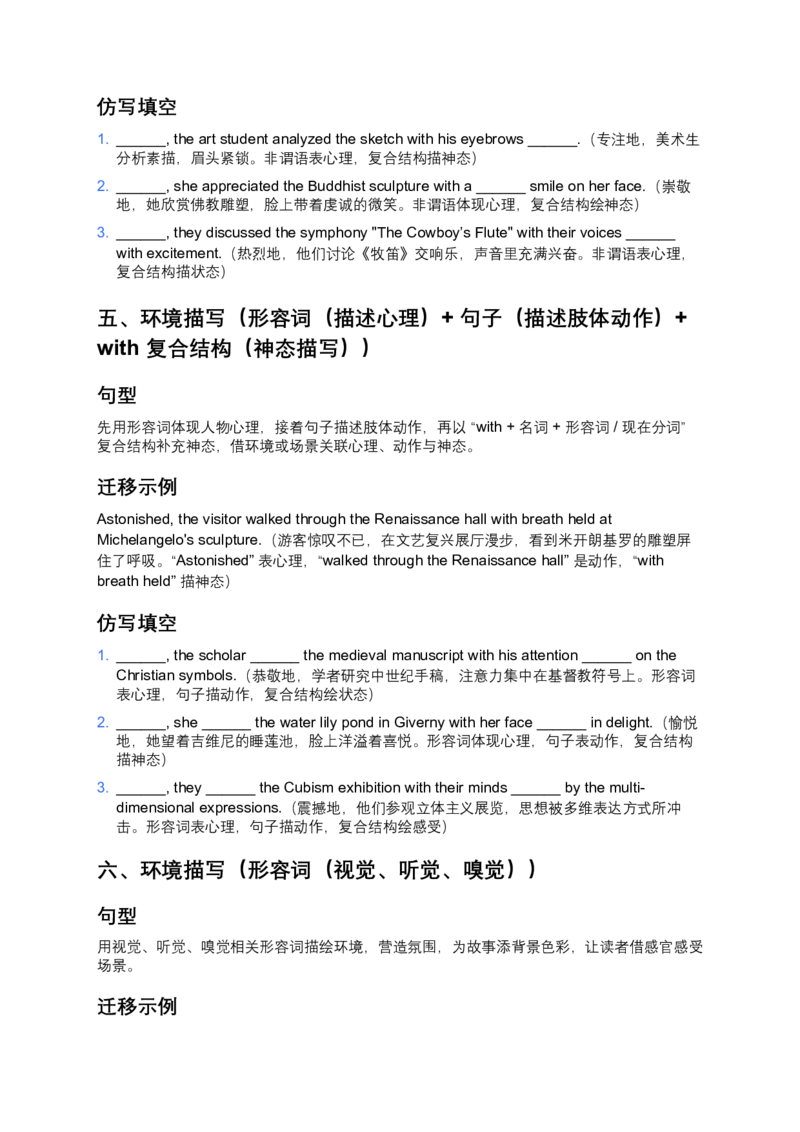
四、情绪 + 神态融合(非谓语动词(描述心理)+ 句子(描述心
理 + with 复合结构(神态描写))
句型
非谓语动词(如现在分词)体现心理,句子进一步阐释心理,并用 “with + 名词 + 形容词 / 现
在分词” 复合结构描绘神态,多维度渲染情绪。
迁移示例
Thrilled, the audience watched the animation "Tadpoles Searching for Mother" with eyes full
of curiosity.(观众激动不已,看着动画《小蝌蚪找妈妈》,眼里充满好奇。“Thrilled” 表心
理,“with eyes full of curiosity” 复合结构描神态)
仿写填空
1. ______, the art student analyzed the sketch with his eyebrows ______.(专注地,美术生
分析素描,眉头紧锁。非谓语表心理,复合结构描神态)
2. ______, she appreciated the Buddhist sculpture with a ______ smile on her face.(崇敬
地,她欣赏佛教雕塑,脸上带着虔诚的微笑。非谓语体现心理,复合结构绘神态)
3. ______, they discussed the symphony "The Cowboy’s Flute" with their voices ______
with excitement.(热烈地,他们讨论《牧笛》交响乐,声音里充满兴奋。非谓语表心理,
复合结构描状态)
五、环境描写(形容词(描述心理)+ 句子(描述肢体动作)+
with 复合结构(神态描写))
句型
先用形容词体现人物心理,接着句子描述肢体动作,再以 “with + 名词 + 形容词 / 现在分词”
复合结构补充神态,借环境或场景关联心理、动作与神态。
迁移示例
Astonished, the visitor walked through the Renaissance hall with breath held at
Michelangelo's sculpture.(游客惊叹不已,在文艺复兴展厅漫步,看到米开朗基罗的雕塑屏
住了呼吸。“Astonished” 表心理,“walked through the Renaissance hall” 是动作,“with
breath held” 描神态)
仿写填空
1. ______, the scholar ______ the medieval manuscript with his attention ______ on the
Christian symbols.(恭敬地,学者研究中世纪手稿,注意力集中在基督教符号上。形容词
表心理,句子描动作,复合结构绘状态)
2. ______, she ______ the water lily pond in Giverny with her face ______ in delight.(愉悦
地,她望着吉维尼的睡莲池,脸上洋溢着喜悦。形容词体现心理,句子表动作,复合结构
描神态)
3. ______, they ______ the Cubism exhibition with their minds ______ by the multi-
dimensional expressions.(震撼地,他们参观立体主义展览,思想被多维表达方式所冲
击。形容词表心理,句子描动作,复合结构绘感受)
六、环境描写(形容词(视觉、听觉、嗅觉))
句型
用视觉、听觉、嗅觉相关形容词描绘环境,营造氛围,为故事添背景色彩,让读者借感官感受
场景。
迁移示例
The grand gallery, with the sound of whispers and the smell of old canvas, was full of artistic
atmosphere.(宏伟的画廊里,低语声和旧画布的气味交织,充满艺术氛围。“grand”(视
觉)、“sound of whispers”(听觉)、“smell of old canvas”(嗅觉)营造氛围)
仿写填空
1. The ______ studio, with the ______ of brushes moving and the ______ of oil paints,
showed a busy creative scene.(明亮的工作室里,画笔移动的声音和油画颜料的气味呈现
出繁忙的创作景象。填视觉、听觉、嗅觉相关词汇)
2. The ______ square, with the ______ of children laughing and the ______ of fresh
flowers, hosted an outdoor art fair.(热闹的广场上,孩子们的笑声和鲜花的香气中,正举
办一场户外艺术展。用视觉、听觉、嗅觉相关词汇)
3. The ______ temple, with the ______ of bells ringing and the ______ of incense, created
a solemn religious atmosphere.(古老的寺庙里,钟声和香烛的气味营造出庄严的宗教氛
围。借视觉、听觉、嗅觉词汇营造氛围)
七、公用高级句式(倒装结构)
句型
把谓语或谓语部分提前,如 “副词 / 介词短语 + 谓语 + 主语”,突出强调,让句子有变化、更
紧凑,增强表达力度。
迁移示例
Only during the Renaissance did such a breakthrough in realistic painting emerge.(只有在
文艺复兴时期,写实绘画才有如此突破。“Only during the Renaissance” 提前,引发倒装,强
调时期)
仿写填空
1. ______ did people recognize the value of this humble ink painting.(直到专家进行精确鉴
定后,人们才认识到这幅不起眼的水墨画的价值。用倒装突出意识到的时机)
2. ______ can we understand the depth of humanistic spirit in Rembrandt's works.(只有通
过研究他的生平,我们才能理解伦勃朗作品中人文精神的深度。借倒装强调理解的方式)
3. ______ came the inspiration for Monet's "Water Lilies" series.(在吉维尼的池塘边,莫奈
《睡莲》系列的灵感涌现了。用倒装突出灵感出现的情境)
八、巧用修辞手法(比喻)
句型
用 “像…… 一样”(like)、“仿佛……”(as if)等,把事物比作另一类事物,让描述生动形象、
具体可感。
迁移示例
The colors in Renoir's paintings are like a symphony of light that dances on the canvas.(雷
诺阿画作中的色彩像光的交响乐,在画布上舞动。把色彩比作交响乐,突出其灵动)
仿写填空
1. The strokes in "Clearing After Snow on a Mountain Pass" were ______ that conveyed the
quiet strength of nature.(《溪山雪霁图》中的笔触像沉默的诗歌,传达着大自然的静谧力
量。用比喻描绘笔触的韵味)
2. The Renaissance sculpture's smile was ______ that warmed everyone who saw it.(文艺
复兴雕塑的微笑像一缕阳光,温暖着每个看到它的人。借比喻展现微笑的温暖)
3. The evolution of fine arts is ______ that records the spiritual journey of humanity.(美术
的演变像一条长河,记录着人类的精神旅程。用比喻体现演变的延续性)
九、巧用修辞手法(拟人)
句型
把事物或抽象概念当作人,赋予人的动作、情感、神态等,让描写鲜活有趣,拉近与读者距
离。
迁移示例
The ancient bronze vase has witnessed the rise and fall of dynasties for centuries.(这个古
老的青铜花瓶几个世纪以来见证了王朝的兴衰。“witnessed” 赋予花瓶人的动作)
仿写填空
1. The water lilies in Giverny ______ gently, sharing their beauty with Monet's brush.(吉维
尼的睡莲温柔地摇曳,与莫奈的画笔分享它们的美丽。拟人化,赋予睡莲 “摇曳” 动作)
2. The Renaissance paintings ______ silently, telling stories of humanity's pursuit of beauty.
(文艺复兴时期的画作静静地诉说,讲述着人类对美的追求。让画作 “诉说”,拟人呈现)
3. The ink ______ on the paper, creating a vivid world in "Feeling from Mountain and
Water".(墨在纸上流淌,在《溪山行旅图》中创造出一个生动的世界。赋予墨 “流淌” 的拟
人化行为)
十、巧用修辞手法(夸张)
句型
故意夸大或缩小事物特征、程度,突出特点,增强感染力,让读者印象深刻。
迁移示例
The influence of Picasso's Cubism was so great that it seemed to rewrite the history of
modern art.(毕加索立体主义的影响如此之大,仿佛改写了现代艺术史。夸张突出影响之
大)
仿写填空
1. The beauty of the sunrise in the painting was so stunning that it ______ for a thousand
years.(画中日出的美景如此震撼,仿佛能凝固一千年。夸张渲染美景的永恒)
2. The sculptor's precision was so remarkable that he ______ every detail with the accuracy
of a microscope.(雕塑家的精准度惊人,仿佛能用显微镜般的精度雕刻每个细节。夸张体
现精准的程度)
3. The crowd at the Impressionist exhibition was so large that it ______ the entire gallery.
(印象派展览的人群如此之多,仿佛挤满了整个画廊。夸张突出人数之多)