第13 讲  动词时态之一般时
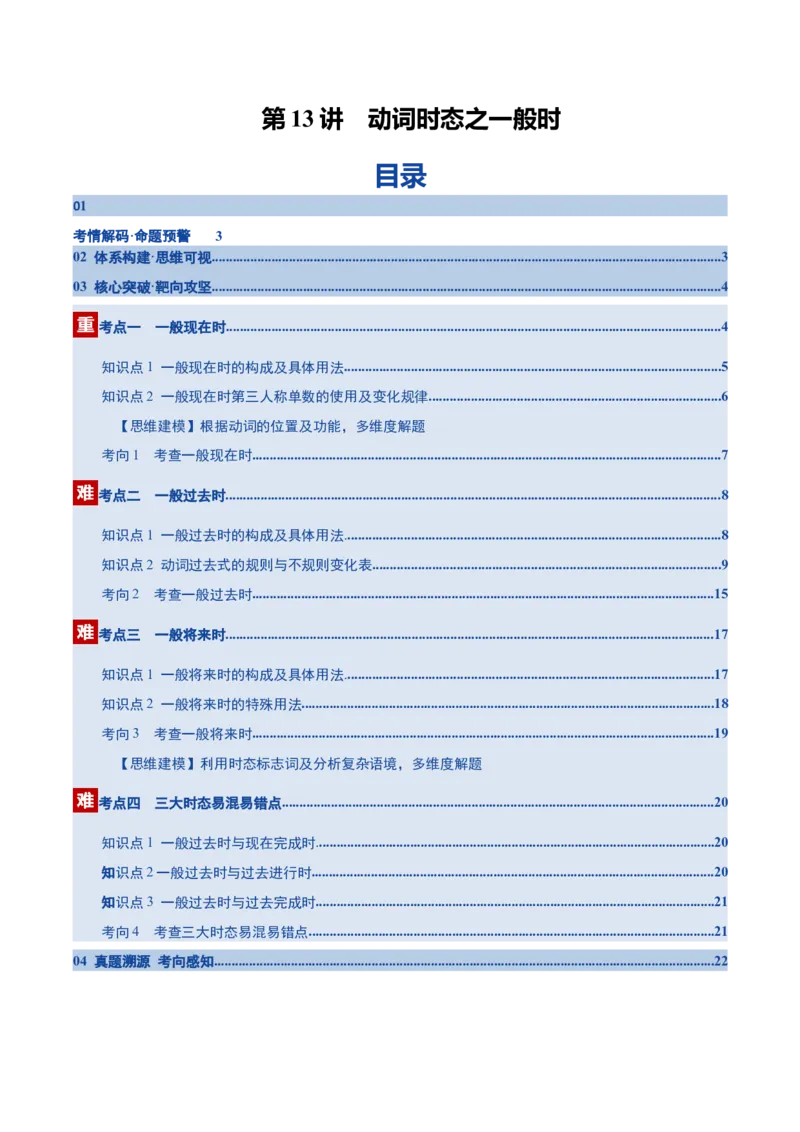
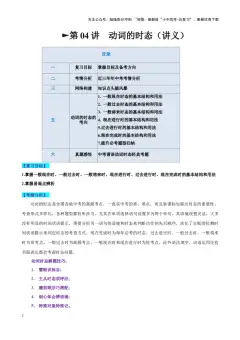
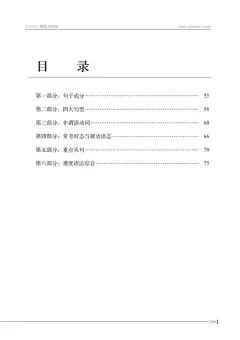
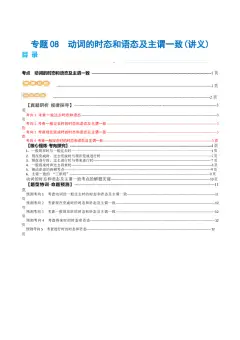
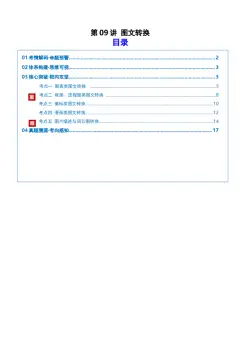
目录
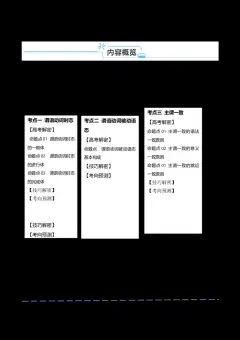
01
考情解码·命题预警
3
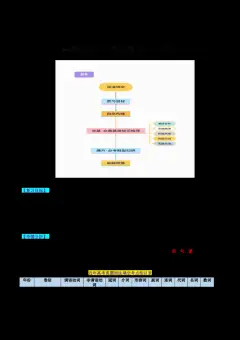
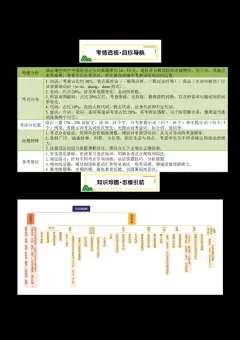
02 体系构建·思维可视.................................................................................................................................................3
03 核心突破·靶向攻坚.................................................................................................................................................4
考点一  一般现在时.............................................................................................................................................4
知识点1 一般现在时的构成及具体用法...........................................................................................................5
知识点2 一般现在时第三人称单数的使用及变化规律...................................................................................6
【思维建模】根据动词的位置及功能,多维度解题
考向1  考查一般现在时......................................................................................................................................7
考点二  一般过去时.............................................................................................................................................8
知识点1 一般过去时的构成及具体用法...........................................................................................................8
知识点2 动词过去式的规则与不规则变化表...................................................................................................9
考向2  考查一般过去时....................................................................................................................................15
考点三  一般将来时...........................................................................................................................................17
知识点1 一般将来时的构成及具体用法.........................................................................................................17
知识点2 一般将来时的特殊用法......................................................................................................................18
考向3  考查一般将来时....................................................................................................................................19
【思维建模】利用时态标志词及分析复杂语境,多维度解题
考点四  三大时态易混易错点...........................................................................................................................20
知识点1 一般过去时与现在完成时..................................................................................................................20
知识点2 一般过去时与过去进行时...................................................................................................................20
知识点3 一般过去时与过去完成时..................................................................................................................21
考向4  考查三大时态易混易错点....................................................................................................................21
04 真题溯源 考向感知...............................................................................................................................................22
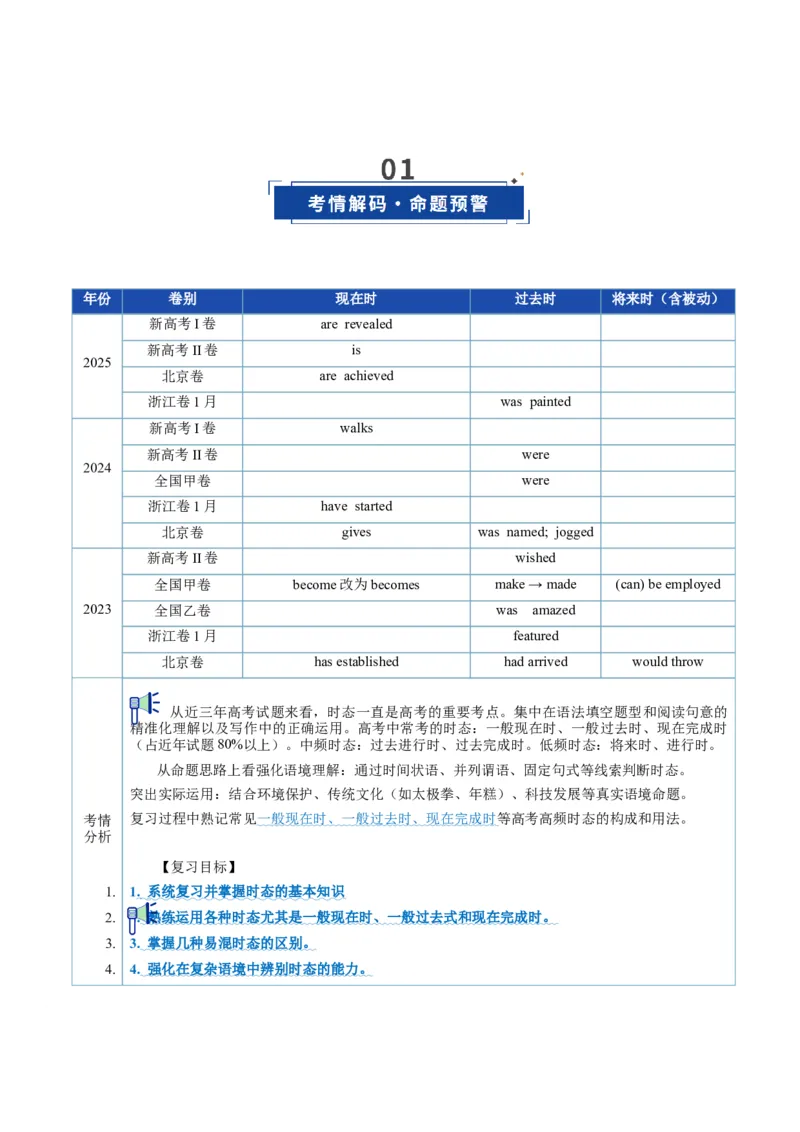
年份
卷别
现在时
过去时
将来时(含被动)
2025
新高考I 卷
are revealed
新高考II 卷
is
北京卷
are achieved
浙江卷1 月
was painted
2024
新高考I 卷
walks
新高考II 卷
were
全国甲卷
were
浙江卷1 月
have started
北京卷
gives
was named; jogged
2023
新高考II 卷
wished
全国甲卷
become 改为becomes
make → made
(can) be employed
全国乙卷
was  amazed
浙江卷1 月
featured
北京卷
has established
had arrived
would throw
考情
分析
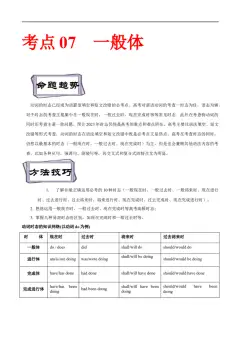
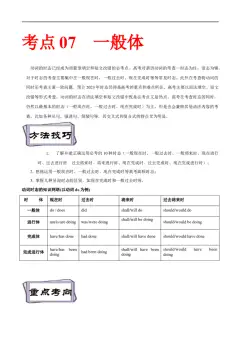
从近三年高考试题来看,时态一直是高考的重要考点。集中在语法填空题型和阅读句意的
精准化理解以及写作中的正确运用。高考中常考的时态:一般现在时、一般过去时、现在完成时
(占近年试题80%以上)。中频时态:过去进行时、过去完成时。低频时态:将来时、进行时。
从命题思路上看强化语境理解:通过时间状语、并列谓语、固定句式等线索判断时态。
突出实际运用:结合环境保护、传统文化(如太极拳、年糕)、科技发展等真实语境命题。
复习过程中熟记常见一般现在时、一般过去时、现在完成时等高考高频时态的构成和用法。
【复习目标】
1.
1.   系统复习并掌握时态的基本知识


2.
2. 熟练运用各种时态尤其是一般现在时、一般过去式和现在完成时。


3.
3. 掌握几种易混时态的区别。


4.
4. 强化在复杂语境中辨别时态的能力。


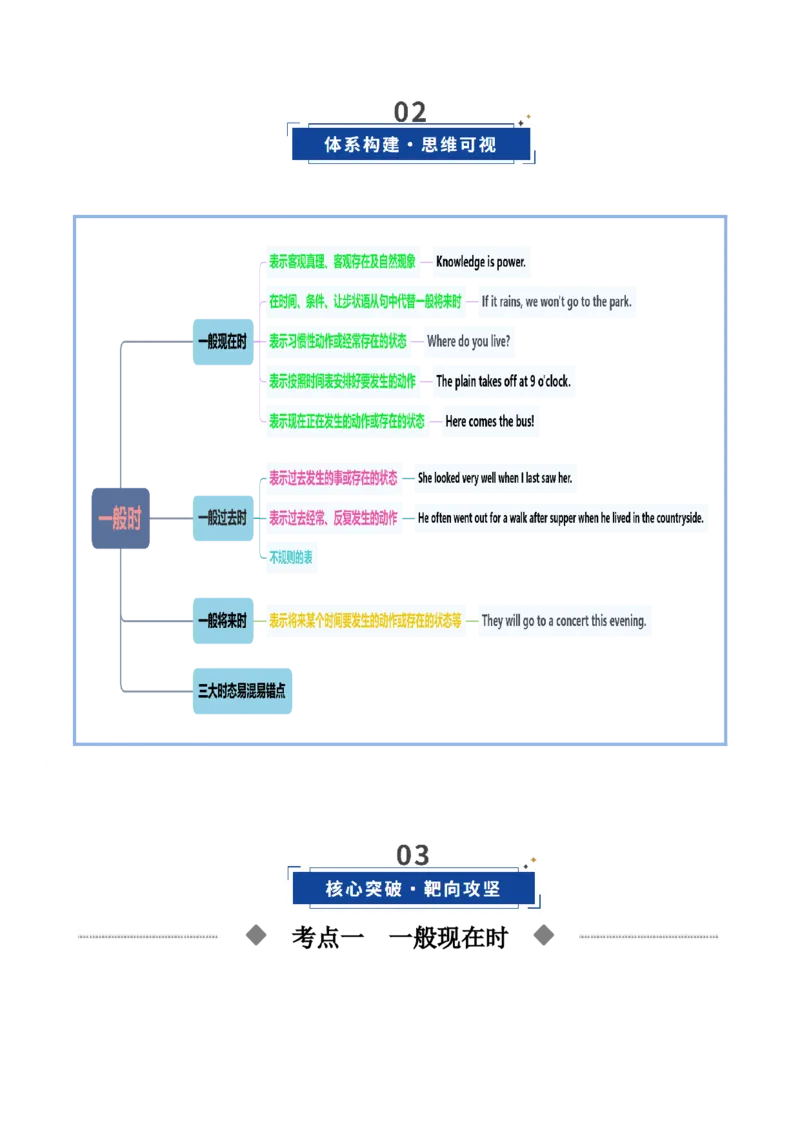
  考点一  一般现在时

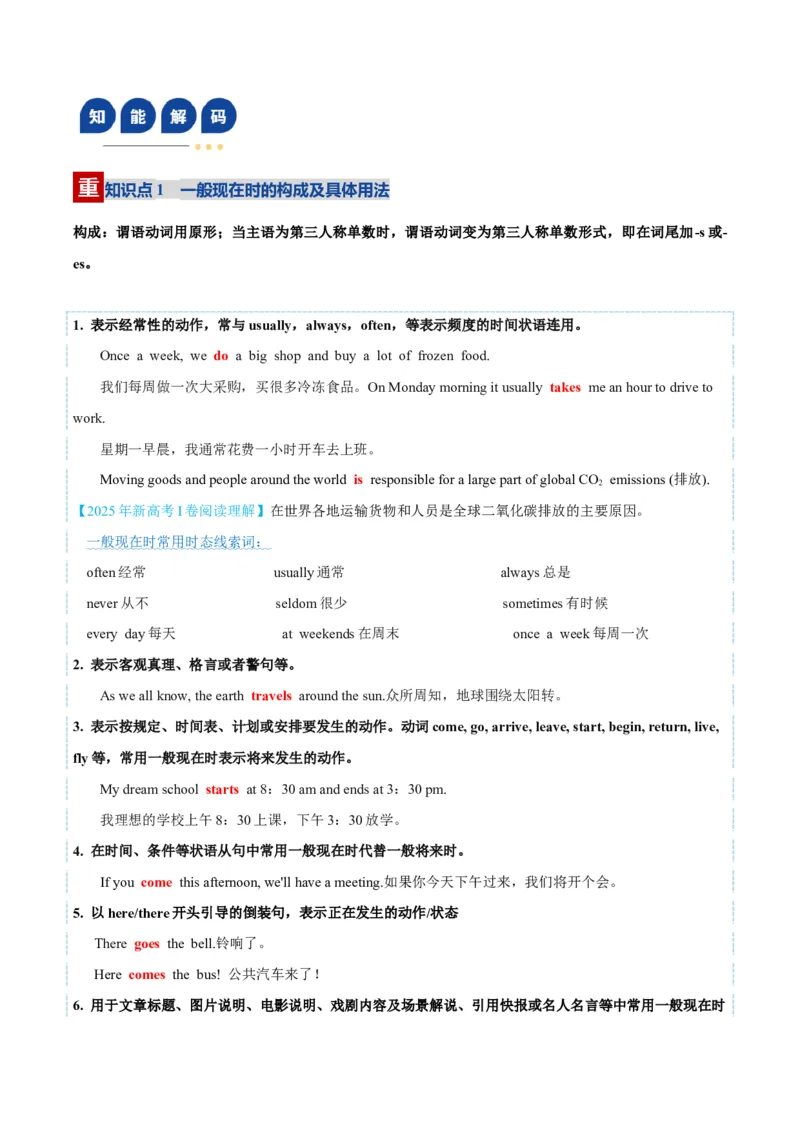
知识点1  一般现在时的构成及具体用法
构成:谓语动词用原形;当主语为第三人称单数时,谓语动词变为第三人称单数形式,即在词尾加-s 或-
es。
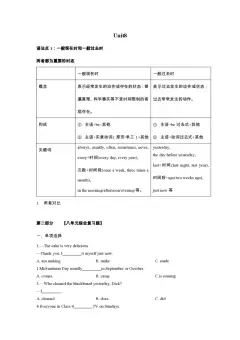
1. 表示经常性的动作,常与usually,always,often,等表示频度的时间状语连用。
Once a week, we do a big shop and buy a lot of frozen food.
我们每周做一次大采购,买很多冷冻食品。On Monday morning it usually takes me an hour to drive to
work.
星期一早晨,我通常花费一小时开车去上班。
Moving goods and people around the world is responsible for a large part of global CO2 emissions (排放).
【2025 年新高考I 卷阅读理解】在世界各地运输货物和人员是全球二氧化碳排放的主要原因。
一般现在时常用时态线索词:
often 经常                  usually 通常                      always 总是
never 从不                  seldom 很少                      sometimes 有时候
every day 每天               at weekends 在周末                once a week 每周一次
2. 表示客观真理、格言或者警句等。
As we all know, the earth travels around the sun.众所周知,地球围绕太阳转。
3. 表示按规定、时间表、计划或安排要发生的动作。动词come, go, arrive, leave, start, begin, return, live,
fly 等,常用一般现在时表示将来发生的动作。
My dream school starts at 8:30 am and ends at 3:30 pm.
我理想的学校上午8:30 上课,下午3:30 放学。
4. 在时间、条件等状语从句中常用一般现在时代替一般将来时。
If you come this afternoon, we'll have a meeting.如果你今天下午过来,我们将开个会。
5. 以here/there 开头引导的倒装句,表示正在发生的动作/状态
   There goes the bell.铃响了。
   Here comes the bus! 公共汽车来了!
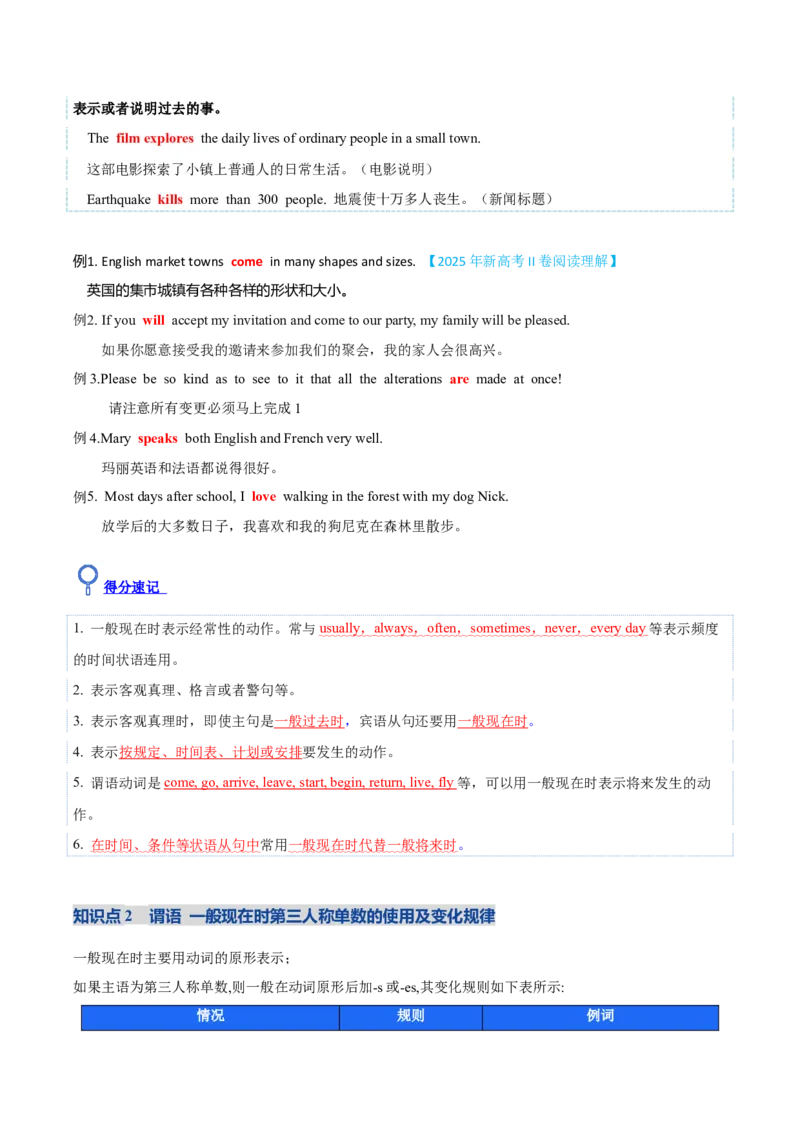
6. 用于文章标题、图片说明、电影说明、戏剧内容及场景解说、引用快报或名人名言等中常用一般现在时
表示或者说明过去的事。
The film explores the daily lives of ordinary people in a small town.
这部电影探索了小镇上普通人的日常生活。(电影说明)
Earthquake kills more than 300 people. 地震使十万多人丧生。(新闻标题)
例1. English market towns come in many shapes and sizes. 【2025 年新高考II 卷阅读理解】
英国的集市城镇有各种各样的形状和大小。
例2. If you will accept my invitation and come to our party, my family will be pleased.
如果你愿意接受我的邀请来参加我们的聚会,我的家人会很高兴。
例3.Please be so kind as to see to it that all the alterations are made at once!
 请注意所有变更必须马上完成1
例4.Mary speaks both English and French very well.
玛丽英语和法语都说得很好。
例5. Most days after school, I love walking in the forest with my dog Nick.
放学后的大多数日子,我喜欢和我的狗尼克在森林里散步。
得分速记
1. 一般现在时表示经常性的动作。常与usually

 ,
  always

 ,
  often

 ,
  sometimes

 ,
  never

 ,
  every day

  等表示频度
的时间状语连用。
2. 表示客观真理、格言或者警句等。
3. 表示客观真理时,即使主句是一般过去时,宾语从句还要用一般现在时。
4. 表示按规定、时间表、计划或安排要发生的动作。
5. 谓语动词是come, go, arrive, leave, start, begin, return, live, fly 等,可以用一般现在时表示将来发生的动
作。
6. 在时间、条件等状语

 从句中

 常用一般现在时

 代替一般将来时

 。
知识点2  谓语 一般现在时第三人称单数的使用及变化规律
一般现在时主要用动词的原形表示;
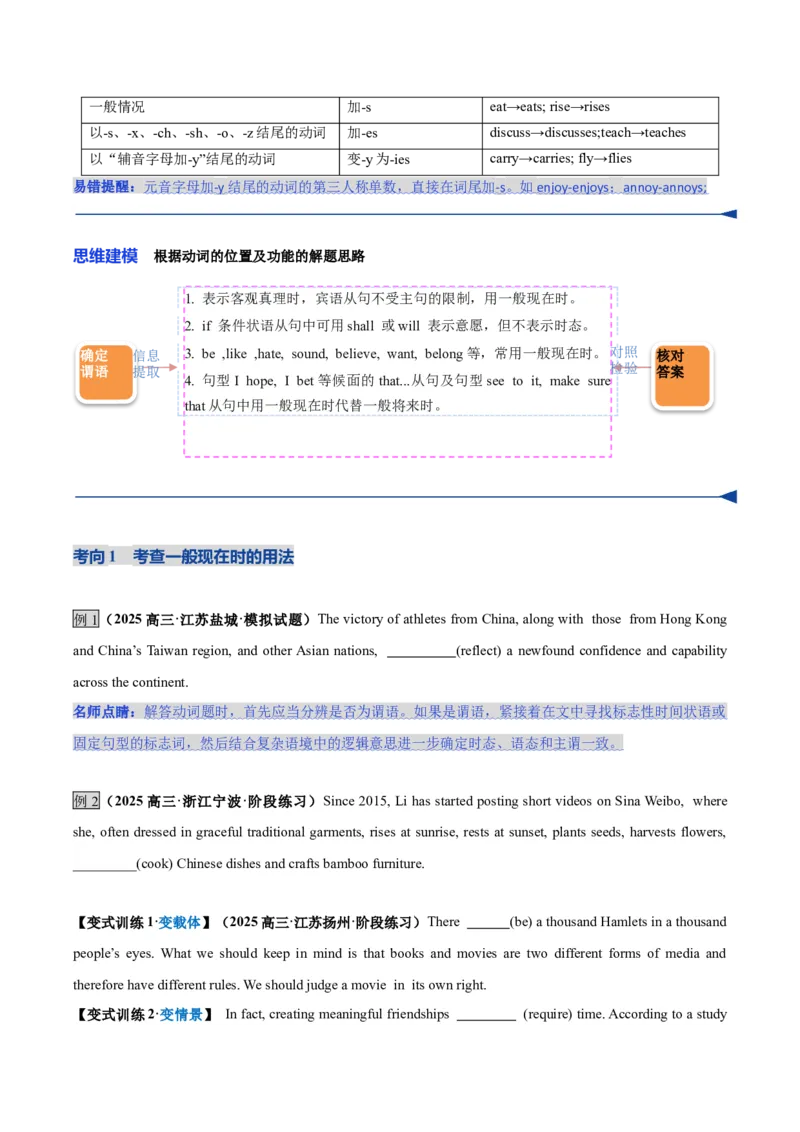
如果主语为第三人称单数,则一般在动词原形后加-s 或-es,其变化规则如下表所示:
情况
规则
例词
一般情况
加-s
eat→eats; rise→rises
以-s、-x、-ch、-sh、-o、-z 结尾的动词
加-es
discuss→discusses;teach→teaches
以“辅音字母加-y”结尾的动词
变-y 为-ies
carry→carries; fly→flies
易错提醒:元音字

 母加

 -y   结尾的动词的第三人称单数,直接在词尾加

 -s  。如

 enjoy-enjoys

 ;
  annoy-annoys;


思维建模  根据动词的位置及功能的解题思路
考向1  考查一般现在时的用法
例1(2025 高三·江苏盐城·模拟试题)The victory of athletes from China, along with those from Hong Kong
and China’s Taiwan region, and other Asian nations,         (reflect) a newfound confidence and capability
across the continent.
名师点睛:解答

 动词

 题时,首先应当分辨是否为谓语。如果是谓语,紧接着在文中寻找标志性时间状语或


固定句型的标志词,然后结合复杂语境中的逻辑意思进一步确定时态、语态和主谓一致。
例2(2025 高三·浙江宁波·阶段练习)Since 2015, Li has started posting short videos on Sina Weibo, where
she, often dressed in graceful traditional garments, rises at sunrise, rests at sunset, plants seeds, harvests flowers,
_________(cook) Chinese dishes and crafts bamboo furniture.
【变式训练1·变载体】(2025 高三·江苏扬州·阶段练习)There       (be) a thousand Hamlets in a thousand
people’s eyes. What we should keep in mind is that books and movies are two different forms of media and
therefore have different rules. We should judge a movie in its own right.
【变式训练2·变情景】 In fact, creating meaningful friendships          (require) time. According to a study
核对
答案
对照
检验
1. 表示客观真理时,宾语从句不受主句的限制,用一般现在时。
2. if 条件状语从句中可用shall 或will 表示意愿,但不表示时态。
3. be ,like ,hate, sound, believe, want, belong 等,常用一般现在时。
4. 句型I hope, I bet 等候面的that...从句及句型see to it, make sure
that 从句中用一般现在时代替一般将来时。
信息
提取
确定
谓语
by researchers at the University of Kansas, a relationship takes about 50 hours together in the     shared activities
to shift from just acquaintances (相识) to casual friends.

  考点二  一般过去时

知识点1  一般过去时的构成及具体用法
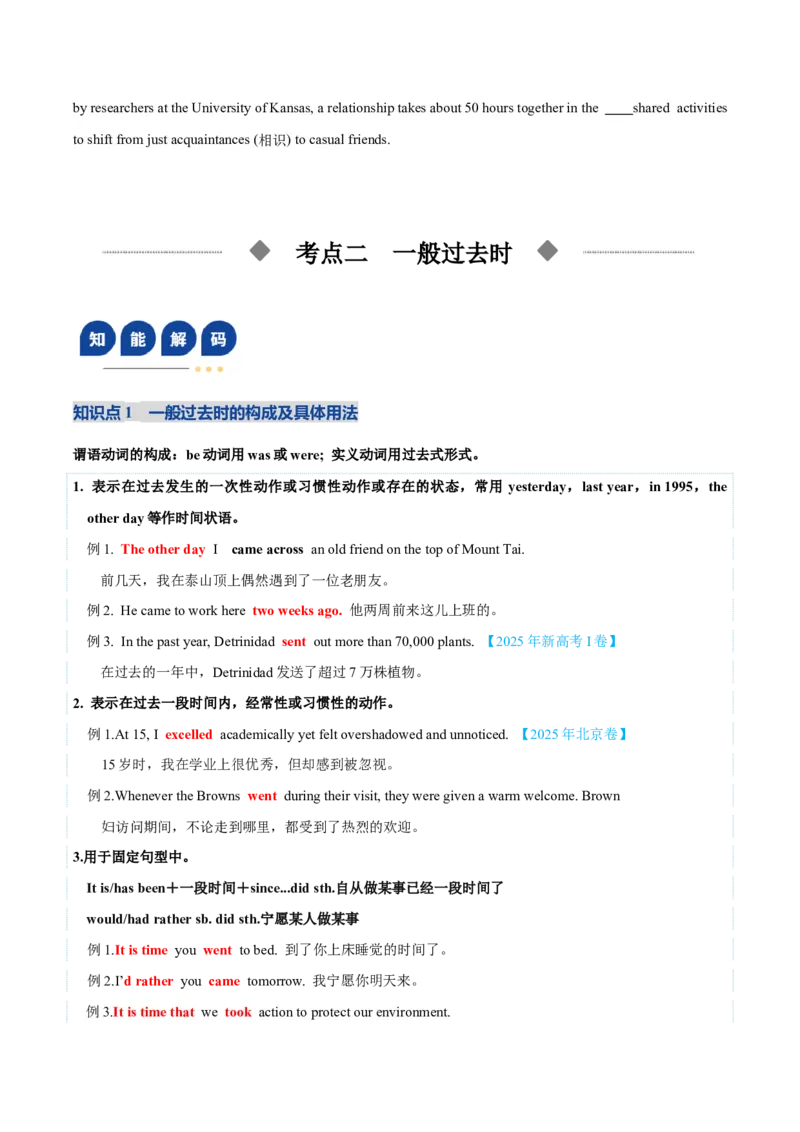
谓语动词的构成:be 动词用was 或were; 实义动词用过去式形式。
1. 表示在过去发生的一次性动作或习惯性动作或存在的状态,常用yesterday,last year,in 1995,the
other day 等作时间状语。
例1. The other day I  came across an old friend on the top of Mount Tai.
前几天,我在泰山顶上偶然遇到了一位老朋友。
例2. He came to work here two weeks ago. 他两周前来这儿上班的。
例3. In the past year, Detrinidad sent out more than 70,000 plants. 【2025 年新高考I 卷】
在过去的一年中,Detrinidad 发送了超过7 万株植物。
2. 表示在过去一段时间内,经常性或习惯性的动作。
例1.At 15, I excelled academically yet felt overshadowed and unnoticed. 【2025 年北京卷】
15 岁时,我在学业上很优秀,但却感到被忽视。
例2.Whenever the Browns went during their visit, they were given a warm welcome. Brown
妇访问期间,不论走到哪里,都受到了热烈的欢迎。
3.用于固定句型中。
It is/has been+一段时间+since...did sth.自从做某事已经一段时间了
would/had rather sb. did sth.宁愿某人做某事
例1.It is time you went to bed. 到了你上床睡觉的时间了。
例2.I’d rather you came tomorrow. 我宁愿你明天来。
例3.It is time that we took action to protect our environment.
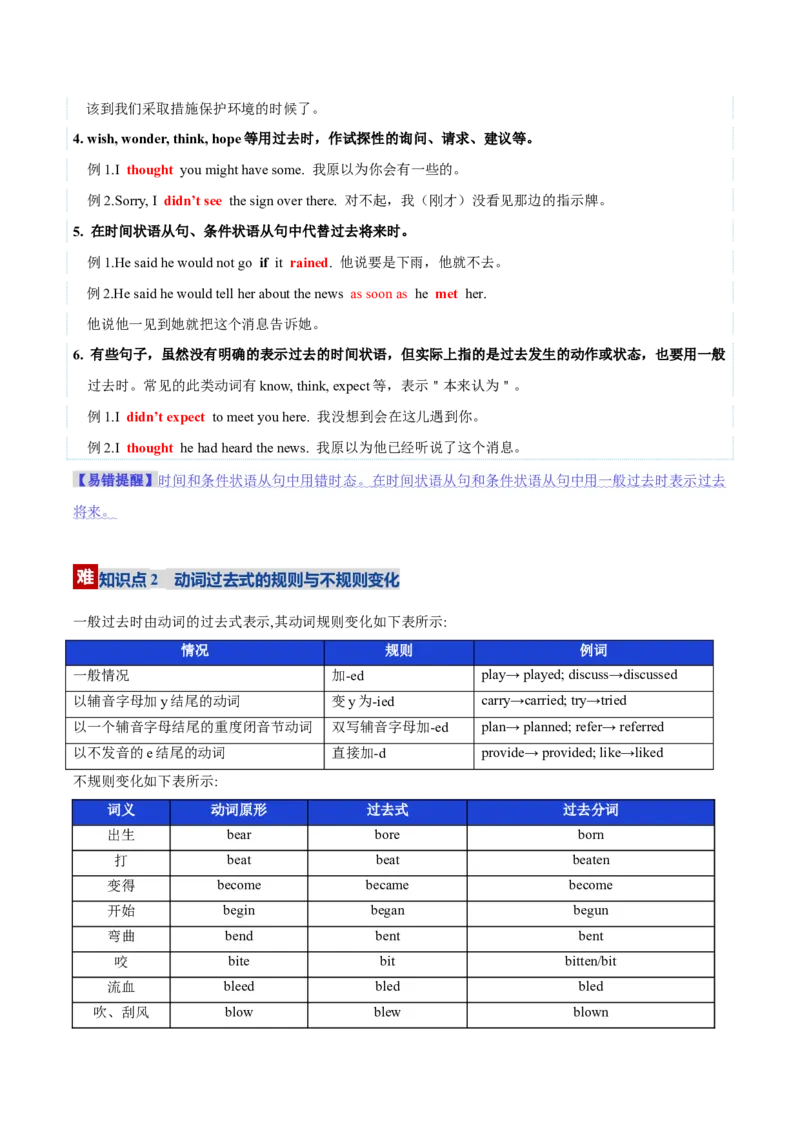
该到我们采取措施保护环境的时候了。
4. wish, wonder, think, hope 等用过去时,作试探性的询问、请求、建议等。
例1.I thought you might have some. 我原以为你会有一些的。
例2.Sorry, I didn’t see the sign over there. 对不起,我(刚才)没看见那边的指示牌。
5. 在时间状语从句、条件状语从句中代替过去将来时。
例1.He said he would not go if it rained. 他说要是下雨,他就不去。
例2.He said he would tell her about the news as soon as he met her.
他说他一见到她就把这个消息告诉她。
6. 有些句子,虽然没有明确的表示过去的时间状语,但实际上指的是过去发生的动作或状态,也要用一般
过去时。常见的此类动词有know, think, expect 等,表示"本来认为"。
例1.I didn’t expect to meet you here. 我没想到会在这儿遇到你。
例2.I thought he had heard the news. 我原以为他已经听说了这个消息。
【易错提醒】时间和条件状语从句中用错时态

 。
  在时间状语从句和条件状语从句中用一般过去时表示过去


将来

 。

知识点2  动词过去式的规则与不规则变化
一般过去时由动词的过去式表示,其动词规则变化如下表所示:
情况
规则
例词
一般情况
加-ed
play→ played; discuss→discussed
以辅音字母加y 结尾的动词
变y 为-ied
carry→carried; try→tried
以一个辅音字母结尾的重度闭音节动词
双写辅音字母加-ed
plan→ planned; refer→ referred
以不发音的e 结尾的动词
直接加-d
provide→ provided; like→liked
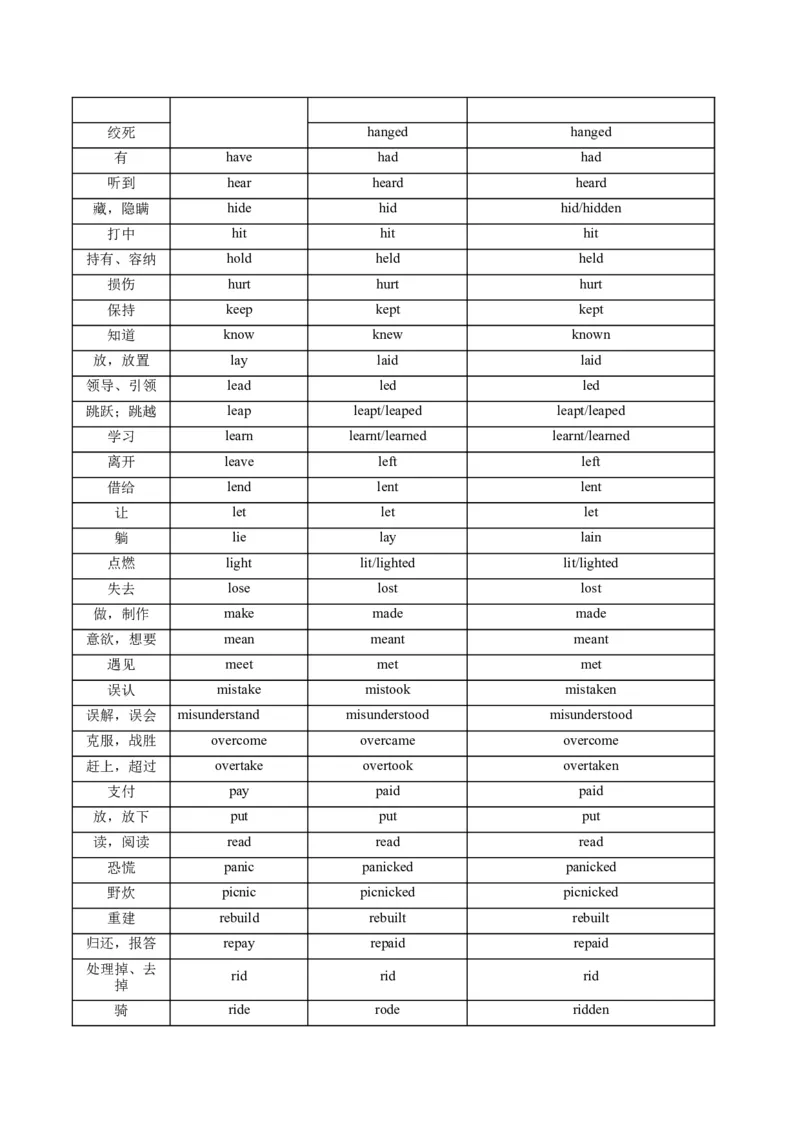
不规则变化如下表所示:
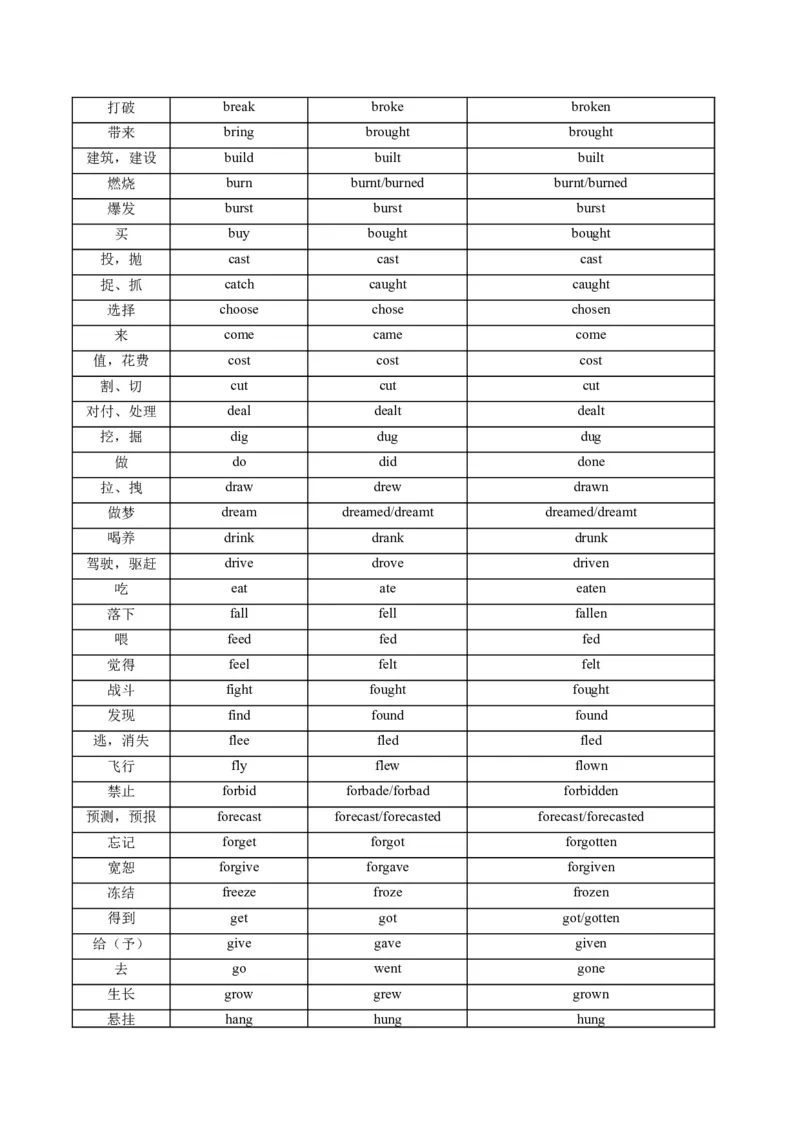
词义
动词原形
过去式
过去分词
出生
bear
bore
born
打
beat
beat
beaten
变得
become
became
become
开始
begin
began
begun
弯曲
bend
bent
bent
咬
bite
bit
bitten/bit
流血
bleed
bled
bled
吹、刮风
blow
blew
blown
打破
break
broke
broken
带来
bring
brought
brought
建筑,建设
build
built
built
燃烧
burn
burnt/burned
burnt/burned
爆发
burst
burst
burst
买
buy
bought
bought
投,抛
cast
cast
cast
捉、抓
catch
caught
caught
选择
choose
chose
chosen
来
come
came
come
值,花费
cost
cost
cost
割、切
cut
cut
cut
对付、处理
deal
dealt
dealt
挖,掘
dig
dug
dug
做
do
did
done
拉、拽
draw
drew
drawn
做梦
dream
dreamed/dreamt
dreamed/dreamt
喝养
drink
drank
drunk
驾驶,驱赶
drive
drove
driven
吃
eat
ate
eaten
落下
fall
fell
fallen
喂
feed
fed
fed
觉得
feel
felt
felt
战斗
fight
fought
fought
发现
find
found
found
逃,消失
flee
fled
fled
飞行
fly
flew
flown
禁止
forbid
forbade/forbad
forbidden
预测,预报
forecast
forecast/forecasted
forecast/forecasted
忘记
forget
forgot
forgotten
宽恕
forgive
forgave
forgiven
冻结
freeze
froze
frozen
得到
get
got
got/gotten
给(予)
give
gave
given
去
go
went
gone
生长
grow
grew
grown
悬挂
hang
hung
hung
绞死
hanged
hanged
有
have
had
had
听到
hear
heard
heard
藏,隐瞒
hide
hid
hid/hidden
打中
hit
hit
hit
持有、容纳
hold
held
held
损伤
hurt
hurt
hurt
保持
keep
kept
kept
知道
know
knew
known
放,放置
lay
laid
laid
领导、引领
lead
led
led
跳跃;跳越
leap
leapt/leaped
leapt/leaped
学习
learn
learnt/learned
learnt/learned
离开
leave
left
left
借给
lend
lent
lent
让
let
let
let
躺
lie
lay
lain
点燃
light
lit/lighted
lit/lighted
失去
lose
lost
lost
做,制作
make
made
made
意欲,想要
mean
meant
meant
遇见
meet
met
met
误认
mistake
mistook
mistaken
误解,误会
misunderstand
misunderstood
misunderstood
克服,战胜
overcome
overcame
overcome
赶上,超过
overtake
overtook
overtaken
支付
pay
paid
paid
放,放下
put
put
put
读,阅读
read
read
read
恐慌
panic
panicked
panicked
野炊
picnic
picnicked
picnicked
重建
rebuild
rebuilt
rebuilt
归还,报答
repay
repaid
repaid
处理掉、去
掉
rid
rid
rid
骑
ride
rode
ridden
响,打电话
ring
rang
rung
升,上升
rise
rose
risen
跑
run
ran
run
说,说话
say
said
said
看见
see
saw
seen
找,找方法
seek
sought
sought
售卖、销售
sell
sold
sold
送、派遣
send
sent
sent
安放
set
set
set
缝纫
sew
sewed
sewn/sewed
摇动
shake
shook
shaken
刮脸
shave
shaved
shaven/shaved
发光
shine
shone/shined
shone/shined
射击
shoot
shot
shot
表明,指示
show
showed
shown/showed
关闭
shut
shut
shut
唱歌
sing
sang
sung
沉下
sink
sank/sunk
sunk
坐
sit
sat
sat
睡觉
sleep
slept
slept
嗅,闻
smell
smelt/smelled
smelt/smelled
播种
sow
sowed
sown/sowed
说话
speak
spoke
spoken
急行
speed
sped/speeded
sped/speeded
拼写
spell
spelt/spelled
spelt/spelled
花费
spend
spent
spent
溢出,流出
spill
spilt/spilled
spilt/spilled
吐唾沫,喷
spit
spat
spat
分裂
split
split
split
溺爱,损坏
spoil
spoilt
spoilt
展开;传播
spread
spread
spread
站,立
stand
stood
stood
偷盗
steal
stole
stolen
粘,刺,戳
stick
stuck
stuck
打、袭击
strike
struck
struck
发誓,诅咒
swear
swore
sworn
打扫,扫地
sweep
swept
swept
肿胀
swell
swelled
swelled/swollen
游泳
swim
swam
swum
摇摆
swing
swung
swung
拿
take
took
taken
教
teach
taught
taught
撕毁
tear
tore
torn
告诉
tell
told
told
想
think
thought
thought
抛,掷
throw
threw
thrown
了解,理解
understand
understood
understood
承担,保证
undertake
undertook
undertaken
醒来
wake
woke/waked
woken/waked
穿
wear
wore
worn
编织,组合
weave
wove
woven
得胜,赢得
win
won
won
缠绕
wind
wound/winded
wound/winded
写
write
wrote
written
得分速记
1. 表示过去某一时间所发生的动作或存在的状态,常与表示具体的过去时间状语连用,如yesterday, last
Friday, just now, the other day, three days ago, in 2008 等。【牢记时间状语标志词】
2. 表达“原以为

 / 本来认为

 / 原希望

 ”等意义时,know,think,expect 等动词常用一般过去时。
I hoped he wouldn’t ask me back. 我本不希望他会邀请我回到他家去。
 We were meant to have arrived at Shanghai this week, but my grandma was ill so we couldn’t leave.
我们本应该这个星期到达上海,但是我奶奶病了,所以我们不能离开。
3. 在时间、条件等状语从句中,常用一般过去时代替过去将来时。
He said he would tell her about the news as soon as he met her.他说他一见到她就把这个消息告诉
她。
4. 固定句型:
It is time that sb.
①
should do/did sth.该到……的时候了。该句型表示“是某人该做某事的时候了”。其中
从句中需要使用虚拟语气,谓语动词用过去式did 或should+动词原形。
It is time that the government took measures to protect the environment.
现在是政府采取措施保护环境的时候了。
It
② is/has been+一段时间+since...did sth.
自从做某事已经一段时间了
would/had rather sb.
③
did sth.宁愿某人做某事
考向  考查一般过去时的用法
例1  (2025 高三· 浙江杭州· 模拟预测)The famous tea master Lu Yu wrote “The Classic of Tea,”
which_______          (lay) the foundation for the development of Chinese tea culture.
易错提醒:本题不是单纯的考查主句的时态,而是考查定语从句中的时态。且涉及不规则动词变化形式。
例2 When they later          (seek) opportunities in the United States, they brought Hunan and Sichuan
Cuisines to New York, and these two cooking styles were adjusted to suit local tastes.
【变式训练·变考法】“Unique”,“delicate”and“wonderful”       (be) words British participants used to
describe their feelings during the tea tastings.
易错提醒:本题将主语和谓语动词分割开,属于易错题型。
【变式训练·变情景】The agency said that mission commander Tang Hongbo and crew member Jiang Xinlin
_________ (return) to the Wentian science module (舱) at 1:32 pm after floating for nearly eight hours outside the
huge orbital station.

  考点三  一般将来时

知识点1  一般将来时的构成及具体用法
谓语动词的构成:
1. will/shall+动词原形
2. be going to+动词原形
3. be to+动词原形
4. be about to do sth.
一般将来时具体用法:
1.shall 用于第一人称,常被will 所代替。will 在陈述句中用于各人称,在征求意见时常用于第二人称。
Which paragraph shall I read first? 我先读哪一段呢?
Will you be at home at seven this evening? 今晚七点回家好吗?
2.be going to +不定式,表示将来。
  a. 主语的意图,即将做某事。
What are you going to do tomorrow? 明天打算作什么呢?
  b. 计划或安排要发生的事。
The play is going to be produced next month。这出戏下月开播。
  c. 有迹象要发生的事。
Look at the dark clouds, there is going to be a storm. 看那乌云,快要下雨了。
3.be +不定式表将来,按计划或正式安排将发生的事。
We are to discuss the report next Saturday. 我们下星期六讨论这份报告。
4.be about to +不定式,意为马上做某事。
He is about to leave for Beijing. 他马上要去北京。
5.一般现在时表将来。
a. 下列动词come,go,arrive,leave,start,begin,return 的一般现在时可以表示将来,主要用来表示
在时间上已确定或安排好的事情。
The train leaves at six tomorrow morning. 火车明天上午六点开。
—When does the bus star? 汽车什么时候开?
—It stars in ten minutes. 十分钟后。
b. 以here,there 等开始的倒装句,表示动作正在进行。
Here comes the bus. = The bus is coming. 车来了。
There goes the bell. = The bell is ringing. 铃响了。
c. 在时间或条件句中。
When Bill comes 不是will come., ask him to wait for me. 比尔来后,让他等我。
I’ll write to you as soon as I arrive there. 我到了那里,就写信给你。
d. 在动词hope,take care that,make sure that 等的宾语从句中。
I hope they have a nice time next week. 我希望他们下星期玩得开心。
Make sure that the windows are closed before you leave the room. 离开房间前,务必把窗户关了。
6.用现在进行时表示将来。
下列动词come, go, arrive, leave, start, begin, return 等现在进行时可以表示将来。
I’m leaving tomorrow. 明天我要走了。
Are you staying here till next week? 你会在这儿待到下周吗?
易错提醒:be about to do

 不能与

 tomorrow, next week

 等表示明确将来时的时间状语连用。


得分速记
1. be going to 用于条件句时,be going to 表将来
If you are going to make a journey, you’d better get ready for it as soon as possible.
2. will 用于条件句时,will 表意愿
Now if you will take off your clothes, we will fit the new clothes on you in front of the mirror.
如果你脱掉衣服,我们将在镜子前为你穿上新的衣服。
3. be to 表示客观安排或受人指示而做某事
I am to play football tomorrow afternoon. (客观安排) 我明天下午要踢足球。
4. be going to 表示主观的打算或计划
I’m going to play football tomorrow afternoon. (主观安排) 我明天下午要踢足球。
知识点2  一般将来时的特殊用法
1.下列动词come,go,arrive,leave,start,begin,return 的一般现在时可以表示将来,主要用来表示在
时间上已确定或安排好的事情。
例1.The train leaves at six tomorrow morning. 火车明天上午六点开。
例2.The train stars in ten minutes. 火车十分钟后发车。
2. 以here,there 等开始的倒装句,表示动作正在进行。
例1.Here comes the bus. = The bus is coming. 车来了。
例2.There goes the bell. = The bell is ringing. 铃响了。
3. 在时间或条件句中。
例1.When Bill comes ask him to wait for me. 比尔来后,让他等我。
例2.I’ll write to you as soon as I arrive there. 我到了那里,就写信给你。
4. 在动词hope,take care that,make sure that 等的宾语从句中。
例1. I hope they have a nice time next week.
我希望他们下星期玩得开心。
例2. Make sure that the windows are closed before you leave the room.
离开房间前,务必把窗户关了。
5.用现在进行时表示将来。下列动词come, go, arrive, leave, start, begin, return 等现在进行时可以表示将
来。
例1.I’m leaving tomorrow. 明天我要走了。
例2.Are you staying here till next week? 你会在这儿待到下周吗?
易错提醒:when 引导的时间状语从句中,用一般现在时代替一般将来时,一般过去时代替过去将来时。但
when 引导的别的从句(如名词性从句或定语从句)中正常使用各种时态。
例1. I can’t say for certain when we’ll arrive. (宾语从句)
我说不准我们什么时候能到。
例2. I will leave when the meeting ends. (时间状语从句)
会议结束后我就走。
考向  考查一般将来时的用法
例1 It’s true that if one doesn’t take the first step, a journey          (remain) a dream forever.
例2 In humans, babies can put a round shape in a round hole from around one year of age, but it         (be)
another year before they are able to do the same with less symmetrical (对称的) shapes.
【变式训练1·变考法】Tap your fingers on the screen and your favorite books         (deliver) to your door
within a couple of hours.
【变式训练2·变情景】As was the case last year, the debrief           (lead) by the RFU’s advisory panel
which includes Bill Sweeney, the chief executive, Conor O’Shea the director of performance, and previous England
players and coaches, whom the union refuses to name.

  考点四  三大时态易混易错点

知识点1  一般过去时与现在完成时
一般过去时侧重说明在过去某个时间发生的事情、存在的状态或经常发生的动作,不强调对现在产生的影
响,常与确定的过去时间状语连用。现在完成时表示发生在过去的动作对现在造成的影响或结果,不与确
定的过去时间状语连用。
例1. He cleaned the room an hour ago, but it’s dirty now.
他一小时前打扫过房间,可是现在房间又脏了。
例2. He has cleaned the room. 他已经打扫房间了。
知识点2  一般过去时与过去进行时
一般过去时侧重说明过去发生的动作的事实,往往已经完成。过去进行时表示在过去某一时刻正在进行的
动作,侧重强调动作的持续,一般还没有完成。
例1. They built a skyscraper. 他们建了一座摩天大楼。(已经完成)
例2. They were building a skyscraper.他们正在建一座摩天大楼。(没有完成)
例3. He took exercise after he got up.起床后他去锻炼身体了。
例4. He was taking exercise when he met Mr Smith.他在锻炼身体时碰到了史密斯先生。
知识点3  一般过去时与过去完成时
一般过去时是相对现在而言的,过去完成时是相对于过去某一时刻而言的,两种时态建立的时间参照不
同。过去完成时必须又一个过去的时间来衬托,必须是“过去的过去”才可以用过去完成时。
例1. Last week they learned Lesson 6.上周他们学了第六课。
例2. By the end of last week they had learned 3 units.
到上周末为止,他们已经学习了3 个单元。
考向  考查三大时态易混易混点
例1 (24-25 高三下·重庆渝中·阶段练习)Due to his outstanding contributions, Huang______     (award) the
Medal of the Republic, China’s highest honor, in 2019.
例2 (2025· 江苏· 模拟预测)So far the technique   ______

   (help) reduce the building’s need for air
conditioning by 50%. Cool, huh?
【变式训练1·变情景】Standing in a field edged by rolling hills, two days before the first tour date in late
September, Ba Nong, the front man of the Chinese band Varihnaz, looked over the yellowed remnants of the rice
stalks (黄色稻茬) he            (spend) the past few months tending. “The land gets to rest, and I get to go
play,” he said.
【变式训练1·变情景】(2025·山东济宁·一模)So far, alongside the green belt, efforts

 __
     (make) to
promote the development of sand-related industries, such as ceramics and pottery.
1.(2025 年浙江1 月卷)The concept    62    (be) certainly not new – men have been renting good suits for
decades – but for female shoppers, it is just taking off.
2.(2024 年新课标I 卷)Further, the Silk Route Garden around the greenhouse    60    (walk) visitors
through a journey influenced by the ancient Silk Road, by which silk as well as many plant species came to
Britain for the first time.
3.(2025 年北京卷) By the time you brushed your teeth, you ____15____ (make) several decisions even without
noticing.
4.(2024 年全国甲卷)They    64    (be) part of a 15-member exploring party that had spent almost five
awesome weeks in witness of the natural beauties there.
5.(2024 年新高考I 卷)Further, the Silk Route Garden around the greenhouse ____
____ (walk) visitors through a journey influenced by the ancient Silk Road, by which silk as well as many plant
species came to Britain for the first time.
6. (2022 年新课标I 卷)The GPNP _________ (design)to reflect the guiding principle of “protecting the
authenticity and integrity( 完整性)of natural ecosystems, preserving biological diversity, protecting ecological
buffer zones, and leaving behind precious natural assets(资产)for future generations”.