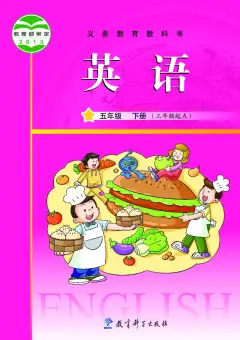
(三年级起点)
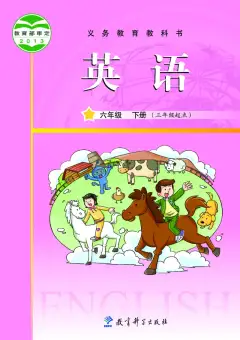
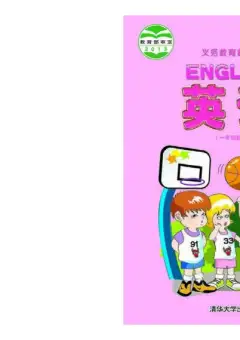
义务教育教科书
六年级
英
語
上册
(三年级起点)
义务教育教科书
主 编:桂诗春
副主编:邹启明 黄志红
六年级
英
語
上册
致
小
朋
友
亲爱的小朋友们:
你们可曾想过周游世界与各国小朋友畅谈?你们可曾想过长大以后,用英
语在广阔的世界舞台上展示自己的聪明才智,和不同肤色、不同种族的人一起
共建美好的地球村?相信你们一定有这样的愿望。
《英语》(新交际)将帮助你们在轻松愉快的环境下学习英语,了解中外文
化,享受学习英语的乐趣,感受运用英语进行交流的喜悦。
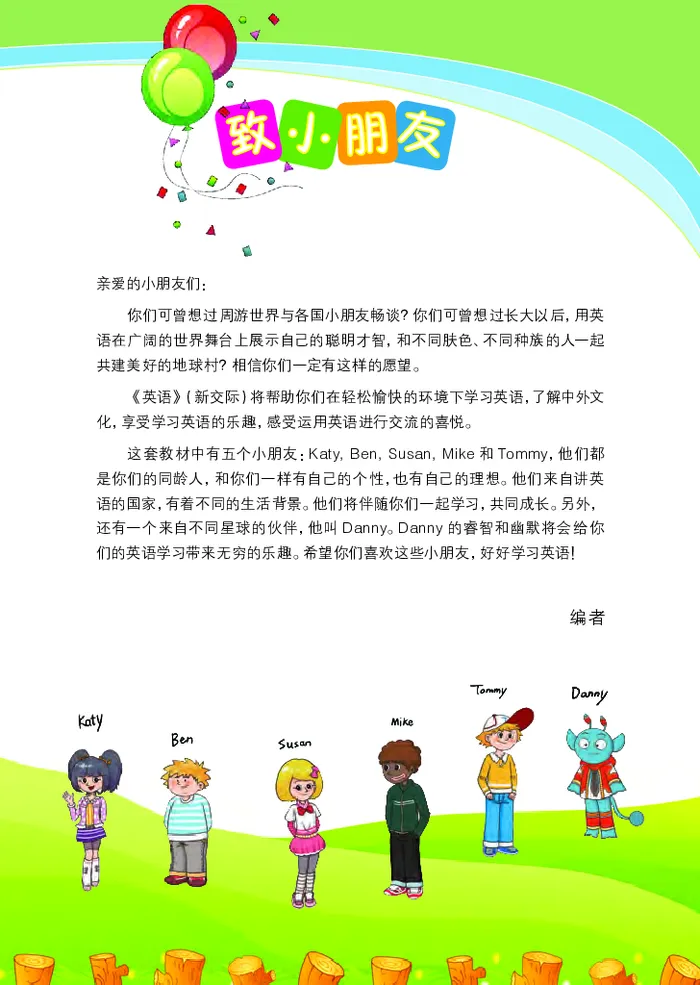
这套教材中有五个小朋友:Katy, Ben, Susan, Mike 和Tommy,他们都
是你们的同龄人,和你们一样有自己的个性,也有自己的理想。他们来自讲英
语的国家,有着不同的生活背景。他们将伴随你们一起学习,共同成长。另外,
还有一个来自不同星球的伙伴,他叫Danny。Danny 的睿智和幽默将会给你
们的英语学习带来无穷的乐趣。希望你们喜欢这些小朋友,好好学习英语!
编者
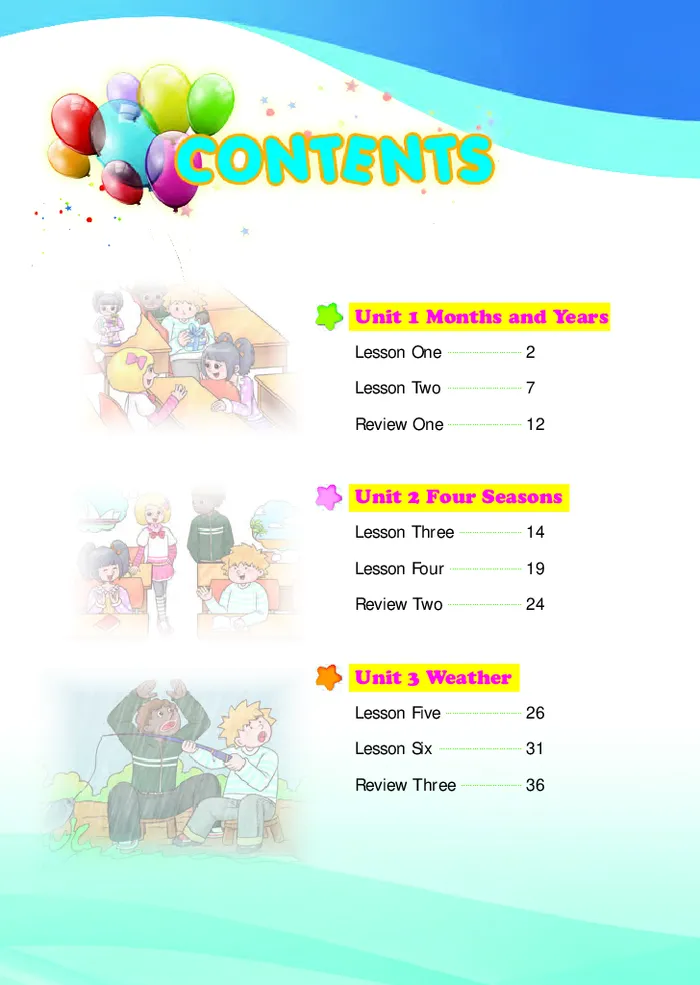
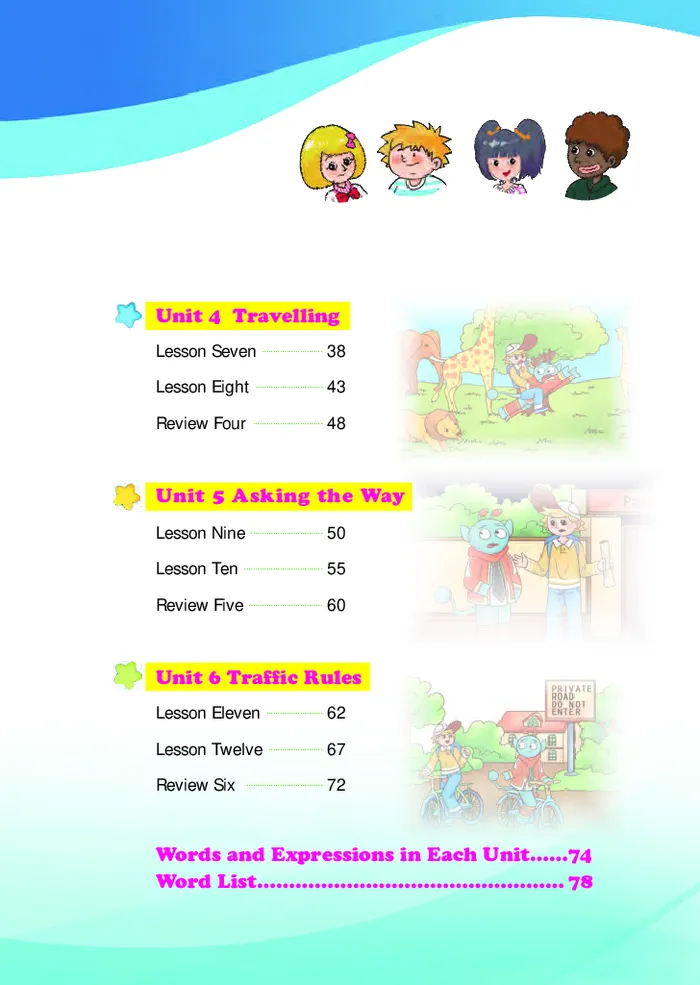
Unit 1 Months and Years
Lesson One .................................. 2
Lesson Two .................................. 7
Review One ................................. 12
Unit 2 Four Seasons
Lesson Three ............................ 14
Lesson Four ................................ 19
Review Two ................................. 24
Unit 3 Weather
Lesson Five .................................. 26
Lesson Six ...................................... 31
Review Three ........................... 36
Unit 4 Travelling
Lesson Seven ........................... 38
Lesson Eight .............................. 43
Review Four ................................ 48
Unit 5 Asking the Way
Lesson Nine ................................ 50
Lesson Ten ................................... 55
Review Five ................................. 60
Unit 6 Traffic Rules
Lesson Eleven .......................... 62
Lesson Twelve ......................... 67
Review Six ................................... 72
Words and Expressions in Each Unit……74
Word List………………………………………… 78
Unit 1
2
Months and Years
Months and Years
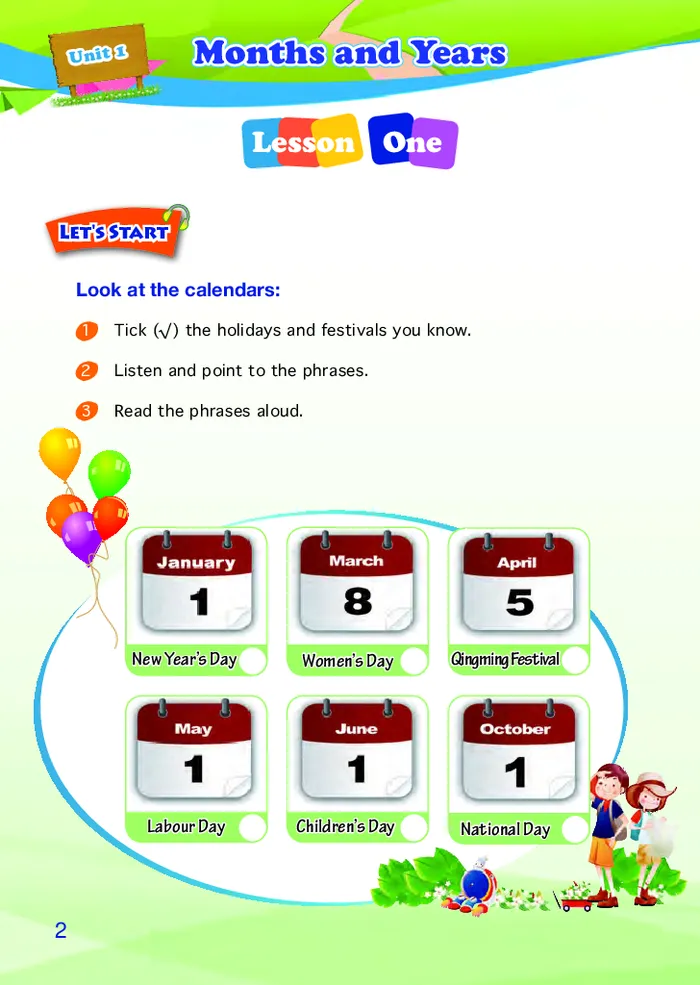
Look at the calendars:
1 Tick (√) the holidays and festivals you know.
2 Listen and point to the phrases.
3 Read the phrases aloud.
Lesson One
New Year’s Day
Let's Start
National Day
Women’s Day
Qingming Festival
Labour Day
Children’s Day
3
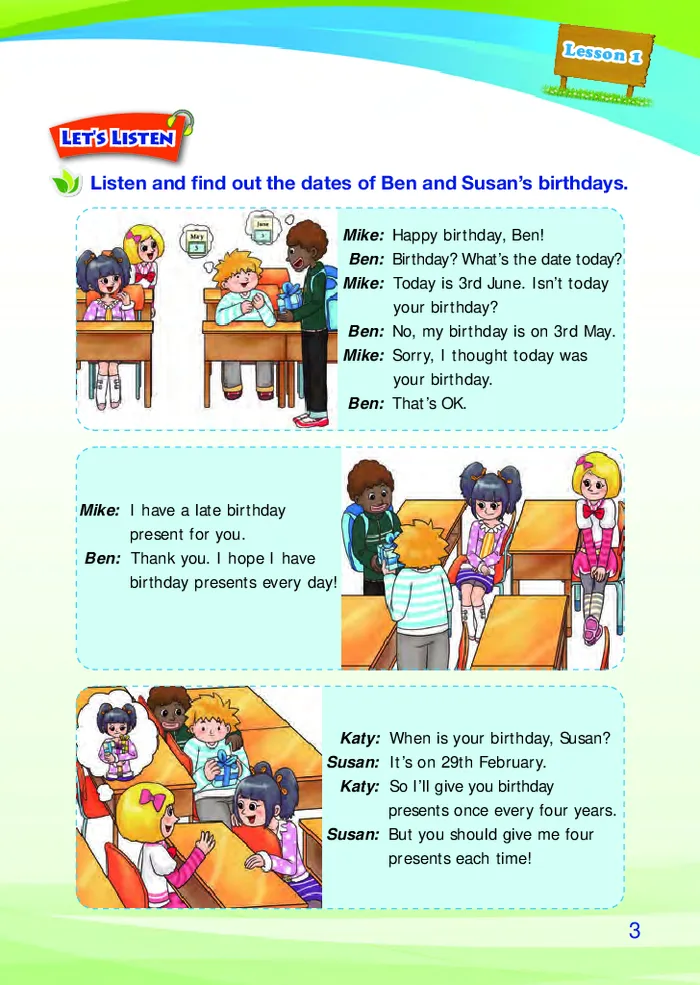
Listen and find out the dates of Ben and Susan’s birthdays.
Lesson 1
Mike: I have a late birthday
present for you.
Ben: Thank you. I hope I have
birthday presents every day!
Katy: When is your birthday, Susan?
Susan: It’s on 29th February.
Katy: So I’ll give you birthday
presents once every four years.
Susan: But you should give me four
presents each time!
Mike: Happy birthday, Ben!
Ben: Birthday? What’s the date today?
Mike: Today is 3rd June. Isn’t today
your birthday?
Ben: No, my birthday is on 3rd May.
Mike: Sorry, I thought today was
your birthday.
Ben: That’s OK.
Let's Listen
Unit 1
4
Months and Years
Months and Years
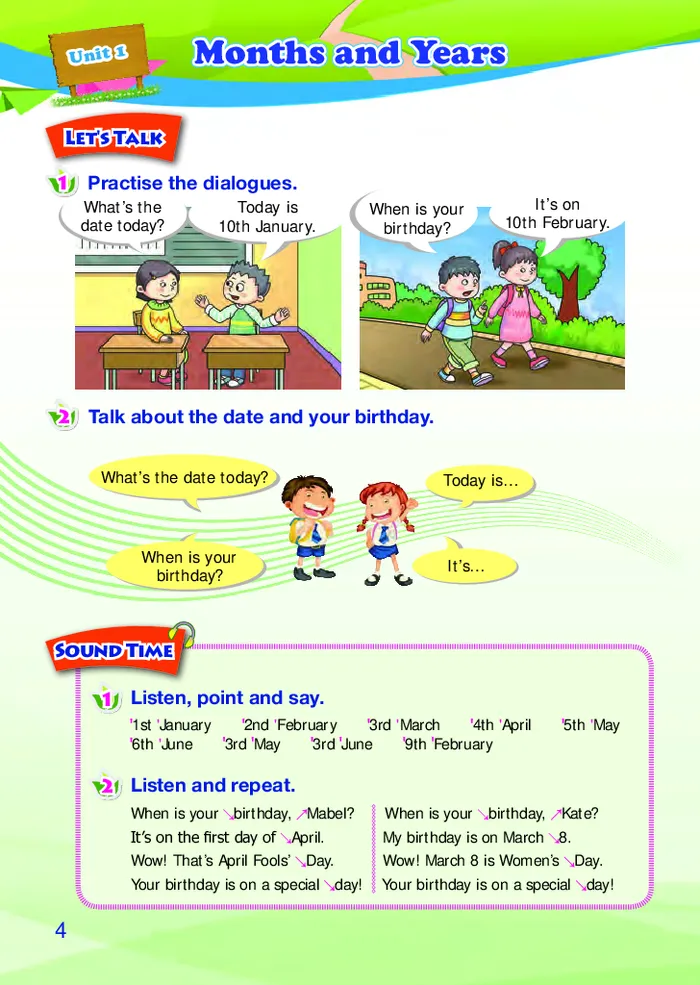
Listen, point and say.
1st 'January 2nd 'February 3rd 'March 4th 'April 5th 'May
6th 'June 3rd May 3rd June 9th February
Listen and repeat.
When is your birthday, Mabel? When is your birthday, Kate?
It’s on the first day of April. My birthday is on March 8.
Wow! That’s April Fools’ Day. Wow! March 8 is Women’s Day.
Your birthday is on a special day! Your birthday is on a special day!
Talk about the date and your birthday.
When is your
birthday?
What’s the
date today?
Today is
10th January.
w
Today is…
It’s…
What’s the date today?
When is your
birthday?
1
1
Practise the dialogues.
2
2
Let's Talk
Sound Time
It’s on
10th February.
5
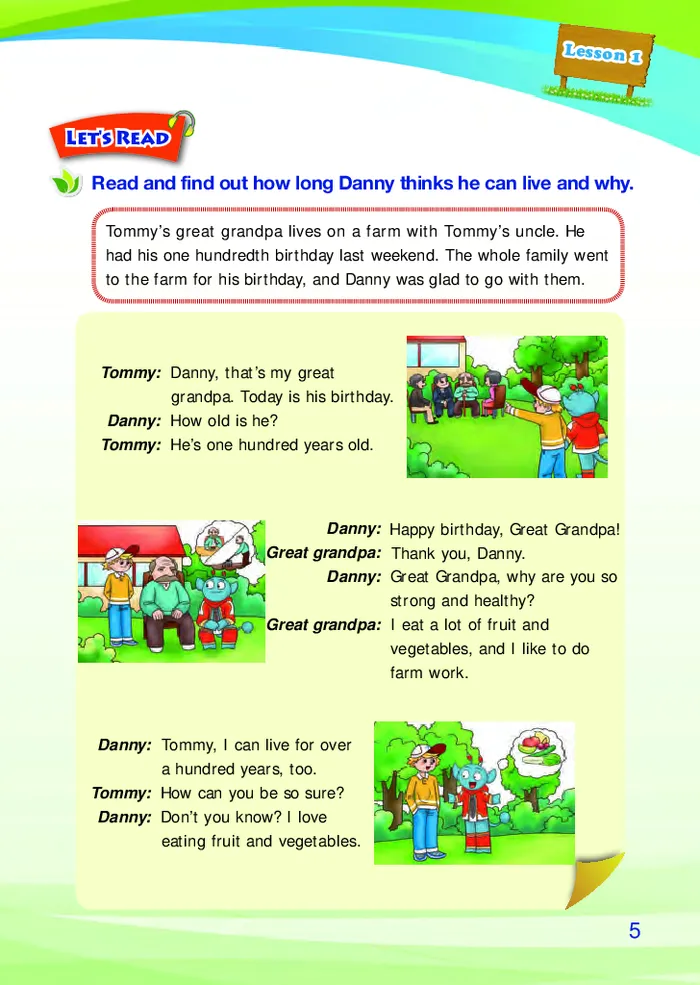
Read and find out how long Danny thinks he can live and why.
Tommy: Danny, that’s my great
grandpa. Today is his birthday.
Danny: How old is he?
Tommy: He’s one hundred years old.
Danny: Happy birthday, Great Grandpa!
Great grandpa: Thank you, Danny.
Danny: Great Grandpa, why are you so
strong and healthy?
Great grandpa: I eat a lot of fruit and
vegetables, and I like to do
farm work.
Danny: Tommy, I can live for over
a hundred years, too.
Tommy: How can you be so sure?
Danny: Don’t you know? I love
eating fruit and vegetables.
Tommy’s great grandpa lives on a farm with Tommy’s uncle. He
had his one hundredth birthday last weekend. The whole family went
to the farm for his birthday, and Danny was glad to go with them.
Lesson 1
Let's Read
Unit 1
6
Months and Years
Months and Years
CULTURE TIME
Read and write.
Dear ,
My birthday is on . Would you like
to come to at ? I’m
looking forward to seeing you.
From
The name of your friend
The date of your birthday
The place and the time
of your birthday party
Student Information Form
Student’s name: Zou Zhiliang Date of birth:
Write invitations for your birthday party.
Albert Einstein
Albert Einstein
was born on
14th March,
1879. He
was a world-
famous
scientist.
Xian Xinghai
was born on
13th June,
1905. He was
a famous
musician in
China.
Xian Xinghai
5th February, 2004 (2004-02-05)
2
1
Famous People's Birthdays
Let's Write
Family Members
Family Name Given Name Relationship
Date of Birth
Zou
Li
Zou
Tang
Zou
Wei
Ying
Shunyi
Hong
Zhiqiang
(1940-01-03)
(1944-03-12)
(1970-06-25)
(1975-05-09)
(2002-04-18)
3rd January, 1940
Grandfather
Grandmother
Father
Mother
Brother
7
Look at the calendars:
1 Tick (√) the Chinese holidays and festivals.
2 Listen and point to the phrases.
3 Read the phrases aloud.
Lesson Two
the Party's
Birthday
National Day
Thanksgiving Day
Christmas Day
Army Day
Teachers' Day
Lesson 2
Let's Start
Unit 1
8
Months and Years
Months and Years
Listen and find out why Katy has two birthdays in a year.
Susan: So, do you have two birthdays
in a year?
Katy: Yes.
Ben: Should we give you presents
twice a year?
Katy: That would be very nice of you.
Other children: No way!
Ben: Katy, what’s your favourite
Chinese festival?
Katy: It’s the Moon Festival.
Susan: When is it?
Katy: It’s in September or October.
Mike: Why is it in two different months?
Katy: Well, Chinese people have two
different calendars. So the Moon
Festival falls in different months.
Mike: Which calendar do you usually use?
Katy: We use both.
Let's Listen
9
When is
the Qingming
Festival?
It’s…
It’s…
When is the
Teachers’ Day?
When is
Christmas Day?
What’s your
favourite festival?
It’s Christmas.
Practise the dialogues.
Talk about Chinese holidays and festivals.
Listen, point and say.
11th Ju'ly 12th 'August 13th Sep'tember
21st Oc'tober 22nd No'vember 23rd De'cember
Listen and repeat.
There are thirty days in April, June, September and November.
In the others there are thirty-one, except for the second month.
February has twenty-eight days clear, and twenty-nine in a leap year.
2
2
1
1
Lesson 2
Let's Talk
Sound Time
It’s on
25th December.
Unit 1
10
Months and Years
Months and Years
It was 29th October, two days before Halloween. Tommy was sitting
at his desk in his bedroom. He was making a pumpkin lantern. Danny
came in and saw the pumpkin lantern. He also saw a strange mask.
Danny: Tommy, what’s that?
Tommy: It’s a pumpkin lantern. It’s
for Halloween.
Danny: Halloween? Is it a festival?
Tommy: Yes, it is. It is on 31st October.
Danny: What do you do on Halloween?
Tommy: We dress up like ghosts, have
parties and play “trick or treat”.
Danny: How interesting! Do you like it?
Tommy: Yes, I like it a lot.
Danny: Trick or treat!
Tommy: Oh! Help, Mum! Help,
Dad!
Danny: Hey! Tommy, it’s me!
Read and find out what Tommy is doing.
Let's Read
11
CULTURE TIME
Read and write.
Write about your school calendar.
Popular Holidays
There will be a big party in Chinatown. You just can’t miss it!
Please bring your family and friends here. You’ll enjoy an
evening of fun with us!
Time: 5 pm to 11 pm,
Place: Garden Hotel, Chinatown, New York
Activities: Watch the moon, eat , sing ,
play , tell stories, etc
The Moon Festival in Chinatown
The autumn term in our school begins on _______________ and ends
on _______________. We have two holidays and one festival this term.
The Teachers’ Day is on _______________ , the Moon Festival is on
_______________ , and our National Day is on _______________ .
2
1
Lesson 2
Let's Write
Children’s Day in China is on 1st June.
1st January is New Year’s Day for
everyone around the world.
Unit 1
12
Months and Years
Months and Years
Moon Festival…
Festivals
in September or October…
When
eat moon cakes…
What to Do
Listen and tick.
Read, group and write.
Listen, write and match.
Moon Festival, in September or October, eat moon cakes, give your friends
presents, Thanksgiving Day, on 31st October, play “trick or treat”, Women’s
Day, on 28th November, Spring Festival, Halloween, in January or February,
on 8th March, dress up like ghosts, have parties, Christmas Day…
(1) Listen and write down the dates. (2) Match the dates with the pictures.
Important Days in China
2
1
3
4
A
C
D
B
1
4
2
5
3
6
Review One
1
2
3
13
Make a poster of a holiday or a festival.
Read and write.
Hi, my name is Pierre. I’m from France. 14th July is our National
Day. It is an important day for us. On that day, we have fireworks
at night and we sing songs.
Hello, everyone! I’m Jack from Australia. Our festivals are like those in
England. I like Easter. It’s in March or April. People give each other Easter
eggs. There are presents inside the eggs. The eggs are very nice!
When is it? What do you do?
New Year’s Day
New Year’s Day is on 1st January.
We usually have a party at school.
We sing songs and play games.
We have a lot of fun.
France
Country
Holiday and
Festival
When
What to Do
National Day
Easter Day
Your Poster
Australia
My work is
4
5
Review 1
Unit 2
14
Four Seasons
Four Seasons
Look at the pictures:
1 Tick (√) the season and city you like best.
2 Listen and point to the phrases.
3 Read the phrases aloud.
Lesson Three
spring in Guangzhou
winter in Harbin
autumn in Beijing
summer in Sanya
Let's Start
15
Listen and find out where Katy plans to go and why.
Katy: Susan, where do you plan
to go for your winter holiday?
Susan: I plan to go to Australia.
Mike: Australia? Is it cold there?
Ben: No. It’s hot there.
Mike: What? Hot in winter?
Ben: No. It’s summer there.
Susan: Where do you plan to go for
your winter holiday, Katy?
Katy: I plan to go to Harbin in
China.
Mike: Is it cold there?
Katy: Yes, it’s very cold.
Mike: Then, why do you
want to go there?
Katy: Because I love ice
and snow, and I can
go skiing.
Lesson 3
Let's Listen
Unit 2
16
Four Seasons
Four Seasons
Talk about your plan for your winter holiday.
Where do you plan to go
for your winter holiday?
I plan to go to…
Yes, it is. / No, it isn’t.
Is it…?
Yes, it is.
Is it cold there?
Where do you plan to go
for your winter holiday?
I plan to go
to Beijing.
Listen, point and say.
and can fan hand man plan stand thank
'candy 'grandpa 'lantern 'panda 'sandwich
Listen and repeat.
I heard a bird sing / in the dark of December.
A magical thing / and sweet to remember.
“We are nearer to spring / than we were in September.”
I heard a bird sing / in the dark of December.
1
2
Practise the dialogues.
1
2
Let's Talk
Sound Time
17
It is late spring. It hasn’t rained for a long time, so it is very dry.
Tommy and Danny planted some apple trees last year. They are not
growing well because there isn’t enough water for them. Tommy is
quite upset, but he doesn’t know what to do.
Tommy: Can you?
Danny: Sure. Don’t you remember
my weather machine?
Tommy: Oh, yes!
Danny: Look! It’s raining.
Tommy: Our apple trees are
happy now.
Danny: Tommy, our apple trees
are going to die. What’s
wrong with them?
Tommy: They don’t have enough
water. It hasn’t rained
for a long time.
Danny: Don’t worry. I can make
it rain.
Read and find out how Tommy and Danny save their apple trees.
Lesson 3
Later...
Let's Read
Unit 2
18
Four Seasons
Four Seasons
CULTURE TIME
Christmas in Different Seasons
In Australia, Christmas is in summer.
It's the season with bright sunshine.
In Britain, Christmas is in winter.
It's the season with heavy snow.
Read and write.
Write to your friend about your travel plan. Use the mind
map to help you.
Welcome to my online photo album. Take a look around and enjoy yourself.
My photos: travel Last updated: 1st September
spring in Chengdu
where
when
why
Plan
I plan to go to…
1
2
Let's Write
Susan’s Photo Album
19
Look at the pictures:
1 Tick (√) what you like to do in different seasons.
2 Listen and point to the phrases.
3 Read the phrases aloud.
Lesson Four
Lesson 4
in spring
fly a kite
plant trees
go fishing
go swimming
in summer
go hiking
go on an outing
in autumn
go skiing
make a snowman
in winter
Let's Start
Unit 2
20
Four Seasons
Four Seasons
Listen and find out where Susan and Ben like to live.
Susan: Katy, where did you live in
China before?
Katy: I lived in the south.
Ben: Is it hot there?
Katy: Yes, it is very hot in summer.
But you can go swimming in
the sea.
Mike: Did you live in the north of England
before, Susan?
Susan: Yes, I did. It is cold there, and I
used to make snowmen in winter.
Mike: Where do you prefer to live, in the
south or in the north?
Susan: Well, I prefer to live in the south in
winter and in the north in summer.
Katy: What about you, Ben? Where do
you want to live?
Ben: A place that is mild in all seasons.
Katy: Then you can live in Kunming, in
China. It’s cool all the year round.
Let's Listen
21
Talk about where you prefer to live.
Listen, point and say.
'go on an 'outing 'go 'swimming 'go 'fishing 'go 'skiing
'fly a 'kite 'make a 'snowman 'plant 'trees
Listen and repeat.
Spring is a planting season, a time between winter and summer.
Spring turns grass and trees green. Summer gives us time to swim.
Autumn is a harvest season, a time between summer and winter.
Autumn cools us with gentle wind. Winter brings us snows white and clean.
Where do you prefer
to live, in the south or
in the north of China?
Because…
Why?
I prefer to live in…
Where do you prefer
to live, in the south or
in the north of China?
I prefer to live
in the south.
Yes, I did. It was very
cold there in winter.
Did you live
in the north of
China before?
Lesson 4
2
1 Practise the dialogues.
2
1
Let's Talk
Sound Time
Unit 2
22
Four Seasons
Four Seasons
Read and find out what Tommy and Danny do on a cold
winter morning.
Danny: Oh, it’s snowing again.
We can’t go out and play.
Tommy: I don’t think so. We can
make a snowman.
Danny: A snowman? Good idea!
We can ask Jane and
Lucy to join us.
Tommy: Let me give him two black
eyes.
Danny: And this carrot is his nose.
Jane: Let’s give him a cap. He won’t
feel cold now.
Lucy: Wear my scarf, Mr Snowman.
All children: He is a very nice snowman!
It was a cold winter morning. Tommy and Danny got up very late.
The window was thick with ice, and the street was deep in snow. All
the buses and cars stopped running. They couldn’t go out. And there
was no one in the street. Danny was quite upset.
Later...
Let's Read
23
CULTURE TIME
Read and write.
Write about your favourite season. Use the mind map to
help you.
Different Seasons in Different Countries
Subject: Tips for newcomers Posted by: Lisa Time: 5th September
Are you new to this city? Here are some ideas about things you can do in
different seasons.
In spring In summer In autumn In winter
go on an outing
why
what to do
weather
what season
favourite season
My favourite season is…
Lesson 4
1
2
There are only three seasons in
Thailand in a year.
rainy season
hot season
cool season
There are four seasons in the USA
in a year.
summer
winter
spring
autumn
Let's Write
Students' BBS
Unit 2
24
Four Seasons
Four Seasons
Listen and match.
Read, group and write.
Listen and write.
Park High School Calendar
Susan
Mike
visit Australia
stay at home
go to Hangzhou
take some
Chinese classes
visit London
Henry
go boating on the lake
do homework
love swimming
enjoy learning Chinese
see Big Ben
Betty
Sam
2
1
3
4
5
cool…
spring…
go fishing…
Seasons
spring, go fishing, cool, go swimming, hot, fly a kite, autumn, go
skiing, cold, make a snowman, warm, plant trees, winter, play on
the beach, summer…
Term
Start
End
Autumn Term
19th August
________________
19th December
10th October
Spring Term
5th January
________________
Summer Term
__________ Term
________________
________________
Review Two
1
3
2
25
Read and answer.
Write about the seasons in your home town.
Spring and Summer in My Home Town
We love spring here. We have a big garden behind our house, and the plants
and flowers start to grow in March. It’s warm in spring, and we often play in
the garden. We are lucky. We have a long spring.
Summer is always hot here. I go swimming every day in August. Sometimes
I go fishing in the river near my home. I love summer, but it is too short, only
one month!
Winter in My Home Town
Winter is long in my home town.
It starts in October. It’s cold and
snowy. I like to make snowmen
with my friends.
___________ in My Home Town
______________________________
______________________________
______________________________
______________________________
What’s the weather like in spring?
_______________________________________________________
What does Mary often do in summer?
_______________________________________________________
How long is summer in Mary’s home town?
_______________________________________________________
2
1
3
by Mary
My work is
Review 2
4
5
Unit 3
26
Weather
Weather
Look at the pictures:
1 Tick (√) the weather and cities you like.
2 Listen and point to the words.
3 Read the words aloud.
Lesson Five
sunny
Kunming
rainy
Hong Kong
cloudy
windy
Zhangjiakou
foggy
Hangzhou
snowy
Shenyang
Let's Start
Shanghai
27
Listen and find out whether rain is good or not.
Let's Listen
Ben: You are right. But too much
rain is bad. There’ll be a flood.
Katy: That’s right. I used to live in the
south. It rained a lot in summer,
and we often had floods.
Mike: So rain is not good at all.
Susan: But without rain, it’s even
worse.
Mike: How come?
Susan: There’ll be a drought. Then
all the plants and animals
will die.
Mike: That’s too bad.
Lesson 5
Mike: What’s the weather like today, Ben?
Ben: I listened to the weatherman this
morning. It’s going to rain the
whole day.
Mike: I hate rain. We can’t go out and play.
Susan: But it’s good for the crops. Without
rain, the crops cannot grow.
Unit 3
28
Weather
Weather
Talk about the weather.
Listen, point and say.
cloud→'cloudy fog→'foggy rain→'rainy
snow→'snowy sun→'sunny wind→'windy
Listen and repeat.
Which city do you like to live in, Shanghai, Guangzhou or Beijing?
Which city do you like to live in, Sanya, Kunming or Harbin?
I like living in Beijing most of all. I like Tian’anmen and the Great Wall.
I like living in places that are cold. I like Harbin with its ice and snow.
What’s the weather
like today?
It’s… today.
Yes, I… / No, I
don’t. I like…
Because…
Do you like…?
Why?
Why?
I hate rain.
Because I can’t
go out and play.
What’s the weather
like today?
It’s going to
rain today.
1 Practise the dialogues.
2
2
1
Let's Talk
Sound Time
29
It was raining on a Sunday morning. Danny was not happy. He did
not like the weather in summer. It was hot and rainy. He preferred
winter because he could make a snowman with friends. Tommy
looked at the weather machine in the house and had an idea.
Read and find out what Tommy and Danny use to change
the weather.
Tommy: Danny, can you change
the rain into snow?
Danny: Oh yes! Do you have any
ice at home?
Tommy: Yes. Here you are.
Danny: Now, put the ice into this box.
Tommy: Oh, good! It’s snowing.
Danny: Ha ha! We can make a
snowman now.
Danny: Oh no! It’s getting hot again.
Tommy: Sorry! We are running out
of ice.
Danny: Oh, my poor snowman!
Lesson 5
Let's Read
Unit 3
30
Weather
Weather
CULTURE TIME
Look, read and write.
Write about the weather in your city.
Weather and Housing
I live in…
Weather Warning Signals
snowy
Put on warm clothes.
Drink a lot of water.
Take an umbrella with you.
Close the windows.
Thatched house
Some people in Africa live in thatched
houses. They’re cool in hot climate.
Igloo
The Inuits live in igloos.
They’re warm in cold climate.
spring, summer, autumn, winter, rainy, sunny,
cloudy, windy, snowy, cold, hot, cool, warm...
1
2
Let's Write
31
Look at the pictures:
1 Tick (√) the weather and the months you like.
2 Listen and point to the words and phrases.
3 Read the words and phrases aloud.
Lesson Six
January
snowy and cold
March
rainy and wet
April
cloudy and warm
August
sunny and hot
September
windy and dry
December
freezing cold
Lesson 6
Let's Start
Unit 3
32
Weather
Weather
Listen and find out what happens to Ben and Mike.
Ben: Mum, what’s the
weather like outside?
Mrs Kane: It’s sunny now.
Ben: Great!
Ben: Mum, I’ll go fishing with Mike at
the lake.
Mrs Kane: Ben, you’d better take an
umbrella.
Ben: Should I? It’s sunny.
Mrs Kane: Yes, but the weatherman said
it’s going to rain later today.
Ben: I don’t think so. Goodbye, Mum.
Mike: Oh, what a big fish you’ve got!
Ben: Well, it made my face very wet.
Mike: No! It’s raining!
Ben: What heavy rain!
Let's Listen
33
What’s the weather
like outside?
It’s cloudy.
Practise the dialogues.
Talk about the weather.
1
Listen, point and say.
warm in spring hot in summer cool in autumn
cold in winter in April in August in October
Listen and repeat.
What’s the weather like today?
In winter the weather is cold.
It is cloudy, but it won’t rain.
In summer the weather is hot.
What about the weather tomorrow?
We have good and bad weather,
It will be cold with heavy snow.
Whether we like it or not.
It’s going to rain.
You’d better take
an umbrella.
I don’t think so.
What’s the weather
like today?
It’s…, but it’s going to…
later. You’d better…
…
Lesson 6
2
2
1
Let's Talk
Sound Time
Unit 3
34
Weather
Weather
It was a hot summer afternoon. Tommy asked Danny to go boating
on the sea. Danny was very excited. They rode a bike to the beach.
The weather was fine, and the water was deep blue. Tommy found a
sailing boat at the beach, and they set sail on the sea.
Read and find out why the boat is flying.
Danny: Tommy, do you enjoy sailing
on the sea?
Tommy: Sure. Look! The sea is blue
and the wind is soft.
How nice!
Danny: But the boat is too slow.
Tommy: Well, if the wind is strong
enough, the boat can
move fast.
Danny: Let me blow the sail.
Tommy: Wow! Our boat is flying!
Danny: Isn’t it exciting?
Tommy: No! It’s too fast! Stop!
Danny: Too late!
Let's Read
35
CULTURE TIME
@
Read and complete the letter.
Write about the picture.
Weather and Harvest
A timely heavy snow promises a
good harvest next year.
Rain in spring is as precious as oil.
sunny, Katy, read, library, play, in the garden…
Dear Karen,
I’m glad that you’re coming to live in our city for a year. Our city is in the south of
China. It’s always r in spring. We carry an u with us every day.
In s , it’s s and hot. We wear T-shirts and shorts to keep us
cool. Autumn is the best s here. It’s m and c . It’s
not very c in winter. You can wear a sweater. It’ll be warm enough.
Love,
Han Bing
Lesson 6
1
2
Let's Write
Unit 3
36
Weather
Weather
Read, group and write.
Listen and write.
Listen and match.
coat…
rainy and wet…
Weather and Clothing
Which City Do They Like to Live in?
Beijing
1
Guilin
3
Qingdao
4
Hong Kong
5
rainy and wet, coat, T-shirt, cloudy and warm, cap, sunny and hot,
freezing cold, trousers, snowy and cold, dress, windy and dry, skirt,
shorts, hat, sweater…
Judy
Sanya
friendly people; good weather; not too
or too
Sam
Kunming
Winter is and .
Joe
Harbin
days
Who
Which City
Why
Wuhan
2
A
B
C
D
E
Review Three
1
2
3
37
@
@
Read and write.
Answer your friend’s email.
10∶00 It’s raining outside.
10∶30 The rain has stopped! Great! I’ll go out and see my friend.
10∶40 It has started to rain again. I’m going back home for my umbrella.
10∶55 Now it’s snowing! I’m going back home again for my sweater.
11∶20 The snow has stopped and the sun is shining. I don’t need my sweater now.
11∶45 Wow! Now it’s getting cloudy.
12∶00 I’m walking in the hot sun now! The weather in England is just crazy!
10∶00
rainy
11∶20
10∶40
11∶45
10∶55
12∶00
Time
Weather
Weather
Time
An English Boy’s Blog
Hi, Frank,
Hi there,
I’m going to your city next week and I don’t know what clothes to take. Can
you give me some ideas?
What season is it now? What’s the weather like?
What are people wearing?
Thank you very much.
All the best,
Frank
______________________________________________________________________
______________________________________________________________________
______________________________________________________________________
______________________________________________________________________
________
My work is
Review 3
4
5
Unit 4
38
Travelilng
Travelling
Look at the pictures:
1 Tick (√) the places you want to visit.
2 Listen and point to the phrases.
3 Read the phrases aloud.
Lesson Seven
lakes in Jiuzhaigou
pine trees on
Huangshan Mountain
hills along
the Lijiang River
the Great Wall in Beijing
Shaolin Temple
in Henan
Dunhuang Caves
in Gansu
Let's Start
39
Listen and find out the places the children want to visit.
Miss Lee: Kids, good news! We
are going to have a
trip to China this year.
All children: Hurray!
Miss Lee: Which places do you
want to visit?
Ben: Let’s ask Katy to plan
our trip. She knows
China better than us.
Katy: OK. I think we should go to
Beijing first. It’s the capital
of China, and we can visit
the Great Wall.
Mike: Yes! The Great Wall is very
famous.
Susan: We can also visit the Palace
Museum.
Ben: Good. Where shall we go next?
Katy: How about Guilin?
Mike: What can we do there?
Katy: We can take a boat trip on
the Lijiang River. The hills
along the river are very
beautiful.
All children: Good! Let’s go there!
Lesson 7
Let's Listen
Unit 4
40
Travelilng
Travelling
Listen, point and say.
the 'capital of 'China a 'trip to 'China the 'Palace Mu'seum
at the 'mountain a'long the 'river in the 'water
Listen and repeat.
I want to be a pilot / and fly, fly, fly.
I want to travel in my plane / flying across the sky.
I want to be a sailor / and sail, sail, sail.
I want to travel on my ship / riding the ocean waves.
Talk about the places you want to visit this summer.
We can visit the
Great Wall and the
Palace Museum.
What can we
do there?
Which places
do you want to
visit in China?
I want to visit
Beijing. It’s the
capital of China.
Which places do you want
to visit this summer?
What can you
do there?
I want to visit…
I can…
1
1
Practise the dialogues.
2
2
Let's Talk
Sound Time
41
Read and find out what Tommy and Danny see in Africa.
Danny: Here we are.
Tommy: Look! The hippos are swimming
in the river.
Danny: Yes. The hippos spend most of
the day in the water. They even
sleep in the water sometimes.
Tommy: Do they eat fish from the river?
Danny: No. They eat grass.
Tommy: Wow! There are so many giraffes.
Do they eat grass, too?
Danny: Yes, and they also eat leaves.
Tommy: No wonder they have such long necks.
Danny: Let’s go and play with the
elephants.
Tommy: Oh no, a lion! Run!
Tommy: What an exciting trip
we had!
Danny: Yes, but it’s really
dangerous.
The winter holiday began. Tommy wanted to go travelling. He asked
Danny where to go. Danny told him to go to Africa. It would be an
interesting place to visit. They could see many animals there. Tommy
agreed. He sat on Danny’s back and they flew into the sky...
Lesson 7
Let's Read
Unit 4
42
Travelilng
Travelling
CULTURE TIME
Look, read and write.
Choose one of the travel plans and write about it.
Two Famous Places
The Leaning Tower of Pisa in
Italy is famous all over the world.
The Taj Mahal was built by an Indian
emperor in memory of his wife.
I plan to travel…
July
October
December
Huangshan Mountain
Hangzhou
Beijing
pine trees
beautiful lakes
the first snow of winter
go hiking
go boating
make a snowman
When
Where
What to See
What to Do
_______________________________________________________________
_______________________________________________________________
My Travel Plan
Day 1
Day 2
Day 3
Day 4
1
2
Let's Write
Day 1 Xiangshan Park in Beijing
Day 2 in Beijing
Day 3 in Gansu
Day 4 in Henan
43
Look at the pictures:
1 Tick (√) the cities you want to visit and decide how to get there.
2 Listen and point to the words and phrases.
3 Read the words and phrases aloud.
Lesson Eight
London
New York
Paris
Moscow
Cairo
Singapore
by plane
by ship
by train
by bus
by taxi
Lesson 8
Let's Start
Unit 4
44
Travelilng
Travelling
Listen and find out where Susan went and how she got there.
Ben: Did you go to the Lake District?
Susan: Yes, I did. I went there by train,
and I took these photos there.
Mike: Wow! How beautiful! Let’s visit
Britain this winter.
Ben: No, it’s too cold then. But we
can go there next summer.
Katy: Yes!
Mike: What did you see in London?
Susan: I visited the British Museum, and
I took a boat trip on the Thames.
Katy: Did you visit the University of
Oxford?
Susan: Of course.
Ben: How did you get there?
Susan: I took a bus.
Mike: Where did you go last summer,
Susan?
Susan: I went to Britain. It was a
wonderful trip.
Ben: Where did you go in Britain?
Susan: First I went to London by plane.
Let's Listen
45
Practise the dialogues.
Talk about where you went last summer.
Where did you
go last summer?
I got there by…
I got there by train.
How did you
get there?
Where did you go
last summer?
I went to Shanghai.
What did you
see there?
I visited…
I went to…
Listen, point and say.
'go to 'London 'go to 'Beijing 'go to 'Paris
by 'bus by 'boat by 'train by 'ship by 'plane
Listen and repeat.
Where did you go last summer? Where did you go last winter?
I went to Shanghai with my father. I went to Beijing with my mother.
How did you get there? What did you see there?
We got there by air.
We visited Tian’anmen Square.
How did you
get there?
Lesson 8
1
2
1
2
Let's Talk
Sound Time
Unit 4
46
Travelilng
Travelling
Tommy learnt about the time zones in his science class, but he
couldn’t understand it. He asked Danny about that. Danny found it
difficult to explain. So he took Tommy to different cities in the world.
It helped Tommy understand the time zones in the world.
Read and find out what cities Tommy and Danny go to.
Tommy: Where are we, Danny?
Danny: We are in Paris.
Tommy: What time is it now?
Danny: It’s 5 pm.
Tommy: Are we in Moscow, Danny?
Danny: Yes, and it’s about 7 pm here.
Tommy: How time flies!
Danny: No. Time doesn’t fly, but we do.
Tommy: Oh, it’s so dark in Shanghai.
Danny: Yes. It’s midnight here.
Tommy: Home again. The trip was
too short.
Danny: No. We have travelled
around the world.
Let's Read
47
CULTURE TIME
Look, read and write.
Read and write.
Low-cost Travel
Backpacking is a form of low-cost
travel for pleasure.
A hostel is a place for travellers
to stay and eat cheaply.
Which travel log is better? Why?
There were many cars on the road. The weather was hot and dry. We went to my
uncle’s farm last summer. I went swimming with my cousins.
--------------------------------------------------------------------------------------
--------------------------------------------------------------------------------------
I went to Hong Kong with my mum by train last Friday. It was my second visit to this
wonderful city. We enjoyed shopping there all day long. We were tired but happy.
This easy-to-use trip planner will give you great ideas. Start planning now.
Trip Planner
Lesson 8
1
2
Let's Write
From: Shanghai To: Paris and London Dates: 29th Sept.—7th Oct.
Day 1 Shanghai to Paris Day 4 Paris to London
by plane
Days 2 & 3 In Paris Day 5 In London
Write your own travel log.
Your Photo
Unit 4
48
Travelilng
Travelling
Listen and match.
Read, group and write.
Jiuzhaigou, Beijing, by plane, lakes, the Great Wall, by boat, Shaolin
Temple, New York, by bus, Cairo, pine trees, hills, rivers, London, by
train, Huangshan Mountain, Dunhuang Caves, Paris, by car, Moscow,
mountains, by ship, Lijiang River…
by plane…
Beijing…
lakes…
Jiuzhaigou…
A Travel Plan
Listen and answer.
Han Bing
Carl
New York
Zhangjiajie
Jiuzhaigou
Harbin
Singapore
Larry
snow and ice
lakes
by plane
mountains and rivers
by ship
Liu Yang
Paul
2
1
3
4
5
Beijing
pine trees
_____________________
_________________
_________________
_________________
by plane
Huangshan Mountain
hills and the Lijiang River
Places to Visit
What to See
How to Get There
Peter’s Trip in China
Review Four
1
2
3
49
@
Read and answer.
Make a poster for a scenic spot in your city or county.
Dear Carl,
I sent you some photos last week. Do you like them? I took those photos at
Huangshan Mountain in China. Aren’t they beautiful? Huangshan Mountain is
very high. It took me two days to climb it. It was tiring, but I enjoyed it. I hope
to visit it again. Would you like to join me next time?
Yours,
Helen
Where did Helen go? _______________________________
What did Helen do there?
_______________________________
Why did Helen write this letter to Carl? _______________________________
2
1
3
What is the name of the place?
Where is it?
How to get there?
What to see there?
My work is
Review 4
4
5
__________________________________________________________________
__________________________________________________________________
___________________________________________________________________
__________________________________________________________________
Your Poster
Unit 5
50
Asking the Way
Asking the Way
Look at the pictures:
1 Tick (√) the places you want to visit in Beijing.
2 Listen and point to the phrases.
3 Read the phrases aloud.
Lesson Nine
Beihai Park
Tian'anmen Square
Bird’s Nest
Palace Museum
Temple of Heaven
Summer Palace
Let's Start
51
Listen and find out where the children want to go.
Lesson 9
Mr Gore: Kids, this is Miss Lin. She’s
going to help us plan our
trip in Beijing.
All children: Good evening, Miss Lin.
Miss Lin: Hello, boys and girls. What
do you want to see
in Beijing?
Ben: I’d like to take some photos in
Tian’anmen Square. Is it close to
the university?
Miss Lin: No, but it’s near the Palace
Museum. So, we’ll visit the
square and the museum on
the third day.
Katy: What about Xiangshan Park?
Miss Lin: We’ll go there by bus on the
fourth day. Will that be OK?
All children: Yeah!
Mike: Let’s visit the Great Wall and
the Summer Palace on the
first day.
Miss Lin: But the Summer Palace is far
from the Great Wall.
Mike: Then let’s go to the Great Wall.
Susan: Where is the Summer Palace?
Miss Lin: It’s near Peking University. We’ll
go there on the second day.
Let's Listen
Unit 5
52
Asking the Way
Asking the Way
Practise the dialogues.
Role-play: Asking the way.
1
Where is…?
It’s…
Yes, … / No, …
No, but it’s near
Tian’anmen Square.
Where is the
Summer Palace?
It’s near Peking
University.
Listen, point and say.
'plan a 'trip 'go to the 'Palace Mu'seum 'visit the 'Summer 'Palace
'visit 'Peking Uni'versity on the 'first 'day on the 'third 'day
Listen and repeat.
Where is the Sunshine School? Where is the Friendship Store?
It’s close to the Beijing Zoo. It’s close to the Zhonghua Mall.
Should we take a bus? Shall we take a bus?
Yes, you’d better do. Yes. Take Bus No. 4.
Is… near…?
Is the Palace Museum
close to the university?
1
2
2
1
Let's Talk
Sound Time
53
Tommy and Danny were travelling in a foreign city. It was quite
late and they got lost in a busy street. Tommy asked a man how to
get back to the hotel. The man drew a map to show him the way.
Tommy looked at the map and was sure he could find the hotel.
Read and find out why Tommy and Danny cannot find
their hotel.
Danny: Are you sure we can
find the hotel?
Tommy: Of course. We should walk
down this street and turn
left at the next crossing.
Danny: Where are we now?
Tommy: We should be close to
the hotel.
Danny: But there isn’t a park near
our hotel.
Tommy: Let me see. Well, the map
must be wrong!
Danny: No, the map is not wrong.
We went in the wrong
direction!
Tommy: Uh-oh.
Lesson 9
Let's Read
Unit 5
54
Asking the Way
Asking the Way
CULTURE TIME
@
Read and write.
Read and write a text message on the telephone. Use the
map to help you.
Dear Susan,
How are you? It’s great that you will come to Beijing soon. There’s so much
to see and do here. Some must-see places are: Tian’anmen Square,
, ,
, and
. I’ll show you around the city when you are here.
Your penfriend,
Lily
Public Transport
Hi.
Different terms are used to refer to an underground railway system, for
example, “Underground” in the UK, “Subway” in the US, and “Metro” in
France and Canada.
Hi, I'm at the bus station. How
can I get to the Sunny Hotel?
1
2
Let's Write
.
.
55
Look at the map:
1 Draw the routh from the park to the hotel.
2 Listen and point to the words and phrases.
3 Read the words and phrases aloud.
Lesson Ten
First Street
Second Street
Third Street
Fourth Street
School
Cinema
Park Road
Sunny Road
Flower Road
Park
Railway Station
Post Office
Hotel
Hospital
Supermarket
Zoo
City Museum
You are here.
Lesson 10
Let's Start
Unit 5
56
Asking the Way
Asking the Way
Listen and find out how the children find their hotel.
Ben: Where are we, Susan?
Susan: I’m afraid we are lost.
Katy: Never mind. We can ask the
policeman for help.
Mike: Excuse me, sir. How can
we get back to the
Sunny Hotel?
Policeman: Go down this street for
about fifteen minutes.
Mike: Yes.
Policeman: Then turn left. And
you’ll find the hotel.
Mike: Thank you very much.
Ben: I’m very tired. Can we take
a taxi?
Susan: Yes, we can. But do you
have enough money?
Ben: No, I don’t.
Katy: So, we have to walk.
Let's Listen
57
Role-play: Asking the way.
Excuse me. How
can I get to…?
Go down this
street…
Then…
You’re welcome.
Yes.
Thank you
very much.
Go down this
street for about
fifteen minutes.
I’m afraid
we are lost.
Excuse me, sir.
How can I get to the
railway station?
Listen, point and say.
afraid paint rain railway sail tail train wait
Sep'tember Oc'tober No'vember De'cember 'after
Listen and repeat.
If you ever, ever / get lost, don’t be worried / or afraid.
Read your map / and look around, maybe you can find your way.
If you ever, ever / get lost, don’t be worried / or afraid.
Ask people around / for help, they will help you / find your way.
Practise the dialogues.
Never mind.
We can ask the
policeman for help.
1
1
2
2
Let's Talk
Sound Time
Lesson 10
Unit 5
58
Asking the Way
Asking the Way
Tommy: Do you understand what she said?
Danny: Of course! I can understand
all the languages in the world!
Read and find out why Danny takes the wrong way.
Tommy: Danny, what did the
girl tell you?
Danny: She told me to walk up
for about half an hour,
and then turn left.
Tommy: Danny, this place looks
so familiar.
Danny: Yes. We’ve been here before.
Tommy: What’s wrong?
Danny: Oh, I see. I misunderstood
the Chinese words for “right”
and “left”!
Tommy: Never mind. Let’s try again!
Tommy and Danny travelled to Huangshan Mountain. They wanted
to go and see the famous pine trees. But they didn’t know how to
get there. So Danny went into a shop and asked a girl in the shop in
Chinese.
Let's Read
59
CULTURE TIME
Look, read and write.
Write to your classmates about how to get to your house from
your school.
Tools for Finding Your Way
My house is…
You can get to the following places from our hotel within ten minutes:
railway station
10 minutes on foot
7 minutes
10 minutes
8 minutes
Sunny Hotel — Good Price & Good Location!
This is Sinan, an ancient compass
for people to find their way.
This is GPS, the latest technology
for people to find their way in any
places of the world.
1
2
Let's Write
Lesson 10
near, turn left/right, find, bus, car, bike, walk…
Unit 5
60
Asking the Way
Asking the Way
Read, group and write.
Listen and choose.
Listen and draw.
in front of…
hotel…
turn left…
Asking the Way
2
1
3
hotel, turn left, in front of, railway station, on the right, museum, turn
right, school, close to, park, next to, zoo, supermarket, near, post office,
hospital, in the middle of, beside…
The Sunny Hotel is in front of ________.
A. the railway station B. the park
To get to the City Square, go down this street and ________.
A. turn left B. turn right
The post office is in the middle of the ________.
A. supermarket B. city
Place
Position
Direction
Review Five
1
2
3
61
@
Read and answer.
Complete the dialogue and act it out.
Dear Henry,
I’m glad that you will come to visit me this weekend.
My home is on Main Street, close to the Central Square. You can take Bus
No. 14 and get off at the Central Square. Then walk down the square and
turn right. You’ll be on Main Street. Walk down the street for about two
minutes and you’ll see a post office. My home is in the building next to the
post office. I live on the third floor.
I look forward to your visit.
Yours,
Sally
At which stop should Henry get off the bus?
_________________________________________________________________
On which street is Sally’s home?
_________________________________________________________________
On which floor is Sally’s home?
_________________________________________________________________
2
1
3
A: Excuse me, sir. Where is the…?
B: It’s…
A: How can I get there?
B: Go down this street and…
A: Yes.
B: Then…
A: …
B: …
My work is
Review 5
4
5
Unit 6
62
Traffic Rules
Traffic Rules
Look at the traffic signs:
1 Tick (√) the signs you know.
2 Listen and point to the words and phrases.
3 Read the words and phrases aloud.
Lesson Eleven
zebra crossing
underpass
footbridge
red light
green light
yellow light
Let's Start
63
Listen and find out how the children cross the street.
Mike: Susan, which bus shall we
take to go to the zoo?
Susan: Let me see. It’s Bus No. 23.
Ben: Where’s the bus stop?
Susan: It’s on the other side of
the street.
Katy: But there is no zebra
crossing here.
Mike: The light is green now. Let’s
run across the street.
Ben: No, Mike. We can’t do that.
Susan: Look at that traffic sign.
Katy: I see. We should use the
underpass to cross the street.
Mike: Oh, we missed the bus!
Ben: Never mind. We can
wait for the next one.
Katy: Anyway, safety comes first.
Lesson 11
Let's Listen
Unit 6
64
Traffic Rules
Traffic Rules
Role-play: Crossing the street.
The light is... now.
Let’s…
Look at that
traffic sign.
But there is no zebra
crossing here.
I see. We should…
I see. We should
use the footbridge
to cross the
street.
Look at that
traffic sign.
The light is yellow
now. Let’s go.
No, we should wait
for the green light.
Listen, point and say.
'look at the 'traffic 'signs 'wait for the 'green light turn right
'take 'Bus No. 23 'walk in the 'street 'cross the 'road 'turn 'left
Listen and repeat.
Buses are driving / on the road. Buses are driving / to and fro.
A red light tells them / it’s time to stop; a green light tells them / it’s time to go.
When you go home / after school, you must follow / the traffic rules.
Look to the left, look to the right, before you walk / to the other side.
Practise the dialogues.
1
2
2
1
Let's Talk
Sound Time
65
Read and find out how Danny saves a boy on the street.
Tommy: Hey, boys. Don’t play football
here.
Carl: Why?
Tommy: Because it’s not safe.
Jack: Carl, you’re in goal.
Carl: Oh, I missed it.
Jack: Go and get back the ball.
Tommy: Look out! The car!
Carl: Help!
Danny: I’m coming!
Carl and Jack: Thank you very much.
Danny: It’s OK. But don’t do
that again.
Carl and Jack: No, we won’t.
One day, Tommy and Danny were walking down the street. They
saw two boys playing football on the pavement. Tommy asked them
to stop because the street was busy with lots of cars and it wasn’t
safe to play there. But the boys didn’t listen to him.
Lesson 11
Let's Read
Unit 6
66
Traffic Rules
Traffic Rules
CULTURE TIME
Let’s Write
Read and write.
Write some safety tips for the students. Use the mind map to
help you.
The First Traffic Lights
You cross the street every day. Before crossing, you…
Welcome to Park Primary School! Our school is opposite a bus stop and the traffic is busy
there. To keep yourself safe,
do not talk to others when you cross the street;
you should use the zebra crossing, _____________ or _____________ to cross the street;
look at the traffic lights when you cross the zebra crossing;
stop when you see the light is _____________ , ______________ when it’s yellow, and
go when it’s green.
Crossing
shouldn’t
should
stop, look at the
traffic lights…
make a telephone
call, run…
Safety Tips for New Students
1
2
The first two-colour traffic
lights of red and green were
used in London in 1868.
The first three-colour traffic lights
of red, yellow and green were
used in New York City in 1918.
67
Look at the traffic signs:
1 Tick (√) the signs you don’t know.
2 Listen and point to the word and phrases.
3 Read the word and phrases aloud.
Lesson Twelve
No Left Turn
No U-Turn
No Right Turn
School Zone
Stop
No Parking
Lesson 12
Let's Start
Unit 6
68
Traffic Rules
Traffic Rules
Listen and find out about the traffic rules in Hong Kong.
Mr Gore: Kids, this is Mr Song. He’ll
be our driver today.
Mr Song: Good morning. Welcome
to Hong Kong.
All children: Good morning, Mr Song.
Susan: Ocean Park is on the right.
We should turn right here.
Mr Song: Sorry. We can’t. Look at that
sign: No Right Turn.
Mr Song: Kids, fasten your seat
belts, please.
All children: Yeah.
Mike: Mr Song, are we driving
on the wrong side?
Mr Song: No. We should drive on
the left-hand side here.
Ben: Wow! A restaurant. Can we
stop here?
Mr Song: Sorry. The sign says no
parking here.
Katy: Everybody, keep quiet, please.
Don’t talk to the driver.
Let's Listen
69
Do a quiz of traffic rules.
What shall we do now?
Stop!
No, we can’t.
Can we turn left here?
Sorry, dear. The sign
says no parking here.
Can we stop here?
No, we
should drive on the
right-hand side.
Are we driving on
the wrong side?
(Show the “Red-Light” card)
(Show the “No Left Turn” card)
Listen, point and say.
'traffic 'lights 'red 'light 'green 'light 'yellow 'light
'traffic 'signs 'no 'left 'turn 'no 'right 'turn 'no 'parking
Listen and repeat.
My dad is a traffic cop, My dad is a helpful man.
Telling drivers to go and stop! He works as hard as he can.
Cars are driving in the street. Rain or snow, hot or cold,
Dad is busy on his beat. Dad tries to keep the traffic flow.
Lesson 12
1
2
1
2
Practise the dialogues.
Let's Talk
Sound Time
Unit 6
70
Traffic Rules
Traffic Rules
Danny: Tommy, be quick. You’re too slow.
Tommy: No, Danny. This is a School Zone.
You should slow down.
Danny: Why should I slow down here?
Tommy: Because children may cross
the street.
Danny: I see.
Tommy: Oh, sorry. We have to turn back
here.
Danny: Why? Isn’t it the shortest way to
the City Museum?
Tommy: Yes, it is. But it’s a private road.
We cannot take it.
Danny: What a strange rule!
Tommy: Danny, why did you stop?
Danny: Look at that stop sign.
We must stop here.
Tommy: But there are no cars or
buses coming. You can
cross the street!
Read and find out about the traffic rules in New York.
Tommy and Danny were in New York. One day, they borrowed two
bikes and went biking. The streets were busy with traffic, and there
were many traffic signs by the roadside. Danny was not very familiar
with the traffic rules, and Tommy had to tell him what to do.
Let's Read
71
CULTURE TIME
Look, read and write.
Write some safety tips for the students who go to school by
bike.
Different Road Rules
by Sunny Car Rental
keep to the side of the road, look at the traffic lights, ride slowly on rainy days…
People drive on the right-hand side
in some countries such as China,
America, Canada, Germany and
Russia.
People drive on the left-hand side
in some countries such as the UK,
Ireland, Australia, India and Japan.
Tips for Drivers
If you go to school by bike, please…
Slow down at
while driving
Thank you for renting a car with us! Here are some of the basic traffic signs in our
country. Please read them carefully and enjoy your trip.
No Left Turn
Lesson 12
1
2
Let's Write
Unit 6
72
Traffic Rules
Traffic Rules
Read, group and write.
Listen and write.
Listen and choose.
2
1
3
4
5
Sam wouldn’t cross the street because ________.
A. the light is red B. the light is yellow
The girl would use ________ to cross the street.
A. the underpass B. the zebra crossing
Andy would use ________ to cross the street.
A. the footbridge
B. the zebra crossing
Mr Tang ________ take a left turn here.
A. could B. could not
Ms Blake would stop the car ________.
A. in the next street B. next to the public toilet
zebra crossing, no right turn, red light, no left turn, yellow light, footbridge,
no U-turn, school zone, stop, green light, no parking, underpass, private
road…
Traffic Safety
no right turn…
zebra crossing…
When you cross a street, look at the ________________ first.
Before you walk on the zebra crossing, remember to look to the_______________
and ________________ .
If there is no zebra crossing, use the ________________ or the ________________ .
2
1
3
Review Six
1
2
3
73
@
Read and answer.
Write some traffic safety tips.
4
3
2
1
Who is Miss Wang?
_____________________________________________________________________
What does she ask the students to take or wear?
_____________________________________________________________________
Why does she ask the students to walk or ride slowly?
_____________________________________________________________________
Why does she ask the students to get up earlier?
_____________________________________________________________________
Dear students,
Did you listen to the weatherman? It’s going to rain heavily tomorrow. Please
remember to take an umbrella with you or wear a raincoat. The road will be
wet in the rain. You should walk or ride your bikes slowly. The traffic lights are
not so clear in the rain. You must look carefully before you cross the street.
Get up a bit earlier. Don’t be late for class. I’ll be glad to see you in the
classroom.
Miss Wang
traffic signs, traffic lights, red light, yellow light, green light, footbridge,
underpass, zebra crossing, roadside, street, wet, slowly, carefully…
Traffic Safety Tips
____________________________________________________________________
____________________________________________________________________
_________________________________________________________________
My work is
Review 6
4
5
74
Unit 1
Lesson One
January 一月
February 二月
March 三月
April 四月
May 五月
June 六月
festival* 节日
labour* 劳动
date* 日期
hope* 希望
once* 一次,一回
great grandpa 曾(外)祖父
hundredth 第一百
whole* 全部的
glad* 高兴的
hundred 一百
over* 超出,比……多
Lesson Two
July 七月
August 八月
September 九月
October 十月
November 十一月
December 十二月
army* 军队
national* 国家的
Thanksgiving* Day 感恩节
month 月
calendar* 日历,月历
fall* (时间)适逢
both* 两个,两者
twice* 两次
no way 不可能
Halloween* 万圣节前夕
pumpkin* 南瓜
lantern* 灯笼
strange* 奇怪的
mask* 面具,口罩
dress up 装扮
ghost* 鬼,幽灵
trick* or treat* 不给糖就捣乱
Unit 2
Lesson Three
spring 春天
Words and Expressions
in Each Unit
(带*号词为课标二级词汇以外的词,只做理解要求,不需要掌握和应用)
75
summer 夏天
autumn 秋天
winter 冬天
plan* 计划
holiday 假期
Australia* 澳大利亚
ice 冰
snow 雪
skiing* 滑雪运动
dry* 干燥的,缺水的
grow* 生长
upset* 心烦的,烦恼的
Lesson Four
hiking* 远足
snowman(pl. snowmen) 雪人
before 以前
south* 南方
sea* 大海
north* 北方
England* 英格兰,英国
used* to ( 过去) 常常
prefer* 更喜爱
mild* (天气)温暖的,暖和的
season 季节
all the year round* 一年到头
thick* 厚的
street 街道
deep* 深的,厚的
join* 加入
feel 感受到,觉得
scarf* 围巾
Unit 3
Lesson Five
rainy 多雨的
cloudy 多云的,阴天的
foggy* 有雾的
windy 多风的,风大的
snowy 多雪的
weatherman 天气预报员
hate* 恨,讨厌
crop* 庄稼,作物
without* 缺乏,没有
flood* 水灾
worse* 更糟糕的,更坏的
drought* 旱灾
because 因为
change* 把……变成
Lesson Six
wet* 潮湿的
freezing* cold 极冷的
had better 最好
heavy 大量的,众多的
excited* 兴奋的
sailing* boat 帆船
set sail* 启航
soft* (雨、风等)温和的,不猛烈的,
(柔)软的
if* 如果
move* 移动
76
Unit 4
Lesson Seven
pine* 松树
along* 沿着
temple* 寺庙
cave* 洞穴
news* 消息,新闻
better* 更好地
capital* 首都
famous* 著名的
palace* 宫殿
museum* 博物馆
the Palace* Museum* 故宫博物馆
next 下一步,然后
go travelling 去旅行
Africa* 非洲
agree* 同意
most* 大部分的
even* 甚至
giraffe* 长颈鹿
leaf*(pl. leaves)树叶
no wonder* 难怪
neck* 脖子
Lesson Eight
London* 伦敦
New York* 纽约
Paris* 巴黎
Moscow* 莫斯科
Cairo* 开罗
Singapore* 新加坡
plane 飞机
ship 轮船
train 火车
taxi 出租车
Britain* (大)不列颠,英国
British* (大)不列颠的,英国的
Thames* 泰晤士河
university* 大学
Oxford* 牛津
district* 地区,区域
take photos 拍照,照相
learn* 学习
zone* 地带,区域
explain* 解释
city 城市
dark* 黑暗的
midnight* 午夜
around* 环绕,围绕
Unit 5
Lesson Nine
square* 广场
nest* 鸟巢
heaven* 天堂
close 近的
fourth 第四的,第四个的
foreign* 外国的
get lost* 迷路
77
hotel* 旅店,宾馆
way 路,道路
crossing* 十字路口,(人行)横道
direction* 方向
Lesson Ten
railway* station* 火车站
post* office* 邮局
hospital 医院
afraid 担心的
policeman (pl. policemen) 警察
excuse* me 劳驾,打扰一下
sir* 先生
tired 疲倦的,累的
have to 不得不
familiar* 熟悉的
misunderstand* 误解
Unit 6
Lesson Eleven
zebra* crossing* 斑马线
underpass* 地下通道
footbridge* 人行天桥
No. = number* 号码
side* 边,面,侧
across* 横过,穿过
traffic* 交通
sign* 标记,指示牌
cross* 穿越,越过
anyway* 无论如何
safety* 安全
pavement* 人行道
lots* of 许多,很多
safe* 安全的
in goal* 守门
get back 取回
look out 小心,当心
Lesson Twelve
parking* 停车
driver 司机
fasten* 系上
seat* belt* 安全带
drive* 开车
left-hand 左手边的
ocean* 海洋
roadside* 路边
slow 慢的,放慢
private* 私人的
rule* 规则
78
Word List
A
across* 横过,穿过
afraid 担心的
Africa* 非洲
agree* 同意
all the year round* 一年到头
along* 沿着
anyway* 无论如何
April 四月
army* 军队
around* 环绕,围绕
August 八月
Australia* 澳大利亚
autumn 秋天
B
because 因为
before 以前
better* 更好地
both* 两个,两者
Britain* (大)不列颠,英国
British* (大)不列颠的,英国的
C
Cairo* 开罗
calendar* 日历,月历
capital* 首都
cave* 洞穴
change* 把……变成
city 城市
close 近的
cloudy 多云的,阴天的
crop* 庄稼,作物
cross* 穿越,越过
crossing* 十字路口,(人行)横道
D
dark* 黑暗的
date* 日期
December 十二月
deep* 深的,厚的
direction* 方向
district* 地区,区域
dress up 装扮
drive* 开车
driver 司机
drought* 旱灾
dry* 干燥的,缺水的
E
England* 英格兰,英国
even* 甚至
excited* 兴奋的
(带*号词为课标二级词汇以外的词,只做理解要求,不需要掌握和应用)
79
excuse* me 劳驾,打扰一下
explain* 解释
F
fall* (时间)适逢
familiar* 熟悉的
famous* 著名的
fasten* 系上
February 二月
feel 感受到,觉得
festival* 节日
flood* 水灾
foggy* 有雾的
footbridge* 人行天桥
foreign* 外国的
fourth 第四的,第四个的
freezing* cold 极冷的
G
get back 取回
get lost* 迷路
ghost* 鬼,幽灵
giraffe* 长颈鹿
glad* 高兴的
go travelling 去旅行
great grandpa 曾(外)祖父
grow* 生长
H
had better 最好
Halloween* 万圣节前夕
hate* 恨,讨厌
have to 不得不
heaven* 天堂
heavy 大量的,众多的
hiking* 远足
holiday 假期
hope* 希望
hospital 医院
hotel* 旅店,宾馆
hundred 一百
hundredth 第一百
I
ice 冰
if* 如果
in goal* 守门
J
January 一月
join* 加入
July 七月
June 六月
L
labour* 劳动
lantern* 灯笼
leaf*(pl. leaves) 树叶
learn* 学习
left-hand 左手边的
London* 伦敦
look out 小心,当心
lots* of 许多,很多
80
M
March 三月
mask* 面具,口罩
May 五月
midnight* 午夜
mild* (天气)温暖的,暖和的
misunderstand* 误解
month 月
Moscow* 莫斯科
most* 大部分的
move* 移动
museum* 博物馆
N
national* 国家的
neck* 脖子
nest* 鸟巢
New York* 纽约
news* 消息,新闻
next 下一步,然后
no way 不可能
no wonder* 难怪
No. = number* 号码
north* 北方
November 十一月
O
ocean* 海洋
October 十月
once* 一次,一回
over* 超出,比……多
Oxford* 牛津
P
palace* 宫殿
Paris* 巴黎
parking* 停车
pavement* 人行道
pine* 松树
plan* 计划
plane 飞机
policeman (pl. policemen) 警察
post* office* 邮局
prefer* 更喜爱
private* 私人的
pumpkin* 南瓜
R
railway* station* 火车站
rainy 多雨的
roadside* 路边
rule* 规则
S
safe* 安全的
safety* 安全
sailing* boat 帆船
scarf* 围巾
sea* 大海
season 季节
81
seat* belt* 安全带
September 九月
set sail* 启航
ship 轮船
side* 边,面,侧
sign* 标记,指示牌
Singapore* 新加坡
sir* 先生
skiing* 滑雪运动
slow 慢的,放慢
snow 雪
snowman(pl. snowmen) 雪人
snowy 多雪的
soft* (雨、风等)温和的,不猛烈
的,(柔)软的
south* 南方
spring 春天
square* 广场
strange* 奇怪的
street 街道
summer 夏天
T
take photos 拍照,照相
taxi 出租车
temple* 寺庙
Thames* 泰晤士河
Thanksgiving* Day 感恩节
the Palace* Museum* 故宫博物馆
thick* 厚的
tired 疲倦的,累的
traffic* 交通
train 火车
trick* or treat* 不给糖就捣乱
twice* 两次
U
underpass* 地下通道
university* 大学
upset* 心烦的,烦恼的
used* to ( 过去) 常常
W
way 路,道路
weatherman 天气预报员
wet* 潮湿的
whole* 全部的
windy 多风的,风大的
winter 冬天
without* 缺乏,没有
worse* 更糟糕的,更坏的
Z
zebra* crossing* 斑马线
zone* 地带,区域
后 记
同学们,学过这本教材之后,你们和书中的六个小伙伴,特别是来自外星球
的Danny 交上朋友了吗?你能像他们一样说出一些英语、用英语与人进行简单的
交流了吗?你喜欢上这套教材、喜欢上学习英语了吗?我们真切地希望你们能够
继续努力,在课堂上、在生活中大胆地使用英语,多用英语做事,让学英语和用
英语成为自己生活的一部分。
这套教材从构思到创作完成都倾注着一批优秀的教学和教材编写专家的心血,
凝结着他们的智慧与汗水。除主编、执行主编及主要编者以外,我们还要特别感
谢曾经为这套教材辛勤付出、无私奉献的一批优秀教师和其他编写人员,他们是:
鲁宗干、张杰、李季、匡丽亚、彭雪红、区碧茹、杨柳青和许桦淳。没有他们和
编写组的共同努力,就没有这套教材。
我们期待同学们在不久的将来能用英语在广阔的世界舞台上展示自己的才能,
能和不同肤色、不同种族的人一起共建美好的地球村!
本教材编写组
2013 年6 月
English