 夜雨聆风
夜雨聆风


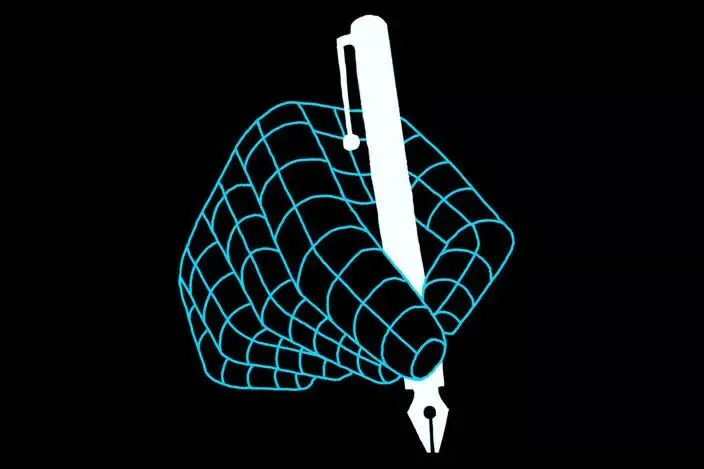
AI 写作很蹩脚,但人类也好不到哪去

AI 写作很蹩脚,但人类也好不到哪去
经济学人 | 文化
难度:★★★☆☆
单词数:781 words
📍本期导读
近期,米娅·巴拉德的恐怖小说《害羞女孩》在炒作和曝光中迅速走红。但随着读者发现文中出现了大量人工智能参与的痕迹,这本爆款图书从各大书店被紧急下架回收。围绕此事,舆论习惯性地嘲笑 AI 写作的拙劣:语言浮夸、隐喻重复、刻意煽情。然而,今天的 AI 虽然像蹩脚学徒,但其进化速度惊人。当机器逐渐摆脱“机器腔”,写出比大多数平庸人类更流畅的文字时,我们还能仅凭“没有灵魂”来否定它吗?人类作家引以为傲的创造力、情感与个人声音,究竟是坚不可摧的壁垒,还是终将被算法破解的密码?
📍完整文章
A furore over AI and a novel presages the future of books
Her voice is “a blade cutting through the sweetness”. His resembles “a blade slicing through the air”; his approval is like “a blade wrapped in silk”. A gaze, a pause, erotic moans: these and other phenomena are as sharp as a knife. Almost anything can be heavy (tears, words, a knock on the door) or weighty (seconds, anger, dollar bills). Far too many things bloom, including silence, gratitude and the taste of blood.
It is easy to be snooty about “Shy Girl”, a novel alleged to have been written with help from artificial intelligence, and about AI prose in general. Rest assured, this column will be. Yet human writers comforted by a sense of superiority should beware. For traditionalists, the tale of AI, fiction and the future of art may quickly become a horror story.
The narrator of “Shy Girl”, itself a yucky horror yarn, is a woman forced by a kidnapper to impersonate a dog. Originally self-published, the buzzy novel was picked up by Hachette, a big publisher, and was due out in America soon; it was released in Britain in November. But after vigilante readers, some equipped with bot-busting software, detected signs of machine involvement, the book was withdrawn. (Mia Ballard, the author, denies using AI, maintaining instead that an early editor did so.)
When large language models (llms) try to write creatively, the text often comes out flat and lurid at once. It strives clunkingly for subtlety; it is portentous about trivia. As in “Shy Girl”, it features excessive, repetitious and downright weird metaphors, combining words that can in theory go together, but really shouldn’t. llms go in for verbless staccato sentences. With few words. Or even. One. They are hooked on adjectives and clauses in threes, as in: “I’m careless, disorganised, not worth the effort.”
For some readers, these stylistic glitches are symptoms of a metaphysical problem. Because it has no tastes, feelings or experiences, a bot can never develop its own voice, they reason. For a person, to write is to choose, each word and sentence a fraught exercise of freedom. Picturing the world anew—while expressing something communal—great writing is a bridge between lives and minds. ai can’t match that. It has no soul, just algorithms.
As a literary bot might put it: Well now. Up to a point. So? The trouble with romanticising human creation is that so much of it is terrible. Pit an llm’s style against Vladimir Nabokov’s and it comes off as wooden; compare it with an airport thriller and it seems much livelier. As for AI output being derivative, a lack of originality is often a virtue in publishing, which loves promoting debut authors as heirs to established ones, and new books as crosses between two previous hits.
The example of “Shy Girl” cuts both ways. As online reviews attest, lots of readers liked it (in fairness, there are some good bits). Though some feel hoodwinked by undeclared AI content, others are unfazed. Already some romance “novelists” openly enlist bots, inputting tropes (“enemies to lovers”, “age gap”) and dodging the grunt work. And remember, today’s llms are merely novices, and they are improving fast. Before long mainstream readers may be requesting quality fiction customised to their tastes, like naggy children demanding stories about the family cat.
Writers who sweated blood over books which, without their consent, were used to train their soulless competitors are justifiably aggrieved. Compensation for that infringement, a kind of omnivorous plagiarism, is currently being determined by class-action lawsuits. For protection in the future, some authors and publishers are banking on schemes that certify titles were written by organic human beings (though as more people use AI for more tasks, from research to editing, the categories may crumble).
Will mortal authors survive? Probably. The best. We’ll see. The startling yet perfect metaphor—like Macbeth’s “dusty death” or his “last syllable of recorded time”—may always be beyond a bot’s imagining. They may never ever produce a line as limpidly profound as “Never, never, never, never, never”, King Lear’s lament for his murdered daughter.
But as is set to be true of arts from acting to music, along with many other activities, whether a star human can beat a machine will not be the only salient question. Even if they can, will readers fork out for their premium prose, how many of them, how much—and will that sustain an old-school book industry? The moral of the “Shy Girl” palaver is not that AI writing is bad or should be banned. Rather, it has to be beaten.
声明:原文版权归杂志所有,仅供个人学习交流。
📍「及目阅读」是什么?
及目阅读是一款 App & 小程序。每天推送一篇精读外刊,每篇文章都选择国外主流期刊,文章质优、话题丰富、时效最新。包括:高质量中文翻译、英美音频、重点词汇、长难句解析、口语发音测评等等。
🔥下载 App 请前往各大应用市场,搜索「及目阅读」。
🔥点击下方卡片,进入「及目阅读」小程序:
有任何问题可以咨询「官方客服」: