ARTICLE · 1088257
SISUMA招新|招新试题
温馨提醒:SISUMA社团详情,请见下方公众号文章
20
26
SISUMA·WELCOME YOU
招新试题
从这里出发,会有光为你而来

2026期待与你相聚
A brief introduction
ABOUT APEC
APEC is the most important economic cooperation forum in the Asia-Pacific region. It was established in 1989 and currently has 21 member economies, with its Secretariat based in Singapore. Members participate as “economies” rather than “countries,” including China, the United States, Japan, the Republic of Korea, Russia, Australia, Peru, Viet Nam, Papua New Guinea, and others.
APEC’s core objectives are to promote trade and investment liberalization and facilitation in the Asia-Pacific, advance economic and technical cooperation, and achieve sustainable growth and shared prosperity. Its three pillars are generally summarized as: trade and investment liberalization, trade facilitation, and economic and technical cooperation.
APEC is not a negotiating body with legally binding force like the WTO. Instead, it operates on the principles of consensus, voluntary participation, and non-binding commitments. Its highest-level meeting is the annual APEC Economic Leaders’ Meeting. Peru hosted in 2024; the Republic of Korea will host in 2025; and China will host in Shenzhen in 2026.
01
Background:
APEC Themes 2026
2026·INVITATION

2026 (China, upcoming): "Building an Asia-Pacific Community to Prosper Together"
Priorities:
Openness, Innovation, Cooperation.
The 33rd APEC Economic Leaders' Meeting will be held in Shenzhen in November 2026.


Drawing on the evolving priorities over the last three years, the proposed theme for the model APEC conference is:
Rebalancing Growth: Openness, Innovation, and Shared Prosperity in the Asia-Pacific
02
试题
2026·INVITATION

Proposed Mock APEC Conference Theme
Rebalancing Growth: Openness, Innovation, and Shared Prosperity in the Asia-Pacific
//
PLEASE PAY ATTENTION
(1) Choose one of the following three topics UNDER this theme as the focus of your interview presentation and give an approximately three-minute speech in English.
(2) Applicants are encouraged to speak without notes, while memorizing your speech is also welcome.
(3) There will be 1–2 questions afterward from the Chair, and you’ll have approximately 30 seconds to answer.
01
Technology Standards and the Digital Divide
Discussion Point:
Advanced economies possess disproportionate digital infrastructure capacity — APEC's high-income group has approximately 15 times the secure internet server capacity of the low-income group. This disparity raises a core question: should advanced economies bear a greater responsibility for technology transfer and capacity building, or should they prioritize maintaining competitive advantages in AI and digital trade? The 2025 Gyeongju Declaration endorsed the APEC AI Initiative, but developing economies remain uncertain about whether the benefits will reach them, given deep disparities in infrastructure, digital capacity, and institutional readiness.
//
As an advanced economy, how would you balance the imperative to maintain your technological competitive edge with the responsibility to bridge the digital divide in the Asia-Pacific?
What specific, verifiable commitments — not merely declarations — would you propose under APEC's voluntary framework?
02
Structural Reform
and the Middle-Income Trap
Discussion Point:
Emerging economies face a dual pressure: they must deepen structural reforms to sustain growth while avoiding the middle-income trap, yet they lack the institutional and financial resources that advanced economies enjoy. The Strengthened and Enhanced APEC Agenda for Structural Reform (SEAASR) for 2026–2030 provides a new framework, but its success depends on whether emerging economies can translate reform commitments into tangible institutional capacity. The key tension lies between pursuing rapid liberalization (which may expose domestic industries) and sequencing reforms carefully (which may slow integration).
//
As an emerging economy, what specific structural reform priorities would you advocate under the SEAASR framework? How would you design a reform sequence that protects vulnerable domestic sectors in the short term without sacrificing long-term integration into the Asia-Pacific economy?
03
Supply Chain Resilience
and Inclusive Trade Participation
Discussion Point:
Developing economies are the most vulnerable to supply chain disruptions yet have the least capacity to influence supply chain governance. Digitally deliverable services account for 61% of services exports in developed economies but only 16% in least developed countries.
The 2024 Machu Picchu Declaration reaffirmed commitment to advancing the Supply Chain Connectivity Framework Action Plan, but developing economies often lack the infrastructure and technical professionals needed to participate meaningfully. The tension is between accepting externally designed supply chain rules and demanding a more inclusive governance structure.
//
As a developing economy, what concrete measures would you demand from APEC's developed and emerging members to ensure that supply chain resilience initiatives actually benefit economies at your development level? How would you ensure that your voice is not merely heard but structurally embedded in APEC's decision-making processes?
03
Key References
For Further Study
2026·INVITATION

For deeper preparation, consult the following official sources:
2024 Machu Picchu Declaration — APEC Secretariat (mddb.apec.org)
2025 Gyeongju Declaration — APEC 2025 Official Site (apec2025.kr)
2026 APEC Theme and Priorities — APEC 2026 China Official Site (apec2026.cn)
APEC Bogor Goals Framework — APEC Secretariat
2025 APEC Senior Officials' Meeting Outcomes — apec.org
APEC面试备考简明提示
必查网址
官网:www.apec.org
文件库:
mddb.apec.org(找 Leaders’ Declarations)
· 2026中国年:www.apec2026.cn
· 2025韩国年:www.apec2025.kr
三题思路
A组发达经济体:平衡技术优势与数字鸿沟,提可核查的自愿承诺,如培训基金、技术标准开放。
B组新兴经济体:结构改革要讲顺序,先易后难,先服务业和中小企业,再投资自由化,同时要加强能力建设支持。
C组发展中经济体:供应链不能只被安排,要争取决策参与权,如工作组固定席位、专项基金、发展影响评估。
04
TIME& PLACE
2026·INVITATION

SISUMA 期待你的加入
时间:2026.10.12 (周一晚上 18:20-21:00)
地点:歌乐楼 B601 B606 B608
请大家注意:前来面试时可以不用准备报名表,但请将报名表发至社团邮箱:sisu_modelapec@163.com
我们会在面试结束之后3-5个工作日内将结果发至【2026-2027SISUMA信息交流群】中,请大家关注群聊和公众号!
01
step1:加入2026 SISUMA信息交流群
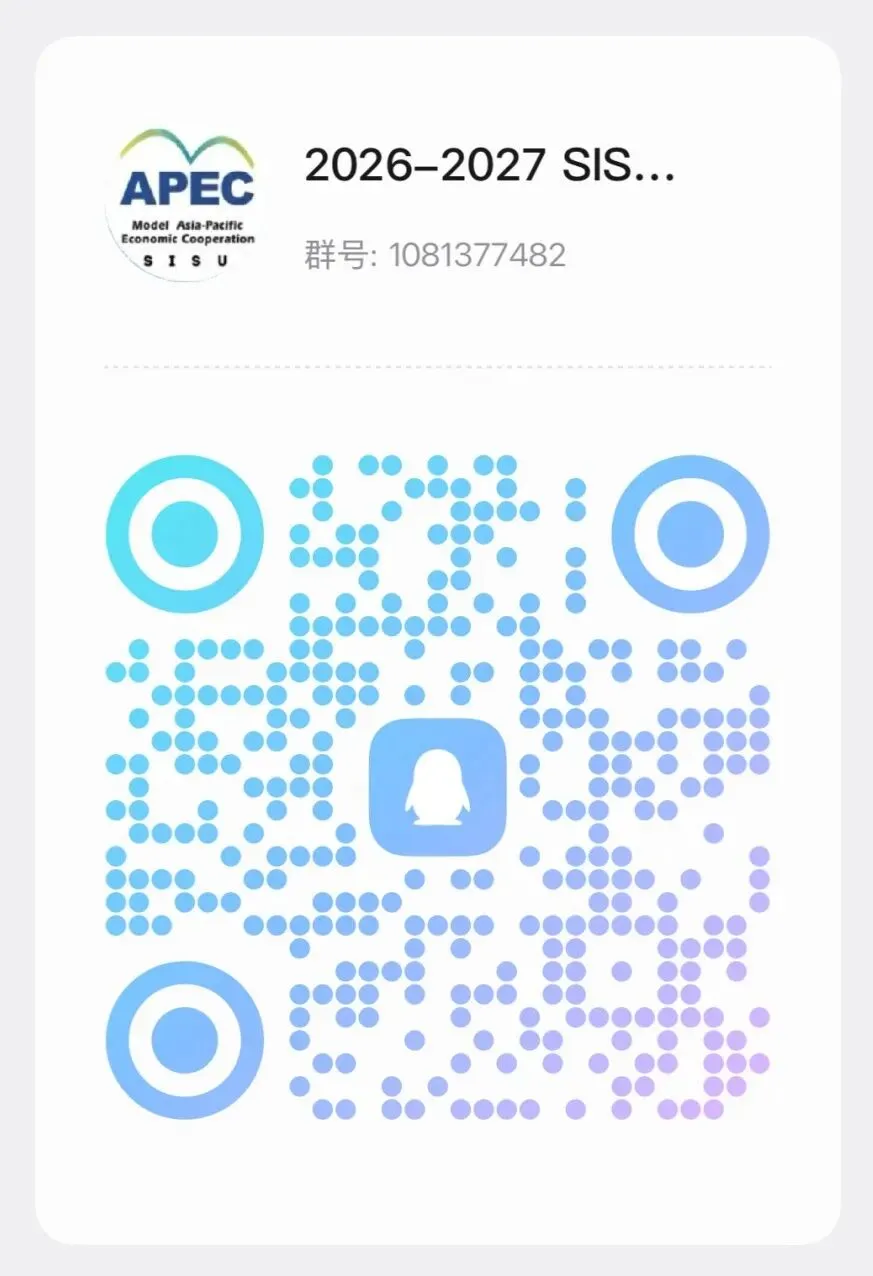
扫描上方二维码,
获取社团面试及后续2026国赛选拔的相关信息
02
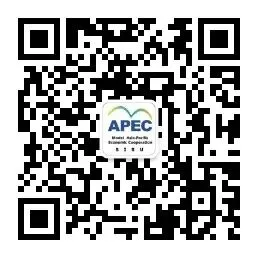
step2:关注川外模拟亚太经合组织公众号
03
step3:完成报名表填写及简历提交

招新题目|学术部长 尹乙力
排版/图文|尹乙力 李玥妍
审核|张国玺