ARTICLE · 1122002
从备课到中文歌曲:5款美国AI工具,中文老师怎么用?From Lesson Planning to Mandarin Songs: Five AI for Teachers
中文教学 × AI · 2026.10.03

先从一件教学任务开始
准备一节“周末活动”中文课,老师可能需要设计对话、调整阅读材料、准备反馈,还想找一首适合跟唱的歌。面对越来越多的AI工具,先问“我这次想解决什么问题”,往往比同时打开五个平台更有用。
本文选取五款由美国公司或机构推出、值得中文老师了解的工具,涵盖备课、材料、反馈、评价与音乐创作。它们不是美国使用量排行榜,也并非都为中文教学开发。功能介绍依据官方资料;以下课堂案例是教学应用建议,尚未进行逐款课堂实测。
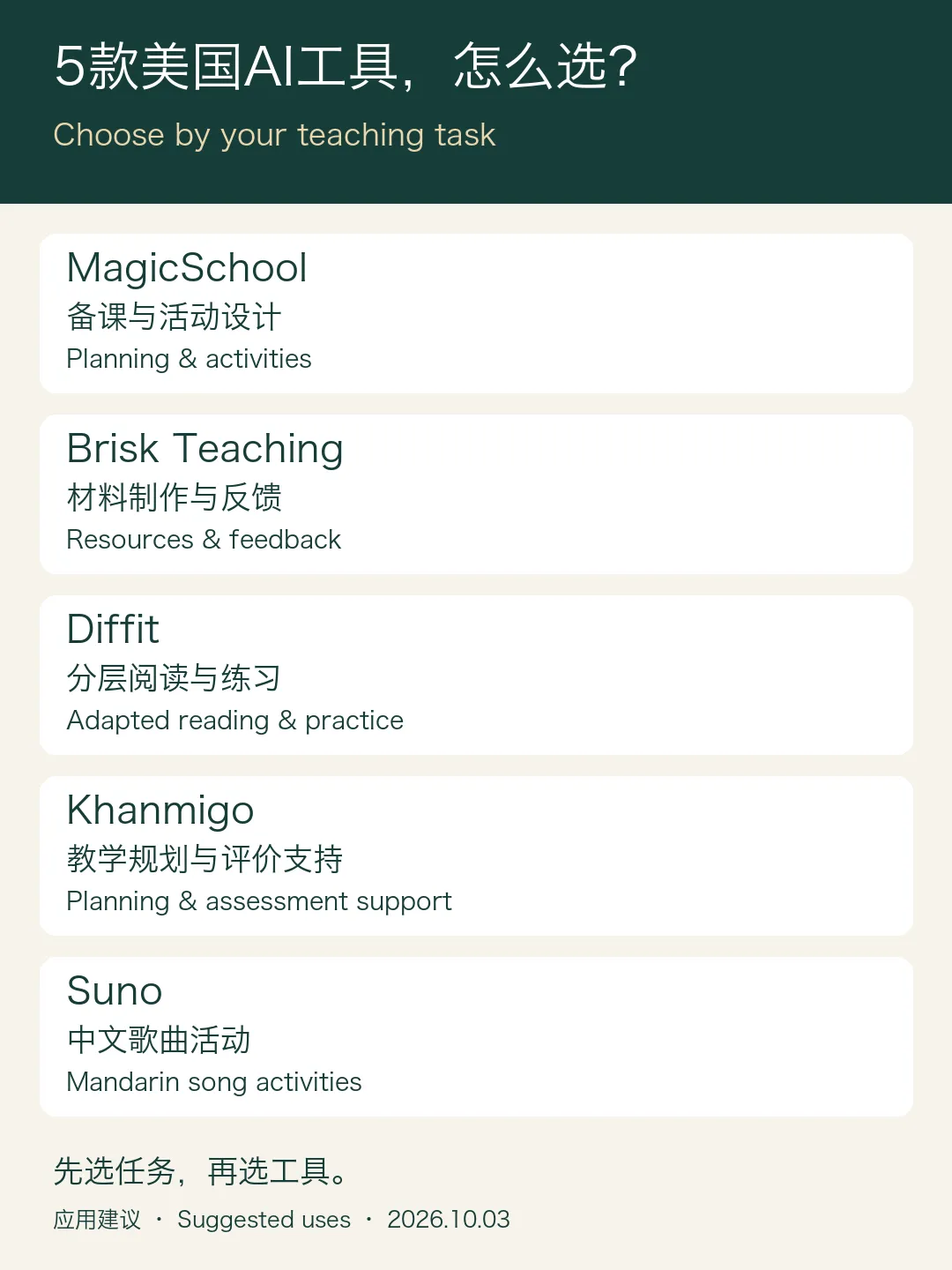
按教学任务选择工具|中文课堂应用建议
01|MagicSchool:给备课一个起点
MagicSchool提供教案、练习、测验等教育工具。对中文老师而言,可以先用它起草一个活动框架,再按学生已学词语、课时与教学目标进行调整。
课堂例子:学生两人一组商量周末去哪里。初级学生借助“你想去哪里?”“我想去……”完成交流;程度较高的学生补充理由,并回应不同意见。老师检查活动是否真的需要双方交换信息。
可改用的任务描述:“设计一个10分钟中文同伴活动。学生已学公园、图书馆、想、因为。目标是提出一个周末建议并回应同伴。请给出步骤、句型支持和一项可观察的完成标准,不增加大量新词。”
检查重点:教案看起来完整,不代表适合本班。删掉超出学生水平的语言,并确认学生说中文的时间足够。
官方资料 / Official source: MagicSchool|工具与方案
02|Brisk Teaching:从手边的材料出发
Brisk可以结合浏览器中的资源辅助制作教学材料,也提供写作反馈等功能。它的切入点是老师已经在使用的内容:一段文本、一份文档或一项作业。
课堂例子:拿一段老师自写的“我的周末”短文,准备“去了哪里”“做了什么”“为什么喜欢”三个层次的问题。若用于写作反馈,先用虚构学生文本试做,并限定反馈只关注本课目标。
检查重点:问题的答案是否真的在原文里?反馈有没有误把可接受的中文表达判成错误?先保留一两条学生能理解、能行动的建议。
官方资料 / Official source: Brisk|功能介绍
03|Diffit:同一个主题,调整阅读支持
Diffit支持从文本、文件、链接或主题生成教学材料,并调整阅读难度、活动和语言。中文老师可以把它作为材料初稿工具,再人工检查词汇、句长与题目。
课堂例子:围绕“周末去公园”,准备短句配词语表的版本,以及加入原因和时间顺序的版本。两组学生最后都回答同一个问题:“你想参加这个活动吗?为什么?”
检查重点:平台的阅读年级标签不等于中文二语水平。指定已学词语、目标句型和篇幅,比只写“适合七年级”更具体。翻译后的文本,也需要重新检查自然度和难度。
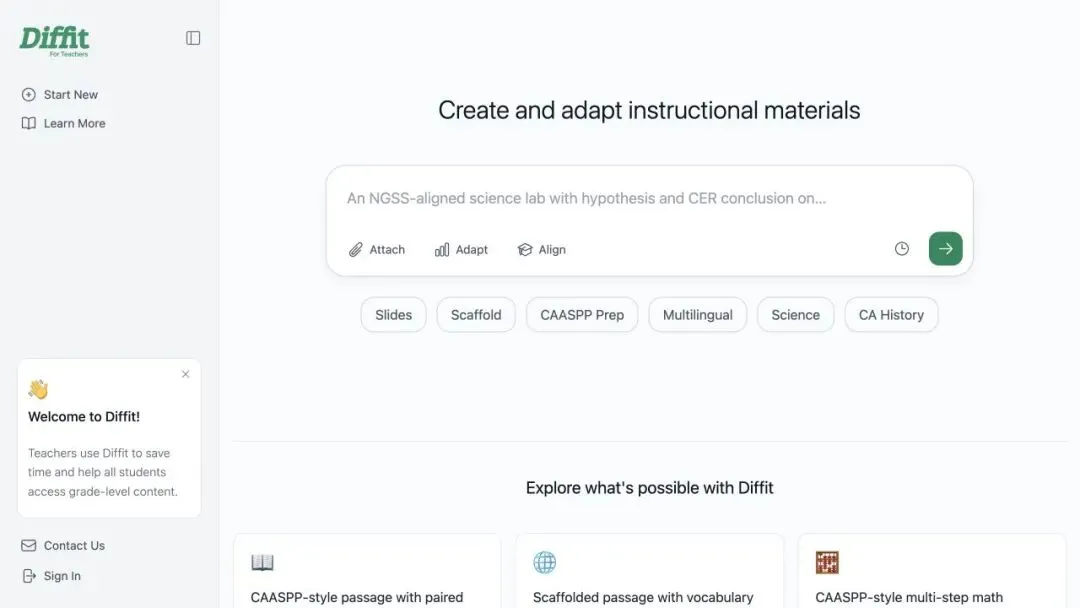
Diffit实际产品界面:材料创建入口。来源:Diffit官网
官方资料 / Official source: Diffit|官方FAQ
04|Khanmigo:把活动和学习目标连起来
Khanmigo的教师工具曾以备课、目标与评价等用途为特色。本次查阅时,其教师入口已跳转至Khan Academy教师平台,官网强调把内容与AI工具结合用于规划教学、反馈和进度跟踪。具体入口与可用功能,以登录后的页面为准。
中文课可以借鉴这样的备课思路:先写清“学生下课时能做什么”,再设计检测。例如目标是提出一个周末安排并说明理由,离堂任务就可以是写下自己的安排,再回应同伴的一个问题。
检查重点:这里介绍的是可尝试的教师备课用途,不代表平台提供完整中文课程或已经验证的中文水平评测。把评价标准改成可观察的表现,例如是否表达了地点和理由。
官方资料 / Official source: Khan Academy|教师平台(Khanmigo教师入口跳转至此)
05|Suno:让目标词句进入一首歌
Suno是AI音乐创作工具,不是专门的教学平台。官方说明支持输入自己的歌词生成歌曲。中文老师可以先写好简短歌词,再尝试生成适合课堂活动的音乐。
原创歌词示例:“星期六,去公园;星期天,去书店。你想去哪儿玩?说说你的打算。”这几句可以作为创作起点,再根据学生已学内容调整。
教学活动不必停在跟唱:第一遍圈出听到的地点,第二遍排列活动顺序,最后关掉音乐,让学生换一个地点说自己的安排。音乐结束后的表达,才是值得观察的学习表现。
检查重点:先听完整首歌,核对歌词有没有被改动、字词是否清楚。歌曲里的旋律不能直接当作普通话声调示范,关键句最好再用自然语速朗读。若要公开发布生成歌曲,另行核对当时适用的使用条款。
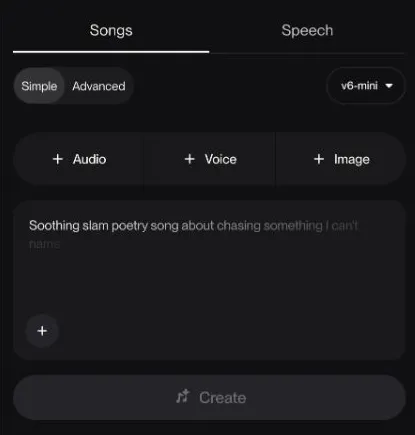
Suno实际产品界面:Simple创作栏局部。来源:Suno官网
官方资料 / Official source: Suno|输入自己的歌词
这周只选一个,小范围试用
如果备课最费时间,从MagicSchool开始;已有材料需要改造,可以看Brisk或Diffit;想梳理目标和评价,了解Khanmigo的教师工具;想做中文歌曲活动,再尝试Suno。它们的功能会重叠,不需要一节课用齐五款。
第一次试用,可以只选一份虚构文本或老师自写材料。记录三件事:生成了什么、老师改了什么、学生最终需要做什么。若调整输出比自己制作还费时,就缩小任务或换一个办法。
本文以教师备课为起点。需要学生直接使用时,再按学校批准的工具、年龄要求和账号安排实施;不要把学生身份信息直接放进示例。
你最想先尝试哪一类:备课、阅读、反馈、评价,还是中文歌曲?
From Lesson Planning to Mandarin Songs: Five US AI Tools for Teachers
Start with one teaching task
Planning a Mandarin lesson on weekend activities can involve dialogue practice, adapted reading, feedback, and perhaps a song. Before opening five platforms, identify one teaching task you want help with.
These five tools come from US-based companies or organizations. This selection covers planning, materials, feedback, assessment, and music creation. It is not a ranking of US adoption, and these tools were not all designed for Mandarin. Feature descriptions draw on official sources; classroom examples are proposed applications, not results from classroom testing.
01 | MagicSchool: a starting point for planning
MagicSchool offers educational tools for lesson plans, worksheets, and quizzes. A Mandarin teacher can use a draft activity as a starting point and adapt it to known language and available time.
Proposed example: partners negotiate a weekend destination. Beginners use “你想去哪里?” and “我想去……”; more advanced learners add reasons and respond to disagreement. Check that the task requires an exchange of information.
Adaptable request: “Design a 10-minute Mandarin partner task using 公园, 图书馆, 想, and 因为. Learners should propose a weekend plan and respond to a partner. Include steps, sentence support, and one observable success criterion. Avoid many new words.”
Review language load and actual speaking time before using the plan.
官方资料 / Official source: MagicSchool|工具与方案
02 | Brisk Teaching: work from existing resources
Brisk can help turn browser-based resources into teaching materials and provide writing feedback. It starts with content a teacher already uses, such as a text, document, or assignment.
Proposed example: use a teacher-written weekend paragraph to prepare questions about where someone went, what they did, and why they enjoyed it. For feedback, begin with a fictional student sample and one lesson goal.
Check that questions are answerable from the text and that feedback does not flag acceptable Mandarin as incorrect. Select one or two suggestions a learner can act on.
官方资料 / Official source: Brisk|功能介绍
03 | Diffit: adapt reading support
Diffit generates materials from text, files, links, or topics and supports adjustments to reading level, activities, and language. Treat its output as a draft for checking vocabulary, sentence length, and questions.
Proposed example: create a short-sentence park outing text with a glossary and another version with reasons and sequencing. Both groups answer: “Would you join this activity? Why?”
A reading-grade label is not a Mandarin second-language proficiency level. Specify familiar vocabulary, target structures, and length. Recheck translated text for naturalness and difficulty.
官方资料 / Official source: Diffit|官方FAQ
04 | Khanmigo: connect activities with learning goals
Khanmigo’s teacher tools have included planning and assessment support. At this review, its teacher URL redirects to Khan Academy’s teacher platform, which describes AI-supported planning, feedback, and progress tracking. Check the signed-in interface for current availability.
For Mandarin, start with what learners should be able to do by the end. If the goal is to propose and justify a weekend plan, an exit task might ask learners to write a plan and answer a partner’s question.
This is a proposed teacher-planning use, not a claim of a complete Mandarin curriculum or validated Mandarin proficiency assessment. Use observable criteria such as communicating a place and a reason.
官方资料 / Official source: Khan Academy|教师平台(Khanmigo教师入口跳转至此)
05 | Suno: turn target language into a song
Suno is an AI music tool rather than a dedicated teaching platform. Its official guidance supports supplying your own lyrics. Teachers can write a short, controlled text before generating music.
Original starter lyrics: “星期六,去公园;星期天,去书店。你想去哪儿玩?说说你的打算。” Adapt these lines to familiar language.
Go beyond singing along: identify places on the first listen, sequence activities on the second, then turn off the music and have learners describe their own plans with a different destination.
Listen to the whole output and check altered lyrics and intelligibility. Melody is not a model of spoken Mandarin tones; read key sentences in a natural speaking voice. Check applicable terms separately before publishing generated songs.
官方资料 / Official source: Suno|输入自己的歌词
Choose one small trial this week
If planning takes the most time, consider MagicSchool. For existing materials, look at Brisk or Diffit. Explore Khanmigo’s teacher tools for planning and assessment, or Suno for song activities. Their functions overlap; one lesson does not need all five.
Start with one fictional or teacher-written text. Record what the tool produced, what you changed, and what learners will do. If revision takes longer than making the resource yourself, narrow the task or use another approach.
This article starts with teacher preparation. Direct student use needs school-approved tools, suitable age access, and account arrangements. Keep student identifying information out of samples.
Which would you try first: planning, reading, feedback, assessment, or Mandarin songs?
机构背景资料 / Organization sources
MagicSchool·Brisk·Diffit·Khan Academy·Suno
资料核对:2026年10月3日。功能、界面与可用范围可能更新。本文未对五款工具开展逐款实测,不构成效果排名。
Sources checked October 3, 2026. Features and availability may change. This is not a hands-on comparison or effectiveness ranking.