ARTICLE · 1170311
最后7天怎么复习英语四级考试?(2)
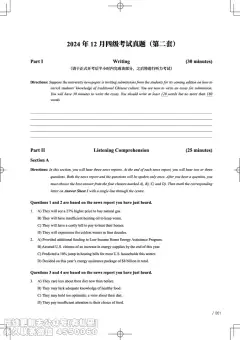
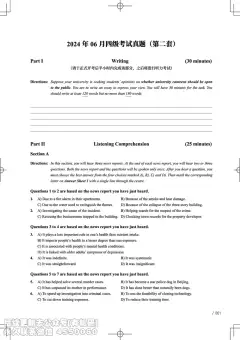
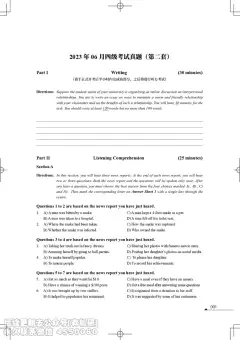
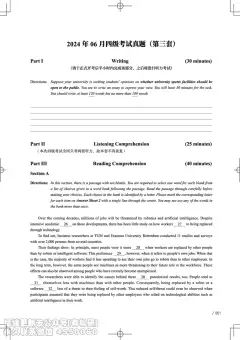
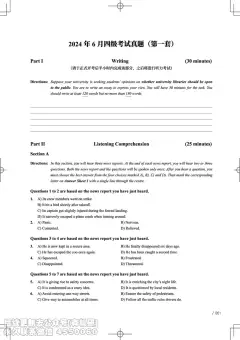
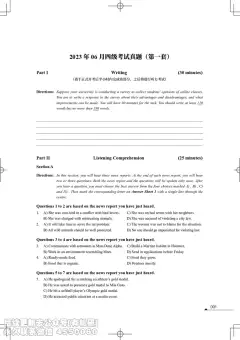
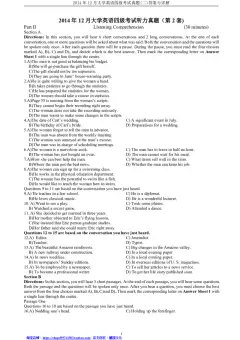
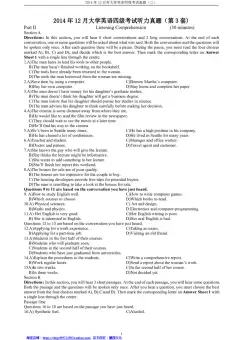
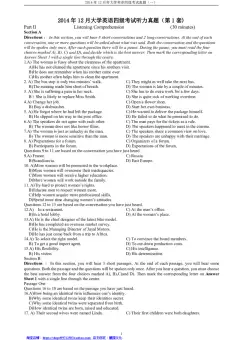
真题真题真题!
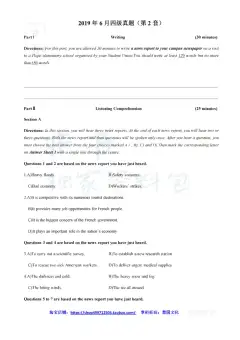
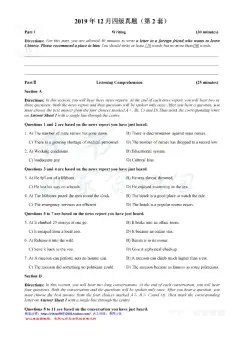
每天做一套题。针对自己的弱项,有针对性地复习。
今天说说阅读!
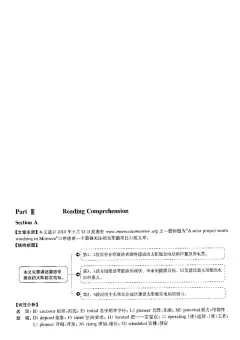
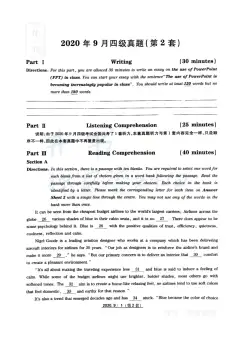
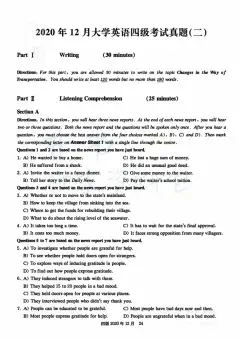
大学英语四级考试中,阅读所占的比重是35%。考查三种题型:300-350词的仔细阅读2篇,题型为我们再熟悉不过的四选一单选题;1000词左右的长篇阅读1篇,题型为信息匹配题(10个句子,看看跟哪个段落匹配);最后一种是选词填空题,从15个词汇中选出10个,填入一篇挖了10个空的文章中,文章长度为200-250词。
无论是哪种题型,四级阅读的关键是:
四级阅读的文章都选自主流英美报刊,包括The Economist《经济学人》、Newsweek《新闻周刊》、Time《时代周刊》、New York Times《纽约时报》等。这些文章都不是有趣的故事,而是论述某个观点或说明某个报告的说明文。它们有一个共同特点,就是“无趣”!但说明文的结构严谨,逻辑清晰,严格遵守“总-分-总”或“总-分”的架构。因此,读懂首尾和每段的开头是便能知道文章大意,也就是“跳读”(Skimming)。有些段落甚至先不用读,先看题目然后找出关键词,再返回文章去找答案,特别注意时间、地点、人名、地名、转折、举例等等之处,这是“查读”(Scanning)。最后,仔细阅读理解题型还需要读懂关键句,读懂选项,选出正确答案。
以上应试技巧,只有在“读懂”的基础上运用才能发挥最大效力。而要读懂,离不开最基础的词汇和语法。尤其是选词填空题,考的都是词汇和语法。
怎么办?
精读真题文章,弄懂每个单词和每句话。10篇文章能涵盖50%的四级词汇,20篇文章就能涵盖70%-80%的词汇。
不要以为题目做对了,就读懂了文章。试着翻译一下,再对比译文,看看差距在哪。
坚持7天,又是一个飞跃。
有时候读懂了还是做不对,这就是理解和思路的问题。要想得分,还得按命题人的思路来。大学英语四级的正确思题不会过多迂回转折,正确选项大都是对原文关键句的“同义替换”。做几套题,体会一下,就能把握命题人的脉络,答案也就一目了然了。
英语阅读在应试上是很有技巧的。仔细阅读占比最大,为20%,所考的四选一选择题是我们从小考到大的题型,上文也提到了解题方法,这里不做过多表述。
长篇阅读占比为10%,题型是信息匹配题,主要用“跳读”和“查读”两种技巧。需要注意的是:同一段落可能不止匹配一道题(You may choose a paragraph more than once)。有些同学第1题选了C,做后面的题目时就不考虑C段了。这是万万不可取的!万一后面的题也匹配C段呢?(概率不大,但真题考过两次)万一第1题就做错了呢?
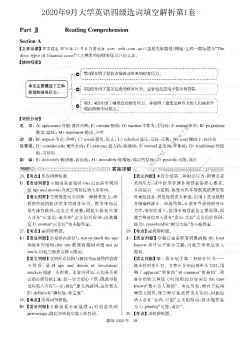
选词填空也叫篇章阅读理解,只占5%。建议大家做完长篇阅读和仔细阅读再做这10道题。词库中的15个词汇只涉及四种词性:名词、动词、形容词、副词 。答题前,先在词汇旁边标一下词性。答题时,用语法知识分析一下要填入什么词性,这样可以选择范围大大缩小。然后,找找上下文中的解题线索,填入答案。
阅读7天能提分不少,但提高英语阅读能力没有捷径,也非一日之寒。多多阅读才是王道。阅读的乐趣在于获取知识,获取信息,认知世界。应付完考试后,大家可以选择自己感兴趣英语文章或小说进行精读训练。
接下来,就来精读一篇典型的四级仔细阅读文章吧。
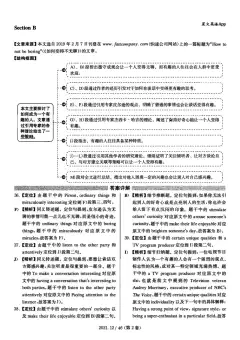
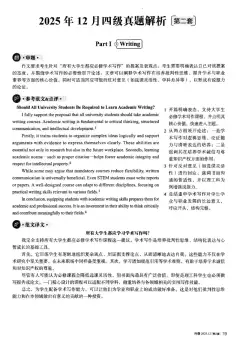
Could you reproduce Silicon Valley elsewhere, or is there something unique about it?
It wouldn’t be surprising if it were hard to reproduce in other countries, because you couldn’t reproduce it in most of the US either. What does it take to make a Silicon Valley?
It’s the right people. If you could get the right ten thousand people to move from Silicon Valley to Buffalo, Buffalo would become Silicon Valley.
You only need two kinds of people to create a technology hub (中心): rich people and nerds (痴迷科研的人).
Observation bears this out. Within the US, towns have become startup hubs if and only if they have both rich people and nerds. Few startups happen in Miami, for example, because although it’s full of rich people, it has few nerds. It’s not the kind of place nerds like.
Whereas Pittsburgh has the opposite problem: plenty of nerds, but no rich people. The top US Computer Science departments are said to be MIT, Stanford, Berkeley, and Carnegie-Mellon. MIT yielded Route 128. Stanford and Berkeley yielded Silicon Valley. But what did Carnegie-Mellon yield in Pittsburgh? And what happened in Ithaca, home of Cornell University, which is also high on the list?
I grew up in Pittsburgh and went to college at Cornell, so I can answer for both. The weather is terrible, particularly in winter, and there’s no interesting old city to make up for it, as there is in Boston. Rich people don’t want to live in Pittsburgh or Ithaca. So while there’re plenty of hackers (电脑迷) who could start startups, there’s no one to invest in them.
Do you really need the rich people? Wouldn’t it work to have the government invest in the nerds? No, it would not. Startup investors are a distinct type of rich people. They tend to have a lot of experience themselves in the technology business. This helps them pick the right startups, and means they can supply advice and connections as well as money. And the fact that they have a personal stake in the outcome makes them really pay attention.
1. What do we learn about Silicon Valley from the passage?
A) Its success is hard to copy anywhere else.
B) It is the biggest technology hub in the US.
C) Its fame in high technology is incomparable.
D) It leads the world in information technology.
2. What makes Miami unfit to produce a Silicon Valley?
A) Lack of incentive for investment.
B) Lack of the right kind of talents.
C) Lack of government support.
D) Lack of famous universities.
3. In what way is Carnegie-Mellon different from Stanford, Berkeley and MIT?
A) Its location is not as attractive to rich people.
B) Its science departments are not nearly as good.
C) It does not produce computer hackers and nerds.
D) It does not pay much attention to business startups.
4. What does the author imply about Boston?
A) It has pleasant weather all year round.
B) It produces wealth as well as high-tech.
C) It is not likely to attract lots of investors and nerds.
D) It is an old city with many sites of historical interest.
5. What does the author say about startup investors?
A) They are especially wise in making investments.
B) They have good connections in the government.
C) They can do more than providing money.
D) They are rich enough to invest in nerds.
高频词汇
reproduce v. 复制,再现
observation n. 观察所得
bear sth. out 证实某事
startup n. 创业公司
yield vt. 产生,出产
make up for 弥补,补偿
distinct a. 有区别的
connection n. [pl.]人脉
stake n. 利害关系,股本
outcome n. 结果
答案
5) C, 4) D,3) A, 2) B, 1) A

微信名:英语四级考试
微信ID:CET-4English
关注大学英语四级考试动向,
你的英语四级备考助手