ARTICLE · 1290598
小学英语语法体系 · 句型归纳 10——七大句型篇

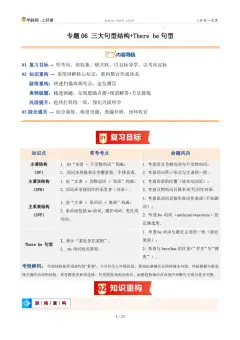
七 大 句 型
Sentence Types | 陈述句 · There be 句式 · 祈使句 · 感叹句 · 疑问句
英语中的句子按照句式可以分为陈述句、疑问句、祈使句和感叹句四大类。这一讲把它们逐一拆开:陈述句怎么变否定、There be 怎么用、祈使句怎么答、感叹句用 what 还是 how、一般疑问句和特殊疑问句怎么变——小升初句型题的全套基本功,一次讲清。
第一节 | 陈述句
知识精要1. 陈述句句型的理解和综合运用2. 肯定陈述句和否定陈述句的变形及应用
要点讲练
一、陈述句的概念
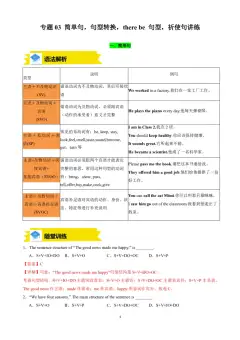
陈述句是陈述一个事实或者说话人的看法。它包括肯定句和否定句两种。陈述句在书写时句末用句号,而在朗读时则用降调。如:
① I'm a student. ② I like dogs. ③ I'm not a teacher.
二、陈述句的句子结构以及用法
陈述句可分为"肯定陈述句"和"否定陈述句"两种,简称为肯定句和否定句。
1、肯定句
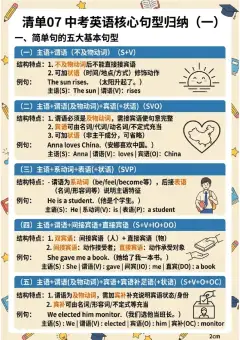
在英语中,一般情况下,肯定句的基本结构为:主+谓+其他,例如:
主语(人称代词或名词)主语一般包括人称代词或名词:I, you, he, she, dog, cat, some books 等物主代词this, that, 等。谓语(be动词)谓语一般就是动词:be动词:is, are, am谓语(助动词)谓语一般就是动词:do, does谓语(行为动词)谓语一般就是动词:like, eat 等
Eg. Mr. Walker is an Englishman. 华克先生是英国人。I am a tall boy. 我是一个高的男孩。He does his homework. 他做他的作业。
2、否定句
否定句的基本形式包括以下两种:
(1)在系动词 am, is, are,助动词 do, does, did,及情态动词 will, would, can, could, may, might, shall, should, must 等后面加上"not"。例如:
① 句子中有 be 动词,后直接加 not,例如:
Eg. I am not (I'm not) a good swimmer. 我不是一个游泳的好手。He is not (isn't) a doctor. 他不是一个医生。It is not (isn't) raining outside. 外面没有在下雨。
② 情态动词 will, would, can, could, may, might, shall, should, must 后面加上"not"。例如:
Eg. I won't do it again. 我不再做这种事。The old man cannot find his way home. 那个老人找不到回家的路。I couldn't sleep last night. 昨夜我无法入睡。
③ 使用助动词"do"的否定句
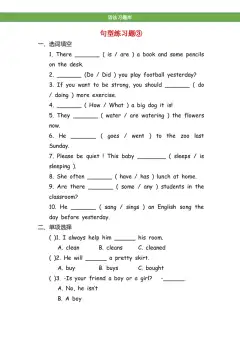
一般动词的否定句通常使用助动词"do",句式如下:do(does, did)+ not + V(原形动词)。
肯定句、否定句的互换:非单三时用 do,单三时用 does。
肯定句(非单三)I like English.否定句I do not like English.肯定句(单三)He likes English.否定句He does not like English.
Eg. I don't know her very well. 我并不很了解她。He doesn't like Chinese tea very much. 他并不很喜欢中国茶。She didn't come to school this morning. 今天早上她没有来上学。Don't believe him. 不要相信他的话。
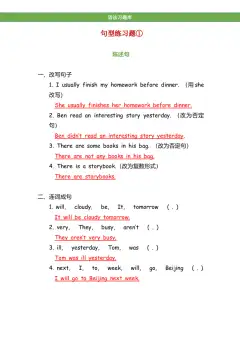
小口诀|1、变否定,找 be、can,be、can 后边加 not;2、无 be、无 can 找动词,动词前边加 don't/doesn't,后面动词用原形。Eg(肯定句 → 否定句):David watches TV every evening. → David doesn't watch TV every evening.She is buying some food in the shop. → She isn't buying some food in the shop.He can play the piano. → He can't play the piano.
(2)使用"not"以外的否定词
① 使用副词never, seldom, hardly, little, neither 等。Eg. She never comes to school late. 她上学从不迟到。She seldom comes to see me. 她不常来看我。② 使用形容词no, few, little 等。Eg. I have no brothers. (=I don't have brothers.) 我没有兄弟。He has few friends in Hong Kong. 他在香港几乎没有朋友。③ 使用代词nothing, nobody, none 等。Eg. I know nothing about computer. 对于电脑我一窍不通。I found nobody in that house. 在那栋房子里我没看到任何人。
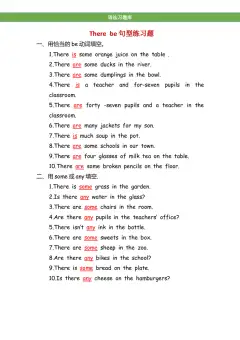
小贴士|特殊(肯定句与否定句互换词):1. some 变为 anyThere are some birds in the tree. → There aren't any birds in the tree.但是,若在表示邀请、请求的句子中,some 可以不变。Would you like some orange juice?与此相关的一些不定代词如 something, somebody 等也要进行相应变化。2. and 变为 orI have a knife and a ruler. → I don't have a knife or a ruler.3. a lot of (=lots of) 变为 many 或 muchThey have a lot of friends.(可数名词)→ They don't have many friends.There is lots of orange in the bottle.(不可数名词)→ There isn't much orange in the bottle.4. already 变为 yetI have been there already. → I haven't been there yet.
另外,否定也可以借用前缀或后缀来表达,例如:He is honest. 他是诚实的。He is dishonest. (=He is not honest.) 他不诚实。They have children. 他们有小孩。They are childless. (=They don't have children.) 他们没有小孩。
第二节 | There be 句式
知识精要1. There be 句型的理解和综合运用2. There be 与 have 的区别
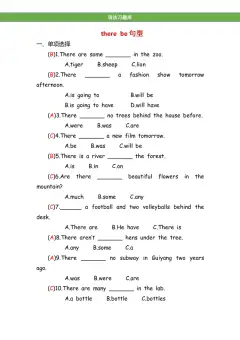
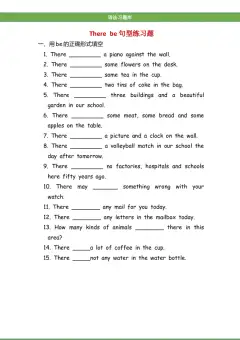
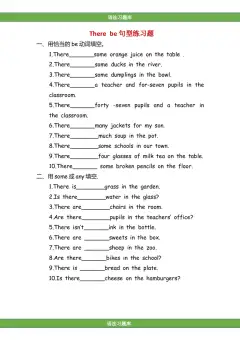
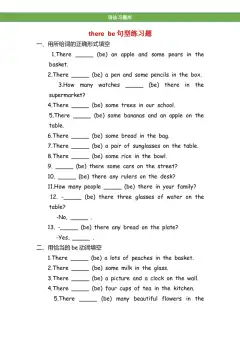
There be 句型也叫作存在句,它是英语中一种常见的句型结构,表示在某地存在某物(某人)或在某时发生某事。
要点讲练
一、There be 句型结构
1、there be 结构的肯定句
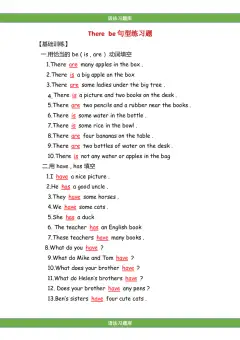
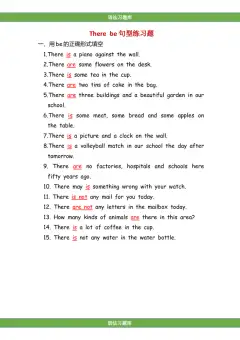
(1) There is + 可数名词单数/不可数名词 + 地点/时间状语Eg. There is a flower in the bottle. 瓶里有一朵花。There is some money in the purse. 钱包里有些钱。(2) There are + 可数名词复数 + 地点/时间状语Eg. There are many books in the shelf. 书架上有一些书。
2、there be 结构的否定句
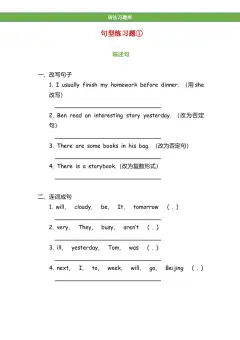
there be 结构的否定句是在 be 后加 "not" 或 "no",表示"没有"之意。如果句中有 some,变否定句时需将 some 变为 any。
Eg. There are not any/no flowers in the vase. 花瓶里没有花。
3、there be 结构的疑问句
(1) 一般疑问句及其答语
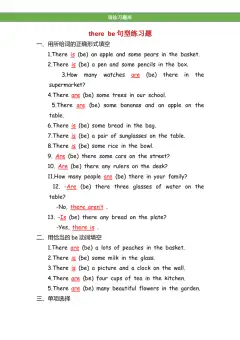
there be 结构的一般疑问句通常是把 be 提至 there 前,首字母大写,句末用问号,其肯定的回答为 "Yes, there is/are",否定回答为 "No, there isn't/aren't"。
Eg. —Is there a computer in your room? 你房间里有电脑吗?—Yes, there is / No, there isn't. 是的,有。/不,没有。
(2) 特殊疑问句及其回答
① 提问句子的主语(包括主语前的修饰语)时,句型一律用 "what is + 地点介词短语?"(无论主语是单数还是复数都用 is)。Eg. There are some birds in the tree. → What's in the tree?② 就 there be 后面的地点状语进行提问时,句型用 "where is / are + 主语?" 如:There is a car in the street. → Where is the car?③ 提问可数名词(主语)前的数量时,用 how many,句型结构为 "how many + 复数名词 + are there + 其它?"(主语无论是单数还是复数,be 通常要用 are)。如:There is a cat under the bed. → How many cats are there under the bed?
二、There be 句型中 be 的确定
1、在一般现在时的 there be 结构中,be 在人称和数上应与其后的主语保持一致。主语是不可数名词或者可数名词单数时 be 用 is;主语是可数名词复数时 be 用 are。在一般过去时中,there be 则相应地用 there was 或者 there were。
Eg. There is an elephant.There are two dogs.
2、若句子中有几个并列的主语,be 的形式要与离其最近的那个主语在人称和数上保持一致,简称"就近原则"。
Eg. There is a flower and two tables in the room.There are two tables and a flower in the room.
小口诀|Be 动词,有三个,am,is 还有 are。"There be" 真特别,不留 am 只留俩,那就是 is 还有 are。要用 is 还是 are,须看其后的名词是单数还是复数。若是单数或不可数名词用 is,否则就用 are。如:There is a tree behind the house.
三、There be 句型与 have/has 的区别
1、不同点
There be 句型和 have, has 都表示"有"的含义。区别如下:There be 表示"某处存在某物或某人";have, has 表示"某人拥有某物/某人",它表示所有、拥有关系。
Eg. ① He has two sons. 他有两个儿子。② There are two men in the office. 办公室里有两个男人。
2、相同点
当 have 表示"包括"、"存在"的含义时,There be 句型与其可互换。
Eg. A week has seven days. = There are seven days in a week. 一个星期有七天。
第三节 | 祈使句
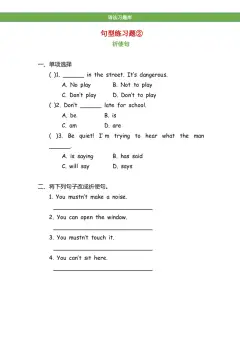
概念引入|用来表示请求、命令、叮嘱、建议等的句子叫祈使句。祈使句的谓语动词用原形,句子没有主语,句末使用感叹号或者句号。例如:Open the door quickly! 快打开门!
用法讲解
1. 祈使句的肯定句。
1) 以系动词 be 开头的祈使句这种句式的结构是:Be 动词+其它成分(形容词、名词或介词短语等)。例如:Be quiet / quick! Be a good student! Be careful when crossing the street.2) 以实义动词开头的祈使句这种祈使句的常用结构为:行为动词原形+其它成分。例如:Come in, please! 请进! Stand up, please. = Please stand up. 请起立。3) let 句型这种祈使句的常用结构为:Let's / let us + 动词原形;或者是 Let + 宾语 + 其他。Let's play football! 我们一起踢足球吧! Let me help you. 让我来帮你。
2. 祈使句的否定句。
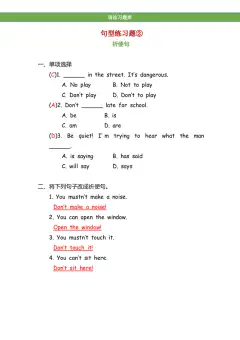
1) Don't + 动词原形Don't be careless. 别粗心。Don't be late again. 不要再迟到。Don't let them play with fire. 别让他们玩火。Don't look at your books. 不要看书。2) Let 引起的祈使句的否定形式a. Let's (Let sb.) + not + 动词原形。Let's not say anything about it. 对于这件事,咱们什么也别说。Let them not play with fire. 别让他们玩火。b. Don't + let + 宾语 + 动词原形 + 其他。Don't let Jim do that. 别让吉姆做那事。Don't let us go, please. 请不要让我们走。3) 在公共场合的提示语中否定祈使句常用 "No+名词 / V-ing 形式"结构,表示"禁止做某事"。例如:NO PHOTOS! 禁止拍照! No parking! 禁止停车!
3. 祈使句的反意疑问句。
1) 肯定祈使句的反意疑问句反问部分用 will you 或 won't you。Please open the door, will/won't you? 请把门打开,好吗?Be sure to write to us, will/won't you? 你一定要给我们写信,好吗?2) 否定祈使句的反意疑问句反问部分只用 will you。Don't be late again, will you? 别再迟到了,行不行?Don't smoke in the meeting room, will you? 不要在会议室抽烟,好吗?3) 以 let's 开头的祈使句反意疑问句反问部分用 shall we。Let's turn on the TV, shall we? 我们把电视打开,好吗?以 let us 开头的祈使句的反意疑问句的反问部分应为 will you 或 won't you。例如:Let us stay here, will/won't you? 请(你)让我们留在这好吗?
4. 祈使句的回答。
祈使句的动作通常是表示将来发生的动作,所以回答祈使句时,一般用 will 或 won't。在回答具有否定意义的祈使句时,要注意两点:
1) 形式一致:即 Yes 与 will 保持一致;No 与 won't 保持一致。2) 意思相反:即 Yes 是"不"的意思;No 是"是"的意思。
在回答时,要注意分析上下文语境中所提供的条件。例如:
—Don't go out, please. It's raining heavily outside. 请不要出去。外面雨下得很大。—Yes, I will. I have to meet my brother at the airport. 不行,我得去机场接我弟弟。
5. 祈使句使用时应注意的问题。
1)在表达请求或劝告时,有时为了表示委婉的语气,可以在句首或句末 please,但是如果 please 加在句末,应用逗号将其与前面的部分隔开。例如:Sit down, please. 请坐。Please look after the twins. 请照顾一下双胞胎。2)在意思比较明显的情况下,可以把谓语动词省略。例如:This way, please. 请这边走。3)有时为了加强语气,可以在动词前使用 do。例如:Do be careful! 一定要小心!4)有时为了强调对方,也可加上主语 you,人名或 everybody, anybody 等不定代词。例如:You sweep the floor and I clean the window. 你来扫地我来擦窗户。Stand up, everybody. 请大家起立。5)有时为了明确向谁提出请求或发出命令,可加称呼语,但称呼语要与句子用逗号隔开。例如:Put the shirt on the bed, Jim. 吉姆,把衬衫放床上。
第四节 | 感叹句
表示喜怒哀乐等强烈感情的句子叫感叹句。感叹句的末尾用感叹号。句子开头经常用 what 或者 how。
1) How 在感叹句中可以修饰形容词、副词、或整个句子等。例如:
How beautiful the skirt is! 这条裙子多漂亮呀!How tall your brother is! 你的哥哥多高呀!How time flies! 时间过得真快呀!
2) what 在感叹句可以修饰名词。如果名词是可数名词的单数形式,用 what+a/an+(形容词)+名词+主语+谓语!如果是不可数名词或者可数名词的复数形式用 What+(形容词)+名词+主语+谓语!例如:
What a tall boy your brother is! 你哥哥是一个多么高的男孩!What beautiful pictures they are! 那些图画多美丽呀!
注意:what 和 how 引导的感叹句有时可以互换,但是要注意词序的变化。例如:"他是多聪明的孩子!"
What a clever boy he is! = How clever a boy he is! = How clever the boy is!
第五节 | 一般疑问句和特殊疑问句
概念引入|英语中的句子按照句式可以分为陈述句、疑问句、祈使句和感叹句。一、陈述句用来说明事实或说话人的看法;分为肯定句和否定句。例如:My name is Lily. 我的名字叫莉莉。(肯定句)She isn't a teacher. 她不是一个老师。(否定句)二、祈使句用来表示请求、命令、劝告和建议等。例如:Open the door please! 请打开门。三、感叹句用来表达强烈的感情。例如:What a beautiful girl she is! 她真是个漂亮的女孩儿啊!四、疑问句用来提出问题。例如:Are you my new teacher? 你是我的新老师吗?本节课,我们将重点讲解疑问句的用法。
疑问句可以分为一般疑问句、特殊疑问句、选择疑问句和附加疑问句。本册书中我们重点学习的是一般疑问句和特殊疑问句。
1、一般疑问句
(1)什么是一般疑问句?
可以用 Yes 或者 No 来回答的疑问句是一般疑问句。一般疑问句读的时候往往要用升调;译成汉语的时候常可以译为"……吗?"。
例如:—Are you a student? 你是个学生吗?—Yes, I am. 是的,我是。—Can you speak English? 你会说英语吗?—Yes, I can. 是的,我会。—Do you go to school every day? 你每天都上学吗?—No, I don't. 不,不是。
(2)如何将陈述句变成一般疑问句?
① 句中有 be 动词(am, is, are, was, were 等)、助动词(do, does, did, have, had 等)或情态动词(can, must, will, may 等)时,将其提到句首,句末加上问号即可。
例如:She is a clever girl. 她是个聪明的女孩。→Is she a clever girl? 她是个聪明的女孩吗?I can swim. 我会游泳。→Can you swim? 你会游泳吗?
② 如果句中没有 be 动词、助动词或情态动词,则要根据不同的时态在句首加上相应的助动词来构成一般疑问句。例如,我们目前学过的一般现在时,当句子的谓语动词是行为动词时,把句子变成一般疑问句就要在句首加上助动词 do 或者 does 提问。主语是第三人称单数时用 does,其余人称用 do。此时句子的谓语动词要用原形。
例如:He likes reading books. 他喜欢读书。→Does he like reading books? 他喜欢读书吗?I do my homework every day. 我每天做作业。→Do you do your homework every day? 你每天都做作业吗?
注意:在把陈述句变成一般疑问句时,除了以上的变化外,还要注意一些相应的词的变化,例如人称的变化,或者把 some 变成 any 等。例如:She has some bread for breakfast. 她早餐吃了些面包。→Does she have any bread for breakfast? 她早餐吃了些面包吗?I am a student. 我是个学生。→Are you a student? 你是个学生吗?
2、特殊疑问句
(1)什么是特殊疑问句?
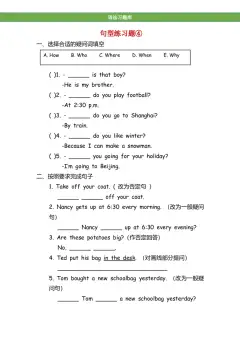
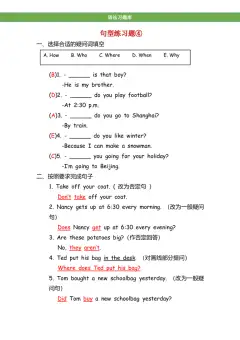
特殊疑问句是以特殊疑问词开头,用来询问具体的某一方面信息的疑问句。特殊疑问句中常见的特殊疑问词有:what(什么),who(谁),where(哪里),when(何时),why(为什么),how(如何)等。特殊疑问句在回答的时候,不可以用 Yes 或者 No,必须回答具体的内容。
例如:—What's his name? 他叫什么名字?—His name is Tom. 他的名字是汤姆。—Who is the girl? 那个女孩儿是谁?—She's my sister. 她是我的姐姐。—Why were you late for school? 你为什么又迟到了?—Because I got up late. 因为我起晚了。—Whose book is this? 这是谁的书?—It's mine. 这是我的书。—Which color do you like? 你喜欢哪个颜色?—I like red. 我喜欢红色。
(2)如何将陈述句变为特殊疑问句?
当我们对一个陈述句中的某一项内容进行提问时,就构成一个特殊疑问句。此时首先要确定用哪一个疑问词,然后将原来的句子变为一般疑问句放在疑问词的后面,把句号变为问号。
① 如果对主语或修饰主语的词提问,其语序是陈述句的语序:"特殊疑问词(+名词)+谓语动词+...?"例如:It's me.(对划线部分提问)→Who is it?This is my bike.(对划线部分提问)→Whose bike is this?② 如果对其他成分提问,其语序是:"特殊疑问词+一般疑问句"。例如:She looks like her mother.(对划线部分提问)→Who does she look like?I'm from England.(对划线部分提问)→Where are you from?
(3)常见的特殊疑问词的用法。
① 特殊疑问词 What 的相关用法What 可以用来询问姓名、年龄、事物、职业和数学计算结果等。例如:What's your name? 你叫什么名字?What's your age? = How old are you? 你多大了?What is two plus four? 二加四是多少?
询问几点几分用 What time(询问什么时候用 When)、询问星期几用 What day,询问日期用 What's the date?
例如:What day is it today? 今天是星期几?What time is it now? 现在是几点了?What's the date today? 今天是几号?
What about 可以用来征求别人的意见和建议,等于 How about。例如:What about going fishing after school? 放学后去钓鱼如何?What class/grade 可以用来询问在哪一个班或者年级,此时也可以用 Which class/grade。例如:—What class are you in? 你在哪一个班级?—I am in Class Two, Grade One. 我在一年级二班。询问是什么颜色用 What color。例如:—What color is your bike? 你的自行车是什么颜色?—It's black. 是黑色的。
② 其他特殊疑问词的用法询问某人是谁用 Who,询问某物是谁的用 Whose。例如:—Who is your teacher? 谁是你的老师?—The man in black coat. 穿黑色大衣的那个男人。—Whose bike is this? 这是谁的自行车?—It's my father's. 它是我爸爸的。询问哪一个用 Which。例如:Which color do you like? 你喜欢哪个颜色?询问地点用 Where。例如:Where is your book? 你的书在哪里?询问原因用 Why。例如:Why are you late again? 你为什么又迟到了?询问方式、状况或者程度等可以用 How。例如:How can I get to the station? 我怎样能到车站?询问某物的价格和价钱用 How much。例如:How much is your bike? 你的自行车多少钱?How much are these apples? 这些苹果多少钱?
注意:询问某物有多少可以用 How many 和 How much。How many 的后面用可数名词的复数形式,How much 的后面用不可数名词。
例如:How many people are there in your family? 你家有多少口人?How much water is there in the bottle? 瓶子里有多少水?
How 的相关词组还有很多,我们在以后的学习中要进一步积累。
5 类句型 · 通关自查
① 变否定的口诀怎么背?(找 be、can,后边加 not;无 be、无 can 找动词,前边加 don't/doesn't)② There be 就近原则:There is a flower and two tables. 对吗?(对,be 离 a flower 近)③ 肯定祈使句和否定祈使句的反意疑问句分别用什么?(will you/won't you;只用 will you)④ What a tall boy…! 和 How tall…! 各自修饰什么?(what 修饰名词;how 修饰形容词、副词)⑤ 一般疑问句和特殊疑问句,哪个必须回答具体内容?(特殊疑问句)
觉得有用,就点个「在看」,转给需要的家长和同学吧。
下一篇预告
《小学语法顺口溜 》
持续关注,小学语法一关一关带娃通关。
小技巧
关注成为粉丝,获取更多资料
往期推荐|《(1)名词》·《(2)冠词》·《(3)代词》·《(4)形容词和副词》·《(5)介词》·《(6)数词》·《(7)动词》《(8)连词》《(9)五大时态》