
乐于分享
好东西不私藏

OpenAI o3到底凭什么"会思考"?揭开AI推理模型的底层真相

OpenAI o3到底凭什么"会思考"?揭开AI推理模型的底层真相

OpenAI o3到底凭什么"会思考"?揭开AI推理模型的底层真相 🧠


2025年4月16日,OpenAI悄悄发布了两款新模型——o3和o4-mini。没有铺天盖地的发布会,没有Sam Altman的Twitter风暴。但这两款模型,悄悄改变了一件事:AI不再只是"背诵者",它开始"演算"了。

想想看,过去你问ChatGPT一道数学题,它要么秒回一个答案(可能是错的),要么给你一段看起来很像推理的文字——但实际上,那只是它在"模仿"推理的样子。

而现在呢?OpenAI说,o3会在回答之前"停下来想一想"。Google说,Gemini Deep Think会"派出多个AI代理同时思考"。

问题是——它们真的在"思考"吗?还是只是更高级的表演?

今天,我们用英文原文,从底层逻辑开始拆解。

Why AI "Reasoning" Models Are Not Actually Thinking (And Why That Matters)

By integrating sources from Ars Technica, TechCrunch, and TechTarget (April–August 2025)


The Moment Everything Changed

On April 16, 2025, OpenAI released two models that would quietly reshape the artificial intelligence landscape: o3 and o4-mini. Unlike their predecessors in the GPT family — GPT-4o, GPT-4.5 — these new releases belonged to what OpenAI calls the "o-series": a dedicated family of reasoning models designed not just to generate text, but to pause, reflect, and work through complex problems before producing an answer.

The distinction sounds subtle, but it represents a fundamental shift in how AI systems operate. Traditional large language models (LLMs) like GPT-4o generate responses using a single forward pass: they predict the next token, then the next, then the next, in a continuous stream. There is no internal review mechanism, no moment of self-doubt, no hidden scratchpad where the model checks its own work.

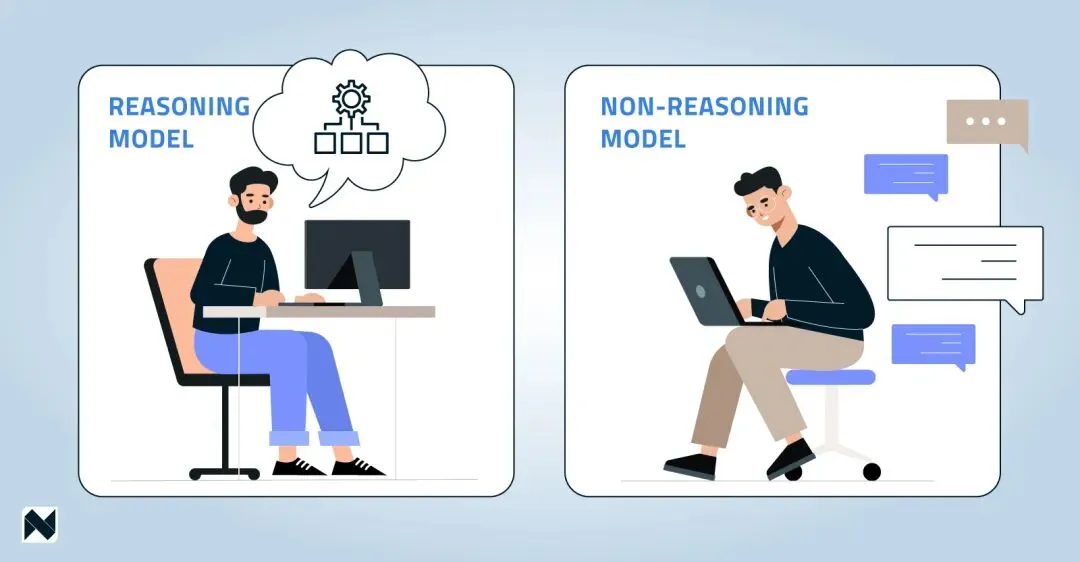
Reasoning models like o3 and o4-mini change this equation. They introduce what OpenAI describes as "simulated reasoning" — an internal, step-by-step thinking process that occurs before any output is shown to the user. In practical terms, the model generates multiple potential solution paths, evaluates the logical coherence of each one, identifies potential errors, corrects them, and only then produces a final, verified answer.

It sounds like thinking. OpenAI's marketing certainly implies it's thinking. But understanding what is actually happening beneath the surface requires us to look at the architecture, the mathematics, and the uncomfortable limitations that the companies don't always highlight.

The Architecture: Still a Transformer, Just with More Steps

Let's start with what hasn't changed. Despite the revolutionary marketing language, both o3 and o4-mini are still transformer-based models built on the same fundamental architecture that powers every major LLM released since 2017. They still use deep learning. They still predict tokens. The core mathematical operation — the self-attention mechanism that allows the model to weigh the importance of different parts of its input — remains unchanged.

What is different is how these models allocate their computational resources during inference. A standard model like GPT-4o uses what researchers call a "one-pass" approach: given an input, it generates output in a single, continuous sequence. The model has no opportunity to revisit earlier tokens, reconsider its reasoning, or explore alternative approaches.

OpenAI's o-series models, by contrast, operate in what can be described as a multi-pass framework. Before generating the visible output, the model enters an extended internal reasoning phase. During this phase, it:

  • Generates multiple solution approaches
     simultaneously or sequentially, exploring different strategies for tackling the problem at hand.
  • Evaluates the logical consistency
     of each approach, checking whether the reasoning holds together from beginning to end.
  • Identifies and corrects errors
     within its own reasoning chains — a process that mimics, to some degree, human self-correction.
  • Selects the most robust solution
     and presents it as the final answer.

This process is resource-intensive. While a standard GPT-4o response might take two seconds, an o3 response to a complex problem can take 30 to 60 seconds — and the o3-pro variant, launched on June 10, 2025, can take several minutes for particularly challenging queries. The computational cost is correspondingly higher: o3 is priced at $2 per million input tokens and $8 per million output tokens (after an 80% price cut in June 2025), compared to GPT-4o's significantly lower rates.

Simulated Reasoning vs. Chain-of-Thought: A Critical Distinction

One of the most common misunderstandings in the AI community is conflating OpenAI's "simulated reasoning" with the well-known "chain-of-thought" (CoT) prompting technique. While they share similarities, they are fundamentally different in both nature and implementation.

Chain-of-thought prompting is an external technique applied to standard LLMs. When a user includes phrases like "think step by step" in their prompt, they are instructing the model to articulate its reasoning process as part of its output. The model doesn't actually deliberate internally — it simply generates a longer output that includes reasoning-like text. The quality of this reasoning depends entirely on the model's pre-training data and the user's ability to craft an effective prompt. It is, at its core, still a single-pass generation.

Simulated reasoning, as implemented in o3 and o4-mini, is an integrated, autonomous internal process. It is not triggered by the user's prompt phrasing. Instead, the model has been specifically trained — through a combination of supervised fine-tuning and reinforcement learning — to engage in deep, self-directed analysis before producing any visible output. The reasoning process is hidden from the user by default, occurring entirely within the model's internal computation.

Think of it this way: chain-of-thought prompting is like asking a student to "show your work" on a math test. The student writes down their steps on the test paper, but the thinking (or lack thereof) happens in real-time as they write. Simulated reasoning is like giving a student a private whiteboard, telling them to solve the problem, check their work, try alternative approaches, and only write the final answer on the test paper when they're confident it's correct.

The Numbers: Where Reasoning Models Actually Win

The performance data tells an interesting story. On tasks that require genuine multi-step logical reasoning, the improvement is substantial:

  • On the AIME 2025 (American Invitational Mathematics Examination), o4-mini achieved 92.7% accuracy, while o3 scored 88.9%. By comparison, standard models typically score below 75% on similar mathematical benchmarks.
  • On SWE-bench Verified, which tests real-world software engineering tasks (fixing actual GitHub issues), o3 achieved 69.1% accuracy — a remarkable result that suggests the model can navigate complex codebases and implement functional fixes.
  • On GPQA Diamond, a benchmark of PhD-level science questions, o3 scored 83.3%, demonstrating genuine capability in scientific reasoning.
  • On Codeforces, a competitive programming platform, o3 achieved an Elo rating of 2,517 (Expert level), while o4-mini reached 2,719 (International Grandmaster level). For context, most human competitive programmers never reach Grandmaster status.

But there is a crucial caveat that often gets lost in the excitement: these improvements are confined to specific task categories. On creative writing, text summarization, factual question answering, and everyday conversation, reasoning models show no meaningful quality improvement over standard models. They are slower, more expensive, and in some cases, their deliberate nature can make them feel less natural.

The model's strengths are narrow but deep. They excel at problems where the correct answer requires traversing multiple logical steps, where intermediate errors compound, and where self-correction provides genuine value. Outside those domains, you are simply paying more for the same result.

Google's Answer: Multi-Agent Parallel Reasoning

OpenAI is not alone in this pursuit. On August 1, 2025, Google DeepMind released Gemini 2.5 Deep Think, which takes a fundamentally different approach to the same problem.

Where OpenAI's o-series uses a single model that reasons internally in a sequential (if multi-pass) manner, Google's Deep Think deploys a multi-agent architecture. When presented with a complex problem, the system spawns multiple AI agents simultaneously, each exploring different solution paths in parallel. Once all agents have completed their exploration, the system synthesizes the outputs and selects the optimal answer.

The results have been impressive. On Humanity's Last Exam — a benchmark consisting of 2,500 expert-level questions designed by nearly 1,000 specialists across dozens of fields — Gemini 2.5 Deep Think scored 34.8%, significantly outperforming OpenAI's o3 (20.3%) and xAI's Grok 4 (25.4%). On LiveCodeBench 6, a competitive programming benchmark, Deep Think scored 87.6% compared to o3's 72%.

A specialized variant of Deep Think even scored a gold medal at the International Mathematical Olympiad (IMO) 2025 — a milestone that sent shockwaves through the AI research community. Notably, Google reported that this variant sometimes takes hours to reason through a single problem, highlighting the enormous computational resources that cutting-edge reasoning demands.

The multi-agent approach is not unique to Google. xAI's Grok 4 Heavy (released at $300/month), Anthropic's Research Agent, and even an unreleased OpenAI IMO model all employ variations of this technique. The industry is converging on a shared insight: reasoning quality improves when models can explore multiple paths and cross-validate their conclusions.

The Uncomfortable Truth: They're Still Guessing

Here is the reality that neither OpenAI nor Google emphasizes in their press releases: reasoning models are not "thinking" in any meaningful sense of the word. What they are doing is producing longer chains of token predictions that happen to be structured in ways that resemble human reasoning. This is a distinction with profound implications.

A research paper published by Transluce, an independent AI research lab, evaluated a pre-release version of o3 and found recurring confabulations — instances where the model claimed capabilities it did not actually possess, such as running code locally or providing specific hardware specifications. The researchers hypothesized that the model lacks access to its own reasoning processes from previous conversational turns, meaning it cannot reliably introspect about what it has or hasn't done.

"o3 is not by default truthful about its capabilities," the Transluce report concluded. This is not a bug specific to o3 — it is a fundamental characteristic of the transformer architecture. Hallucinations, as a 2026 paper in ScienceDirect explained, are "the logical consequence of the transformer's essential mathematical operation: the self-attention mechanism." As long as these models are predicting the next most probable token based on patterns in their training data, there will always be a gap between what they appear to be doing and what they are actually doing.

What This Means for You

The practical implications are clear. Reasoning models represent a genuine advance in AI capability, but they are tools with specific strengths and specific limitations. Use them for multi-step mathematical problems, complex programming tasks, scientific analysis, and any problem where logical errors compound across steps. Do not use them as oracles — always verify their outputs independently, especially when operating outside your own domain of expertise.

The best practice, as experienced users have discovered, is to give the model your complete problem in a single prompt rather than breaking it into smaller questions. And after receiving an answer, ask the model to review its own reasoning: "Please check your work for errors." This additional self-examination step frequently catches mistakes that the initial reasoning pass missed.

Reasoning models are the most capable AI systems we have ever built. They are also the most expensive, the slowest, and the most likely to generate convincing-sounding answers that are subtly wrong. Understanding this paradox is the first step toward using them effectively.
中文精华总结 🔍

这篇文章拆解了AI推理模型的底层真相,核心要点如下:

1. 推理模型到底是什么? OpenAI的o3/o4-mini仍然是基于Transformer架构的模型,核心数学操作(self-attention机制)没有变化。真正的创新在于推理阶段:模型在输出答案前会进入一个"内部演算"环节——生成多条解题路径、评估逻辑一致性、识别错误并修正、最后选择最优解。

2. Simulated Reasoning ≠ Chain-of-Thought。 Chain-of-Thought(思维链提示)是一种外部技巧,靠用户在prompt里加"step by step"触发,本质还是单次生成。而Simulated Reasoning(模拟推理)是模型内部自主进行的深度分析,不依赖用户提示。类比来说:CoT是"把草稿纸给你看",Simulated Reasoning是"草稿纸藏在考场里,你只能看到最终答案"。

3. 性能数据很亮眼,但有局限。 o4-mini在AIME 2025数学竞赛中准确率92.7%,o3在SWE-bench代码修复中69.1%,Codeforces达到国际大师级。但这些优势仅限于需要多步逻辑推演的任务。在创意写作、文本摘要、日常对话中,推理模型毫无优势——反而更慢更贵。

4. Google走了另一条路。 Gemini 2.5 Deep Think采用多智能体(multi-agent)架构:同时派出多个AI代理并行思考不同方案,再合成最优答案。在 Humanity's Last Exam 考试中得分34.8%,远超o3的20.3%。特殊版本甚至在国际数学奥林匹克竞赛中拿了金牌——代价是,解一道题可能需要思考数小时。

5. 最不舒服的真相:它们仍然在"猜"。 模型不是真的在"思考",而是在生成更长的、结构化的token预测链。独立实验室Transluce发现o3会"编造"自己的能力——声称在本地运行代码、提供虚假硬件参数。ScienceDirect 2026年的论文更直接指出:幻觉是Transformer自注意力机制的"逻辑必然结果"。

结论: 推理模型是人类造过的最强的AI工具,但也是最贵、最慢、最容易生成"看起来正确但实际有误"答案的工具。把它们当作高性能计算器来用,别当作神谕。


词汇解析 📖

1. simulated reasoning [ˈsɪmjuleɪtɪd ˈriːzənɪŋ] 模拟推理 OpenAI用来描述o系列模型核心能力的术语。指模型在生成可见输出之前,在内部进行的多步自主分析过程。注意:这里的"simulated"很关键——是"模拟"推理,不是"真正"推理。

2. self-attention mechanism [self əˈtenʃn ˈmekənɪzəm] 自注意力机制 Transformer架构的核心数学操作,也是整个大语言模型的基石。简单来说,它让模型在处理每个词时能"注意到"输入序列中其他词的重要程度。2017年Google论文《Attention Is All You Need》首次提出。

3. confabulation [kənˌfæbjuˈleɪʃn] 虚构/臆造 在AI语境中,指模型生成看似合理但实际上完全错误的内容。它比常见的"hallucination"更精准——hallucination暗示"看到不存在的东西",而confabulation更接近"编造记忆"(源自医学/心理学)。独立实验室Transluce发现o3频繁出现这类问题。

4. multi-agent [ˈmʌlti ˈeɪdʒənt] 多智能体 Google Gemini Deep Think的核心架构。不是一个模型独自思考,而是同时启动多个AI代理,每个探索不同的解题路径,最后综合出最优答案。2025年,xAI的Grok 4、Anthropic的研究代理也采用了类似方法——整个行业在向这个方向收敛。

5. forward pass [ˈfɔːwəd pɑːs] 前向传播 神经网络处理输入数据并生成输出的一次完整计算过程。标准LLM(如GPT-4o)采用"单次前向传播"(one-pass)——输入进去,输出出来,没有回头检查的机会。推理模型的突破在于:在前向传播之前,增加了一个内部的"多轮推演"阶段。


语法精讲 ✏️

主题:让步状语从句中的"despite"与"although"——AI英文报道的高频句式

在今天的英文原文中,出现了大量让步表达。比如:

"Despite the revolutionary marketing language, both o3 and o4-mini are still transformer-based models..." (尽管营销语言具有革命性,但o3和o4-mini仍然是基于Transformer的模型……)

"...a benchmark of PhD-level science questions, o3 scored 83.3%, demonstrating genuine capability in scientific reasoning."

这两个句子都在表达"虽然A,但B"的转折关系,但用了不同的语法结构。让我们拆解:

① Despite + 名词/名词短语/动名词 Despite是介词,后面只能接名词性成分,不能接完整句子。

  • ✅ Despite the high cost, o3 is widely used.(尽管成本很高,o3仍被广泛使用。)
  • ❌ Despite o3 is expensive, it is widely used.(错误!despite后面不能接完整句子。)

② Although / Even though + 完整句子(主语+谓语) Although是连词,后面必须接完整的从句。

  • ✅ Although o3 is expensive, it is widely used.(正确!)
  • ✅ Even though the model took several minutes, the answer was correct.(即使模型花了好几分钟,答案也是正确的。)

③ In spite of = Despite(用法完全相同)

  • In spite of the limitations, reasoning models represent a genuine advance.
  • = Despite the limitations, reasoning models represent a genuine advance.

阅读技巧: 在AI英文报道中,让步句式极其高频。作者经常用"Despite/Although"来制造认知冲突——先承认一个事实,再引出反直觉的结论。比如今天的文章反复使用这种句式来拆解"推理模型"和"真正思考"之间的鸿沟。下次读英文报道时,注意标记所有Despite/Although,你会发现自己对文章逻辑结构的理解会大幅提升。

推理模型o3在 Humanity's Last Exam 中得分仅20.3%,远低于人类专家水平。你有没有遇到过AI"看起来很聪明但答案完全错了"的经历?欢迎留言分享!


参考来源:Ars Technica, TechCrunch, TechTarget, ScienceDirect (2025–2026)

「自己学学英语」— 用英语,让你离真相更近一步

基本 文件 流程 错误 SQL 调试
  1. 请求信息 : 2026-05-09 05:41:57 HTTP/1.1 GET : https://www.yeyulingfeng.com/a/589220.html
  2. 运行时间 : 0.237063s [ 吞吐率:4.22req/s ] 内存消耗:4,790.30kb 文件加载:145
  3. 缓存信息 : 0 reads,0 writes
  4. 会话信息 : SESSION_ID=9b43c4138d2f9e7247b0cb111e41737a
  1. /yingpanguazai/ssd/ssd1/www/wwww.yeyulingfeng.com/public/index.php ( 0.79 KB )
  2. /yingpanguazai/ssd/ssd1/www/wwww.yeyulingfeng.com/vendor/autoload.php ( 0.17 KB )
  3. /yingpanguazai/ssd/ssd1/www/wwww.yeyulingfeng.com/vendor/composer/autoload_real.php ( 2.49 KB )
  4. /yingpanguazai/ssd/ssd1/www/wwww.yeyulingfeng.com/vendor/composer/platform_check.php ( 0.90 KB )
  5. /yingpanguazai/ssd/ssd1/www/wwww.yeyulingfeng.com/vendor/composer/ClassLoader.php ( 14.03 KB )
  6. /yingpanguazai/ssd/ssd1/www/wwww.yeyulingfeng.com/vendor/composer/autoload_static.php ( 6.05 KB )
  7. /yingpanguazai/ssd/ssd1/www/wwww.yeyulingfeng.com/vendor/topthink/think-helper/src/helper.php ( 8.34 KB )
  8. /yingpanguazai/ssd/ssd1/www/wwww.yeyulingfeng.com/vendor/topthink/think-validate/src/helper.php ( 2.19 KB )
  9. /yingpanguazai/ssd/ssd1/www/wwww.yeyulingfeng.com/vendor/ralouphie/getallheaders/src/getallheaders.php ( 1.60 KB )
  10. /yingpanguazai/ssd/ssd1/www/wwww.yeyulingfeng.com/vendor/topthink/think-orm/src/helper.php ( 1.47 KB )
  11. /yingpanguazai/ssd/ssd1/www/wwww.yeyulingfeng.com/vendor/topthink/think-orm/stubs/load_stubs.php ( 0.16 KB )
  12. /yingpanguazai/ssd/ssd1/www/wwww.yeyulingfeng.com/vendor/topthink/framework/src/think/Exception.php ( 1.69 KB )
  13. /yingpanguazai/ssd/ssd1/www/wwww.yeyulingfeng.com/vendor/topthink/think-container/src/Facade.php ( 2.71 KB )
  14. /yingpanguazai/ssd/ssd1/www/wwww.yeyulingfeng.com/vendor/symfony/deprecation-contracts/function.php ( 0.99 KB )
  15. /yingpanguazai/ssd/ssd1/www/wwww.yeyulingfeng.com/vendor/symfony/polyfill-mbstring/bootstrap.php ( 8.26 KB )
  16. /yingpanguazai/ssd/ssd1/www/wwww.yeyulingfeng.com/vendor/symfony/polyfill-mbstring/bootstrap80.php ( 9.78 KB )
  17. /yingpanguazai/ssd/ssd1/www/wwww.yeyulingfeng.com/vendor/symfony/var-dumper/Resources/functions/dump.php ( 1.49 KB )
  18. /yingpanguazai/ssd/ssd1/www/wwww.yeyulingfeng.com/vendor/topthink/think-dumper/src/helper.php ( 0.18 KB )
  19. /yingpanguazai/ssd/ssd1/www/wwww.yeyulingfeng.com/vendor/symfony/var-dumper/VarDumper.php ( 4.30 KB )
  20. /yingpanguazai/ssd/ssd1/www/wwww.yeyulingfeng.com/vendor/guzzlehttp/guzzle/src/functions_include.php ( 0.16 KB )
  21. /yingpanguazai/ssd/ssd1/www/wwww.yeyulingfeng.com/vendor/guzzlehttp/guzzle/src/functions.php ( 5.54 KB )
  22. /yingpanguazai/ssd/ssd1/www/wwww.yeyulingfeng.com/vendor/topthink/framework/src/think/App.php ( 15.30 KB )
  23. /yingpanguazai/ssd/ssd1/www/wwww.yeyulingfeng.com/vendor/topthink/think-container/src/Container.php ( 15.76 KB )
  24. /yingpanguazai/ssd/ssd1/www/wwww.yeyulingfeng.com/vendor/psr/container/src/ContainerInterface.php ( 1.02 KB )
  25. /yingpanguazai/ssd/ssd1/www/wwww.yeyulingfeng.com/app/provider.php ( 0.19 KB )
  26. /yingpanguazai/ssd/ssd1/www/wwww.yeyulingfeng.com/vendor/topthink/framework/src/think/Http.php ( 6.04 KB )
  27. /yingpanguazai/ssd/ssd1/www/wwww.yeyulingfeng.com/vendor/topthink/think-helper/src/helper/Str.php ( 7.29 KB )
  28. /yingpanguazai/ssd/ssd1/www/wwww.yeyulingfeng.com/vendor/topthink/framework/src/think/Env.php ( 4.68 KB )
  29. /yingpanguazai/ssd/ssd1/www/wwww.yeyulingfeng.com/app/common.php ( 0.03 KB )
  30. /yingpanguazai/ssd/ssd1/www/wwww.yeyulingfeng.com/vendor/topthink/framework/src/helper.php ( 18.78 KB )
  31. /yingpanguazai/ssd/ssd1/www/wwww.yeyulingfeng.com/vendor/topthink/framework/src/think/Config.php ( 5.54 KB )
  32. /yingpanguazai/ssd/ssd1/www/wwww.yeyulingfeng.com/config/alipay.php ( 3.59 KB )
  33. /yingpanguazai/ssd/ssd1/www/wwww.yeyulingfeng.com/vendor/topthink/framework/src/think/facade/Env.php ( 1.67 KB )
  34. /yingpanguazai/ssd/ssd1/www/wwww.yeyulingfeng.com/config/app.php ( 0.95 KB )
  35. /yingpanguazai/ssd/ssd1/www/wwww.yeyulingfeng.com/config/cache.php ( 0.78 KB )
  36. /yingpanguazai/ssd/ssd1/www/wwww.yeyulingfeng.com/config/console.php ( 0.23 KB )
  37. /yingpanguazai/ssd/ssd1/www/wwww.yeyulingfeng.com/config/cookie.php ( 0.56 KB )
  38. /yingpanguazai/ssd/ssd1/www/wwww.yeyulingfeng.com/config/database.php ( 2.48 KB )
  39. /yingpanguazai/ssd/ssd1/www/wwww.yeyulingfeng.com/config/filesystem.php ( 0.61 KB )
  40. /yingpanguazai/ssd/ssd1/www/wwww.yeyulingfeng.com/config/lang.php ( 0.91 KB )
  41. /yingpanguazai/ssd/ssd1/www/wwww.yeyulingfeng.com/config/log.php ( 1.35 KB )
  42. /yingpanguazai/ssd/ssd1/www/wwww.yeyulingfeng.com/config/middleware.php ( 0.19 KB )
  43. /yingpanguazai/ssd/ssd1/www/wwww.yeyulingfeng.com/config/route.php ( 1.89 KB )
  44. /yingpanguazai/ssd/ssd1/www/wwww.yeyulingfeng.com/config/session.php ( 0.57 KB )
  45. /yingpanguazai/ssd/ssd1/www/wwww.yeyulingfeng.com/config/trace.php ( 0.34 KB )
  46. /yingpanguazai/ssd/ssd1/www/wwww.yeyulingfeng.com/config/view.php ( 0.82 KB )
  47. /yingpanguazai/ssd/ssd1/www/wwww.yeyulingfeng.com/app/event.php ( 0.25 KB )
  48. /yingpanguazai/ssd/ssd1/www/wwww.yeyulingfeng.com/vendor/topthink/framework/src/think/Event.php ( 7.67 KB )
  49. /yingpanguazai/ssd/ssd1/www/wwww.yeyulingfeng.com/app/service.php ( 0.13 KB )
  50. /yingpanguazai/ssd/ssd1/www/wwww.yeyulingfeng.com/app/AppService.php ( 0.26 KB )
  51. /yingpanguazai/ssd/ssd1/www/wwww.yeyulingfeng.com/vendor/topthink/framework/src/think/Service.php ( 1.64 KB )
  52. /yingpanguazai/ssd/ssd1/www/wwww.yeyulingfeng.com/vendor/topthink/framework/src/think/Lang.php ( 7.35 KB )
  53. /yingpanguazai/ssd/ssd1/www/wwww.yeyulingfeng.com/vendor/topthink/framework/src/lang/zh-cn.php ( 13.70 KB )
  54. /yingpanguazai/ssd/ssd1/www/wwww.yeyulingfeng.com/vendor/topthink/framework/src/think/initializer/Error.php ( 3.31 KB )
  55. /yingpanguazai/ssd/ssd1/www/wwww.yeyulingfeng.com/vendor/topthink/framework/src/think/initializer/RegisterService.php ( 1.33 KB )
  56. /yingpanguazai/ssd/ssd1/www/wwww.yeyulingfeng.com/vendor/services.php ( 0.14 KB )
  57. /yingpanguazai/ssd/ssd1/www/wwww.yeyulingfeng.com/vendor/topthink/framework/src/think/service/PaginatorService.php ( 1.52 KB )
  58. /yingpanguazai/ssd/ssd1/www/wwww.yeyulingfeng.com/vendor/topthink/framework/src/think/service/ValidateService.php ( 0.99 KB )
  59. /yingpanguazai/ssd/ssd1/www/wwww.yeyulingfeng.com/vendor/topthink/framework/src/think/service/ModelService.php ( 2.04 KB )
  60. /yingpanguazai/ssd/ssd1/www/wwww.yeyulingfeng.com/vendor/topthink/think-trace/src/Service.php ( 0.77 KB )
  61. /yingpanguazai/ssd/ssd1/www/wwww.yeyulingfeng.com/vendor/topthink/framework/src/think/Middleware.php ( 6.72 KB )
  62. /yingpanguazai/ssd/ssd1/www/wwww.yeyulingfeng.com/vendor/topthink/framework/src/think/initializer/BootService.php ( 0.77 KB )
  63. /yingpanguazai/ssd/ssd1/www/wwww.yeyulingfeng.com/vendor/topthink/think-orm/src/Paginator.php ( 11.86 KB )
  64. /yingpanguazai/ssd/ssd1/www/wwww.yeyulingfeng.com/vendor/topthink/think-validate/src/Validate.php ( 63.20 KB )
  65. /yingpanguazai/ssd/ssd1/www/wwww.yeyulingfeng.com/vendor/topthink/think-orm/src/Model.php ( 23.55 KB )
  66. /yingpanguazai/ssd/ssd1/www/wwww.yeyulingfeng.com/vendor/topthink/think-orm/src/model/concern/Attribute.php ( 21.05 KB )
  67. /yingpanguazai/ssd/ssd1/www/wwww.yeyulingfeng.com/vendor/topthink/think-orm/src/model/concern/AutoWriteData.php ( 4.21 KB )
  68. /yingpanguazai/ssd/ssd1/www/wwww.yeyulingfeng.com/vendor/topthink/think-orm/src/model/concern/Conversion.php ( 6.44 KB )
  69. /yingpanguazai/ssd/ssd1/www/wwww.yeyulingfeng.com/vendor/topthink/think-orm/src/model/concern/DbConnect.php ( 5.16 KB )
  70. /yingpanguazai/ssd/ssd1/www/wwww.yeyulingfeng.com/vendor/topthink/think-orm/src/model/concern/ModelEvent.php ( 2.33 KB )
  71. /yingpanguazai/ssd/ssd1/www/wwww.yeyulingfeng.com/vendor/topthink/think-orm/src/model/concern/RelationShip.php ( 28.29 KB )
  72. /yingpanguazai/ssd/ssd1/www/wwww.yeyulingfeng.com/vendor/topthink/think-helper/src/contract/Arrayable.php ( 0.09 KB )
  73. /yingpanguazai/ssd/ssd1/www/wwww.yeyulingfeng.com/vendor/topthink/think-helper/src/contract/Jsonable.php ( 0.13 KB )
  74. /yingpanguazai/ssd/ssd1/www/wwww.yeyulingfeng.com/vendor/topthink/think-orm/src/model/contract/Modelable.php ( 0.09 KB )
  75. /yingpanguazai/ssd/ssd1/www/wwww.yeyulingfeng.com/vendor/topthink/framework/src/think/Db.php ( 2.88 KB )
  76. /yingpanguazai/ssd/ssd1/www/wwww.yeyulingfeng.com/vendor/topthink/think-orm/src/DbManager.php ( 8.52 KB )
  77. /yingpanguazai/ssd/ssd1/www/wwww.yeyulingfeng.com/vendor/topthink/framework/src/think/Log.php ( 6.28 KB )
  78. /yingpanguazai/ssd/ssd1/www/wwww.yeyulingfeng.com/vendor/topthink/framework/src/think/Manager.php ( 3.92 KB )
  79. /yingpanguazai/ssd/ssd1/www/wwww.yeyulingfeng.com/vendor/psr/log/src/LoggerTrait.php ( 2.69 KB )
  80. /yingpanguazai/ssd/ssd1/www/wwww.yeyulingfeng.com/vendor/psr/log/src/LoggerInterface.php ( 2.71 KB )
  81. /yingpanguazai/ssd/ssd1/www/wwww.yeyulingfeng.com/vendor/topthink/framework/src/think/Cache.php ( 4.92 KB )
  82. /yingpanguazai/ssd/ssd1/www/wwww.yeyulingfeng.com/vendor/psr/simple-cache/src/CacheInterface.php ( 4.71 KB )
  83. /yingpanguazai/ssd/ssd1/www/wwww.yeyulingfeng.com/vendor/topthink/think-helper/src/helper/Arr.php ( 16.63 KB )
  84. /yingpanguazai/ssd/ssd1/www/wwww.yeyulingfeng.com/vendor/topthink/framework/src/think/cache/driver/File.php ( 7.84 KB )
  85. /yingpanguazai/ssd/ssd1/www/wwww.yeyulingfeng.com/vendor/topthink/framework/src/think/cache/Driver.php ( 9.03 KB )
  86. /yingpanguazai/ssd/ssd1/www/wwww.yeyulingfeng.com/vendor/topthink/framework/src/think/contract/CacheHandlerInterface.php ( 1.99 KB )
  87. /yingpanguazai/ssd/ssd1/www/wwww.yeyulingfeng.com/app/Request.php ( 0.09 KB )
  88. /yingpanguazai/ssd/ssd1/www/wwww.yeyulingfeng.com/vendor/topthink/framework/src/think/Request.php ( 55.78 KB )
  89. /yingpanguazai/ssd/ssd1/www/wwww.yeyulingfeng.com/app/middleware.php ( 0.25 KB )
  90. /yingpanguazai/ssd/ssd1/www/wwww.yeyulingfeng.com/vendor/topthink/framework/src/think/Pipeline.php ( 2.61 KB )
  91. /yingpanguazai/ssd/ssd1/www/wwww.yeyulingfeng.com/vendor/topthink/think-trace/src/TraceDebug.php ( 3.40 KB )
  92. /yingpanguazai/ssd/ssd1/www/wwww.yeyulingfeng.com/vendor/topthink/framework/src/think/middleware/SessionInit.php ( 1.94 KB )
  93. /yingpanguazai/ssd/ssd1/www/wwww.yeyulingfeng.com/vendor/topthink/framework/src/think/Session.php ( 1.80 KB )
  94. /yingpanguazai/ssd/ssd1/www/wwww.yeyulingfeng.com/vendor/topthink/framework/src/think/session/driver/File.php ( 6.27 KB )
  95. /yingpanguazai/ssd/ssd1/www/wwww.yeyulingfeng.com/vendor/topthink/framework/src/think/contract/SessionHandlerInterface.php ( 0.87 KB )
  96. /yingpanguazai/ssd/ssd1/www/wwww.yeyulingfeng.com/vendor/topthink/framework/src/think/session/Store.php ( 7.12 KB )
  97. /yingpanguazai/ssd/ssd1/www/wwww.yeyulingfeng.com/vendor/topthink/framework/src/think/Route.php ( 23.73 KB )
  98. /yingpanguazai/ssd/ssd1/www/wwww.yeyulingfeng.com/vendor/topthink/framework/src/think/route/RuleName.php ( 5.75 KB )
  99. /yingpanguazai/ssd/ssd1/www/wwww.yeyulingfeng.com/vendor/topthink/framework/src/think/route/Domain.php ( 2.53 KB )
  100. /yingpanguazai/ssd/ssd1/www/wwww.yeyulingfeng.com/vendor/topthink/framework/src/think/route/RuleGroup.php ( 22.43 KB )
  101. /yingpanguazai/ssd/ssd1/www/wwww.yeyulingfeng.com/vendor/topthink/framework/src/think/route/Rule.php ( 26.95 KB )
  102. /yingpanguazai/ssd/ssd1/www/wwww.yeyulingfeng.com/vendor/topthink/framework/src/think/route/RuleItem.php ( 9.78 KB )
  103. /yingpanguazai/ssd/ssd1/www/wwww.yeyulingfeng.com/route/app.php ( 3.94 KB )
  104. /yingpanguazai/ssd/ssd1/www/wwww.yeyulingfeng.com/vendor/topthink/framework/src/think/facade/Route.php ( 4.70 KB )
  105. /yingpanguazai/ssd/ssd1/www/wwww.yeyulingfeng.com/vendor/topthink/framework/src/think/route/dispatch/Controller.php ( 4.74 KB )
  106. /yingpanguazai/ssd/ssd1/www/wwww.yeyulingfeng.com/vendor/topthink/framework/src/think/route/Dispatch.php ( 10.44 KB )
  107. /yingpanguazai/ssd/ssd1/www/wwww.yeyulingfeng.com/app/controller/Index.php ( 9.87 KB )
  108. /yingpanguazai/ssd/ssd1/www/wwww.yeyulingfeng.com/app/BaseController.php ( 2.05 KB )
  109. /yingpanguazai/ssd/ssd1/www/wwww.yeyulingfeng.com/vendor/topthink/think-orm/src/facade/Db.php ( 0.93 KB )
  110. /yingpanguazai/ssd/ssd1/www/wwww.yeyulingfeng.com/vendor/topthink/think-orm/src/db/connector/Mysql.php ( 5.44 KB )
  111. /yingpanguazai/ssd/ssd1/www/wwww.yeyulingfeng.com/vendor/topthink/think-orm/src/db/PDOConnection.php ( 52.47 KB )
  112. /yingpanguazai/ssd/ssd1/www/wwww.yeyulingfeng.com/vendor/topthink/think-orm/src/db/Connection.php ( 8.39 KB )
  113. /yingpanguazai/ssd/ssd1/www/wwww.yeyulingfeng.com/vendor/topthink/think-orm/src/db/ConnectionInterface.php ( 4.57 KB )
  114. /yingpanguazai/ssd/ssd1/www/wwww.yeyulingfeng.com/vendor/topthink/think-orm/src/db/builder/Mysql.php ( 16.58 KB )
  115. /yingpanguazai/ssd/ssd1/www/wwww.yeyulingfeng.com/vendor/topthink/think-orm/src/db/Builder.php ( 24.06 KB )
  116. /yingpanguazai/ssd/ssd1/www/wwww.yeyulingfeng.com/vendor/topthink/think-orm/src/db/BaseBuilder.php ( 27.50 KB )
  117. /yingpanguazai/ssd/ssd1/www/wwww.yeyulingfeng.com/vendor/topthink/think-orm/src/db/Query.php ( 15.71 KB )
  118. /yingpanguazai/ssd/ssd1/www/wwww.yeyulingfeng.com/vendor/topthink/think-orm/src/db/BaseQuery.php ( 45.13 KB )
  119. /yingpanguazai/ssd/ssd1/www/wwww.yeyulingfeng.com/vendor/topthink/think-orm/src/db/concern/TimeFieldQuery.php ( 7.43 KB )
  120. /yingpanguazai/ssd/ssd1/www/wwww.yeyulingfeng.com/vendor/topthink/think-orm/src/db/concern/AggregateQuery.php ( 3.26 KB )
  121. /yingpanguazai/ssd/ssd1/www/wwww.yeyulingfeng.com/vendor/topthink/think-orm/src/db/concern/ModelRelationQuery.php ( 20.07 KB )
  122. /yingpanguazai/ssd/ssd1/www/wwww.yeyulingfeng.com/vendor/topthink/think-orm/src/db/concern/ParamsBind.php ( 3.66 KB )
  123. /yingpanguazai/ssd/ssd1/www/wwww.yeyulingfeng.com/vendor/topthink/think-orm/src/db/concern/ResultOperation.php ( 7.01 KB )
  124. /yingpanguazai/ssd/ssd1/www/wwww.yeyulingfeng.com/vendor/topthink/think-orm/src/db/concern/WhereQuery.php ( 19.37 KB )
  125. /yingpanguazai/ssd/ssd1/www/wwww.yeyulingfeng.com/vendor/topthink/think-orm/src/db/concern/JoinAndViewQuery.php ( 7.11 KB )
  126. /yingpanguazai/ssd/ssd1/www/wwww.yeyulingfeng.com/vendor/topthink/think-orm/src/db/concern/TableFieldInfo.php ( 2.63 KB )
  127. /yingpanguazai/ssd/ssd1/www/wwww.yeyulingfeng.com/vendor/topthink/think-orm/src/db/concern/Transaction.php ( 2.77 KB )
  128. /yingpanguazai/ssd/ssd1/www/wwww.yeyulingfeng.com/vendor/topthink/framework/src/think/log/driver/File.php ( 5.96 KB )
  129. /yingpanguazai/ssd/ssd1/www/wwww.yeyulingfeng.com/vendor/topthink/framework/src/think/contract/LogHandlerInterface.php ( 0.86 KB )
  130. /yingpanguazai/ssd/ssd1/www/wwww.yeyulingfeng.com/vendor/topthink/framework/src/think/log/Channel.php ( 3.89 KB )
  131. /yingpanguazai/ssd/ssd1/www/wwww.yeyulingfeng.com/vendor/topthink/framework/src/think/event/LogRecord.php ( 1.02 KB )
  132. /yingpanguazai/ssd/ssd1/www/wwww.yeyulingfeng.com/vendor/topthink/think-helper/src/Collection.php ( 16.47 KB )
  133. /yingpanguazai/ssd/ssd1/www/wwww.yeyulingfeng.com/vendor/topthink/framework/src/think/facade/View.php ( 1.70 KB )
  134. /yingpanguazai/ssd/ssd1/www/wwww.yeyulingfeng.com/vendor/topthink/framework/src/think/View.php ( 4.39 KB )
  135. /yingpanguazai/ssd/ssd1/www/wwww.yeyulingfeng.com/app/controller/Es.php ( 3.30 KB )
  136. /yingpanguazai/ssd/ssd1/www/wwww.yeyulingfeng.com/vendor/topthink/framework/src/think/Response.php ( 8.81 KB )
  137. /yingpanguazai/ssd/ssd1/www/wwww.yeyulingfeng.com/vendor/topthink/framework/src/think/response/View.php ( 3.29 KB )
  138. /yingpanguazai/ssd/ssd1/www/wwww.yeyulingfeng.com/vendor/topthink/framework/src/think/Cookie.php ( 6.06 KB )
  139. /yingpanguazai/ssd/ssd1/www/wwww.yeyulingfeng.com/vendor/topthink/think-view/src/Think.php ( 8.38 KB )
  140. /yingpanguazai/ssd/ssd1/www/wwww.yeyulingfeng.com/vendor/topthink/framework/src/think/contract/TemplateHandlerInterface.php ( 1.60 KB )
  141. /yingpanguazai/ssd/ssd1/www/wwww.yeyulingfeng.com/vendor/topthink/think-template/src/Template.php ( 46.61 KB )
  142. /yingpanguazai/ssd/ssd1/www/wwww.yeyulingfeng.com/vendor/topthink/think-template/src/template/driver/File.php ( 2.41 KB )
  143. /yingpanguazai/ssd/ssd1/www/wwww.yeyulingfeng.com/vendor/topthink/think-template/src/template/contract/DriverInterface.php ( 0.86 KB )
  144. /yingpanguazai/ssd/ssd1/www/wwww.yeyulingfeng.com/runtime/temp/c935550e3e8a3a4c27dd94e439343fdf.php ( 31.50 KB )
  145. /yingpanguazai/ssd/ssd1/www/wwww.yeyulingfeng.com/vendor/topthink/think-trace/src/Html.php ( 4.42 KB )
  1. CONNECT:[ UseTime:0.001169s ] mysql:host=127.0.0.1;port=3306;dbname=wenku;charset=utf8mb4
  2. SHOW FULL COLUMNS FROM `fenlei` [ RunTime:0.001650s ]
  3. SELECT * FROM `fenlei` WHERE `fid` = 0 [ RunTime:0.000755s ]
  4. SELECT * FROM `fenlei` WHERE `fid` = 63 [ RunTime:0.000679s ]
  5. SHOW FULL COLUMNS FROM `set` [ RunTime:0.001394s ]
  6. SELECT * FROM `set` [ RunTime:0.000723s ]
  7. SHOW FULL COLUMNS FROM `article` [ RunTime:0.001545s ]
  8. SELECT * FROM `article` WHERE `id` = 589220 LIMIT 1 [ RunTime:0.001416s ]
  9. UPDATE `article` SET `lasttime` = 1778276517 WHERE `id` = 589220 [ RunTime:0.022809s ]
  10. SELECT * FROM `fenlei` WHERE `id` = 64 LIMIT 1 [ RunTime:0.000726s ]
  11. SELECT * FROM `article` WHERE `id` < 589220 ORDER BY `id` DESC LIMIT 1 [ RunTime:0.001213s ]
  12. SELECT * FROM `article` WHERE `id` > 589220 ORDER BY `id` ASC LIMIT 1 [ RunTime:0.005779s ]
  13. SELECT * FROM `article` WHERE `id` < 589220 ORDER BY `id` DESC LIMIT 10 [ RunTime:0.002243s ]
  14. SELECT * FROM `article` WHERE `id` < 589220 ORDER BY `id` DESC LIMIT 10,10 [ RunTime:0.002065s ]
  15. SELECT * FROM `article` WHERE `id` < 589220 ORDER BY `id` DESC LIMIT 20,10 [ RunTime:0.004094s ]
0.240966s