 夜雨聆风
夜雨聆风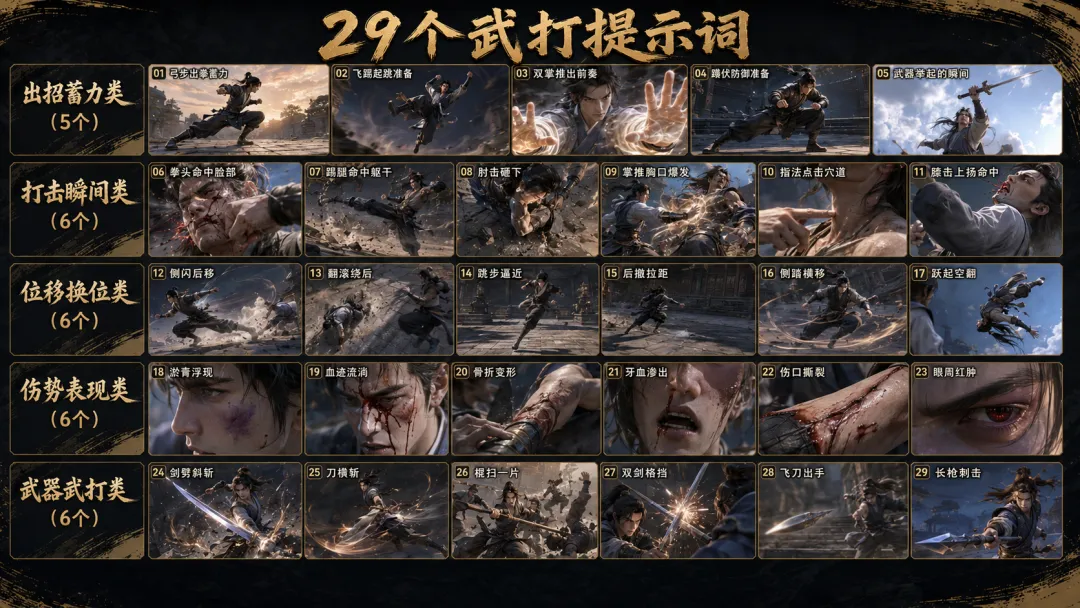




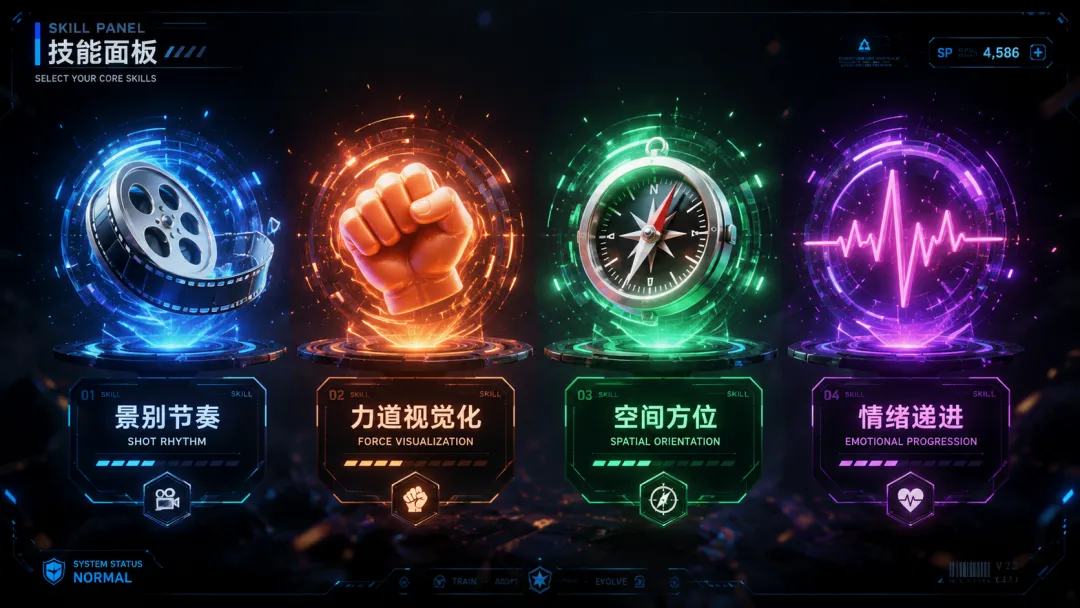
远景:展示整体空间和多个角色位置
全景:展示全身动作和位移
中景:展示招式对决
近景:展示关键打击瞬间
特写:展示拳脚接触点和血液/伤痕
重击:火花、血迹、木屑、烟尘
肉击:汗珠、肌肉线条、汗湿衣服
脆击:玻璃碎、骨头裂痕、硬物碎片
飘逸:衣角飘动、发丝飞扬、尘土旋涡
摄像机位置固定
角色A始终在画面左侧
角色B始终在画面右侧
攻击方向统一:左手从左到右,右手从右到左
开场:试探性轻触(双方摸底)
中段:真实对抗(开始认真)
高潮:全力爆发(不死不休)
结尾:胜负已分(一方倒地或逃离)



出招蓄力类
打击瞬间类
位移换位类
伤势表现类
武器武打类
弓步出拳蓄力:wide shot of martial artist in fighting stance, left leg forward, right arm cocked back, tension visible in shoulder muscles, dramatic side lighting, anticipation moment before strike 飞踢起跳准备:medium shot of character jumping upward, both arms raised for spinning kick, right leg extended, motion blur on trailing leg, dynamic pose in mid-air 双掌推出前奏:close-up of character with both palms thrust forward, chi energy gathering around hands, glowing aura, intense concentration on face, wind blowing robe flutters backward 蹲伏防御准备:low angle shot of character in defensive crouch, both fists raised in guard position, eyes focused on opponent, weight shifted to back foot, tension in muscles 武器举起的瞬间:medium shot of character raising sword overhead, blade catching light, muscles tensed in both arms, dramatic silhouette against bright sky background
拳头命中脸部:close-up of fist impact on face, skin distortion, blood splatter radiating from contact point, motion blur on punch trajectory, slow motion effect, visceral realism 踢腿命中躯干:medium shot of side kick landing on opponent's ribcage, foot driving forward, opponent's body bending from impact, dust cloud at contact point, powerful and decisive 肘击砸下:top-down close-up of elbow descending toward ground, target area showing deformation from force, surrounding debris scattering outward, shadow of arm creating dramatic framing 掌推胸口爆发:medium shot of palm strike to chest, victim being lifted off ground from impact, clothes billowing from force, energy wave visible in surrounding air, dynamic power transfer 指法点击穴道:extreme close-up of fingertip touching pressure point on neck, subtle nerve activation visible, minimal but precise movement, clinical accuracy, tension in single point of contact 膝击上扬命中:close-up from below of knee driving upward, impact point under chin, head snapped back from force, split second capture of violence
侧闪后移:side view of character dodging sideways, body leaning back at sharp angle, attack passing through previous position, controlled retreat motion, floor dust kicked up 翻滚绕后:aerial top view of character performing forward roll, legs tucking tight, emerging on opposite side, momentum preserved through the movement, fluid and athletic 跳步逼近:medium shot of character advancing with hopping steps, weight forward, fists protecting face, aggressive forward pressure, intimidating approach 后撤拉距:wide shot of character stepping backward creating distance, arms extended maintaining reach, calculating distance for counterattack, defensive positioning 侧踏横移:low angle tracking shot of character moving laterally, both feet performing side steps, staying facing forward, circle walking around opponent, tactical positioning 跃起空翻:slow motion shot of character performing backflip, body rotating backward in complete circle, legs extended at apex, landing in ready stance, aerial dominance display
淤青浮现:close-up of cheek showing bruise forming, skin discoloration spreading in real time, tender swelling beginning, pain slightly visible in expression, subtle damage accumulation 血迹流淌:extreme close-up of blood streaming from cut on forehead, single stream running down face, gravity affecting trajectory, red against pale skin, raw and visceral 骨折变形:close-up of limb showing abnormal angle after break, bone possibly visible through skin, immediate swelling, viceral shock in subject's eyes, graphic injury detail 牙血渗出:close-up of character with blood trickling from corner of mouth, evidence of internal damage from blunt trauma, grimace of pain, mixed with defiance, fighting spirit despite injury 伤口撕裂:medium close-up of slash wound on arm, edges separated by deep cut, subcutaneous tissue visible, blood pooling in wound bed, pain and determination simultaneously expressed 眼周红肿:close-up of swollen eye bruising in real time, orbital area turning purple, eyelid drooping from swelling, vision impairment visible, cumulative damage showing
剑劈斜斩:medium shot of sword cutting diagonally downward through frame, blade angle at 45 degrees, target splitting in half along cut line, metallic glint on blade edge, decisive slash 刀横斩:wide shot of horizontal sword slash cutting across screen, blade parallel to ground, force of swing creating air distortion wave, target at center, pure cutting power 棍扫一片:wide shot of staff sweeping through group, wooden weapon passing through multiple targets, all falling in sequence from single strike, overwhelming force demonstration 双剑格挡:close-up of two blades crossed in guard position, sparks flying from friction point, tension in both characters' arms, steel grinding against steel, clash of equal opponents 飞刀出手:POV shot from thrower's perspective, blade spinning toward target, lethal trajectory through air, motion blur on rapidly rotating knife, precision and lethality combined 长枪刺击:medium shot of spear thrusting forward, tip aimed at opponent's chest, both hands extending weapon, tip leading motion, simple direct penetrating attack, focused and deadly

已关注
关注
重播 分享 赞
已关注
关注
重播 分享 赞


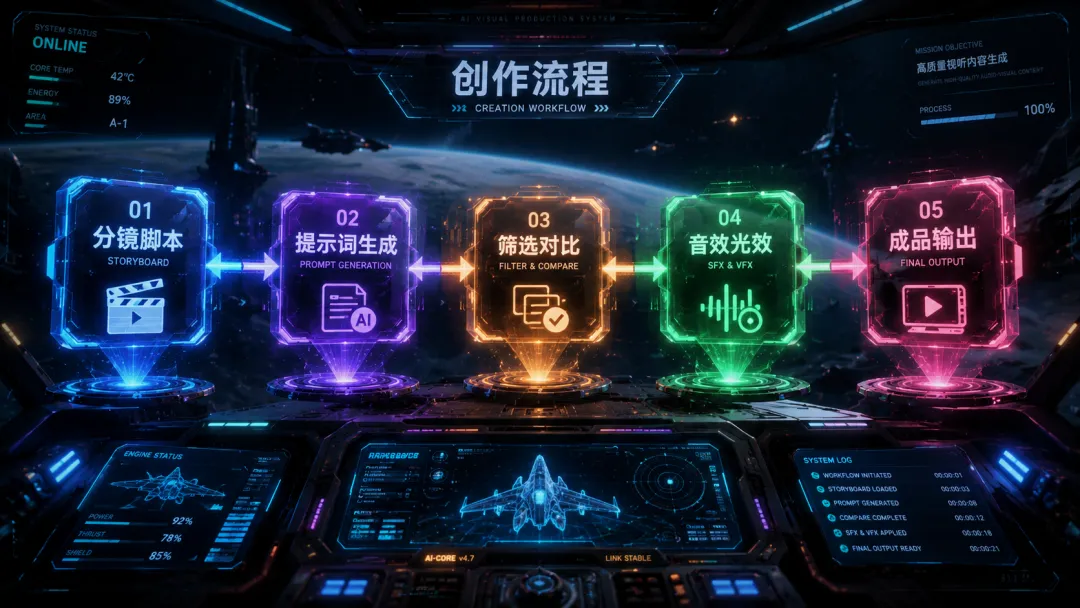
分镜1:远景建立,角色A和B在废弃工厂两端对峙,距离10米,夜戏 分镜2:中景试探,两人缓慢靠近,开始出招试探,弓步出拳蓄力 分镜3:近景交手,拳头命中脸部,血迹流淌 分镜4:位移换位,侧闪后移,跳步逼近
在命中瞬间加0.5秒慢动作
在位移瞬间加运镜效果
在情绪转折点加BGM鼓点
出拳:风声+冲击力
命中:肉击声/钝器声
位移:脚步+衣服摩擦声
武器:金属碰撞/撕裂声
重击:加闪光
武器碰撞:加火花
情绪爆发:加镜头光晕