 夜雨聆风
夜雨聆风各位CATTIer,周末的考试感觉如何?今天我们来复盘一下一二三级笔译英译汉科目的真题。
01
三级笔译
三级笔译的考题涉及物种灭绝、生物多样性、基因编辑技术等话题。全文如下:
上下滑动阅读更多内容
Over the past week, the media have been inundated with news of the “de-extinction” of the dire wolf — a species that went extinct about 13,000 years ago. The breakthrough has been achieved by Colossal Biosciences, a multibillion-dollar United States company that claims their goal is to restore biodiversity through the de-extinction of species. The project is being debated and marketed as a conversation win. But does this technology really have the best interests of conservation in mind? We argue as ecologists that genetic advancements like these, while they are major scientific and technological feats, still risk minimizing the severity of the current extinction crisis. lmportantly, they take away focus from proven conservation efforts that are needed to protect the biodiversity that remains.
First, it is important to recognize that the three “dire wolf” pups created are not actually dire wolves. Colossal carried out 20 edits in 14 genes of the grey wolf genome to create their “dire wolves” using a genetic technique called CRISPR-Cas9. The grey wolf’s genome is 2.4 billion base pairs long. Would we consider a chimpanzee, with which we share 98.8% of our genome, to be human after 20 edits? The reality is that there are three slightly modified grey wolves.
This de-extinction project has had millions of dollars poured into it-amounts of money most conservation programs could only dream of. There are proven solutions to help reverse biodiversity loss: habitat protection and restoration, the control of invasive species and the phasing out of fossil fuels. However, those solutions are not slickly marketed as shiny, techno-fix packages like de-extinction. Instead, they are heavily underfunded.
Promoting extinction as reversible risks downplaying its gravity and legacy. Headlines like the one that appeared on the front cover of TIME magazine-with the word “extinct” crossed out seed a false hope that no matter what environmental damage is done, species loss can be easily undone. The risk is that de-extinction will be used as an ultimate of set for any environment impact. It is what makes fighting, biodiversity loss such an urgent concern, so much so that people risk their lives to prevent it, with 150 wildlife rangers dying each year around the world in their fight to protect endangered species. Framing extinction as temporary creates false hope and undermines motivation for real conservation action.
We might already be seeing this happen in response to the “de-extinction” of the dire wolf. Interior Secretary of the US administration, Doug Burgum, praised the new biotechnology advancement and used it as an argument for the removal of the US Endangered Species Act. What good is bringing back species if there are no protective laws to address the drivers of their declines? It is deeply ironic that while millions are being spent recreating a dire wolf proxy, its cousin, the grey wolf, is heavily persecuted globally, other predators are affected too. In Australia, the dingo, which has been show to suppress invasive cats and red foxes, helping native biodiversity, is also heavily persecuted.
If we can’t safeguard or protect habitat for apex predators today, in ecosystems that are already under immense pressure, what kind of world would we be bringing extinct species back into? Up to 150 species are considered to go extinct every day. No amount of genetic tech will solve this unless we address the root causes: habitat destruction, over-exploitation and climate change. The de-extinction of the dire wolf may sound like a conservation breakthrough, but it risks distracting us from the protection of our current living species. This approach turns biodiversity conservation into a billionaire's Jurassic Park fantasy instead of addressing the crisis we already know how to fix.
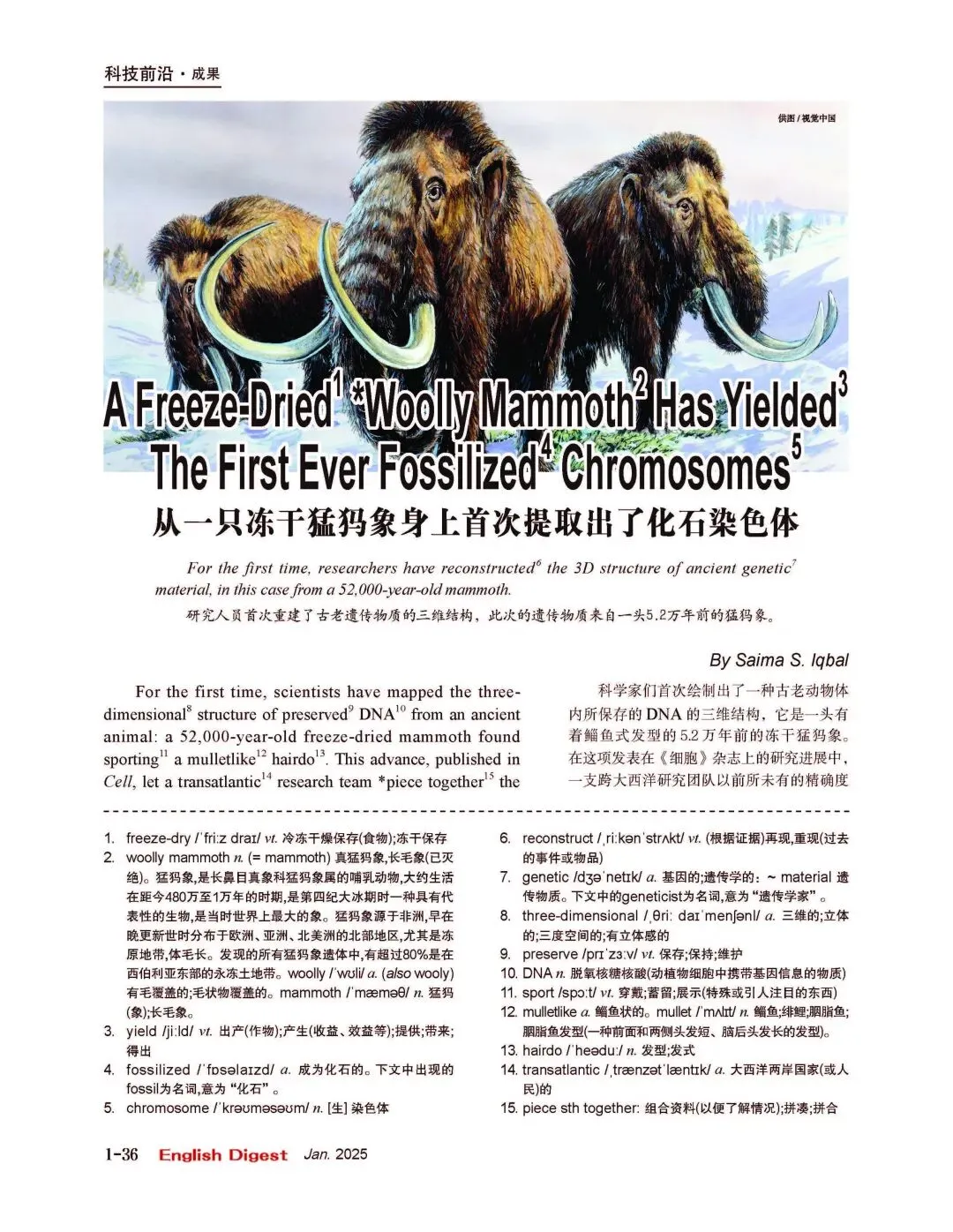
《英语文摘》杂志的科技栏目中经常涉及有关基因组的文章。
比如,2025年1期的一篇文章讲述了科学家从距今5.2万年前的冻干猛犸象身上成功拼出猛犸象的基因组,为探索灭绝物种开辟了可能性。
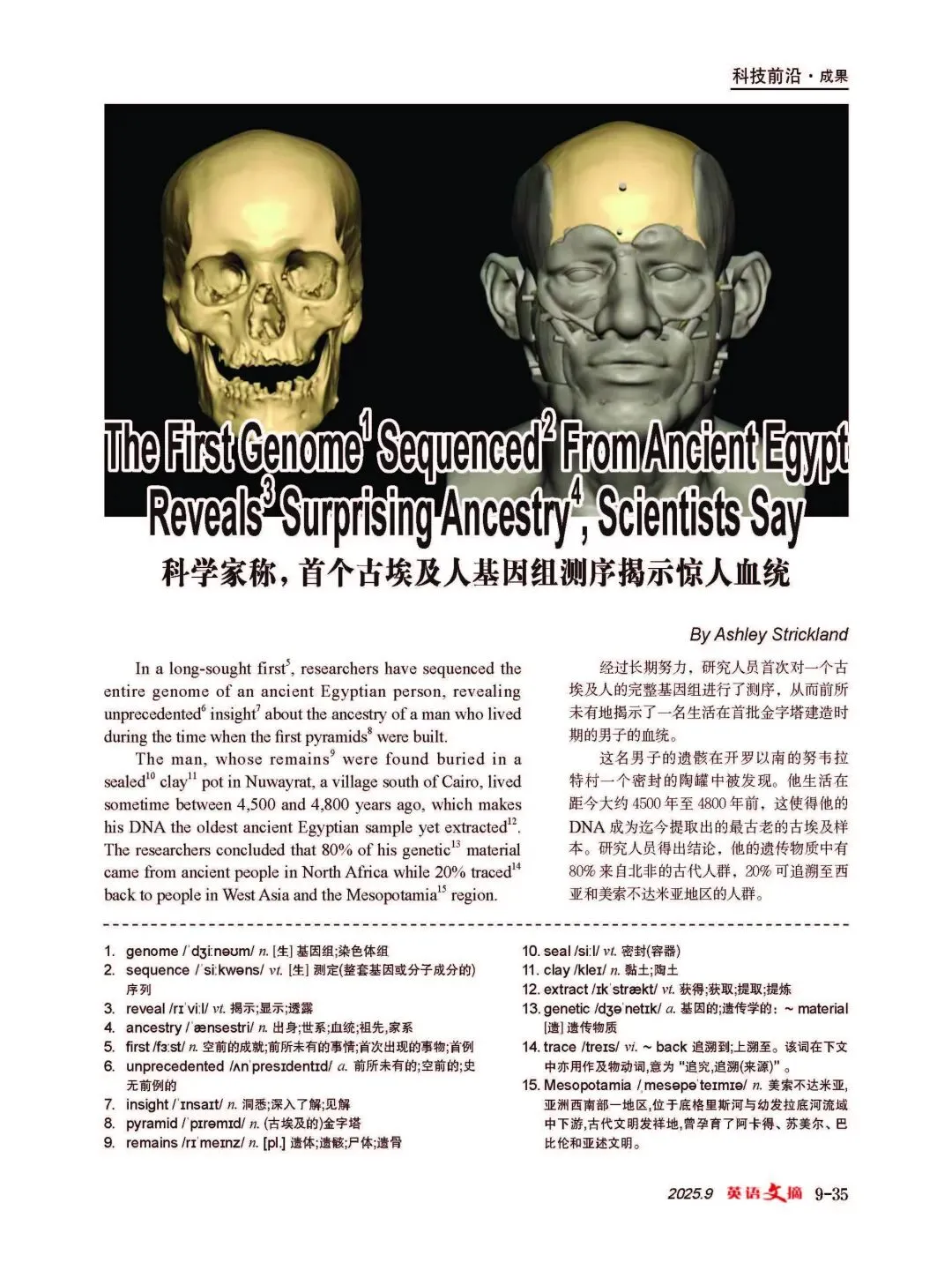
2025年9期的科技文章讲述了研究人员对一个古埃及人的基因组进行了测序,揭示了其遗传背景。
02
二级笔译
二级笔译的第一篇英译汉内容是德国经济情况。全文如下:
上下滑动阅读更多内容
According to Germany’s Federal Statistical Office (Destatis), output in Germany fell slightly in the third quarter, increasing the risk of a recession in Europe’s biggest economy. And its GDP dropped by 0.1 percent in the July-to-September period compared with the previous quarter, when it grew by 0.1 percent.
Though investment by companies into machinery and equipment made a positive contribution to GDP, a fall in consumer spending drove the decline. The data bodes ill for the entire area that uses the euro because Germany is the largest of its 20 economies. Germany’s economy is once again teetering on the brink of a technical recession. A technical recession is defined as two consecutive quarters of declining output.
The German economy has been flirting with recession for almost a year. GDP shrank in the final three months of 2022 before stagnating in the first quarter of this year. (An initial estimate by the statistics office has shown two consecutive quarters of declining output)
Economists say the picture is unlikely to improve soon, as the country’s vast manufacturing sector grapples with weak Chinese demand, high energy costs and painful interest rate hikes. Companies in the sector are shedding jobs at the fastest rate in three years, as new orders decline and confidence remains deeply negative.
There was better news on inflation. Consumer prices rose by 3 percent on average in October compared with a year ago, according to an initial estimate. This marked a sharp slowdown from a rate of 4.3 percent in September.
While Germany’s economy may be particularly hard-hit, business activity in the rest of the euro area has also been lackluster and economists think a period of stagnation, or even a mild recession is looming in the region. A recent survey of companies in the eurozone’s manufacturing and services sectors signaled a steep decline in output in October. The outlook for demand for goods and services also worsened.
Still, third-quarter GDP data in the euro area is a “mixed bag so far”. While Germany and Austria contracted, Belgium and Spain grew strongly. This makes it likely that euro zone GDP did not contract in the third quarter — but a small decline in the fourth quarter is a realistic prospect.
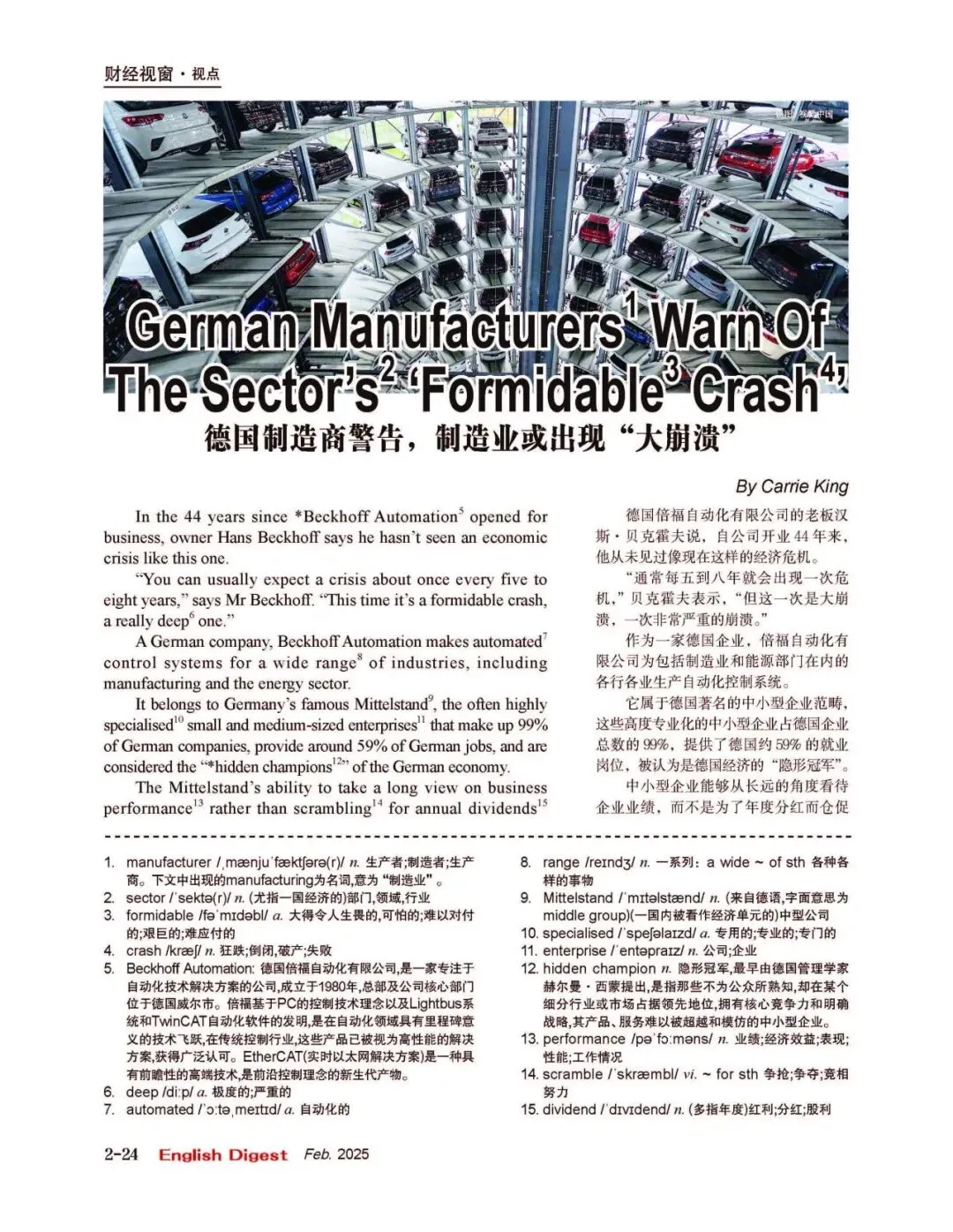
《英语文摘》2025年2期的“财经视窗”栏目文章介绍了德国制造业可能出现大崩溃,分析了德国企业面临的问题。
二笔英译汉的第二篇是有关翻译和误译的历史文化类文章。全文如下:
上下滑动阅读更多内容
Translation is the silent waiter who gets noticed only when he makes mistakes. Sometimes these are relatively minor errors.But history is littered with more consequential mistranslations — erroneous, intentional or simply misunderstood. For a job that often involves endless hours poring over books or laptop screens. Translation can prove surprisingly hazardous.
Nikita Khrushchev’s infamous statement in 1956 — “We will bury you” ushered in one of the Cold War's most dangerous phases, one rife with paranoia and conviction that both sides were out to destroy the other. But it turns out that’s not what he said, not in Russian, anyway. Khrushchev’s actual declaration was “We will outlast you” prematurely boastful, perhaps, but not quite the declaration of hostilities most Americans heard, thanks to his interpreter’s mistake.
The response of Kantaro Suzuki, prime minister of Japan, to an Allied ultimatum in July 1945 just days before Hiroshima was conveyed to Harry Truman as “silent contempt”, when it was actually intended as “No comment. We need more time.” Japan was not given any.
And the events of Sept. 11, and everything that followed, might well have been averted had the Arabic-language messages that American intelligence intercepted on Sept. 10 been processed sooner than the 12th — a matter less of misreading than of personnel shortages, but a failure of translation nonetheless.
These are recent instances, but examples stretch back to antiquity. The Bible, reportedly the most translated book of all time, has been gotten not only the longest-running debates about translation, including the endless war between fidelity and felicity, but also some notable misconceptions.
When Jerome, the patron saint of translators, rendered the Bible into Latin, he introduced a pun that created one of the most potent symbols of Christian iconography, turning the Tree of the Knowledge of Good and Evil into the tree of apples.
Of course, “mistranslation” is often in the eye of the beholder, and its consequences can range from the philosophical to the fatal. A populist English translation of the New Testament by the 16th-century scholar William Tyndale got him executed by the clergy for heresy.
More recently, the Armed Forces Journal reported in 2011 that interpreters in Iraq were “10 times more likely to die in combat than deployed American or international forces.” Perhaps, in a further twist on the old Italian pun “translator, traitor”, neither the troops they were interpreting for nor the enemy they were speaking to had complete faith in what they related.
和经济、科技等话题不同,历史、文化类话题内容覆盖范围较广,考生很难单凭考前的集中学习掌握所有可能涉及的话题。因此,重点在于平时要不断积累。
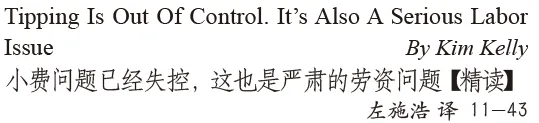
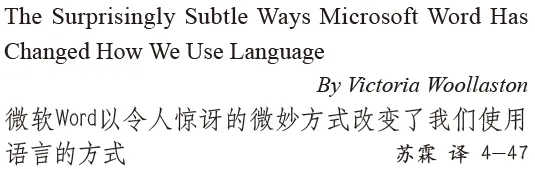
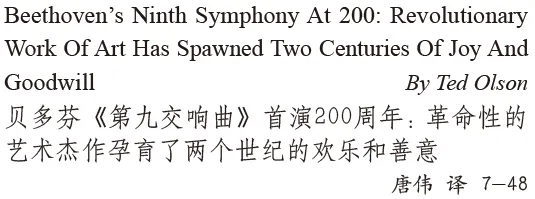
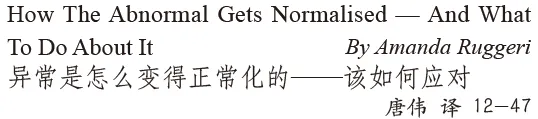
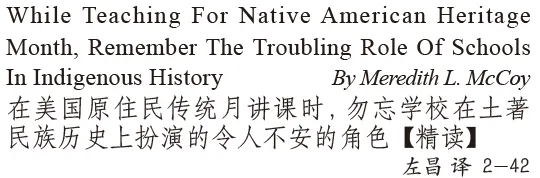
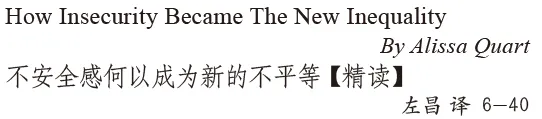
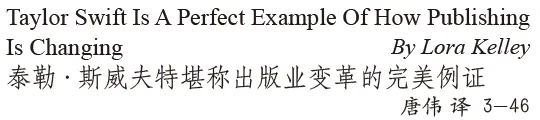
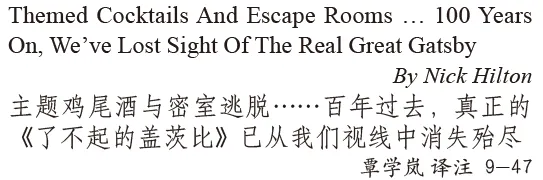
《英语文摘》杂志每期会刊登两篇文化类文章,其中一篇是精读文章。文章涉猎广泛,涵盖了历史、社会、语言、文学、艺术、心理、种族等话题。

03
一级笔译
一级笔译英汉翻译连续两年考金融话题,本文讲的是中央银行(美联储)的量化紧缩、资产负债表操作等,选自《经济学人》,原文如下(考试内容有删减):
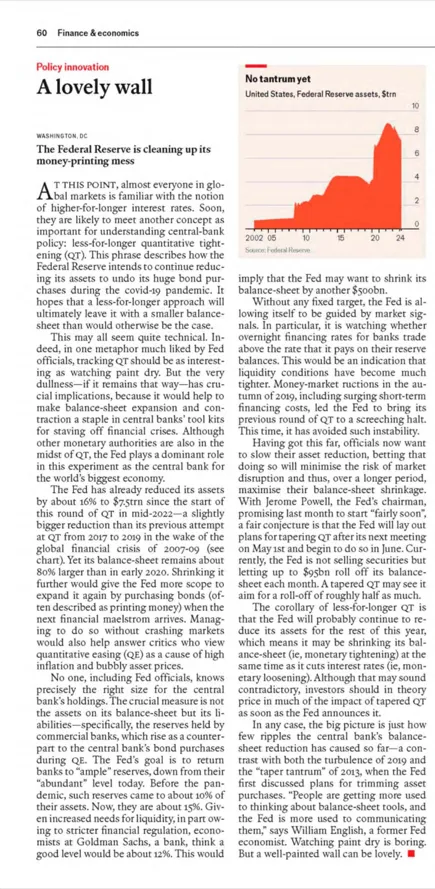
本文是非常专业的金融类文章,不光出现了大量的金融术语,整篇文章也需要考生了解其背后的概念和理论,否则极易出现误译。
《英语文摘》杂志的“财经视窗·透视”栏目的选材和CATTI考试的内容高度契合:
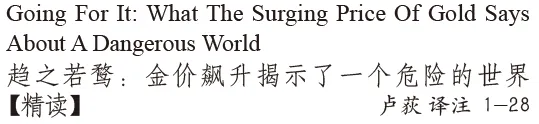
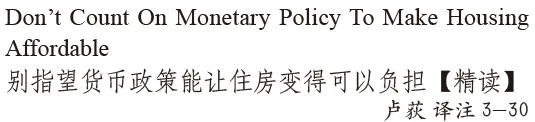

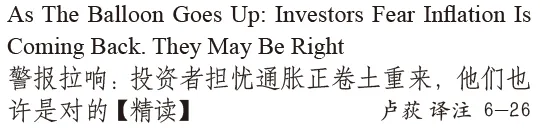
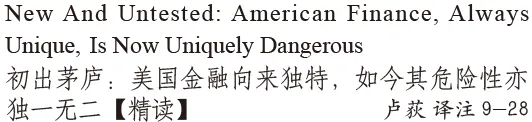
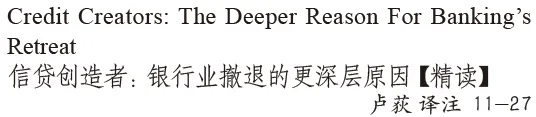
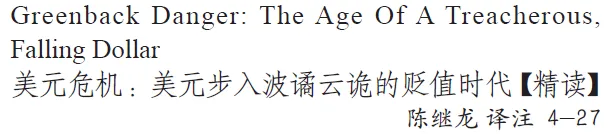
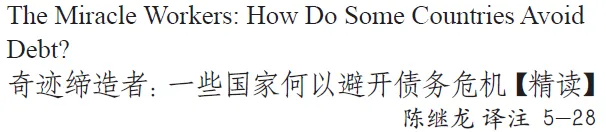
该栏目的每篇文章不仅提供专业精准的译文,还带有细致的注释和背景知识,能够帮助读者理解财经知识。
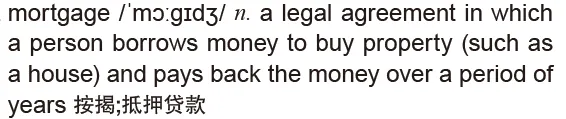
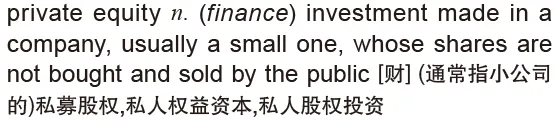
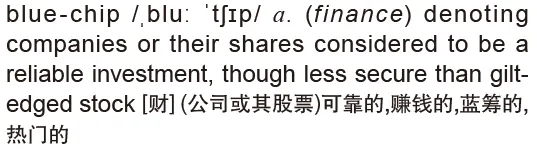
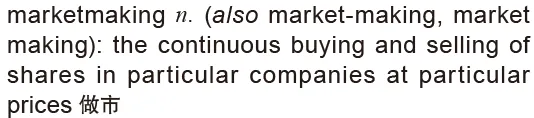
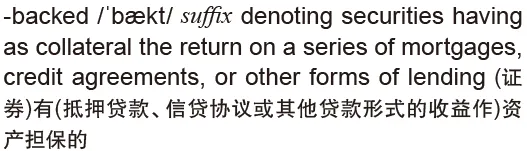
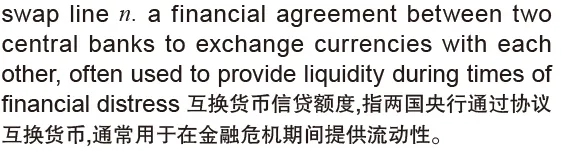
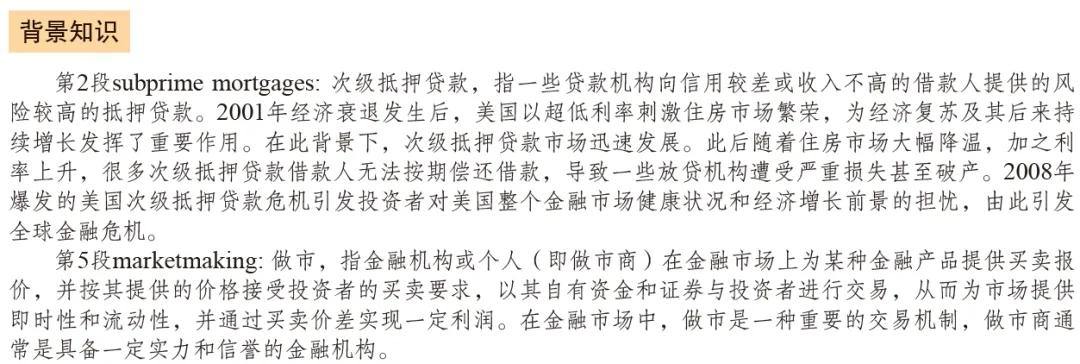
《英语文摘》杂志栏目设置多样,话题覆盖全面。每篇文章均提供准确地道的汉语译文,读者可以先自己练习,再与译文对照,改进自己译文中的问题。用好这本杂志,会让你在CATTI考场上游刃有余。
点击下方卡片购买《英语文摘》杂志
点击下方卡片购买CATTI备考用书