 夜雨聆风
夜雨聆风— UVM 源码精读系列 - Day 4 —
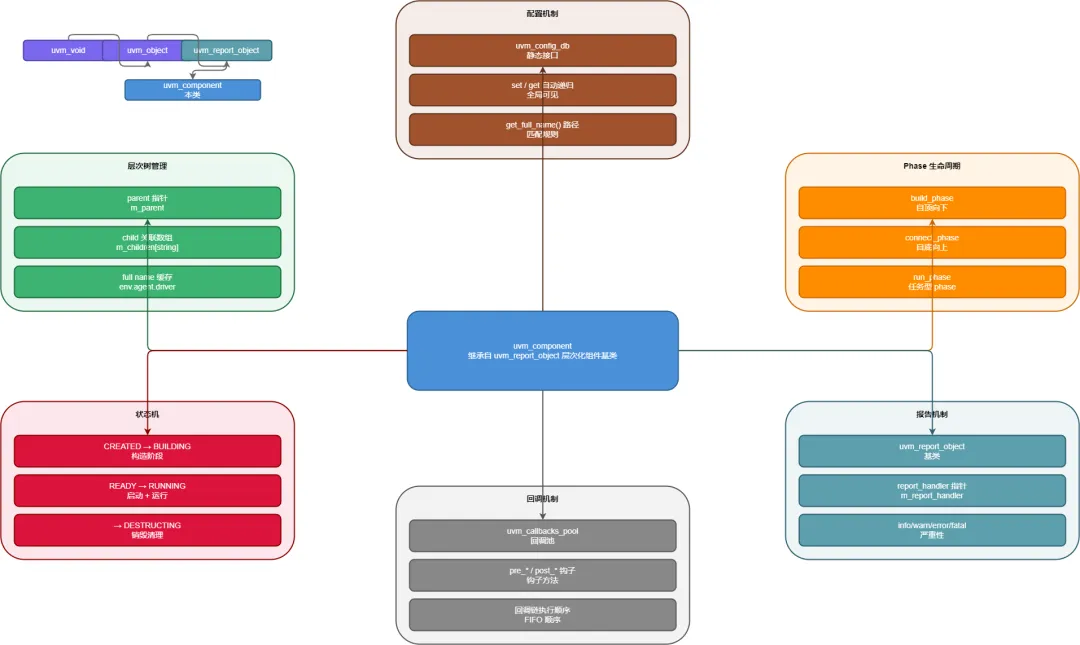 uvm_component 核心架构与生命周期
本期重点
uvm_component 的层次结构、parent-child 关系、build/connect/end_of_elaboration 方法
一、关键特性
- 继承自 uvm_report_object
:`uvm_component` 在 `uvm_object` 基础上增加了报告功能和层次化管理能力,是所有可层次化 UVM 组件(agent、driver、monitor、env、test)的基类 - 双亲关联树结构
:每个组件通过 `m_parent` 指针和 `m_children[string]` 关联数组维护 parent-child 关系,形成一棵以 `uvm_top` 为根的完整验证平台拓扑树 - 全名缓存机制
:`m_name` 字段在构造时一次性拼接完整层次名(如 `env.agent.driver`),避免运行时反复字符串拼接的性能损耗 - Phase 生命周期钩子
:提供 `build_phase`、`connect_phase`、`end_of_elaboration_phase`、`run_phase` 等虚方法作为标准生命周期扩展点,框架按自顶向下或自底向上顺序自动调度 - 构建时合法性检查
:`new()` 中检测 `build_phase` 是否已结束,禁止在 elaboration 之后动态创建组件,确保层次结构在运行前完全固化
二、源码分析
1. 构造函数:new() 的层次注册与合法性校验
function uvm_component::new (string name, uvm_component parent);super.new(name);// If uvm_top, reset name to "" so it doesn't show in full paths then returnif (parent==null && name == "__top__") beginset_name(""); // *** VIRTUALevent_pool = new("event_pool");return;endcs = uvm_coreservice_t::get();top = cs.get_root();// Check that we're not in or past end_of_elaborationbeginuvm_phase bld;uvm_domain common;common = uvm_domain::get_common_domain();bld = common.find(uvm_build_phase::get());if (bld.get_state() == UVM_PHASE_DONE) beginuvm_report_fatal("ILLCRT", {"It is illegal to create a component ('",name,"' under '",(parent == null ? top.get_full_name() : parent.get_full_name()),"') after the build phase has ended."},UVM_NONE);endendif(parent == null) beginparent = top;endif (parent.has_child(name) && this != parent.get_child(name)) begin// error handling ...endm_parent = parent;if (!m_parent.m_add_child(this)) beginm_parent = null;endm_set_full_name();endfunction
`new()` 是 UVM 组件层次化的核心。关键设计有三点:
- 阶段守卫
:通过查询 `uvm_build_phase` 的状态,禁止在 build phase 结束后创建组件。这保证了层次结构在运行前完全确定,避免运行时动态增删组件带来的不确定性。 - 自动挂载到 uvm_top
:若 `parent == null`,自动将 `uvm_root`(即 `uvm_top`)作为父节点,这样所有顶层组件都会挂到统一的根节点下,形成完整的树。 - 双向注册
:先设置 `m_parent`,再调用 `m_parent.m_add_child(this)` 将自身注册到父节点的 `m_children` 中,最后调用 `m_set_full_name()` 构建全名。
2. m_add_child:双索引保障拓扑一致性
functionbituvm_component::m_add_child(uvm_component child);if (m_children.exists(child.get_name()) &&m_children[child.get_name()] != child) begin`uvm_warning("BDCLD",$sformatf("A child with the name '%0s' (type=%0s) already exists.",child.get_name(), m_children[child.get_name()].get_type_name()))return 0;endif (m_children_by_handle.exists(child)) begin`uvm_warning("BDCHLD",$sformatf("A child with the name '%0s' %0s %0s'",child.get_name(), "already exists in parent under name '",m_children_by_handle[child].get_name()))return 0;endm_children[child.get_name()] = child;m_children_by_handle[child] = child;return 1;endfunction
`m_add_child` 使用双索引结构维护子组件:`m_children[string]` 按名称索引,`m_children_by_handle[uvm_component]` 按句柄索引。这种设计的意图是:
`m_children` 支持通过名称快速查找(`get_child(name)`) `m_children_by_handle` 防止同一对象被重复添加(即使改名) 两者结合可检测"同名不同对象"和"同对象不同名"两种非法情况
3. m_set_full_name:全名缓存与级联更新
functionvoiduvm_component::m_set_full_name();uvm_root top;if ($cast(top, m_parent) || m_parent==null) beginm_name = get_name();endelse beginm_name = {m_parent.get_full_name(), ".", get_name()};endforeach (m_children[c]) beginuvm_component tmp;tmp = m_children[c];tmp.m_set_full_name();endendfunction
`m_set_full_name()` 实现了延迟全名计算 + 级联传播。当组件名称改变或父节点变化时,递归更新自身及所有子节点的 `m_name`。代码注释明确说明了实现选择:"一次性构造 full name,因为 full name 可能经常被用于查找"。这体现了 UVM 在空间换时间上的典型优化——验证平台中 `get_full_name()` 被频繁调用(如配置路径匹配、报告输出),缓存全名避免了重复的字符串拼接。
4. Phase 方法的桥接设计
function voiduvm_component::build_phase(uvm_phase phase);build();endfunctionfunction void uvm_component::connect_phase(uvm_phase phase);connect();return;endfunctionfunction void uvm_component::end_of_elaboration_phase(uvm_phase phase);end_of_elaboration();return;endfunctiontask uvm_component::run_phase(uvm_phase phase);run();return;endtask
注意到 UVM 提供了两套 phase API:`xxx_phase(uvm_phase phase)` 和旧的 `xxx()`。源码中 `build_phase` 直接调用 `build()`,这是向后兼容的桥接层设计。UVM 1.1 时代使用 `build()`/`connect()` 等无参方法,1800.2 标准引入带 `uvm_phase` 参数的 `build_phase` 等。这种桥接让用户既能使用新标准 API,又能兼容旧代码。所有 phase 方法的默认实现都是空的(或仅调用旧版方法),子类通过重写来扩展行为。
5.apply_config_settings:Field Automation 与 Config DB 的桥梁
function void uvm_component::apply_config_settings (bit verbose=0);uvm_resource_types::rsrc_q_t all[string];string name_order[$];uvm_resource_pool rp = uvm_resource_pool::get();config_mode_t mode;mode = apply_config_settings_mode();if (mode & CONFIG_CHECK_NAMES) beginuvm_queue#(uvm_acs_name_struct) names;uvm_field_op op;names = new("names");op = uvm_field_op::m_get_available_op();op.set(UVM_CHECK_FIELDS, null, names);this.do_execute_op(op);op.m_recycle();while (names.size()) beginuvm_acs_name_struct s;s = names.pop_front();if (s.name != "") beginname_order.push_back(s.name);endendend// ... 后续按 name_order 查询 resource pool 并 set_localendfunction
`apply_config_settings` 是 `uvm_config_db#set` 与组件字段之间的自动绑定桥梁。在 `build_phase` 结束时,框架调用此方法:先通过 `UVM_CHECK_FIELDS` 操作收集组件中所有声明了 field automation 的字段名,然后按名称到 `uvm_resource_pool` 中查询匹配的配置资源,最后通过 `set_local` 将资源值注入到对应字段。这实现了"声明即配置"的便捷用法——用户在 `build_phase` 中 `uvm_config_db#(int)::set(this, "agent.driver", "timeout", 100)`,框架自动将 `timeout` 赋给 driver 的同名字段。
三、小结
`uvm_component` 是 UVM 验证平台的骨架节点。它通过 `m_parent`/`m_children` 构建层次树,通过 `m_name` 缓存全名优化查找,通过 `new()` 的阶段守卫保证结构固化,通过双索引注册防止拓扑冲突,通过 `apply_config_settings` 桥接配置数据库。理解 uvm_component 的设计,就是理解 UVM "树状拓扑 + 阶段生命周期 + 配置自动注入"三大核心机制如何交织运作。