文档文本内容
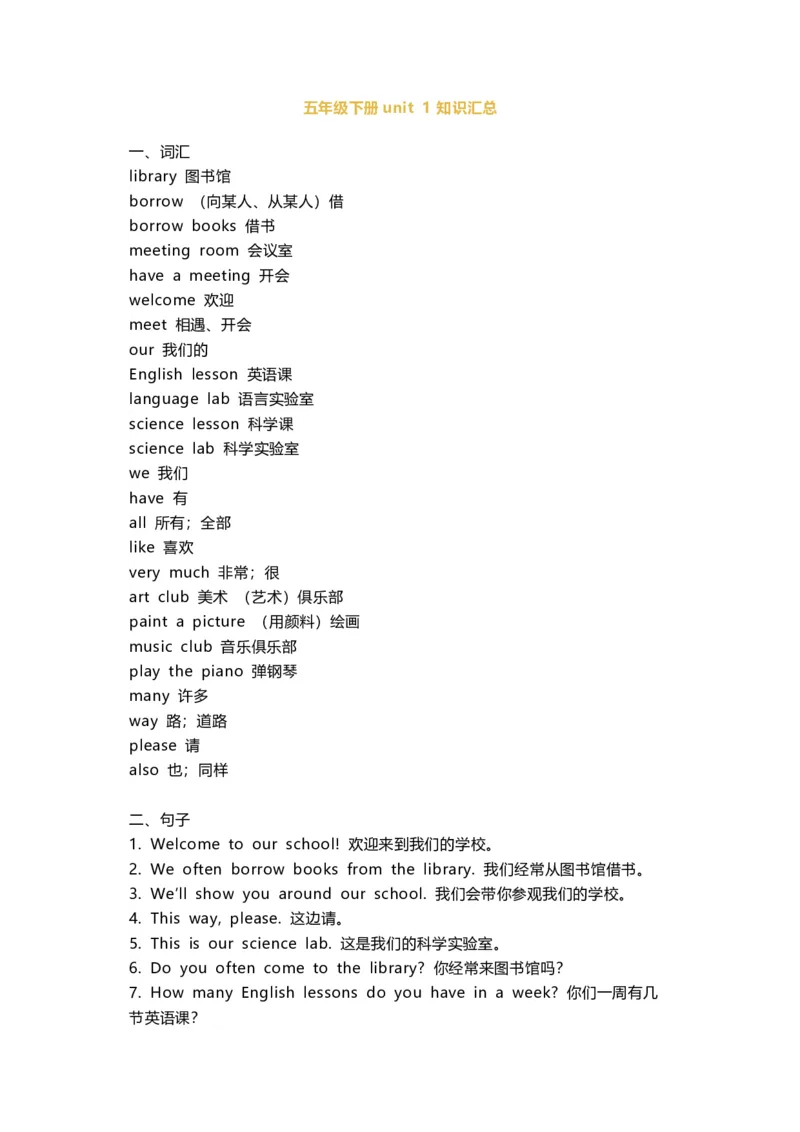
五年级下册unit 1 知识汇总
一、词汇
library 图书馆
borrow (向某人、从某人)借
borrow books 借书
meeting room 会议室
have a meeting 开会
welcome 欢迎
meet 相遇、开会
our 我们的
English lesson 英语课
language lab 语言实验室
science lesson 科学课
science lab 科学实验室
we 我们
have 有
all 所有;全部
like 喜欢
very much 非常;很
art club 美术 (艺术)俱乐部
paint a picture (用颜料)绘画
music club 音乐俱乐部
play the piano 弹钢琴
many 许多
way 路;道路
please 请
also 也;同样
二、句子
1. Welcome to our school! 欢迎来到我们的学校。
2. We often borrow books from the library. 我们经常从图书馆借书。
3. We’ll show you around our school. 我们会带你参观我们的学校。
4. This way, please. 这边请。
5. This is our science lab. 这是我们的科学实验室。
6. Do you often come to the library? 你经常来图书馆吗?
7. How many English lessons do you have in a week? 你们一周有几
节英语课?8. How many science lessons do you have in the science lab? 你们
在科学俱乐部有几节科学课?
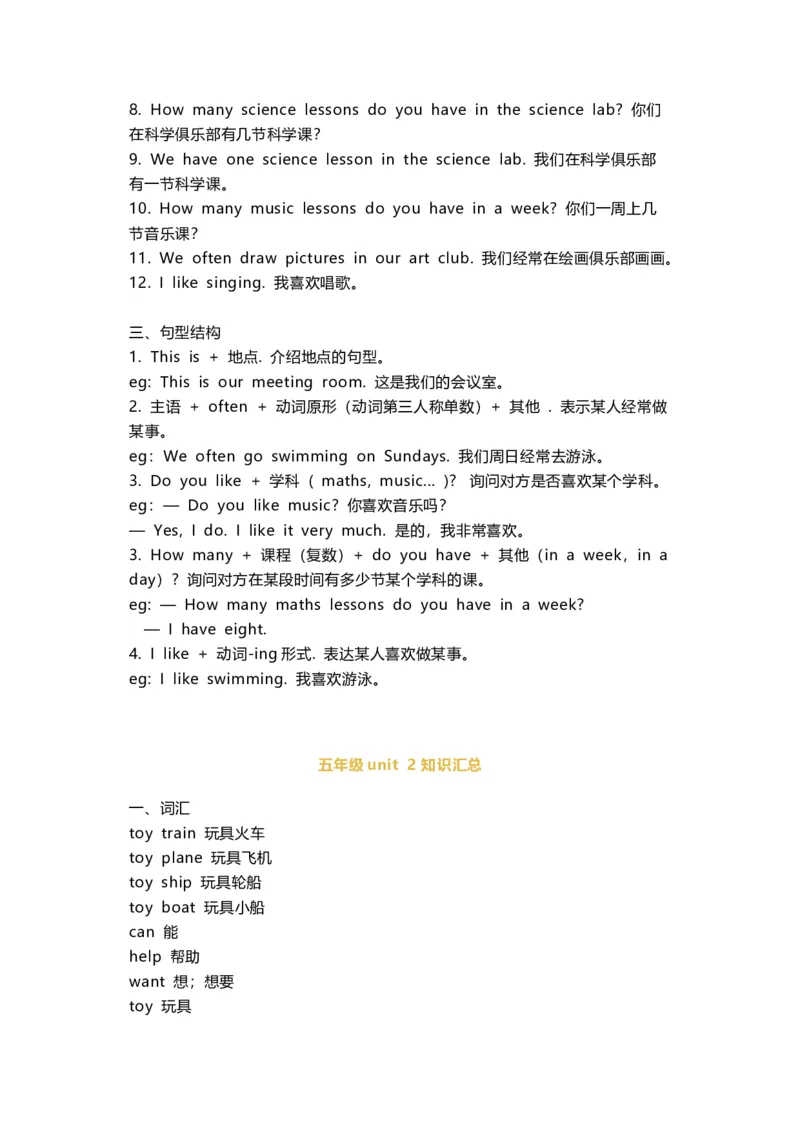
9. We have one science lesson in the science lab. 我们在科学俱乐部
有一节科学课。
10. How many music lessons do you have in a week? 你们一周上几
节音乐课?
11. We often draw pictures in our art club. 我们经常在绘画俱乐部画画。
12. I like singing. 我喜欢唱歌。
三、句型结构
1. This is + 地点. 介绍地点的句型。
eg: This is our meeting room. 这是我们的会议室。
2. 主语 + often + 动词原形(动词第三人称单数)+ 其他 . 表示某人经常做
某事。
eg:We often go swimming on Sundays. 我们周日经常去游泳。
3. Do you like + 学科 ( maths, music... )? 询问对方是否喜欢某个学科。
eg:— Do you like music? 你喜欢音乐吗?
— Yes, I do. I like it very much. 是的,我非常喜欢。
3. How many + 课程(复数)+ do you have + 其他(in a week,in a
day)? 询问对方在某段时间有多少节某个学科的课。
eg: — How many maths lessons do you have in a week?
— I have eight.
4. I like + 动词-ing形式. 表达某人喜欢做某事。
eg: I like swimming. 我喜欢游泳。
五年级unit 2 知识汇总
一、词汇
toy train 玩具火车
toy plane 玩具飞机
toy ship 玩具轮船
toy boat 玩具小船
can 能
help 帮助
want 想;想要
toy 玩具train 火车
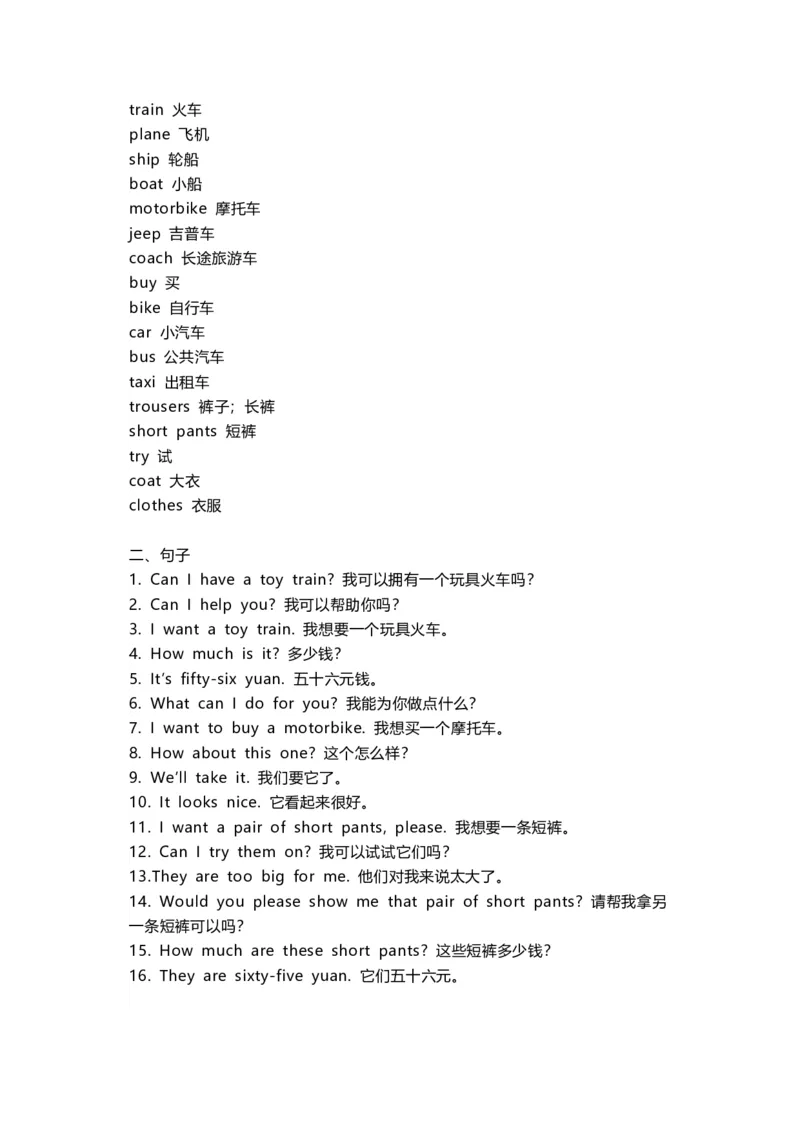
plane 飞机
ship 轮船
boat 小船
motorbike 摩托车
jeep 吉普车
coach 长途旅游车
buy 买
bike 自行车
car 小汽车
bus 公共汽车
taxi 出租车
trousers 裤子;长裤
short pants 短裤
try 试
coat 大衣
clothes 衣服
二、句子
1. Can I have a toy train? 我可以拥有一个玩具火车吗?
2. Can I help you? 我可以帮助你吗?
3. I want a toy train. 我想要一个玩具火车。
4. How much is it? 多少钱?
5. It’s fifty-six yuan. 五十六元钱。
6. What can I do for you? 我能为你做点什么?
7. I want to buy a motorbike. 我想买一个摩托车。
8. How about this one? 这个怎么样?
9. We’ll take it. 我们要它了。
10. It looks nice. 它看起来很好。
11. I want a pair of short pants, please. 我想要一条短裤。
12. Can I try them on? 我可以试试它们吗?
13.They are too big for me. 他们对我来说太大了。
14. Would you please show me that pair of short pants? 请帮我拿另
一条短裤可以吗?
15. How much are these short pants? 这些短裤多少钱?
16. They are sixty-five yuan. 它们五十六元。三、句型结构
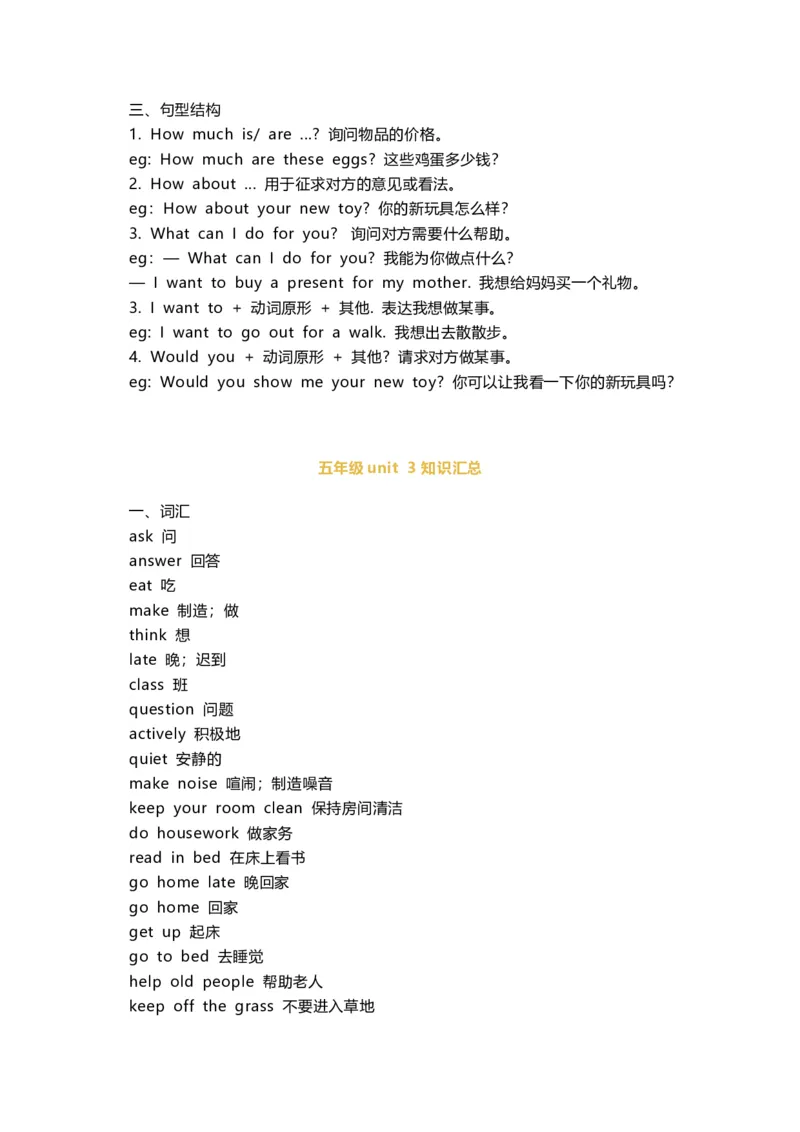
1. How much is/ are ...? 询问物品的价格。
eg: How much are these eggs? 这些鸡蛋多少钱?
2. How about ... 用于征求对方的意见或看法。
eg:How about your new toy? 你的新玩具怎么样?
3. What can I do for you? 询问对方需要什么帮助。
eg:— What can I do for you? 我能为你做点什么?
— I want to buy a present for my mother. 我想给妈妈买一个礼物。
3. I want to + 动词原形 + 其他. 表达我想做某事。
eg: I want to go out for a walk. 我想出去散散步。
4. Would you + 动词原形 + 其他? 请求对方做某事。
eg: Would you show me your new toy? 你可以让我看一下你的新玩具吗?
五年级unit 3 知识汇总
一、词汇
ask 问
answer 回答
eat 吃
make 制造;做
think 想
late 晚;迟到
class 班
question 问题
actively 积极地
quiet 安静的
make noise 喧闹;制造噪音
keep your room clean 保持房间清洁
do housework 做家务
read in bed 在床上看书
go home late 晚回家
go home 回家
get up 起床
go to bed 去睡觉
help old people 帮助老人
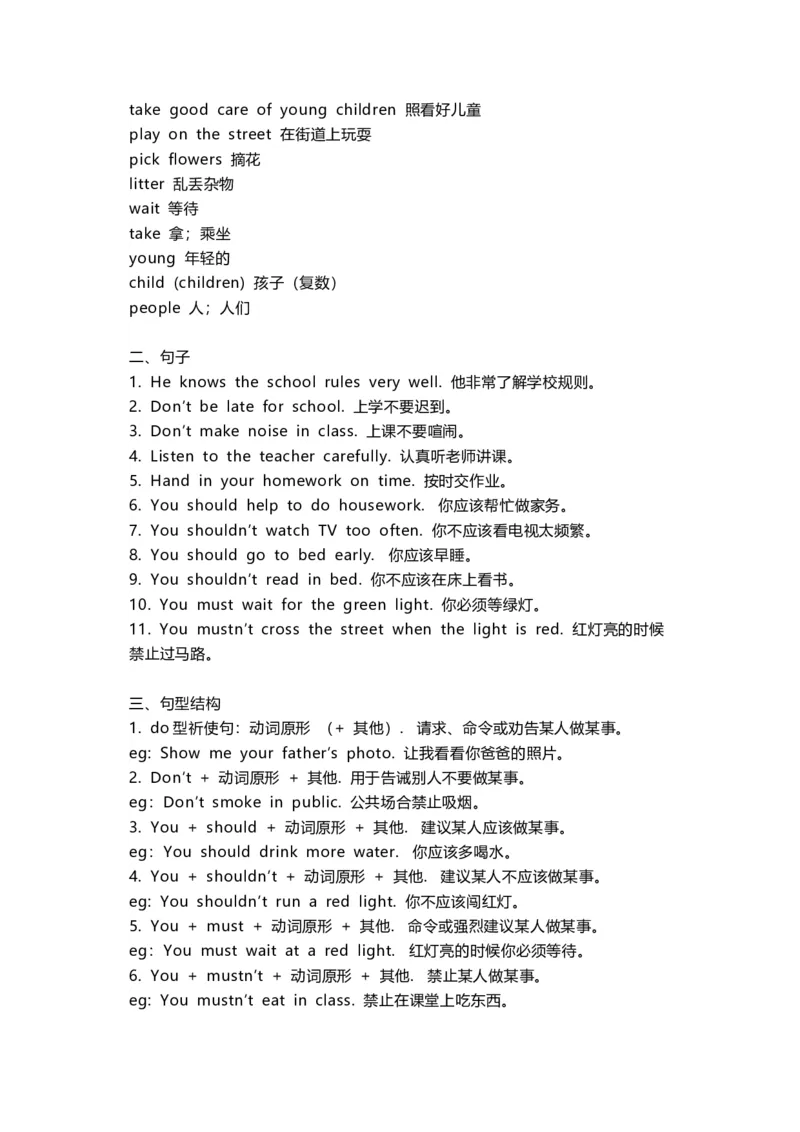
keep off the grass 不要进入草地take good care of young children 照看好儿童
play on the street 在街道上玩耍
pick flowers 摘花
litter 乱丢杂物
wait 等待
take 拿;乘坐
young 年轻的
child (children) 孩子(复数)
people 人;人们
二、句子
1. He knows the school rules very well. 他非常了解学校规则。
2. Don’t be late for school. 上学不要迟到。
3. Don’t make noise in class. 上课不要喧闹。
4. Listen to the teacher carefully. 认真听老师讲课。
5. Hand in your homework on time. 按时交作业。
6. You should help to do housework. 你应该帮忙做家务。
7. You shouldn’t watch TV too often. 你不应该看电视太频繁。
8. You should go to bed early. 你应该早睡。
9. You shouldn’t read in bed. 你不应该在床上看书。
10. You must wait for the green light. 你必须等绿灯。
11. You mustn’t cross the street when the light is red. 红灯亮的时候
禁止过马路。
三、句型结构
1. do型祈使句:动词原形 (+ 其他). 请求、命令或劝告某人做某事。
eg: Show me your father’s photo. 让我看看你爸爸的照片。
2. Don’t + 动词原形 + 其他. 用于告诫别人不要做某事。
eg:Don’t smoke in public. 公共场合禁止吸烟。
3. You + should + 动词原形 + 其他. 建议某人应该做某事。
eg:You should drink more water. 你应该多喝水。
4. You + shouldn’t + 动词原形 + 其他. 建议某人不应该做某事。
eg: You shouldn’t run a red light. 你不应该闯红灯。
5. You + must + 动词原形 + 其他. 命令或强烈建议某人做某事。
eg:You must wait at a red light. 红灯亮的时候你必须等待。
6. You + mustn’t + 动词原形 + 其他. 禁止某人做某事。
eg: You mustn’t eat in class. 禁止在课堂上吃东西。五年级unit 4 知识汇总
一、词汇
have a bad cold 重感冒
have a fever 发烧
have a headache 头痛
have a cough 咳嗽
dear 亲爱的
ill 有病的
bad 严重的;厉害的
afraid 害怕
worry 担心;着急
have a toothache 牙痛
have a stomachache 胃痛
take some medicine 吃点儿药
take a good rest 好好休息
wrong 错的
with 和……一起
head 头
face 脸
ear 耳朵
arm 胳膊
chocolate 巧克力
dragon fruit 火龙果
bring 带来
feel 感觉
get-well card 康复卡
here 这里;在这里
for 为了……;给……
二、句子
1. Kate doesn’t feel well today. Kate今天感觉不好。
2. I’m ill today. 我今天生病了。
3. Don’t worry about your lessons. 别担心你的课程。
4. I’ll help you with your English. 我会帮你学英语。
5. I have a bad cold. 我得了重感冒。6. I’m afraid I can’t go to school today. 我恐怕今天不能去学校了。
7. May I speak to Miss Liu? 我可以跟刘老师通电话吗?
8. This is Miss Liu speaking. 我是刘老师。
9. What’s wrong with you? 你怎么了?
10. I have a headache. 我头疼。
11. Can I go to school tomorrow? 我明天能去学校吗?
12. You should take a good rest. 你应该好好休息。
13. Here is a get-well card for you. 这是给你的康复卡。
14. How are you feeling today? 你今天感觉如何?
15. I feel much better. 我觉得好多了。
三、句型结构
1. May I speak to ..., please? 礼貌地请某人接电话。
eg: May I speak to Susie? 我可以跟苏西通电话吗?
2. I have a/ an ... 表达自己患了什么病。
eg:I have a fever. 我发烧了。
3. Don’t worry about ... 用于劝慰别人。
eg:Don’t worry about your grandma, she will be better. 别担心你的
奶奶,她会好起来的。
4. 主语 + will + 动词原形 + 其他. 表达某人将要做某事。
eg: He will go on a trip. 他要去旅行。
5. How are you feeling ...? 询问某人感觉怎么样?
eg: — How are you feeling today? 你今天感觉怎么样?
— I feel ill today. 我感觉不舒服。
五年级unit 5知识汇总
一、词汇
make a call 打电话
write an email 写电子邮件
wash the clothes 洗衣服
clean the room 打扫房间
tell a story 讲故事
sing a song 唱歌
play the guitar 弹吉他
play the violin 拉小提琴look at the picture 看图片
talk about 谈论
stand 站立
sit 坐下;坐
cousin 表(堂)兄妹;表(堂)姐妹
二、句子
1. Hold on, please. 请稍等。
2. Are you coming here with your parents this morning? 你今天要跟
爸爸妈妈一起来我这里吗?
3. We’re all very busy today. 我们今天都很忙。
4. What are you doing, Lily? 你正在做什么,莉莉?
5. I am cleaning my room. 我正在打扫房间。
6. I’m telling a story. 我正在讲故事。
7. What’s Li Yan doing? 李艳在做什么?
8. She’s singing a song. 她在唱歌。
9. Are you looking at the picture? 你在看那张图吗?
10. Is he looking at the moon? 他在看月亮吗?
三、句型结构
1. This is ... speaking. Can I speak to ... 打电话用语。
eg: This is Lucy speaking. Can I speak to Jack? 我是露西,我可以跟杰
克通电话吗?
2. 主语 + be 动词 ( am, is, are ) + 动词-ing形式 + 其他. 表达某人正在
做某事。
eg:They are reading books. 他们在看书。
3. — What is/ am/ are + 主语 + 动词-ing形式 + 其他? 询问某人正在
做什么。
— 主语 + is/ am/ are + 动词-ing形式 + 其他.
eg:— What is he doing? 他在做什么?
— He is having lunch. 他在吃午饭。
4. Be动词 (am, is, are) + 主语 + 动词-ing形式 + 其他? 询问某人是否正
在做某事。
eg: Are they having a class? 他们正在上课吗?
五年级unit 6 知识汇总
一、词汇play football 踢足球
play volleyball 打排球
play basketball 打篮球
watch the games 观看比赛
game 比赛;游戏
foot (feet) 脚(复数)
football 足球
basketball 篮球
playground 操场
play badminton 打羽毛球
play tennis 打网球
play ping-pong 打乒乓球
play baseball 打棒球
Miss 小姐
Ms 女士
Mr 先生
Mrs 太太
favourite 最喜欢的
sport 运动
do the high jump 跳高
do the long jump 跳远
run fast 跑得快
run 跑;跑步
high jump 跳高
long jump 跳远
二、句子
1. We’re watching the games. 我们正在看比赛。
2. The boys are playing football. 男孩们在踢足球。
3. The girls are playing volleyball. 女孩们在打排球。
4. The teachers are playing basketball. 老师们在打篮球。
5. That’s my favourite sport. 那是我最爱的运动。
6. Can I play it with you? 我可以和你一起玩吗?
7. What are you doing? 你在做什么?
8. We’re playing ping-pong. 我们在打乒乓球。
9. They’re playing tennis. 他们在打网球。
10. Are you watching the high jump? 你们在看跳高吗?11. Are they doing the high jump, too? 他们也在跳高吗?
三、句型结构
1. What are + 主语(复数形式)(you, they...) + 动词-ing形式 + (其
他)? 询问某些人在做什么。
eg: — What are the girls doing? 女孩儿们在干嘛?
— They’re washing clothes. 她们在洗衣服。
2. — Be动词 (Am, Is, Are) + 主语 + 动词-ing形式 + 其他? 询问某人
是否正在做某事。
— Yes, 主语 + be动词./ No, 主语 + be动词 + not.
eg:— Are you listening to music? 你在听音乐吗?
— No, I am not. 不,我没听。