文档文本内容
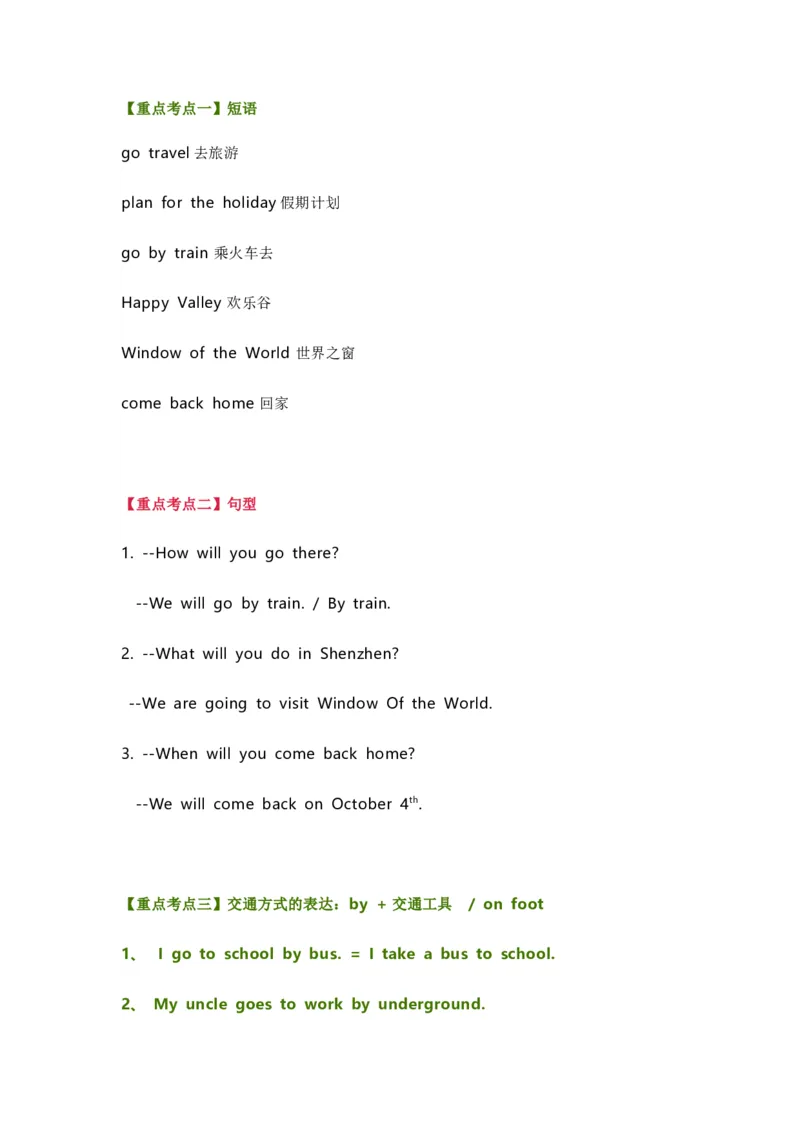
【重点考点一】短语
go travel去旅游
plan for the holiday假期计划
go by train 乘火车去
Happy Valley 欢乐谷
Window of the World 世界之窗
come back home 回家
【重点考点二】句型
1. --How will you go there?
--We will go by train. / By train.
2. --What will you do in Shenzhen?
--We are going to visit Window Of the World.
3. --When will you come back home?
--We will come back on October 4th.
【重点考点三】交通方式的表达:by + 交通工具 / on foot
1、 I go to school by bus. = I take a bus to school.
2、 My uncle goes to work by underground.3、 My aunt goes to school on foot. = My aunt walks to school.
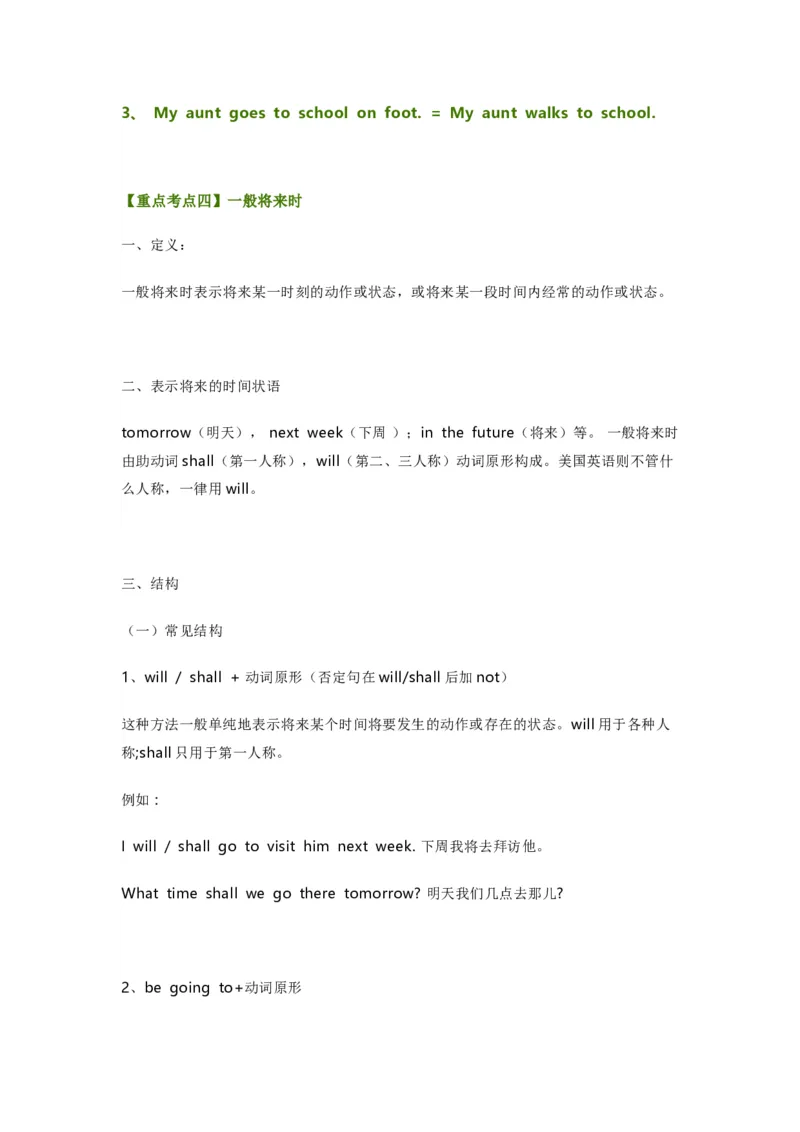
【重点考点四】一般将来时
一、定义:
一般将来时表示将来某一时刻的动作或状态,或将来某一段时间内经常的动作或状态。
二、表示将来的时间状语
tomorrow(明天), next week(下周 );in the future(将来)等。 一般将来时
由助动词shall(第一人称),will(第二、三人称)动词原形构成。美国英语则不管什
么人称,一律用will。
三、结构
(一)常见结构
1、will / shall + 动词原形(否定句在will/shall后加not)
这种方法一般单纯地表示将来某个时间将要发生的动作或存在的状态。will用于各种人
称;shall只用于第一人称。
例如 :
I will / shall go to visit him next week. 下周我将去拜访他。
What time shall we go there tomorrow? 明天我们几点去那儿?
2、be going to+动词原形be going to 相当于一个助动词(其中be有人称和数的变化),与它后面的动词原形一起
构成谓语。用来表示将要发生的动作以及计划、安排和打算要做的事。
例如:
There is going to be a football match this afternoon.今天下午将有一场足球
赛。
I'm going to go to the park. 我将要去公园。
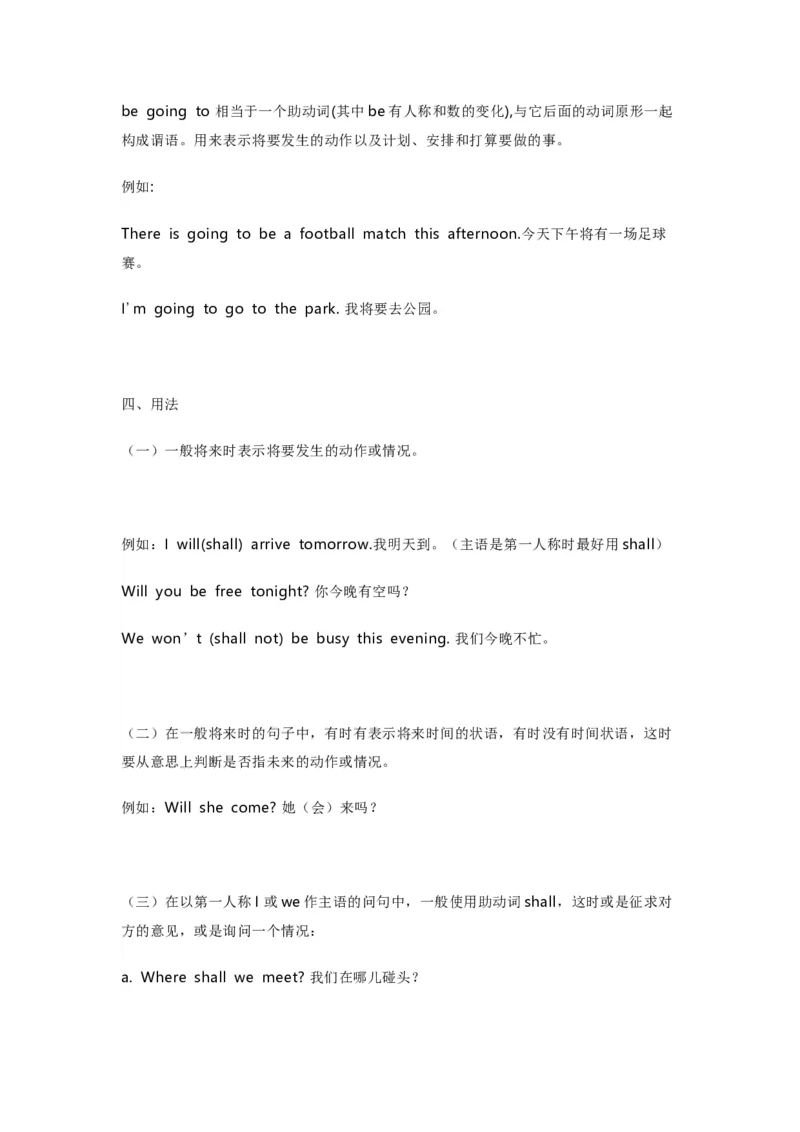
四、用法
(一)一般将来时表示将要发生的动作或情况。
例如:I will(shall) arrive tomorrow.我明天到。(主语是第一人称时最好用shall)
Will you be free tonight? 你今晚有空吗?
We won’t (shall not) be busy this evening. 我们今晚不忙。
(二)在一般将来时的句子中,有时有表示将来时间的状语,有时没有时间状语,这时
要从意思上判断是否指未来的动作或情况。
例如:Will she come? 她(会)来吗?
(三)在以第一人称I 或we作主语的问句中,一般使用助动词shall,这时或是征求对
方的意见,或是询问一个情况:
a. Where shall we meet? 我们在哪儿碰头?b. Shall we have any classes tomorrow?明天我们有课吗?
在这类问句中,近几年来也有不少人用will,特别是在美国。例如:How will I get
there? 我怎么去?
(四)be going to+ 动词原形
a.表示计划、打算、准备做的事。
例如:We are going to putup a building here.我们打算在这里盖一座楼。
How are you going to spend your holidays? 假期你准备怎样过?
b.表示即将发生或肯定要发生的事。例如:
I think it is going to snow. 我看要下雪了。
五、will 与 be going to 的分别
be going to与will两者都可表示将要发生的事、将要去做某事,但它们有如下几点
区别:
1. be going to 表示将要发生的事情,will 表示的时间则较远一些,如:
He is going to write a letter tonight.
He will write a book one day.2. be going to 表示根据主观判断将来肯定发生的事情,will表示客观上将来势必发
生的事情。
He is seriously ill. He is going to die.
He will be twenty years old.
3. be going to 含有“计划,准备”的意思,而 will 则没有这个意思,如:
She is going to lend us her book.
He will be here in half an hour.