文档文本内容
Unit 12 Life is full of the unexpected.
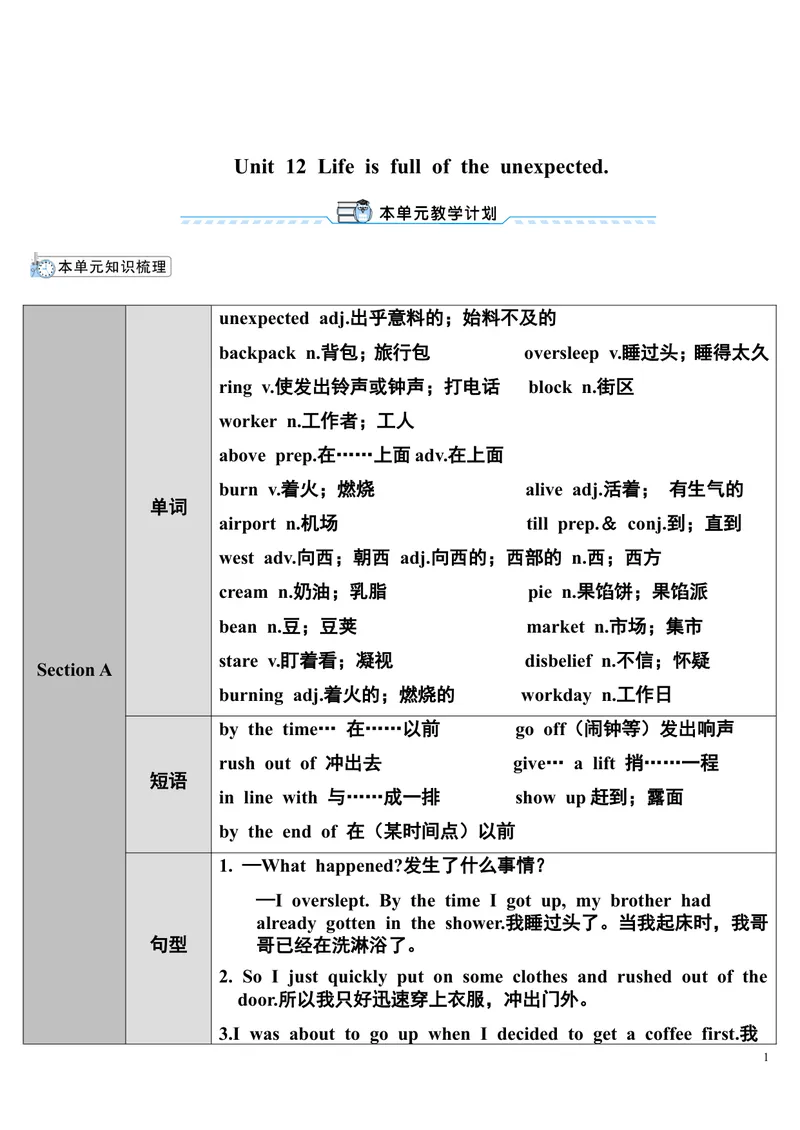
unexpected adj.出乎意料的;始料不及的
backpack n.背包;旅行包 oversleep v.睡过头;睡得太久
ring v.使发出铃声或钟声;打电话 block n.街区
worker n.工作者;工人
above prep.在……上面adv.在上面
burn v.着火;燃烧 alive adj.活着; 有生气的
单词
airport n.机场 till prep.& conj.到;直到
west adv.向西;朝西 adj.向西的;西部的 n.西;西方
cream n.奶油;乳脂 pie n.果馅饼;果馅派
bean n.豆;豆荚 market n.市场;集市
stare v.盯着看;凝视 disbelief n.不信;怀疑
Section A
burning adj.着火的;燃烧的 workday n.工作日
by the time… 在……以前 go off(闹钟等)发出响声
rush out of 冲出去 give… a lift 捎……一程
短语
in line with 与……成一排 show up赶到;露面
by the end of 在(某时间点)以前
1. —What happened?发生了什么事情?
—I overslept. By the time I got up, my brother had
already gotten in the shower.我睡过头了。当我起床时,我哥
句型 哥已经在洗淋浴了。
2. So I just quickly put on some clothes and rushed out of the
door.所以我只好迅速穿上衣服,冲出门外。
3.I was about to go up when I decided to get a coffee first.我
1本打算
上楼,这时我决定先去买杯咖啡。
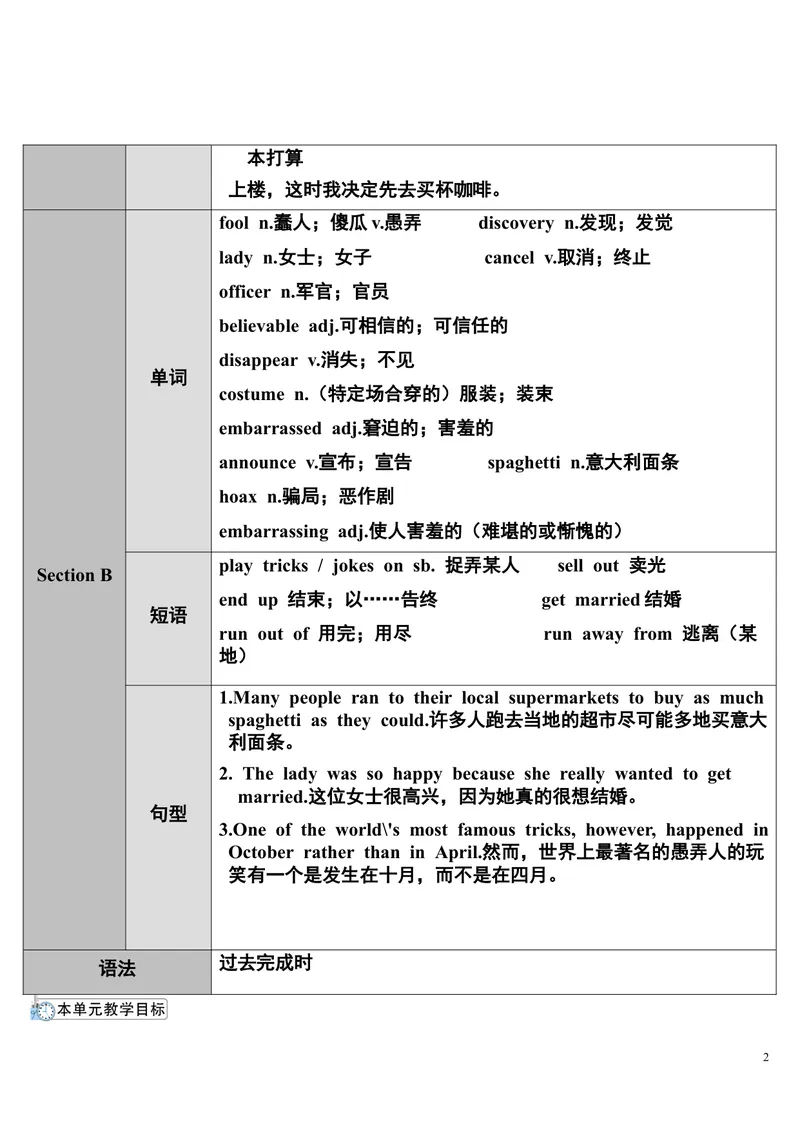
fool n.蠢人;傻瓜v.愚弄 discovery n.发现;发觉
lady n.女士;女子 cancel v.取消;终止
officer n.军官;官员
believable adj.可相信的;可信任的
disappear v.消失;不见
单词
costume n.(特定场合穿的)服装;装束
embarrassed adj.窘迫的;害羞的
announce v.宣布;宣告 spaghetti n.意大利面条
hoax n.骗局;恶作剧
embarrassing adj.使人害羞的(难堪的或惭愧的)
play tricks / jokes on sb. 捉弄某人 sell out 卖光
Section B
end up 结束;以……告终 get married结婚
短语
run out of 用完;用尽 run away from 逃离(某
地)
1.Many people ran to their local supermarkets to buy as much
spaghetti as they could.许多人跑去当地的超市尽可能多地买意大
利面条。
2. The lady was so happy because she really wanted to get
married.这位女士很高兴,因为她真的很想结婚。
句型
3.One of the world\'s most famous tricks, however, happened in
October rather than in April.然而,世界上最著名的愚弄人的玩
笑有一个是发生在十月,而不是在四月。
过去完成时
语法
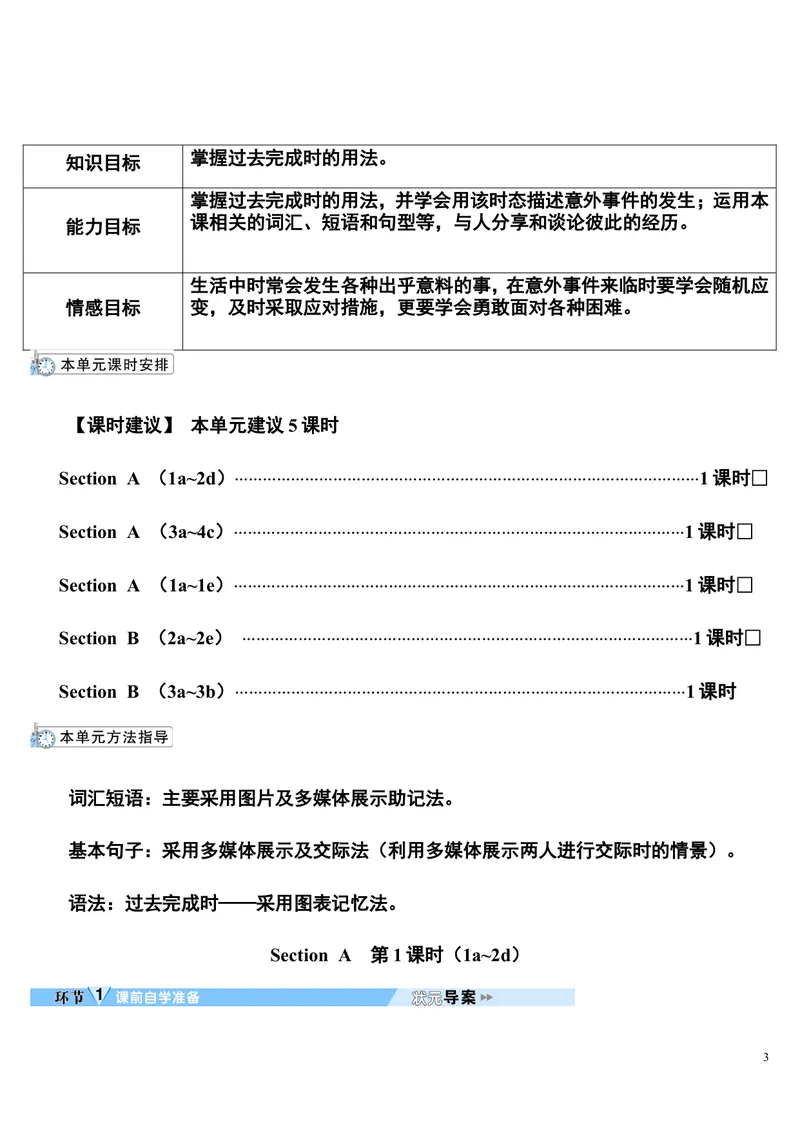
2掌握过去完成时的用法。
知识目标
掌握过去完成时的用法,并学会用该时态描述意外事件的发生;运用本
课相关的词汇、短语和句型等,与人分享和谈论彼此的经历。
能力目标
生活中时常会发生各种出乎意料的事,在意外事件来临时要学会随机应
情感目标 变,及时采取应对措施,更要学会勇敢面对各种困难。
【课时建议】 本单元建议5课时
Section A (1a~2d) ………………………………………………………………………………………1课时
Section A (3a~4c) ……………………………………………………………………………………1课时
Section A (1a~1e) ……………………………………………………………………………………1课时
Section B (2a~2e) ……………………………………………………………………………………1课时
Section B (3a~3b) ……………………………………………………………………………………1课时
词汇短语:主要采用图片及多媒体展示助记法。
基本句子:采用多媒体展示及交际法(利用多媒体展示两人进行交际时的情景)。
语法:过去完成时——采用图表记忆法。
Section A 第1课时(1a~2d)
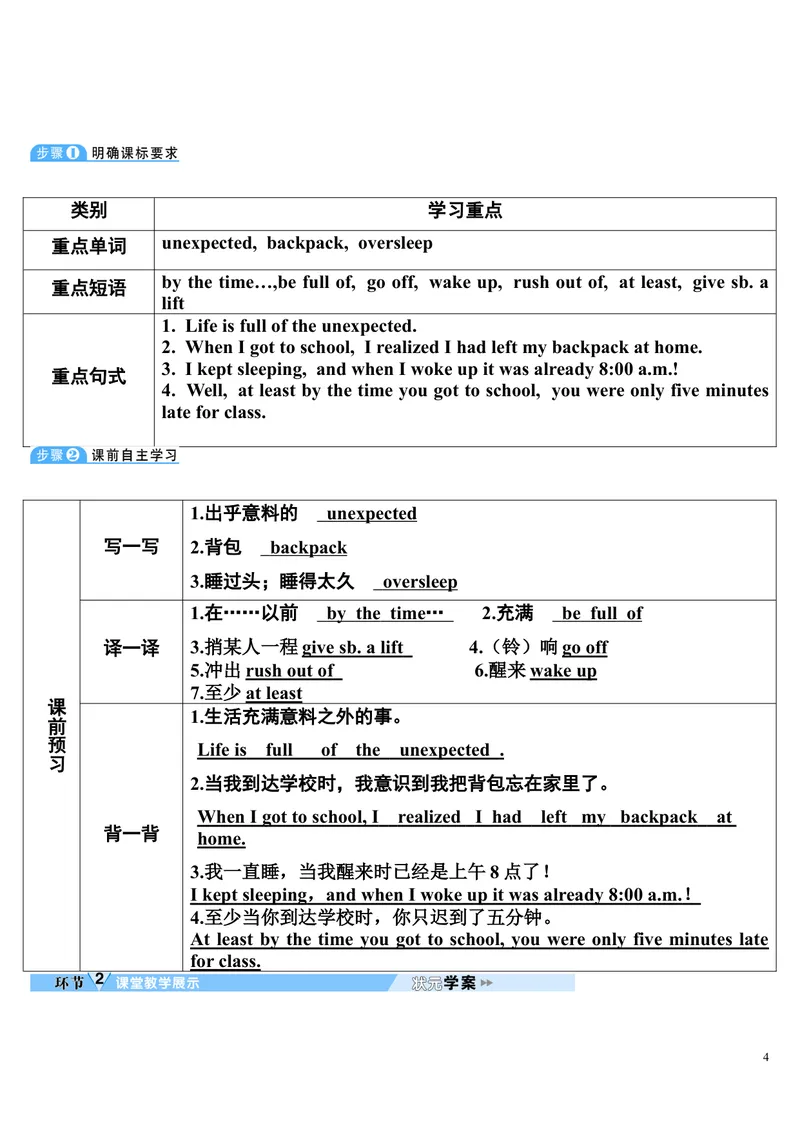
3类别 学习重点
重点单词 unexpected, backpack, oversleep
by the time…,be full of, go off, wake up, rush out of, at least, give sb. a
重点短语
lift
1. Life is full of the unexpected.
2. When I got to school, I realized I had left my backpack at home.
3. I kept sleeping, and when I woke up it was already 8:00 a.m.!
重点句式
4. Well, at least by the time you got to school, you were only five minutes
late for class.
1.出乎意料的 unexpected
写一写 2.背包 backpack
3.睡过头;睡得太久 oversleep
1.在……以前 b y th e tim e … 2.充满 b e ful l o f
译一译 3.捎某人一程 give sb. a lift 4.(铃)响go off
5.冲出 rush out of 6.醒来wake up
7.至少at least
课
1.生活充满意料之外的事。
前
预
Life is full of the unexpected .
习
2.当我到达学校时,我意识到我把背包忘在家里了。
When I got to school, I realized I had left my backpack at
背一背
home.
3.我一直睡,当我醒来时已经是上午8点了!
I kept sleeping , and when I woke up it was already 8:00 a.m. !
4.至少当你到达学校时,你只迟到了五分钟。
At least by the time you got to school, you were only five minutes late
for class.
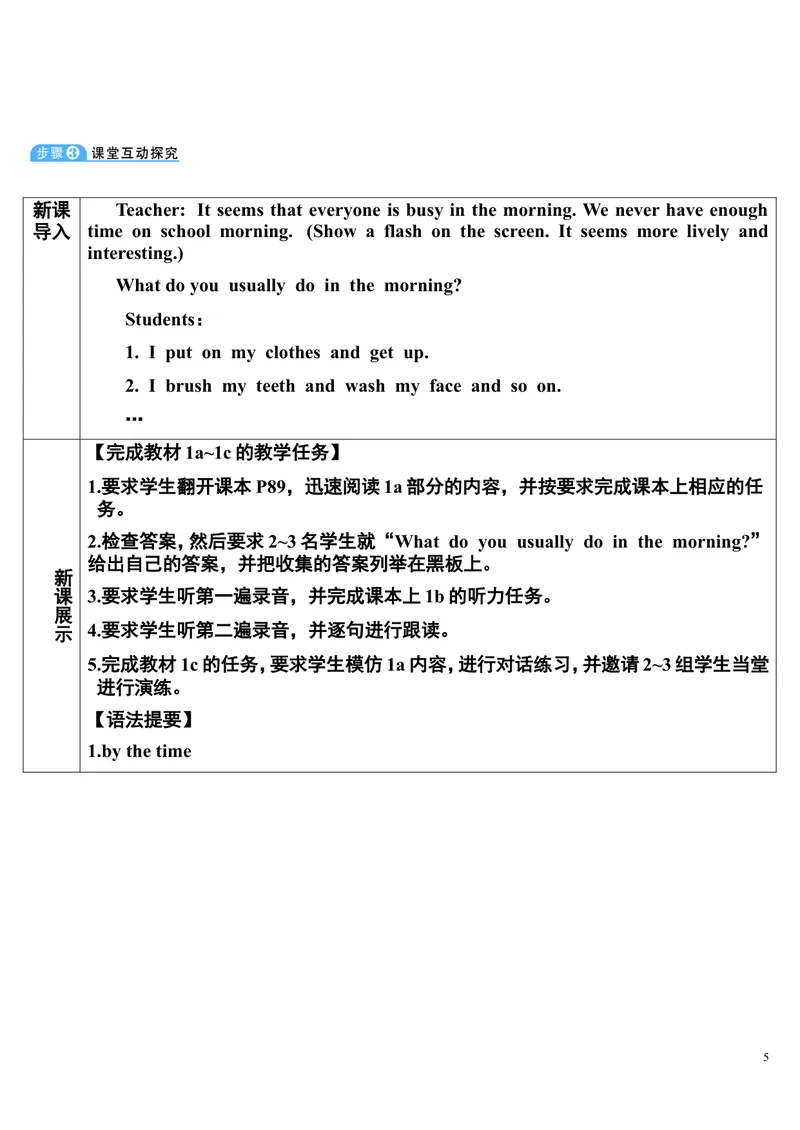
4新课 Teacher: It seems that everyone is busy in the morning. We never have enough
导入 time on school morning. (Show a flash on the screen. It seems more lively and
interesting.)
What do you usually do in the morning?
Students:
1. I put on my clothes and get up.
2. I brush my teeth and wash my face and so on.
…
【完成教材1a~1c的教学任务】
1.要求学生翻开课本P89,迅速阅读1a部分的内容,并按要求完成课本上相应的任
务。
2.检查答案,然后要求2~3名学生就“What do you usually do in the morning?”
给出自己的答案,并把收集的答案列举在黑板上。
新
课 3.要求学生听第一遍录音,并完成课本上1b的听力任务。
展
示 4.要求学生听第二遍录音,并逐句进行跟读。
5.完成教材1c的任务,要求学生模仿1a内容,进行对话练习,并邀请2~3组学生当堂
进行演练。
【语法提要】
1.by the time
5by the time意为“到……时,在……以前”,引导时间状语从句,主句常用过去完
成时。过去完成时表示在过去的某个时间或动作之前已经发生的动作或一直延续的
动作或状态。
例句:By the time I got home, they had already left.当我到家的时候,他们已经
离开了。
2.happen
happen作不及物动词,不能用于被动语态。其用法如下:
(1)“sth.+happens+时间/地点”意为“某时或某地发生了某事”。
例句:An accident happened in our neighborhood just now.刚才我们社区发生
了一起事故。
(2)“sth. happens to sb.”意为“某人发生了某事”。
例句:A car accident happened to David yesterday.昨天戴维出了车祸。
(3)“sb. happens to do sth.”意为“某人碰巧做某事”。
例句:I happened to meet a friend of mine in the street yesterday.昨天我碰巧
在街上遇到了我的一个朋友。
辨析:happen与take place
“(偶然)发生”,可用来指某个事 If anything happens, please let
happen 件突然发生,强调偶然性,主语往 me know. 如果发生了什么事
往是表示事件、事故等的名词。 情,请通知我。
“发生;举行”,常指布置或按计 The meeting will take place
划进行,尤指“举行”,不含偶然 on next Monday.会议将于下星
take place 的意味。 期一举行。
【问题探究】
1.根据汉语意思完成句子。
汤姆发生了什么事?他看起来如此悲伤。
What happened to Tom? He looks so sad.
2.(甘肃天水中考)By the time we got to the station, the train B already
______.
A. had; leave B. had; left C. have; left D. had; leaved
6【完成教材2a~2d的教学任务】
1.播放第一遍录音,完成2a,2b的听力任务,然后个别检查,统一核对答案。
2.要求学生听第二遍录音,并逐句进行跟读。
3.听力内容巩固训练。要求学生根据所听到的内容完成下列各句。完成后要求若干学
生给出自己的答案,以巩固对听力内容的理解。
(1)I ran home to get my backpack.
(2)I ran back to school without my keys or my backpack.
4.大声朗读听力材料。
5.放下听力材料,要求学生模仿听力内容,利用2a,2b的信息分角色进行对话练习。然
后请2~3组学生当堂演示,注意纠正学生的错误。
6.学生编造故事的结尾,然后在小组内交流和分享。
7.学生两人一组分角色练习2d对话,然后请2~3组学生表演此段对话。
8.教师根据学生的实际情况对2d的语言知识点进行讲解。
9.让学生用重点短语造句并收集句子。
【语法提要】
1.go off
go off是动词短语,意为“响起;发出声音”。
例句:My alarm clock goes off at six every morning. 我的闹钟每天早晨六点钟响。
The alarm went off just now. You should get up. 刚刚闹钟响了。你应该起床了。
拓展:go off还有“开火;(电灯)熄灭;(食物)变质;停止运行”等含义。
例句:The gun went off by accident. 枪走火了。
Suddenly the lights went off. 灯突然熄灭了。
The heating goes off at night.暖气夜间停止供热。
Meat goes off quickly in hot weather. 热天肉很快就变质了。
2.put on
put on意为“穿上;戴上”,用于穿衣服、穿鞋、戴帽子等,强调动作。
例句:It's cold outside. Please put on your warm clothes. 外面很冷,请穿上暖和的衣
服。
He put on his coat when it started raining. 开始下雨时,他就穿上了外套。
辨析:put on, dress, wear 与have on
put on 强调穿的动作,宾语是物,反义词 He put on his coat and went out.
组为take off。 他穿上外套就出去了。
dress 既可表动作也可表状态,既可作及 My little sister was dressed in red.
物动词也可作不及物动词,但只能 我妹妹身着红色衣服。
用人作宾语。
wear 强调穿的状态,以物为宾语,可用 He was wearing sunglasses.他戴着
于进行时。 太阳镜。
have on 强调穿的状态,以物为宾语,属动 She always has a short skirt on. 她
7副结构,不用于进行时。 总是穿着一条短裙。
【问题探究】
根据汉语意思完成句子。
1.牛奶在热天很快就变质了。
Milk goes of f quickly in hot weather.
2.(山东潍坊中考)It's too cold outside today. You'd better A your jacket.
A. put on B. put up C. take off D. take after
用所给动词的正确形式填空。
1. By the time I got up, my mother had already cooked (cook) breakfast
yesterday morning.
活
学 2. By the time Jack got home, his sister had washed (wash) the clothes.
活
练 3.—What happened (happen) to you last week? —My bike was stolen.
布置作业:教师引导学生课后完成本课时对应练习,并预习下一课时内容。
通过教师充分的课前准备,本课时为学生创设了良好的语言环境。通过大量的听、
说训练以及分角色扮演,学生熟练地掌握了本课时的重要语言点。教学过程比较轻松
教 愉快,学生们的积极性也很高,教学效果非常好。
学
反
思
8教学过程中老师的疑问:
教师点评和总结:
9