文档文本内容
Unit 5  Our School Life
                                精讲精练
                                   责编:郭素清
词汇精讲
1. always
always 是频度副词,意为“一直,总是”。它的反义词是never, 意为“从不”。常用于一般现在
时,其划线提问要用How often +一般疑问句。例如:
She always likes birthday cards. 她总是喜欢生日贺卡。
【拓展】
always, usually, often, sometimes 和never 是英语中最常见的频度副词。
(1)always 的频度约为100%,表示动作重复、状态继续,中间没有间断,意为“总是、永远
地”。例如:The sun always rises in the east and sets in the west.  太阳总是东升西落。
(2)usually 的频度为约80%左右,意为“通常、平常”,即很少有例外。例如:
He usually goes to bed at ten o’clock. 他通常十点钟睡觉。
(3)often 的频度为约60%左右,意为“常常”,但不如usually 那么频繁,表示动作重复,中
间有间断。例如:
He is often late for school. 他上学经常迟到。
(4)sometimes 的频度约为40%左右,意为“有时”,表示动作偶尔发生。可以位于句首,以示
强调。例如:
It is sometimes hot and sometimes cold.  天气忽冷忽热。
Sometimes he does it this way and sometimes he does it that way.
他有时这样做,有时那样做。
(5)seldom 的频度约为20%左右,意为“很少、不经常”。 例如:
I hardly ever go out these days. 这些天我几乎不出门。
(6)never 的频度为0,意为“从来不、永不”。 例如:
My parents are never late for work.  我父母上班从来不迟到。
2. ride
(1)ride 作不及物动词,意为“骑马,乘车”。例如:
She rode home on her bicycle. 她骑自行车回家。
The car rides smoothly. 这车乘起来很平稳。
(2)ride 作及物动词,意为“骑(马等);乘(车)等”。例如:
He learned to ride a horse at the age of nine.  他九岁时学会了骑马。
I think more people should ride bikes.  我认为更多的人应该骑自行车。
(3)ride 可作名词,意为“乘坐,骑马;(或乘车)旅行,兜风”等。例如:
He gave me a ride to the market. 他让我搭车去市场。
We went for a ride in the car. 我们开车兜风。
3. listen
listen 是不及物动词,常与to 连用,意为“听……”。例如:
Listen carefully! 认真听!
Don’t listen to him. 不要听他的话。
I like listening to music.  我喜欢听音乐。
【拓展】
sound、hear 和listen 的辨析:
sound 是连系动词,后接形容词,表示“听起来”;hear 是及物动词,后接听到的内容;listen 是
不及物动词,表示听的动作,后面接听的对象时,要加上to。例如:
The song sounds wonderful! 那首歌听起来太精彩了!
He listened carefully, but he heard nothing. 他仔细听,可什么也没听到。
He is listening to the teacher. 他正在听老师讲课。
4. once
(1)once 用作副词,意为“一次”。两次是“twice”,三次是“three times”,四次是“four
times”。 多余两次都可用times 表示。例如:
The old professor comes to see us once a week.  那个老教授一周来看我们一次。
—How often does he come here?  他(每隔)多久来一次?
—Three times a month.  每月三次。
(2)once 用作副词时,意为“曾经;一度;从前”。它是一个不确定的时间副词,其位置一般
是在行为动词之前,系动词之后。例如:
Once he lived in America, but now he lives in England.
他曾经生活在美国,但现在他生活在英国。
【注意】
once 用作副词时,在句中的位置不同表示的意思也不同。例如:
I once went to Shanghai. 我曾经去过上海。
I went to Shanghai once. 我去过上海一次。
(3)once 构成的一些短语的用法:
 1)at once 表示“立刻;马上”。 例如:
  Finish the task at once. 请立刻完成任务。
 2)once again 表示“再一次;又一次”,相当于once more。
  Read the passage once more. 把课文再读一遍。
5. American
American 作名词时,意为“美国人,美洲人”;做形容词时,意为“美国的,美国人的,美洲
的”。America 意为“美国”,和American 都是专有名词,第一个字母要大写。例如:
He is an American student.  他是个美国学生。
He comes from America.  他来自美国。
【拓展】
其它常见的国家和某国人的表达。
国家
居民
  语言
China 中国
Chinese 中国人
Chinese 汉语
America 美国
American 美国人
English 英语
England 英国
Englishman 英国人
English 英语
Japan 日本
Japanese 日本人
Japanese 日语
6. talk
talk 意为“谈话”,当talk 作此意讲时,不强调内容,一般指说的动作,其后常接介词to 和
with,表示“与……谈话”;接介词about 时表示“谈论……”。例如:
Jimmy and Bill often talk about computer games.
吉米和比尔经常谈论电脑游戏。
Mary is talking with Mr. Green in English.
玛丽正在用英语和格林先生交谈。
【拓展】
辨析:speak、say 和tell
(1)speak 一词强调说话的能力、对象和方式。用作及物动词时后接表示语言的名词作宾语;用
作不及物动词时,后接介词to,表示“与……讲话”,一般用于打电话用语中或较正式的情况下。
例如:
They can speak Chinese.  他们会说中文。
May I speak to Mr. Black?  请问,我能和布莱克先生讲话吗?
(2)say 用作及物动词,强调说的内容。若指“对某人说”用say to sb.来表示。例如:
Can you say it in English? 你能用英语说它吗?
(3)tell 经常作及物动词,意为“讲述,告诉”,后常接双宾语,侧重把一件事情传达给别人。
常用结构是tell sb. to do sth. 意为“告诉某人做某事”,其否定形式为tell sb. not to do sth.,
意为“告诉某人不要做某事”,tell sb. about sth. 意为“告诉某人关于某事”。例如:
My mother tells me to get up early.  我妈妈告诉我早点起床。
7. make
make 作使役动词,后接省略to 的动词不定式,即:make sb. do sth. 意为“使/让某人做某事”,
类似的动词还有let,have 等。例如:
The boss made them work for long time.
老板让他们长时间工作。
They made us forget the past. 他们使我们忘记了过去。
【拓展】
make 作使役动词,意为“使……;让……”,常构成make + 宾语(sb./sth.) + 形容词/名词(作
宾补),即make sb. / sth. + adj./n.。例如:
What he said makes us happy.  他所说的话使我们很高兴。
We made John our monitor.  我们选约翰当班长
8. room
(1)room 作可数名词,意为“房间”,组成的复合词有bedroom(卧室),bathroom(浴室),
classroom(教室)等。例如:
There are three rooms in the house. 那个房子有三个房间。
This big room is my bedroom. 这个大房间是我的卧室。
(2)room 作不可数名词, 表示人或物体所占的“空间或场所”、处事的“余地”等意思,可用
little,much,no,plenty 等词修饰。可构成make room for…(给……让出地方);take up
room(占地方);leave room for…(留出空间给……)等短语。
9. borrow
borrow 作动词,意为“借,借入,借用”。例如:
May I borrow your bike?  我可以借你的自行车吗?
You can borrow the book from the library.  你可以从图书馆借这本书。
【拓展】
 borrow 和lend 的辨析:
(1) borrow 是“借进”,即说话人向别人借东西供自己用,常用于borrow sth. from sb. /
somewhere 结构,意为“从某人/某地借来某物”。例如:
He borrowed a lot of money from the bank. 他从银行借了很多钱。
(2) lend 是“借出”,即说话人把自己的东西借给别人用,常用于lend sth. to sb. 或lend sb.
sth.结构中,意为“借给某人某物”。例如:
I don’t like to lend my TV set to Tom.  我不想把电视机借给Tom。
10. look for
look for 意为“寻找”,多用于进行时态中,强调动作本身。例如:
 He is looking for his pen here and there. 他正在到处寻找他的钢笔。
【拓展】
look for; find 与find out 的辨析:
这一组词均有“寻找,找”的含义。look for 强调找的动作,表示“寻找”;find 强调找的结果,
表示“找到”;find out 强调经过仔细调查、分析,表示“弄清楚,弄明白”。例如:
 Tim is looking for his little dog.  Tim 正在找他的小狗。
 I want to find out what time the train leaves.  我想弄清楚火车几点钟出发。
 I found the dog there.  我发现那只狗在那里。
11. must
(1)must 作情态动词, 表示“必须”。可用于肯定句、否定句或疑问句,用于否定句时,
mustn’t 的意为“一定不要,不能”,而不表示“不必”。例如:
Must I finish the work tonight?    我必须今晚完成这项工作吗?
You must study hard. 你必须努力学习。
We mustn’t leave her by herself. 我们一定不要把她单独留下。
(2)对于must 开头的一般疑问句,若作否定回答,可以用needn’t,不用 mustn’t。例如:
—Must I clean all the rooms?  这些房间我都得清扫吗?
 —No, you needn’t.  不必了。
12. a few
few 为形容词,意为“不多,很少”,只能与可数名词搭配,表示“几乎没有”,自身有否定含
义。也常与不定冠词a 组成词组a few,表示“有一点”,有肯定含义。例如:
He has few friends.   他几乎没朋友。
May I ask a few questions?  我可以问几个问题吗?
【拓展】
辨析:few/a few; little/a little
(1)few/a few 只能用来修饰可数名词,few 表示否定,意为“没有,几乎没有”;a few 表示
肯定,意为“有几个,有一些”。例如:
He has few friends here, he feels lonely.
他这里没朋友,他感觉寂寞。
There are a few eggs in the basket.  篮子里有几个鸡蛋。
(2)little/a little 只能用来修饰不可数名词,little 表示否定,意为“没有,几乎没有”;a little
表示肯定,意为“有一点,有一些”。例如:
There is little ink in my bottle, can you give me a little ink?
我的瓶子里没有墨水了,你能给我点儿墨水吗?
13.from…to
“from…to…”是常用的介词短语,表示“从……到……”,其用法很多,搭配能力也很强。可
以连接两个不同的地点、时间、数字等。例如:
Lunch is from 12:00 to 1:00.   午餐从12 点到1 点。
It’s only two hundred meters from here to my home.
从这里到我家仅有两百米远。
【拓展】from…to 构成的其他常见的词组
from day to day 日复一日地;        from door to door 挨门挨户地;
from house to house 挨家挨户地;    from place to place 从一个地方到另一个地方;处处
from side to side 从一边到另一边;   from time to time 不时地;有时
词汇精练
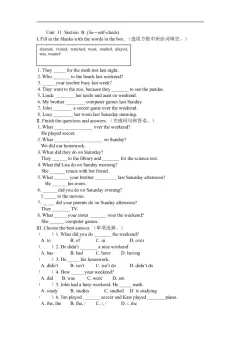
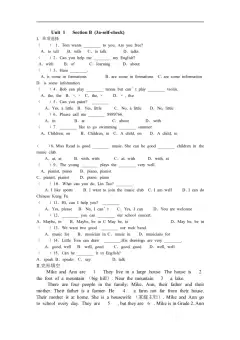
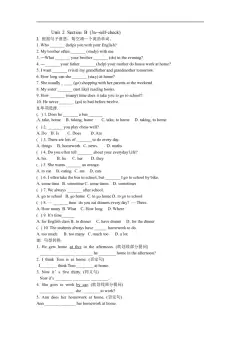
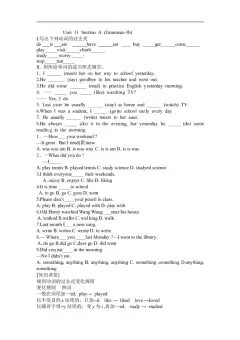
Ⅰ. 英汉互译。
1. 新年快乐 __________                 2. by underground _________
3. 在工作日___________               4. take a bus_________
5. 玩篮球__________              6. How long _________
7. 仍旧谢谢你 ____________           8. 按时 ___________
9. look for___________            10. 有点难___________
11. 互相帮助 ___________        12. at school __________
II. 根据首字母和句子意思把单词补充完整。
1. What d_____ is it today?
2.—Why do you like W________ best?
—Because I have a music class.
3. What class are they h_______?
4. What time is the class o______?
5. I think it’s a little difficult and b_______.
6.—Which s_______ do you like best?
—English.
7. There are a f______ students in the classroom, and I find Tom.
8. I often b_______ books from the library.
9. It is i_______ to fly kites in spring.
10.Xiao Hong is the best student in her class. She always works h_____.
III. 用方框中所给词的适当形式完成句子。
1.I like maths, _______it’s interesting.
2.What’s your favourite _________?
3. We often play football ________.
4. In the afternoon, we have a ________in the playground.
5. I like reading ________stories.
6. He _______ four lessons in the morning.
7. They usually have a big _______ on weekends.
8. My father often __________ at nine in the morning.
IV. 用适当的介词填空。
1. The students go to school _____the morning.
2. We don’t have lessons _______Saturday or Sunday.
3. I often go home _____five in the afternoon.
4. He is looking _____the red pencil.
5. My friends have classes_____ Monday _____Friday.
V.听力链接。
(2015 福建省福州中考)
1. What present did Mary receive?

2. When will they meet?
because,dinner, break, interesting,have,start work,after school,subject

3. What’s Li Hong’s favorite subject?

4. Which sport are they talking about?

5. What did the boy’s mother cook for him?

参考答案
   Ⅰ. 英汉互译。
    1. Happy New Year     2.乘地铁        3.on weekdays                 4.乘公交
    5.play basketball     6.多久          7. Thank you all the same       8.on time
    9.寻找         10.a little difficult     11.help each other         12.在上课,在学校
    II. 根据首字母和句子意思把单词补充完整。
    1. day   2. Wednesday    3. having    4. over   5.boring
    6. subject   7. few      8.borrow    9.interesting   10. hard
    III. 用方框中所给词的适当形式完成句子。
    1. because   2.subject    3.after school   4.break
    5.interesting  6. has       7. dinner     8. starts work
    IV.用适当的介词填空。
    1. in    2.on    3.at    4.at/for   5. from, to
V.听力链接。
参考答案及听力材料:
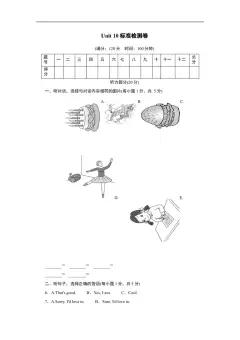
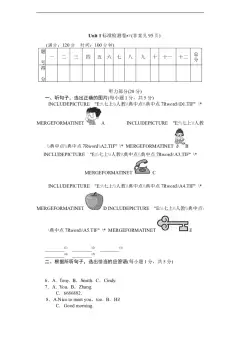
 1. A       2.C       3.C        4. B       5. B
听下面五段对话,从题中所给的A、B、C 三幅图中选出与对话意思相符的图。每段对话读
两遍。
1. M: Mary, your skirt looks very nice.
W: Thank you. It’s my birthday present from my aunt.
2. M: Lucy, what time shall we meet tomorrow?
W: Let’s make it nine o’clock at the school gate.
3. M: Do you like geography, Li Hong?
W: Of course, but I like English best of all.
4. M: Swimming is a nice sport in summer.
W: So it is. But we must be very careful.
5. W: Wow, how delicious the fried rice smells!
M: My mom made it for me. She is good at cooking.