文档文本内容
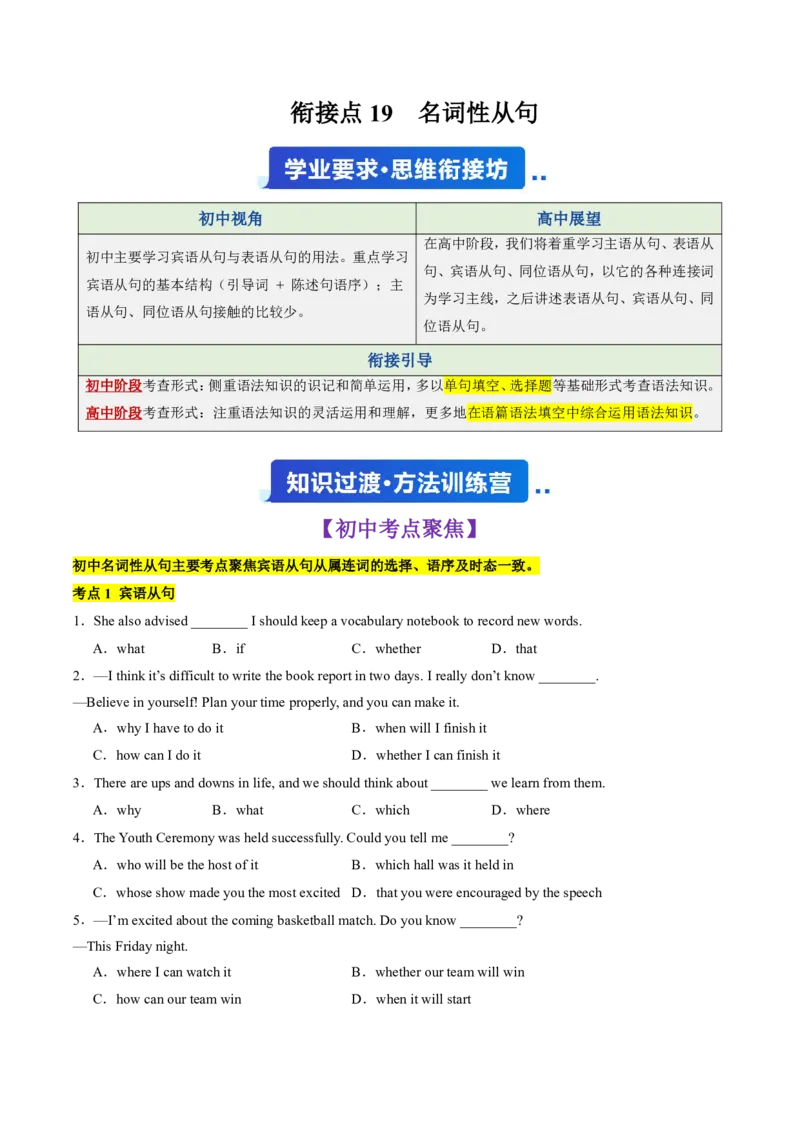
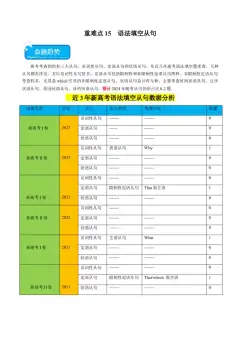
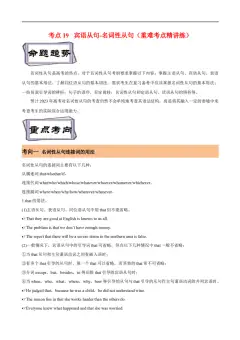
衔接点19
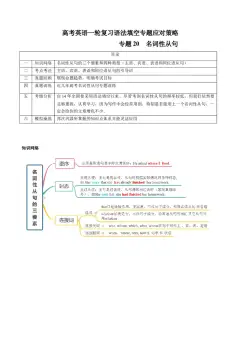
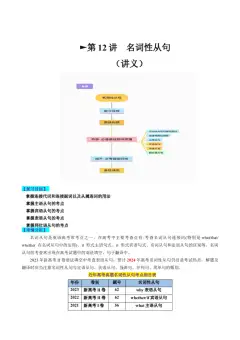
名词性从句
初中视角
高中展望
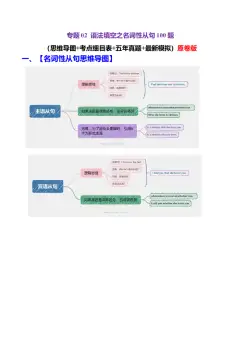
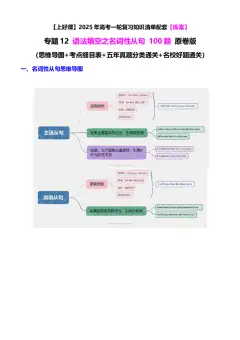
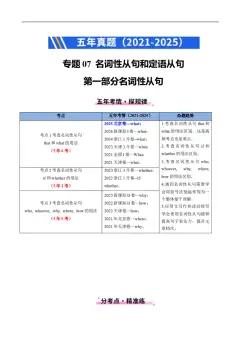
初中主要学习宾语从句与表语从句的用法。重点学习
宾语从句的基本结构(引导词+ 陈述句语序);主
语从句、同位语从句接触的比较少。
在高中阶段,我们将着重学习主语从句、表语从
句、宾语从句、同位语从句,以它的各种连接词
为学习主线,之后讲述表语从句、宾语从句、同
位语从句。
衔接引导
初中阶段考查形式:侧重语法知识的识记和简单运用,多以单句填空、选择题等基础形式考查语法知识。
高中阶段考查形式:注重语法知识的灵活运用和理解,更多地在语篇语法填空中综合运用语法知识。
【初中考点聚焦】
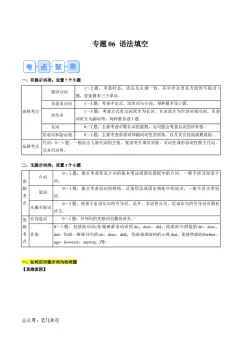
初中名词性从句主要考点聚焦宾语从句从属连词的选择、语序及时态一致。
考点1 宾语从句
1.She also advised ________ I should keep a vocabulary notebook to record new words.
A.what
B.if
C.whether
D.that
2.—I think it’s difficult to write the book report in two days. I really don’t know ________.
—Believe in yourself! Plan your time properly, and you can make it.
A.why I have to do it
B.when will I finish it
C.how can I do it
D.whether I can finish it
3.There are ups and downs in life, and we should think about ________ we learn from them.
A.why
B.what
C.which
D.where
4.The Youth Ceremony was held successfully. Could you tell me ________?
A.who will be the host of it
B.which hall was it held in
C.whose show made you the most excited
D.that you were encouraged by the speech
5.—I’m excited about the coming basketball match. Do you know ________?
—This Friday night.
A.where I can watch it
B.whether our team will win
C.how can our team win
D.when it will start
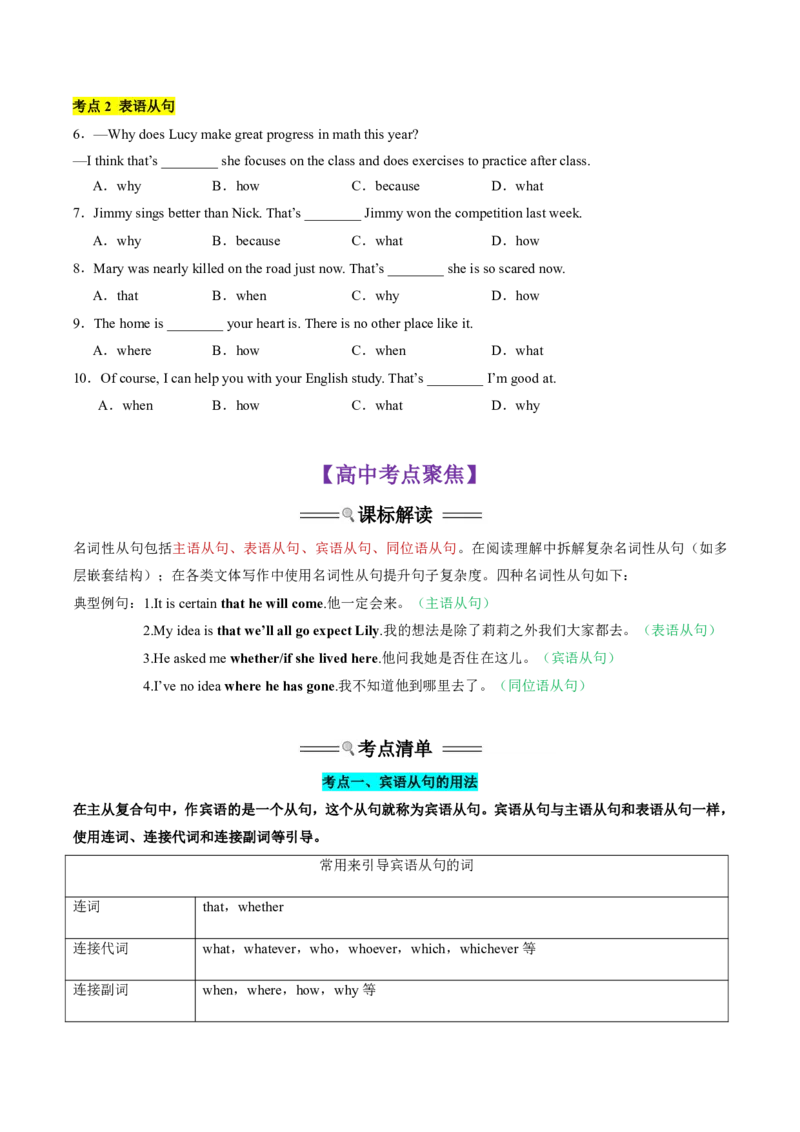
考点2 表语从句
6.—Why does Lucy make great progress in math this year?
—I think that’s ________ she focuses on the class and does exercises to practice after class.
A.why
B.how
C.because
D.what
7.Jimmy sings better than Nick. That’s ________ Jimmy won the competition last week.
A.why
B.because
C.what
D.how
8.Mary was nearly killed on the road just now. That’s ________ she is so scared now.
A.that
B.when
C.why
D.how
9.The home is ________ your heart is. There is no other place like it.
A.where
B.how
C.when
D.what
10.Of course, I can help you with your English study. That’s ________ I’m good at.
A.when
B.how
C.what
D.why
【高中考点聚焦】
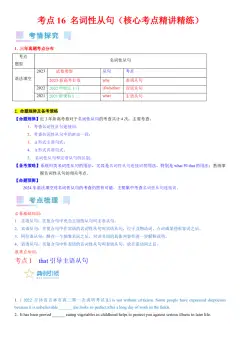
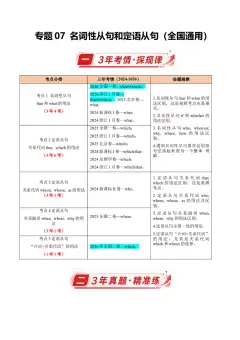
课标解读
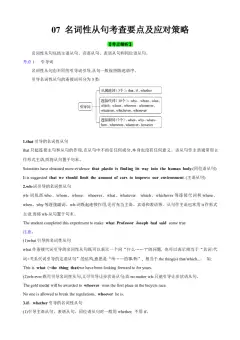
名词性从句包括主语从句、表语从句、宾语从句、同位语从句。在阅读理解中拆解复杂名词性从句(如多
层嵌套结构);在各类文体写作中使用名词性从句提升句子复杂度。四种名词性从句如下:
典型例句:1.It is certain that he will come.他一定会来。(主语从句)
2.My idea is that we’ll all go expect Lily.我的想法是除了莉莉之外我们大家都去。(表语从句)
3.He asked me whether/if she lived here.他问我她是否住在这儿。(宾语从句)
4.I’ve no idea where he has gone.我不知道他到哪里去了。(同位语从句)
考点清单
考点一、宾语从句的用法
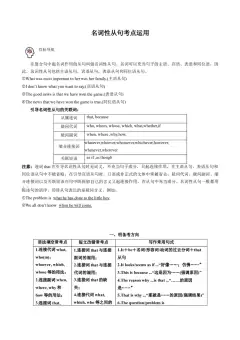
在主从复合句中,作宾语的是一个从句,这个从句就称为宾语从句。宾语从句与主语从句和表语从句一样,
使用连词、连接代词和连接副词等引导。
常用来引导宾语从句的词
连词
that,whether
连接代词
what,whatever,who,whoever,which,whichever 等
连接副词
when,where,how,why 等
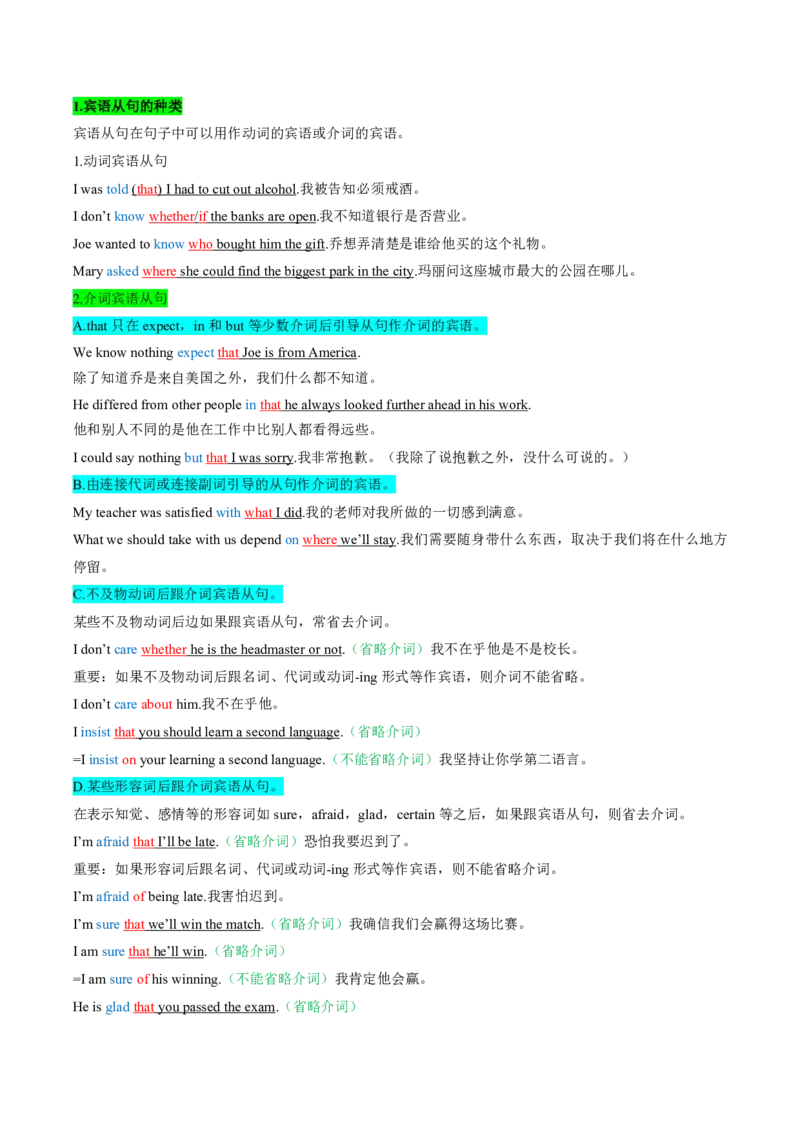
1.宾语从句的种类
宾语从句在句子中可以用作动词的宾语或介词的宾语。
1.动词宾语从句
I was told (that) I had to cut out alcohol.我被告知必须戒酒。
I don’t know whether/if the banks are open.我不知道银行是否营业。
Joe wanted to know who bought him the gift.乔想弄清楚是谁给他买的这个礼物。
Mary asked where she could find the biggest park in the city.玛丽问这座城市最大的公园在哪儿。
2.介词宾语从句
A.that 只在expect,in 和but 等少数介词后引导从句作介词的宾语。
We know nothing expect that Joe is from America.
除了知道乔是来自美国之外,我们什么都不知道。
He differed from other people in that he always looked further ahead in his work.
他和别人不同的是他在工作中比别人都看得远些。
I could say nothing but that I was sorry.我非常抱歉。(我除了说抱歉之外,没什么可说的。)
B.由连接代词或连接副词引导的从句作介词的宾语。
My teacher was satisfied with what I did.我的老师对我所做的一切感到满意。
What we should take with us depend on where we’ll stay.我们需要随身带什么东西,取决于我们将在什么地方
停留。
C.不及物动词后跟介词宾语从句。
某些不及物动词后边如果跟宾语从句,常省去介词。
I don’t care whether he is the headmaster or not.(省略介词)我不在乎他是不是校长。
重要:如果不及物动词后跟名词、代词或动词-ing 形式等作宾语,则介词不能省略。
I don’t care about him.我不在乎他。
I insist that you should learn a second language.(省略介词)
=I insist on your learning a second language.(不能省略介词)我坚持让你学第二语言。
D.某些形容词后跟介词宾语从句。
在表示知觉、感情等的形容词如sure,afraid,glad,certain 等之后,如果跟宾语从句,则省去介词。
I’m afraid that I’ll be late.(省略介词)恐怕我要迟到了。
重要:如果形容词后跟名词、代词或动词-ing 形式等作宾语,则不能省略介词。
I’m afraid of being late.我害怕迟到。
I’m sure that we’ll win the match.(省略介词)我确信我们会赢得这场比赛。
I am sure that he’ll win.(省略介词)
=I am sure of his winning.(不能省略介词)我肯定他会赢。
He is glad that you passed the exam.(省略介词)
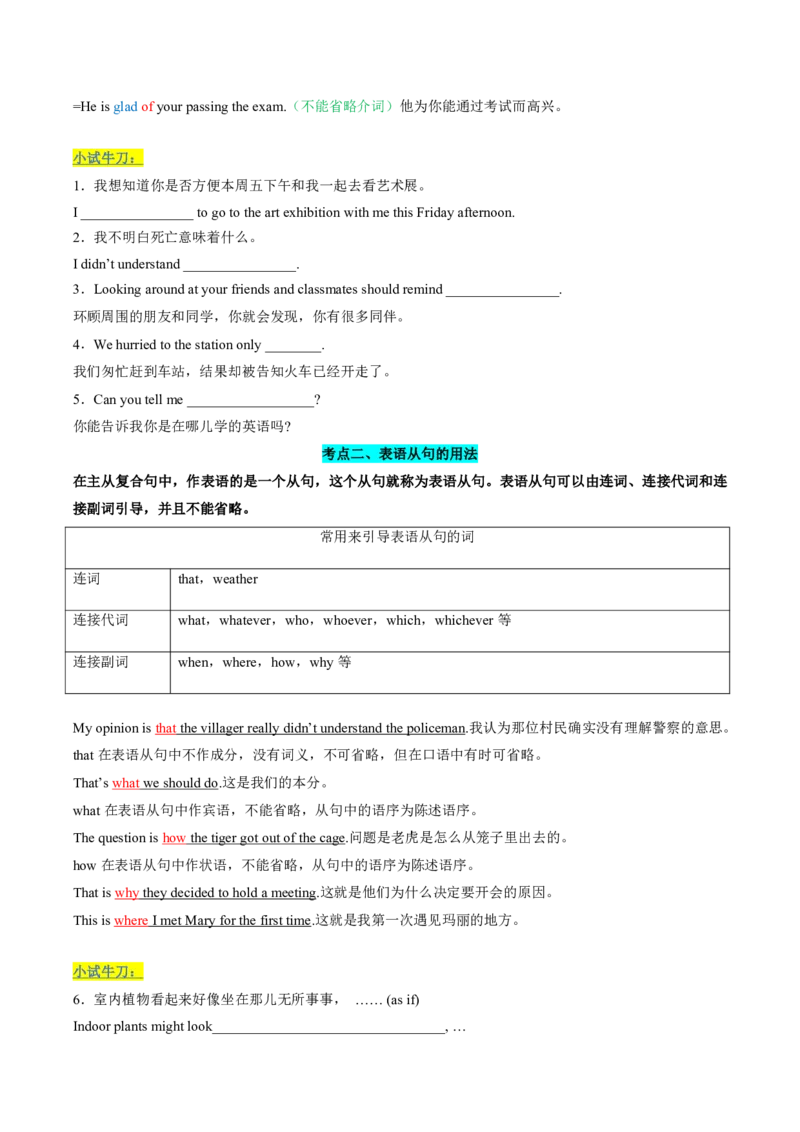
=He is glad of your passing the exam.(不能省略介词)他为你能通过考试而高兴。
小试牛刀:
1.我想知道你是否方便本周五下午和我一起去看艺术展。
I ________________ to go to the art exhibition with me this Friday afternoon.
2.我不明白死亡意味着什么。
I didn’t understand ________________.
3.Looking around at your friends and classmates should remind ________________.
环顾周围的朋友和同学,你就会发现,你有很多同伴。
4.We hurried to the station only ________.
我们匆忙赶到车站,结果却被告知火车已经开走了。
5.Can you tell me __________________?
你能告诉我你是在哪儿学的英语吗?
考点二、表语从句的用法
在主从复合句中,作表语的是一个从句,这个从句就称为表语从句。表语从句可以由连词、连接代词和连
接副词引导,并且不能省略。
常用来引导表语从句的词
连词
that,weather
连接代词
what,whatever,who,whoever,which,whichever 等
连接副词
when,where,how,why 等
My opinion is that the villager really didn’t understand the policeman.我认为那位村民确实没有理解警察的意思。
that 在表语从句中不作成分,没有词义,不可省略,但在口语中有时可省略。
That’s what we should do.这是我们的本分。
what 在表语从句中作宾语,不能省略,从句中的语序为陈述语序。
The question is how the tiger got out of the cage.问题是老虎是怎么从笼子里出去的。
how 在表语从句中作状语,不能省略,从句中的语序为陈述语序。
That is why they decided to hold a meeting.这就是他们为什么决定要开会的原因。
This is where I met Mary for the first time.这就是我第一次遇见玛丽的地方。
小试牛刀:
6.室内植物看起来好像坐在那儿无所事事,…… (as if)
Indoor plants might look_________________________________, …
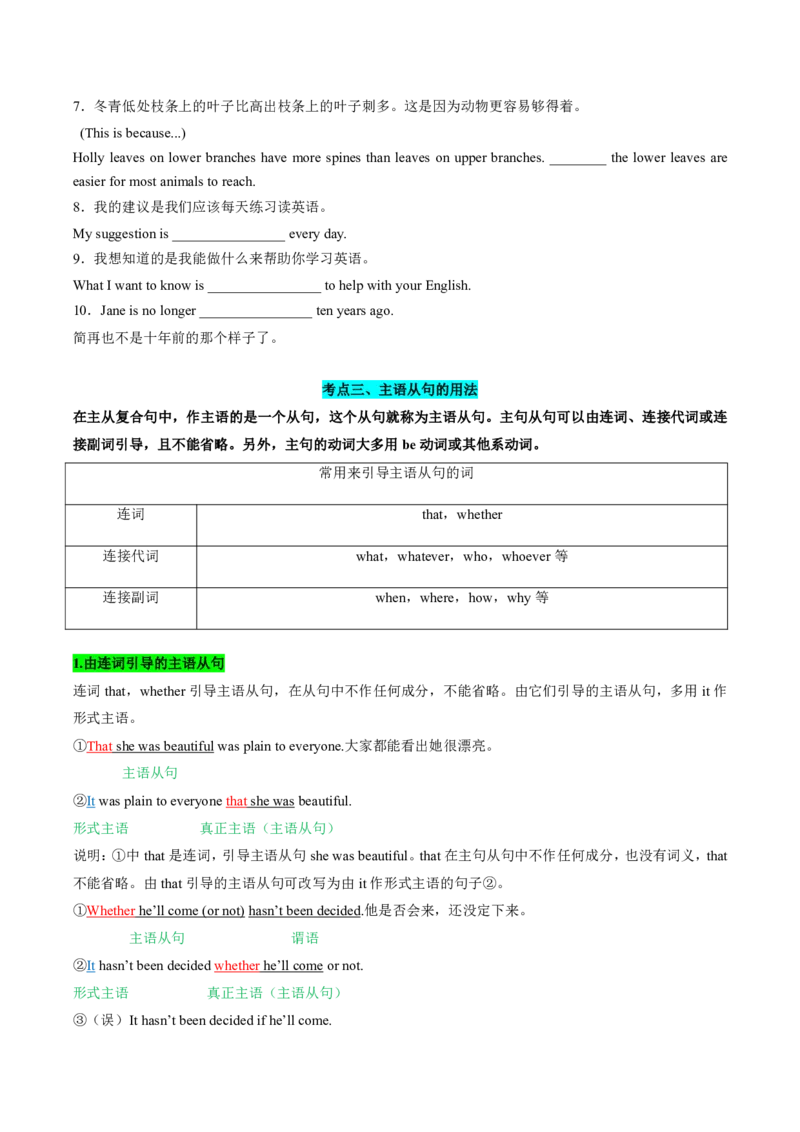
7.冬青低处枝条上的叶子比高出枝条上的叶子刺多。这是因为动物更容易够得着。
(This is because...)
Holly leaves on lower branches have more spines than leaves on upper branches. ________ the lower leaves are
easier for most animals to reach.
8.我的建议是我们应该每天练习读英语。
My suggestion is ________________ every day.
9.我想知道的是我能做什么来帮助你学习英语。
What I want to know is ________________ to help with your English.
10.Jane is no longer ________________ ten years ago.
简再也不是十年前的那个样子了。
考点三、主语从句的用法
在主从复合句中,作主语的是一个从句,这个从句就称为主语从句。主句从句可以由连词、连接代词或连
接副词引导,且不能省略。另外,主句的动词大多用be 动词或其他系动词。
常用来引导主语从句的词
连词
that,whether
连接代词
what,whatever,who,whoever 等
连接副词
when,where,how,why 等
1.由连词引导的主语从句
连词that,whether 引导主语从句,在从句中不作任何成分,不能省略。由它们引导的主语从句,多用it 作
形式主语。
①That she was beautiful was plain to everyone.大家都能看出她很漂亮。
主语从句
②It was plain to everyone that she was beautiful.
形式主语
真正主语(主语从句)
说明:①中that 是连词,引导主语从句she was beautiful。that 在主句从句中不作任何成分,也没有词义,that
不能省略。由that 引导的主语从句可改写为由it 作形式主语的句子②。
①Whether he’ll come (or not) hasn’t been decided.他是否会来,还没定下来。
主语从句
谓语
②It hasn’t been decided whether he’ll come or not.
形式主语
真正主语(主语从句)
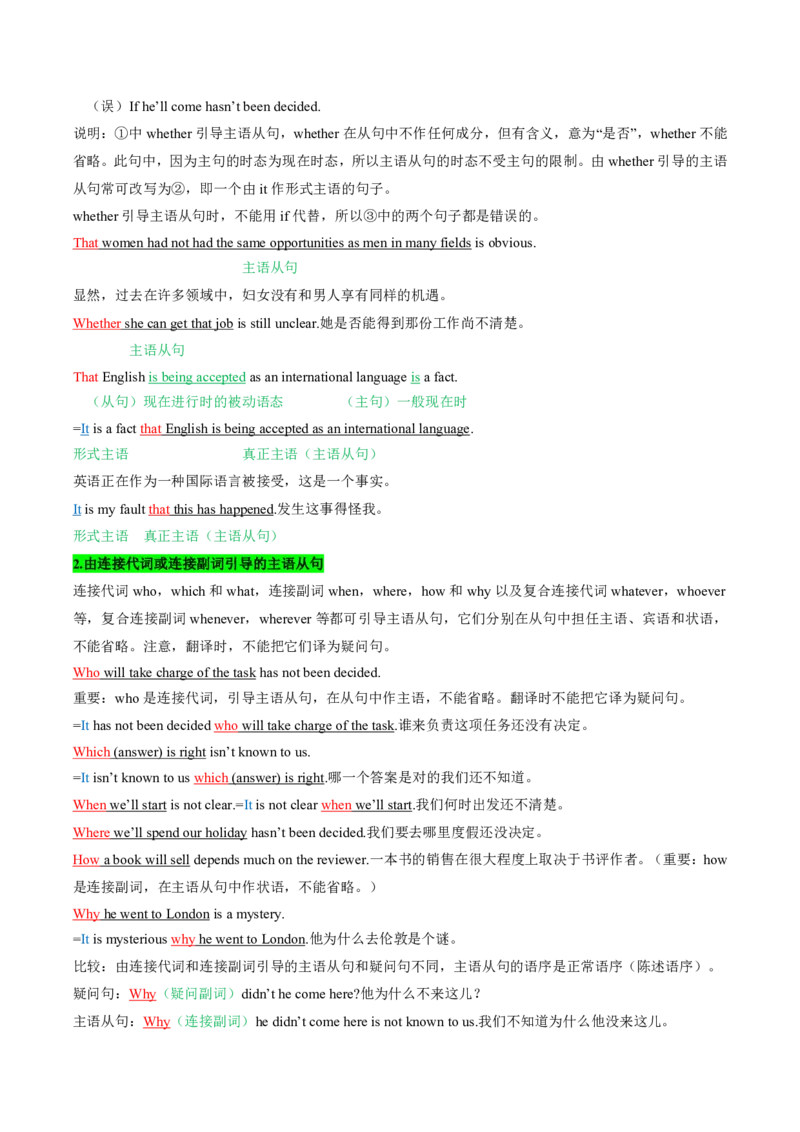
③(误)It hasn’t been decided if he’ll come.
(误)If he’ll come hasn’t been decided.
说明:①中whether 引导主语从句,whether 在从句中不作任何成分,但有含义,意为“是否”,whether 不能
省略。此句中,因为主句的时态为现在时态,所以主语从句的时态不受主句的限制。由whether 引导的主语
从句常可改写为②,即一个由it 作形式主语的句子。
whether 引导主语从句时,不能用if 代替,所以③中的两个句子都是错误的。
That women had not had the same opportunities as men in many fields is obvious.
主语从句
显然,过去在许多领域中,妇女没有和男人享有同样的机遇。
Whether she can get that job is still unclear.她是否能得到那份工作尚不清楚。
主语从句
That English is being accepted as an international language is a fact.
(从句)现在进行时的被动语态
(主句)一般现在时
=It is a fact that English is being accepted as an international language.
形式主语
真正主语(主语从句)
英语正在作为一种国际语言被接受,这是一个事实。
It is my fault that this has happened.发生这事得怪我。
形式主语
真正主语(主语从句)
2.由连接代词或连接副词引导的主语从句
连接代词who,which 和what,连接副词when,where,how 和why 以及复合连接代词whatever,whoever
等,复合连接副词whenever,wherever 等都可引导主语从句,它们分别在从句中担任主语、宾语和状语,
不能省略。注意,翻译时,不能把它们译为疑问句。
Who will take charge of the task has not been decided.
重要:who 是连接代词,引导主语从句,在从句中作主语,不能省略。翻译时不能把它译为疑问句。
=It has not been decided who will take charge of the task.谁来负责这项任务还没有决定。
Which (answer) is right isn’t known to us.
=It isn’t known to us which (answer) is right.哪一个答案是对的我们还不知道。
When we’ll start is not clear.=It is not clear when we’ll start.我们何时出发还不清楚。
Where we’ll spend our holiday hasn’t been decided.我们要去哪里度假还没决定。
How a book will sell depends much on the reviewer.一本书的销售在很大程度上取决于书评作者。(重要:how
是连接副词,在主语从句中作状语,不能省略。)
Why he went to London is a mystery.
=It is mysterious why he went to London.他为什么去伦敦是个谜。
比较:由连接代词和连接副词引导的主语从句和疑问句不同,主语从句的语序是正常语序(陈述语序)。
疑问句:Why(疑问副词)didn’t he come here?他为什么不来这儿?
主语从句:Why(连接副词)he didn’t come here is not known to us.我们不知道为什么他没来这儿。
what 引导的主语从句有时相当于“先行词+that 引导的定语从句”,表示一样东西或一件事情。who,whom,
which,what 可以和ever 构成合成词,和what 一样引导从句,ever 起强调作用。由它们引导的主语从句不
能用形式主语it 替代,它们在句子中作成分,不能省略,语序为陈述语序。
What he said(主语从句)was perfectly true.
what=the thing that,在从句中作宾语,不能省略,为陈述语序,不能用疑问句语序“What did he say?”。
=The thing that he said was perfectly true.(the thing+that 引导的定语从句)他讲的都是事实。
Whoever leaves the office should tell me.
whoever 在从句中作主语,不能省略。
=Anyone who leaves the office should tell me.无论是谁离开办公室都应该告诉我。
Whichever you want is yours.你要哪一个,哪一个就是你的。
whichever 在从句中作宾语,不能省略,注意语序。
Whatever I have is yours.我所有的一切都是你的。
whatever 在从句中作宾语,不能省略,注意语序。
引导主语从句的连接代词
无论是谁(主)
whoever
=anyone who
=no matter who
无论是谁(宾)
whomever
=anyone whom
=no matter whom
无论是谁的
whosever
=anyone whose
=no matter whose
无论是哪个
whichever
=anything that
=no matter which
无论是什么
whatever
=anything that
=no matter what
小试牛刀:
1.事故的起因是未知的。
________ ________ ________ ________ remains unknown.
2.该公司为何召回新车,目前尚未正式公布。
________ the company recalled the new cars ________ yet.
3.任何违法的人都应该被惩罚(break)。
________ the law should be punished.
4.他是否适合这份工作,还有待观察。
________________ he is fit for the job.
5.如何在不破坏自然的前提下刺激当地经济,是个重大挑战。
________ without damaging nature is a big challenge.
考点四、同位语从句的用法
在主从复合句中,作同位语的是一个从句,则这个句子就称为同位语从句。同位语从句由连词that 和whether、
关系代词who 和what 或关系副词why 和how 等引导。连词that 在同位语从句中不担任任何成分,也没有
词义,但是不能省略。从意思上来讲,同位语从句所表达的意思,就是与之同位的名词所表达的意思。
与从句同位的名词通常是表示事实等的抽象名词
answer 回答
belief 信念
doubt 怀疑
fact 事实
hope 希望
idea 想法
news 消息
order 命令
question 问题
reply 回答
thought 想法
rumour 谣言
注意:具体名词,如pen,book 等之后不能跟同位语从句。
The idea that we invited him yesterday is quite good.昨天我们邀请了他,这个主意真是太好了。
The question whether we’ll go to see the film next Monday hasn’t been settled.
说明:whether 引导同位语从句,有词义,不作成分,不能省略,也不能用if 来代替。
下周一我们是否去看那部电影还未决定。
His question why the sky is blue is difficult to answer.他问为什么天是蓝的,这令人很难回答。
The rumour that there’ll be an earthquake soon spread all over the area.(同位语从句)
说明:that 引导的从句是抽象名词rumour 的同位语从句,that 无词义,不作成分,也不能省略。
将要发生地震的谣言很快就在这一地区传开了。
The rumour is that there’ll be an earthquake.(表语从句)谣言是将要发生地震了。
比较:试比较下面两个句子的正误。
(正)The idea (that) he told me yesterday is good.(定语从句)
(误)The idea is that he told me yesterday.昨天他告诉我的那个主意太好了。
小试牛刀:
1.As we learn more about the universe, we may one day answer the question
there is life on other
planets. (用适当的词填空)
2.I have no idea
will be in charge of the company. (用适当的词填空)
3.The news
our team won the game made us very excited. (用适当的词填空)
4.Astronomers have long held the firm belief
there are other livable planets in the vast universe. (用适
当的词填空)
5.I have no idea
they were able to get it done in so short a time. (用适当的词填空)
一、单句语法填空
1.
we value traditional culture or ignore it will shape our cultural identity in the long run. (用适当的词
填空)
2.
he says in his report is really interesting. (用适当的词填空)
3.
counts now is not to blame others but to make a united effort to solve the problem. (用适当的词填
空)
4.
your professor expects from this assignment is not perfection, but evidence that you truly
engaged with the material. (用适当的词填空)
5.
we will go camping depends on the weather. (用适当的词填空)
6.It remains to be seen
we are wrong in the matter. (用适当的词填空)
7.
option is more suitable for our project needs further discussion. (用适当的词填空)
8.
we can solve this problem efficiently is the key to the project’s success. (用适当的词填空)
9.
he suddenly quit his job without any explanation confused his colleagues. (用适当的词填空)
10.There are still some doubts
she could finish it herself. (用适当的词填空)
11.Tom came back with bad news
there would be a test soon. (用适当的词填空)
12.The students discussed a question
online learning is more effective than traditional classroom
learning. (用适当的词填空)
13.The question
will take his place hasn’t been discussed. (用适当的词填空)
14.There is solid evidence
watching 3D movies have some side effects on the viewers. (用适当的词填
空)
15.This is
the toy car is beyond the little boy’s reach — no matter how hard he tries to reach for it, he
just can’t get it. (用适当的词填空)
16.Winter is extremely cold for the homeless; this is
many people reach out to them by donating warm
clothes and hot meals. (用适当的词填空)
17.One traditional belief about television is
it reduces a child’s ability to think. (用适当的词填空)
18.Traditional festivals tell us
we are and fill us with pride in being Chinese. (用适当的词填空)
19.These words of Dr Lin Qiaozhi give us a look into the heart of this amazing woman, and
carried her
through a life of hard choices. (用适当的词填空)
20.I really did not know
I should continue correcting him or simply drop the matter. (用适当的词填空)
二、完成句子
1.I don’t know
.
我不知道这个报道是否是真的。
2.If you ask me
(我最喜欢什么体育运动), I would like to say football is my favourite.
3.I
he will be offered the chance to go abroad.
他是否能获得出国机会,我很怀疑。
4.
his smart phone was out of order.
我联系不上他的原因是他的手机出故障了。
5.My advice is
.
我的建议是我们应该马上制定一个新计划。
6.His accent at once betrayed the fact
.
他的口音立刻暴露出他是一个外国人。
7.我认为,我们应该去帮助他们克服目前的困难。
I hold the opinion
.
8.有消息说我们学校将会举办一次以中国传统习俗为主题的班会。
Word came
whose topic is related to Chinese traditional customs.
9.
made me feel confused.
作者写的东西让我感到困惑。
10.It remains to be seen
.
他是否胜任这项工作还有待观察。
一、语法填空
阅读下面短文,在空白处填入1 个适当的单词或括号内单词的正确形式。
As a foreign visitor to China, I once only knew Hangzhou from books and online videos. However, a recent
trip gave me a new view, telling me
1
perfectly nature and civilization combine in this ancient city.
To enjoy local culture in person, I found the great wisdom and creativity
2
(hide) behind every
bridge and lake scene were absolutely impressive, passing down beauty for centuries. It hit me that West Lake is
not just a lake,
3
a symbol of peace and harmony.
Wandering along the lake in the evening, I
4
(bring) into a peaceful world with gentle wind,
shining lights and quiet paths. Walking around the old streets,
5
old houses stand beside modern shops, I
sensed the endless charm of Hangzhou. A tour to Lingyin Temple was even
6
(amaze) . Standing among
old trees, I imagined the people
7
(pray) here in ancient times.
Hangzhou fully lives up to its reputation
8
a paradise on earth, from historic attractions to modern
streets, quiet lakes to lively local life. This journey was a meaningful
9
(discover) of China’s perfect
balance of old and new. I built a stronger love for Chinese culture. A trip to Hangzhou is never just a travel
experience, but a purification (净化) of one’s
10
(spirit) mind.
二、阅读理解
Let’s Explore Nature!
The summer holiday is coming! Do you want to have a wonderful and meaningful vacation? If you are
interested in animals and nature, come and join us!
Youth Explorer has prepared you with a three-day summer programme! You can take part in many activities
and meet animals — lions, monkeys, tigers and so on! More information about the programme is as follows:
Age: Students aged 10 to 15
Group: Two programmes for you to choose from. Each group needs at most 15 students.
Programme A
Programme B
Dates: 15 — 17 July
Dates: 6 — 8 August
Days: Monday to Wednesday
Days: Tuesday to Thursday
Time: 9:30 a.m. — 4:00 p.m.
Time: 9:30 a.m. — 4:00 p.m.
Programme cost: $200 for members; $230 for non-members.
How to do: Simply come to our centre to get an application form (申请表).Send your completed form to us
before July 10th.
Notes:
*No free lunches are offered. You may either bring a box lunch or pay for lunch at our restaurants.
*Both programmes will start 1 DAY later if there is a warning of rainstorms.
11.What animals can you see in the summer programme?
A.Monkeys.
B.Pandas.
C.Foxes.
D.Elephants.
12.Who can join the three-day summer programme?
A.Children under 6.
B.Students over 16.
C.Children aged 7—9.
D.Students aged 12—14.
13.How much should one member and two non-members pay for the programme?
A.$600.
B.$630.
C.$660.
D.$700.