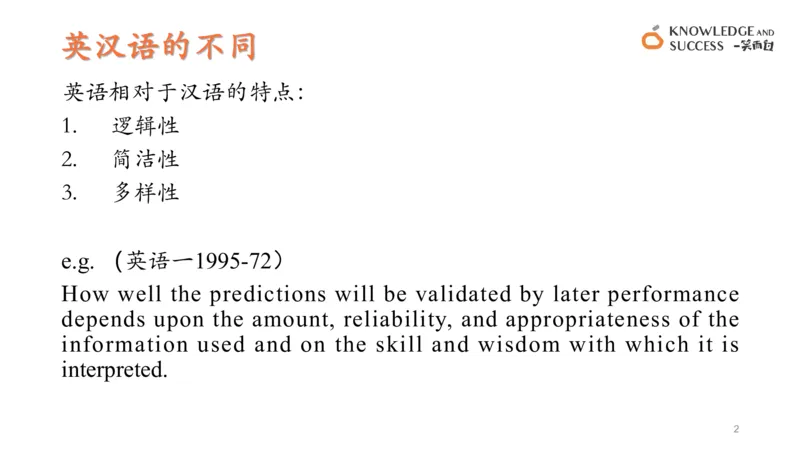
考研翻译写作基础英语相对于汉语的特点:
1. 逻辑性
2. 简洁性
3. 多样性
e.g.
(英语一
1995-72
)
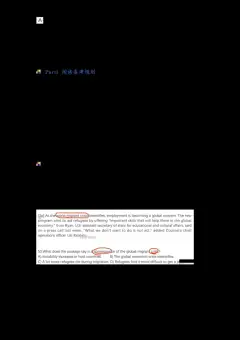
How well the predictions will be validated by later performance
depends upon the amount, reliability, and appropriateness of the
information used and on the skill and wisdom with which it is
interpreted.
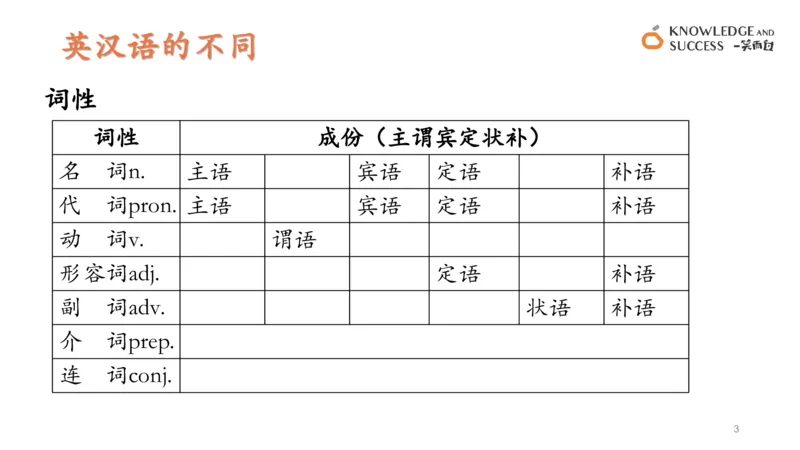
2词性
词性 成份(主谓宾定状补)
名 词n. 主语 宾语 定语 补语
代 词pron. 主语 宾语 定语 补语
动 词v. 谓语
形容词adj. 定语 补语
副 词adv. 状语 补语
介 词prep.
连 词conj.
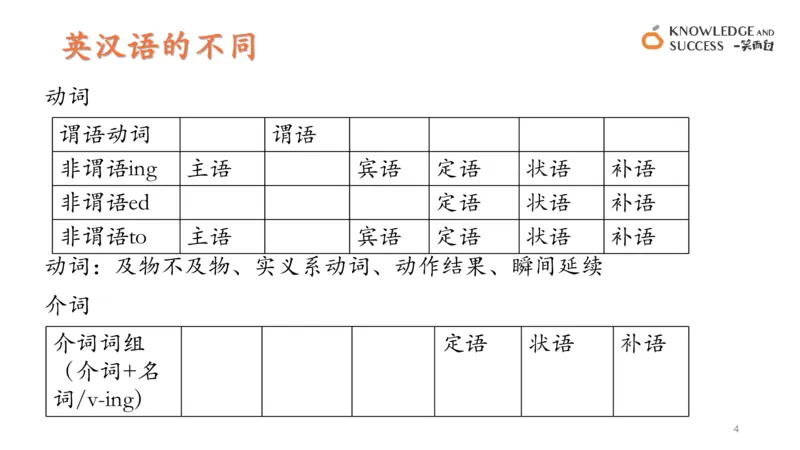
3动词
谓语动词 谓语
非谓语ing 主语 宾语 定语 状语 补语
非谓语ed 定语 状语 补语
非谓语to 主语 宾语 定语 状语 补语
动词:及物不及物、实义系动词、动作结果、瞬间延续
介词
介词词组 定语 状语 补语
(介词+名
词/v-ing)
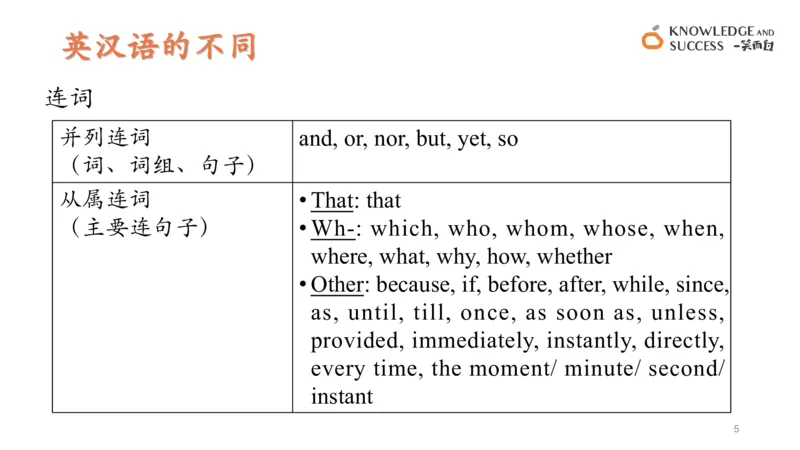
4连词
并列连词 and, or, nor, but, yet, so
(词、词组、句子)
从属连词 • That: that
(主要连句子) • Wh-: which, who, whom, whose, when,
where, what, why, how, whether
• Other: because, if, before, after, while, since,
as, until, till, once, as soon as, unless,
provided, immediately, instantly, directly,
every time, the moment/ minute/ second/
instant
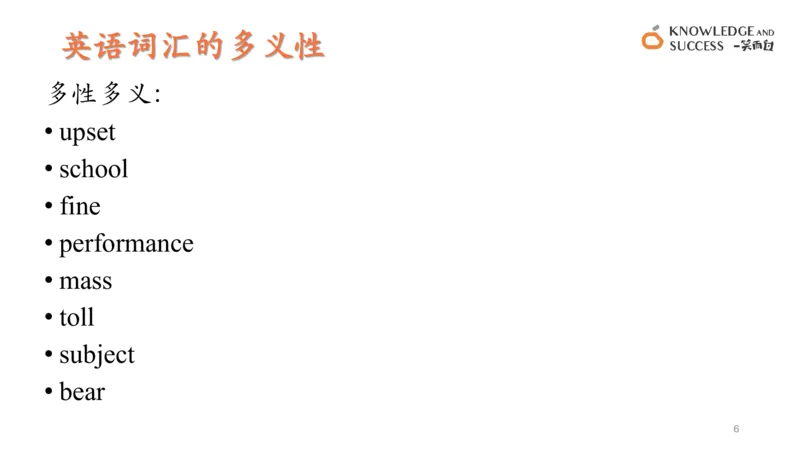
5多性多义:
• upset
• school
• fine
• performance
• mass
• toll
• subject
• bear
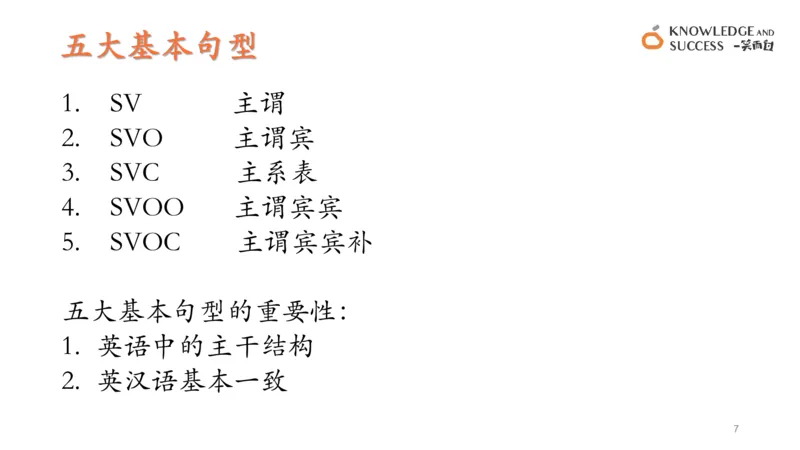
61. SV 主谓
2. SVO 主谓宾
3. SVC 主系表
4. SVOO 主谓宾宾
5. SVOC 主谓宾宾补
五大基本句型的重要性:
1. 英语中的主干结构
2. 英汉语基本一致
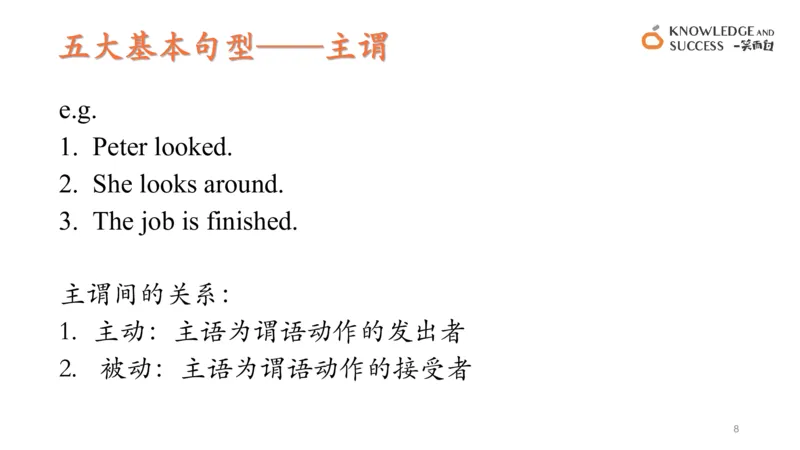
7e.g.
1. Peter looked.
2. She looks around.
3. The job is finished.
主谓间的关系:
1. 主动:主语为谓语动作的发出者
2. 被动:主语为谓语动作的接受者
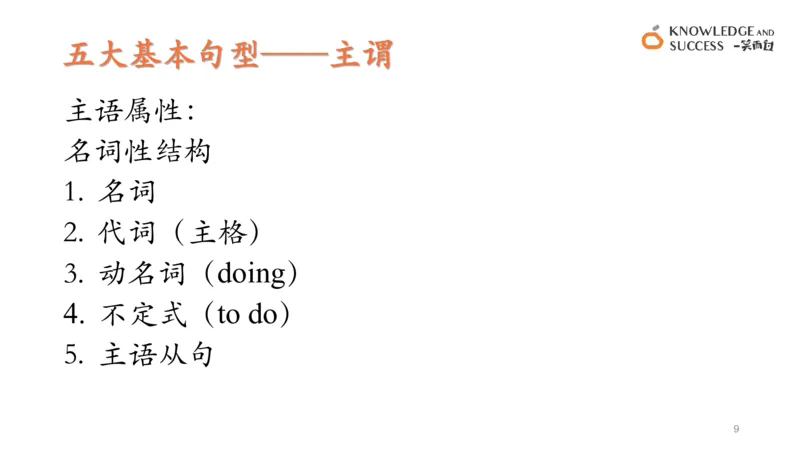
8主语属性:
名词性结构
1. 名词
2. 代词(主格)
3. 动名词(doing)
4. 不定式(to do)
5. 主语从句
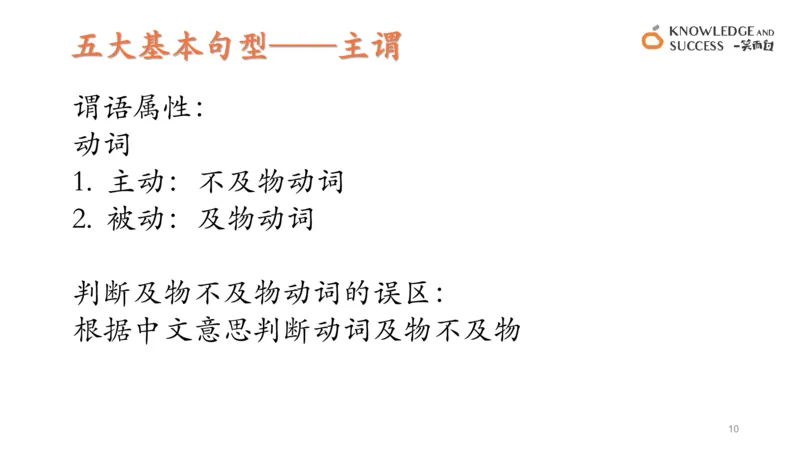
9谓语属性:
动词
1. 主动:不及物动词
2. 被动:及物动词
判断及物不及物动词的误区:
根据中文意思判断动词及物不及物
10e.g.
1. I watch TV.
2. The students are looking at the teacher.
主谓宾间的关系(只有主动):
1. 主语为谓语动作的发出者
2. 宾语为谓语动作的接受者
11谓语属性:动词
1. 及物动词
2. 不及物动词+介词
宾语属性:
名词性结构
1. 名词
2. 代词(宾格)
3. 动名词(doing)
4. 不定式(to do)
5. 宾语从句
12可带动名词(doing)的动词:
admit, acknowledge, anticipate, advocate, appreciate, avoid,
can’t help/ resist/ stand, consider, defer, delay, deny, mind,
enjoy, fancy, favour, give up, include, keep, practice, risk,
stop, suggest...
13e.g.
1. I am excited/ a college student/ in the classroom/
home.
2. I feel happy.
3. Everyone stayed calm.
4. Food goes bad easily in summer.
14系动词的类型:
1. be动词
2. 感官动词 appear, look, feel, taste, smell, sound, seem
3. “保持”类动词 keep, remain, stay, stand (firm)
4. “变化”类动词become, go, turn, grow, get, fall (ill),
come (true), run (dry)
15表语的属性:
1. 形容词 I am excited.
2. 名词 I am a college student.
3. 代词 It is him.
4. 介词短语 I am in the classroom.
5. 副词(表位置) I am here/ home.
6. 不定式(to) My plan is to pass the test.
7. 动名词(doing) My hobby is growing flowers.
8. 表语从句
16e.g.
1. He gave me some advice.
2. He gave some advice to me.
可带双宾的动词:
“给予” 类动词
give, buy, tell, leave, lend, offer, pay, show, teach, bring, do, make,
pass, sell, send, sing, write, spare
17e.g.
1. I regard you as the best friend.
2. You make me happy.
3. Parents expect their children to be excellent.
4. I see my students doing their homework.
5. I find all the housework done.
6. The president appointed him the sales manager.
18宾补的形式:
1. I regard you as the best friend.
2. You make me happy.
3. Parents expect their children to be excellent.
4. I see my students doing their homework.
5. I find all the housework done.
6. The president appointed him the sales manager.
宾补的作用:
• 宾补是对宾语的补充说明
• 宾语+宾补可在意思上构成“主谓”、“主谓宾” 或“主系表” 关系
19常见可带宾补动词:
make, call, name, think, elect, appoint, consider, want,
wish, expect, keep, have, leave, drive, catch, stop, allow,
get, find, regard, ask, remind, prefer, encourage, tell, order,
like, hate, help, paint, cut, mind...
注意:
宾补通常都出现在上述动词的固定搭配中。
20the college students in the classroom
结论:
1. 定语修饰名词
2. 英语中定语分前置后后置
3. 英语中简单定语前置,复杂定语后置
英语中定语位置及基本形式(前二后六):
1. 前置定语:形容词、名词
2. 后置定语:介词词组、doing现在分词词组、done过去
分词词组、不定式、形容词词组、定语从句
21the college students in the classroom
教室里的大学生
结论:
汉语中只有前置定语
22什么是状语(adverbial)?
1. 状语一般修饰动词
2. 状语经常由副词充当
23He got to the station quickly.
英语中状语的位置:
1. Quickly, he got to the station. (主语前)
2. He quickly got to the station. (动词前)
3. He got quickly to the station. (动词后)
4. He got to the station quickly. (宾语后)
24英语中状语的位置:
1. At a high speed, he got to the station. (主语前)
2. He, at a high speed, got to the station. (动词前)
3. He got, at a high speed, to the station. (动词后)
4. He got to the station at a high speed. (宾语后)
注意:
状语的四个位置对状语的形式没有限制。
25英语中状语的基本形式:
1. 副词
2. 介词词组
3. doing现在分词词组
4. done过去分词词组
5. 不定式
6. 形容词词组
7. 状语从句
26汉语中状语的位置:
He got to the station quickly.
1. 他很快就到了车站。 (动词前)
2. 很快,他就到了车站。(主语前)
27从句类型:
1. 定语从句
2. 名词从句(主从、 宾从、表从、 同从)
3. 状语从句
28含义:
句:主谓结构
从:从属连词/引导词
从句基本结构:
引导词(只能使用一个)+主谓结构
引导词的作用:
共同作用:连接主从句
独特作用:每种从句中各不相同
2024-10-17 29引导词的类型:
• that:
that
• wh-:
which, who, whom, whose, when, where, what, why, how, whether
• 其它从属连词:
because, if, although, though, before, after, while, since, as, until,
till, once, as soon as, unless, provided, immediately, instantly,
directly, every time, the moment/ minute/ second/ instant
2024-10-17 30e.g.
• ...although he came home.
• ...that he came home.
• ...when he came home.
容易引起混淆的引导词:
that/ wh-
2024-10-17 31定语从句的结构:
1. 引导词
• That:
that
• Wh-:
which/ who/ whom/ whose/ when/ where/ why
(注意:how/ what/ whether一般不能引导定语从句)
2. 作后置定语
32基本结构:
名词结构/句子+引导词
这是我昨天买的那本书。
This is the book that/ which I bought yesterday.
定语从句的特点:
1、引导词指代被修饰的名词结构,甚至句子
2、引导词在定语从句中充当成分,但无意义
3、句子语意一定不完整
331. Think about driving a route that’s very familiar.
2. According to Ben-Shalar, realistic optimists are those who make the
best of things that happen, but not those who believe everything
happens for the best.
3. “It was a really bad move because that’s not my passion,” says Ning,
whose dilemma about the job translated, predictably, into a lack of sales.
4. I never feel overwhelmed with the amount of information my brain
absorbs.
5. The effect is caused by the way we allocate our attention.
6. While producing large quantities of CO2, these computers emit a great
deal of heat, so the centres need to be well air-conditioned, which uses
even more energy.
34这是我昨天买的那本书。
This is the book that/ which I bought yesterday.
定从使用前提(一):
带有动词的“的”字结构
35我买了一本书。这本书给我提供了很大的帮助。
I bought a book, which gave me great help.
定语从句使用前提(二):
相邻句子有名词重复时,可使用定语从句合并翻译。
合并方法:
找出重复名词,用相应引导词替代,进行句子合并。
36他离开了学校。这让我大吃一惊。
He left the school, which surprised me greatly.
注意:
当重复部分为句子时,必须使用逗号+which的定语从句。
371. 条件:
引导词作从句的主语
2. 方法:
省略引导词,改谓语动词为非谓语动词。
3. 非谓语动词的三种基本形式:
-ing:表主动、正在进行
-ed : 被动、已经完成
to : 表将来、目的
38I bought a book, which provided great help.
I bought a book providing great help.
• 现在分词短语作后置定语
I bought a book, which was written by the best novelist in the
world.
I bought a book written by the best novelist in the world.
• 过去分词短语作后置定语
39I bought a book, which would solve all my problems in
English learning.
I bought a book to solve all my problems in English learning.
I bought a book, which would be revised soon.
I bought a book to be revised soon.
• 不定式作后置定语
40I bought a book, which was able to solve all my problems in
English learning.
I bought a book able to solve all my problems in English
learning.
• 形容词短语作后置定语
411. Others are reasonable consequences of particular advances in
science being to some extent self-accelerating.
2. To deliver results to its users quickly, then, Google has to maintain
vast data centres round the world, packed with powerful computers.
3. One could interpret much of the work of Beethoven by saying that
suffering is inevitable, but the courage to fight it renders life worth
living
4. There is no agreement whether methodology refers to the concepts
peculiar to historical work in general or to the research techniques
appropriate to the various branches of historical inquiry.
42• 我找到了导致这场意外的原因。
I have found the reason that led to the accident.
I have found the reason leading to the accident.
• 这座房子就是他出生的地方。
The house is the place in which/ where he was born.
• 我参加过无数考试,几乎没有不及格过。
I have taken countless exams, in which I have hardly failed.
• 他获得了比赛的一等奖。我感到十分高兴。
He won the first prize in the competition, which pleased me greatly.
43名词从句的基本结构:
1. 引导词
• That:
that
• Wh-:
which(ever), who(ever), whom(ever), what(ever),
whose(ever), how, when, where, why, whether
• 其他:
because/ as if/ as though(表从), if(宾从)
2. 充当主语、宾语、表语、同位语
441. That he cheated in the exam will be eventually discovered.
2. You don’t know which I bought yesterday.
3. My question is how I can further my study in this university.
4. No one can deny the fact that I am Chinese.
名词从句的特点:
1、句子结构和语意均完整
2、引导词无指代
3、that无意义、不充当成分;wh-有意义、充当成分
45基本结构:
引导词+主谓结构 + 谓语
1. That he cheated in the exam will be eventually discovered.
2. It is obvious that he cheated in the exam.
注意:
1. 带有正常主语从句的句子一般呈现出“一主两谓”的结构。
形式主语只能代替主从、不定式和动名词(动词 ),不能
2. ing
代替名词和代词
461. How well the predictions will be validated by later performance depends upon the
amount, reliability, and appropriateness of the information used and on the skill
and wisdom with which it is interpreted.
2. Whether the Government should increase the financing of pure science at the
expense of technology or vice versa often depends on the issue of which is seen as
the driving force.
3. Furthermore it is obvious that the strength of a country’s economy is directly
bound up with the efficiency of its agriculture and industry, and that this in turn
rests upon the efforts of scientists and technologists of all kinds.
4. It may be said that the measure of the worth of any social institution is its effect in
enlarging and improving experience, but this effect is not a part of its original
motive.
47我们什么时候能成功取决于我们自身的努力。
When we can succeed depends on our own efforts.
主语从句使用的前提(一):
句子充当主语
翻译方法:
名词从句可以基本按照语序翻译,但引导词要置于句首。
48我们最终取得了成功依靠的是我们自身的努力。
That we finally succeeded depended on our own efforts.
试对比:
我们什么时候能成功取决于我们自身的努力。
我们最终取得了成功依靠的是我们自身的努力。
注意:
当主语从句为陈述句句意时,必须在句首加上引导词
that。
49他离开了学校。这让我大吃一惊。
That he left the school surprised me greatly.
主语从句使用的前提(二):
前句为后句的主语
翻译方法:
用前句代替后句的主语。
50我们什么时候能成功还是一个未知数。
When we can succeed is still unknown/ a mystery.
It is still unknown/ a mystery when we can succeed.
形式主语使用的常见形式:
1. It is adj. that/ wh-...
2. It is n. that/ wh...
3. It is -ed that...
It is said that we succeeded.
51• 中国赢得2010年世博会举办权,靠的是国际社会的支持。
That China won 2010 World Expo depended on the international
society’s support.
• 中国坚持和平发展是基于中国国情的必然选择。
That China insists on peaceful development is a necessary choice
based on China’s condition.
It is a necessary choice based on China’s condition that China insists
on peaceful development.
52