Lesson 9 Mid-Autumn Festival中秋节
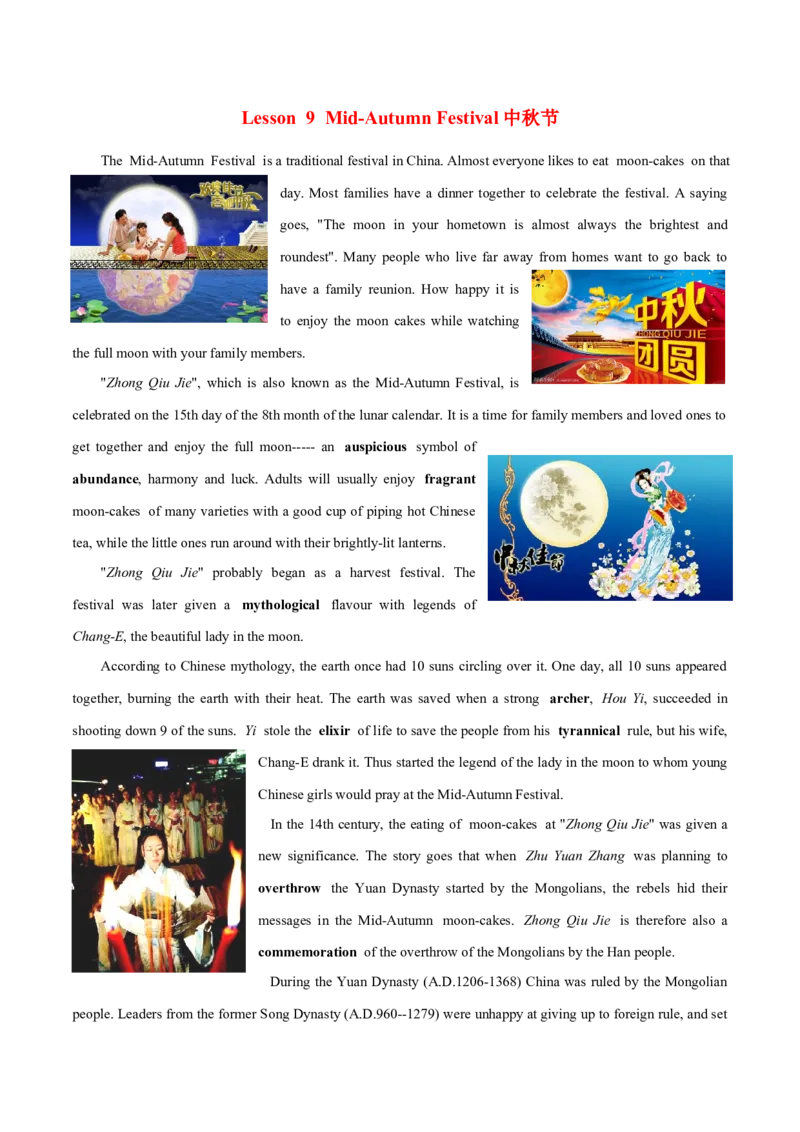
The Mid-Autumn Festival is a traditional festival in China. Almost everyone likes to eat moon-cakes on that
day. Most families have a dinner together to celebrate the festival. A saying
goes, "The moon in your hometown is almost always the brightest and
roundest". Many people who live far away from homes want to go back to
have a family reunion. How happy it is
to enjoy the moon cakes while watching
the full moon with your family members.
"Zhong Qiu Jie", which is also known as the Mid-Autumn Festival, is
celebrated on the 15th day of the 8th month of the lunar calendar. It is a time for family members and loved ones to
get together and enjoy the full moon----- an auspicious symbol of
abundance, harmony and luck. Adults will usually enjoy fragrant
moon-cakes of many varieties with a good cup of piping hot Chinese
tea, while the little ones run around with their brightly-lit lanterns.
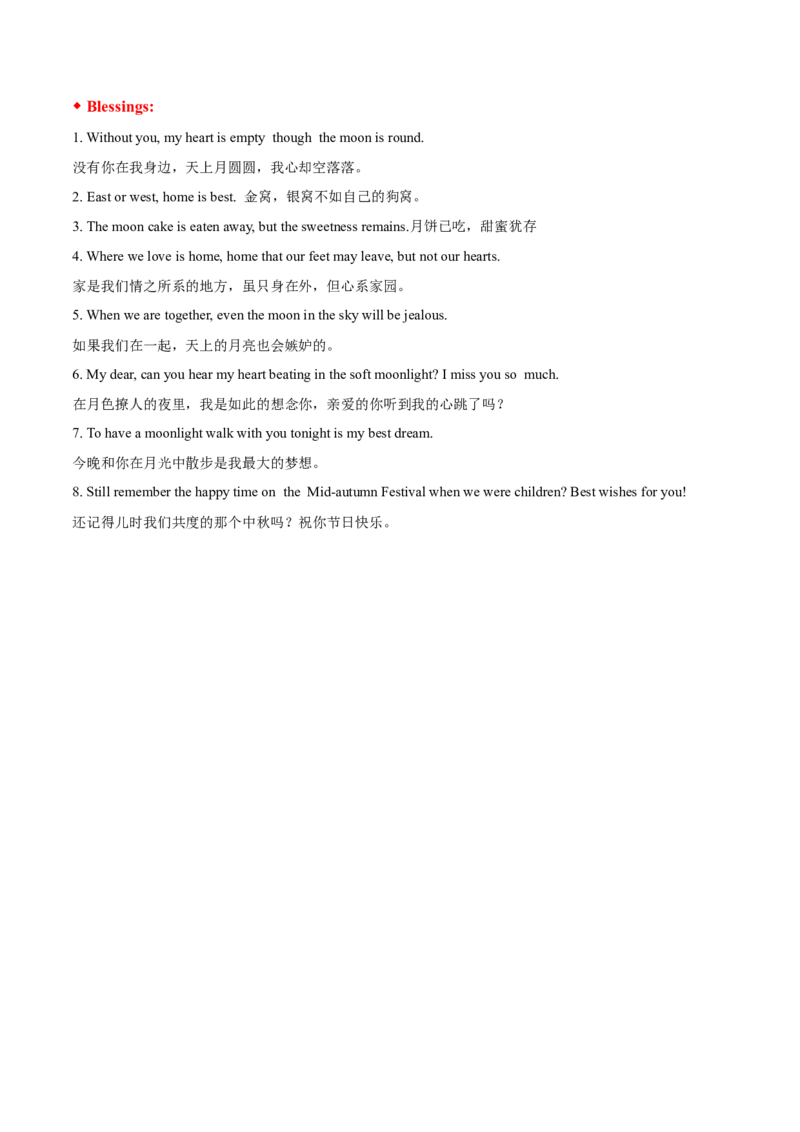
"Zhong Qiu Jie" probably began as a harvest festival. The
festival was later given a mythological flavour with legends of
Chang-E, the beautiful lady in the moon.
According to Chinese mythology, the earth once had 10 suns circling over it. One day, all 10 suns appeared
together, burning the earth with their heat. The earth was saved when a strong archer, Hou Yi, succeeded in
shooting down 9 of the suns. Yi stole the elixir of life to save the people from his tyrannical rule, but his wife,
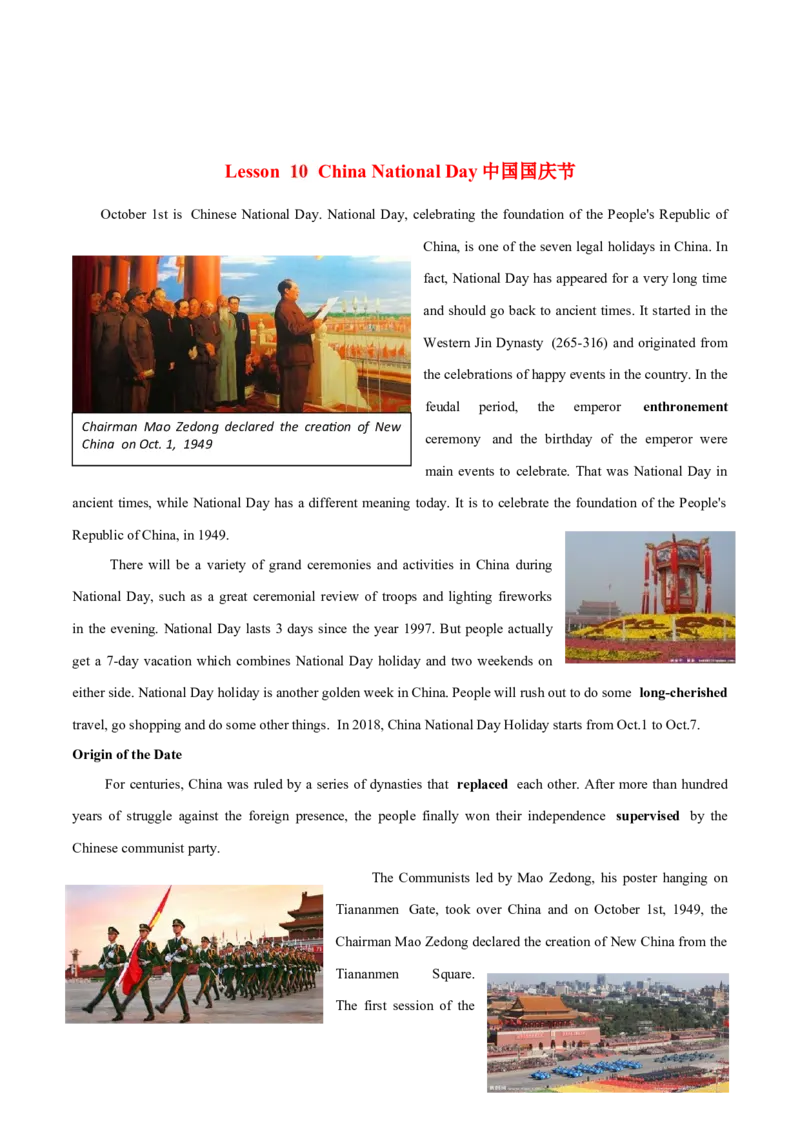
Chang-E drank it. Thus started the legend of the lady in the moon to whom young
Chinese girls would pray at the Mid-Autumn Festival.
In the 14th century, the eating of moon-cakes at "Zhong Qiu Jie" was given a
new significance. The story goes that when Zhu Yuan Zhang was planning to
overthrow the Yuan Dynasty started by the Mongolians, the rebels hid their
messages in the Mid-Autumn moon-cakes. Zhong Qiu Jie is therefore also a
commemoration of the overthrow of the Mongolians by the Han people.
During the Yuan Dynasty (A.D.1206-1368) China was ruled by the Mongolian
people. Leaders from the former Song Dynasty (A.D.960--1279) were unhappy at giving up to foreign rule, and setdown to coordinate the rebellion without being discovered. The leaders of the rebellion, knowing that the
Moon Festival was drawing near, ordered the making of special cakes. Packed into each moon-cake was a message
with the outline of the attack. On the night of the Moon Festival, the rebels successfully attacked and overthrew the
government. What followed was the establishment of the Ming Dynasty (A.D. 1368-1644). Today, moon-cakes are
eaten to commemorate this event.(441 words)
◆Helper:
auspicious [ɔː'spiʃəs] 有希望的, 吉利的 abundance [ə'bʌnd(ə)ns] 富,充裕 fragrant ['freigr(ə)nt] 芳香的 mythological
[miθə'lɒdʒik(ə)l]神话的,虚构的 archer ['ɑːtʃə] 弓箭手 elixir [i'liksə; -siə]炼金药,长生不老药 tyrannical [ti'rænik(ə)l; tai-]
暴君的, 专横的 overthrow推翻 commemoration [kəmemə'reiʃ(ə)n] 纪念,纪念仪式 coordinate [kəʊ'ɔ:dineit] 使协调
rebellion [ri'beljən] 造反,叛乱
◆Brief Chinese Introduction:
农历八月十五日是中国的传统节日——中秋节。每年农历八月为秋季的第二个月,古时称为仲秋,因
处于秋季之中和八月之中,故民间称为中秋,又称秋夕、八月节、八月半、月夕、月节,又因为这一天月
亮满圆,象征团圆,又称为团圆节。中秋节最早可能是一个庆祝丰收的节日。后来,月宫里美丽的仙女嫦
娥的神话故事赋予了它神话色彩。在14世纪,中秋节吃月饼又被赋予了一层特殊的含义。传说在朱元璋带
兵起义推翻元朝时,将士们曾把联络信藏在月饼里。因此,中秋节后来也成为汉人推翻蒙古人统治的纪念
日。
◆Exercise:
Written work
(2013辽宁卷)一个英文网站面向中学生征稿。请你写一篇英文稿件,介绍“中秋节”及这个节日里的主
要活动。
写作要点:1.它是中国传统节日之一;2.家人团聚;3.赏月、吃月饼; 4.还有旅游、访友等其他活动。
5.……
注意:1.词数100左右;2.可以适当增加细节,以使用文连贯;3开头语已写好,不计入总词数。
参考词汇:中秋节:the Mid-Autumn Festival 农历: lunar calendar
赏月: enjoy the full moon 月饼: moon cake
The Mid- Autumn Festival
The Mid-Autumn Festival falls on the 15 th of the eighth month of Our Chinese lunar calendar .……◆ Blessings:
1. Without you, my heart is empty though the moon is round.
没有你在我身边,天上月圆圆,我心却空落落。
2. East or west, home is best. 金窝,银窝不如自己的狗窝。
3. The moon cake is eaten away, but the sweetness remains.月饼已吃,甜蜜犹存
4. Where we love is home, home that our feet may leave, but not our hearts.
家是我们情之所系的地方,虽只身在外,但心系家园。
5. When we are together, even the moon in the sky will be jealous.
如果我们在一起,天上的月亮也会嫉妒的。
6. My dear, can you hear my heart beating in the soft moonlight? I miss you so much.
在月色撩人的夜里,我是如此的想念你,亲爱的你听到我的心跳了吗?
7. To have a moonlight walk with you tonight is my best dream.
今晚和你在月光中散步是我最大的梦想。
8. Still remember the happy time on the Mid-autumn Festival when we were children? Best wishes for you!
还记得儿时我们共度的那个中秋吗?祝你节日快乐。Lesson 10 China National Day中国国庆节
October 1st is Chinese National Day. National Day, celebrating the foundation of the People's Republic of
China, is one of the seven legal holidays in China. In
fact, National Day has appeared for a very long time
and should go back to ancient times. It started in the
Western Jin Dynasty (265-316) and originated from
the celebrations of happy events in the country. In the
feudal period, the emperor enthronement
Chairman Mao Zedong declared the creation of New
ceremony and the birthday of the emperor were
China on Oct. 1, 1949
main events to celebrate. That was National Day in
ancient times, while National Day has a different meaning today. It is to celebrate the foundation of the People's
Republic of China, in 1949.
There will be a variety of grand ceremonies and activities in China during
National Day, such as a great ceremonial review of troops and lighting fireworks
in the evening. National Day lasts 3 days since the year 1997. But people actually
get a 7-day vacation which combines National Day holiday and two weekends on
either side. National Day holiday is another golden week in China. People will rush out to do some long-cherished
travel, go shopping and do some other things. In 2018, China National Day Holiday starts from Oct.1 to Oct.7.
Origin of the Date
For centuries, China was ruled by a series of dynasties that replaced each other. After more than hundred
years of struggle against the foreign presence, the people finally won their independence supervised by the
Chinese communist party.
The Communists led by Mao Zedong, his poster hanging on
Tiananmen Gate, took over China and on October 1st, 1949, the
Chairman Mao Zedong declared the creation of New China from the
Tiananmen Square.
The first session of theprimary Chinese People’s Political Consultative Conference (CPPCC) determined in 1949 to fix on October 1 the
date of the National Day. On October 1, 1949, the People's Republic of China was formally established, with its
national capital in Beijing. With the help of the Soviets, Mao began reforming the government and the social order
of China and the entire society of China was transformed in just a few years.
As far as official celebrations are concerned, the biggest is National Day, which in the pre-form era was
marked by parades in most cities, and a monumental parade in Beijing witnessed by China’s top leaders standing
on a podium at the head of enormous Tiananmen Square.
China National Day’s parade
The government and military make an effort to the National Day’s Parade including the careful selections of
soldiers and residents. For example, the height is an important element to select. Thousands of soldiers and civilians
take part in the massive parades on National Day. China National Day’s parade which usually is held every ten
years is absolutely sublime and spectacular.
Besides, there will be a live celebration about National Day’s parade
on TV. A splendid firework display is set off to light the sky brightly in
the evening. Every city will be decorated festively and filled with a variety
of festival activities. For example, the small size bright-colored Five-star Red Flags are on the sides of the streets in
Shanghai. The ceremonial raising of the national flag is held solemnly in Lhasa –the capital of Tibet. (560 words)
◆Helper:
feudal ['fjuːd(ə)l] 封建的 enthronement [ɪn'θronmənt]即位, 登基典礼 ceremonial [serɪ'məʊnɪəl]仪式的; 正式的 long-
cherished ['lɔŋ,tʃɛrɪʃt] 被长期渴望的 podium ['pəʊdɪəm] 表演台, 讲台 supervise ['suːpəvaɪz; 'sjuː-] 指导, 监督 establish
[ɪ'stæblɪʃ; e-] 建立,创建 the Soviet [ˈsəuviət,ˈsɔviət]苏维埃;苏联(人) transform [træns'fɔːm] 改变;改观 sublime
[sə'blaɪm] 庄严的,雄伟的 spectacular [spek'tækjələ(r)] 场面富丽的,壮观的 solemnly ['sɒləmli]庄严地, 严肃地
◆Brief Chinese Introduction:
"国庆”一词,本指国家喜庆之事,最早见于西晋。在我国封建时代, 国家喜庆的大事莫大过于帝王的
登基、诞辰(清朝称皇帝的生日为万岁节)等。因而我国古代把皇帝即位、诞辰称为“国庆”。今天称国
家建立的纪念日为国庆,现在每年的10月1日是中国的国庆节(National Day)。中国人民在中国共产党
的领导下取得了人民革命的伟大胜利。 1949年10月1日,在首都北京天安门广场举行了开国大典,在隆
隆的礼炮声中,毛泽东主席庄严地向全世界宣告:“中华人民共和国、中央人民政府成立了!”并亲手升
起了第一面五星红旗。天安门广场聚集了三十万军民进行了盛大的阅兵和庆祝游行。新中国的建立,实现
了中华民族的独立和解放,开创了中国历史的新纪元。◆Exercise:
I. Questions:
1. When was the first national day held in ancient times? For what did the people celebrate?
2. Does National Day today have the same meaning as that of ancient times?
3. What do Chinese people often do during National Day now?
4. Who was it that led the Chinese people to found the People’s Republic of China?
5. How long can a vacation for Chinese National Day last?
II. Written work
国庆节即将到来,针对黄金周的一些问题,国家拟对黄金周集中假期进行调整。下面是某一网站就黄
金周是否应该取消作的调查。请你把调查的结果写成短文,发表在学校的报刊上。
黄金周长假期的调查(1000人)
人数 原因 [写作要求] 只能使用5个句子表达
假期集中,方便出外旅游,尽情放
全部内容;
赞成长假期 45%
松;更多时间与家人一起。
[评分标准] 句子结构准确,信息内
容易造成交通阻塞,甚至交通事故;
容完整,篇章结构连贯。
取消长假期 55% 人流量大,对景点保护不利;各项服
务质量下降。
Suggested Answers9. Mid-Autumn Festival
The Mid- Autumn Festival
The Mid-Autumn Festival falls on the 15th of the eighth month of Our Chinese lunar calendar. As one of the
traditional Chinese festivals, it has been enjoying great popularity in our country. Usually, no matter how far away
or how busy we are, we will try to come home for the celebration. The moon that night looks the brightest in the
whole lunar month. What we love most is the time we enjoy the full moon together. With the beautiful moon up in
the sky, we sit together and eat moon cakes and fruit, sharing our stories. In addition to these traditional activities,
we have a wider range of choices such as travelling and visiting our relatives or friends.
10. China National Day
I. Questions:
1.It started in the Western Jin Dynasty (265-316) and originated from the celebrations of happy events in the
country. In the feudal period, the emperor enthronement ceremony and the birthday of the emperor were main
events to celebrate.
2.No. It is to celebrate the foundation of the People's Republic of China.
3.There will be a variety of grand ceremonies and activities in China during National Day, such as a great
ceremonial review of troops and lighting fireworks in the evening. People will rush out to do some long-cherished
travel, go shopping and do some other things.
4.It was Mao Zedong
5.7 days, another golden week in China
II. Written work
Recently we made a survey of whether we should have long holiday in the coming National Day. 45% of the
surveyed people(1000)hope to have a long holiday since this provides them with adequate time for a trip and
they can relax themselves completely. They also mention that with the long holiday, they have more fun staying
with the family. However, 55% of people say that during the long holiday, there are more traffic jams and even
traffic accidents. What’s more, the crowded people’s gathering in some famous places has caused damage to the
relics and led to poor service quality.