Chapter VIII Chinese Architecture
Lesson 1 Hui-style Architecture徽派建筑
At the foot of beautiful Huangshan Mountain lie groups of grey-tiled and white-walled houses, forming the
most typical scene like traditional Chinese landscape paintings. It is Hui-style architecture, one of the major
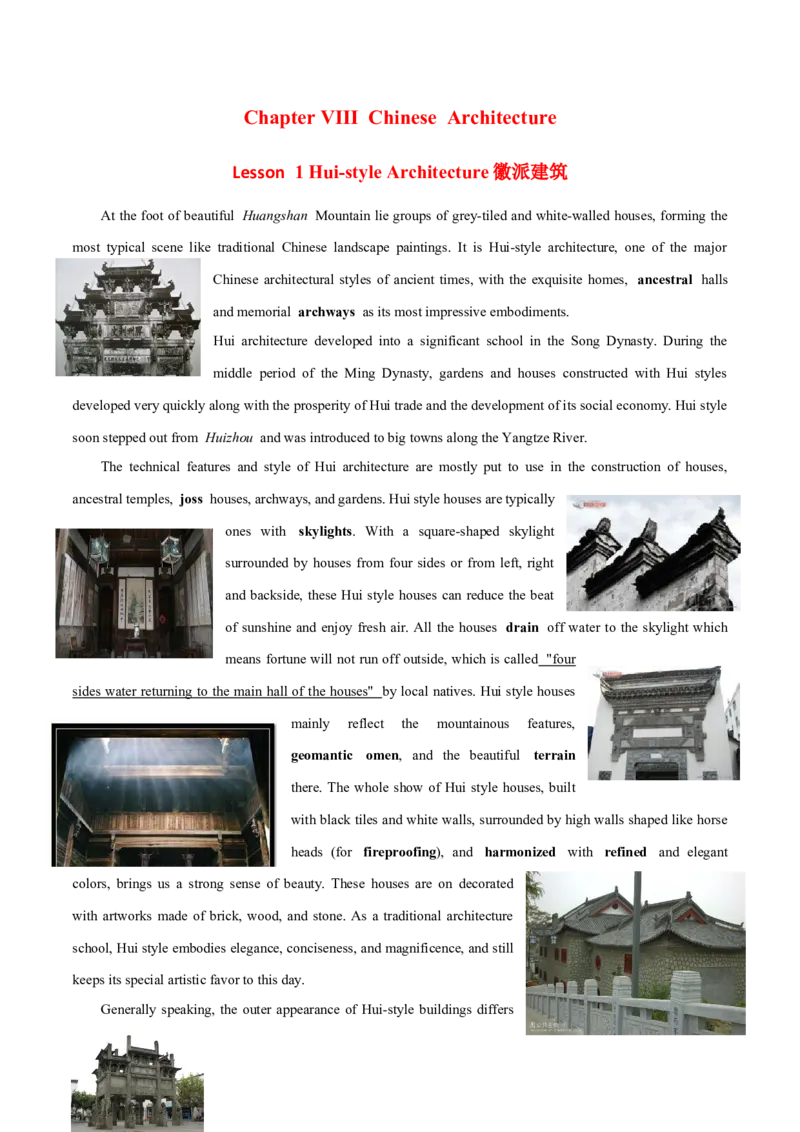
Chinese architectural styles of ancient times, with the exquisite homes, ancestral halls
and memorial archways as its most impressive embodiments.
Hui architecture developed into a significant school in the Song Dynasty. During the
middle period of the Ming Dynasty, gardens and houses constructed with Hui styles
developed very quickly along with the prosperity of Hui trade and the development of its social economy. Hui style
soon stepped out from Huizhou and was introduced to big towns along the Yangtze River.
The technical features and style of Hui architecture are mostly put to use in the construction of houses,
ancestral temples, joss houses, archways, and gardens. Hui style houses are typically
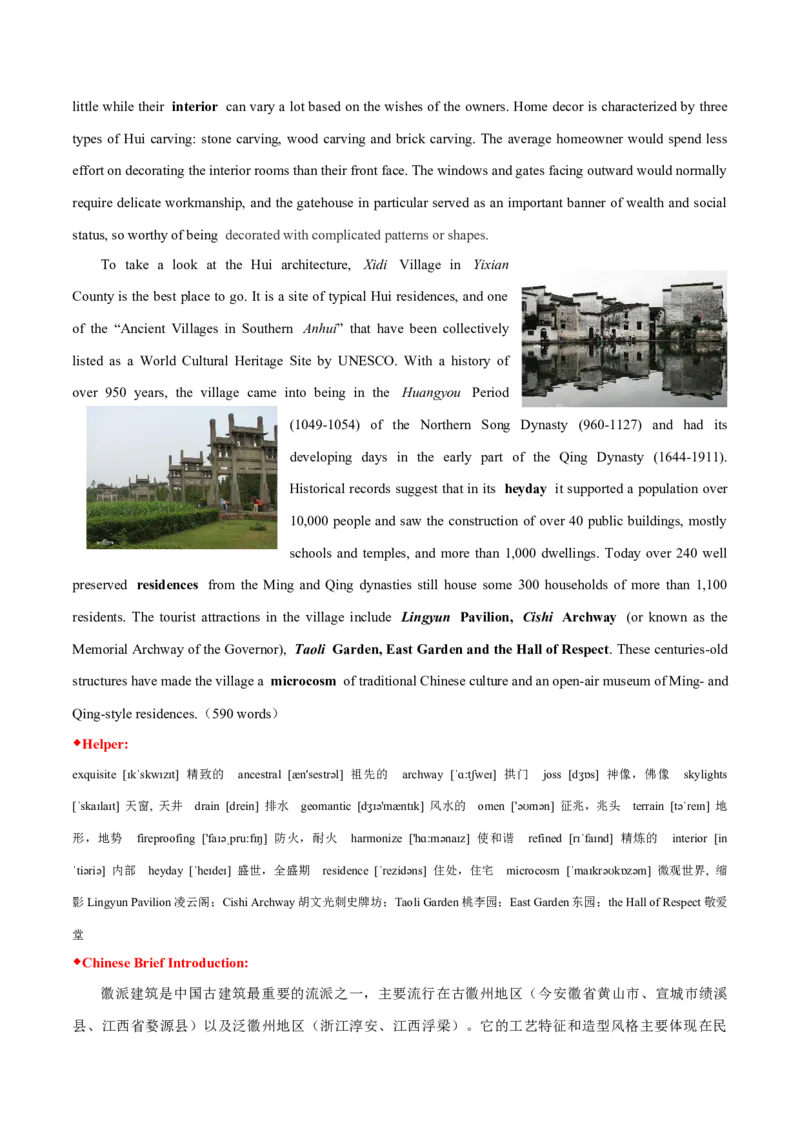
ones with skylights. With a square-shaped skylight
surrounded by houses from four sides or from left, right
and backside, these Hui style houses can reduce the beat
of sunshine and enjoy fresh air. All the houses drain off water to the skylight which
means fortune will not run off outside, which is called "four
sides water returning to the main hall of the houses" by local natives. Hui style houses
mainly reflect the mountainous features,
geomantic omen, and the beautiful terrain
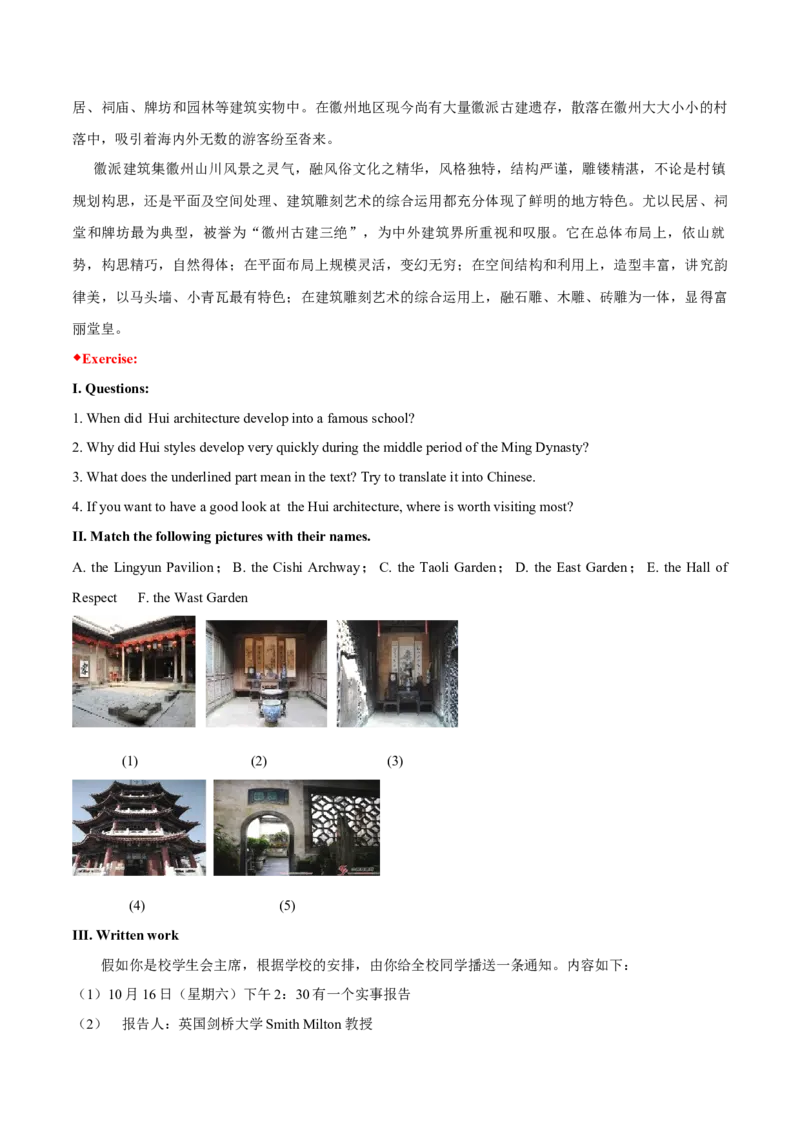
there. The whole show of Hui style houses, built
with black tiles and white walls, surrounded by high walls shaped like horse
heads (for fireproofing), and harmonized with refined and elegant
colors, brings us a strong sense of beauty. These houses are on decorated
with artworks made of brick, wood, and stone. As a traditional architecture
school, Hui style embodies elegance, conciseness, and magnificence, and still
keeps its special artistic favor to this day.
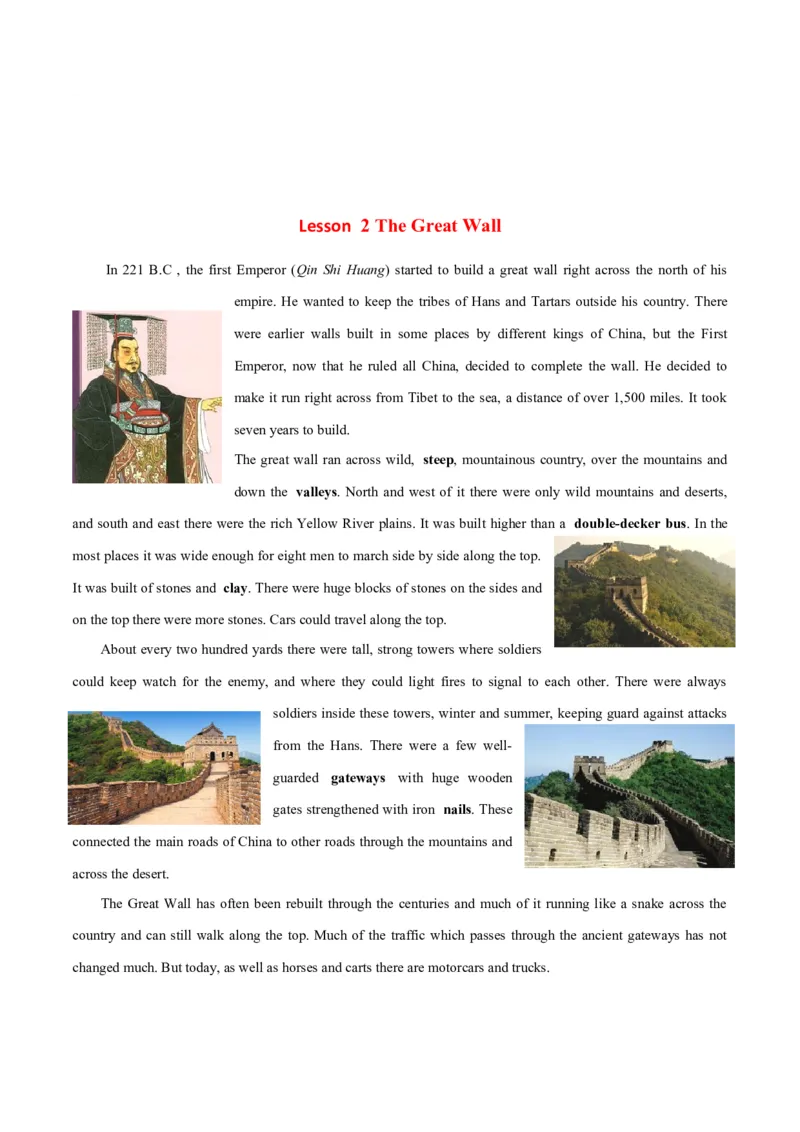
Generally speaking, the outer appearance of Hui-style buildings differslittle while their interior can vary a lot based on the wishes of the owners. Home decor is characterized by three
types of Hui carving: stone carving, wood carving and brick carving. The average homeowner would spend less
effort on decorating the interior rooms than their front face. The windows and gates facing outward would normally
require delicate workmanship, and the gatehouse in particular served as an important banner of wealth and social
status, so worthy of being decorated with complicated patterns or shapes.
To take a look at the Hui architecture, Xidi Village in Yixian
County is the best place to go. It is a site of typical Hui residences, and one
of the “Ancient Villages in Southern Anhui” that have been collectively
listed as a World Cultural Heritage Site by UNESCO. With a history of
over 950 years, the village came into being in the Huangyou Period
(1049-1054) of the Northern Song Dynasty (960-1127) and had its
developing days in the early part of the Qing Dynasty (1644-1911).
Historical records suggest that in its heyday it supported a population over
10,000 people and saw the construction of over 40 public buildings, mostly
schools and temples, and more than 1,000 dwellings. Today over 240 well
preserved residences from the Ming and Qing dynasties still house some 300 households of more than 1,100
residents. The tourist attractions in the village include Lingyun Pavilion, Cishi Archway (or known as the
Memorial Archway of the Governor), Taoli Garden, East Garden and the Hall of Respect. These centuries-old
structures have made the village a microcosm of traditional Chinese culture and an open-air museum of Ming- and
Qing-style residences.(590 words)
◆Helper:
exquisite [ɪkˈskwɪzɪt] 精致的 ancestral [æn'sestrəl] 祖先的 archway [ˈɑ:tʃweɪ] 拱门 joss [dʒɒs] 神像,佛像 skylights
[ˈskaɪlaɪt] 天窗, 天井 drain [drein] 排水 geomantic [dʒɪə'mæntɪk] 风水的 omen ['əʊmən] 征兆,兆头 terrain [təˈreɪn] 地
形,地势 fireproofing ['faɪəˌpru:fɪŋ] 防火,耐火 harmonize ['hɑ:mənaɪz] 使和谐 refined [rɪˈfaɪnd] 精炼的 interior [in
ˈtiəriə] 内部 heyday [ˈheɪdeɪ] 盛世,全盛期 residence [ˈrezidəns] 住处,住宅 microcosm [ˈmaɪkrəʊkɒzəm] 微观世界, 缩
影Lingyun Pavilion凌云阁;Cishi Archway胡文光刺史牌坊;Taoli Garden桃李园;East Garden东园;the Hall of Respect敬爱
堂
◆Chinese Brief Introduction:
徽派建筑是中国古建筑最重要的流派之一,主要流行在古徽州地区(今安徽省黄山市、宣城市绩溪
县、江西省婺源县)以及泛徽州地区(浙江淳安、江西浮梁)。它的工艺特征和造型风格主要体现在民居、祠庙、牌坊和园林等建筑实物中。在徽州地区现今尚有大量徽派古建遗存,散落在徽州大大小小的村
落中,吸引着海内外无数的游客纷至沓来。
徽派建筑集徽州山川风景之灵气,融风俗文化之精华,风格独特,结构严谨,雕镂精湛,不论是村镇
规划构思,还是平面及空间处理、建筑雕刻艺术的综合运用都充分体现了鲜明的地方特色。尤以民居、祠
堂和牌坊最为典型,被誉为“徽州古建三绝”,为中外建筑界所重视和叹服。它在总体布局上,依山就
势,构思精巧,自然得体;在平面布局上规模灵活,变幻无穷;在空间结构和利用上,造型丰富,讲究韵
律美,以马头墙、小青瓦最有特色;在建筑雕刻艺术的综合运用上,融石雕、木雕、砖雕为一体,显得富
丽堂皇。
◆Exercise:
I. Questions:
1. When did Hui architecture develop into a famous school?
2. Why did Hui styles develop very quickly during the middle period of the Ming Dynasty?
3. What does the underlined part mean in the text? Try to translate it into Chinese.
4. If you want to have a good look at the Hui architecture, where is worth visiting most?
II. Match the following pictures with their names.
A. the Lingyun Pavilion;B. the Cishi Archway;C. the Taoli Garden;D. the East Garden;E. the Hall of
Respect F. the Wast Garden
(1) (2) (3)
(4) (5)
III. Written work
假如你是校学生会主席,根据学校的安排,由你给全校同学播送一条通知。内容如下:
(1)10月16日(星期六)下午2:30有一个实事报告
(2) 报告人:英国剑桥大学Smith Milton教授(3)报告内容:东西方不同建筑风格及其对艺术,文化的影响
(4)地点:学校礼堂
(5)要求:所有同学都要参加,准时到场,认真听讲,做好笔记。在听报告期间,如有问题询问,可举
手或递纸条给报告人。报告会结束后将分班进行讨论
请根据以上内容写一则100词左右的英文广播通知。Lesson 2 The Great Wall
In 221 B.C , the first Emperor (Qin Shi Huang) started to build a great wall right across the north of his
empire. He wanted to keep the tribes of Hans and Tartars outside his country. There
were earlier walls built in some places by different kings of China, but the First
Emperor, now that he ruled all China, decided to complete the wall. He decided to
make it run right across from Tibet to the sea, a distance of over 1,500 miles. It took
seven years to build.
The great wall ran across wild, steep, mountainous country, over the mountains and
down the valleys. North and west of it there were only wild mountains and deserts,
and south and east there were the rich Yellow River plains. It was built higher than a double-decker bus. In the
most places it was wide enough for eight men to march side by side along the top.
It was built of stones and clay. There were huge blocks of stones on the sides and
on the top there were more stones. Cars could travel along the top.
About every two hundred yards there were tall, strong towers where soldiers
could keep watch for the enemy, and where they could light fires to signal to each other. There were always
soldiers inside these towers, winter and summer, keeping guard against attacks
from the Hans. There were a few well-
guarded gateways with huge wooden
gates strengthened with iron nails. These
connected the main roads of China to other roads through the mountains and
across the desert.
The Great Wall has often been rebuilt through the centuries and much of it running like a snake across the
country and can still walk along the top. Much of the traffic which passes through the ancient gateways has not
changed much. But today, as well as horses and carts there are motorcars and trucks.To build such an enormous wall across such wild and mountains country without any modern tractors or
other heavy machines was very difficult. All the Emperor’s builders were thousands of men, often prisoners of war.
They lifted the earth in buckers and dragged the stones in teams with ropes
over their shoulders. They worked in such wild and distant places that it was
difficult to supply them with enough food or to make proper shelters in
which they could sleep. Thousands of workers died and were buried in the
clay inside the wall. The people hated the Emperor for his cruelty. Many
people were seized and forced to work on the wall far away from their homes. Many of them never came back.
Superstitious people who believed in magic used to say that the Emperor had ridden across the mountains on
magic horses. The wall appeared under him as he went along. Wherever the horse stamped it foot, a watch-tower
appeared. But the wall was not made by magic. It was made by the work and lives of thousands of men.(506
words)
◆Helper:
steep [sti:p] 陡峭的,险峻的 valley [ˈvæli] 山谷 double-decker bus [ˈdʌblˈdekə bʌs] 双层巴士 clay [klei] 黏土,泥土
gateway ['ɡeɪtweɪ]入口 nail ['neɪlz] 钉子 tractor [ˈtræktə] 拖拉机, 牵引器 bucker['bʌkə]装运工 shelter [ˈʃeltə] 居所
Superstitious [ˌsu:pəˈstɪʃəs]迷信的 stamp [stæmp] 跺脚
◆Chinese Brief Introduction:
据记载,秦始皇使用了近百万劳动力修筑长城,占全国总人口的二十分之一。当时没有任何机械,全
部劳动都由人力完成,工作环境又是崇山峻岭、峭壁深壑,十分艰难。长城始建于春秋战国时期,历史达
2000多年,今天所指的万里长城多指明代修建的长城。长城东西绵延上万华里,因此又称作万里长城。长
城是中国也是世界上修建时间最长、工程量最大的一项古代防御工程。据2012年国家文物局发布数据,历
代长城总长为21196.18千米,是第一批全国爱国主义教育示范基地。长城是我国古代劳动人民创造的伟大
的奇迹,是中国悠久历史的见证。与古罗马斗兽场、古埃及金字塔、比萨斜塔等是古世界的八大奇迹之
一。1987年12月,长城被列为世界文化遗产。
◆Exercise:
I. Multiple Choice:
Chose the best answer from the following A, B, C, D.
( ) 1. The Great Wall took _________ years to build.
A. 221 B. 1500 C. 7 D. 20
( ) 2. The Great Wall protected the plain in the _________ .A. north and west B. north and east C. south and west D. south and east
( ) 3. Fires were sometimes lit to ____________.
A. keep the soldiers warm and cook the food B. keep the enemy away
C. brighten the road and cook the food D. signal from one tower to another
( ) 4. The gateways were made for __________ to pass through
A. horses and carts B. cars and lorries C. visitors and tractors D. Hans and Tartars
( ) 5. Which statement is not true according to the passage?
A. There was clay in the middle of the wall.
B. There were no ways through the mountains and across the desert outside the wall.
C. A great number of workers died because there was not enough food and shelter.
D. There were a great many gates in the wall.
II. Written work
1. 假设由你接待一组加拿大中学生代表团。该团经广州、成都等地在北京只逗留两天。团长向你征求
意见在北京先参观何处,请按以下提示提出你的口头建议:
(1)首先建议去长城。长城是世界是最长的墙,是世界八大奇观之一,有 20个世纪的悠久历史,全部由
手工建成,令人惊叹不已。
(2)其次是故宫,它建于1406年,曾有24位皇帝在那儿居住过。皇帝在那儿发号施令。参观它,可以更
多地了解中国历史。
(3)对其逗留时间短暂深感遗憾,否则,可以参观许多具有历史意义的地方和景区,如颐和园、北海公
园等。
参考词汇:发号施令:issue orders 令人惊奇:amazing
2. 假如你是一名导游,陪同某外国旅游团游览长城。车抵长城,下车前你准备对大家作必要的介绍和
交代。请拟一份讲话稿。讲话稿必须包括以下内容:
(1)简单介绍长城(世界上最长的城墙,有两千多年的历史,是世界奇观之一);
(2)在长城逗留两个半小时,11点离开;
(3)游览车在入口处等候,记住车号,准时返回;
(4)贵重物品随身携带,下车前关上车窗;
(5)游览时注意安全,祝大家玩得愉快。
注意:不要逐句翻译,字数100个单词左右。Suggested Answers to Chapter VIII
1. Hui-style Architecture
I. 3. Water in all directions gathers together, which means rich water should be kept in one's own fields. It shows
Hui businessmen’s ideas of gathering money. “四水归堂”
II. Match the following pictures with their names.
Keys: (1) B (2) E (3) C (4) D (5) A (6) F
III. Written work
【参考答案】
Boys and girls,
May I have your attention, please? Now I have an announcement to make. There will be a lecture in our school
auditorium on Saturday Oct.16.It is about the different styles between eastern and western architecture and their
effects on art and culture. The lecture will be given by Smith Milton, a professor from Cambridge University in
England. It will begin at 2:30 p.m. Everyone is required to attend. Please listen carefully and take notes. If
somebody has a question, please put up your hand or write it down on a piece of paper and pass it to the speaker.
After the lecture, we’ll have a discussion in each class.
Please do remember the time and place: 2:30 p.m. Saturday Oct.16, school auditorium. Don’t be late.
That’s all. Thank you.
2. The Great Wall of China
I. Multiple Choice:
1. C 2. D 3. D 4. A 5. D
II. Written work
1. Well, the first place I suggest that you visit is the Great Wall, the longest wall in the world, which is said to
be one of the wonders in the world. It has a history of more than twenty centuries. It is amazing to see such a huge
wall was made entirely by hand.
The other place worth visiting is the Palace Museum, which was built in 1406. Twenty-four emperors once
lived there,from where the ruling emperors issued orders. You can learn a lot about Chinese history by visiting
this Palace.
What a pity that you can’t stay longer, otherwise, you could visit many other historic places and beautifulscenes such as Summer Palace, Bei Hai Park and so on.
2.
Ladies and gentlemen,
Here we are at the foot of the Great Wall. It is the longest wall in the world and has a history of over 2 000 years.
It is one of the wonders of the world. We’ll stay here for two hours and a half, that is to say, we’ll leave at 11
o’clock. The bus will be waiting for us at the entrance. Please remember our bus number and be back on time.
Besides, please take your valuable things with you and shut all the windows before you get off. Be careful while
you are on the Great Wall.
Have a good time!