义
务
教
育
教
科
书
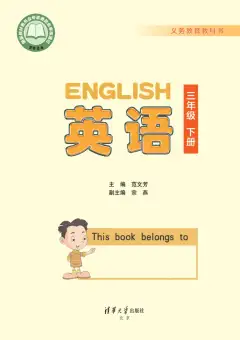
(一年级起点)
五年级 上册
五年级 上册
(一年级起点)
主     编:
副主编:
陈    琳       Printha Ellis (英)
鲁子问
Name ( 姓名):               Class ( 班级):               School ( 学校):
义
务
教
育
教
科
书
前        言
各位同学,你们好!欢迎大家学习本套英语教材!
2000年,外语教学与研究出版社与麦克米伦出版(中国)有限公司依据
国家《义务教育 英语课程标准(实验稿)》共同组织开发了本套教材;作为
我国第一套中小学“一条龙”英语教材,本套教材已出版使用十余年。2011
年,基于新颁布的国家《义务教育 英语课程标准(2011年版)》,我们对教
材进行了认真修订。
在修订后的小学教材中,我们为同学们保留了大家熟悉并喜爱的四个小
伙伴—中国学生大明和玲玲、英国学生Sam和Amy,还增加了其他一些人物
和小动物。他们会带领大家在一系列有趣的故事、对话、游戏、活动和歌曲中
学习英语。
修订后的教材每册包括10个学习模块(Module)、一个复习模块
(Review Module)、四个单词表、一个补充阅读(Reading for Pleasure)
版块以及一个综合运用实践项目(Project)。每个学习模块分两个单元
(Unit),一般情况下,第一单元呈现本模块所要学习的语言内容,第二单元
提供若干任务型(Task-based)活动,包括一首歌曲、歌谣或韵句。学习模
块的课文中呈现了一些语法内容,但不要求老师做理论的讲解,更不要求大家
孤立地、脱离语境地掌握,只希望大家初步学会在恰当的语境中运用包含这些
语法的句子。这一原则也希望老师在教学过程中以及家长在辅导孩子学习的
时候注意。复习模块对前面10个模块所学的内容进行综合和融合性复习,使
大家的语言知识和相应的语言技能得到进一步的巩固与提高。教材有四个单词
表,包括:分模块按出现顺序收录的单词,按字母顺序收录的全书单词,歌
曲、歌谣或韵句中出现的单词以及人名、地名。在歌曲、歌谣或韵句中出现的
新词,只要求理解,不要求学会运用。补充阅读为大家选用了篇幅短小、内容
丰富、形式多样的材料。教材最后设计了一个综合运用实践项目,供同学们根
据兴趣自由选择使用。
本套教材同时还配有对应的网络教材,可供同学们在线学习使用。
同学们,希望大家积极尝试,大胆实践,主动学做教材中的英语活动,
努力学唱英语歌曲、歌谣和韵句。相信你们会在参与活动、完成任务的过程中
体会到学习英语的乐趣,实现英语的灵活运用和自由交际。
N
E
W
 S
TA
N
DA
RD
 E
N
G
LI
S
H

………………………………  2

……………………………………………  5

……………………………………………………  8

………………………………… 11
……………………………………………… 14
…………………………………… 17
……………………………………… 20
…………………………………………… 23
……………………………………………………………… 26
………………………………………… 29
…………………………………… 32
………………………………………… 35
…………………………………………… 38
………………………………………… 41
Unit 1 There wasn’t a clock here before.
Unit 2 There are tall trees now.
Unit 1 This one is heavy.
Unit 2 They sell many different things.
Unit 1 Today is Halloween.
Unit 2 Easter is in spring in the UK.
Unit 1 We’re going to tell stories.
Unit 2 I’m going to be eleven.
Unit 1 It’s mine!
Unit 2 Amy’s blue dress is wet.
Unit 1 You can play basketball well.
Unit 2 They got seventy points.
Unit 1 His dog can help him.
Unit 2 It could find the people.
Module 1
Module 4
Module 2
Module 5
Module 3
Module 6
Module 7
Review Module
Words and Expressions in Each Module
Word List
Words and Expressions in Songs and
Chants
Proper Nouns
Reading for Pleasure
Unit 1
Unit 2
……………………………… 44
………………………………………… 47
………………………………………………………… 50
……………………………………………… 53
……………………………………… 56
……………………………………………… 59
…………………………………………………………………………… 62
…………………………………………………………………………… 64
…… 66
………………………………………………………………… 68
…………………………………………………………………… 71
……………………………………………………… 71
…………………………………………… 72
…………………………………………………………… 76
……………………………………………………………… 82
………………………………………………………………………… 90
Module 8
Project
Module 9
Module 10
Masks
The Elves and the Shoemaker
Harvest Festival
Singing Colours
Unit 1 Children often sit around tables.
Unit 2 There are lots of games.
Unit 1 Are you sad?
Unit 2 She was very happy.
Unit 1 You should tidy your toys.
Unit 2 You shouldn’t be late.
2
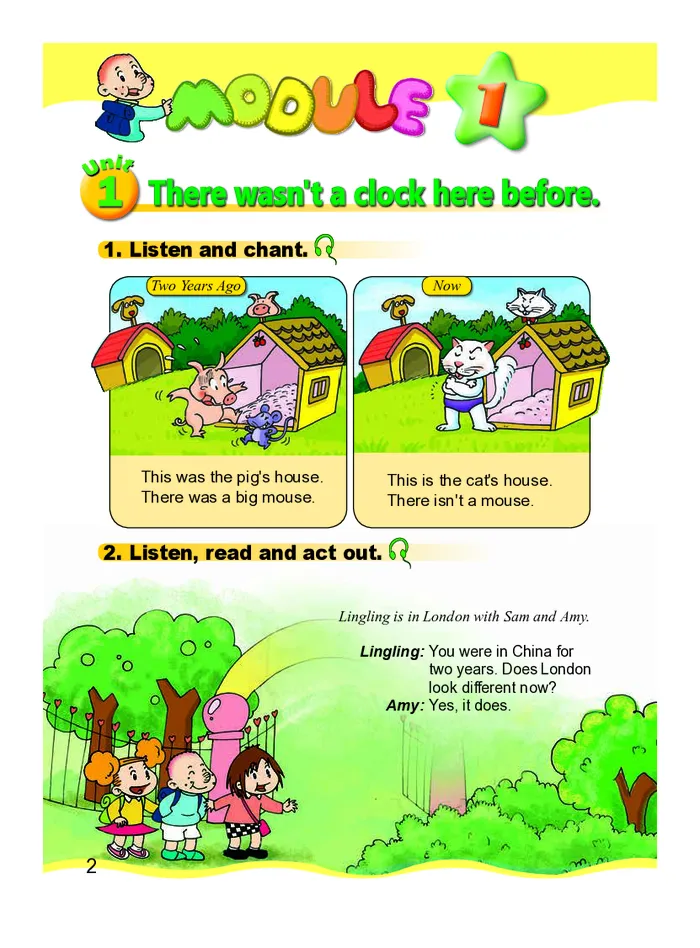
This was the pig's house.
There was a big mouse.
This is the cat's house.
There isn't a mouse.
Lingling is in London with Sam and Amy.
1
1
You were in China for
two years. Does London
look different now?
Yes, it does.
Lingling:
Amy:
1. Listen and chant.

There wasn't a clock here before.
1
t
i
n
U
2. Listen, read and act out.
Two Years Ago
Now
3
1
t
i
n
U
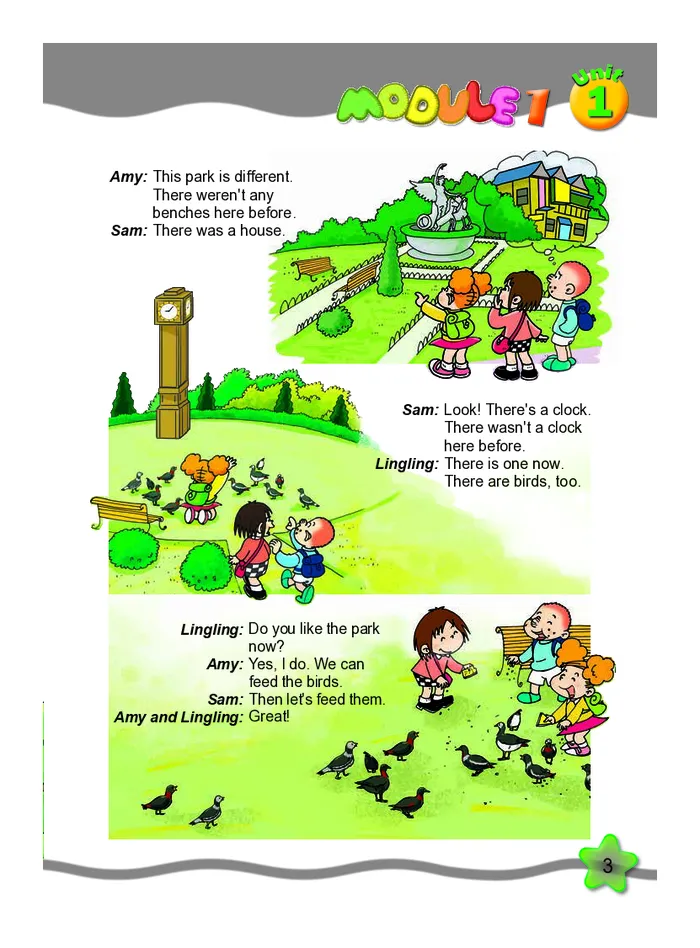
Do you like the park
now?
Yes, I do. We can
feed the birds.
Then let's feed them.
Great!
Look! There's a clock.
There wasn't a clock
here before.
There is one now.
There are birds, too.
This park is different.
There weren't any
benches here before.
There was a house.
Lingling:
Amy:
Sam:
Amy and Lingling:
Sam:
Lingling:
Amy:
Sam:
1
4
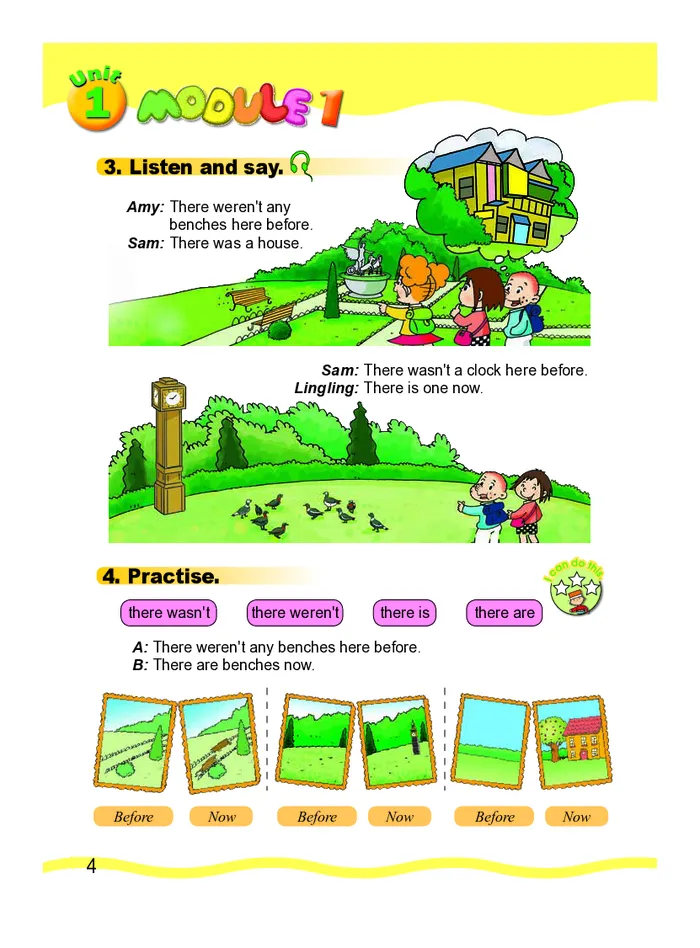
There weren't any
benches here before.
There was a house.
Before
Now
Before
Before
Now
Now
There wasn't a clock here before.
There is one now.
3. Listen and say.
4. Practise.
Sam:
Lingling:
Amy:
Sam:
there wasn't
there weren't
there are
there is
A: There weren't any benches here before.
B: There are benches now.
1
t
i
n
U
1
1
5
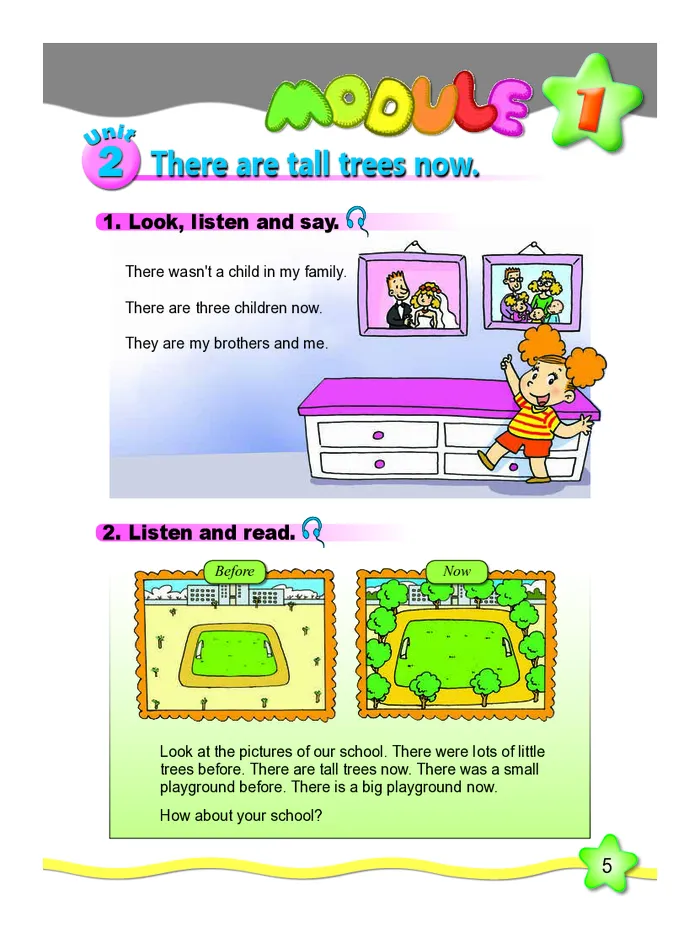
There are tall trees now.
Look at the pictures of our school. There were lots of little
trees before. There are tall trees now. There was a small
playground before. There is a big playground now.
How about your school?
There wasn't a child in my family.
There are three children now.
They are my brothers and me.
1. Look, listen and say.
2. Listen and read.
2
t
i
n
U
1
1
Before
Now
6
2
t
i
n
U
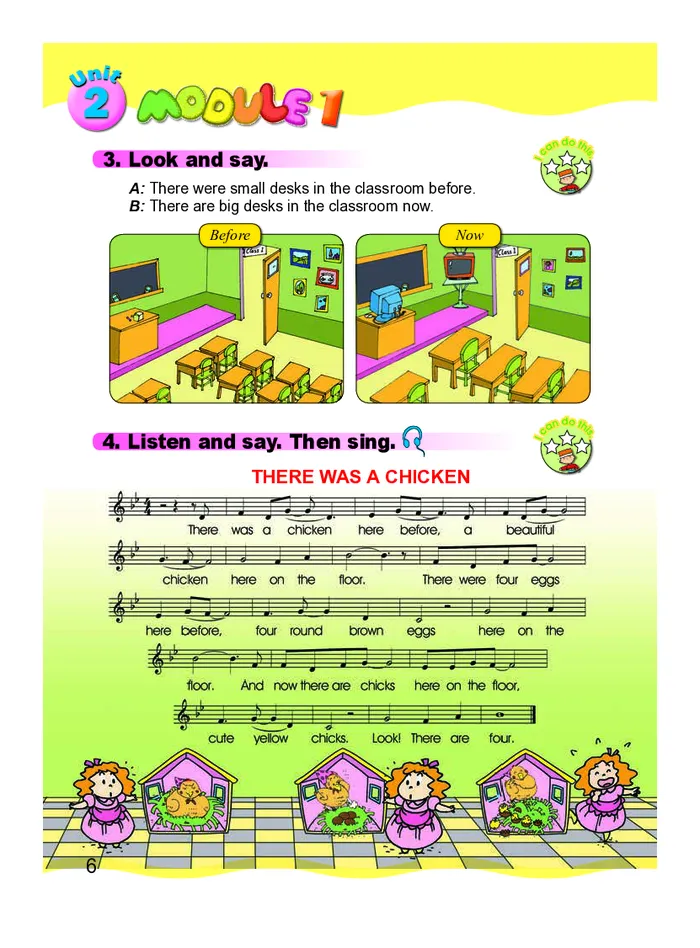
3. Look and say.
4. Listen and say. Then sing.
A: There were small desks in the classroom before.
B: There are big desks in the classroom now.
Before
Now
1
1
THERE WAS A CHICKEN
7
2
t
i
n
U
5. Find the differences and say.
A: There was/wasn't... / There were/weren't...
B: There is/isn't... / There are/aren't...
6. Draw and write.
Before
Now
1
1
Talk about the changes at your school.
There wasn't/weren't...
here before. But there
 is/are... now.


8
1
t
i
n
U
2
1. Look, listen and say.
2. Listen, read and act out.
This one is heavy.
Amy:
Lingling:
Come on, Lingling. Let's go to
the supermarket.
Great! Let's go!
It's small.
But it's heavy.
It's big. But it's
not heavy.
9
Ms Smart:
Lingling, Amy and Sam:
1
t
i
n
U
2
You are helpful children.
Have an ice cream.
Thank you!
	Ms Smart:	Please help me put the bags in the car.
	 Lingling:	This one is heavy. I can't carry it.

Sam:	Let me help you.
Oh, what a big supermarket!
Yes, it is. There are many sweets over there.
And there is a lot of fruit, too.
Lingling:
Amy:
Sam:
10
1
t
i
n
U
3. Listen and say.
2
2
Amy: There are many sweets.
Sam: There is a lot of fruit, too.
Lingling: This one is heavy.
4. Practise.
This car is big.
There is a lot of fruit.
11
They sell many different things.
1. Look, listen and say.
2
t
i
n
U
2
2
Many English supermarkets are very big. They sell many different
things. They sell food, clothes, toys and CDs. They sell many
things from China, too.
Sometimes there
are restaurants at
the supermarkets.
Many families go to
the supermarkets
together.
2. Listen and read.
Oh, you are so
different.
And you are
so cool.
12
3. Read and write.
4. Listen and say. Then chant.
2
2
2
t
i
n
U
This supermarket is very big.
It sells many different things.
Supermarkets sell sweets.
They sell fruit, too.
Some sell nice clothes
for me and for you.
They sell many different things
like CDs and toys.
They sell lots of goodies
for all of us, girls and boys.
13
5. Follow and say.
6. Draw and say.
Introduce your favourite shop to the class.
2
2
2
t
i
n
U
This is our shop.
We sell books.
This is our shop.
We sell books, fish
and cakes.
This is my favourite
shop. It sells…
This is our shop.
We sell books and
fish.
14
3
1. Listen and chant.
2. Listen, read and act out.
Today is Halloween.
1
t
i
n
U
Trick or treat?
Give me a sweet!
Happy Halloween!
Here are your sweets.
Lingling, today is
Halloween.
What's that?
It's an autumn
festival in the UK.
It's really fun.
Amy:
Lingling:
Amy:
14
15
1
t
i
n
U
Children wear scary
clothes.
Scary clothes?
Yes. Look at the hats
and the masks!
They go to their neighbours'
houses and ask, "Trick or treat?"
Then their neighbours give them
sweets.
That night...
Sam:
Lingling:
Amy:
Sam:
Amy:
Trick or treat?
You look so scary!
Here are some sweets.
Thank you!
Amy, Sam and Lingling:
Neighbour:
Amy, Sam and Lingling:
3
15
16
Halloween is an autumn festival
in the UK. It's really fun.
3. Listen and say.
4. Practise.
1
t
i
n
U
A: What do children do at Halloween?
B: They...
Children go to their neighbours'
houses and ask, "Trick or treat?"
3
A: What do their neighbours do?
B: They...
Trick or treat?
Trick or treat?
16
17
Easter is in spring in the UK.
1. Look, listen and say.
2
t
i
n
U
Lingling, guess!
How many eggs
are there?
Oh, there
are ten!
There is
only one.
3
2. Listen and read.
Look at these children's hats.
There are toy chicks and flowers
on the hats. Do you know why?
They are Easter hats. Easter is
in spring in the UK. People give
children chocolate eggs. They are
Easter eggs. Some Easter eggs
are big and some are small.
Sometimes there are small
eggs in the big eggs!
17
Look!
18
3
Festivals are fun.
Festivals are fine.
We can eat lots of yummy foods
and have a fabulous time.
Hooray, woo hoo!
Do you love festivals, too?
There's Christmas and Halloween,
the Spring Festival and the Mid-Autumn Festival.
Hooray, woo hoo!
Lots and lots to do!
3. Now ask and answer.
4. Listen and say. Then chant.
What is on the children's hats?
When is Easter in the UK?
What do people give children?
What is sometimes in the big eggs?
18
2
t
i
n
U
19
3
6. Do and say.
Christmas is a
winter festival in
the UK. People…
5. Do and say.
Make a poster about a festival and introduce it to the class.
19
It's Christmas.
We…
2
t
i
n
U
Lingling:
Amy:
20
4
We're going to tell stories.
1
t
i
n
U
1. Look, listen and say.
2. Listen, read and act out.
What's this?
It's an invitation to
my birthday party.
I'm going to be eleven.
What's he
doing?
He's telling
a story.
Long, long ago, there
was an old man...
Long, long ago, there
was an old man. Look!
He's telling a story.
21
1
t
i
n
U
4
What are we going to
do?
We're going to have
lunch together.
Are you going to have
a birthday cake?
Yes, I am. Mum is
going to make a
birthday cake for me.
After lunch, we're going to tell stories.
And then we're going to see a film.
But before that, you are going to help
me tidy up!
Oh yes!
Lingling:
Amy:
Lingling:
Amy:
Sam:
Amy:
Ms Smart:
Sam, Amy and Lingling:
22
1
t
i
n
U
3. Listen and say.
4. Practise.
What are they going to do at the weekend?
Things They Are Going to Do at the Weekend
4
	Lingling:	 What are we going

	 to do?

Amy: 	We're going to have

	 lunch together.
	Lingling:
Sam:
What are we going
to do?
We're going to tell
stories.
23
4
I'm going to be eleven.
1. Look, listen and say.
2. Listen and read.
2
t
i
n
U
Dear Lingling,
I'm going to be eleven. Please come to
my birthday party!
At: 15 Marling Street, London
On: Sunday, 2nd November
From: 11:00 AM
To: 2:00 PM
Can you come? Please reply.
Amy
Dear Matt,
Please come to our party!
24
2
t
i
n
U
3. Read and write.
4
4. Listen and say. Then sing.
Saturday
Sunday
I'm going to play football
on Saturday.
IT'S FANGFANG'S BIRTHDAY TODAY
It's   Fangfang's            birthday       today.                                Let's
all      sing     hip,   hip,   hooray!                           She's     going          to
be         eleven.                                Let's    party,               eat, drink   and
play.                     We're    going         to       play   lots    of       games
with  toy   cars,     trains     and   planes.              We're  going          to
laugh and    have   fun,               come sunshine        or    come  rain!
25
2
t
i
n
U
5. Make funny sentences.
6. Write an invitation.
Dear
,
I am going to be
.
Please come to my
 party.
At:
On:
From:

To:
Can you come? Please reply.
4
Xiaoyong is going to play football in the river.
26
5
It's mine!
1
t
i
n
U
1. Look, listen and say.
Whose eraser is it?
Is it yours?
Oh,
it's mine.
2. Listen, read and act out.

It's mine!
It isn't yours, Sam.
It's mine!
What's the matter?
Sam wants to wear
my T-shirt.
Sam:
Amy:
Ms Smart:
Amy:
But it isn't hers.
It's mine!
It isn't his.
It's mine!
But both your red T-shirts
are there. They are
wet. Look!
Then whose
T-shirt is it?
It's mine. Look!
Sam:
Amy:

Ms Smart:
Sam:
Lingling:
I'm sorry, Lingling.
And I'm sorry, Amy.
I'm sorry, too.
That's OK.
Sam:
Amy:
Lingling:
27
1
t
i
n
U
5
28
3. Listen and say.

4. Practise.
Whose bag
is it?
It's hers.
Sam: It isn't hers.
Amy: It isn't his.
Whose T-shirt is it?
It's mine.
Sam:
Lingling:
5
1
t
i
n
U
29
5
2
t
i
n
U
1. Listen and chant.
2. Listen and read.
Amy's blue dress is wet.
Whose flowers are they?
Whose flowers are they?
I don't know. I don't know.
But don't take them away.
It's raining. The children are running home. Look! Amy's
blue dress is wet. Lingling's favourite skirt is dirty.
Sam's shoes are wet and dirty. Tom is laughing!
Oh, but the workers are still working.
30
3. Look and say.
4. Listen and say. Then chant.
Mengmeng's car is new.
Mengmeng
Qiqi
Xiaojun
Mingming
"It's mine!
It's mine!"
the short man said.
"It isn't yours at all."
"Yes, it is,"
the tall man said.
"You are too,
too small."
5
2
t
i
n
U
Panpan
Xiaoyong
31
5. Remember and say.
6. Act it out. Ask and answer.
This bag is hers.
Yes, it's mine.
Girl:
Boy:
5
At the lost-and-found.
What colour
is it?
Yes, it is!
Thank you!
It's blue.
I lost my hat.
When did you
lose it?
Yesterday.
Is this yours?
2
t
i
n
U
This hat is his.
No, it isn't mine!

Boy:
Girl:
32
6
6
1. Listen and chant.
2. Listen, read and act out.
You can play basketball well.
1
t
i
n
U
Look at the birds
up in the sky!
How can they fly
so fast and so high?
Lingling, do you want to play basketball?
Yes, I do. But I can't play well.
Amy:
Lingling:
33
Can you run fast?
No, I can't.
Hooray! We're the winners!
You're great, Lingling. Our team
got eighty points and you got
twenty points!
You can play basketball well,
Lingling. I'm your first fan!
Thank you.
But you can jump really high!
That's true!
1
t
i
n
U
6
Sam:
Lingling:
Sam:
Amy:
Sam:
Lingling:
Amy:
Lingling:
After the match...
34
3. Listen and say.
4. Practise.
1
t
i
n
U
6
6
	       Sam:
	 Lingling:
Amy:
Sam:
Can you run fast?
No, I can't.
You can jump really high.
You can play basketball
well.
I can run fast.
I can play
basketball well.
jump high
play football well
play basketball well
run fast
Talk about yourself.
35
Yesterday, Sam, Amy and Lingling
played basketball in the park.
They got seventy points.
The other team got sixty-four
points.
Sam got thirty-six points.
Amy got thirteen points.
And Lingling got twenty-one
points. Their team won!
They were very happy!
They got seventy points.
2
t
i
n
U
6
6
1. Look, listen and say.
2. Listen and read.
Oh, he got forty points.
He can play well.
Can he
play basketball?
36
2
t
i
n
U
3. Listen and point.
4. Listen and say. Then sing.
6
6
He got thirty-six points.
CAN YOU PLAY BASKETBALL VERY WELL?
Can you    play       basketball            very     well,   very     well?   Can you  play      very   well, or
not      at       all?               I    can    jump   high   in    the   air,           in    the    air,     in   the   air.
I    can    jump high    in   the  air.         I’m     very     tall.          And    I     can  run     very      fast,
very        fast,      very     fast.          I   can     run         very       fast and     catch     the      ball.
37
I can't do 2.
I can do 1.
2
t
i
n
U
5. Look, try and say.
6. Do and say.
Form a class basketball team.
6
6
This is our basketball team.
He can… She can…
I'm tall.
I can jump high.
38
2. Listen, read and act out.
His dog can help him.
Look! There's a TV show
about dogs.
Great! I love dogs.
Dogs are clever.
Dogs are cute.
They can help a lot.

Dogs are useful.

Dogs are cool.

They can do a lot.
7
1
t
i
n
U
1. Listen and chant.
Amy:
Lingling:
39
TV presenter:	In the UK, many blind

people have special

dogs. This man is

blind. His dog can

help him.
This dog is very clever!
Can Fifi help blind
people?
Let's see!
1
t
i
n
U
7
Lingling:
Amy:
Fifi, help!
No, he can't.
He only wants
to play!
Lingling:
Amy:
40
3. Listen and say.
4. Practise.
Can Fifi help blind
people?
No, he can't. He only
wants to play.
This dog
can't read.
This panda can
ride a bike.
1
t
i
n
U
7
This man is blind.
His dog can help him.
Lingling:
Amy:
41
2
t
i
n
U
There was a fire.
There were people
inside the house.
The firefighters couldn't
see the people. They
couldn't help them.
But they had a special dog.
It could find the people.
Then the firefighters could
help them.
2. Listen and read.
It could find the people.
I watched a TV
show yesterday.
An old man found a special
bird. It could speak English.
1. Look, listen and say.
7
7
Wow!
East or west,
home is the best.
42
2
t
i
n
U
3. Read and write.
4. Listen and say. Then sing.
Then
Then
Now
Now
The girl couldn't walk then.
The girl can walk now.
7
A GOOD FRIEND
                 I can't sing and I can't  dance. I can't fly to the moon.   But
                 I  can  be  a   very good   friend, a    very good   friend to  you.
                 I can't  row a boat or bake a cake.   I  can't ride   a      bike.           But
                 I  can  be  a   very good friend, a       very good   friend  to  you.
                 I can't read and  I can't  write.         I can't speak a   word.           But
                               I can    be a very good  friend to you. Woof, woof, woof!
43
5. Ask and answer. Then remember and
    say.
6. Draw and say.
7
2
t
i
n
U
My favourite animal is the
dog. It can help people. It can
swim. It can jump high…
I can swim. Can you?
Yes, I can.
Maomao and
Xiaoyong can
swim.
I can't stand on my
hands. Can you?
Yes, I can.
Xiaoyong can
stand on his hands,
but Lanlan can't.
44
Welcome to my party.
It starts at seven.
Welcome to my party.
It finishes at eleven.
8
1. Listen and chant.
2. Listen and read.
Children often sit around tables.
1
t
i
n
U
45
8
1
t
i
n
U
15 Marling Street
London, NW2
UK
Dear Daming,
Yesterday, I went to Sam and Amy's school. I took some photos there.
In the UK, children often sit around tables in class. We sit in lines in China.
They sing songs together every morning. We do morning exercises.
In the UK, school often starts at 9 o'clock and finishes at half past three.
In China, we usually start school at 8 o'clock and finish at 4 o'clock.
School is fun here. But I miss my friends back in China.
Love,
Lingling
46
3. Listen and say.

4. Practise.
8
1
t
i
n
U
They sing songs together
every morning. We do morning
exercises.
A: In the UK, they often start school at 9 o'clock.
B: In China, we usually start school at 8 o'clock.
In the UK, children often sit
around tables in class. We sit
in lines in China.
47
I won't go to the park.
I'll study hard.
My books are open now.
It's the right time to start.
There are lots of games.
8
8
2
t
i
n
U
1. Listen and chant.
2. Listen and read.

This is an English school. There are
children's paintings on the walls.
There are lots of games. The students
can have fun at break time.
English children study hard. They do homework every day.
48
3. Read and write.
Talk about yourself.
8
8
2
t
i
n
U
4. Listen and say. Then sing.
I get up at seven.
I GET UP IN THE MORNING
49
5. Find the differences and say.
6. Draw and write.
Introduce your school to your friends.
8
8
2
t
i
n
U
A: There are two pencils in Picture A.
B: There is one pencil in Picture B.
This is my school...


A
B
50
9
1
t
i
n
U
Are you sad?
1. Look, listen and say.
2. Listen, read and act out.
Are you sad?
Are you
happy now?
What's the matter,
Lingling? Are you sad?
No, I'm not.
Amy:
Lingling:
Woof, woof...
Woof, woof!
51
1
t
i
n
U
9
Are you angry?
No, I'm not.
Are you bored?
Do you want to play with my doll?
No, I'm not bored.
Tell me, please!
OK. I'm going to make you a
surprise present for Christmas!
Now it's not a surprise! But thank
you very much, Lingling!
Amy:
Lingling:
Amy:
Lingling:
Amy:
Lingling:
Amy:
So what's the matter?
Nothing. I'm thinking.
What are you thinking
about?
It's a secret, Amy.
Amy:
Lingling:
Amy:
Lingling:
52
1
t
i
n
U
9
3. Listen and say.
4. Practise.
A: Is she sad?
B: Yes, she is.
sad
bored
angry
happy
What's the matter?
Nothing.
Are you sad?
No, I'm not.
Amy:
Lingling:
Amy:
Lingling:
Look, ask and answer.
53
9
2
t
i
n
U
She was very happy.
1. Look, listen and say.
2. Listen and read.
He is happy.
Oh,
he is sad.
Oh, he is
angry now!
Yesterday, it was
raining. Zara couldn't
go out. She was sad.
She helped her mum
make a cake.
After that, she was
hungry. She ate the
cake with her mum.
She was very thirsty.
So she drank some
water.
Then the rain stopped.
Zara went out to play.
She was very happy.
                    You are       happy        and  you  know    it,   clap    your
                                       happy        and  you  know    it,   stamp your
     hands.           You  are      happy     and you know   it,   clap    your
       feet.             You  are      happy     and you know   it,   stamp your
     hands.           You  are       happy    and you  know   it.   And   you
       feet.             You  are       happy    and you  know   it.   And   you
          really              want           to       show     it.        You       are
          really              want           to       show     it.        You       are
           happy   and  you  know  it, clap your hands. You are
           happy   and  you  know  it, stamp your                         feet.
54
2
t
i
n
U
9
3. Read and write.
4. Listen and say. Then sing.

She was sad.
YOU ARE HAPPY
55
2
t
i
n
U
9
5. Mime, ask and answer.
6. Say and act.
sad
bored
happy
hungry
thirsty
angry
Yes, I am.
Are you thirsty?
Yesterday,
I played football. I was tired.
I was hungry and thirsty. I lost my
cap. I was very sad...
56
1
t
i
n
U
You should tidy your toys.
1. Look, listen and say.
2. Listen, read and act out.
You should go to
bed now.
10
10
Sam, you should go to bed
at 9. We'll go to Big Ben
tomorrow.
OK, Mum!
Mum, Tom is making
a mess.
Tom, you shouldn't
play with the CDs!
I'm sorry, Mum.
And you shouldn't
take the books down.
I know. Sorry.
Amy:
Ms Smart:
Tom:
Ms Smart:
Tom:
57
Wow! The room is clean now.
What a good boy!
Yes. I'm a good boy now.
And thanks for your help, girls.
You're welcome.
1
t
i
n
U
10
10
Tom, you should tidy your toys.
We'll help you, Tom.
Thanks, Lingling.
Ms Smart:
Lingling:
Tom:
Ms Smart:
Tom:
Ms Smart:
Amy and Lingling:
58
10
10
1
t
i
n
U
3. Listen and say.
4. Practise.
You should tidy
your toys.
You should/shouldn't...
Ms Smart:
Tom:
Ms Smart:
You shouldn't play
with the CDs!
I'm sorry.
×
×
×
√
√
√
59
Class Rules
2
t
i
n
U
10
10
1. Look, listen and say.
2. Listen and read.
You shouldn't be late.
We are out today.
Please feed my fish.
You shouldn't feed
them too much.
You shouldn't be late.
You should bring your
books to class.
You should listen in class.
You should work hard.
You should be kind.
You should be helpful.
60
2
t
i
n
U
3. Read and write.
4. Listen and say. Then chant.
   "You shouldn't jump on the
bed," my big sister said.
   "You could fall off the bed and
bump your head!"
   "You shouldn't jump on the
bed," my mother said.
   "You could fall off the bed
and bump your head!"
   But I jumped and I jumped
and I jumped on the bed.
   And I fell off the bed and I
bumped my head.
You should
.
You shouldn't
.
You should
.
You shouldn't
.
1
2
3
4
10
10
61
2
t
i
n
U
6. Think and write.
2
3
2
1
4
1
6
3
2
5
5
4
4
3
1
2
Make your class rules. Use "should" and "shouldn't".
10
10
Class Rules
1)
3)
2)
4)
5. Do and say.
You should/shouldn't...
62
Yes, I can.
Can you make
a cake?
1. Read and say.
2. Look, ask and answer.
1
t
i
n
U
This is your hat. It's...
Talk about yourself.
This is my bag. It's mine.
This is his coat. It's...
This is her book. It's...
63
3. Act and guess.
4. Do and say.
1
t
i
n
U
tired
bored
hungry
thirsty
happy
sad
angry
Yes, I am.
Bring a photo of you to class and talk about it.
Are you happy?
I was three then.
I could talk.
I couldn't swim.
64
Li Ming's Weekly Plan

Monday:	Do exercise

Tuesday:	Read books
	 Wednesday:	See a film

Thursday:	Listen to music

Friday:	Clean my room

Saturday:	Wash my clothes

Sunday:	Have my birthday party
Li Ming is going to do exercise next Monday.
A: She shouldn't put the books on the desk.
B: She should put the books in the bag.
2
t
i
n
U
1. Look and say.
2. Read and say.
65
Start
Finish
Go up the ladders! Go down the snakes!
2
t
i
n
U
3. Do and say.
A: I've got four. I'm on number four. There's an ice cream.
B: Go up!
A: I'm on number twenty-four. There's a ball.
Words and Expressions in Each Module
66
Module 1
for 达,计
different 不同的
*bench 长凳
then 那么,就
playground 操场,运动场
Module 2
heavy 重的
let 允许,让
sell 卖,销售
sometimes 有时
Module 3
*Halloween 万圣节前夕
*trick or treat 不请吃就捣蛋
 (万圣节前夕孩子们挨家挨户
   要糖吃时说的话)
give 给,送
festival 节日
*scary 吓人的,可怕的
*mask 面具
neighbour 邻居
night 夜晚,夜间
*Easter 复活节
*chick 小鸡
chocolate 巧克力
Module 4
stories  (story的复数形式)故事
*invitation 请帖
tidy up 收拾,整理
November 十一月
from (表示时间)从……起
to 直到
reply 回答,答复
Module 5
mine 我的
whose 谁的
yours 你的;你们的
hers 她的
both 两……(都),
 两个……(都)
wet 湿的
That's OK. 没关系。
take away 移走,拿走
worker 工人
still 还,仍然
Module 6
well 好;熟练地
high 高高地
67
true 真实的,确实的
got (get的过去式)得到
eighty 八十
point 分数
fan 狂热爱好者,迷
seventy 七十
sixty 六十
Module 7
useful 有用的
show (电视或广播)节目
*presenter (电视或广播节目
 的)主持人
blind 失明的
could (can的过去式)能
speak 说(某种语言)
fire 火灾,失火
inside 在……里面
*firefighter 消防队员
couldn't = could not 不能
Module 8
often 经常
around 围绕,环绕
start 开始
line 行,排,列
half 一半
past 晚于,过(几点)
miss 想念
study 学习
open 开着的
wall 墙
have fun 玩得开心
break 课间休息
Module 9
nothing 没有事情,没有东西
think 思考;想,觉得
drank (drink的过去式)
 喝,饮
Module 10
should 应该
go to bed 上床睡觉
shouldn't = should not 不应该
take down 取下,拿下
clean 干净的
rule 规则,规章
kind 友好的,善意的,体贴的

(注:黑体词为义务教育英语课
程标准二级词汇,标有*的词为
五级词汇表外的词汇)
68
Aa
around 围绕,环绕
Bb
*bench 长凳
blind 失明的
both 两……(都),
 两个……(都)
break 课间休息
Cc
*chick 小鸡
chocolate 巧克力
clean 干净的
could (can的过去式)能
couldn't = could not 不能
Dd
different 不同的
drank (drink的过去式)
 喝,饮
Ee
*Easter 复活节
eighty 八十
Ff
fan 狂热爱好者,迷
festival 节日
fire 火灾,失火
*firefighter 消防队员
for 达,计
from (表示时间)从……起
Gg
give 给,送
go to bed 上床睡觉
got (get的过去式)得到
Hh
half 一半
*Halloween 万圣节前夕
have fun 玩得开心
heavy 重的
hers 她的
high 高高地
Word  List
69
Ii
inside 在……里面
*invitation 请帖
Kk
kind 友好的,善意的,体贴的
Ll
let 允许,让
line 行,排,列
Mm
*mask 面具
mine 我的
miss 想念
Nn
neighbour 邻居
night 夜晚,夜间
nothing 没有事情,没有东西
November 十一月
Oo
often 经常
open 开着的
Pp
past 晚于,过(几点)
playground 操场,运动场
point 分数
*presenter (电视或广播节目
 的)主持人
Rr
reply 回答,答复
rule 规则,规章
Ss
*scary 吓人的,可怕的
sell 卖,销售
seventy 七十
should 应该
shouldn't = should not 不应该
show (电视或广播)节目
sixty 六十
sometimes 有时
speak 说(某种语言)
start 开始
still 还,仍然
70
stories (story的复数形式)
 故事
study 学习
Tt
take away 移走,拿走
take down 取下,拿下
That's OK. 没关系。
then 那么,就
think 思考;想,觉得
tidy up 收拾,整理
to 直到
*trick or treat 不请吃就捣蛋
 (万圣节前夕孩子们挨家挨
   户要糖吃时说的话)
true 真实的,确实的
Uu
useful 有用的
Ww
wall 墙
well 好;熟练地
wet 湿的
whose 谁的
worker 工人
Yy
yours 你的;你们的
71
air 天空;空中
at all 根本
bake 烘,烤,焙
enjoy 喜爱;享受
fabulous 极好的
fine 很好的,不错的
goodies (goody的复数形式)
 好吃的东西
hip, hip, hooray 希普,希普,
 万岁(齐声喝彩欢呼或表示
 赞许时喊的词语)
Names
Matt 马特
party 尽情欢乐
show 表现出,表露
the Mid-Autumn Festival
 中秋节
the Spring Festival 春节
word 词,单词;字
yummy 美味的,可口的
Words and Expressions
in Songs and Chants
Proper Nouns
Places
Marling Street 马林街
There was a shoe shop. The shoemaker made the shoes. He was
very poor. He didn't have much money. He had only one piece of
leather for one pair of shoes.
That night, the shoemaker put the leather on the table. Then he went
to bed.
The Elves and the Shoemaker
The shoemaker bought some more leather. He put it on the table.
Then he went to bed.
The next day, he saw a new pair of shoes on the table. He was very
excited and very happy. Soon a man came into the shop. He bought
the shoes. Now the shoemaker had some money.
They give their food to the teacher. "Sit down, children,"
says the teacher. "We'll learn about food and where it comes
from." "That's easy!" shouts Jenny. "Food comes from the
supermarket." "That's right," the teacher says. "But where does
the supermarket get the food?" The children sit quietly. They
don't know. They live in the city. They know about buses and
traffic lights, but they don't know about farms.
77
77
79
After the lesson, the children go into the school hall. All the classes
are there. The students sing songs about farms, and read poems
about animals. The headmaster tells them how hard farmers work to
give everyone food. Sara and Mark read a poem. "Thank you farmers
for the food so nice, for beans and apples and pears and rice."
harvest festival 收获节
lesson 一堂课
traffic light 交通信号灯,红绿灯
pick up 拿起,提起
carton 纸盒
India 印度
Thailand 泰国
headmaster 校长
bean 豆
Word List
Singing Colours
When I feel sad,
I sing a blue tune
about the cold, blue
winter sky
and the icy moon.
When I feel happy,
I sing a golden tune
about the summer sun
in golden June.
When I'm far away from you,
I sing a silver tune.
I know you too are looking
at the silver moon.
When I feel hungry,
I sing an orange tune
and eat oranges and peaches
beneath the big, bright moon.
blue 忧郁的
tune 曲调,曲子
icy 冰冷的
golden 金色的
silver 银色的
clear 明亮的
moonlight 月光
grey 灰色的
raindrop 雨滴
rainy 多雨的
sick 生病的
snow 雪
all right 健康的,没问题的
beneath 在……下面
Word List
90
The faces can be happy, sad, bored, angry, hungry or thirsty.
1. Draw and cut out circles from cards. Or you
  can use paper plates.
2. Draw different faces on the cards or plates.
Are you drawing
a happy face?
Mine is bored.
Yes, I am.
Masks
91
4. Cut holes for the eyes. Stick a pencil on the
  back to hold the mask.
3. Decorate the masks with paper hair.
My mask is a girl.
Look! She's got
long hair.
92
6. Hold your masks and sing "You are happy".
A: I'm happy.
B: I'm thirsty.
C: I'm angry.
5. Play with your masks.
A: I want to sing and dance.
B: I want some water.
C: I want to stamp my feet.
A
B
C
A
B
C
既名为“后记”,一般应该是本教材使用完毕后才看到的吧。
那么,同学们,你们喜欢这套教材吗?大明、玲玲以及他们的小伙
伴们是否让你们喜爱上了英语,并且帮助你们掌握了一定的英语运用能
力呢?如果是这样,那就太好啦!希望你们在以后的英语学习中继续大
胆地开口说英语——课上说、课下说;继续积极地参与各项语言活动。
一句话,你们要尽量主动使用英语来表达意思和做事情,这样才能把英
语学好。
可敬的老师们,感谢你们的辛勤劳动,以及你们为国家英语课程改
革付出的努力和做出的贡献。在修订本套教材的过程中,我们也充分考
虑了英语课程改革以及一线教学的需求。修订后的教材更加突出了英语
课程工具性和人文性的统一,优化了各册的结构设计和内容安排,以使
教学脉络更加清晰、梯度更加合理。
为了在最大程度上保证教材与课程标准的契合,便于一线教学使用,
所有参与本套教材编写的人员均付出了艰辛的努力。在此我想特别感谢
我的编写团队,没有他们的努力与付出,就没有本教材的问世。
本册教材的主要编写人员如下(中方编写人员按姓氏笔画排序):
Naomi Simmons(英)   Carlos Barcenas(英)
于业宏      王馨悦      孙  泓      张  琦      樊  波
你们的
二〇一二年春日
后 记
后 记