文档文本内容
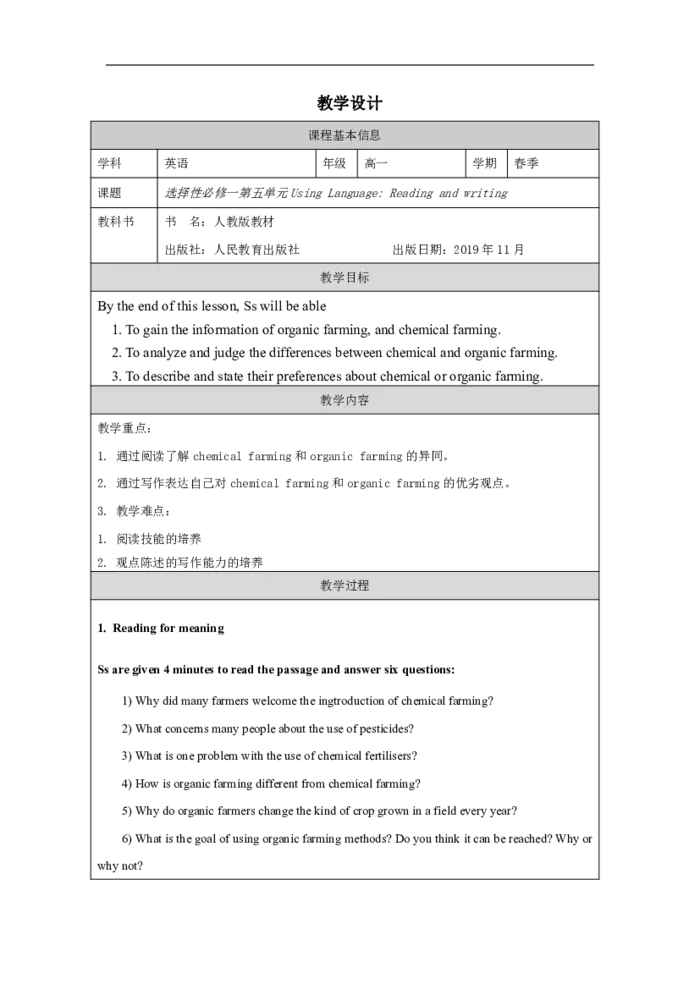
教学设计
课程基本信息
学科
英语
年级
高一
学期
春季
课题
选择性必修一第五单元Using Language: Reading and writing
教科书
书
名:人教版教材
出版社:人民教育出版社
出版日期:2019 年11 月
教学目标
By the end of this lesson, Ss will be able
1. To gain the information of organic farming, and chemical farming.
2. To analyze and judge the differences between chemical and organic farming.
3. To describe and state their preferences about chemical or organic farming.
教学内容
教学重点:
1. 通过阅读了解chemical farming 和organic farming 的异同。
2. 通过写作表达自己对chemical farming 和organic farming 的优劣观点。
3. 教学难点:
1. 阅读技能的培养
2. 观点陈述的写作能力的培养
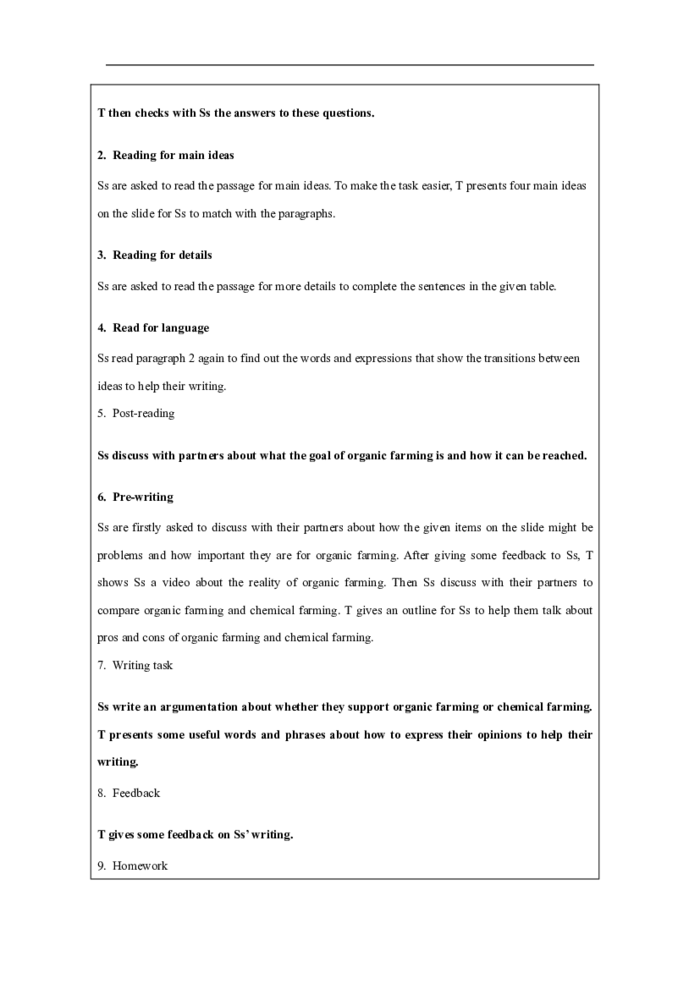
教学过程
1. Reading for meaning
Ss are given 4 minutes to read the passage and answer six questions:
1) Why did many farmers welcome the ingtroduction of chemical farming?
2) What concerns many people about the use of pesticides?
3) What is one problem with the use of chemical fertilisers?
4) How is organic farming different from chemical farming?
5) Why do organic farmers change the kind of crop grown in a field every year?
6) What is the goal of using organic farming methods? Do you think it can be reached? Why or
why not?
T then checks with Ss the answers to these questions.
2. Reading for main ideas
Ss are asked to read the passage for main ideas. To make the task easier, T presents four main ideas
on the slide for Ss to match with the paragraphs.
3. Reading for details
Ss are asked to read the passage for more details to complete the sentences in the given table.
4. Read for language
Ss read paragraph 2 again to find out the words and expressions that show the transitions between
ideas to help their writing.
5. Post-reading
Ss discuss with partners about what the goal of organic farming is and how it can be reached.
6. Pre-writing
Ss are firstly asked to discuss with their partners about how the given items on the slide might be
problems and how important they are for organic farming. After giving some feedback to Ss, T
shows Ss a video about the reality of organic farming. Then Ss discuss with their partners to
compare organic farming and chemical farming. T gives an outline for Ss to help them talk about
pros and cons of organic farming and chemical farming.
7. Writing task
Ss write an argumentation about whether they support organic farming or chemical farming.
T presents some useful words and phrases about how to express their opinions to help their
writing.
8. Feedback
T gives some feedback on Ss’ writing.
9. Homework
Ss share their compositions with their partners and help revise their compositions.
备注:教学设计应至少含教学目标、教学内容、教学过程等三个部分,如有其它内容,可自
行补充增加。