高三英语
时量:120 分钟 满分:150 分
第一部分 听力(共两节,满分20 分)
做题时,先将答案标在试卷上。录音内容结束后,你将有两分钟的时间将试卷上的答案转
涂到答题卡上。
第一节(共5 小题;每小题1 分,满分5 分)
听下面5 段录音。每段录音后有一个小题,从题中所给的A、B、C 三个选项中选出最佳选
项。听完每段录音后,你都有10 秒钟的时间来回答有关小题和阅读下一小题。每段录音播
放两遍。
1. What are the speakers mainly talking about?
A. Tourist attractions. B. Different technologies. C. A travel app.
2. What is the woman's reaction to the photograph?
A. She loves its colors. B. She is unsure of its meaning.
C. She wants to give it to her son as a gift.
3. What is the probable relationship between the speakers?
A. Mother and son. B. Brother and sister. C. Husband and wife.
4. Where does the conversation probably take place?
A. At home. B. At a clinic. C. At a sports club.
5. Which fact does the man present to the woman?
A. The ocean is less dangerous than space.
B. Space is harder to explore than the ocean.
C. The deep sea has fewer visitors than space.
第二节(共15 小题;每小题1 分,满分15 分)
听下面5 段录音。每段录音后有几个小题,从题中所给的A、B、C 三个选项中选出最佳选
项。听每段录音前,你将有时间阅读各个小题,每小题5 秒钟;听完后,各小题将给出5
秒钟的作答时间。每段录音播放两遍。
听第6 段录音,回答第6、7 题。
6. What is the woman saving money for?
A. A new car. B. A new bed. C. A vacation.
7. What does the man suggest the woman do?
A. Find another job. B. Take a break from work. C. Work extra hours to meet deadlines.
听第7 段录音,回答第8 至10 题。
8. Why does the man find the system challenging?
A. He has trouble with its booking function.
B. He can't connect it with other software.
C. He can't access its patient records.
9. How will the woman probably help the man?
A. By finishing some of his work.
B. By organizing his personal files.
C. By teaching him how to use an AI tool.
10. Who are the speakers probably?
A. Nurses. B. Patients. C. AI experts.
听第8 段录音,回答第11 至13 题。
11. Why do the speakers go to the forest?
A. To have a break. B. To do research. C. To take care of trees.
12. What would the man like to do after he retires?
A. Build his own house. B. Move to rural areas. C. Visit natural reserves.
13. How much money does the man plan to save in a year?
A. $5, 000. B. $3, 600. C. $3, 000.
听第9 段录音,回答第14 至17 题。
14. How is the woman feeling about her work?
A. Sad. B. Confident. C. Stressful.
15. What is the most difficult for the woman?
A. Planning lessons. B. Teaching many courses. C. Managing students.
16. What has the woman tried to do?
A. Hand out more homework. B. Get some students to help. C. Shorten lesson times.
17. What will the woman do tomorrow?
A. Learn from Mr. Smith. B. Cover a class for the man. C. Prepare an open class.
听第10 段录音,回答第18 至20 题。
18. What is the speaker curious about?
A. Whether humans can live on another planet.
B. Whether there is life on other planets.
C. Whether Earth will be here to stay.
19. What can we learn about Comet(彗星) A3?
A. The speaker was lucky to see it.
B. No one alive now will ever see it again.
C. It passed by Earth 8, 000 years ago.
20. What will the speaker do in the future?
A. Visit another planet. B. Design an advanced telescope.
C. Carry on with his research work.
第二部分 阅读(共两节,满分50 分)
第一节(共15 小题;每小题2. 5 分, 满分37. 5 分)
阅读下列短文,从每题所给的A、B、C、D 四个选项中选出最佳选项。
A
The London Book Fair(LBF) is where the global publishing community unites to develop
relationships, gain insights, and define the future of creative content.
From publishers, dealmakers, copyright pros, commissioners and global licensors— the entire
publishing industry is represented at LBF.
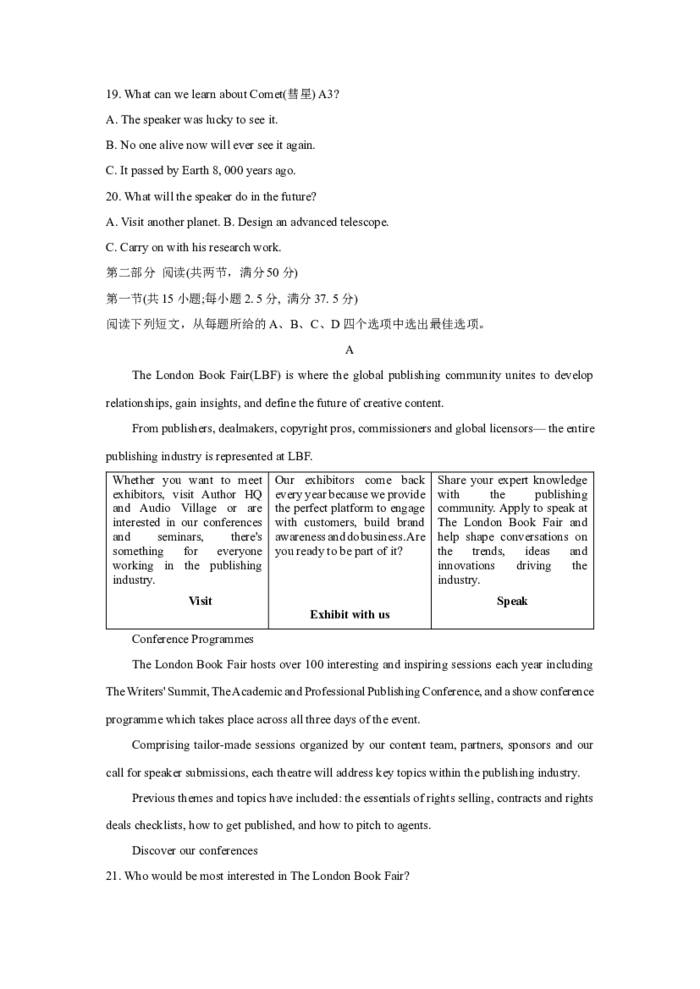
Whether you want to meet
exhibitors, visit Author HQ
and Audio Village or are
interested in our conferences
and

seminars,

there's
something for everyone
working in the publishing
industry.
Visit
Our exhibitors come back
every year because we provide
the perfect platform to engage
with customers, build brand
awareness and do business. Are
you ready to be part of it?
Exhibit with us
Share your expert knowledge
with

the

publishing
community. Apply to speak at
The London Book Fair and
help shape conversations on
the trends, ideas and
innovations driving the
industry.
Speak
Conference Programmes
The London Book Fair hosts over 100 interesting and inspiring sessions each year including
The Writers' Summit, The Academic and Professional Publishing Conference, and a show conference
programme which takes place across all three days of the event.
Comprising tailor-made sessions organized by our content team, partners, sponsors and our
call for speaker submissions, each theatre will address key topics within the publishing industry.
Previous themes and topics have included: the essentials of rights selling, contracts and rights
deals checklists, how to get published, and how to pitch to agents.
Discover our conferences
21. Who would be most interested in The London Book Fair?
A. Lawmakers.
B. Speakers.
C. Bookworms.
D. Publishers.
22. Which of the following would you visit if you wanted to make your books known to more?
A. Visit
B. Exhibit with us
C. Speak
D. Discover our conferences
23. What is the main purpose of the sessions?
A. To meet exhibitors from all over the world.
B. To share knowledge with the publishing community.
C. To solve the most pressing publishing-related issues.
D. To check rights selling, contracts and publishing houses.
B
For nearly 900 days in 1941—44, Nazi forces blockaded(封锁) Leningrad, modern-day St
Petersburg in Russia, trying to starve the city into submission. When food ran out, people ate cotton
husks, leather belts and even their pets. Nearly a third of the population——some750, 000 civilians
——died.
Yet in the center of the city, in a former palace, the All Union Institute of Plant Breeding, the
world's first seed bank, housed 250, 000 plants from five continents. This collection, if planted,
could have fed "every citizen within Leningrad, and the Soviet Union(苏联) and elsewhere besides".
Botanists faced a dilemma: safeguard the seed bank for the future or use it to save themselves and
others from starvation?
The seed bank's staff chose not to eat the collection. As botanists, they grasped the potential of
the seeds to engineer high-yielding and disease-resistant crops to feed future generations. Their
sacrifice was not without consequences: 19 staff starved to death.
Whereas today huge gene banks, such as the Svalbard Global Seed Vault in Norway, store
copies of the world's crops in case of disasters, such initiatives used to seem unusual. The plant
library was the brainchild of Nikolai Vavilov, a noted botanist. His international fame drew the
attention of Soviet authorities, who arrested him in 1940 and accused him of treason( 叛国罪).
Vavilov died in the prison in 1943.
The Soviets did not value Vavilov's work, but the Nazis did. They thought his collection could
be used to create German supercrops. In a twist, Heinz Brücher, a botanist and senior SS officer(党卫
军高级官员), launched a secret mission to seize Vavilov's seeds. The Nazis stole from remote
seed-breeding stations and established a rival seed bank in an Austrian castle. After the war Brücher
fled, and the seeds he had stolen were lost.
But efforts to protect Vavilov's collection were not in vain: over the past 70 years seeds saved
during the blockade have been used to create varieties of wheat that are superior in quality and yield.
The sacrifice of the Russian botanists has stocked the world's breadbasket.
24. Why did the Nazis target Leningrad?
A. To arrest botanists there.
B. To force it to give in.
C. To develop German supercrops.
D. To steal the seeds from it.
25. What led to the botanists' choice?
A. The risk to their precious seeds.
B. Their devotion to a scientific cause.
C. The necessity of feeding all Russians.
D. Their consideration for citizens then.
26. Who came up with the first seed bank?
A. The Soviets.
B. The Nazis.
C. Heinz Brücher.
D. Nikolai Vavilov.
27. What happened to the seeds after the war?
A. They were lost to stealing.
B. They were stored secretly.
C. They produced better varieties.
D. They ended the shortage of crops.
C
Cutting is one of the fundamental skills of the Chinese kitchen, as central to it as the application
of fire and flavour. In ancient China, cooking itself was known as ge peng, ‘to cut and to cook’; and
every lesson for a trainee Chinese chef still involves precise instructions for exactly how everything
should be chopped. This is partly because of the popularity of fast stir-frying as a cooking method.
For a stir-fry, all the ingredients must be cut into small pieces that need little more than a lick of heat
to be cooked. If the pieces are too big, they will remain raw inside while their outsides become dry
and ‘old’(lao). If they are cut unevenly, they will all be cooked at different times, so the final result
will be rough and unsatisfactory. And with really fast stir-frying methods such as bao, which literally
means ‘burst’ or ‘explode’, the fine, even chopping of ingredients is even more essential. Careful
cutting is not a superficial matter: it is key to the success of the final dish.
Chopsticks, used in China for two, maybe even three thousand years, make their own demands.
Knives are almost never seen on the Chinese dinner table, so food must be tender enough to be torn
gently apart with chopsticks, or otherwise cut into bite-sized pieces. At grand feasts, you may find
whole ducks, chickens or pork knuckles, braised (men) so lovingly that they melt away at the touch
of a chopstick, but for everyday meals, almost everything is finely cut.
But these are simply the practicalities of cutting. What are even more fascinating are the
beautiful presentations it brings. Skilful cutting adds an extra dimension to the enjoyment of a dish.
Think only of a stir-fry of eel(鳝鱼) and vegetables, where all the ingredients, different though they
may be in colour, taste and texture, are cut into similar snaking strands. Delicate cutting is part of a
refined and civilised culinary culture that has existed in China for thousands of years. ‘Knife
skills’(dao gong) are still the starting point for any aspiring chef.
28. What can be learned about stir-frying in China?
A. It changes ancient Chinese cooking methods.
B. It means cooking over a high heat for long.
C. It works well with precise chopping of food.
D. It is the first step to be a trainee Chinese chef.
29. Why are chopsticks mentioned in the passage?
A. To demonstrate how Chinese use them to eat.
B. To give an example of how Chinese usually eat.
C. To prove their role on the Chinese dinner table.
D. To reveal their influences on the way of cutting.
30. What does a Chinese chef have to learn about?
A. Food and animals.
B. Cutting and frying.
C. Cutting and cooking.
D. Presentation and nutrition.
31. Which is the best title of the passage?
A. The cutting edge
B. The cutting board
C. Chinese cooking methods
D. Traditional Chinese dishes
D
A fascinating study led by researchers at Aarhus University in Denmark suggests that toys
played a crucial role in the survival of two cultures in ancient Greenland.
The research focused on the Norse settlers, who arrived in 985, and the Inuit people, who came
around 1000. Although both groups initially thrived, the Norse settlements ultimately failed during
the Little Ice Age around 1400, while the Inuit persisted. The study examined toys from both cultures'
settlements, revealing striking differences. Norse settlements had just 72 toys, while similar Inuit
sites contained 2, 397.
The researchers categorized these toys into five groups: weapons, tools, transport, social-play
items, and skill-play objects, which revealed that the Inuit children not only had more toys available
to them, but that these toys were more diverse. Most important, the researchers found that the
differences in the number and diversity of toys grew dramatically over time.
They report in the European Journal of Archaeology that, although 8 social-play toys were
found among the Norse settlements and 23 social-play toys were found among the Inuit settlements
between 1000 and 1200, over the next 200 years the gap grew to 11 social-play toys for the Norse
and 158 social-play toys for the Inuit.
A similar trend held for all the other categories of toy. As the years went by, toys associated
with hunting at sea became more common among the Inuit, but the Norse continued to give their
children figurines of horses and birds. In essence, say the researchers, the Norse were adapting their
lives to their new environment but continuing to gift old-fashioned toys.
Though the lack of toys may indicate that Norse society was less creative from the start, the
researchers argue that their tendency to give irrelevant toys worsened any initial lack of creativity
and ultimately sabotaged their survival. In contrast, the Inuit's preference for diverse and relevant
toys paved the way for their children to be more innovative and adaptive. A parable for parents if
ever there was one.
32. What happened to the Norse settlers in Greenland?
A. They lived here for 400 years alone.
B. They didn't survive the Little Ice Age.
C. They were defeated by the Inuit people.
D. They didn't give their children enough toys.
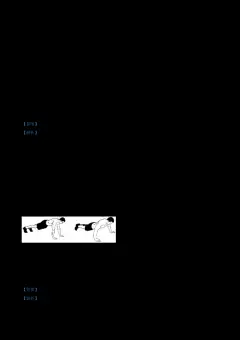
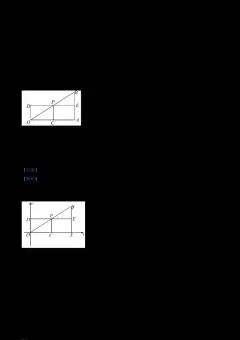
33. Which is the right diagram based on the fourth paragraph?

34. What does the underlined word "sabotaged" in the last paragraph mean?
A. Opposed.
B. Threatened.
C. Determined.
D. Facilitated.
35. Which can be inferred from the passage?
A. Parents can learn from it what toys to give to their children.
B. The more toys the children have, the more adaptive they will be.
C. The Inuit people didn't provide old-fashioned toys to their children.
D. Greenland used to be a wasteland before the Norse settlers arrived.
第二节(共5 小题;每小题2. 5 分,满分12. 5 分)
阅读下面短文,从短文后的选项中选出可以填入空白处的最佳选项。选项中有两项为多余
选项。
The heart is the most misunderstood of our organs. For a start, it looks nothing like the
traditional symbol associated with Valentine’s Day and lovers’ initials carved into tree trunks and
the like. 36___. It is more centrally located in the chest than that. Most curious of all, perhaps, is
that we make it the emotional seat of our being, as when we declare that we love someone with all
our heart or claim a broken heart when they abandon us. 37___. The heart is a wondrous organ and
fully deserving of our praise and gratitude, but it is not invested even slightly in our emotional
well-being.
That's a good thing. The heart has no time for distractions. 38___. It has just one job to do, and
it does it supremely well: it beats. Slightly more than once every second, about100, 000 times a day,
as many as 3. 5 billion times in a lifetime, it rhythmically pumps blood through your body— and
these aren't gentle forces. They are powerful enough to send blood spurting up to three meters if the
aorta(主动脉) is cut.
With such a continuous work rate, it is a miracle that most hearts last as long as they do. 39___.
That's 1, 680 gallons in a day— more gallons pushed through you in a day than you are likely to put
in your car in a year. The heart must pump with enough force not merely to send blood to your
outermost extremities but to help bring it all the way back again. It has been calculated that during
a lifetime the heart does an amount of work sufficient to lift a one-ton object 150 miles into the air.
40___. It just doesn't care about your love life.
A. Don't misunderstand me.
B. They focus on what to do.
C. It is a truly remarkable mechanism.
D. The heart is not really one pump but two.
E. It is the most single-minded thing within you.
F. Every hour your heart pumps around 70 gallons of blood.
G. Nor is the heart where we place our right hand to show love of our country.
第三部分 语言运用(共三节,满分40 分)
第一节(共15 小题;每小题1 分,满分15 分)
阅读下面短文,从每题所给的A、B、C、D 四个选项中选出可以填入空白处的最佳选项。
I came to know this unique individual in a very simple way. One afternoon, in the little town
where I then lived, I was taking my dog for a walk when he began to behave 41___. He rolled crazily
on the ground, 42___ himself against every tree, cried and growled constantly.
While I was 43___ what was wrong with him, I became 44___ that someone was walking by
my side——a man of about 30, poorly dressed. A 45___, I thought, and I was about to put my hand
in my pocket to get him some change. But the stranger 46___ peacefully at me as though we were
old friends. “He’s got a tick(蜱虫叮咬), poor chap, ” he said, pointing to my dog. “ 47___! We’ll
have it out. ”
I was surprised, but there was such warm 48___ in his gaze that I took no offence at his
familiarity. I 49___ him to a park bench and sat down. He called the dog with a shrill whistle.
And, strange to say, my dog, who was usually 50___ of strangers, responded at once, and, at a
sign, put his head on the man's knee. 51___ the dog's coat with long, sensitive fingers, the stranger
finally uttered satisfied“A-ha!”“Here it is, ” he laughed, 52___ holding something in the air. “Now
run along, doggie. ”
As the dog scurried off, the stranger 53___ with a nod and walked on. His departure was so
sudden that it did not 54___ me until later that I should have given him something for his trouble or
at least should have thanked him. But there was the same finality and 55___ about his coming.
41. A. accordingly      B. stupidly      C. badly      D. strangely
42. A. defended      B. threw      C. rubbed      D. warned
43. A. realizing      B. complaining      C. explaining      D. wondering
44. A. sure      B. aware      C. concerned      D. satisfied
45. A. beggar      B. neighbor      C. volunteer      D. doctor
46. A. stared      B. smiled      C. pointed      D. coming
47. A. Come along      B. Come off      C. Come back      D. Come down
48. A. peace      B. acceptance      C. optimism      D. friendliness
49. A. chased      B. led      C. followed      D. walked
50. A. fond      B. tired      C. dismissive      D. afraid
51. A. Touching      B. Searching      C. Shining      D. Loosening
52. A. easily      B. sincerely      C. joyfully      D. instantly
53. A. ran      B. sat      C. rose      D. thought
54. A. get to      B. occur to      C. depend on      D. fall on
55. A. self-possession   B. self-consciousness  C. self-preservation   D. self-determination
第二节(共10 小题;每小题1. 5 分,满分15 分)
阅读下面短文,在空白处填入1 个适当的单词或括号内单词的正确形式。
In 2001, Ann Bancroft and Liv Aresen traveled 2, 700 kilometers on foot across Antarctica,
with each 56___(pull) a sled carrying 100 kilograms of food and 57___(equip). Crossing this land
of extremes was no easy feat. The temperature in Antarctica is often a(n) 58___(imagine)—-40℃,
the temperature 59___ which skin and flesh freeze
Antarctica holds the record for the coldest temperature ever 60___(measure) on Earth, which
is —-89. 2℃.
Antarctica contains approximately 70 percent of the world's fresh water supply, and 61___ it
is considered to be one of the world's largest deserts. That's 62___ Antarctica's enormous supply of
fresh water is locked up in ice that 63___(average) over two kilometers in thickness, covering an
area roughly the size of the United States. If the ice sheets melted, the seas 64___(rise) as much as
60 meters. However, like all other deserts on Earth, Antarctica receives less than 250 millimeters of
rain a year. It's hard to believe that, 500million years ago, Antarctica had a warm climate and 65___
cover of dense vegetation.
第三节(共10 小题;每小题1 分,满分10 分)
根据提示,写出对应的单词。
66. glorious→____ vt. 赞美;颂扬;美化
67. argue→____ n. 论点, 争吵, 争论
68. recognize→____ n. 识别;承认;赏识
69. generous→____ n. 慷慨;大方;宽宏大量
70. justice→____ n. 不公平/不公正
71. scare→____ adj. 吓人的
72. destroy→____ adj. 毁灭性的
73. consume→____ n. 消费
74. expose→____ n. 暴露;揭露
75. industry→____ adj. 勤劳的;勤奋的
第四部分 写作(共两节,满分40 分)
第一节(满分15 分)
假定你是李华,你校的英国友好学校计划资助你们学校的3 位同学前往英国进行为期两周
的文化交流活动。请你给对方写一封邮件,内容包括:
(1)感谢对方提供机会;
(2)提出你的申请以及原因/优势。
注意:
(1)写作词数应为80 个左右;
(2)首句话已给出;
(3)请按如下格式在答题卡的相应位置作答。
Dear Sir or Madam,
I am Li Hua, a student in your sister school in China.
_______________________________________________________________________________
_______________________________________________________________________________
_______________________________________________________________________________
_______________________________________________________________________________
_______________________________________________________________________________
_______________________________________________________________________________
_______________________________________________________________________________
_______________________________________________________________________________
_______________________________________________________________________________
_______________________________________________________________________________
_______________________________________________________________________________
_______________________________________________________________________________
Yours,
Li Hua
第二节(满分25 分)
阅读下面材料,根据其内容和所给段落开头语续写两段,使之构成一篇完整的短文。
At sixty-five, I longed for a new purpose. One Sunday, our priest(牧师) suggested I volunteer
with the youth department. After convincing my husband, we joined the Sunday school youth Bible
class and evening events. It was a time filled with silly games, loud music and the Bible study.
Little did I know how much this generation gap would change me. When I took on the challenge
of mentoring teenagers, some of whom lived in difficult home situations, I never expected I’d learn
something from them. I watched teens learn to care about the homeless and the needy, and I realized
they willingly made a difference to someone else's life.
When our priest asked if I'd like to be a leader at the annual summer-camp trip, I jumped at the
chance. As I took the first step up into the waiting bus, one of the boys raised his hand. “Here, Mrs.
K. Let me help you. I saved a seat for you in the front. It will be easier for you to get out. ” His big
smile softened my heart. I just said, “Thank you. ”
Four hours later, we arrived at our destination. I found myself gasping for breath as I trudged
up a long hill to the girls’ dorm. Then we prepared for the upcoming drama together. Meanwhile,
we had talks about their hopes and dreams, fears and choices. I provided the listening ear, and an
arm around a shoulder. I became their cheerleader when they needed it.
The next morning the youth had free time and signed up for the zip line(滑索) over a deep
canyon. I watched with fascination as our teens ascended a mountainside to zipline across a canyon. I
didn't share with them how terrified I am of heights. One of the camp leaders helped the last teen
and then announced, “Any of you leaders who want to zip can get prepared now. ”
注意:
(1)续写词数应为150 个左右;
(2)请按如下格式在答题卡的相应位置作答。
One teen boy waved at me and asked if I'd like to have a try.
_______________________________________________________________________________
_______________________________________________________________________________
_______________________________________________________________________________
_______________________________________________________________________________
_______________________________________________________________________________
Once I stepped onto the platform and attached the clip(滑索夹) to the zip line, I suddenly found
myself flying through the air.
_______________________________________________________________________________
_______________________________________________________________________________
_______________________________________________________________________________
_______________________________________________________________________________
_______________________________________________________________________________
_______________________________________________________________________________