高三英语试卷
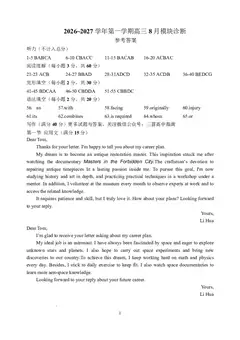
参考答案
第一部分 听力(共 20 小题;每小题 1.5 分,满分 30 分)
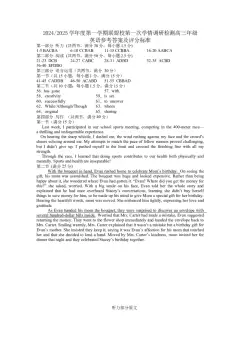
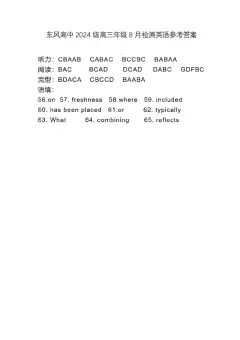
1—5 ACABB
6—10 CBAAC
11—15 CBCBC
16—20 ACBBA
第二部分 阅读
第一节(共 15 小题;每小题 2.5 分,满分 37.5 分)
21—23 DBA
24—27 BBDC
28—31 CBCD
32—35 BACC
第二节(共 5 小题;每小题 2.5 分,满分 12.5 分)
36—40 CAFDG
第三部分 语言运用
第一节(共 15 小题;每小题 1.0 分,满分 15.0 分)
41—45 DBACD
46—50 ACDBB
51—55 BDBAC
第二节(共 10 小题;每小题 1.5 分,满分 15.0 分)
56. on
57. decorative
58. how
59. a
60. crafted
61. further 62. witnessed
63. when
64. openness
65. reminding
第四部分 写作(满分 40 分)
第一节(满分 15.0 分)
【应用文评分标准】
一、评分总原则
1. 先定档,后微调:先根据内容、逻辑、语言三项定档次,再在档内上下浮动 1—2 分。
2. 内容优先:本题核心是“选择+理由+真实感受”,立场不清、理由空泛者,不得进入高分
档。
3. 反模板:凡通篇套用 Firstly/Secondly/In conclusion 且无真实经历的,最高不超过第三档。
4. 言之有理即可:选 A 或选 B 均可,不预设“正确答案”,但必须自圆其说。
二、分档标准
第五档(13—15 分)
内容:明确选择 A 或 B;结合一次具体经历(如某次考试、某个复习阶段、与同学的对比
等);有真实感受,能体现高三的真实状态。
思辨:不是简单解释名言,而是用自己的经历证明这句名言为什么适合自己;有比较或反
思(如“快 vs 稳”“开花 vs 扎根”),能体现对高三的思考。
语言:词汇丰富,表达地道;句式多样,无明显语法错误;衔接自然,无模板痕迹。
第四档(10—12 分)
内容:有明确选择;有理由,但经历较笼统(如“我考试没考好”“我学习压力大”);感受
真实但不够具体。
思辨:能对名言作合理解释,但缺少比较或反思,思考停留在表面。
语言:词汇、句式较简单,偶有语法错误但不影响理解;衔接基本自然,模板痕迹不明显。
第三档(7—9 分)
内容:选择明确,但理由单薄,个人经历几乎没有或一笔带过。
思辨:仅复述名言含义,缺少自己的思考。
语言:语法与词汇错误较多,个别地方影响理解;衔接生硬,有一定模板痕迹。
第二档(4—6 分)
内容:立场不清或偏离题目,理由空泛、堆砌,缺少真实经历。
思辨:基本没有思考,多为空话套话。
语言:语法、词汇错误多,明显影响理解;套话痕迹重。
第一档(1—3 分)
内容:仅有寥寥数语,或大部分照抄原文、与题目关联很弱,几乎没有有效信息。
语言:错误极多,仅能看出个别单词,难以成句。
零分:未作答,或所写内容与题目完全无关。
【应用文范文】
范文 1
Words That Lift Me Up
Between the two sentences, I would choose the first one: “Slow and steady wins the race.”
It resonates with me deeply because senior year is a long journey, not a sprint. Last month,
my deskmate finished two extra practice books in a week, and I almost panicked. But I stuck to
my own pace: one review session every night, one error notebook check every weekend. I didn’t
rush, and my grades moved up steadily. What I learned is that speed doesn’t matter as much as
rhythm. Running too fast may leave me exhausted before the final exam, while a steady pace
keeps me moving forward.
So when I feel anxious, I tell myself: slow down, keep going, and trust the process. That is
how I will survive senior year.
(129 words)
范文 2
Between the two quotes, I choose “Some days you bloom. Some days you grow roots. Both
matter.” to encourage myself during my senior year.
Last month, I got high marks in the monthly exam. I felt like I was blooming, full of
confidence and joy. But two weeks later, I failed the physics quiz badly. I was so upset that I even
wanted to give up. Then I thought of this quote. I realized that the tough days when I struggled
with difficult physics problems were the days I was growing roots. Those days were helping me
build a stronger foundation for future progress.
Senior year is full of ups and downs. This quote reminds me not to be too proud when I do
well, and not to be too discouraged when I face setbacks. Both the shining moments and the hard
days are important parts of my growth.
(149 words)
第二节(满分 25.0 分)
【内容解析】
1. 第一段第一句顺着父亲停车、转身、对着“我”发火展开,接下来必须写父亲对“我”发火
时说了什么话。父亲说话的内容可以与前文的伏笔相呼应,比如 In my father’s mind, where
I was going came first above all else. For him, the purpose of the present was to point the way to
what lay next, so he and mom had sacrificed everything to come to this country only hoping to
bring me to where I was now. 还有父亲常说的话 Not while I’m around. Not while I’m here. 这
里不但可以写父亲发火说话的内容,也可以再细节上补充——如他紧握方向盘、指节发白
的手、泛红的眼眶、突然低下去的嗓音,让人物形象更加立体。
2. 第二段要完成情绪的转折与和解。父亲从“发火”到“沉默”再到“袒露真心”,是情节的核
心。可通过他递出那份一直未拆的礼物、说出礼物的真正含义来推动——礼物并不是替“我”
指定方向,而是父母牺牲一切后留给“我”的退路与底气,让“我”明白无论走多远都有人可
以回头。
3. 情节走向宜遵循“冲突—倾听—理解—和解”的层次:先承接第一段的对峙,再让“我”说
出自己真正的迷茫或想法,随后父亲态度软化、彼此坦诚,最终在沉默或一个动作(发动
汽车、望向远方)中达成理解,避免凭空跳到“皆大欢喜”。
4. 主题升华应落回前文的伏笔:父母的牺牲、“去向”的分量、Not while I’m around. Not
while I’m here. 的含义。让“我”在结尾真正理解了这句话不是束缚而是保护,并在“路”与
“家”之间找到自己的方向,与原文情感基调保持一致。
【读后续写评分标准】
第五档(21—25 分)很好:与原文情境融洽衔接,所续内容合理完整;能紧扣伏笔,情节
推进自然,人物形象饱满;词汇、句式丰富准确,语法错误极少;上下文衔接流畅,无语
篇断裂。
第四档(16—20 分)好:与原文衔接较好,内容较完整;能呼应部分伏笔,情节基本合理;
词汇、句式较多样,偶有错误但不影响理解;衔接较为自然。
第三档(11—15 分)适当:能续写但与原文情境略有出入;情节较为简单或跳跃,伏笔回
应不足;语言错误较多,部分影响理解;衔接基本成立但生硬。
第二档(6—10 分)较差:续写内容与原文关联较弱,情节单薄或不合逻辑;语言错误多,
明显影响理解;缺乏有效的衔接手段。
第一档(1—5 分)差:仅有只言片语,或与原文几乎无关,情节无法成立;语言错误极多,
难以成句。
零分:未作答,或所写内容与原文完全无关。
【读后续写范文】
On

  the

  drive

   home,

   my

   father

  pulled

   the

  car

   over,

  turned

  to
   me,

  and

   let
   the

   anger

  out.

  It
wasn’t the shouting I expected, but a trembling voice heavy with disappointment. "Do you think I
enjoy playing the villain?" he asked, his eyes red-rimmed. "I didn’t leave everything behind in
Africa just to watch you throw your life away in a classroom or a street corner. ‘Not while I’m
here’ doesn’t mean I want to control you. It means I am here to make sure you survive long
enough to fly." His words hit me harder than any punishment. I looked at his bent back—the same
posture he used when reading me bedtime stories—and realized that his strictness was just another
form of that storytelling voice, guiding me through the dark. Tears blurred my vision as the
rebellion drained out of me, replaced by a profound shame and gratitude.
After

  my

  father

   drove

  around

  the

  deserted

  streets

   all
   night,

  we
    finally

   found

   Chris.

   He
was sitting on a curb near the park, shivering and looking utterly lost without his own father’s
guidance. Seeing us, he didn’t run; he just lowered his head. My father didn’t scold him. Instead,
he got out of the car, wrapped his jacket around Chris’s shoulders, and said softly, "You’re not
alone, son. Not while I’m here." That night, driving Chris back to his mother’s, the silence in the
car wasn’t awkward anymore; it was peaceful. I looked at my father’s profile in the dashboard
light and knew that no matter how far I went or how many mistakes I made, his voice would
always be the steady ground beneath my feet, ensuring I grew roots strong enough to bloom.