ARTICLE · 1147449
10.09 考研英语阅读题源外刊模拟试题【难度6.8】
Section II Reading Comprehension
Part A
Directions: Read the following four texts. Answer the questions below each text by choosing A, B, C or D. Mark your answers on the ANSWER SHEET.
Text 4
In the late nineteenth century, an Austrian geologist found the same distinctive fossil fern in India that had turned up in Africa, South America, Australia and Antarctica, along with matching rock formations. He suspected that these landmasses had once been joined, and named the ancient whole Gondwanaland.
Such unions recur in Earth's history. Roughly every 300 to 500 million years, convection currents in the mantle pull the continents together, as cool ocean floor sinks and the oceans between them narrow; once united, the landmass slowly heats up and splits apart again, not necessarily along the old lines. This "supercontinent cycle" has probably produced at least three giants over the past two billion years, the latest being Pangaea, which formed about 300 million years ago.
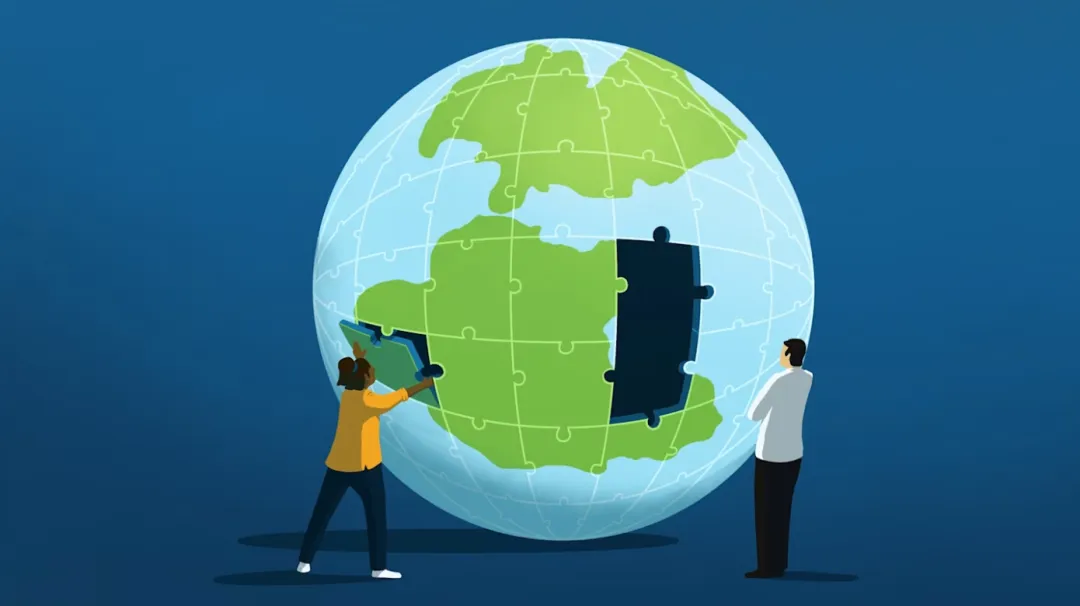
Gondwana, which came before Pangaea, has long been a contentious candidate for the title. A supercontinent is supposed to hold at least 75 per cent of the planet's land, yet earlier surveys put Gondwana's share at only 64 per cent.
A research team now argues that this figure was an undercount. They dated more than 25,000 granite samples from a global database, originally to study how minerals form, but mapping the results hinted that parts of Gondwana had been overlooked. Magma rising through old crust inherits that crust's chemical signature, which can be read in neodymium isotopes produced by the radioactive decay of samarium. Using this signature, the team traced Gondwanan crust hidden beneath younger mountain belts in Asia, Europe and North America.
Adding these regions lifts the total to about 80 per cent, enough, the team says, to settle the matter for a "Greater Gondwana" that existed some 550 to 500 million years ago. An independent expert finds the claim more persuasive because the new finds cluster around Gondwana's known edge, but cautions that rocks of the same age do not prove beyond doubt that their host terrains were once joined.
The timing is striking: it coincides with the Cambrian explosion, the sudden appearance of many animal forms in the fossil record about 540 million years ago. A landmass the size of Greater Gondwana, the expert suggests, could have created favourable conditions for complex life by oxygenating the oceans, altering the climate and providing shallow continental shelves where the first creatures with shells, limbs and eyes could live. The authors add that volcanic activity linked to its formation may have warmed a frozen supercontinent, giving life another push.
The cycle has not stopped. In 200 million years or more, Asia, Australia and the Americas may collide to form a new supercontinent, "Amasia", which could trigger another mass extinction — long after humans, perhaps, have gone.
36. According to Paragraph 2, once the continents have been drawn together, the resulting landmass
A. sinks into the mantle beneath it
B. splits again into exactly the same pieces
C. gradually heats up and then breaks apart
D. grows steadily larger over the next billion years
37. Why had Gondwana's status as a supercontinent long been disputed?
A. It had formed before Pangaea rather than after it.
B. Earlier surveys gave it too small a share of the planet's land.
C. Its fossils had been found on too few continents.
D. Its rocks were too young to be dated reliably.
38. How did the research team identify Gondwanan crust beneath younger mountain belts?
A. By comparing the fossils found in granite from different continents.
B. By measuring how quickly the granite samples had cooled.
C. By matching rock formations across the southern continents.
D. By reading the isotopic signature that magma inherits from old crust.
39. What is the independent expert's attitude towards the team's claim?
A. Positive, but aware that the evidence is not conclusive.
B. Enthusiastic, since the evidence leaves no room for doubt.
C. Doubtful, because the new finds lie far from Gondwana's edge.
D. Critical, since rocks of the same age cannot be dated.
40. The author mentions the Cambrian explosion in Paragraph 6 to suggest that Greater Gondwana
A. was itself formed by a sudden burst of animal life
B. prevented complex animals from reaching the shallow seas
C. may have helped create conditions favourable to complex life
D. caused the first mass extinction in Earth's history
附注:根据历年考研英语真题阅读题源外刊等,摘选最新文章,模拟仿真出题。
参考答案见以下。
Quick look: CBDAC
36.【正确答案】C
【解析】题型:细节理解题(过程辨析)
定位:第二段 "once united, the landmass slowly heats up and splits apart again, not necessarily along the old lines."
分析:超大陆循环分两个阶段。先是地幔对流把各大陆拉拢,下沉的冷洋底使其间海洋收窄;大陆合并之后,陆块逐渐升温,再次裂开,且不一定沿旧的边界。C项对应"合并后升温并裂解"这一环节。
干扰项:[A]"沉入下方地幔"张冠李戴,下沉的是冷却的洋底,不是合并后的陆块;[B]"裂成完全相同的碎块"与原文相反,原文明确"不一定沿旧的分界线";[D]"此后十亿年持续变大"无中生有,原文说的是合并后会再度裂开,没有"持续变大"之说。
37.【正确答案】B
【解析】题型:细节理解题(原因)
定位:第三段 "A supercontinent is supposed to hold at least 75 per cent of the planet's land, yet earlier surveys put Gondwana's share at only 64 per cent."
分析:争议的原因写在第二句:超大陆的标准是占地球陆地至少75%,而早先的调查只算出冈瓦纳占64%,达不到门槛。B项对应这一原因。
干扰项:[A]"形成于盘古大陆之前"答非所问,原文只是顺带交代冈瓦纳先于盘古大陆存在,并未把它当作争议的原因;[C]"化石只出现在太少的大陆上"与原文相反,第一段说同类化石出现在非洲、南美、澳大利亚、南极等多个大陆;[D]"岩石太年轻无法可靠测年"无中生有,原文未提测年可靠性问题。
38.【正确答案】D
【解析】题型:细节理解题(方法)
定位:第四段 "Magma rising through old crust inherits that crust's chemical signature, which can be read in neodymium isotopes... Using this signature, the team traced Gondwanan crust hidden beneath younger mountain belts..."
分析:岩浆上升时会继承其穿过的古老地壳的化学特征,这一特征可以从钕同位素中读出。团队据此在较年轻的山脉带下找到了隐藏的冈瓦纳地壳。D项概括了这一方法。
干扰项:[A]"比较不同大陆花岗岩中的化石"张冠李戴,化石比较是第一段那位地质学家的线索,而本段研究的是花岗岩的年代与同位素,没有涉及花岗岩中的化石;[B]"测量花岗岩冷却速度"无中生有,原文未提冷却速度;[C]"匹配南方各大陆的岩层"张冠李戴,岩层匹配同样是第一段那位地质学家的依据,不是本研究团队的方法。
39.【正确答案】A
【解析】题型:态度推理题
定位:第五段 "An independent expert finds the claim more persuasive because the new finds cluster around Gondwana's known edge, but cautions that rocks of the same age do not prove beyond doubt that their host terrains were once joined."
分析:专家的态度有两层。一方面,新发现集中在冈瓦纳的已知边缘,让结论更有说服力;另一方面,他提醒同龄岩石并不能无可置疑地证明它们所在的地块曾经相连。合起来是"肯定,但意识到证据尚不足以定论"。A项准确。
干扰项:[B]"热情,证据毫无疑问"程度夸大,原文明确"并不能无可置疑地证明";[C]"怀疑,因为新发现远离边缘"与原文相反,专家恰恰因为新发现靠近已知边缘而更信服;[D]"批评,因为同龄岩石无法测年"歪曲原文,专家只是指出同龄岩石不足以证明地块曾相连,并没有批评测年或团队的方法。
40.【正确答案】C
【解析】题型:功能/推理判断题
定位:第六段 "it coincides with the Cambrian explosion... A landmass the size of Greater Gondwana, the expert suggests, could have created favourable conditions for complex life..."
分析:作者先指出这个时间窗口与寒武纪大爆发重合,随后给出推测:如此规模的陆块可能通过使海洋富氧、改变气候、提供浅水大陆架等方式,为复杂生命创造有利条件。原文全程用 "could have" "may have" 措辞,C项的 "may have helped" 与之吻合。
干扰项:[A]"本身是动物生命爆发的结果"因果颠倒,原文的逻辑是陆块的形成与演变可能促成生命繁盛,而不是相反;[B]"阻止复杂动物进入浅海"与原文相反,原文说它提供了浅水大陆架供早期生物栖息;[D]"引发了地球史上第一次大灭绝"无中生有,末段提到的大灭绝是未来"Amasia"可能引发的,与寒武纪无关。
【参考译文】
19世纪末,一位奥地利地质学家在印度发现了一种独特的蕨类植物化石,这种化石此前已在非洲、南美洲、澳大利亚和南极洲被发现,且伴有相吻合的岩层。他推测这些陆块曾连为一体,并将这片古老的整体命名为“冈瓦纳大陆”(Gondwanaland)。
这种大陆聚合现象在地球历史上反复出现。大约每隔3亿至5亿年,地幔中的对流会将各大陆拉向彼此——随着冷却的洋底沉降,其间的大洋随之变窄;一旦聚合,陆块便会缓慢升温并再次分裂,且分裂线未必沿用旧有的边界。这种“超大陆旋回”在过去20亿年间可能至少造就了三个巨型大陆,其中最新形成的是约3亿年前出现的“盘古大陆”(Pangaea)。
作为盘古大陆的前身,冈瓦纳大陆是否能获称“超大陆”长期以来备受争议。超大陆的定义通常要求其包含地球至少75%的陆地面积,而早期的测算显示冈瓦纳大陆仅占64%。
如今,一个研究团队指出,这一数值被低估了。他们利用全球数据库中超过25,000个花岗岩样本进行年代测定——最初目的是研究矿物形成过程——但对结果的绘图分析显示,冈瓦纳大陆的部分区域此前被遗漏了。岩浆穿过古老地壳上升时会继承该地壳的化学特征,而这一特征可通过钐(samarium)放射性衰变产生的钕(neodymium)同位素来解读。利用这一特征,该团队追踪到了隐藏在亚洲、欧洲和北美较年轻山系之下的冈瓦纳地壳。
将这些区域纳入计算后,总占比提升至约80%。该团队认为,这一数据足以确立“大冈瓦纳大陆”(Greater Gondwana)的地位——该大陆存在于约5.5亿至5亿年前。一位独立专家认为这一主张更具说服力,因为新发现的区域集中在冈瓦纳大陆已知的边缘地带;不过他也提醒道,即便岩石年代相同,也无法确凿证明它们所在的陆块曾连为一体。这一时间点颇为引人注目:它与“寒武纪大爆发”——即约5.4亿年前化石记录中多种动物形态突然涌现的时期——不谋而合。专家指出,像“大冈瓦纳”(Greater Gondwana)这样规模的陆块,可能通过为海洋充氧、改变气候以及提供浅海大陆架(供最早拥有外壳、肢体和眼睛的生物栖息),为复杂生命的演化创造了有利条件。研究人员还补充道,伴随该陆块形成而产生的火山活动,可能使当时处于冰封状态的超大陆变暖,从而进一步推动了生命的演化。
这一循环并未停止。在两亿年或更久之后,亚洲、澳大利亚和美洲可能会相互碰撞,形成一个新的超大陆——“阿马西亚”(Amasia)。这可能会引发另一次生物大灭绝——尽管届时人类或许早已不复存在。
附注: