ARTICLE · 1174339
2016年12月大学英语六级考试真题及解析(卷一、卷二)
2016年12月17日全国大学英语六级考试已结束,本次考试为多题多卷,小编第一时间收集整理不同版本试题,供考生参考

【听力】
卷一
sectionA Conversation
Conversation 1
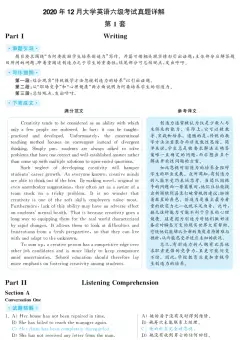
W: Professor Henderson could you give us a brief overview of what you do, where you work and your main area of research?
M: Well the Center for Climate Research where I work s the science of climate change to issues around economics and policy.
Some of our research is to do with the likely impacts of climate change and all of the associated risks.
W: And how strong is the evidence that climate change is happening that it's really something we need to be worried about.
M: Well most of the science of climate change particularly that to do with global warming is simply fact.
But other aspects of the science are less certain or at least more disputed.
And so we're really talking about risk what the economics tells us is that it's probably cheaper to avoid climate change to avoid the risk than it has to deal with the likely consequences.
W: So what are we doing? What can we do about it?
M: Well I would argue that we need to develop the science specifically to understand the likely impacts of climate change in different contexts.
As I said we need to understand the best ways of avoiding climate change and this will involve a huge transition to low carbon energy systems and the transition is a tremendous priority.
And for this to happen, we may need action on a global scale from a political perspective.
We need to understand the terms on which major countries like China and the USA might sign up to a global agreement because at the moment we don't have that consensus.
W: Right.
M: And we also need to plan ahead so that we're in a position to deal with the likely levels of climate change which are already inevitable and even more so to for the levels that are likely if we don't get those global agreements.
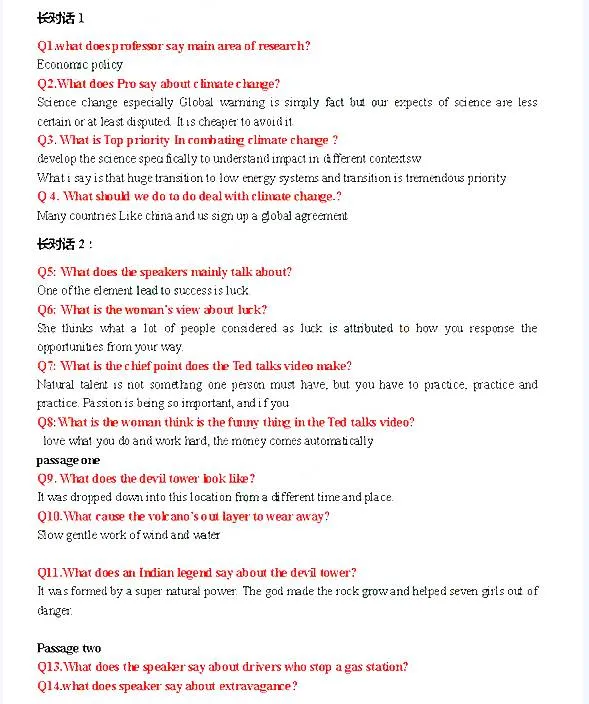
Q1. What does Professor H say about his main area of research?
A It tries to predict the possible trends of global climate change.
B It studies the impact of global climate change on people’s lives.
C It s the science of climate change to economic and policy issues.
D It focuses on the efforts countries can make to deal with global warning.
答案 C
Q2. What does Professor H say about climate change?
A It will take a long time before a consensus is reached on its impact.
B It would be more costly to deal with its consequences than to avoid it.
C It is the most pressing issue confronting all countries.
D It is bound to cause endless disputes among nations.
答案 B
Q3. What does Professor H say is a top priority in combating climate change?
A The transition to low-carbon energy systems.
B The cooperation among world major powers.
C The signing of a global agreement.
D The raising of people’s awareness.
答案 A
Q4. What does Professor H advise us to do to better deal with climate change?
A Carry out more research on it.
B Cut down energy consumption.
C Plan well in advance.
D Adopt new technology.
答案 C
Conversation 2
W: I have many business English students. When I teach the classroom, we often end up talking about things like success and what leads to success. And it's interesting that many of them mention the element of luck.
M: Right.
W: Luck is important to success. But since you've seen that fantastic video on the TED Talks website by Richard St. John, he doesn't mention luck at all.
M: Well, I'm a firm believer that people can make their own luck. I mean what people regard as luck, you can actually create, to a degree.
W: Sure. I think a lot of what people consider luck is attributed to how you respond to the opportunities that come your way.
M: Yes. Very good point.
W: Seizing the opportunities. But was there any point in the video that you thought was particularly interesting?
M: Yes. Actually there was. Something very impressive to me as many people think that luck is important and that natural talent is something you must have in order to be successful. And in the video we saw, the point about getting good at something is not about having some natural talent. It's all about practice, practice, practice.
W: Definitely yeah. Natural talent helps in some way but at the end of the day you really do need to work hard and get really really good at what you do.
M: Sure.
W: I thought one interesting thing in the video was the idea of passion being so important and that people who really love what they do. Of course you're going to want to work harder and put the time and effort into it. And the funny thing is that if you love what you do and are really passionate about it and work really hard, the money kind of comes automatically.
Q5. What are the speakers mainly talking about?
Q6. What is the woman’s view of luck?
Q7. What is the chief point the TED Talks video makes?
Q8. What does the woman think is the funny thing in the TED Talks video?
sectionB Passage
Passage 1
Devil’s Tower, the first national monument in America, could almost be mistaken for the stump of an enormous tree. Its sheer rock sides sweep up from a broad until they cut off abruptly at the flat summit. Rising more than 1,000 feet in the middle of the gently rolling plains of Wyoming, the massive column of rock, looks as though it was dropped down into this location from a different time and place.
In a sense, it was, Devil’s Tower is a relic of the past. When the melt rock of the earth’s core forced its way to the surface to form the throat of a volcano, as the centuries passed, the rock cooled and hardened, shrinking and cracking into long columns, born in fire and fury. Devil’s Tower was then shaped by the slow, gentle work of wind and water. The outer s of the volcano were worn away until the hard core stood completely exposed.
It is small wonder that an Indian legend described Devil’s Tower as being formed by supernatural powers. The legend says that when seven girls were attacked by bears, they took refuge on top of a small rock, and they appealed to the Rock God for help. The God caused the rock to grow and to lift the girls far above the ground, while it sides were scored by the claws of the angry bears. Even today, says the legend, the girls can be seen above the towering rock. As seven shining stars in the night sky.
9. What does the Devil’s Tower look like?
10. What cause the volcano’s outer s to wear away?
11. What does the Indian legend say about the Devil’s Tower?
12. How did the Rock God help the seven girl in the Indian legend?
Passage 2
It’s no accident that most gas stations have convenience stores attached. Few of us can fill up the tank without buying a few snacks, cigarettes,soft drinks or other items we can live without. I deserve it. That’s what hard working men and women say to justify their lavish vacations, big stereo systems or regular restaurant meals. They do deserve such indulgences. However, they also deserve a home of their own--a secure retirement and freedom from worrying about unpaid bills. No one should have to live with what a Texas mother described as constant stress,tension, even fear about money. Sadly the pleasure that comes from extravagances often disappears long before the bills do. The video camera that one single mother bought for a special occasion, for example, is not much fun now. She’s figured out that it will take her another three years to pay it off at $30 a month. And the New Yorkers who spent a bundle on an outdoor hot tub now admit they rarely use it, because we can't afford to heat it in winter. The solution set priorities add up the annual cost of each item. Then consider what else you can buy with the same money. That will help you decide which items are really worth it. One Chicago woman, for example, discovered that daily lunches with coworkers cost her $2000 a year; she decided to take lunch to work instead. “I now put $20 a week into my vacation fund and another 20 into retirement savings, she says, those mean more to me than lunch”.
Q13. What does the speaker say about drivers who stop at gas stations?
Q14. What does the speaker say about extravagances?
Q15. What does a speaker want to show by the example of the Chicago woman?
Section C -- Recording One
Let’s say you start to brain storm a list of all the emotions you ever experienced. Just for fun, try it now.
What’s on your list? Chances are, you included things like: happy, sad, excited, angry, afraid, grateful, proud, scared, confused, stressed, relaxed and amazed. Now sort your list into two categories: positive emotions and negative emotions.
Feeling both positive and negative emotions is a natural part of being human. We might use the word “negative” to describe more difficult emotions but it does not mean those emotions are bad or we shouldn’t have them. Still, most people were probably rather feel a positive emotion than a negative one. It’s likely you prefer to feel happy instead of sad or confident instead of insecure.
What matters is how our emotions are balanced. How much of each type of the emotion positive or negative we experience.
Negative emotions warn us of threats or challenges that we may need to deal with. For example, fear can alert us to possible danger, it’s a signal that we might need to protect ourselves. Angry feelings warn us that someone is stepping on our toes, crossing a boundary or violating our trust. Anger can be a signal that we might have to act on our own behalf.
Negative emotions focus our awareness. They help us to zero in on a problem so we can deal with it. But too many negative emotions can make us feel overwhelmed, anxious, exhausted or stressed out. When negative emotions are out of balance, problems might seem too big to handle.
The more we dwell on our negative emotions, they more negative we begin to feel. Focusing on negativity just keeps it going.
Positive emotions balance out negative ones, but they have other powerful benefits, too. Instead of narrowing our focus, like negative emotions do, positive emotions affect our brains in ways that increase our awareness, attention and memory. They help us take in more information, hold several ideas in mind at once and understand how different ideas relate to each other.
When positive emotions open us up to new possibilities, we are more able to learn and build on our skills. That leads to doing better on tasks and tests.
People who have plenty of positive emotions in their everyday lives tend to be happier, healthier, learn better and get along well with others.
Q16. What does the speaker say about negative emotions?
Q17.What happens to people whose negative emotions are out of balance?
Q18. How do positive emotions affect us?
Section C -- Recording Two
In the past few months, I've been travelling for weeks at a time with only one suitcase of clothes. One day, I was invited to an important event, and I wanted to wear something special for it. I looked through my suitcase but couldn't find anything to wear. I was lucky to be at the technology conference then, and I had access to 3D printers. So I quickly designed a skirt on my computer, and I loaded the file on the printer. It just printed the pieces overnight. The next morning, I just took all the pieces, assembled them together in my hotel room, and this is actually the skirt that I'm wearing right now.
So it wasn't the first time that I printed clothes. For my senior collection at fashion design school, I decided to try and 3D print an entire fashion collection from my home. The problem was that I barely knew anything about 3D printing, and I had only nine months to figure out how to print five fashionable looks.
I always felt most creative when I worked from home. I love experimenting with new materials, and I always tried to develop new techniques to make the most unique textiles for my fashion projects.
One summer break, I came here to New York for an internship at a fashion house in Chinatown. We worked on two incredible dresses that were 3D printed. They were amazing -- like you can see here. But I had a few problems with them. They were made from hard plastics and that's why they were very breakable. The models couldn't sit in them, and they even got scratched from the plastics under their arms.
So now, the main challenge was to find the right material for printing clothes with, I mean the material you feed the printer with. The breakthrough came when I was introduced to Filaflex, which is a new kind of printing material. It's strong, yet very flexible. And with it, I was able to print the first garment, a red jacket that had the word "freedom" ded into it. And actually, you can easily download this jacket, and change the word to something else. For example, your name or your sweetheart's name.
So I think in the future, materials will evolve, and they will look and feel like fabrics we know today, like cotton or silk.
Q19. What does the speaker say about the skirt she is wearing now?
Q20. When did the speaker start experimenting with 3D printing?
Q21. What was the problem with the material the speaker worked on at a New York fashion house?
Q22. What does the speaker say about Filaflex?
【答案】
Section A Conversation
1. [C] It s the science of climate change to economic and policy issues.
2. [B] It would be more costly to deal with its consequences than to avoid it.
3. [A] The transition to low-carbon energy systems.
4. [C] Plan well in advance.
5. [B] What determines success.
6. [D] It means being good at seizing opportunities.
7. [D] Practice is essential to becoming good at something.
8. [C] Being passionate about work can make one wealthy.
Section B Passage
9. [A] To stump of a giant tree.
10. [B] Wind and water.
11. [D] It was created by supernatural powers.
12. [C] By lifting them well above the ground.
13. [A] They will buy something from the convenience stores.
14. [A] They can bring only temporary pleasures.
15. [D] Small daily savings an make a big difference in one's life.
Section C Lecture
16. [B] They are necessary in our lives.
17. [B] They feel too overwhelmed to deal with life's problem.
18. [A] They expand our mind.
19. [B] It came from a 3D printer.
20. [C] When she was studying at a fashion design school.
21. [C] It was hard and breakable.
22. [D] It marks a breakthrough in printing material.
23. [A] They arise from the advances in technology.
24. [D] It is intensively competitive.
25. [D] Sharing of costs with each other.
卷二听力

【阅读】
卷一·答案:
26. [O] vanished
27. [M] undergone
28. [D] expanding
29. [K] survived
30. [H] process
31. [L] terminals
32. [E] industrialized
33. [F] perceived
34. [B] conveniences
35. [G] practice
卷二
Section B
卷一
Countries Rush for Upper Hand in Antarctica36. [J]
37. [C]
38. [E]
39. [G]
40. [D]
41. [I]
42. [B]
43. [H]
44. [Q]
45. [L]
卷二

Section C
卷一
passage one
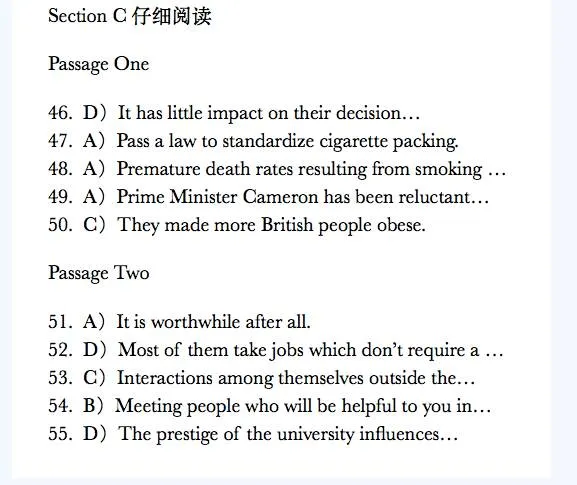
46. [D] It has little impact on their decision whether or not to quit smoking.
47. [A] Pass a law to standardise cigarette packaging.
48. [B] The number of smokes has dropped more sharply than in the UK.
49. [A] Prime Minister Cameron has been reluctant to take action.
50. [C] They made more British people obese.
passage two
51. [A] It is worthwhile after all.
52. [D] Most of them take jobs which don't require a college degree.
53. [C] Interactions among themselves outside the classroom.
54. [B] Meting people who will be helpful to you in the future.
55. [D] The prestige of the university influences employers' recruitment decisions.
卷二
【翻译】
卷一:度假
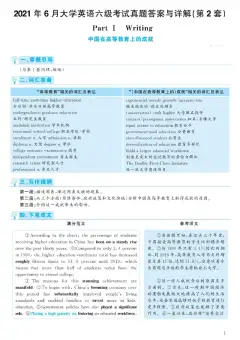
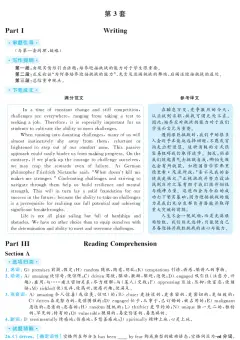
随着生活水平的提高,度假在中国人生活中的作用越来越重要。过去,中国人的时间主要花在谋生上,很少有机会外出旅游。然而,近年来中国旅游业发展迅速。经济的繁荣和富裕中产阶级的出现,引发了一个前所未有的旅游热潮。中国人不仅在国内旅游,出国旅游业越来越普遍。2016年国庆假日期间,旅游消费总计超过4000亿元,据世界贸易组织估计,2020年中国将成为世界上最大的旅游国,在未来几年里将成为出境旅游支出增长最快的国家。
参考范文:
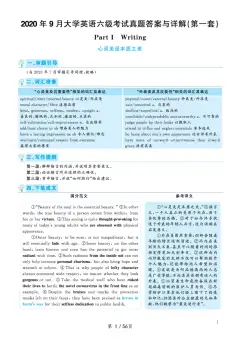
As the life quality improves, taking holiday is playing an increasingly important role in the life of Chinese people. In the past, much of Chinese people’s life was spent on making a living, so we were always denied the chances to go out for a vacation. Nevertheless, the rapid development in Chinese tourism as a result of a flourishing economy, which also leads to the rise of affluent middle class has seen an unprecedented boom in travelling. Chinese people not only choose to travel at home but also seek to embark on a foreign excursion. During the National Day period, the total tourism consumption reached over 40 billion yuan. It is estimated by the WTO that by 2020, China will be the largest tourism country which will witness a rapid increase in the outbound tourism expenditures.
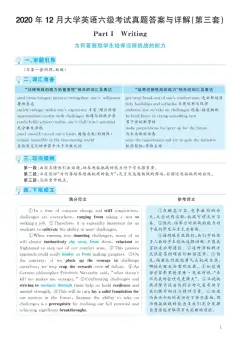
卷二:学汉语
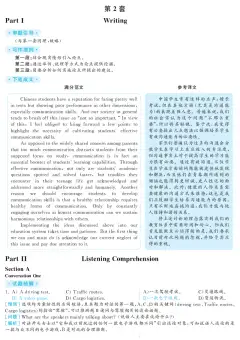
随着中国经济的蓬勃发展,学汉语的人数迅速增加,使汉语成了世界上人们最爱学的语言之一。近年来,中国大学在国际上的排名也有了明显的提高。由于中国教育的巨大进步,中国成为最受海外学生欢迎的留学目的地之一就不足为奇了。2015年,近40万国际学生蜂拥来到中国市场。他们学习的科目不再限于中国语言和文化,而包括科学与工程。在全球教育市场上,美国和英国仍占主导地位,但中国正在迅速赶上。
参考译文:
With China’s booming economy, the number of people who learn Chinese grows rapidly. It makes Chinese become one of the favorite languages that people would like to learn. Recently, Chinese universities rise significantly in world university rankings. Since the significant progress made in Chinese education, it is no wonder that China has been one of the most favored places for overseas students. In 2015, nearly 40,0000 international students swarmed into the Chinese market. Not confined to Chinese language and culture, the subjects they choose to learn also include science and engineering. Although the global market is still dominated by US and UK, China is striving to catch up.