ARTICLE · 1178469
【难点攻破】高中英语之长难句
点击蓝字
,关注我们
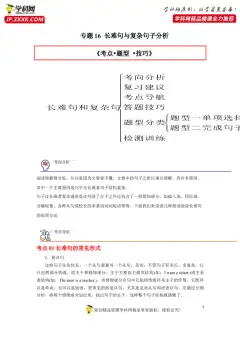
英语长难句(Long and Difficult Sentences)是指结构复杂、成分繁多、难以理解的英语句子。其“难”主要不在于单词量大小,而在于句子内部信息的“层级”多、逻辑关系复杂,以及各种语法结构的叠加。
一、 长难句的构成与特点
结构复杂,层层嵌套:长难句往往在主干(主谓宾/主系表)之外,叠加了多种修饰成分(如定语、状语、同位语)和语法结构(如从句、非谓语动词、插入语),形成“套娃”式的嵌套结构。
成分繁多,修饰语长:常包含较长的介词短语、形容词/副词短语、非谓语动词短语(如不定式、动名词、分词)等,这些成分对核心信息进行大量补充和限定,增加了阅读障碍。
逻辑关系复杂:句子中常包含多重逻辑关系(如因果、转折、递进、让步等),通过各类连词(并列连词、从属连词)连接,导致句子信息密度大,理解时需要理清各部分之间的逻辑脉络。
存在特殊句式:常包含倒装、省略、强调、分隔(如插入语打乱原有语序)等语法现象,打断了原有的线性阅读习惯。
二、 长难句的常见类型
修饰型长难句:以大量修饰成分为主,主干清晰,但修饰成分(尤其是后置定语)极长,导致句子“长”。例如:包含多重定语从句或长介词短语的句子。
嵌套型长难句:包含多个从句(名词性从句、定语从句、状语从句)相互嵌套,结构极复杂,导致句子“难”。例如:主句中套着定语从句,定语从句中又套着状语从句。
并列型长难句:由多个分句通过并列连词(如 and、but、or)连接,各分句本身可能也是复杂句,信息量大且逻辑层次多。
混合型长难句:结合了嵌套和并列的特点,结构最为复杂,常见于学术文章、新闻报道和考试阅读中。
三、 长难句的本质
英语长难句本质上是英语“嵌套逻辑”的体现。英语倾向于将多个信息“嵌套”在一个句子中(如名词+修饰+修饰的修饰),而中文更倾向于“线性逻辑”(分句并列)。理解长难句的核心在于“去繁存简”,即剥离修饰成分,精准定位句子主干,再逐层解析修饰与逻辑关系。

牛刀小试
1. The young scientist, who had spent five years conducting experiments in the remote desert, finally discovered a new chemical element capable of withstanding extremely high temperatures.
2. What amazed the international community most was that the Chinese medical team volunteered to stay in the wartorn region, risking their own lives to save others.
3. The ancient temple, hidden deep within the misty mountains and rarely visited by tourists, is said to house a priceless statue of Buddha carved from a single piece of white jade.
4. Although she had never received any formal training in painting, the elderly woman created a masterpiece that perfectly captured the vibrant energy of the bustling street market.
5. I still remember the moment when the old librarian handed me the wornout book, saying that it had once belonged to a famous local historian.
6. The proposal to build a new highspeed railway line connecting the two major economic zones was eventually rejected because the environmental impact assessment revealed serious potential risks.
7. Whether the artificial intelligence program can truly understand human emotions remains a controversial topic among scientists specializing in cognitive neuroscience.
8. Facing the severe criticism from the media, the CEO made a public statement in which he promised to implement stricter safety standards to prevent similar accidents.
9. The documentary series, consisting of eight episodes and featuring breathtaking aerial footage, explores remote villages where ancient traditions are still carefully preserved by the local inhabitants.
10. My grandmother often tells me stories about her childhood when she used to sit under the old banyan tree, listening to the melodic sound of raindrops falling on the lotus leaves.

1. 原句: The young scientist, who had spent five years conducting experiments in the remote desert, finally discovered a new chemical element capable of withstanding extremely high temperatures.
译文:那位曾在偏远沙漠中花了五年时间进行实验的年轻科学家,最终发现了一种能够承受极高温度的新化学元素。
分析:
定语从句: `who had spent ... desert` 修饰 `scientist`,译为前置定语“...的”。
非谓语动词: `conducting experiments` 作 `spent` 的伴随状语;`capable of withstanding` 是形容词短语作后置定语,译为“能够承受...的”。
2. 原句: What amazed the international community most was that the Chinese medical team volunteered to stay in the wartorn region, risking their own lives to save others.
译文:最令国际社会震惊的是,中国医疗队自愿留在战乱地区,冒着生命危险拯救他人。
分析:
名词性从句: `What amazed ... most` 是主语从句,译为“...的是”。
非谓语动词: `risking ... others` 是现在分词短语作伴随状语,译为“冒着...”。
3. 原句: The ancient temple, hidden deep within the misty mountains and rarely visited by tourists, is said to house a priceless statue of Buddha carved from a single piece of white jade.
译文:那座深藏于云雾缭绕的群山之中、鲜有游客到访的古寺,据说供奉着一尊由整块白玉雕刻而成的无价佛像。
分析:
非谓语动词: `hidden` 和 `visited` 均为过去分词作后置定语修饰 `temple`;`carved ... jade` 过去分词短语作定语修饰 `statue`。
非谓语动词(不定式): `to house ... statue` 是主语补足语,与 `is said` 构成复合谓语。
4. 原句: Although she had never received any formal training in painting, the elderly woman created a masterpiece that perfectly captured the vibrant energy of the bustling street market.
译文:尽管她从未接受过任何正规的绘画训练,这位老妇人却创作出了一幅完美捕捉了熙熙攘攘街市活力的杰作。
分析:
状语从句: `Although ... painting` 是让步状语从句,译为“尽管...”。
定语从句: `that ... market` 修饰 `masterpiece`,较长故译为后置定语(重复先行词“杰作”)。
非谓语动词: `bustling` 是现在分词作定语修饰 `street market`。
5. 原句: I still remember the moment when the old librarian handed me the wornout book, saying that it had once belonged to a famous local historian.
译文:我仍然记得那位老图书管理员把那本破旧的书递给我的那一刻,他说这本书曾属于当地一位著名的历史学家。
分析:
定语从句: `when ... book` 修饰 `moment`,译为“...的一刻”。
非谓语动词: `saying ... historian` 现在分词短语作伴随状语。
名词性从句: `that it had once belonged ... historian` 作 `saying` 的宾语。
6. 原句: The proposal to build a new highspeed railway line connecting the two major economic zones was eventually rejected because the environmental impact assessment revealed serious potential risks.
译文:修建一条连接两大经济区的新高铁线路的提议最终被否决了,因为环境影响评估显示出了严重的潜在风险。
分析:
非谓语动词: `to build ... zones` 不定式短语作后置定语修饰 `proposal`;`connecting` 现在分词作定语修饰 `line`。
状语从句: `because ... risks` 是原因状语从句。
7. 原句: Whether the artificial intelligence program can truly understand human emotions remains a controversial topic among scientists specializing in cognitive neuroscience.
译文:人工智能程序是否能够真正理解人类情感,在专门从事认知神经科学研究的科学家中仍是一个有争议的话题。
分析:
名词性从句: `Whether ... emotions` 是主语从句。
非谓语动词: `specializing ... neuroscience` 现在分词短语作后置定语修饰 `scientists`。
8. 原句: Facing the severe criticism from the media, the CEO made a public statement in which he promised to implement stricter safety standards to prevent similar accidents.
译文:面对来自媒体的严厉批评,这位首席执行官发表了一份公开声明,在声明中他承诺将实施更严格的安全标准以防止类似事故再次发生。
分析:
非谓语动词: `Facing ... media` 现在分词短语作状语。
定语从句: `in which ... accidents` 是“介词 + which”引导的定语从句修饰 `statement`。
非谓语动词(不定式): `to implement` 和 `to prevent` 作目的状语或宾语。
9. 原句: The documentary series, consisting of eight episodes and featuring breathtaking aerial footage, explores remote villages where ancient traditions are still carefully preserved by the local inhabitants.
译文:这部由八集组成、配有令人叹为观止的航拍镜头的纪录片系列,探索了那些古老传统仍被当地居民悉心保存的偏远村庄。
分析:
非谓语动词: `consisting` 和 `featuring` 是现在分词短语作后置定语修饰 `series`。
定语从句: `where ... inhabitants` 是关系副词引导的定语从句修饰 `villages`。
10. 原句: My grandmother often tells me stories about her childhood when she used to sit under the old banyan tree, listening to the melodic sound of raindrops falling on the lotus leaves.
译文:我的祖母经常给我讲她童年的故事,那时她常常坐在那棵老榕树下,听着雨滴落在荷叶上发出的悦耳声音。
分析:
定语从句: `when ... tree` 修饰 `childhood`。
非谓语动词: `listening ... leaves` 现在分词短语作伴随状语;`falling ... leaves` 现在分词短语作定语修饰 `raindrops`。