ARTICLE · 1255822
小升初英语必考!6大情态动词用法大全,规则、句型、易错点全掌握!
小升初英语必考!6大情态动词用法大全,规则、句型、易错点全掌握!
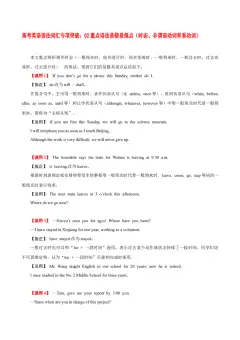
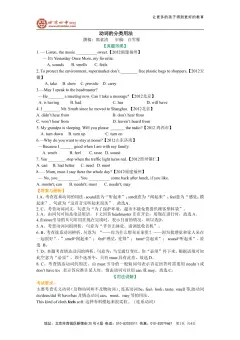
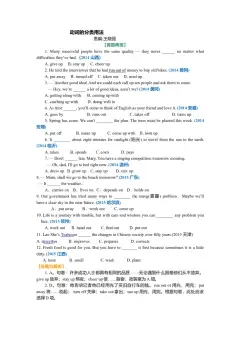
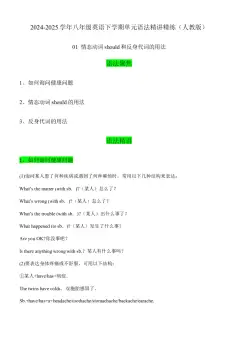
点击蓝字,关注我们 情态动词是小学英语和小升初考试中的常见语法考点。 can、could、may、must、should、would 看起来简单,但在表示能力、请求、许可、义务和建议时,用法各不相同。
今天整理了6大常见情态动词的基本用法、核心句型、易错点及20道专项练习,建议收藏复习! 
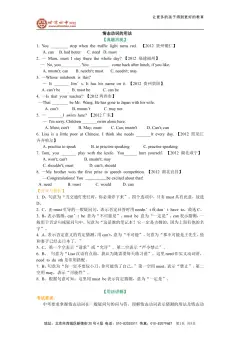
一、情态动词的3大基本规则 规则1:情态动词后接动词原形 基本结构: 主语 + 情态动词 + 动词原形 + 其他。 - I can swim. 我会游泳。 - You should study hard. 你应该努力学习。 - We must finish our homework. 我们必须完成作业。 注意: ❌She can sings. ✅She can sing. 情态动词后面的动词不加 -s、-es,也不直接加 -ing。 规则2:否定句在情态动词后加 not 基本结构: 主语 + 情态动词 + not + 动词原形。 常见缩写:
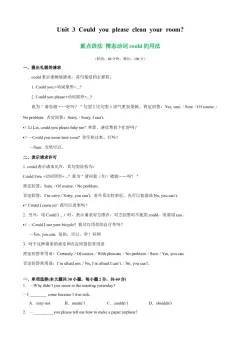
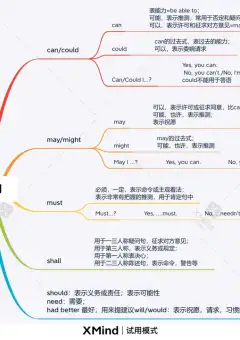
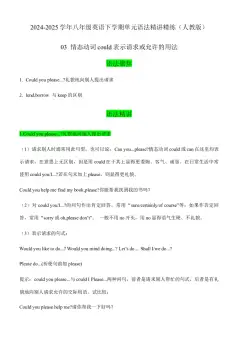
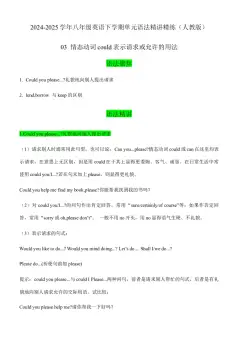
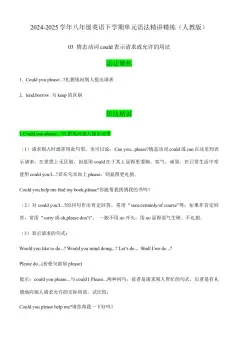
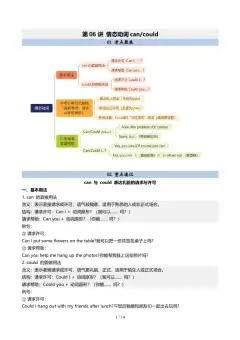
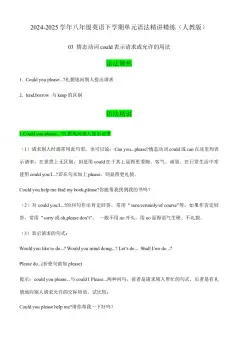
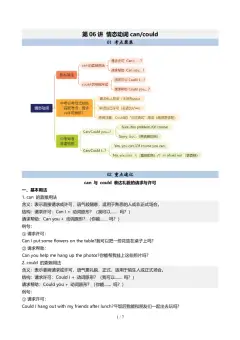
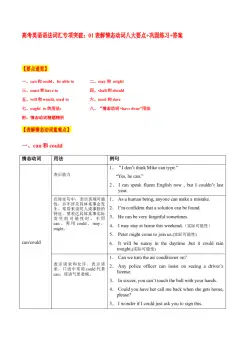
- I can't ride a bike. 我不会骑自行车。 - You shouldn't eat too much candy. 你不应该吃太多糖果。 - You mustn't run here. 你不可以在这里跑。 规则3:一般疑问句把情态动词提前 基本结构: 情态动词 + 主语 + 动词原形 + 其他? - Can you play basketball? 你会打篮球吗? - May I come in? 我可以进来吗? - Should we go now? 我们现在应该走吗? 注意: ❌Do you can swim? ✅Can you swim? 有情态动词时,通常不需要再借助 do 或 does 构成一般疑问句。 二、情态动词 can 的用法 can 是小学英语中最常见的情态动词之一。 1. 表示能力:能、会 - I can speak English. 我会说英语。 - She can dance very well. 她跳舞跳得很好。 - Birds can fly. 鸟会飞。 常见句型: Can + 主语 + 动词原形? —Can you swim? —Yes, I can. / No, I can't. 2. 表示请求或许可:可以 - Can I use your pen? 我可以用一下你的钢笔吗? - Can you help me? 你能帮我吗? - Can we play outside? 我们可以在外面玩吗? 常见回答: - Sure. 当然。 - Of course. 当然可以。 - Sorry, you can't. 对不起,不可以。 3. 表示可能性 - It can be very cold here in winter. 这里冬天有时会非常冷。 记忆重点:can 主要表示能力,也可以表示请求、许可和可能性。 三、情态动词 could 的用法 1. 表示过去的能力:过去能、会 - I could swim when I was six. 我六岁时就会游泳。 - My grandpa could run fast when he was young. 我爷爷年轻时能跑得很快。 对比: - I can ride a bike now. 我现在会骑自行车。 - I couldn't ride a bike three years ago. 三年前我还不会骑自行车。 2. 表示礼貌请求 - Could you help me, please? 请问你能帮我一下吗? - Could I borrow your ruler? 我可以借用一下你的尺子吗? - Could you open the door? 你能开一下门吗? 注意:could 用于礼貌请求时,不一定表示过去。 例如: —Could you help me? —Of course I can. 这里的 could 表示语气更委婉,回答可以用 can。 3. can 和 could 的区别
四、情态动词 may 的用法 1. 表示请求许可:可以 - May I come in? 我可以进来吗? - May I ask a question? 我可以问一个问题吗? - May I sit here? 我可以坐在这里吗? may 常用于比较正式、礼貌的请求。 常见回答: —May I come in? —Yes, you may. / Of course. 如果不允许,可以回答: —No, you may not. 2. 表示可能性:可能、也许 - It may rain tomorrow. 明天可能下雨。 - She may be at home. 她可能在家。 - He may come later. 他可能晚点来。 3. can 和 may 的区别 - Can I use your phone? 我可以用你的电话吗? - May I use your phone? 我可以用您的电话吗? 两句话都可以表示请求许可,may 通常比 can 更正式、更礼貌。 五、情态动词 must 的用法 1. 表示必须、一定要 - You must finish your homework. 你必须完成作业。 - We must follow the school rules. 我们必须遵守校规。 - You must wear a seat belt. 你必须系安全带。 must 强调说话人认为某件事必须做。 2. mustn't 表示禁止 must not / mustn't = 不准、禁止 - You mustn't run in the library. 你不可以在图书馆里跑。 - You mustn't play with fire. 你不可以玩火。 - You mustn't cross the road when the light is red. 红灯亮时不准过马路。 3. Must I...? 的回答 —Must I finish my homework now? 肯定回答: —Yes, you must. 否定回答: —No, you needn't. 或者: —No, you don't have to. 注意:否定回答通常不用 No, you mustn't,因为 mustn't 表示"禁止",而不是"不必"。 4. mustn't 和 don't have to 的区别
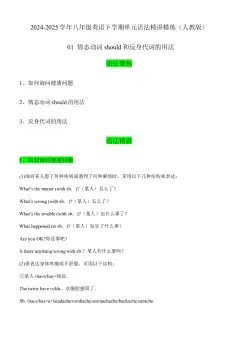
mustn't = 不能做;don't have to = 可以不做。这是小升初英语中的高频易错点。 六、情态动词 should 的用法 1. 表示建议:应该 - You should drink more water. 你应该多喝水。 - You should go to bed early. 你应该早点睡觉。 - We should help our parents. 我们应该帮助父母。 2. shouldn't 表示不应该 - You shouldn't eat too much junk food. 你不应该吃太多垃圾食品。 - You shouldn't be late for school. 你不应该上学迟到。 - You shouldn't talk loudly in the library. 你不应该在图书馆里大声说话。 3. 常见问答句型 —What should I do? —I think you should see a doctor. 我应该怎么办?我认为你应该去看医生。 4. should 和 must 的区别 - You should do your homework. 你应该做作业。 - You must do your homework. 你必须做作业。 should 强调建议,must 强调必须。 七、情态动词 would 的用法 1. Would you like...? 表示礼貌邀请或询问意愿 - Would you like some water? 你想喝点水吗? - Would you like an apple? 你想吃一个苹果吗? - Would you like to join us? 你愿意加入我们吗? 常见回答: —Would you like some juice? —Yes, please. / No, thank you. —Would you like to play football? —Yes, I'd love to. 2. Would you please...? 表示礼貌请求 - Would you please open the window? 请你打开窗户好吗? - Would you please help me? 请你帮我一下好吗? 3. would like 表示想要 would like + 名词 - I would like a cup of tea. 我想要一杯茶。 would like to + 动词原形 - I would like to visit Beijing. 我想去北京游玩。 注意: ❌I would like go swimming. ✅I would like to go swimming. would like 后接动词时,要用 to do 结构。 八、6大情态动词用法速查表
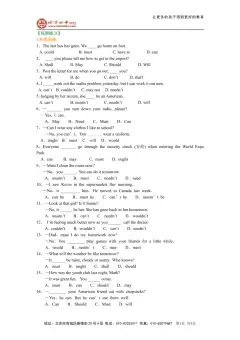
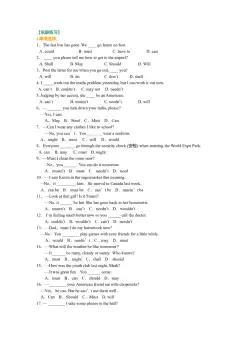
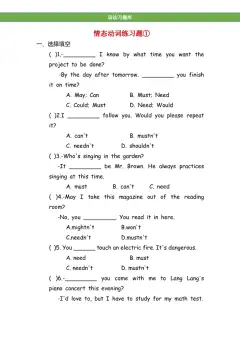
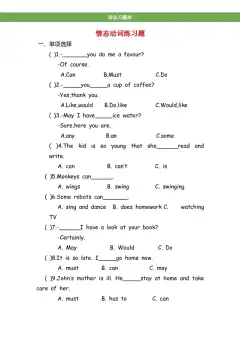
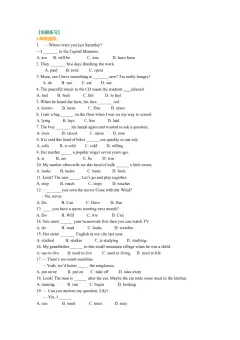
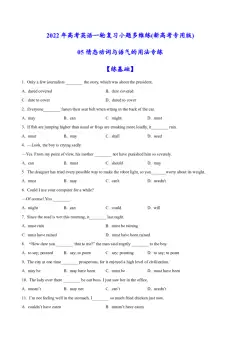
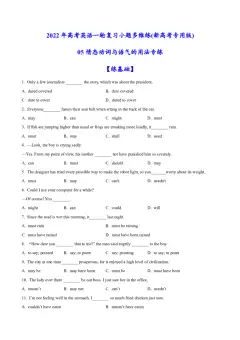
九、8个常见易错点 易错点1:情态动词后误用第三人称单数 ❌He can plays football. ✅He can play football. 原因:can 后接动词原形。 易错点2:情态动词后误加 to ❌You must to finish your homework. ✅You must finish your homework. 原因:must 后直接接动词原形。 注意:would like to do 是固定结构,不能与此混淆。 易错点3:一般疑问句重复使用 do ❌Does she can dance? ✅Can she dance? 原因:can 提前即可构成一般疑问句。 易错点4:把 could 全部理解成过去时 ❌Could you help me? 一定表示过去请求帮助。 ✅Could you help me? 也可以表示现在的礼貌请求。 易错点5:mustn't 和 don't have to 混淆 ❌You mustn't come tomorrow.(想表达"你明天不必来") ✅You don't have to come tomorrow. 原因:mustn't 表示禁止,don't have to 表示不必。 易错点6:Must I...? 的否定回答错误 ❌—Must I go now? —No, you mustn't.(想表达"不必") ✅—Must I go now? —No, you needn't. 也可以回答:No, you don't have to. 易错点7:should 后误加动词 -ing ❌You should drinking more water. ✅You should drink more water. 原因:should 后接动词原形。 易错点8:would like 后漏掉 to ❌I would like play basketball. ✅I would like to play basketball. 原因:would like to do 表示"想要做某事"。 十、20道情态动词专项练习 第一组:单项选择(1—10题) 1. My brother ______ swim very well. A. can B. cans C. can to 2. ______ I come in, Mr Green? A. Am B. May C. Do 3. You ______ run in the classroom. It's dangerous. A. mustn't B. don't have to C. can 4. When I was five, I ______ ride a bike. A. can't B. couldn't C. mustn't 5. You look tired. You ______ have a rest. A. should B. mustn't C. can't 6. Would you like ______ some milk? A. drink B. drinking C. to drink 7. —Must I finish the work today? —No, you ______. A. mustn't B. needn't C. can't 8. It ______ rain tomorrow. Take an umbrella just in case. A. may B. mustn't C. can't 9. ______ you please close the door? A. Would B. Are C. Do 10. We ______ obey the traffic rules. A. must B. can to C. must to 第二组:用所给词的适当形式填空(11—15题) 11. She can ______ (sing) English songs. 12. You should ______ (go) to bed early. 13. May I ______ (use) your pencil? 14. He must ______ (finish) his homework first. 15. I would like ______ (visit) the zoo. 第三组:按要求完成句子(16—20题) 16. Tom can play basketball. 改为否定句:____________________________ 17. She can speak English. 改为一般疑问句:____________________________ 18. You should eat too much candy. 改为否定句:____________________________ 19. Must I get up early tomorrow? 作否定回答,表示"不必":____________________________ 20. I want to have some juice. 用 would like 改写:____________________________ 十一、20道练习参考答案 第一组答案 1. A:can 后接动词原形,can 本身不加 -s。 2. B:May I...? 表示礼貌请求许可。 3. A:mustn't 表示禁止。 4. B:when I was five 表示过去,couldn't 表示过去不会。 5. A:should 表示建议。 6. C:would like to do 表示想要做某事。 7. B:Must I...? 的否定回答可以用 needn't。 8. A:may 表示可能性。 9. A:Would you please...? 表示礼貌请求。 10. A:must 后接动词原形。 第二组答案 11. sing:can 后接动词原形。 12. go:should 后接动词原形。 13. use:may 后接动词原形。 14. finish:must 后接动词原形。 15. to visit:would like to do 固定搭配。 第三组答案 16. Tom can't play basketball. 17. Can she speak English? 18. You shouldn't eat too much candy. 19. No, you needn't. 也可以回答:No, you don't have to. 20. I would like to have some juice. 十二、考前必背口诀 1. 情态动词有特点,后接动词用原形。
2. 否定直接加 not,疑问情态动词放句首。
3. can 表能力和许可,could 请求更委婉。
4. may 表许可和可能,must 表示必须做。
5. mustn't 表示不准做,don't have to 表示不必做。
6. should 表示提建议,would like 表示想要。
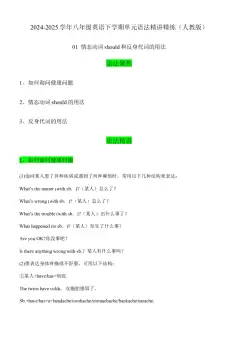
7. Would you like to...? 邀请别人很常见。 小学英语情态动词的核心,就是分清能力、许可、请求、建议、义务和意愿这几种含义。
把这 6 大情态动词的用法记牢,再结合 20 道专项练习巩固,遇到选择题、句型转换题和情景交际题时,就能更准确地判断。
今天整理了6大常见情态动词的基本用法、核心句型、易错点及20道专项练习,建议收藏复习!
| 肯定形式 | 否定形式 |
|---|---|
| can | could |
|---|---|
| 表达 | 含义 | 例句 |
|---|---|---|
| 情态动词 | 主要用法 | 典型例句 |
|---|---|---|
2. 否定直接加 not,疑问情态动词放句首。
3. can 表能力和许可,could 请求更委婉。
4. may 表许可和可能,must 表示必须做。
5. mustn't 表示不准做,don't have to 表示不必做。
6. should 表示提建议,would like 表示想要。
7. Would you like to...? 邀请别人很常见。
把这 6 大情态动词的用法记牢,再结合 20 道专项练习巩固,遇到选择题、句型转换题和情景交际题时,就能更准确地判断。