ARTICLE · 1320197
初中英语写作指导:智慧故事
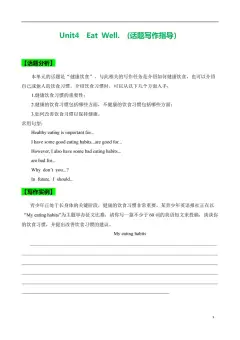
初中英语写作指导:智慧故事【写作任务】Write a short story about wisdom. 学校短篇故事大赛启动,请写一篇关于智慧的短篇故事投稿。内容包括: - Time, place, weather, character(s) (appearance, clothes, feelings, etc.) - What happened at the beginning, in the middle, and at the end? (put the events in time order.) - What did the character(s) do at the end of the story, and how did they feel? 题目要求写一个关于“智慧”的故事,分为三个部分: Part 1 场景设定——时间、地点、天气、人物(外貌、衣着、心情) Part 2 情节发展——开始→中间→结尾(按时间顺序) Part 3 故事结局——人物做了什么、感受如何 很久以前 Many years ago / Long long ago / Once upon a time 一个晴朗的早晨 One sunny morning 一个下雨的午后 One rainy afternoon 一个寒冷的冬日 One cold winter day 在海边的一个小村庄 In a small village by the sea 在森林深处 Deep in the forest 有一个叫……的小男孩 There was once a young boy named ... 天正在下雨 It was raining heavily 太阳高高挂在天上 The sun was high in the sky 一个……的老人 an old man with... 穿着破旧的衣服 wearing old and torn clothes 感到担心/害怕/兴奋 felt worried / scared / excited 有一天 One day 突然 Suddenly 然后 Then / After that 最后 Finally / In the end 他决定…… He decided to... 他想到了一个办法 He came up with an idea. 他没有……而是…… Instead of..., he... 从那天起 From that day on 从那以后 Ever since then 他感到…… He felt... 他意识到 He realized that... 他学到了一个道理 He learned a lesson. 真正的智慧是…… True wisdom is... One hot summer day, a little turtle was walking slowly near a river. He was small and green, with a hard shell on his back. He felt happy because the sun was warm. Suddenly, a hungry fox came out from behind a tree. The fox looked at the turtle and wanted to eat him. The turtle felt very scared. The fox said, "Little turtle, you are my lunch!" The turtle thought quickly. He said, "Mr. Fox, my meat is not tasty. But if you throw me into the river, I will become bigger and fatter. Then I will be more delicious." The fox believed him. He picked up the turtle and threw him into the river with all his strength. Splash! The turtle fell into the water. He swam away quickly and laughed, "Thank you, Mr. Fox! Now I am safe!" The fox was very angry, but it was too late. The turtle used his wisdom to save himself. He felt very proud. From that day on, he knew that thinking fast is more important than being strong. One cold winter evening, in a small village at the foot of a mountain, an old man sat by his fire. He had long white hair and wore a simple brown coat. His name was Master Li, and he was known as the wisest person in the village. That night, the wind was howling, and snow was falling heavily. Master Li felt peaceful, but he knew trouble was coming. At the beginning, two young men from the village came to his door, arguing loudly. Each man claimed that a beautiful horse belonged to him. They shouted and pushed each other. "Please help us decide!" they begged. Master Li looked at the horse carefully. Instead of saying who was right, he said, "I cannot tell who owns this horse. But I know someone who can — the horse itself. Leave it here for one night." The young men agreed. That night, Master Li fed the horse and brushed its fur gently. He did not take sides. At the end, the next morning, the horse walked straight to its real owner — the man who had fed it for years. The other man hung his head in shame. Master Li smiled and said, "True wisdom is not about proving who is right. It is about letting the truth show itself." The two young men thanked him and became friends again. Master Li felt satisfied and warm inside, not because of the fire, but because he had helped others find peace. From that day on, the villagers respected him even more. They learned that wisdom is silent, patient, and kind.
Part 1: Setting the scene
Part 2: Developing the story
Part 3: Ending the story
【写作指导】