ARTICLE · 1379064
二创!扬州市高三英语期中试题!单词认识,变形就错?这45道语法填空,帮你彻底打通构词法“任督二脉”!
二创!扬州市高三英语期中试题!单词认识,变形就错?这45道语法填空,帮你彻底打通构词法“任督二脉”!期中考试刚过,很多高三同学在后台私信:
“阅读能看懂,但语法填空一考词性转换就发懵……”“单词表背得滚瓜烂熟,卷子上变成 -tion、-ity、-ive 就完全认不出了!”“句子一长,就找不准该填什么词性。”
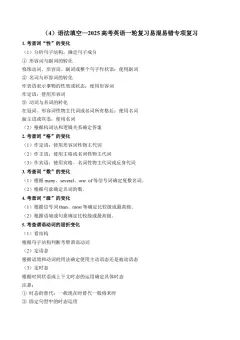
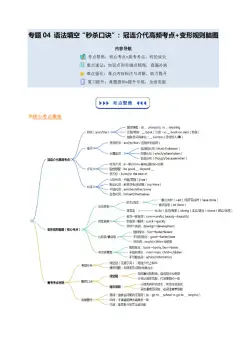
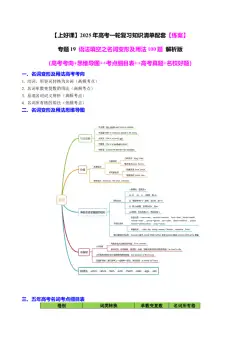
其实,高考英语的语法填空和单词拼写,核心考的就是“构词法”!前缀表否定或方向,后缀定词性。遇到长难句,先找主谓宾,再看空格修饰谁。
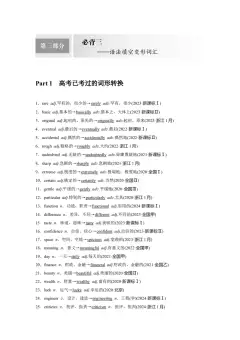
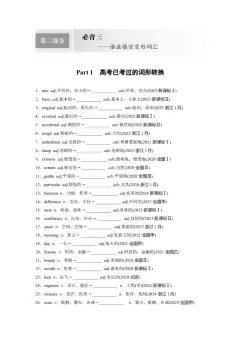
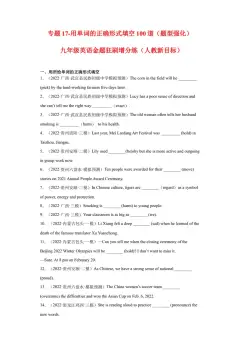
今天,我们深度剖析了最新的一份高三英语期中试卷,从中精心提取了45个极具代表性的长难句,全部改编为【单句语法填空】。重点考察词汇派生与转化,句子长度均超过10个词!
这不仅是一次词汇的复习,更是对长难句语法分析的一次绝佳训练。强烈建议先收藏、打印,独立完成后再核对答案! 👇
🔥 专项突破:核心词汇派生 45题
【Reading A & B:自然探索与历险】
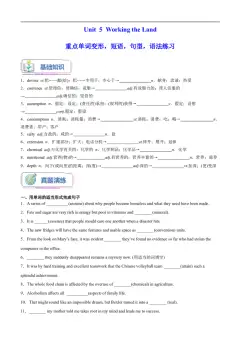
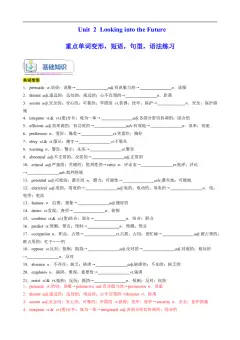
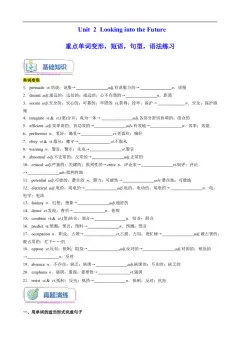
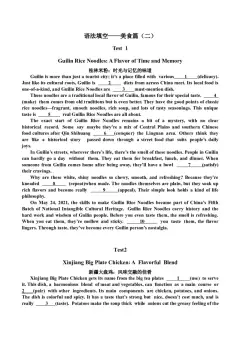
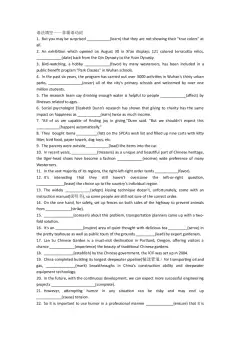
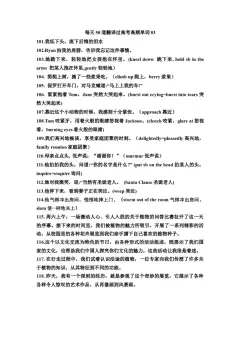
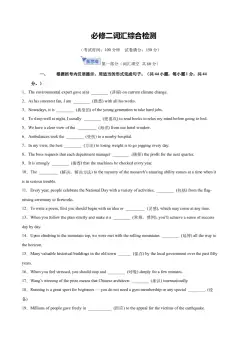
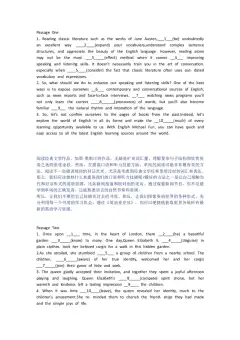
Admission to the Getty Center is free for everyone. However, everyone over two must make a timed-entry ________ (reserve) on our website. During your visit, families can enjoy the tram ride, gardens, and art galleries to ________ (entertainment) their children. These rules protect the art and ensure a ________ (please) experience for everyone, bringing people together to preserve the past. A ________ (harm) adventure can turn dangerous when nature changes, as the waves crashed over our small boat. When we set out, the sky was blue, though cold, and life jackets kept us warm until the sky ________ (dark) rapidly. We rowed to rocky islands and had so much fun that we missed the ________ (gather) clouds in the sky. The only shelter was the boat, where we hid cold and frightened until we heard voices calling, showing our ________ (willing) to keep calm. I understood that adventure is not wrong, but nature demands ________ (respect), which saved us along with our teamwork.
【Reading C:红树林与生态保护】
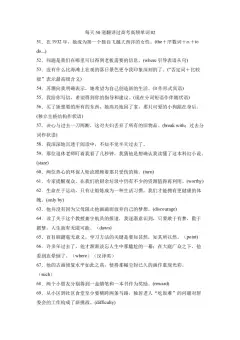
Mangroves are salt-________ (tolerate) woody plants living in coastal tidal zones, protecting coasts from wearing away. Their twisted supporting roots slow tides and trap sediment, providing ________ (protect) for coasts and local fisheries. Known as blue carbon sinks, mangroves store carbon much better than most land forests, keeping carbon ________ (store) for hundreds of years. However, these valuable coastal ecosystems face two main threats: human ________ (act) and climate change. Mangroves can adapt to slow sea-level increase by ________ (accumulate) sediment to raise their soil surface. Once their carbon-rich soils are washed away, mangroves will shift from carbon sinks to carbon ________ (source). A new study led by the University of Exeter ________ (challenge) earlier conclusions based on field observations. Local ________ (measure) may create misleading conclusions, so conservation plans must focus on the entire landscape. To preserve mangroves' climate value, conservation and ________ (restore) plans must focus on the entire landscape. Protecting mangrove forests matters greatly, for they play a vital role in ________ (fight) climate change.
【Reading D:古代科技与织布机】
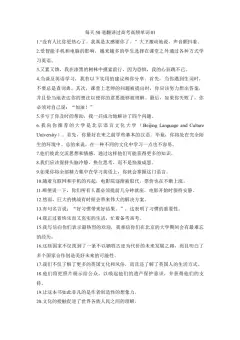
The computer is fundamentally an input-output device because it receives instructions and performs ________ (calculate) automatically. China's ancient figure loom may be the world's earliest computer, according to the China ________ (associate) for Science and Technology. Unearthed in 2012, this silk-weaving machine used ________ (program) computation with physical pattern cards. The Chengdu machine operated at the same time on 100 devices, producing results with perfect ________ (precise). China addressed this challenge early on through machine use, which ________ (establish) it as the world's silk production centre. Beyond fine silk patterns, the loom's ________ (science) thinking is even more amazing. Its technical logic greatly influenced the basic rules of modern ________ (inform) technology. Craftsmen turned patterns into a physical order using bamboo sticks to control ________ (program) patterns through mixing threads.
【七选五:时差与健康】
Jet lag, which may lead to sleep disorders, daytime ________ (exhaust) and unpleasant symptoms, can easily ruin a holiday. ________ (adjust) your sleep-wake schedule alone is not enough to reduce the impacts of jet lag. Jet lag happens when your body's ________ (biology) clock is mismatched with the time zone where you arrive. When you cross multiple time zones rapidly, physical ________ (balance) may still bring unpleasant digestive issues. Both caffeine and alcohol can increase your risk of ________ (dehydrate), so sufficient water intake is advised. Do not ignore the transition back home after travelling because sudden changes may ________ (disturbance) your body clock.
【完形填空:克服恐惧】
For years, Sophie had allowed an ________ (visible) fear to shape her choices, rarely reaching out to strangers. She rarely asked for opportunities when ________ (curious) encouraged her to step forward. Her first challenge was to ask a café ________ (employ) if she could make her own coffee. Some people refused her requests; others responded with ________ (expect) generosity. A stranger's "no" might reflect a lack of time or opportunity, not ________ (automatic) a judgment of her. More importantly, she realised her fear had been ________ (narrow) possibilities before they existed. By the end, she had not become fearless, but she had developed a different ________ (relate) with fear. Fear no longer meant ________ (fail) for her, but a chance to act without knowing the answer.
【附加:试卷中的熟词生义与长难句拓展】
The Great film historian picks four of his favourite books, offering a superb ________ (glimpse) of how a brilliant head runs a studio. (n. 一瞥) Through his videos, he has attracted a vast following of ________ (devote) young fans, whose parents are equally enthusiastic. (adj. 忠诚的) He keeps marks and imperfections real to encourage children to embrace the beauty of ________ (perfect). (n. 不完美) The overall findings are ________ (reassure), suggesting how screens are used matters more than the time spent. (adj. 令人放心的) The selected bamboo, which is ________ (prize) for its toughness, is wrapped in silk and sent for processing. (v. 珍视)
🗝️ 答案与深度解析
【Reading A & B】
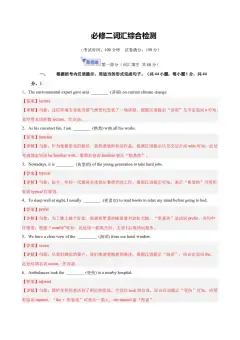
reservation (形容词timed-entry后接名词,意为“预约”) entertain (不定式to后接动词原形,意为“娱乐”) pleasant (形容词修饰名词experience,意为“令人愉快的”) harmless (形容词修饰名词adventure,结合语境,看似“无害的”冒险) darkened (作谓语动词,过去时,意为“变暗”) gathering (现在分词作定语,意为“聚集的乌云”) willingness (形容词性物主代词our后接名词,意为“意愿”) respect (动词demand后接名词作宾语,意为“尊重”)
【Reading C】
tolerant (复合形容词salt-tolerant,意为“耐盐的”) protection (动词provide后接名词,意为“保护”) stored (过去分词作宾补,keep sth. done,意为“被储存”) activities (形容词human后接名词复数,意为“人类活动”) accumulating (介词by后接动名词,意为“积累”) sources (名词复数,carbon sources,意为“碳源”) challenges (作谓语,一般现在时,主语是A new study,单三形式) measurements (形容词Local后接名词复数,意为“测量”) restoration (与conservation并列,名词,意为“恢复”) fighting (介词in后接动名词,in doing sth.,意为“对抗”)
【Reading D】
calculations (动词perform后接名词复数,意为“计算”) Association (专有名词,China Association for Science and Technology) programmable (形容词修饰名词computation,意为“可编程的”) precision (形容词perfect后接名词,意为“精确度”) established (作谓语,过去时,意为“确立”) scientific (形容词修饰名词thinking,意为“科学的”) information (名词作定语,information technology,信息技术) preprogrammed (过去分词作定语,意为“预先编程的”)
【七选五】
exhaustion (形容词daytime后接名词,意为“疲惫”) Adjusting (动名词作主语,句首大写) biological (形容词修饰名词clock,biological clock 生物钟) imbalance (physical imbalance 生理失衡,结合语境加否定前缀im-) dehydration (介词of后接名词,意为“脱水”) disturb (情态动词may后接动词原形)【完形填空】
invisible (形容词修饰名词fear,结合语境,意为“看不见的”) curiosity (连词when引导时间状语从句,作主语,名词) employee (名词作宾语,意为“员工”) unexpected (形容词修饰名词generosity,结合语境,意为“意想不到的”) automatically (副词修饰动词judge/整个句子,意为“自动地”) narrowing (过去完成进行时 had been doing,意为“缩小(可能性)”) relationship (形容词different后接名词,意为“关系”) failure (动词mean后接名词作宾语,意为“失败”)
【拓展拓展】
glimpse (名词,a superb glimpse of... 一瞥) devoted (形容词,意为“忠诚的/热爱的”) imperfection (名词,the beauty of imperfection 不完美之美) reassuring (形容词作表语,意为“令人安心的”) prized (被动语态,be prized for 因...而备受珍视)
💡 刷完题,记得总结这三条“提分铁律”:
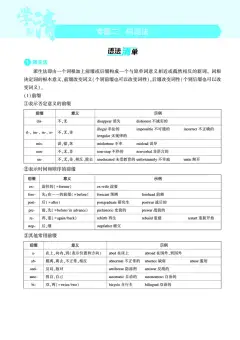
看词性定后缀:空格前是 the、形容词或介词,通常填名词(如 -tion, -ment, -ness, -ity);修饰动词或整个句子,通常填副词(-ly)。 看逻辑定前缀:注意句意是否有转折、否定,警惕 in-, un-, im-, dis- 等否定前缀(如本次考查的 invisible, unexpected)。 积累熟词生义:比如文中的 prize (珍视)、glimpse (一瞥),不要只记最基础的意思。
资料整理不易,如果你的英语成绩因此有了提升,欢迎在评论区打卡“完成”!
觉得有用的话,别忘了点个【赞】和【在看】,并转发给身边正在为英语发愁的高三党。你的支持,是我们持续输出高质量干货的最大动力!❤️
📌 想要获取这45道题的【高清无答案版PDF打印文件】?请在公众号后台回复关键词:【语法填空45】,即可直接下载打印,随时刷题!