ARTICLE · 1388031
雅思写作真题|你吃的烤肠可能是鸡脖子做的:垃圾食品广告该不该像香烟一样禁掉
哈喽刷题搭子们👋
摘要:标签在藏成分,雅思问的是更狠的那一层——该不该让它连广告都打不了。
今天微博第 16 位:你吃的烤肠可能是鸡脖子做的(13.1 万)。
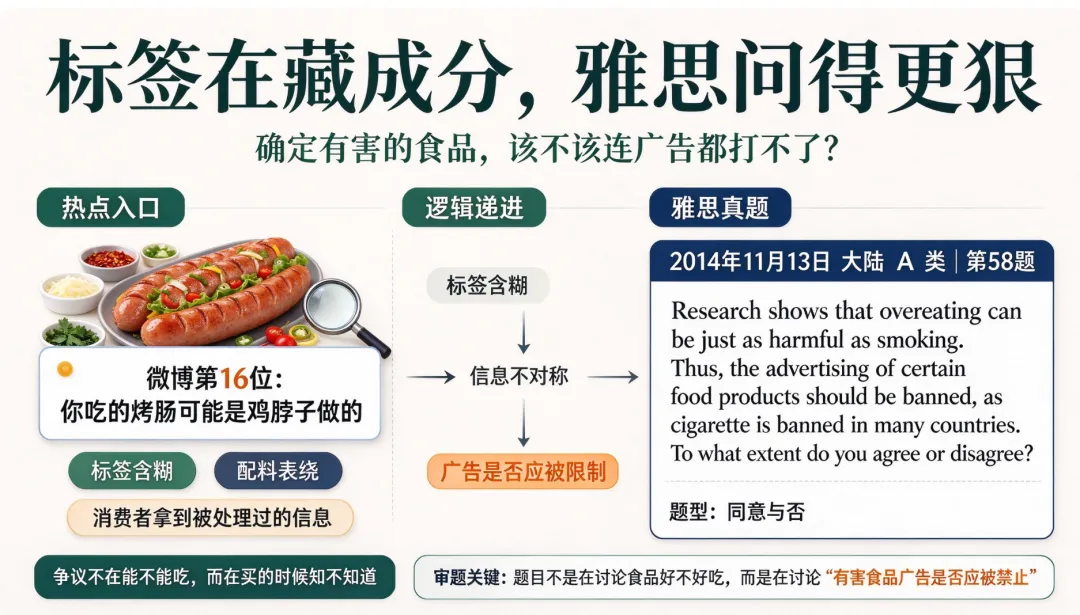
这条的争议点不在「鸡脖子能不能吃」,而在你买的时候知不知道。标签含糊、配料表绕,消费者拿到的信息是被处理过的。
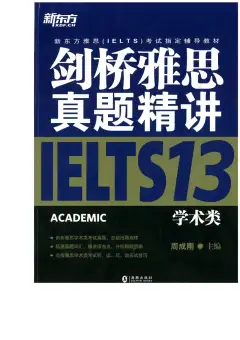
雅思 2014 年考过一道题,比这条更往前推了一步:如果某种食品的危害已经确定,那我们该不该干脆把它的广告禁掉?
这题,雅思真考过
2014年11月13日 大陆 A 类
Research shows that overeating can be just as harmful as smoking. Thus, the advertising of certain food products should be banned, as cigarette is banned in many countries. To what extent do you agree or disagree?
题型:同意与否
三个审题坑,先排掉
坑一:这题的靶子是「广告」,不是「食品」
题干没有要禁汉堡、禁可乐,它要禁的是广告。太多人写完整篇在论证「垃圾食品不健康」,可题干已经承认这一点了——你论证的是它已经给你的前提,等于零分动作。
坑二:as cigarette is banned 是一个类比,类比要先验真
香烟禁广告之所以成立,靠三个条件:成瘾性、二手危害、无安全剂量。这三条薯片一条都不占。先拆类比,再给立场——这是这道题最值钱的动作,也是拉开 7 分的地方。
坑三:别一路禁到底
「完全禁止」和「部分限制」是两个不同答案。你可以只同意后者,但必须在开头就交代清楚你同意到哪一步,否则后面对不上。
我的答案:部分同意。不赞成全面禁止,但赞成对面向儿童的广告和误导性宣传下重手。
范文(336 词)
The suggestion that certain foods should be advertised no more freely than cigarettes is intuitively attractive, since both are linked to diseases that impose costs on everyone. I agree with it only in part: restrictions are justified, but the analogy with tobacco does not extend to a total ban.
One compelling argument is that the comparison breaks down on the feature that justified banning tobacco advertising. This is because cigarettes are addictive, harmful to bystanders and unsafe at any dose, whereas no ordinary food meets all three tests: a child can eat a biscuit and remain unharmed, and there is no second-hand smoke from a hamburger. Once the analogy is tested rather than assumed, a blanket prohibition loses the very ground it stood on.
Apart from the weakness of the analogy, an outright ban is also a blunt instrument when the target is better defined. In other words, the harm does not come from mention of the product but from advertising that targets children or implies health benefits that do not exist; regulating those two categories directly is more precise than silencing an entire industry. Otherwise, if every product high in fat or sugar were banned from advertising, the burden would fall hardest on small producers who cannot afford anything but mass media, while the largest brands would simply shift their budgets to sponsorship and packaging.
Nevertheless, there is a defensible core to the original claim. Where a product is genuinely addictive, or where advertising is aimed at children too young to recognise persuasion, the state has a clear duty to intervene, and partial bans of that kind already work elsewhere. However, this is less likely to justify treating a snack as though it were a cigarette, since the difference in harm is a difference in kind, not merely in degree.
In conclusion, I agree only to a limited extent, mainly because the tobacco analogy fails on addiction and third-party harm, as well as because targeted rules outperform blanket ones. Restrict the message, not the mention.
🕊 白鸟老师小课堂
三个词,一条链:危害有多大 → 卖的时候怎么说服你 → 该不该管、管到哪一步。
① addictive —— 成瘾性的,不用会难受。
大白话:烟是断不掉,薯片只是停不下来。
② third-party harm —— 对第三方的伤害,自己不吸也会受害。
大白话:二手烟这件事,薯片没有。
③ proportionate —— 相称的、合乎比例的。
大白话:罚要配得上错,不能一刀切。
✍️造例
Tobacco is ==addictive== and causes ==third-party harm==, which is why a total advertising ban is considered ==proportionate==; a biscuit, whatever its sugar content, meets neither condition, so the same remedy would be disproportionate.
中文翻译:烟草成瘾,还会造成对第三方的伤害,所以全面禁止广告才被认为是合乎比例的;一块饼干不管含糖多少,这两条都不占,所以同样的药方就过重了。
高分搭配:break down on(在某点上站不住)/a blunt instrument(粗暴的工具)/the burden falls hardest on(负担最重地落在……身上)
🔗 延伸一组(媒体/健康类通用,考试直接搬)
informed choice 知情选择 → misleading claim 误导性宣称 → targeted regulation 针对性监管
Advertising is defensible where it supports ==informed choice==; it becomes a problem when it makes a ==misleading claim== or addresses children. That is why ==targeted regulation== is preferable to prohibition.
中文:广告只要服务于知情选择就站得住;一旦做出误导性宣称或者对着孩子说,就成了问题。这也是针对性监管优于一概禁止的原因。
最后一句,说点不客气的
你可能会问:那烤肠里到底有没有鸡脖子?
可能有,也可能没有——问题的关键不在鸡脖子,而在你有没有被告知。
这篇真正想说的是:信息不对称,才是最该管的那一节。 与其禁止吃,不如强迫说清楚;与其堵住嘴,不如把标签翻开。
写作文也一样。你喊「垃圾食品有害」,那是常识;你把「香烟禁广告的三个成立条件逐条检验,再落到薯片上」,那才是论证。同一个立场,检验过类比的写法,分数能差一整档。
三问,你挑一个回我
1. 你买零食的时候,会看配料表吗?看过几秒钟?
2. 面向儿童的食品广告,你觉得该全面禁掉吗?
3. 如果包装上必须写清「本产品含糖量相当于 X 块方糖」,你会少吃吗?
回在评论区,我挑几个明天拆。
身份分流:纸笔考生,把 Body1 那句「三条测试逐条验」的写法背下来,类比型题目通用;机考考生,重点记 addictive / third-party harm / proportionate 三词搭配;口语 part 3 问 government regulation,直接搬这条链。
通用模板(背走就能用):
A tobacco-style ban is justified only where a product is addictive and causes third-party harm. Where it is neither, a proportionate response is to regulate the claim, not to silence the product.
雅思写作范文系列已经更了很久了,全是机考和纸笔的实考真题,一道没编;每道都逐字核过题库,先拆审题坑再动笔。关键词“范文”,合集直接发你。
关注不迷路。 你的搭子下次还在。
Grace 在努力 ♡