45图书在版编目(CIP)数据
英语. 八年级. 上册 / 北京市仁爱教育研究所
编著. -北京 : 科学普及出版社, 2013.4 (2021.6重印)
义务教育教科书
ISBN 978-7-110-08253-9
Ⅰ. ①英... Ⅱ. ①北... Ⅲ. ①英语课-初中-教材
Ⅳ. ①G634.411
中国版本图书馆CIP数据核字(2013)第088524号
策划编辑 徐扬科 许 倩 责任编辑 吕 鸣 林 然
责任印制 徐 飞
是仁爱版教材的商标
仁爱版教材推广及服务中心电话
4008100168 010-82676936 13911468451
义务教育教科书
英 语
八年级 上册
北京市仁爱教育研究所 编著
*
科学普及出版社
(北京市海淀区中关村南大街16号)
邮政编码:100081
福建新华发行(集团)有限责任公司发行
福建新华印刷有限责任公司印刷
*
787mm×1092mm 16开 10印张 200千字
2013年4月第1版 2021年6月第76次印刷
ISBN 978-7-110-08253-9/G·3465
定价:9.90 元
著作权所有,请勿擅用本书制作各类出版物,违者必究。
如有质量问题,影响阅读,请与北京市仁爱教育研究所联系调换。
地址: 北京市海淀区北四环西路68号左岸工社12层 邮编: 100080
电话: 4008100168 010-82676936 13911468415
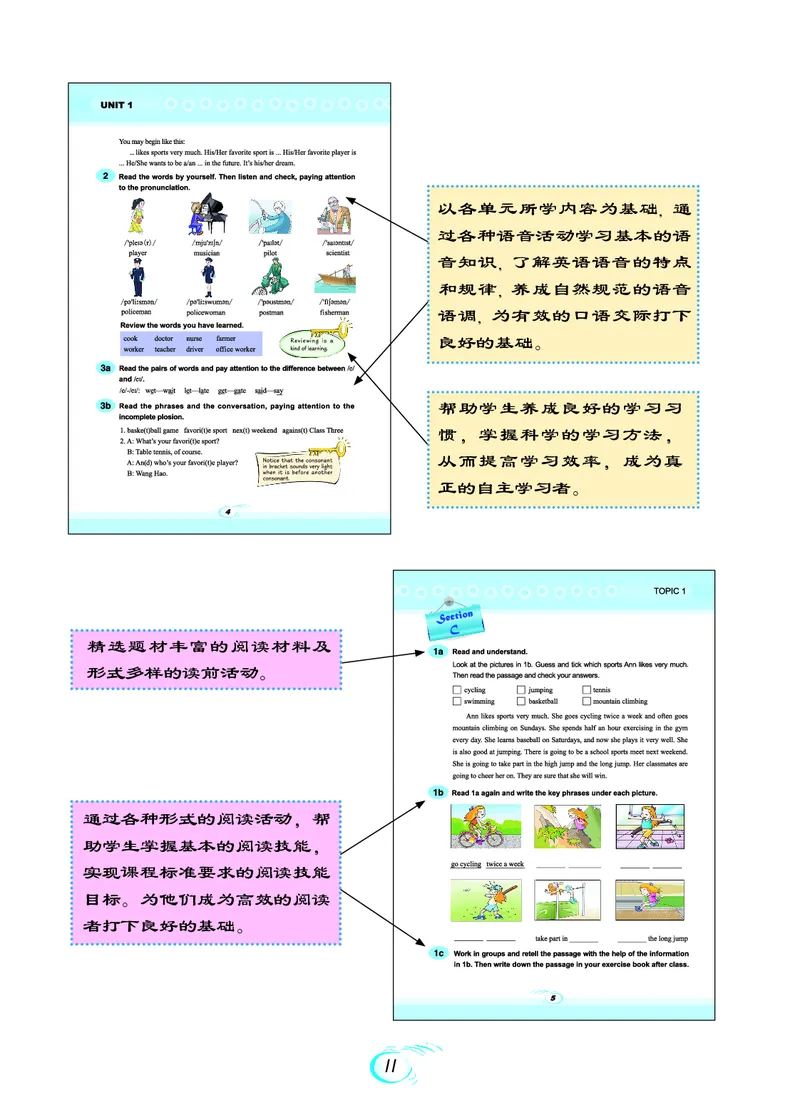
网址:http://www.renai-edu.com 邮箱:editor@renai-edu.com以各单元所学内容为基础, 通
过各种语音活动学习基本的语
音知识, 了解英语语音的特点
和规律, 养成自然规范的语音
语调, 为有效的口语交际打下
良好的基础。
帮助学生养成良好的学习习
惯,掌握科学的学习方法,
从而提高学习效率,成为真
正的自主学习者。
精选题材丰富的阅读材料及
形式多样的读前活动。
通过各种形式的阅读活动,帮
助学生掌握基本的阅读技能,
实现课程标准要求的阅读技能
目标。为他们成为高效的阅读
者打下良好的基础。
II引导学生通过完成任务的方
式归纳本话题所学知识,培
养他们定期自主复习的好习
惯,为终身可持续性学习奠
定基础。
通过题材丰富的泛读文章,
进一步扩大学生的阅读量。
同时,拓展学生的文化视
野,进而提高其跨文化交际
能力。
贯彻过程性写作理念,以意义
表达为核心目标,同时关注语
言形式的使用。将听、说、读
的技能与写作有机结合,并结
合单元相关话题的写作活动,
提高目标语的写作能力。体现
培养学生综合语言运用能力的
课标理念。
以合作探究活动形式,促使学
生通过体验、实践、讨论、合
作、探究等方式,综合运用本
话题的语言知识和技能解决现
实生活中的一些实际问题,培
养学生用英语做事情的能力。
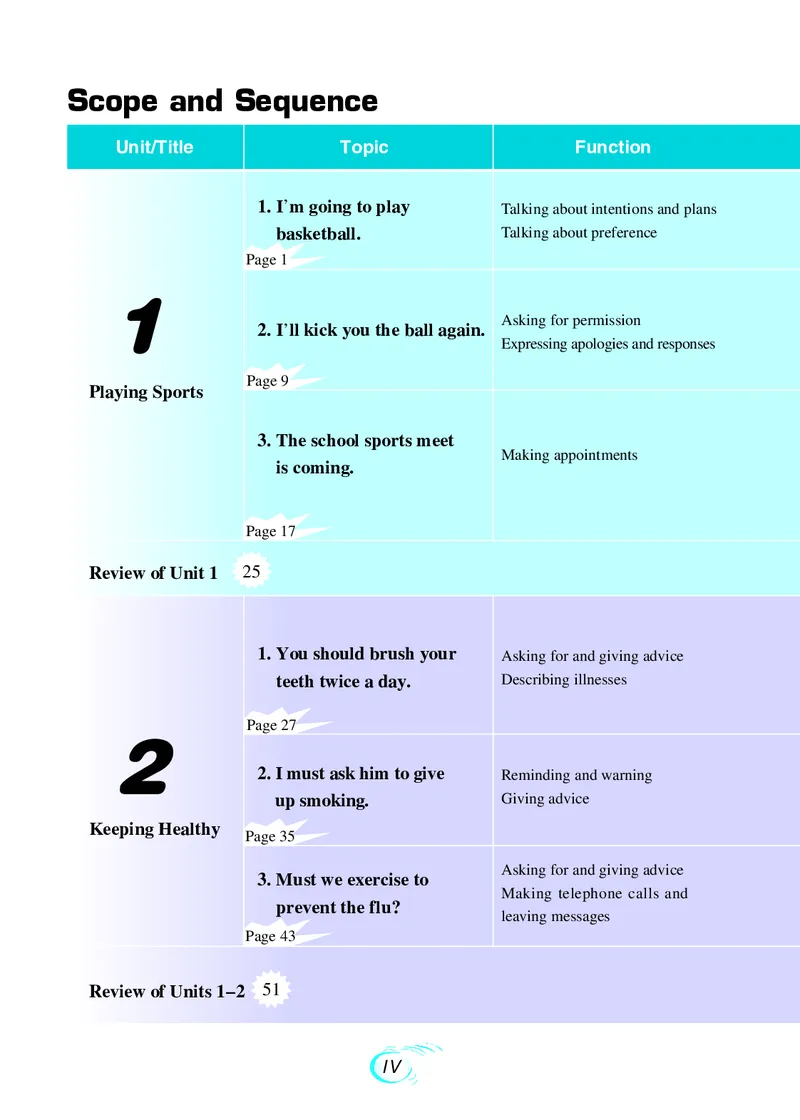
IIIScope and Sequence
Unit/Title Topic Function
1. I’m going to play Talking about intentions and plans
basketball. Talking about preference
Page 1
1
Asking for permission
2. I’ll kick you the ball again.
Expressing apologies and responses
Page 9
Playing Sports
3. The school sports meet
Making appointments
is coming.
Page 17
Review of Unit 1 25
1. You should brush your Asking for and giving advice
teeth twice a day. Describing illnesses
Page 27
2
2. I must ask him to give Reminding and warning
up smoking. Giving advice
Keeping Healthy
Page 35
Asking for and giving advice
3. Must we exercise to
Making telephone calls and
prevent the flu?
leaving messages
Page 43
Review of Units 1-2 51
IVStructure Pronunciation Vocabulary Strategy
Names of sporting Reviewing
Difference between
activities Paying attention to the
Future tense: be going to /e/ and /V/
Words to describe pronunciation
Incomplete plosion
careers Using Wh-questions
Subject+vt.+ Difference between Paraphrasing
Words for team games
indirect object+ /e/ and /}/ Paying attention to the
Words about basketball
direct object Incomplete plosion pronunciation
Paying attention to the
pronunciation
Words for sports meet
Consonant clusters
Using resources to get
Future tense: will/shall Words to describe the
Weak form
more information
Olympics
Using past tense
Checking and correcting
Modal verbs (I ): Guessing with word’s
Difference between
should, shouldn’ t, /i / and /V/ instruction
Names of illnesses
had better, Weak form Learning sentence patterns
had better not Incomplete plosion Making sentences
Expressing attitude
Modal verbs (II): Difference among Words for healthy
Paying attention to the
must, mustn’ t, may, /7/, /A / and /D/ habits
pronunciation
can Liaison Names of foods
Grouping new words
Paying attention to the
Syllabic
Modal verbs (III):
Liaison Words about the flu pronunciation
must, have to
Weak form Words for health Finding topic sentences
Reflexive pronouns
Incomplete plosion Understanding pronouns
VScope and Sequence
Unit/Title Topic Function
1. W hat’s your hobby? Expressing likes and dislikes
Page 55
3
2. What sweet music! Expressing likes and dislikes
Our Hobbies
Page 63
3. What were you doing at Expressing agreement and
this time yesterday? disagreement
Page 71
Review of Unit 3 79
1. What’s the strongest animal
Expressing preference
on the farm?
Page 81
4
2. How can we protect ourselves Expressing concern and
from the earthquake? reassurance
Our World
Page 89
3. The Internet makes the Expressing certainty and
world smaller. uncertainty
Page 97
Review of Units 3-4 105
Appendices 109
VIStructure Pronunciation Vocabulary Strategy
Collecting expressions
Paying attention to the
Consonant clusters Words to describe
Used to pronunciation
Stress hobbies
Summarizing and
predicting
Retelling with key words
Difference among Names of musical
/e/, /I/ and /2/ Paying attention to the
instruments
Exclamations Assimilation pronunciation
Words for kinds of
Stress Supporting your general
music
Liaison
opinion
Difference among
/l/, /n/ and /M/
Assimilation Words of indoor and Paying attention to the
Past continuous
Stress
outdoor activities different expressions
Liaison
Weak form
Incomplete plosion
Paying attention to the
pronunciation
Comparative and
Difference between
Names of animals Noticing the transitions
superlative degrees /r/ and /l/
and plants Using linking words
Pause
of adjectives (I)
Using comparative and
superlative forms
Difference between Names of natural
Comparative and /F/ and /N/ Working out the rule
disasters
superlative degrees Falling tone Paying attention to the
Words to describe
of adjectives (II) Incomplete plosion pronunciation
natural disasters
Liaison
Difference between Using fillers to get
Subject+vt.+ /w/ and /v/ thinking time
Words about the
Rising tone
object+object Paying attention to the
Liaison Internet
complement Stress pronunciation
Weak form Taking notes
VIIUNIT 2
2 Complete the sentences with the
Recognizing and remembering
phrases in the box. Then practice
sentence patterns may help you
with your partner. speak English more fluently.
I have a headache.
You should .
I have a fever.
You should .
I can’t sleep well at night. You shouldn’t .
I have a backache.
You shouldn’t .
1. drink coffee or tea in the evening
2. drink enough boiled water
3. lift heavy things
4. stay in bed and have a good sleep
3 A. Listen to the conversations and number the pictures.
B. Listen again and write down the advice, using should/shouldn’t.
1.
2.
3.
28TOPIC 1
Section
B
1a Look, listen and say.
Steve: Hey, Bruce. You don’t look well. What’s the matter?
Bruce: Well, I’m feeling terrible! I have a headache and a cough.
Steve: I’m sorry to hear that. How long have you
been like this?
Bruce: Two days.
Steve: You may have the flu. You’d better take some
medicine.
Bruce: I think I will.
Steve: Shall I take you to the hospital?
Bruce: No, thank you. I’ll go home and have a rest.
1b Listen to 1a and choose the correct answers.
1. — What’s wrong with Bruce? — He has .
A. a toothache B. a fever C. a headache and a cough
2. — What’s Steve’s suggestion? —
A. Seeing a doctor. B. Taking some medicine. C. Going home and having a rest.
1c
Listen again and mark T (True) or F (False).
1. Steve looks well. ( )
2. Bruce has been ill for two days. ( )
3. Steve will take Bruce to the hospital. ( )
4. Bruce will take some medicine. ( )
2
Number the sentences to make up a conversation similar to 1a.
□
1 How are you feeling, Nick?
□
I have a terrible cold. I cough day and night.
□
Not so well. I don’t feel like eating.
□
OK. Thank you.
□
I’m so sorry to hear that. Why don’t you have a
good rest? You’d better not go to school today.
□
What’s wrong?
29Review of Unit 3
fishing traveling
drawing cooking
acting making model planes
Example:
A: What’ s your hobby?
B: I used to skate, but now I don’t like it. I like playing basketball.
C: He/She used to ...
4b Listen to the reports of your classmates and complete the paragraph.
There are students in my class, boys and
girls. , and were their favorite hobbies in
the past. But they prefer to , and now. Most
of the boys like , and most of the girls are fond of .
5 Read the following poem aloud, paying attention to the pronunciation of
the red letters. Then tick the pictures which match the poem.
People are busy on workdays.
Students go to school for five days.
We are free on the weekends.
We relax in different ways.
6 What is your way to relax? Write a short poem. The one in 5 can help you.
You may begin like this:
We relax in different ways ...
80
80UNIT 4
3a Look at the pictures and write down the words according to the sounds.
Then listen, read and check, paying attention to the vowels and stress.
/'sn9K,st m/ /'reInst m/ /taI'fu n/
__________ ___________ ___________
/fl7d/ /draKt/ /'fDrIst/ /faI9/
__________ ___________ ___________
3b Listen and pay attention to the marked parts and intonation. Read after
the tape and imitate. Then work in pairs and use the words in 3a and the
comparative or superlative forms of adjectives to practice.
1. /F/ : think earthquake toothache anything
/N/ : this their them mother
2. How terrible! My God!
3. Li Ming, come an(d) look!
The falling tone is often
4. A: Wha(t) do you think of the snowstorm? used in statements,
exclamations, commands
B: I think it is more dangerous than the flood.
and Wh- questions.
4
Work in groups and interview your group members’ views of natural
disasters based on 3a. Report your result to the class.
You may begin like this:
John thinks ... is more dangerous than ... He also thinks ... is the most
dangerous ...
92
92UNIT 4
2 Work in pairs and make up conversations with the sentences in the
box.
Example:
A: I’m sure there are many interesting things to see on the Internet.
B: I’m not sure whether/if it is good to shop online.
Will everyone in the world use the Internet in the future?
Are there any good movie websites online?
Can we find interesting books on the Internet?
Will people have computers in their bodies some day?
3
Discuss in groups about what you saw or heard on the Internet. Then
make a report and present it to the class.
A: I saw/looked at/watched ...
B: I’m sure ...
C: I visited the website and a reporter said ...
D: I’m not sure if/whether ...
...
4a Read the pairs of words and pay attention to the difference between /w/
and /v/.
/w/ /v/: wet—vet west—vest wine—vine
-
4b Listen to the sentences, paying attention to the liaison,
weak form, stress and intonation. Then read
The rising tone is often
after the tape and imitate.
used in general questions,
greetings and requests.
1. 'Good 'morning. 'Good 'evening.
2. Will 'everyone in the 'world 'use the 'Internet in the 'future?
3. Well, 'some people 'watch TV 'online.
4. Do you know 'how to 'protect 'ourselves from the 'earthquake?
5. 'Really? 'Which was the 'most 'serious?
6. A 'reporter said 'scientists could 'put 'little 'computers 'right into our 'heads.
7. The 'Internet 'makes our life 'easier and 'more interesting.
100
100Review of Units 3-4
5 Fill in the blanks with the correct form of each adjective.
old tall large wonderful big
Many people know that the blue whale is _____ than any other animal in the world.
But is it the oldest living thing in the world? No! Then what’s the _______ living thing?
That is the redwood tree. There are some redwoods that are more than 2 000 years
_______. The redwoods in California are the __________ in the world. Most of them
grow to be more than 90 meters high. The _______ redwood is over 115 meters high!
6 Listen to the conversations and number the pictures.
( ) ( ) ( ) ( ) ( )
7 Listen to the conversation and mark T (True) or F (False).
1) Jane often enjoys music on the Internet. ( )
2) Jane never does her homework with the help of the Internet. ( )
3) Jane often writes emails to her Chinese friends. ( )
4) Kangkang often plays games on the Internet. ( )
5) Kangkang likes the Internet. ( )
8 Read the passage and complete the tasks on Page 108.
Everyone has hobbies, such as reading, collecting
things, keeping pets and playing sports. Hobbies can
bring pleasure and knowledge.
Chen Yang is a student. Two years ago, she liked
playing computer games. She found nothing more
interesting than it. But now she has changed. She is fond
of reading because there are many wonderful things in books. She always loses herself
in them. She often says, “The more I read, the more I learn.”
107Appendices 附录
Notes to the Texts 课文注释
Unit 1 Playing Sports
Topic 1 Im going to play basketball.
Section A
你要去干什么
1. —What are you going to do? ?
我要去打篮球
—Im going to play basketball. 。
动词原形表示 打算 准备做某事
be going to+ “ / ”。
我暑假期间经常看见你打篮球
2. I often saw you play basketball during the summer holiday. 。
意为 看见 做 表示看见事件 行动的全过程 动作已经结束 如
see do “ …… ……”, 、 , 。 :
他看见她穿过了马路
He saw her cross the road. 。
意为 看到 正在做 强调事件 行动正在进行 如
see doing “ …… ……”, 、 。 :
昨天这个时候我看见她正在跳舞
I saw her dancing at this time yesterday. 。
我们这周日和三
3. we are going to have a basketball game against Class Three on Sunday. ……
班将有一场篮球赛
。
意为 对着 反对 靠着 如
against “ ; ; ”。 :
每个人都反对他
Everyone is against him. 。
游泳和划船 你更喜欢哪项运动
4. —Which sport do you prefer, swimming or rowing? , ?
我更喜欢划船
—I prefer rowing. 。
意为 更喜欢 其后可接名词 动名词或动词不定式 如
prefer “ ”, 、 。 :
苹果和橘子 你更喜欢哪种
—Which do you prefer, apples or oranges? , ?
我更喜欢橘子
—I prefer oranges. 。
很多人更愿意住在乡下
Many people prefer to live in the countryside. 。
意为 和 相比更喜欢 如
prefer to “ …… ……”。 :
和游泳相比我更喜欢滑冰
I prefer skating to swimming. 。
你经常划船吗
5. —Do you row much? ?
是的 常常 不 很少
—Yes, quite a lot. /No, seldom. , 。 / , 。
在肯定句 否定句或疑问句中 和 常与动词连用 用来描述某个动
、 ,(very)much quite a bit/a lot ,
作发生的频率 或与表示情感的动词连用 表示情感的深浅程度 如
, , 。 :
我经常光顾那家商店
I go to that shop so much. 。
我觉得有点冷
Im feeling a bit cold. 。
109你要加入学校划船队吗
6. Are you going to join the school rowing team? ?
组织 表示 加入某个组织
join+ “ ”。
表示 加入某人的行列和某人一起
join sb. “ , ”。
活动 表示 参加 某项活动 如
join in+( ) “ ( )”。 :
我将会加入学校足球队
Ill join the school football team. 。
他决定加入我们
He decided to join us. 。
简打算下周参加排球赛
Jane is going to join in the volleyball game next week. 。
Section B
他曾效力于 的休斯敦火箭队
1. He played for the Houston Rockets in the NBA. NBA 。
意为 为某队效力 如
play for a team “ ” :
他今年会为该队效力
Hes going to play for the team this year. 。
你长大以后想做什么
2. What are you going to be when you grow up? ?
此句中 引导时间状语从句 从句用一般现在时 主句用一般将来时
when , , 。
文化背景知识
是美国全国篮球协会的缩写 前身是 年成立的美
NBA (National Basketball Association) 。 NBA 1946
国篮球协会 年改为现名
(ABA),1949 。
勒布朗 詹姆斯 年 月 日出生 是一名美国职业篮球运动员
LeBron James · ,1984 12 30 , 。 2009-2012
年期间三次获得 最有价值球员 称号 被认为是当今 表现最全面的球员之一
“NBA ” , NBA 。
Section C
她每天花半小时在体育馆锻炼
1. She spends half an hour exercising in the gym every day. 。
意为 花费 通常接表示时间和金钱的名词 构成 或
spend “ ”, , spend(in)doing spend on 。
如
:
她花了很多钱买衣服
She spent a lot of money on clothes/(in)buying clothes. 。
下周末将举行一场校运会
2. There is going to be a school sports meet next weekend. 。
句型用在一般将来时中 其结构为
There be , :
如
There is/are going to be / There will be :
下个星期日将上映一场电影
There will be a movie next Sunday. 。
3. Because it makes him strong and its popular all over the world.
因为它 踢足球 使他身体健壮 而且这项运动在全世界都很流行
( ) , 。
意为 使某人 某物保持 如
make/keep+sb./sth.+adj. “ / ……”。 :
游泳有助于她的心肺健康
Swimming helps to keep her heart and lungs healthy. 。
意为 使某人 某物做某事 如
make + sb./sth.+do sth. “ / ”。 :
别把他弄哭了
Dont make him cry. 。
一种保持健康的好方法
4. a good way to keep fit
与 意思相同 都表示 保持健康 尤其指人通过经常锻炼而保持健康
keep fit keep healthy , “ ”,keep fit 。
Section D
他和他的队友昨日抵达北京
1. He arrived in Beijing with his teammates yesterday. 。
意为 到达 后接较大的地方 大城市 大的空间 后接较狭窄或较小
arrive in/at “ ……。”in ( 、 ),at
的地方 小村庄 小城镇 如
( 、 )。 :
她上午七点到达了火车站
She arrived at the railway station at seven in the morning. 。
110但遗憾的是队员们不会久留
2. But its too bad that the team isnt going to stay for long. 。
他们将
3. They are leaving for Japan the day after tomorrow for a game with Japans national team.
于后天动身前往日本 与日本国家队进行一场比赛
, 。
意为 动身前往 意为 离开 地前往 地 此句中
leave for “ ……”;leave A for B “ A B ”, leave for
相当于
Japan leave Beijing for Japan。
此处用现在进行时表示即将发生的动作 表示位置移动的动词
。 go, come, leave, fly, start
等 可以用现在进行时表示将要发生的动作 如
, 。 :
你们什么时候出发
What time are you starting? ?
我就来
Im coming. 。
她晚上要飞往上海
She is flying to Shanghai tonight. 。
Topic 2 Ill kick you the ball again.
Section A
请你教我 好吗
1. Would you mind teaching me? , ?
意为 你介意做某事吗 是表示请求允许的常用句型 类似
Would/Do you mind doing sth.? “ ?”, 。
的句型还有 引导的从句 如
:Would/Do you mind+if 。 :
你介意我在这儿吸烟吗
Would you mind if I smoke here? ?
我们去练习吧
2. Lets go and practice. 。
作动词时 后常接名词或动名词 如
practice , 。 :
她每天早晨在公园练习唱歌
She practices singing every morning in the park. 。
还可作名词 如
practice 。 :
熟能生巧
Practice makes perfect. 。
继续努力
3. Keep trying. 。
意为 使某人 不停地做 某事 如
keep(sb.)doing sth. “( ) ( )”。 :
不要说个没完
Dont keep talking! !
你不应该让我等那么久
You shouldnt keep me waiting so long. 。
请你不要乱扔瓶子 好吗
4. Would you mind not throwing bottles around? , ?
在此为副词 意为 四处 到处 如
around , “ , ”。 :
我只是想四处走走
I just want to walk around. 。
Section B
康康 向迈克尔道个歉怎么样呢
1. Kangkang,what about saying sorry to Michael? , ?
意为 向某人问候 道歉 道谢 道别
say hello/sorry/thanks/goodbye to sb. “ / / / ”。
迈克尔 我为我所说的话感到很抱歉
2. Michael, I am sorry for what I said. , 。
意为 为某事感到遗憾 后悔 抱歉
be sorry for sth. “ / / ”。
意为 我所说过的话 如
what I said “ ”。 :
他记着我所说过的话
He remembered what I said. 。
你们一定会玩得更高兴
3. You are sure to have more fun. 。
意为 肯定要做某事 表示将来 如
be sure to do sth. “ ”( )。 :
肯定要下雨
Its sure to rain. 。
111意为 确信或对某事有把握 如
be sure about/of sth. “ ”。 :
我对这个答案没有把握
Im not sure about/of the answer. 。
Section C
篮
1. Basketball is one of the most popular sports in the United States and other parts of the world.
球在美国以及世界的其他地方都是最受欢迎的运动之一
。
可数名词的复数形式 意为 之一 该短语作主语时 谓语动词常用单数形式
one of + , “…… ”。 , 。
如
:
我最喜欢的篮球明星之一是迈克尔 乔丹
One of my favorite basketball stars is Michael Jordan. · 。
2. The goal is to throw the ball through the other side’s basket, and to stop the other team from
每个队的 目标是通过将球投入对方的篮筐而得分 并阻止对方这样做
doing so. ( ) , 。
意为 阻止 碍 做某事 如
stop from doing sth. “ ( )…… ”。 :
糟糕的天气可能阻碍我们打篮球
The bad weather may stop us from playing basketball. 。
Section D
足球是 人们 在冬季和早春时进行的
Football is a fast game played in winter and early spring. ( )
一种追求速度的运动项目
。
在此作为形容词 意为 做得很快的 发生得很迅速的 如
fast , “ , ”。 :
他上周的旅行虽然短暂 但很愉快
He had a fast and enjoyable journey last week. , 。
Topic 3 The school sports meet is coming.
Section A
我将参加跳远和跳高比赛
1. Ill be in the long jump and the high jump. 。
活动 意为 参加某项活动 相当于
be in + “ ”, take part in/join in。
这是我第一次参加跳高比赛
2. Its my first time to take part in the high jump. 。
意为 某人第一次做某事 如
Its ones first time to do sth. “ ”。 :
这是她第一次参观这个博物馆
Its her first time to visit this museum. 。
Section B
让我们定在六点半吧
Lets make it half past six. 。
此句是约定时间的常用语
。
Section C
奥运五环是奥运会的象征
1. The Olympic rings are a symbol of the Olympic Games. 。
意为 的象征 如
a/the symbol of “…… ”。 :
白鸽是和平的象征
The white dove is a symbol of peace. 。
两者都是每四年举办一次
2. They are both held every four years. 。
是一般现在时的被动语态 意为 被举办
are held , “ ”。
奥运会将会更激动人心
3. and the Olympic Games will be more exciting. 。
是 的比较级形式 意为 更激动人心
more exciting exciting , “ ”。
112Section D
我希望有一天我能参
and I hope some day Ill be able to take part in the Olympic Games. ……
加奥运会
。
意为 有能力 能够 表示 能力 可能 时只有现在式和过去式 而
be able to “ , ”。 can “ , ” (could), be
可用于各种时态 如
able to 。 :
With the help of the doctor, he was able to stand for a while.
在医生的帮助下 他能站立一会儿了
, 。
Unit 2 Keeping Healthy
Topic 1 You should brush your teeth twice a day.
Section A
我牙痛
1. I have a toothache. 。
意为 牙痛 相似的结构还有
have a toothache “ ”, :
头痛 背痛 胃痛
have a headache ;have a backache ;have a stomachache 。
我希望你很快好起来
2. I hope youll get well soon. 。
为系动词 后面跟形容词 在此句中意为 身体健康的 身体好的 是形容词 也
get , 。 well “ , ”, ;well
可作副词 意为 好 令人满意地 如
, “ , ”。 :
他英语说得好
He speaks English well. 。
我患了重感冒
3. I have a bad cold. 。
意为 患感冒 相似的 发烧 咳嗽 但 得了流感 用
have a cold “ ”, have a fever ;have a cough , “ ” have
(the) flu。
Section B
你像这样有多久了
How long have you been like this? ?
Section C
我要尝试一些新动作
Im going to try something new. 。
形容词修饰 等不定代词时 位于其后 如
something, anything, nothing , 。 :
医生说你没什么事
The doctor said there was nothing wrong with you. 。
Section D
你今天感觉怎么样
How are you feeling today? ?
一般用来询问 关心对方的身体状况 回答时可根据实际情况 如
、 。 。 :
感觉好些了 谢谢
Im feeling a little better, thanks. , 。
113Topic 2 I must ask him to give up smoking.
Section A
熬夜对身体不好
Staying up late is bad for your health. 。
在此是动名词短语作主语 谓语动词用单数
staying up late , 。
意为 对某人 某物不好 与之相对应的为 意为 对某
be bad for sb./sth. “ / ”, be good for sb./sth. “
人 某物有好处 如
/ ”。 :
饮茶对健康有好处
Drinking tea is good for your health. 。
Section B
它甚至可以导致癌症
1. and it can even cause cancer. …… 。
我必须要他戒烟
2. I must ask him to give up smoking. 。
意为 要求某人做某事 其否定形式为 用法类似的动
ask sb. to do sth. “ ”, ask sb. not to do sth.。
词还有 等 如
want, tell, get 。 :
我必须告诉他不要在街上玩耍
I must tell him not to play in the street. 。
意为 放弃 后接名词或动名词 如
give up “ ”, 。 :
你应该戒酒
You should give up drinking. 。
Section C
妈妈说过的需要吃的 食物
1. What Mothers Said to Eat ( )
有一次他的盘子里放的是洋白菜
2. Once, cabbage was on his plate. 。
迈克尔一看到它 就很生气
3. As soon as Michael saw it, he got mad. , 。
意为 一 就 如
as soon as “ …… ……”。 :
我一到北京就给你打电话
As soon as I arrive in Beijing, Ill call you. 。
Topic 3 Must we exercise to prevent the flu
?
Section A
那么我们该做什么来预防它呢
So what should we do to prevent it? ?
不定式短语 作目的状语 如
to prevent it 。 :
玛丽亚回古巴庆祝生日
Maria went back to Cuba to celebrate her birthday. 。
Section B
哦 我可以留个口信吗
1. Oh, can I leave a message? , ?
意为 留口信
leave a message “ ”。
意为 给某人 捎口信
give (sb.) a message “( ) ”。
意为 传口信 如
take a message “ ”。 :
她现在不在 要我传个口信吗
She is not here now. Can I take a message? , ?
请告诉我爸爸不要忘记明天下午
2. Please tell my father not to forget the talk tomorrow afternoon.
114的报告
。
意为 告诉某人 不要 做某事
tell sb. (not) to do sth. “ ( ) ”。
意为 告诉某人某事 如
tell sb. sth. “ ”。 :
请告诉我你的电话号码
Tell me your phone number, please. 。
Section C
因此 当你运动时 一定要注意安全
1. , so try to stay safe when you play them. , , 。
表示 保持某种状态 相当于 如
stay+adj. “ ”, keep+adj. :
要饮食恰当以保持健康
Eat right to stay healthy. 。
所以 快乐才能健康
2. So, be happy to be healthy. , 。
你应该远离烟酒
3. You should say no to smoking and drinking. 。
Unit 3 Our Hobbies
Topic 1 Whats your hobby
?
Section A
我可能需要改变一下
1. Maybe I need a change. 。
在这里作名词 有 换口味 的含义 如
change , “ ” 。 :
我们今晚换换活动 去看电影吧
Lets go to a movie tonight for a change. , 。
遛狗
2. walk a pet dog 。
Section B
你以前有什么爱好
—What hobbies did you use to have? ?
我曾经收集棒球卡片
—I used to collect baseball cards. 。
意为 过去常常 曾经 表示现在已不是那样了 后接动词原形 其否定式为
used to “ ; ”, , 。 didnt
或 如
use to used not to。 :
我父亲过去是一位农民 但现在他是
My father used to be a farmer,but now he is an office worker. ,
一名职员
。
Section C
制作剪贴簿是一种爱好
1. Scrapbooking is a hobby. 。
他们把想要记住
2. They kept pictures, letters, poems and other things they wanted to remember.
的图片 信件 诗歌以及其他物件都保存下来
、 、 。
3. Some people have funny collections, like the worlds most stupid ideas or pictures of the worlds
有些人的收集很有趣 像世界上最愚蠢的主意或世界上最丑的狗的照片
most ugly dogs. , 。
多音节 部分双音节 形容词是形容词的最高级形式 意为 最 如
most+ ( ) , “ ……”。 :
最漂亮的 最严重的
most beautiful ;most serious 。
很容易着手 做剪贴簿
4. It is easy to get started. ( )。
115意为 开始 如
get started “ ”。 :
我们都等不及要开始下一项工作了
We couldnt wait to get started on the next job. 。
你可以辛勤地收集许多
5. You can be busy and collect many things or lazy and collect few things.
东西 也可以懒惰地几乎不收集东西
, 。
Section D
宠物能给主人的生活带来爱和
All pets provide their owners with love and comfort in their lives.
安慰
。
意为 为某人提供某物 也可表达为 如
provide sb. with sth. “ ”, provide sth. for sb. :
学校为孩子们提供午餐
The school provides lunch for children. 。
Topic 2 What sweet music
!
Section A
My Heart Will Go On 你知道 我心永恒 这首歌吗
1. Do you know the song ? 《 》 ?
呣 我可以借给你一些她的歌曲光盘
2. Hmm I can lend you some CDs of her songs. , 。
语气词 表示有疑问或犹豫时发出的声音
hmm , 。
意为 借出 常构成词组 或 如
lend “ ”, lend sb. sth. lend sth.to sb. :
你能把铅笔借给我吗
Can you lend your pencil to me? ?
意为 借入 常构成词组 如
borrow “ ”, borrow from :
yuan 昨天我向他借了五元钱
I borrowed five from him yesterday. 。
Section C
不久 沃尔夫冈就和他姐姐娜奈尔弹
1. Soon Wolfgang played as well as his big sister, Nannerl. ,
得一样好
。
意为 和 一样 如
as as “ …… ”。 :
康康和迈克尔跑得一样快
Kangkang runs as fast as Michael. 。
我抽烟不像以前那么多了
I dont smoke as much as I used to. 。
他是一个神童 一个天生的音乐家
2. He was an amazing child, a born musician. , 。
Section D
好的音乐带给人们舒适和宁静
1. Good music brings people comfort and peace of mind. 。
王俊峰说各种文化
2. Wang Junfeng says that every culture has its own special kind of drumming.
都有其独特的鼓乐
。
Topic 3 What were you doing at this time yesterday
?
Section A
请别挂断电话
1. Hold the line, please. 。
此句是一种常用的电话交际用语 类似的还有
。 :
116请稍等
Hold on, please. 。
请等一会儿
Wait a moment, please. 。
昨天这个时候你在做什么呢
2.What were you doing at this time yesterday? ?
本句为过去进行时 表示过去的某个时刻 某一时间段正在进行的动作 其结构为
, / , was/were+
现在分词
。
意为 此时此刻 是美式用法 英式用法则为
at this time “ ”, ; this time。
我打电话叫你去英语角 但是没
3. I called you to go to the English Corner but no one answered. ,
人接
。
意为 给 打电话
call “ …… ”
意为 接电话
answer the phone “ ”。
Section B
我不同意
1. I dont agree. 。
这是表明自己观点 态度的表达方式 此外还有
、 。 :
我同意 你的观点
I agree (with you). ( )。
我认为是这样的
I think so. 。
我认为不是这样的
I dont think so. 。
你说得很对
You are quite right. 。
难道它不有趣吗
2. Isnt it interesting? ?
此句为一般疑问句的否定式 这类疑问句常表示提问人的惊异 赞叹 怀疑或责难等语气
。 、 、 。
回答时根据实际情况来判断 如果事实上是 用 如果事实上不是 用 如
, , yes; , no。 :
你不下棋吗
—Dont you play chess? ?
不 我下棋 是的 我不下棋
—Yes, I do. , 。 / No, I dont. , 。
Section C
1. But the little girl was afraid to go home without selling one box of matches, because her father
但是没卖出一盒火柴 小女孩不敢回家 因为那样她父亲会打她
would beat her. , , 。
意为 害怕做 强调因害怕其结果而不敢做 类似的表达法还有
be afraid to do “ ……”, 。 be
如
afraid of doing :
我担心迷路
I was afraid of losing my way. 。
然后 她又划了一根火柴
2. Then she lit a fourth match. , 。
序数词 意为 再一 又一 如
a/an+ “ ; ”。 :
他又试了一次
He had a third try. 。
Section D
世纪早期 人们在星期日去教堂做礼拜
1. In the early 1800s, people went to church on Sundays. 19 , 。
意为 在 世纪 如
in the 1800s/1800s “ 19 ”。 :
在 世纪 年代
in the 1960s/1960s 20 60
那样 在周一上午他们感到太疲倦而
2. And then they felt too tired to work on Monday mornings. ,
无法工作
。
意为 太 以致不能 如
too to “ …… ……”。 :
我激动得无法入睡
I was too excited to sleep. 。
为
3. To solve the problem of “blue Mondays”,the English made Saturday afternoon a holiday in1874.
117解决 忧郁星期一 的问题 在 年 英国人把星期六下午作为假日
“ ” , 1874 , 。
此处意为 忧郁的 悲观的 相当于 如
blue “ , ”, sad。 :
我今天心情不好
I am feeling blue today. 。
一点钟的时候 每个人都停下了工作
4. At one oclock, everyone stopped working. , 。
意为 停止 中断 行为 活动 如
stop doing “ ; ( , )”。 :
当老师进来时 大家都不讲话了
When the teacher came in, everyone stopped talking. , 。
意为 停下 去做 其他事情 如
stop to do “ ……, ( )”。 :
她停下来去看地图
She stopped to look at the map. 。
Unit 4 Our World
Topic 1 Whats the strongest animal on the farm
?
Section A
你在想什么
what are you thinking about? …… ?
意为 考虑 思考 与 意思相近 如
think about “ , ”, think of 。 :
我从未考虑过要当一名医生
I have never thought of becoming a doctor. 。
意为 想起 想到 对 有想法 时 与 不同 如
think of “ , , …… ” , think about 。 :
她常常想起她的朋友玛丽亚
She often thinks of her friend, Maria. 。
你认为这部电影怎么样
What do you think of the movie? ?
Section C
热带雨林覆盖了地球表面的
1. Rainforests cover 6% of the earths surface. 6%。
读作
6% six percent。
它们
2. They provide places to live for thousands of plants and animals found nowhere else on Earth.
为数千种动植物提供了生存场所 这些动植物是地球上其他地方所没有的
, 。
做定语 修饰
found nowhere else on Earth , plants and animals。
成千上万的动物栖息在热带雨林中
3. Thousands and thousands of animals live in rainforests. 。
意为 成千上万的
thousands and thousands of “ ”
意为 数百的
hundreds of “ ”
意为 数以百万计的
millions of “ ”
它们中有许多居住在离地面三
4. Many of them live in the trees over 30 meters from the ground.
十多米高的树上
。
相当于 意为 多于 超过
over more than, “ , ”。
它们对调节气候起到了重要作用
5. They play an important part in controlling the climate. 。
意为 在某事中 起作用 参与 某事 如
play a part (in sth.) “( ) ; ( )”。 :
她积极参与班级活动
She plays an active part in class activities. 。
但是 现在热带雨林变得越来越小
6. But now, rainforests are becoming smaller and smaller , ……
形容词比较级 形容词比较级或 多音节形容词原级 意为 越来越 如
+and+ more and more+ , “ ……”。 :
118天气变得越来越暖和了
The weather gets warmer and warmer. 。
中国变得越来越美丽了
China is becoming more and more beautiful. 。
Section D
熊猫生活在中国西南部的丛林和
1. Pandas live in the forests and mountains of Southwest China.
群山之中
。
意为 中国西南部 相当于
Southwest China “ ”, the southwest of China。
它们是世界上最古老的虎种
2. They are the oldest type of tigers in the world ……
Topic 2 How can we protect ourselves from the earthquake
?
Section B
这是一场 级的地震
1. It was a level 7.1 earthquake. 7.1 。
我认为我们应该跑出门
2. I think we should run out of the door. 。
意为 从 里 出来 没有 缺少 等 如
out of “( …… ) ; , ” 。 :
看窗外
Look out of the window. 。
我快没主意了
Im running out of ideas. 。
Section C
了解一些保护自
1. Knowing some waysto protect yourself will help to keep you safe in the earthquake.
己的方法将有助于你在地震中保证自身的安全
。
是动名词短语 在句中作主语
knowing some ways to protect yourself , 。
为动词不定式短语作定语 修饰
to protect yourself , ways。
远离窗户 高的
2. Stay away fromwindows,tall furniture and pictures or anything that may fall on you. 、
家具和照片或任何可能砸中你的东西
。
Section D
But with the help of the whole nation, people in Wenchuan are rebuilding their homes now and they
但是在全国人民的帮助下 汶川人民正在重建家园并回归到正常的生
are returning to normal life. ,
活之中
。
Topic 3 The Internet makes the world smaller.
Section A
我还可以和我的奶奶面对面地聊天
1. I can also chat with my grandmother face to face. 。
意为 面对面地 类似的结构还有 齐头并进 手
face to face “ ”。 :neck and neck“ ”;hand in hand“
拉手 背靠背
”;back to back“ ”。
科学家们
2. Scientists started to study the Internet in the 1960s and made it into use in the 1990s.
在 世纪 年代开始研究因特网 并在 年代将其投入使用
20 60 , 90 。
此处为名词 意为 运用 使用 如
use , “ , ”。 :
119计算机在 世纪 年代初开始使用
Computers first came into use in the early 1950s. 20 50 。
Section B
口语 你猜怎么着
1. Guess what! ( ) !
我相信你可以在因特网上找到很
2. Im sure you can find lots of information on the Internet now.
多信息
。
引导的从句 可以省略 如
be sure+that ,that 。 :
他确信自己能通过考试
He is sure (that) he will pass the exam. 。
当表示不确定时 用 引导的从句 意为 不确定是否 如
, be not sure + whether/if , “ ……”。 :
我不敢肯定因特网是否会使这个世
Im not sure whether the Internet will make the world better.
界变得更好
。
Section C
一些人用互联网
1. Some people use the Internet to hurt others and try to get money by cheating.
伤害他人并通过欺骗来获取钱财
。
只有我们运用恰
2. The Internet can change our lives for the better, but we should use it carefully.
当 因特网才会使我们的生活变得更好
, 。
意为 向着较好的情况 转变 相对应的词组为 如
for the better “ ( )”。 for the worse。 :
我希望天气很快会好转
I hope the weather will soon change for the better. 。
五月里 她的病情恶化了
In May, her illness took a turn for the worse. , 。
120Grammar 语法
. 反身代词(Reflexive Pronouns)
Ⅰ
反身代词即自身代词 是表示或强调自身的代词 有人称和数之分 意为 自己 本身
, , 。 “ , ,
亲自
”。
反身代词的形式
1.
数
人称 单 数 复 数
第一人称
myself ourselves
第二人称
yourself yourselves
himself
第三人称
herself themselves
itself
反身代词的用法
2.
作动词或介词的宾语 如
(1) 。 :
简自学英语
Jane teaches herself English. 。
在昨晚的晚会上 他们玩得很开心
They enjoyed themselves at the party last night. , 。
你们必须学会照顾自己
You must learn to look after yourselves. 。
那个男孩不能独自制作飞机模型
The boy cant make the model plane by himself. 。
作主语或宾语的同位语 如
(2) 。 :
我本人不同意
I myself do not agree. 。
关于这件事 我想去问问汤姆本人
I want to ask Tom himself about it. , 。
你最好自己去问你的老师
Youd better ask your teacher about it yourself. 。
注 反身代词与某些动词连用时表示某种特定的意义 如
: 。 :
请随便吃些肉
Help yourself to some meat, please. 。
. 情态动词(Modal Verbs)
Ⅱ
情态动词有其自身词汇意义 表示或暗示某种情绪或说话者对某一动作或状态的态度 如可
, ,
能 愿意 愿望 建议 必要 允许等 但它们的词义不完整 不能单独作谓语 必须和具有实在意义
、 、 、 、 、 。 , ,
的动词一起构成谓语 情态动词通常没有人称和数的变化 其后要跟动词原形
。 , 。
英语中的情态动词主要有 等
can, could, may, might, shall, should, will, would, must, need 。
情态动词 否定式及否定式简略形式
/k nt/
can can not=cant ː
/ k dnt/
could could not=couldnt ˈ ʊ
/ meI nt/
may may not=maynt ˈ ə
/ maItnt/
might might not=mightnt ˈ
/ nt/
shall shall not=shant ʃː
/ dnt/
should should not=shouldnt ˈʃʊ
/w nt/
will will not=wont əʊ
121/ w dnt/
would would not=wouldnt ˈ ʊ
/ m snt/
must must not=mustnt ˈ ʌ
/ nidnt/
need need not=neednt ˈ ː
注 美式英语中常用 而不用 和 也很少用
: must not mustnt。 maynt, mightnt shant 。
的基本用法
1. can(could)
表示能力 如
(1) 。 :
你会弹钢琴吗
Can you play the piano? ?
她昨天不能来是因为她病了
She couldnt come yesterday because she was ill. 。
表示请求 允许 如
(2) , 。 :
你可否告诉我怎么走
Could you show me the way? ?
你可以借我的词典
You can borrow my dictionary. 。
注 表示请求 允许时 比 语气更委婉
: 、 ,could can 。
表示可能 如
(3) 。 :
月有阴晴圆缺
The moon cant always be full. 。
可能是亨利吗
Could it be Henry? ?
注 表示可能性时 比 表示的可能性小
: ,could can 。
的基本用法
2. may (might)
表示可能 但不肯定 通常用于陈述句肯定式 暗含不确定 如
(1) , , , 。 :
发烧可能会引起头痛
A fever may cause a headache. 。
他可能会及时赶到那里
He might get there in time. 。
注 比 的可能性小 更具有不确定性
:might may , 。
表示允许或征求同意 多用于肯定句和疑问句中 如
(2) , 。 :
你可以用我的笔
You may use my pen. 。
我可以在这儿停车吗
May I park here? ?
我可以用你的电话吗
Might I use your phone? ?
注 在提出请求时 比 语气更委婉 更有礼貌
: ,might may , 。
是 的过去式 常用于间接引语中 如
(3)might may , 。 :
她说她可能晚点回家
She said that she might go home later. 。
注 句型 表示请求对方许可 其中 语气最不正式 语气
: Can/May/Could/Might I ? 。 can ;could
比较客气 委婉 用于正式场合 语气恭敬 比 更为客气 如
、 ;may/might , ;might may 。 :
我可以坐在你旁边吗
Can I sit beside you? ?
我可以用你的车吗
May I use your car? ?
你能帮我个忙吗
Could you give me a hand? ?
我可以要你的电子邮箱地址吗
Might I have your email address? ?
回答时可以说
:
肯定
:Of course./Yes, you can/may.
否定
:No, you cant/may not.
的基本用法
3. must
表示义务 可用于肯定句和疑问句中 如
(1) , 。 :
122你必须照顾你的父母
You must take care of your parents. 。
我们必须送孩子们去上学吗
Must we send our children to school? ?
的否定式 表示不许 禁止 如
(2)must , , 。 :
不许在路上玩耍
You must not play on the road. 。
表示推测 意为 一定 准是 如
(3)must , “ , ”。 :
这封信一定是她笔友寄来的
The letter must be from her pen pal. 。
表示劝告 必须做某事 表明事情的必要性与重要性 如
(4) , , 。 :
你必须多锻炼
You must do more exercise. 。
注 回答含有 的疑问句时 要用 或 作为否定回答 不能用 如
: must , dont have to neednt , mustnt。 :
我们得一直让窗户开着吗
—Must we keep the windows open all the time? ?
不 没有必要
—No, you dont have to. / No, you neednt. , 。
和 的比较
must have to
和 都有 必须 的含义 但各自的侧重点不同 强调说话者的主观看法 而
must have to “ ” , :must ,
强调客观的需要 如
have to 。 :
我现在得走了 我想走
I must leave now. 。 ( )
她没赶上公共汽车 只好步行回家 错过公共汽车
She missed the bus and had to walk home. , 。 (
等客观原因导致她不得不步行回家
)
没有人称 数和时态的变化 则有 如
must 、 ,have to 。 :
那时我只好借些钱
I had to borrow some money at that time. 。
和 的基本用法
4shall should
的用法
(1)shall
表示征询意见 主要用于第一人称的疑问句中 如
, 。 :
要不要我带你去医院
Shall I take you to the hospital? ?
的用法
(2)should
表示义务 如
① 。 :
我们应该节约用水
We should save water. 。
我们应当保护环境
We should protect the environment. 。
表示提出或征询建议 如
② 。 :
你应当去看医生
You should go to see a doctor. 。
你不应该总是待在家里玩电脑游戏
You shouldnt always stay at home and play computer games. 。
和 的基本用法
5. will would
指将来 通常指过去的将来
will ,would 。
在陈述句中表示意愿 如
(1) 。 :
我定会尽力帮助你
I will do my best to help you. 。
我对老师说我要跟她一起去
I told the teacher that I would go along with her. 。
表示请求 邀请或个人的看法 想法 如
(2) 、 、 。 :
帮我把这封信寄走好吗
Will you help me send this letter? ?
请把那本书递给我好吗
Would you pass me that book? ?
注 在提出请求时 比 语气更委婉
: ,would will 。
的基本用法
6. need
123表示必要性 多用于疑问句 否定句或否定意义的句子中 如
, 、 。 :
你不必着急
You neednt hurry. 。
需要我重复吗
—Need I repeat it? ?
不 不必了
—No, you neednt. , 。
注 也可用作实义动词 如
:need 。 :
你需要出示校卡
You need to show your school card. 。
我想你的夹克该洗了
Your jacket needs washing, Im afraid. 。
意为 最好 或 应该 是提出建议的一种方式 如
7. had better “ ” “ ”, 。 :
你最好去看医生
You had better go to see a doctor. 。
你最好别吃辛辣的食物
Youd better not eat spicy food. 。
意为 过去常常 曾经 表示过去的习惯动作或状态 并且这种情况现在不复存
8. used to “ ; ”。 ,
在 其否定形式为 如
, didnt use to。 :
我父亲过去是农民 但现在是职员
My father used to be a farmer, but now he is an office worker. , 。
他过去不常去那里
He didnt use to go there. 。
他过去常乘公共汽车来吗
Did he use to come by bus? ?
. 形容词的比较等级(Comparative and Superlative Degrees of Adjectives)
Ⅲ
比较等级的含义
1
形容词有三个比较等级 原级 即原形 比较级
:(1) (positive degree), ;(2) (comparative degree),
表示 较 或 更 一些 最高级 表示 最
“ ……” “ …… ”;(3) (superlative degree), “ ……”。
表示两者的比较时用比较级 如
。 :
这个房间比那个大
This room is bigger than that one. 。
表示三者或三者以上中 最 时 用最高级 如
“ ……” , 。 :
兔子是它们中最小的
The rabbit is the smallest of them. 。
形容词的比较等级
2
形容词比较等级的规则变化
构 成 方 法 原 级 比 较 级 最 高 级
单 一般在词尾加 / /或⁃est/Ist/ great greater greatest
⁃er ə
音 strong stronger strongest
节
词 以字母 结尾的词加 r或⁃st brave braver bravest
和 e ⁃
少 fine finer finest
数 以重读闭音节结尾且末尾只有一个辅音字母
双 , big bigger biggest
应先双写这个辅音字母 再加⁃er或⁃est
音 , fat fatter fattest
节
以 辅音字母 结尾的词 先变 为 再
词 “ +y” , y i, happy happier happiest
加⁃er或⁃est
lucky luckier luckiest
部
多
分
音
双
节 在词前加 或 serious more serious most serious
词 音 more most
节 interesting more interesting most interesting
和
词
124注 形容词比较等级所加的 和 自成一个音节 分别读作/ /和/Ist/ 如
:(1) ⁃er ⁃est, , ə 。 :
quick quicker quickest
happy happier happiest
如果形容词原级的词尾为字母 在加 和 时 要发 音 如
r, ⁃er ⁃est ,r /r/ 。 :
near nearer nearest
clever cleverer cleverest
如果形容词原级词尾的发音为 在加 和 时 音后须加一个 音 如
//, ⁃er ⁃est ,// // 。 :
long longer longest
strong stronger strongest
有些形容词的比较等级用 和 或 和 皆可 如 等 当代英语
(2) ⁃er ⁃est more most , clever, lovely 。
似乎有多用 和 的趋势
more most 。
表示 较不 和 最不 时 可用 与 如
(3) “ ……” “ ……” , less least。 :
difficult less difficult least difficult
有些形容词的比较等级变化是不规则的 常见的有
。 :
原 级 比 较 级 最 高 级
good/well better best
bad/ill worse worst
many/much more most
little less least
far farther/further farthest/furthest
形容词比较等级的基本用法
3
比较级 常用于 比较级 结构 如
(1) : “ +than” 。 :
猫比其他动物更可爱
Cats are more lovely than other animals. 。
这篇文章不如那篇文章难
This article is less difficult than that one. 。
最高级 常用 最高级 比较范围 结构 比较范围常用 引导的短语表
(2) : “the+ + ” , of, in, among
达 如
。 :
中国长城是世界上最伟大的
The Great Wall of China is one of the greatest wonders in the world.
奇观之一
。
我认为玫瑰花在所有的花中是最漂亮的
I think roses are the most beautiful of all the flowers. 。
她是他们当中年纪最大的
She was the eldest among them. 。
注 在一定的上下文中 形容词最高级后的名词 所谓的中心词 可省去 如
: , ( ) 。 :
他是班上年龄最小的学生
He is the youngest in the class. 。
比较结构中还须注意以下问题
4 :
比较级与最高级的结构可以转换 意思不变 如
(1) , 。 :
在中国 长江比其他河流都长
The Changjiang River is longer than the other rivers in China. , 。
在中国 长江比其他任何河流都长
The Changjiang River is longer than any other river in China. , 。
长江是中国最长的河流
The Changjiang River is the longest river in China. 。
125当某一事物与其他事物作比较时 被比较事物中不能包括本身 如
(2) , 。 :
他比班上其他学生都高
He is taller than any other student in his class. 。
上海比湖北任何一个城市都大
Shanghai is larger than any city in Hubei. 。
如果比较对象相同 可用 代替第二个比较对象 如
(3) , that/those 。 :
上海的天气比武汉的天气要好
The weather in Shanghai is better than that in Wuhan. 。
第三册的课文要比第四册的容易得多
The texts in BookⅢare much easier than those in BookⅣ. 。
两个比较级用 连在一起可表达全面增加或减少 意为 越来越 如
(4) and , “ ……”。 :
天气变得越来越暖和
The weather is getting warmer and warmer. 。
她越来越漂亮
She is becoming more and more beautiful. 。
比较级 比较级 表示 越 越 如
(5)“the+ ,the+ ” “ ……, ……”。 :
越多越好
The more, the better. 。
你练得越多 做起来就变得越容易
The more you practice, the easier it becomes. , 。
表示两者中 较 时 用 形容词比较级 短语 来表达 如
(6) “ ……” , “the+ +of ” 。 :
他是两人中较高者
He is the taller of the two. 。
形容词的比较级可用 等修饰 使原来的比较级在语意上更加明
(7) much, a little, a lot, even ,
确 如
。 :
鸡要比奶牛小得多
Chickens are much smaller than cows. 。
这部电影比那部更有趣一些
This movie is a little more interesting than that one. 。
这会使我们的工作变得更困难
This will make our job even more difficult. 。
. 一般将来时(The Future Tense)
Ⅳ
一般将来时表示将来某个时间要发生的动作或存在的状态 也表示将来经常或反复发生的动
,
作 常与表示将来的时间状语连用 如
, , :tomorrow,soon,later,next week(month, year ), in a few
等
days(months, years ) 。
由 助动词 动词原形 构成
1. “ will/shall+ ” 。
表示未来的事实或对将来的预测 在口语中 在代词后常缩写为 常缩写为
。 ,will ll, will not
在疑问句中 主语为第一人称 时 常用助动词
wont。 , (I,we) , shall。
人 称 肯 定 式 否 定 式 疑 问 式
第一人称
I/We will go. I/We will not go. Shall I/we go?
第二人称
You will go. You will not go. Will you go?
第三人称 He/She/It will go. He/She/It will not go. Will he/she/it go?
They will go. They will not go. Will they go?
由 动词原形 构成
2. “be going to+ ” 。
表示打算 计划 愿意要做的事情或有迹象表明即将发生的事 也用来表示自然现象 如
、 、 , 。 :
这个星期日你打算干什么
—What are you going to do this Sunday? ?
我打算和我的同学们去打篮球
—Im going to play basketball with my classmates. 。
瞧那些乌云 快要下雨了
Look at those clouds! Its going to rain. ! 。
现在进行时表示将来
3. 。
表示位置移动的动词 等 可以用现在进行时表示将要
go, come, leave, fly, start, meet, move ,
126发生的事 如
。 :
你们什么时候出发
When are you starting out? ?
我明天离开
Im leaving tomorrow. 。
一般现在时表示将来
4. 。
表示按计划要发生的事 如
(1) 。 :
火车十点四十五分开 到
The train leaves/arrives at 10:45. / 。
在时间状语从句或条件状语从句中用一般现在时表示将来 如
(2) 。 :
她来时我将把这件事告诉她
When she comes, Ill tell her about it. 。
如果明天不下雨 我就去动物园
If it doesnt rain tomorrow, Ill go to the zoo. , 。
注 句型用在一般将来时中 其结构为
:There be , :There will be / There is/are going to be
如
:
今天下午还将有一场接力赛
There will be another relay race this afternoon. 。
下周末将有一场校运动会
There is going to be a school sports meet next weekend. 。
. 过去进行时(The Past Continuous Tense)
Ⅴ
过去进行时表示过去某个时间或某段时间正在进行的动作
。
过去进行时的构成
1.
过去进行时由 现在分词 v. 构成 以动词 为例 将过去进行时的肯定
“was/were+ ( ⁃ing)” 。 read ,
式 否定式 疑问式以及简略答语列表如下
、 、 :
肯 定 式 否 定 式 疑 问 式 答 语
∗ ∗
I was reading. I was not reading. Was I reading? Yes, I was. / No, I wasnt.
You were reading. You were not reading. Were you reading? Yes, I was. / No, I wasnt.
He/She/It was not Was he/she/it Yes, he/she/it was. / No,
He/She/Itwasreading.
reading. reading? he/she/it wasnt.
∗ ∗
We were reading. We were not reading. Were we reading? Yes, we were. / No, we werent.
You were reading. You were not reading. Were you reading? Yes, we were. / No, we werent.
They were reading. They were not reading. Were they reading? Yes,theywere. / No,theywerent.
注 代表自问自答
:∗ 。
过去进行时的基本用法
2.
过去进行时表示过去某个时刻正在进行的动作 时间状语往往是表示过去某一时间点
(1) , 。
如
:
今天早上八点半你在干什么
What were you doing at 8:30 this morning? ?
当我给他打电话的时候 他正在吃晚饭
When I called him, he was having dinner. , 。
过去进行时还表示过去某段时间内持续进行的动作 如
(2) 。 :
昨天七点到九点你在干什么
What were you doing from seven to nine yesterday? ?
昨天整个上午我都在看书
I was reading the whole morning yesterday. 。
一般过去时和过去进行时的比较
(3)
127一般过去时表示在过去某个时间发生的动作或存在的状态 而过去进行时则表示在过去某一
,
时刻或某一段时间正在进行的动作 如
。 :
他昨晚写了一封信 信写完了
He wrote a letter yesterday evening. 。 ( )
他昨晚一直在写一封信 信不一定写完
He was writing a letter yesterday evening. 。 ( )
. 感叹句(Exclamatory Sentences)
Ⅵ
用以表示喜 怒 哀 乐等强烈感情的句子叫做感叹句 感叹句句末常用感叹号 亦可用句号
、 、 、 。 , ,
一般读降调 常用的感叹句的构成方法有三种
。 :
陈述句 疑问句可构成感叹句 如
1. 、 。 :
听起来真棒
It sounds great! !
真是有趣极了
Isnt it interesting! !
集邮一定很有趣
Collecting stamps must be great fun! !
单词或短语均可构成感叹句 省去其他句子成分 如
2. ( )。 :
天啊
Oh, my god! !
救命
Help! !
瞧
Look! !
小心
Look out! !
太好了
Great! !
棒极了
Excellent! !
太精彩了
Wonderful! !
加把劲 加油
Come on! ! / !
干得好
Well done! !
将感叹词 或 置于它所修饰的词前面 即可构成感叹句 修饰形容词或副词
3. how what , 。 how ,
修饰名词短语 现代英语中感叹句往往不加主谓成分 如
what 。 。 :
他多聪明呀
How clever (he is)! !
他是一个多么聪明的男孩啊
What a clever boy! !
多有趣的书啊
What interesting books! !
多动听的音乐啊
What sweet music! !
. 宾语补足语(Object Complement)
Ⅶ
宾语补足语是补充宾语的成分 通常置于宾语之后 宾语和宾语补足语共同构成复合宾语
, 。 ,
构成逻辑上的主谓关系 可以用作宾语补足语的有名词短语 形容词短语 介词短语 不定式短语
。 、 、 、
和分词短语等
。
名词短语用作宾语补足语 如
1. 。 :
他把它叫做米老鼠
He called it Mickey Mouse. 。
我们正努力使校园变成一个美丽的花园
We are making our school a beautiful garden. 。
形容词短语用作宾语补足语 如
2. 。 :
互联网使世界变得小了
The Internet makes the world smaller. 。
这消息使她感到悲伤
The news made her sad. 。
副词短语用作宾语补足语 如
3. 。 :
请把它们收起来
Put them away, please. 。
离开时请关灯
Dont leave with lights on. 。
128介词短语用作宾语补足语 如
4. 。 :
她发现狗在桌子下面
She found the dog under the table. 。
动词不定式短语用作宾语补足语 如
5. 。 :
她想让你马上回电话
She wants you to call her back soon. 。
我宁愿他不来
I prefer him not to come. 。
注 有些动词如 等用不带 的不定式或不定式短语作
: feel, see, hear, watch, make, let, have to
宾语补足语 如
。 :
一种专门的语言使电脑之间能相互通话
A special language makes computers talk with each other. 。
分词短语用作宾语补足语 如
6. 。 :
我听到有人来了
I can hear someone coming. 。
我发现所有的窗户都破了
I found all the windows broken. 。
129Words and Expressions in Each Unit 各单元词汇表
注:黑体词为《英语课程标准》要求掌握的词,白体词为课文中要求理解的词。 单词
后的数字是指此词第一次出现的页码。 本词汇表采用 (
IPA International Phonetic Al⁃
国际音标)标注系统。
phabet
Unit 1 pilot / paIl t/ n.飞行员 驾驶员
ˈ ə ; (4)
policeman /p li sm n/ n. pl. 男警察
əˈ ː ə ( ⁃men)
Topic Im going to play basketball.
(4)
1 policewoman /p li sw m n/ n. pl.
during / d rI / / dj rI / prep.在 期间
əˈ ː ʊ ə ( ⁃women)
ˈ ʊ ; ˈ ʊə …… 女警察
(4)
(1) postman / p stm n/ n. pl. 邮递员
against / enst eInst/ prep.对着 反对
ˈ əʊ ə ( ⁃men) ,
əˈ ;əˈ ; (1) 邮差
team /ti m/ n.队 组
(4)
ː , (1) fisherman / fI r m n/ n. pl. 渔民
win /wIn/ v.获胜 赢得
ˈ ʃə( ) ə ( ⁃men) ;
, (1) 钓鱼的人
cheer /t I r / v.加油 欢呼 喝彩
(4)
n.欢
ʃ
呼
ə(
声
)
喝彩声
; , (1) jump /d mp/ v.&n.跳跃
ʒʌ (5)
为
,
加油
spend /spend/ v.花费 金钱 时间等 度过
( 、 ); (5)
c fo h o e t e b r a ll / on f tb … l … / n.足球运动 足球 橄榄 ( 球 1) exercise / eks r saIz/ v.锻炼
ˈ ʊ ɔː ; ; ˈ ə( ) (5)
n.锻炼 练习
(1) ; (49)
practice / præktIs/ v.& n.练习 实践 baseball / beIsb l/ n.棒球
ˈ ; (1) ˈ ɔː (5)
/prIf r / v.更喜欢 宁愿 选择 擅长 精通
prefer ˈ ɜː( ) , ( ) (2) be good at ……; …… (5)
row /r / v.划 船 weekend / wi kend/ / wi kend/ n.周末
əʊ ( ) (2) ˈ ː ; ˌ ː ˈ (5)
n.一排 一行 part /p r t/ n.部分 一些 片断
, ː( ) ; ; (5)
quite /kwaIt/ adv.相当 很 十分 参加 加入
, , (2) take part in , (5)
join /d In/ v.加入 参加 连接 对 有益
ʒɔ , ; (2) be good for …… (6)
skate /skeIt/ v.溜冰 滑冰 滑 滑板 health /hel / n.健康 保健
, ; ( ) (2) ; (6)
/ saIkl/ v.骑自行车 popular / p pj l r / / p pj l r / adj.
cycle ˈ (2) ˈ ː əə( ) ; ˈ ɒ əə( )
n.循环 周期 流行的 大众的 受欢迎的
; (85) , , (6)
tennis / tenIs/ n.网球 到处 遍及
ˈ (2) all over , (6)
乒乓球 world /w r ld/ n. 世界 地球
table tennis (2) ɜː( ) ; (6)
player / pleI r / n.运动员 比赛者 选手 heart /h r t/ n.心脏 心
ˈ ə( ) ; , (3) ː( ) , (6)
/ r kIt/ / r kIt/ n.火箭 /l / n.肺 肺脏
rocket ˈ ː ; ˈ ɒ (3) lung ʌ ; (6)
dream /dri m/ n.梦想 梦 后天
ː ; (3) the day after tomorrow (6)
v.做梦 healthy / hel i/ adj.健康的 健壮的
ˈ , (6)
grow / r / v.成长 生长 发育 种植 变成 fit /fIt/ adj.健康的 适合的
əʊ , ; ; ; (3) ; (6)
长大成人 成长 v. 使 适合 安装
grow up , (3) ( ) ;
scientist / saI ntIst/ n.科学家 保持健康
ˈ ə (3) keep fit (6)
future / fju t r / n.将来 / s p r / n.晚饭 晚餐
ˈ ː ʃə( ) (3) supper ˈ ʌ ə( ) , (6)
今后 relax /rIlæks/ v. 使 放松 轻松
in the future (3) ˈ ( ) , (6)
musician /mjuzI n/ n.乐手 音乐家 乐师 famous / feIm s/ adj.著名的
ˈ ʃ , , (4) ˈ ə (7)
130/ ti mmeIt/ n.队友 n.郊野 露天
teammate ˈ ː (7) ;
excited /IksaItId/ adj.激动的 兴奋的 century / sent ri/ n.世纪 百年
ˈ , (7) ˈ ʃə , (13)
bad /bæd/ adj.令人不愉快的 坏的 起初 起先
; (7) at first , (13)
leave /li v/ v.离开 把 留下 剩下 / Ind r / adj.室内的
ː ; …… , (7) indoor ˈ ɔː( ) (13)
n.假期 休假 become /bIk m/ v.变得 变成
, (32) ˈ ʌ , (13)
动身去某地 into / Int / prep.进入 到 里面
leave for (7) ˈ ə , …… (13)
pity / pIti/ n.遗憾 可惜 同情 怜悯 形成 产生
ˈ , ; , (8) come into being , (13)
/ l/ n.目标 进球得分 射门
goal əʊ ; , (13)
Topic Ill kick you the ball again. through / ru / prep.穿过 贯穿
2 ː , (13)
ill /Il/ adj.有病的 不健康的 side /saId/ n.一边 一侧 一旁 侧面
; (9) , ; , (13)
患病 病倒 basket / bæskIt/ / b skIt/ n. 篮球运动的
fall ill , (9) ˈ ; ˈ ː ( )
mind /maInd/ v.介意 关心 篮 篮子
; (9) ; (13)
n.思想 想法 follow / f l / / f l / v.遵守规则
, ˈ ːəʊ ; ˈ ɒəʊ ;
kick /kIk/ v.踢 踹 踢 腿 跟随 仿效 跟得上
; ; ( ) (9) ; ; (13)
pass /pæs/ /p s/ v.传球 传递 经过 推移 example /I zæmpl/ /I z mpl/ n.例子
; ː ; ; ; ; ˈ ; ˈ ː ,
及格 实例 样品
(9) ; (13)
帮某人一个忙 例如 举例
give sb. a hand (9) for example , (13)
在某方面做得好 hold /h ld/ v.抓住 举办 保持 包含
do well in (9) əʊ ; ; ; (13)
certainly / s r tnli/ adv.当然 确定 肯定 skill /skIl/ n.技艺 技能
ˈ ɜː( ) , , ; (13)
as /æz z/ prep.作为 当作
(10) ;ə , (13)
somewhere / s mwe r / adv.在某处 adv.& conj.像 一样 如同 因为
ˈ ʌ ə( ) (10) …… , ;
throw / r / v.扔 投 掷 than / n/ prep. 用以引出比较的第二部
əʊ , , (10) ðə (
斥责某人 对某人大声说 分 比
shout at sb. ; (11) ) (14)
fight /faIt/ v.争论 打仗 架 score /sk r / v.& n.得分 进球
; ( ) (11) ɔː( ) , (14)
n.打仗 架 争论 / l v r / n.爱好者 热爱者
( ); lover ˈʌ ə( ) ; (15)
尽某人最大努力 such /s t / pron.这样的 那样的 类似的
do ones best (11) ʌ ʃ , , (15)
/ ti mw r k/ n.协同工作 配合 / krIkIt/ n.板球 运动
teamwork ˈ ː ɜː( ) , cricket ˈ ( ) (15)
main /meIn/ adj.主要的 最重要的
(11) ; (15)
angry / æ ri/ adj.发怒的 愤怒的 生气的 person / p r sn/ n.人 个人
ˈ , , ˈ ɜː( ) ; (15)
hero / hIr / / hI r / n.英雄 豪杰
(11) ˈ əʊ ; ˈ ə əʊ , (16)
对 生气 cup /k p/ n.杯子 杯
be angry with …… (11) ʌ , (16)
谈论 讨论 / faInl/ adj.最终的 最后的
talk about ; (11) final ˈ , (16)
nothing / n I / pron.无关紧要的东西 n.决赛
ˈ ʌ ;
没有什么 grass / ræs/ / r s/ n.草坪 草地
(11) ; ː ; (16)
finish / fInI / v.完成 做好 point /p Int/ n.得分 观点 要点
ˈ ʃ , (12) ɔ ; , (16)
n. 最后部分 结尾 结局 v. 用手指头或物体 指
, , (23) ( )
grandfather / rænf r / hit /hIt/ v.击 球 碰撞
ˈ ːðə( ) =grandpa ( ); (16)
/ rænp / n. 外 祖父 爷爷 外公 /bæt/ n.球棒 球拍 蝙蝠
ˈ ː ( ) ; ; (12) bat ; ; (16)
invent /Invent/ v.发明 创造
ˈ , (13)
/Invent r / n.发明者 发明家
inventor ˈ ə( ) , ;
创造者 Topic The school sports meet
(13) 3
/k r t/ n.球场 运动场 法庭 is coming.
court ɔː( ) , ; (13)
/ a td r z/ adv.在户外 在野外 exciting /IksaItI / adj.令人激动的 使人兴
outdoors ˌ ʊ ˈ ɔː( ) , ˈ ,
奋的
(13) (17)
131接力赛 /meIl/ adj.男性的 男的
relay race (18) male ; (26)
hear /hI r / v.听见 听到 / swIm r / n. 会 游泳者
ə( ) , (18) swimmer ˈ ə( ) ( ) (26)
shall / æl/ modal v. 好吗 要不要 record / rek rd/ / rek d/ n.记录 唱片
ʃ …… ? ……? ˈ ə ; ˈ ɔː ; (26)
/rIk r d/ v.记录 记载
(19) ˈ ɔː( ) ,
message / mesId / n.信息 消息 successful /s ksesfl/ adj.获得成功的
ˈ ʒ ; (20) ə ˈ (26)
theater / i t r/ / I t r / n.剧场 戏院 /d meIk n/ adj.牙买加 人 的
ˈːə ə ; ˈ ə ə( ) , Jamaican ʒəˈ ə ( ) (26)
/ waIdli/ adv.普遍地 广泛地
(20) widely ˈ ; (26)
不分上下 并驾齐驱 /rI r d/ v.认为 是 把
neck and neck , (20) regard ˈː( ) …… ; ……
line /laIn/ n.线 线条 电话线路 视为
; ; (20) (26)
modern / m d rn/ / m dn/ adj.现代的
ˈ ː ə ; ˈ ɒ (21)
Olympics / lImpIks/ n.奥林匹克运动会 Unit 2
əˈ (21)
/ m t / / m t / n.箴言 格言
motto ˈ ː əʊ ; ˈ ɒ əʊ , (21)
/ lImpIk/ adj.奥林匹克运动会的 Topic You should brush your teeth
Olympic əˈ (21) 1
ring /rI / n.环形物 如环圈戒指等 铃声 twice a day.
( , , ); (21)
v.打电话 钟 铃等 响 toothache / tu eIk/ n.牙痛
;( 、 ) (45) ˈ ː (27)
/ sImbl/ n.象征 标志 / dentIst/ n.牙科医生
symbol ˈ , (21) dentist ˈ (27)
stand /stænd/ v.站立 位于 忍受 承受 / bækeIk/ n.背痛
; ; , (21) backache ˈ (27)
代表 象征 headache / hedeIk/ n.头痛
stand for , (21) ˈ (27)
least /li st/ adv.最少 最少量 suggest /s d est/ v.建议 提议
ː , (21) əˈ ʒ , (27)
pron.最少的 程度最轻的 fever / fi v r / n.发烧 发热
; ˈ ː ə( ) , (27)
至少 不少于 cough /k f/ /k f/ n. v.咳嗽
at least , (21) ɔː ; ɒ & (27)
/ na deIz/ adv.现今 现在 stomachache / st m keIk/ n.胃疼
nowadays ˈ ʊə ; (21) ˈ ʌ ə (27)
/k mpi t/ v.竞争 对抗 患感冒
compete ə ˈ ː ; (21) have a cold (27)
chance /t æns/ /t ns/ n.机会 机遇 coffee / k fi/ / k fi/ n.咖啡
ʃ ; ʃː ; (21) ˈ ː ; ˈ ɒ (28)
/h st/ n.主办国 或城市 机构 主人 tea /ti / n.茶 茶叶
host əʊ ( 、 ); ː ; (28)
v.举办 主办 做主人招待 enough /In f/ adj.足够的 充分的
, ; (22) ˈ ʌ , (28)
feel /fi l/ v.觉得 感到 adv.足够
ː , (22)
/bI InI / n.开头 开端 /b Il/ v.沸腾 烧开
beginning ˈ , (22) boil ɔ ; (28)
whether / we r / conj.是否 lift /lIft/ v.举起 抬起 云 烟等 消散
ˈ ðə( ) (22) , ;( 、 ) (28)
gold / ld/ n.金 金子 n. 英 电梯
əʊ , (22) ( ) (93)
adj.金色的 /heI/ interj. 引起注意或表示兴趣 惊讶
hey ( 、
/ medl/ n.奖章 勋章 或生气 嘿 喂
medal ˈ ; (22) ) , (29)
/ bædli/ adv.差 很 非常 严重地 terrible / ter bl/ adj.糟糕的 可怕的
badly ˈ ; , ; (23) ˈ ə ; (29)
able / eIbl/ adj.能够 有能力的 /flu / n.流行性感冒
ˈ ; (23) flu ː (29)
medicine / medsn medIsn/ n.药
ˈ ; ˈ (29)
Review of Unit 1 suggestion /s d est n/ n.建议 提议
əˈ ʒ ʃə , (29)
日日夜夜
day and night (29)
really / ri li/ adv.答话时表示感兴趣或惊讶 candy / kændi/ n.糖果
ˈ ːə ; ˈ (30)
真正地 brush /br / v.刷 擦
(25) ʌʃ ; (30)
another / n r / pron.另一 事物或人 n.刷子
əˈ ʌðə( ) ( )
tooth /tu / n. pl. /ti / 牙齿
(25) ː ( teeth ː ) (30)
break /breIk/ v. 使 破 碎 打破 纪录 lie /laI/ v.躺 平躺
( ) , ; ( )(25) , (30)
/ fri staIl/ n.自由泳 自由式 躺下
freestyle ˈ ː ; (26) lie down (30)
adj.自由式的 while /waIl/ conj.当 时候 而 然而
…… ; , (31)
132n.一段时间 一会儿 / steIpl/ n.主食
, staple ˈ (39)
/ skeItb r d/ n.滑板 /wi t/ n.小麦
skateboard ˈ ɔː( ) (31) wheat ː (39)
cry /kraI/ n.叫喊 叫声 salt /s lt/ n.盐 食盐
, (31) ɔː , (39)
v.哭 喊叫 sugar / r / n.食糖
; ˈʃʊə( ) (39)
taxi / tæksi/ n.出租车 illness / Iln s/ n.病 疾病
ˈ (31) ˈ ə , (39)
X⁃ray / eks reI/ n. 光照片 射线 weak /wi k/ adj.虚弱的 无力的
ˈ X ;X (31) ː , (39)
serious / sIri s/ / sI ri s/ adj.严重的 /kri m / n.奶油 乳脂
ˈ ə ; ˈ ə ə ; cream ː , (39)
严肃的 认真的 ice cream 冰淇淋
; (31) (39)
/pIl/ n.药丸 药片 force /f r s/ v.强迫 迫使
pill , (31) ɔː( ) , (39)
check /t ek/ v.查看 核实 检查 / t aIldh d/ n.童年 幼年
ʃ , ; (32) childhood ˈ ʃ ʊ , (39)
care / ke r / n.照顾 照看 小心 谨慎 /pleIt/ n.盘子 碟子 一盘
ə( ) , ; , (32) plate , ; (39)
v.关心 关怀 关注 在意 mad /mæd/ adj.疯的
, ; , (39)
关心 照顾 taste /teIst/ v.尝 品 吃
take care of , (32) , , (39)
/sInsI li/ adv.真诚地 诚实地 n.品味 审美
sincerely ˈ ə ; (32) , (69)
still /stIl/ adv.仍然 还是 /s r praIzd/ adj.感到惊讶的
, (33) surprised ə( )ˈ ,
fruit /fru t/ n.水果 果实 结果 出人意料的
ː ; ; (33) (39)
worry / w ri/ / w ri/ v.& n.担心 担忧 watermelon / w t r mel n/ n.西瓜
ˈ ɜː ; ˈ ʌ , (33) ˈ ɔː ə( ) ə (40)
担心 烦恼 potato /p teIt / n.土豆 马铃薯
worry about , (33) əˈ əʊ , (40)
advice / dvaIs/ n.忠告 劝告 建议 /t Ips/ 薯条
ə ˈ , , (33) potato chips ʃ (40)
sandwich / sænwIt sænwId / n.三明治
ˈ ʃ; ˈ ʒ
Topic I must ask him to give up 夹心面包片
2 ( ) (40)
smoking. strawberry / str beri/ / str b ri/ n.草莓
ˈ ɔː ; ˈ ɔː ə (40)
tired / taI r d/ adj.疲倦的 疲劳的 beef /bi f/ n.牛肉
ˈ ə( ) , (35) ː (40)
cause /k z/ v.使发生 引起 导致 biscuit / bIskIt/ n.饼干
ɔː , , (35) ˈ (40)
n.原因 起因 /etset r / abbr.等等 以及其他
, etc. ˈ ə ə , (40)
litter / lIt r / n.废弃物 垃圾 shower / a r / n.& v.淋浴
ˈ ə( ) , (36) ˈʃ ʊə( ) (41)
v.乱丢杂物 fact /fækt/ n.事实 真相 现实
, ; (42)
/ d stbIn/ n.垃圾箱 事实上 实际上
dustbin ˈ ʌ (36) in fact , (42)
/ fI r neIl/ n.指甲 / nhel i/ adj.不健康的
fingernail ˈ ə( ) (36) unhealthy ʌ ˈ (42)
meal /mi l/ n.一餐 饭 / kemIkl/ n.化学品
ː ( ) (36) chemical ˈ (42)
without /wI a t/ prep.没有 缺乏 / sI ret/ / sI ret/ n.香烟 纸烟
ˈð ʊ , ; cigarette ˈ ə ; ˌ əˈ ,
不和 在一起
…… (36) (42)
article / r tIkl/ n.文章 物品 冠词 body / b di/ / b di/ n.身体
ˈː( ) ; ; (37) ˈ ː ; ˈ ɒ (42)
smoke /sm k/ v.吸烟 冒烟 /dIzi z/ n.病 疾病
əʊ ; (37) disease ˈ ː , (42)
n.烟 /h r m/ v.&n.危害 伤害 损害
harm ː( ) , , (42)
even / i vn/ adv.甚至 即使 / sm k r / n.吸烟者
ˈː , (37) smoker ˈ əʊ ə( ) (42)
/ kæns r / n.癌 癌症 adj. 二手的 旧的
cancer ˈ ə( ) , (37) second⁃hand , (42)
/ en r d i/ n.精力 活力 干劲 risk /rIsk/ n.危险 风险
energy ˈ ə( ) ʒ , , (37) , (42)
necessary / nes seri/ / nes s ri/ v. 使 冒 的风险
ˈ ə ; ˈ ə ə ( ) ……
adj.必要的 必需的 possible / p s bl/ / p s bl/ adj.可能
; (37) ˈ ː ə ; ˈ ɒ ə ;
active / æktIv/ adj.活跃的 积极的 能做到
ˈ ; (38) (42)
tomato /t meIt / /t m t / 尽量 地
əˈ əʊ ; əˈ ː əʊ as as possible …… (42)
n.西红柿 番茄
, (39)
/ kæbId / n.卷心菜 洋白菜
cabbage ˈ ʒ , (39)
133/ sImpt m/ n.症状
symptom ˈ ə (53)
Topic Must we exercise to / su t bl/ / sju t bl/ adj.合适的
3 suitable ˈ ː ə ; ˈ ː ə ,
prevent the flu 适宜的
? (53)
/ d r n lIst/ n.记者 /d s/ n. 药的 一剂 一服
journalist ˈ ʒɜː( ) ə , dose əʊ ( ) , (53)
新闻工作者 v.给 某人 服药
(43) ( )
question / kwest n/ n.问题 instruction /Instr k n/ n.用法说明
ˈ ʃə (43) ˈ ʌ ʃə ,
v.询问 操作指南
(53)
/ hed/ adv.向前 提前 预先 / ke f li/ adv.小心地 慎重地
ahead əˈ ; , (43) carefully ˈ ə ə ; ;
尤指经某人允许 开始 开始做 仔细地
go ahead ( ) , ; (53)
走在前面 /rIlId s/ adj.宗教 信仰 的
(43) religious ˈ ʒə ( ) (53)
/prIvent/ v.阻止 阻碍 阻挠 except /Iksept/ prep.除 之外
prevent ˈ , , (43) ˈ …… (53)
build /bIld/ v.增强 建筑 建造 war /w r / n.战争 战争状态
; , (43) ɔː( ) ; (53)
增强 的体质 / æ li t/ n.运动员
build sb. up …… (43) athlete ˈ ː (53)
一直 /w nself/ pron.自己 自身 亲自
all the time (43) oneself ʌ ˈ , ; (54)
finally / faIn li/ adv.最后 最终 终于 grandmother / rænm r /
ˈ ə ; , (43) ˈ ʌðə( ) =grandma
/ kra dId/ adj.拥挤的 n. 外 祖母 奶奶 外婆
crowded ˈ ʊ (43) /ˈrænmː/ ( ) , , (54)
/s r / adj. 发炎 疼痛的 酸痛的
sore ɔː( ) ( ) , (44) Unit 3
/ r t/ n.咽喉 喉咙
throat əʊ , (44)
Internet / Int r net/ n.互联网 因特网
ˈ ə( ) , (44)
themselves / mselvz/ pron.他 她 它们自己 Topic What s your hobby
ðə ˈ / / 1 ’ ?
hobby / h bi/ / h bi/ n.业余爱好 嗜好
(46) ˈ ː ; ˈ ɒ ,
habit / hæbIt/ n.习惯
ˈ (47) (55)
fat /fæt/ adj. 胖的 肥胖的 /rIsaIt/ v.背诵 朗诵
, (47) recite ˈ , (55)
n. 脂肪 poem / p m/ / p Im/ n.诗 韵文
ˈ əʊə ; ˈ əʊ ; (55)
happen / hæp n/ v.发生 出现 maybe / meIbi/ adv.可能 或许 也许
ˈ ə , (47) ˈ , , (55)
/eId/ 急救 对 感兴趣
first aid (47) be interested in …… (56)
/ hæpIn s/ n.愉快 幸福 /f nd/ /f nd/ adj.喜爱的 爱好的
happiness ˈ ə , (47) fond ː ; ɒ , (56)
另一方面 喜欢
on the other hand (47) be fond of (56)
/ nhæpi/ adj.不高兴的 伤心的 pet /pet/ n.宠物 宠儿 宝贝
unhappy ʌ ˈ , (47) ; , (56)
herself /h r self/ pron.她自己 collect /k lekt/ v.收集 搜集
ɜː( )ˈ (49) əˈ , (56)
itself /Itself/ pron.它自己 plant /plænt/ /pl nt/ v.种植 播种
ˈ (49) ; ː , (56)
/stret / v.伸展 舒展 n.植物
stretch ʃ , (50)
/IkwIpm nt/ n.设备 器材 /k lek n/ n.收藏品 收集物
equipment ˈ ə , (50) collection əˈ ʃ , (57)
/t u z/ v.选择 挑选 /d l/ /d l/ n.玩偶 玩具娃娃
choose ʃ ː ; (50) doll ː ; ɒ , (58)
instead /Insted/ adv.代替 反而 coin /k In/ n.硬币
ˈ , (50) ɔ (58)
代替 hate /heIt/ v.厌恶 讨厌 仇恨
instead of (50) , ; (58)
pop /p p/ /p p/ adj. 口语
ː ; ɒ = popular ( )
音乐 艺术等 大众的 通俗的
Review of Units 1-2 ( 、 ) , (58)
/ skræpb k/ n.剪贴簿
scrapbook ˈ ʊ (59)
/ k k r / n.厨灶 炉具 friendship / frend Ip/ n.友谊 友好 友情
cooker ˈ ʊ ə( ) , (51) ˈ ʃ , , (59)
off / f/ / f/ prep.离开 funny / f ni/ adj.滑稽的 好笑的
ɔː ; ɒ (51) ˈ ʌ , (59)
adv.离开 stupid / stupId/ / stjupId/ adj.愚蠢的 笨的
ˈ ː ; ˈ ː ,
advise / dvaIz/ v.建议 劝告
ə ˈ , (52) (59)
kill /kIl/ v.杀死 ugly / li/ adj.丑陋的 难看的
(52) ˈʌ , (59)
134background / bæk ra nd/ n.背景 因 而出名
ˈ ʊ (59) be famous for …… (66)
paper / peIp r / n.纸 纸张 wonder / w nd r / n.奇才 奇迹 惊奇
ˈ ə( ) , (59) ˈ ʌ ə( ) ; ; (67)
scissors / sIz r z/ n. pl. 剪刀 v.想知道 感到惊讶
ˈ ə( ) ( ) (59) ;
glue / lu / n.胶 胶水 /k mp z r / n.作曲家 创作者
ː , (59) composer ə ˈ əʊ ə( ) ,
v. 用胶水 粘合 粘贴
( ) , (67)
cut /k t/ v.剪 切 割 note /n t/ n.音符 笔记 记录 注释
ʌ , , (59) əʊ ; , ; (67)
n.伤口 开口 / p p / /p p / n. 儿语 爸爸
; papa ˈ ː ə ; əˈ ː ( ) (67)
stick /stIk/ v.粘贴 粘住 /pres/ v.按 压 挤 推
, (59) press , ; , (67)
lazy / leIzi/ adj.懒惰的 smile /smaIl/ v.微笑 笑
ˈ (59) , (67)
/ taItl/ n.题目 标题 n.微笑 笑容
title ˈ , (59) ,
passage / pæsId / n.章节 段落 / meIzI / adj.令人惊奇的
ˈ ʒ , (59) amazing əˈ (67)
introduction / Intr d k n/ n.介绍 引进 peace /pi s/ n.宁静 平静 和平
ˌ əˈ ʌ ʃ ; (60) ː , ; (69)
everyday / evrideI/ adj.日常的 每日的 culture / k lt r / n.文化 文明
ˈ , (61) ˈ ʌ ʃə( ) , (69)
snake /sneIk/ n.蛇 own / n/ adj.自己的 本人的
(61) əʊ , (69)
provide /pr vaId/ v.提供 给予 v.拥有 有
əˈ , (61) ,
/ n r / n.主人 物主 south /sa / n.南部 南方 南风 南
owner ˈəʊ ə( ) , (61) ʊ ; ; ; (69)
/ k mf r t/ n.安慰 舒服 adj.南 方 的 向南的 从南来的
comfort ˈ ʌ ə( ) ; (61) ( ) ; ;
v.安慰 抚慰 adv.在南方 向南方 自南方
, ; ;
pig /pI / n.猪 贪婪的人
; (61)
/bæ / /b / n.洗澡 浴室 浴盆 Topic What were you doing at
bath ; ː ; ; (61) 3
/p nd/ /p nd/ n.池塘 this time yesterday
pond ː ; ɒ (61) ?
dirty / d r ti/ adj.肮脏的 污秽的 answer / æns r / / ns r / v.答复回答
ˈ ɜː( ) , (62) ˈ ə( ) ; ˈː ə( ) , (71)
/ nfrendli/ adj.不友好的 有敌意的 n.答复 回答 答案
unfriendly ʌ ˈ , , ;
洗淋浴
(62) take a shower (71)
/pæk/ v.把 打包
pack …… (72)
Topic What sweet music n.包 捆 猎犬 野兽等的 一群
2 ! , ;( 、 )
concert / k ns rt/ / k ns t/ n.音乐会 serve /s r v/ v.端上 饭菜 接待 服务
ˈ ː ə ; ˈ ɒ ə ; ɜː( ) ( ); , (72)
演奏会 /t æt/ v.& n.聊天 闲谈
(63) chat ʃ , (72)
真遗憾 真可惜 news /nu z/ /nju z/ n.消息 新闻
What a pity! , (63) ː ; ː ; (72)
/hm/ /m/interj 表示有疑问或犹豫 museum /mjuzi m/ n.博物馆
hmm ; .( ˈ ːə (72)
时发出的声音 呣 嗯 唔 /r st/ adj.烤的 烤 肉等
) , , (63) roast əʊ ; ( ) (72)
lend /lend/ v.借给 借出 duck /d k/ n.鸭子
, (63) ʌ (72)
/ sI r / n.歌手 歌唱家 agree / ri / v.同意 应允
singer ˈ ə( ) , (63) əˈ ː , (73)
violin / vaI lIn/ n.小提琴 adj.一般 不怎么样 凑合
ˌ əˈ (64) so⁃so , , (73)
/dr m/ n.鼓 / pleznt/ adj.令人愉快的 舒适的
drum ʌ (64) pleasant ˈ , (73)
instrument / Instr m nt/ n.乐器 工具 同意某人的看法 与某人看
ˈ ə ə ; (64) agree with sb. ,
说唱 嘻哈乐 节奏强烈 说唱形式 法一致
hip hop ; ( , (73)
的一种流行伴舞音乐 brave /breIv/ adj.勇敢的
) (64) (73)
/f k/ adj.民俗的 民间的 useful / ju sfl/ adj.有用的 有益的
folk əʊ ; (65) ˈ ː , (74)
/ klæsIkl/ adj.古典的 传统的 match /mæt / n.火柴 比赛 竞赛
classical ˈ ; (65) ʃ ; , (75)
rock /r k/ /r k/ n.摇滚乐 岩石 大石块 v.将 配对
ː ; ɒ ; , (65) ……
/d æz/ n.爵士音乐 爵士舞曲 dark /d r k/ adj.黑暗的 暗色的
jazz ʒ , (65) ː( ) ; (75)
/taIp/ n.类型 种类 n.黑暗 暗处
type , (66) ;
/ kwIkli/ adv.迅速地 很快地 voice /v Is/ n.嗓音 说话声
quickly ˈ , (66) ɔ , (75)
135低声地说 rose /r z/ n.玫瑰花
in a low voice (75) əʊ (83)
sell /sel/ v.卖出 出售 转让 /fr fr / /fr / n.青蛙 蛙
……; ; (75) frog ɔː; ː ; ɒ , (84)
hungry / h ri/ adj.饥饿的 / reInf rIst/ / reInf rIst/
ˈ ʌ (75) rainforest ˈ ɔː ; ˈ ɒ
beat /bi t/ v.打 击打 在比赛中 n. 热带 雨林
ː , ;( ) ( ) (85)
打败 某人 thick / Ik/ adj.茂密的 厚的 浓的
( ) (75) ; ; (85)
burn /b r n/ v.燃烧 烧毁 forest / f rIst/ / f rIst/ n.森林
ɜː( ) ; (75) ˈ ɔː ; ˈ ɒ (85)
/st v/ n.炉子 火炉 ground / ra nd/ n.地 地面
stove əʊ , (75) ʊ , (85)
/ u s/ n. pl. / i s/ 鹅 wet /wet/ adj.湿的 潮湿的
goose ː ( geese ː ) (75) , (85)
/ dIs pI r / v.消失 灭绝 cover / k v r / v.覆盖 遮盖 掩盖
disappear ˌ əˈ ə( ) ; (75) ˈ ʌ ə( ) , ; (85)
/fleIm/ n.火焰 火舌 n.盖子 罩
flame ; (75) ;
dead / ded/ adj.死的 earth / r / n.地球 土 泥 大地
(75) ɜː( ) ; , ; (85)
wake /weIk/ v.醒来 弄醒 唤醒 surface / s r fIs/ n.表面
; , (76) ˈ ɜː( ) (85)
醒来 唤醒 成千上万 几千
wake up , (76) thousands of , (85)
/ hæpIli/ adv.快乐地 高兴地 幸福地 / n we r / adv.无处 哪里都不
happily ˈ , , nowhere ˈ əʊ ə( ) , (85)
control /k ntr l/ v. n.控制
(76) ə ˈ əʊ & (85)
however /ha ev r / adv.然而 不管怎样 / klaIm t/ n.气候
ʊˈ ə( ) ; climate ˈ ə (85)
die /daI/ v.死 死亡
(77) , (85)
solve /s lv/ /s lv/ v.解决 问题 灭绝 消失
ː ; ɒ ( ) (77) die out ; (85)
factory / fæktri fækt rI/ n.工厂 wood /w d/ n.木头 木材 pl. 树木 森林
ˈ ;ˈ ə (77) ʊ , ;( ) , (85)
/kl zd/ adj.关闭的 reason / ri zn/ n.原因 理由 解释
closed əʊ (78) ˈ ː , , (85)
/preI/ v.祈祷 祈求 v.推理 推断
pray ; (78) ,
protect /pr tekt/ v.保护
əˈ (85)
Review of Unit 3 / sa west/ n.西南
southwest ˈ ʊ (87)
feed /fi d/ v.喂 养 饲养
ː ( ), (87)
lake /leIk/ n.湖 湖泊 以 为食
, (79) feed on …… (87)
做鬼脸 bamboo / bæmbu / n.竹
make faces (79) ˌ ˈ ː (87)
laugh /læf/ /l f/ v.& n.笑 大笑 发笑 less /les/ det. 与不可数名词连用 较少的
; ː , ; (79) ( ) ,
更少的
(87)
Unit 4 越来越少
less and less (87)
land /lænd/ n.陆地 土地
; (87)
Topic Whats the strongest ani⁃ v.登岸 陆 降落
1 ( );
mal on the farm /weIl/ n.鲸
? whale (87)
sky /skaI/ n.天 天空 sea /si / n.海 海洋
, (81) ː , (87)
river / rIv r / n.河 江 处在危险状态
ˈ ə( ) , (81) in danger (87)
clear /klI r / adj.清澈的 明白清楚的 / n/ n.海洋
ə( ) ; , ocean ˈəʊʃ (87)
明显的 晴朗的 /f r/ n.毛皮 皮子
; (81) fur ɜ(ː) ; (88)
v.移走 清除 /b n/ n.骨头 骨质
, bone əʊ , (88)
/ bju ti/ n.美丽 美人 / fi t r / n.特征 特点 特色
beauty ˈ ː ; (81) feature ˈ ː ʃə( ) ; ; (88)
nature / neIt r / n.自然 性质
ˈ ʃə( ) ; (81)
horse /h r s/ n.马 Topic Howcanwe protect ourselves
ɔː( ) (81) 2
sheep / i p/ n. pl. 绵 羊 驯服者 from the earthquake
ʃː ( sheep)( ) ; (81) ?
hen /hen/ n.母鸡 earthquake / r kweIk/ n.地震
(82) ˈɜː( ) (89)
cow /ka / n.母牛 奶牛 /straIk/ v.侵袭 爆发 撞 撞击
ʊ , (82) strike , ; , (89)
thin / In/ adj.瘦的 薄的 稀的 / pr vIns/ / pr vIns/ n.省份
; ; (82) province ˈ ː ; ˈ ɒ ,
136某些国家的 一级行政区 adj.在线的 联网的
( ) (89) , (103)
missing / mIsI / adj.失踪的 找不到的 information / Inf r meI n/ n.资料 信息
ˈ , , ˌ ə( )ˈ ʃ ; (97)
丢失的 缺少的 面对面
; (89) face to face (97)
mobile / m baIl/ adj.可移动的 language / læ wId / n.语言
ˈ əʊ (90) ˈ ʒ (97)
phone /f n/ n.电话 电话机 / hedmæst r / / hedm st r /
əʊ , (90) headmaster ˌ ˈ ə( ) ; ˌ ˈ ː ə( )
fire / faI r / n.失火 火灾 火 n. 尤指私立学校的 校长
ˈ ə( ) , ; (90) ( ) (98)
/ reInst r m/ n.暴风雨 /m r z/ n.火星
rainstorm ˈ ɔː( ) (90) Mars ː( ) (99)
/ sn st r m/ n.雪暴 暴风雪 / pi ts / n.比萨饼
snowstorm ˈ əʊ ɔː( ) , (90) pizza ˈ ː ə (99)
level / levl/ n.级别 水平 程度 website / websaIt/ n.网站 网址
ˈ ; , (91) ˈ , (99)
sad /sæd/ adj.难过的 悲哀的 /rIp r t r / n.记者
; (91) reporter ˈ ɔː( ) ə( ) (99)
/k m/ adj.镇静的 沉着的 perfect / p r fIkt/ adj.完美的 最佳的
calm ː , (91) ˈ ɜː( ) ; (101)
/ da nste z/ adv.往楼下去楼下 / seIfli/ adv.安全地
downstairs ˌ ʊ ˈ ə , (93) safely ˈ (101)
middle / mIdl/ n.中间 中央 中心 true /tru / adj.确实的 真的 真正的
ˈ , , (93) ː , ; (101)
/ Ind r z/ adv.在室内 /t i t/ v.& n.欺骗 作弊
indoors ˌ ˈ ɔː( ) (93) cheat ʃː ; (101)
/ d r weI/ n.出入口 门道 correct /k rekt/ adj.正确的 恰当的
doorway ˈ ɔː( ) , (93) əˈ ; (101)
/ f r nIt r / n.家具 v.改正 纠正 修正
furniture ˈ ɜː( ) ʃə( ) (93) , ,
/ pa r / 电源线 输电线 search /s r t / v.& n.搜索 搜查
power ˈ ʊə( ) line , (93) ɜː( ) ʃ , (102)
shake / eIk/ v.摇动 使 颤动 抖 掉 result /rIz lt/ n.结果 后果 成绩 得分
ʃ ,( ) ; ( ) (93) ˈ ʌ , ; , (103)
/ k/ / k/ n.剧烈震动 grammar / ræm r / n.语法
shock ʃː ; ʃɒ (93) ˈ ə( ) (103)
v.使震惊 adj.讲英语的
English⁃speaking (103)
/ æft r k/ / ft k/ dictionary / dIk neri/ / dIk nri/
aftershock ˈ ə ʃː ; ˈː əʃɒ ˈ ʃə ; ˈ ʃə
n. 地震后的 余震 n.字典 词典
( ) (93) , (103)
understand / nd r stænd/ v.理解 懂 /Impru v/ v.改进 改善
ˌʌ ə( )ˈ , (94) improve ˈ ː , (104)
/ æs/ n.气体燃料 气体 查阅
gas ; (94) look up (104)
/ mIlj n/ n.百万 expensive /IkspensIv/ adj.昂贵的 花钱多的
million ˈ ə (95) ˈ ,
whole /h l/ adj.整体的 全部的
əʊ , (95) (104)
n.整个 整体
,
/ neI n/ n.国家 民族 Review of Units 3-4
nation ˈ ʃə ; (95)
/ ri bIld/ v.重建 重组 使复原
rebuild ˌ ːˈ , ; (95)
/ n r ml/ adj.正常的 一般的 / p st / n.招贴画 海报
normal ˈ ɔː( ) , (95) poster ˈ əʊ ə , (106)
appear / pI r / v.出现 看来 好像 / redw d/ n.红杉 红木
əˈ ə( ) ; ; (96) redwood ˈ ʊ , (107)
/ Ind r d/ adj.受伤的 有伤的 pleasure / ple r / n.快乐 愉快 满意
injured ˈ ʒə( ) , (96) ˈ ʒə( ) , , (107)
send /send/ v.派遣 打发 安排去 knowledge / n lId / / n lId /
; ; (96) ˈ ː ʒ ; ˈ ɒ ʒ
army / r mi/ n.军队 n.知识 学问
ˈː( ) (96) , (107)
沉迷于 专心致志于
lose oneself in ……; ……
Topic The Internet makes the
3 (107)
world smaller. drop /dr p/ /dr p/ n.滴 水珠
ː ; ɒ , (108)
cheap /t i p/ adj.便宜的 廉价的
/tI r / n.眼泪 泪水
tear ə( ) , (108)
online /
ʃː
nlaIn/ / nl
;
aIn/ adv.在线 联
(9
网
7) /te r / v.撕裂 撕碎
ə( ) ,
ˌː ˈ ; ˌɒ ˈ ,
(97)
说明:本词汇表音标根据《牛津高阶英汉双解词典》(第 版)标注。
6
137Vocabulary 词汇表
注:黑体词为《英语课程标准》要求掌握的词,白体词为课文中要求理解的词。 单词
后的数字是指此词第一次出现的页码。 本词汇表采用 (
IPA International Phonetic Al⁃
国际音标)标注系统。
phabet
A background / bæk ra nd/ n.背景
ˈ ʊ (59)
bad /bæd/ adj.令人不愉快的 坏的
able / eIbl/ adj.能够 有能力的 ; (7)
ˈ ; (23) / bædli/ adv.差 很 非常 严重地
active / æktIv/ adj.活跃的 积极的 badly ˈ ; , ; (23)
ˈ ; (38) bamboo / bæmbu / n.竹
advice / dvaIs/ n.忠告 劝告 建议 ˌ ˈ ː (87)
ə ˈ , , (33) baseball / beIsb l/ n.棒球
advise / dvaIz/ v.建议 劝告 ˈ ɔː (5)
ə ˈ , (52) basket / bæskIt/ / b skIt/ n. 篮球运动的
/ æft r k/ / ft k/ n. ˈ ; ˈ ː ( )
aftershock ˈ ə ʃː ; ˈː əʃɒ 篮 篮子
地震后的 余震 ; (13)
( ) (93) /bæt/ n.球棒 球拍 蝙蝠
against / enst eInst/ prep.对着 反对 bat ; ; (16)
əˈ ;əˈ ; (1)
/bæ / /b / n.洗澡 浴室 浴盆
agree / ri / v.同意 应允 bath ; ː ; ; (61)
对 生气
əˈ ː , (73)
同意某人的看法 与某人看 be angry with …… (11)
beat /bi t/ v.打 击打 在比赛中
agree with sb. ,
法一致 ː , ;( )
打败 某人
(73)
/ hed/ adv.向前 提前 预先 ( ) (75)
/ bju ti/ n.美丽 美人
ahead əˈ ; , (43)
到处 遍及 beauty ˈ ː ; (81)
become /bIk m/ v.变得 变成
all over , (6)
一直 ˈ ʌ , (13)
beef /bi f/ n.牛肉
all the time (43)
/ meIzI / adj.令人惊奇的 ː
因 而出名
(40)
amazing əˈ (67)
be famous for …… (66)
angry / æ ri/ adj.发怒的 愤怒的 生气的 喜欢
ˈ , , be fond of (56)
/bI InI / n.开头 开端
(11) beginning ˈ , (22)
another / n r / pron.另一 事物或人 擅长 精通
əˈ ʌðə( ) ( ) be good at ……; …… (5)
对 有益
(25) be good for …… (6)
answer / æns r / / ns r / v.答复 回答 对 感兴趣
ˈ ə( ) ; ˈː ə( ) , be interested in …… (56)
biscuit / bIskIt/ n.饼干
(71) ˈ (40)
n.答复 回答 答案 body / b di/ / b di/ n.身体
, ; ˈ ː ; ˈ ɒ (42)
appear / pI r / v.出现 看来 好像 /b Il/ v.沸腾 烧开
əˈ ə( ) ; ; (96) boil ɔ ; (28)
army / r mi/ n.军队 /b n/ n.骨头 骨质
ˈː( ) (96) bone əʊ , (88)
article / r tIkl/ n.文章 物品 冠词 brave /breIv/ adj.勇敢的
ˈː( ) ; ; (37) (73)
as /æz z/ prep.作为 当作 break /breIk/ v. 使 破 碎 打破 纪录
;ə , (13) ( ) , ; ( )
adv.& conj.像 一样 如同 因为
…… , ; (25)
尽量 地 brush /br / v.刷 擦
as as possible …… (42) ʌʃ ; (30)
起初 起先 n.刷子
at first , (13)
/ æ li t/ n.运动员 build /bIld/ v.增强 建筑 建造
athlete ˈ ː (53) ; , (43)
至少 不少于 增强 的体质
at least , (21) build sb. up …… (43)
burn /b r n/ v.燃烧 烧毁
B
ɜː( ) ; (75)
/ bækeIk/ n.背痛
backache ˈ (27)
138C concert / k ns rt/ / k ns t/ n.音乐会
ˈ ː ə ; ˈ ɒ ə ;
演奏会
/ kæbId / n.卷心菜 洋白菜 (63)
cabbage ˈ ʒ , (39) control /k ntr l/ v. n.控制
/k m/ adj.镇静的 沉着的 ə ˈ əʊ & (85)
calm ː , (91) / k k r / n.厨灶 炉具
/ kæns r / n.癌 癌症 cooker ˈ ʊ ə( ) , (51)
cancer ˈ ə( ) , (37) correct /k rekt/ adj.正确的 恰当的
candy / kændi/ n.糖果 əˈ ; (101)
ˈ (30) v.改正 纠正 修正
care / ke r / n.照顾 照看 小心 谨慎 , ,
ə( ) , ; , (32) cough /k f/ /k f/ n. v.咳嗽
v.关心 关怀 关注 在意 ɔː ; ɒ & (27)
, ; , /k r t/ n.球场 运动场 法庭
/ ke f li/ adv.小心地 慎重地 court ɔː( ) , ; (13)
carefully ˈ ə ə ; ; cover / k v r / v.覆盖 遮盖 掩盖
仔细地 ˈ ʌ ə( ) , ; (85)
(53) n.盖子 罩
cause /k z/ v.使发生 引起 导致 ;
ɔː , , (35) cow /ka / n.母牛 奶牛
n.原因 起因 ʊ , (82)
, /kri m / n.奶油 乳脂
century / sent ri/ n.世纪 百年 cream ː , (39)
ˈ ʃə , (13) / krIkIt/ n.板球 运动
certainly / s r tnli/ adv.当然 确定 肯定 cricket ˈ ( ) (15)
ˈ ɜː( ) , , / kra dId/ adj.拥挤的
crowded ˈ ʊ (43)
(10) cry /kraI/ n.叫喊 叫声
chance /t æns/ /t ns/ n.机会 机遇 , (31)
ʃ ; ʃː ; (21) v.哭 喊叫
/t æt/ v.& n.聊天 闲谈 ;
chat ʃ , (72) culture / k lt r / n.文化 文明
cheap /t i p/ adj.便宜的 廉价的 ˈ ʌ ʃə( ) , (69)
ʃː ; (97) cup /k p/ n.杯子 杯
/t i t/ v.& n.欺骗 作弊 ʌ , (16)
cheat ʃː ; (101) cut /k t/ v.剪 切 割
check /t ek/ v.查看 核实 检查 ʌ , , (59)
ʃ , ; (32) n.伤口 开口
cheer /t I r / v.加油 欢呼 喝彩 ;
ʃ ə( ) ; , (1) / saIkl/ v.骑自行车
n.欢呼声 喝彩声 cycle ˈ (2)
, n.循环 周期
为 加油 ; (85)
cheer on …… (1) D
/ kemIkl/ n.化学品
chemical ˈ (42)
/ t aIldh d/ n.童年 幼年 dark /d r k/ adj.黑暗的 暗色的
childhood ˈ ʃ ʊ , (39) ː( ) ; (75)
/t u z/ v.选择 挑选 n.黑暗 暗处
choose ʃ ː ; (50) ;
/ sI ret/ / sI ret/ n.香烟 纸烟 日日夜夜
cigarette ˈ ə ; ˌ əˈ , day and night (29)
dead / ded/ adj.死的
(42) (75)
/ klæsIkl/ adj.古典的 传统的 / dentIst/ n.牙科医生
classical ˈ ; (65) dentist ˈ (27)
clear /klI r / adj.清澈的 明白清楚的 dictionary / dIk neri/ / dIk nri/ n.字典
ə( ) ; , ˈ ʃə ; ˈ ʃə ,
明显的 晴朗的 词典
; (81) (103)
v.移走 清除 die /daI/ v.死 死亡
, , (85)
/ klaIm t/ n.气候 灭绝 消失
climate ˈ ə (85) die out ; (85)
/kl zd/ adj.关闭的 dirty / d r ti/ adj.肮脏的 污秽的
closed əʊ (78) ˈ ɜː( ) , (62)
coffee / k fi/ / k fi/ n.咖啡 / dIs pI r / v.消失 灭绝
ˈ ː ; ˈ ɒ (28) disappear ˌ əˈ ə( ) ; (75)
coin /k In/ n.硬币 /dIzi z/ n.病 疾病
ɔ (58) disease ˈ ː , (42)
collect /k lekt/ v.收集 搜集 /d l/ /d l/ n.玩偶 玩具娃娃
əˈ , (56) doll ː ; ɒ , (58)
/k lek n/ n.收藏品 收集物 尽某人最大努力
collection əˈ ʃ , (57) do ones best (11)
形成 产生 / d r weI/ n.出入口 门道
come into being , (13) doorway ˈ ɔː( ) , (93)
/ k mf r t/ n.安慰 舒服 /d s/ n. 药的 一剂 一服
comfort ˈ ʌ ə( ) ; (61) dose əʊ ( ) , (53)
v.安慰 抚慰 v.给 某人 服药
, ( )
/k mpi t/ v.竞争 对抗 在某方面做得好
compete ə ˈ ː ; (21) do well in (9)
/k mp z r / n.作曲家 创作者 / da nste z/ adv.往楼下 去楼下
composer ə ˈ əʊ ə( ) , downstairs ˌ ʊ ˈ ə ,
(67) (93)
139dream /dri m/ n.梦想 梦 n.打仗 架 争论
ː ; (3) ( );
v.做梦 / faInl/ adj.最终的 最后的
final ˈ , (16)
drop /dr p/ /dr p/ n.滴 水珠 n.决赛
ː ; ɒ , (108)
/dr m/ n.鼓 finally / faIn li/ adv.最后 最终 终于
drum ʌ (64) ˈ ə ; , (43)
duck /d k/ n.鸭子 / fI r neIl/ n.指甲
ʌ (72) fingernail ˈ ə( ) (36)
during / d rI / / dj rI / prep.在 期间 finish / fInI / v.完成 做好
ˈ ʊ ; ˈ ʊə …… ˈ ʃ , (12)
n. 最后部分 结尾 结局
(1) , , (23)
/ d stbIn/ n.垃圾箱 fire / faI r / n.失火 火灾 火
dustbin ˈ ʌ (36) ˈ ə( ) , ; (90)
E /eId/ 急救
first aid (47)
fisherman / fI r m n/ n. pl. 渔民
earth / r / n.地球 土 泥 大地 ˈ ʃə( ) ə ( ⁃men) ;
ɜː( ) ; , ; (85) 钓鱼的人
earthquake / r kweIk/ n.地震 (4)
ˈɜː( ) (89) fit /fIt/ adj.健康的 适合的
/ en r d i/ n.精力 活力 干劲 ; (6)
energy ˈ ə( ) ʒ , , (37) v. 使 适合 安装
adj.讲英语的 ( ) ;
English⁃speaking (103) /fleIm/ n.火焰 火舌
enough /In f/ adj.足够的 充分的 flame ; (75)
ˈ ʌ , (28) /flu / n.流行性感冒
adv.足够 flu ː (29)
/f k/ adj.民俗的 民间的
/IkwIpm nt/ n.设备 器材 folk əʊ ; (65)
equipment ˈ ə , (50) follow / f l / / f l / v.遵守规则
/etset r / abbr.等等 以及其他 ˈ ːəʊ ; ˈ ɒəʊ ;
etc. ˈ ə ə , (40) 跟随 仿效 跟得上
even / i vn/ adv.甚至 即使 ; ; (13)
ˈː , (37) /f nd/ /f nd/ adj.喜爱的 爱好的
everyday / evrideI/ adj.日常的 每日的 fond ː ; ɒ , (56)
ˈ , (61) football / f tb l/ n.足球运动 足球 橄榄球
example /I zæmpl/ /I z mpl/ n.例子
ˈ ʊ ɔː ; ;
ˈ ; ˈ ː ,
实例 样品
(1)
; (13) force /f r s/ v.强迫 迫使
except /Iksept/ prep.除 之外
ɔː( ) , (39)
ˈ …… (53) forest / f rIst/ / f rIst/ n.森林
excited /IksaItId/ adj.激动的 兴奋的
ˈ ɔː ; ˈ ɒ (85)
ˈ , (7) 例如 举例
exciting /IksaItI / adj.令人激动的 使人兴
for example , (13)
ˈ , / fri staIl/ n.自由泳 自由式
奋的
freestyle ˈ ː ; (26)
exercise / eks r saIz/ v.锻炼
(17) adj.自由式的
n.锻炼
ˈ
练
ə
习
( ) (5) friendship / frend Ip/ n.友谊 友好 友情
ˈ ʃ , , (59)
expensive / ; IkspensIv/ adj.昂贵的 花钱 ( 多 4 的 9) /fr fr / /fr / n.青蛙 蛙
frog ɔː; ː ; ɒ , (84)
ˈ , fruit /fru t/ n.水果 果实 结果
(104) ː ; ; (33)
funny / f ni/ adj.滑稽的 好笑的
F ˈ ʌ , (59)
/f r/ n.毛皮 皮子
面对面 fur ɜ(ː) ; (88)
/ f r nIt r / n.家具
face to face (97)
fact /fækt/ n.事实 真相 现实 furniture ˈ ɜː( ) ʃə( ) (93)
future / fju t r / n.将来
, ; (42)
factory / fæktri fækt rI/ n.工厂 ˈ ː ʃə( ) (3)
ˈ ;ˈ ə (77) G
患病 病倒
fall ill , (9)
famous / feIm s/ adj.著名的 / æs/ n.气体燃料 气体
ˈ ə (7) gas ; (94)
fat /fæt/ adj. 胖的 肥胖的 帮某人一个忙
, (47) give sb. a hand (9)
n. 脂肪 glue / lu / n.胶 胶水
ː , (59)
/ fi t r / n.特征 特点 特色 v. 用胶水 粘合 粘贴
feature ˈ ː ʃə( ) ; ; (88) ( ) ,
feed /fi d/ v.喂 养 饲养 尤指经某人允许 开始
ː ( ), (87) go ahead ( ) ,
以 为食 开始做 走在前面
feed on …… (87) ; (43)
feel /fi l/ v.觉得 感到 / l/ n.目标 进球得分 射门
ː , (22) goal əʊ ; , (13)
fever / fi v r / n.发烧 发热 gold / ld/ n.金 金子
ˈ ː ə( ) , (27) əʊ , (22)
fight /faIt/ v.争论 打仗 架 adj.金色的
; ( ) (11)
140/ u s/ n. pl. / i s/ 鹅 v.举办 主办 做主人招待
goose ː ( geese ː ) (75) , ; (22)
grammar / ræm r / n.语法 however /ha ev r / adv.然而 不管怎样
ˈ ə( ) (103) ʊˈ ə( ) ;
grandfather / rænf r /
ˈ ːðə( ) =grandpa (77)
/ rænp / n. 外 祖父 爷爷 外公 hungry / h ri/ adj.饥饿的
ˈ ː ( ) ; ; (12) ˈ ʌ (75)
grandmother / rænm r / I
ˈ ʌðə( ) =grandma
n. 外 祖母 奶奶 外婆
/ˈrænmː/ ( ) , , ice cream 冰淇淋
(39)
(54) ill /Il/ adj.有病的 不健康的
grass / ræs/ / r s/ n.草坪 草地 ; (9)
; ː ; (16) illness / Iln s/ n.病 疾病
ground / ra nd/ n.地 地面 ˈ ə , (39)
ʊ , (85) /Impru v/ v.改进 改善
grow / r / v.成长 生长 发育 种植 变成 improve ˈ ː , (104)
əʊ , ; ; ; (3) 低声地说
长大成人 成长 in a low voice (75)
grow up , (3) 处在危险状态
H in danger (87)
/ Ind r / adj.室内的
indoor ˈ ɔː( ) (13)
habit / hæbIt/ n.习惯 / Ind r z/ adv.在室内
ˈ (47) indoors ˌ ˈ ɔː( ) (93)
happen / hæp n/ v.发生 出现 事实上 实际上
ˈ ə , (47) in fact , (42)
/ hæpIli/ adv.快乐地 高兴地 幸福地 information / Inf r meI n/ n.资料 信息
happily ˈ , , ˌ ə( )ˈ ʃ ;
(76) (97)
/ hæpIn s/ n.愉快 幸福 / Ind r d/ adj.受伤的 有伤的
happiness ˈ ə , (47) injured ˈ ʒə( ) , (96)
/h r m/ v.& n.危害 伤害 损害 instead /Insted/ adv.代替 反而
harm ː( ) , , (42) ˈ , (50)
hate /heIt/ v.厌恶 讨厌 仇恨 代替
, ; (58) instead of (50)
患感冒 instruction /Instr k n/ n.用法说明
have a cold (27) ˈ ʌ ʃə ,
headache / hedeIk/ n.头痛 操作指南
ˈ (27) (53)
/ hedmæst r / / hedm st r / instrument / Instr m nt/ n.乐器 工具
headmaster ˌ ˈ ə( ) ; ˌ ˈ ː ə( ) ˈ ə ə ; (64)
n. 尤指私立学校的 校长 Internet / Int r net/ n.互联网 因特网
( ) (98) ˈ ə( ) ,
health /hel / n.健康 保健
; (6) (44)
healthy / hel i/ adj.健康的 健壮的 今后
ˈ , (6) in the future (3)
hear /hI r / v.听见 听到 into / Int / prep.进入 到 里面
ə( ) , (18) ˈ ə , …… (13)
heart /h r t/ n.心脏 心 introduction / Intr d k n/ n.介绍 引进
ː( ) , (6) ˌ əˈ ʌ ʃ ;
hen /hen/ n.母鸡
(82) (60)
hero / hIr / / hI r / n.英雄 豪杰 invent /Invent/ v.发明 创造
ˈ əʊ ; ˈ ə əʊ , (16) ˈ , (13)
herself /h r self/ pron.她自己 /Invent r / n.发明者 发明家
ɜː( )ˈ (49) inventor ˈ ə( ) , ;
/heI/ interj. 引起注意或表示兴趣 惊讶 创造者
hey ( 、 (13)
或生气 嘿 喂 itself /Itself/ pron.它自己
) , (29) ˈ (49)
说唱 嘻哈乐 节奏强烈 说唱形式 J
hip hop ; ( ,
的一种流行伴舞音乐
) (64) /d meIk n/ adj.牙买加 人 的
hit /hIt/ v.击 球 碰撞 Jamaican ʒəˈ ə ( ) (26)
( ); (16) /d æz/ n.爵士音乐 爵士舞曲
/hm/ /m/interj 表示有疑问或犹豫 jazz ʒ , (65)
hmm ; .( join /d In/ v.加入 参加 连接
时发出的声音 呣 嗯 唔 ʒɔ , ; (2)
) , , (63) / d r n lIst/ n.记者
hobby / h bi/ / h bi/ n.业余爱好 嗜好 journalist ˈ ʒɜː( ) ə ,
ˈ ː ; ˈ ɒ , 新闻工作者
(43)
(55) jump /d mp/ v.& n.跳跃
hold /h ld/ v.抓住 举办 保持 包含 ʒʌ (5)
əʊ ; ; ; (13) K
horse /h r s/ n.马
ɔː( ) (81)
/h st/ n.主办国 或城市 机构 主人 保持健康
host əʊ ( 、 ); keep fit (6)
kick /kIk/ v.踢 踹 踢 腿
; ; ( ) (9)
141kill /kIl/ v.杀死 / medl/ n.奖章 勋章
(52) medal ˈ ; (22)
knowledge / n lId / / n lId / n.知识 medicine / medsn medIsn/ n.药
ˈ ː ʒ ; ˈ ɒ ʒ , ˈ ; ˈ (29)
学问 message / mesId / n.信息 消息
(107) ˈ ʒ ; (20)
middle / mIdl/ n.中间 中央 中心
L
ˈ , , (93)
/ mIlj n/ n.百万
lake /leIk/ n.湖 湖泊 million ˈ ə (95)
mind /maInd/ v.介意 关心
, (79)
land /lænd/ n.陆地 土地
n.思想 想法
; (9)
; (87)
v.登岸 陆 降落 missing / m , IsI / adj.失踪的 找不到的
( ); ˈ , ,
language / læ wId / n.语言 丢失的 缺少的
ˈ ʒ (97) ; (89)
laugh /læf/ /l f/ v.& n.笑 大笑 发笑 mobile / m baIl/ adj.可移动的
; ː , ; (79) ˈ əʊ (90)
lazy / leIzi/ adj.懒惰的 modern / m d rn/ / m dn/ adj.现代的
ˈ (59) ˈ ː ə ; ˈ ɒ (21)
least /li st/ adv.最少 最少量 / m t / / m t / n.箴言 格言
ː , (21) motto ˈ ː əʊ ; ˈ ɒ əʊ , (21)
pron.最少的 程度最轻的 museum /mjuzi m/ n.博物馆
; ˈ ːə (72)
leave /li v/ v.离开 把 留下 剩下 musician /mjuzI n/ n.乐手 音乐家 乐师
ː ; …… , (7) ˈ ʃ , , (4)
n.假期 休假
N
, (32)
动身去某地
leave for (7) / neI n/ n.国家 民族
lend /lend/ v.借给 借出 nation ˈ ʃə ; (95)
, (63) nature / neIt r / n.自然 性质
less /les/ det. 与不可数名词连用 较少的 ˈ ʃə( ) ; (81)
( ) , necessary / nes seri/ / nes s ri/ adj.必
更少的 ˈ ə ; ˈ ə ə
(87) 要的 必需的
越来越少 ; (37)
less and less (87) 不分上下 并驾齐驱
level / levl/ n.级别 水平 程度 neck and neck , (20)
ˈ ; , (91) news /nu z/ /nju z/ n.消息 新闻
lie /laI/ v.躺 平躺 ː ; ː ; (72)
, (30) / n r ml/ adj.正常的 一般的
躺下 normal ˈ ɔː( ) , (95)
lie down (30) note /n t/ n.音符 笔记 记录 注释
lift /lIft/ v.举起 抬起 云 烟等 消散 əʊ ; , ; (67)
, ;( 、 ) (28) nothing / n I / pron.无关紧要的东西
n. 英 电梯 ˈ ʌ ;
( ) (93) 没有什么
line /laIn/ n.线 线条 电话线路 (11)
; ; (20) / na deIz/ adv.现今 现在
litter / lIt r / n.废弃物 垃圾 nowadays ˈ ʊə ; (21)
ˈ ə( ) , (36) / n we r / adv.无处 哪里都不
v.乱丢杂物 nowhere ˈ əʊ ə( ) ,
查阅 (85)
look up (104) O
沉迷于 专心致志于
lose oneself in ……; ……
/ n/ n.海洋
(107) ocean ˈəʊʃ (87)
/ l v r / n.爱好者 热爱者 off / f/ / f/ prep.离开
lover ˈʌ ə( ) ; (15) ɔː ; ɒ (51)
/l / n.肺 肺脏 adv.离开
lung ʌ ; (6)
/ lImpIk/ adj.奥林匹克运动会的
M Olympic əˈ
(21)
mad /mæd/ adj.疯的 Olympics / lImpIks/ n.奥林匹克运动会
(39) əˈ (21)
main /meIn/ adj.主要的 最重要的 /w nself/ pron.自己 自身 亲自
; (15) oneself ʌ ˈ , ; (54)
做鬼脸 online / nlaIn/ / nlaIn/ adv.在线 联网
make faces (79) ˌː ˈ ; ˌɒ ˈ ,
/meIl/ adj.男性的 男的
male ; (26) (97)
/m r z/ n.火星 adj.在线的 联网的
Mars ː( ) (99) , (103)
match /mæt / n.火柴 比赛 竞赛 另一方面
ʃ ; , (75) on the other hand (47)
v.将 配对 / a td r z/ adv.在户外 在野外
…… outdoors ˌ ʊ ˈ ɔː( ) ,
maybe / meIbi/ adv.可能 或许 也许
ˈ , , (55) (13)
meal /mi l/ n.一餐 饭 n.郊野 露天
ː ( ) (36) ;
142own / n/ adj.自己的 本人的 能做到
əʊ , (69) (42)
v.拥有 有 / p st / n.招贴画 海报
, poster ˈ əʊ ə , (106)
/ n r / n.主人 物主 postman / p stm n/ n. pl. 邮递员
owner ˈəʊ ə( ) , (61) ˈ əʊ ə ( ⁃men) ,
邮差
P
(4)
potato /p teIt / n.土豆 马铃薯
/pæk/ v.把 打包 əˈ əʊ , (40)
pack …… (72) /t Ips/ 薯条
n.包 捆 猎犬 野兽等的 一群 potato chips ʃ (40)
, ;( 、 ) power / pa r / 电源线 输电线
/ p p / /p p / n. 儿语 爸爸 ˈ ʊə( ) line , (93)
papa ˈ ː ə ; əˈ ː ( ) (67) practice / præktIs/ v.& n.练习 实践
paper / peIp r / n.纸 纸张 ˈ ; (1)
ˈ ə( ) , (59)
/preI/ v.祈祷 祈求
part /p r t/ n.部分 一些 片断 pray ; (78)
/prIf r / v.更喜欢 宁愿 选择
ː( ) ; ; (5)
pass /pæs/ /p s/ v.传球 传递 经过 推移 prefer ˈ ɜː( ) , ( ) (2)
/pres/ v.按 压 挤 推
; ː ; ; ; ;
及格 press , ; , (67)
/prIvent/ v.阻止 阻碍 阻挠
(9)
passage / pæsId / n.章节 段落 prevent ˈ , , (43)
protect /pr tekt/ v.保护
ˈ ʒ , (59)
peace /pi s/ n.宁静 平静 和平 əˈ (85)
provide /pr vaId/ v.提供 给予
ː , ; (69)
perfect / p r fIkt/ adj.完美的 最佳的
/ p
ə
r
ˈ
vIns/ / pr
,
vIns/ n.省份
(61)
ˈ ɜː( ) ; (101)
person / p r sn/ n.人 个人 provinc
某
e
些
ˈ
国
家
ː
的 一
;
级
ˈ
行
ɒ
政区
,
ˈ ɜː( ) ; (15)
pet /pet/ n.宠物 宠儿 宝贝 ( ) (89)
; , (56) Q
phone /f n/ n.电话 电话机
əʊ , (90)
pig /pI / n.猪 贪婪的人 question / kwest n/ n.问题
/pI
l/ n.药丸
;
药片
(61) v.询问 ˈ ʃə (43)
p
p
i
i
l
l
l
ot / paIl t/ n.
,
飞行员 驾驶员
(31) / kwIkli/ adv.迅速地 很快地
quickly ˈ , (66)
ˈ ə ; (4) quite /kwaIt/ adv.相当 很 十分
pity / pIti/ n.遗憾 可惜 同情 怜悯
, , (2)
ˈ , ; , (8)
R
/ pi ts / n.比萨饼
/ reInf rIst/ / reInf rIst/
pizza ˈ ː ə (99)
plant /plænt/ /pl nt/ v.种植 播种 rainforest ˈ ɔː ; ˈ ɒ
n. 热带 雨林
; ː , (56)
n.植物 ( ) (85)
/ reInst r m/ n.暴风雨
/pleIt/ n.盘子 碟子 一盘 rainstorm ˈ ɔː( ) (90)
really / ri li/ adv.答话时表示感兴趣或惊讶
plate , ; (39)
player / pleI r / n.运动员 比赛者 选手
真正
ˈ
地
ːə ;
ˈ ə( ) ; , (3)
/ pleznt/ adj.令人愉快的 舒适的 reason / ri zn/ n.原因 理由 解释 (25)
pleasant ˈ ,
ˈ ː , , (85)
v.推理 推断
(73)
,
pleasure / ple r / n.快乐 愉快 满意 / ri bIld/ v.重建 重组 使复原
ˈ ʒə( ) , , (107) rebuild ˌ ːˈ , ; (95)
poem / p m/ / p Im/ n.诗 韵文 /rIsaIt/ v.背诵 朗诵
ˈ əʊə ; ˈ əʊ ; (55) recite ˈ , (55)
point /p Int/ n.得分 观点 要点 record / rek rd/ / rek d/ n.记录 唱片
ɔ ; , (16) ˈ ə ; ˈ ɔː ; (26)
v. 用手指头或物体 指 /rIk r d/ v.记录 记载
( ) ˈ ɔː( ) ,
policeman /p li sm n/ n. pl. 男警察 / redw d/ n.红杉 红木
əˈ ː ə ( ⁃men) redwood ˈ ʊ , (107)
/rI r d/ v.认为 是 把
(4) regard ˈː( ) …… ; ……
policewoman /p li sw m n/ n. pl. 视为
əˈ ː ʊ ə ( ⁃women) (26)
女警察 relax /rIlæks/ v. 使 放松 轻松
(4) ˈ ( ) , (6)
/p nd/ /p nd/ n.池塘 接力赛
pond ː ; ɒ (61) relay race (18)
pop /p p/ /p p/ adj. 口语 /rIlId s/ adj.宗教 信仰 的
ː ; ɒ = popular ( ) religious ˈ ʒə ( ) (53)
音乐 艺术等 大众的 通俗的 /rIp r t r / n.记者
( 、 ) , (58) reporter ˈ ɔː( ) ə( ) (99)
popular / p pj l r / / p pj l r / adj. result /rIz lt/ n.结果 后果 成绩 得分
ˈ ː əə( ) ; ˈ ɒ əə( ) ˈ ʌ , ; , (103)
流行的 大众的 受欢迎的 ring /rI / n.环形物 如环 圈 戒指等 铃声
, , (6) ( , , );
possible / p s bl/ / p s bl/ adj.可能
ˈ ː ə ; ˈ ɒ ə ; (21)
143v.打电话 钟 铃等 响 sky /skaI/ n.天 天空
;( 、 ) (45) , (81)
risk /rIsk/ n.危险 风险 smile /smaIl/ v.微笑 笑
, (42) , (67)
v. 使 冒 的风险 n.微笑 笑容
( ) …… ,
river / rIv r / n.河 江 smoke /sm k/ v.吸烟 冒烟
ˈ ə( ) , (81) əʊ ; (37)
/r st/ adj.烤的 烤 肉等 n.烟
roast əʊ ; ( ) (72)
rock /r k/ /r k/ n.摇滚乐 岩石 大石块 / sm k r / n.吸烟者
ː ; ɒ ; , smoker ˈ əʊ ə( ) (42)
snake /sneIk/ n.蛇
(65) (61)
/ r kIt/ / r kIt/ n.火箭 / sn st r m/ n.雪暴 暴风雪
rocket ˈ ː ; ˈ ɒ (3) snowstorm ˈ əʊ ɔː( ) ,
rose /r z/ n.玫瑰花
əʊ (83) (90)
row /r / v.划 船 solve /s lv/ /s lv/ v.解决 问题
əʊ ( ) (2) ː ; ɒ ( ) (77)
n.一排 一行 somewhere / s mwe r / adv.在某处
, ˈ ʌ ə( ) (10)
/s r / adj. 发炎 疼痛的 酸痛的
S
sore ɔː( ) ( ) , (44)
adj.一般 不怎么样 凑合
sad /sæd/ adj.难过的 悲哀的 so⁃so , , (73)
south /sa / n.南部 南方 南风 南
; (91)
/ seIfli/ adv.安全地 ʊ ; ; ; (69)
adj.南 方 的 向南的 从南来的
safely ˈ (101)
salt /s lt/ n.盐 食盐 ( ) ; ;
adv.在南方 向南方 自南方
ɔː , (39)
sandwich / sænwIt sænwId / n.三明治 ; ;
/ sa west/ n.西南
ˈ ʃ; ˈ ʒ
夹心面包片 southwest ˈ ʊ (87)
spend /spend/ v.花费 金钱 时间等 度过
( ) (40)
scientist / saI ntIst/ n.科学家 ( 、 );
ˈ ə (3)
scissors / sIz r z/ n. pl. 剪刀 stand /stænd/ v.站立 位于 忍受 承受 (5)
ˈ ə( ) ( ) (59)
score /sk r / v.& n.得分 进球 代表 象征 ; ; , (21)
ɔː( ) , (14)
/ skræpb k/ n.剪贴簿 stand fo / r steIpl , / n.主食 (21)
scrapbook ˈ ʊ (59)
staple ˈ (39)
sea /si / n.海 海洋 stick /stIk/ v.粘贴 粘住
ː , (87) , (59)
search /s r t / v.&n.搜索 搜查 still /stIl/ adv.仍然 还是
ɜː( ) ʃ , (102) , (33)
adj. 二手的 旧的 stomachache / st m keIk/ n.胃疼
second⁃hand , (42) ˈ ʌ ə (27)
sell /sel/ v.卖出 出售 转让 /st v/ n.炉子 火炉
……; ; (75) stove əʊ , (75)
send /send/ v.派遣 打发 安排去 strawberry / str beri/ / str b ri/ n.草莓
; ; (96) ˈ ɔː ; ˈ ɔː ə
serious / sIri s/ / sI ri s/ adj.严重的
ˈ ə ; ˈ ə ə ; (40)
严肃的 认真的 /stret / v.伸展 舒展
; (31) stretch ʃ , (50)
serve /s r v/ v.端上 饭菜 接待 服务 /straIk/ v.侵袭 爆发 撞 撞击
ɜː( ) ( ); , (72) strike , ; , (89)
shake / eIk/ v.摇动 使 颤动 抖 掉 stupid / stupId/ / stjupId/ adj.愚蠢的 笨的
ʃ ,( ) ; ( ) (93) ˈ ː ; ˈ ː ,
shall / æl/ modal v. 好吗 要不要
ʃ …… ? ……? (59)
successful /s ksesfl/ adj.获得成功的
(19) ə ˈ (26)
sheep / i p/ n. pl. 绵 羊 驯服者 such /s t / pron.这样的 那样的 类似的
ʃː ( sheep)( ) ; (81) ʌ ʃ , , (15)
/ k/ / k/ n.剧烈震动 sugar / r / n.食糖
shock ʃː ; ʃɒ (93) ˈʃʊə( ) (39)
v.使震惊 suggest /s d est/ v.建议 提议
əˈ ʒ , (27)
斥责某人 对某人大声说 suggestion /s d est n/ n.建议 提议
shout at sb. ; (11) əˈ ʒ ʃə , (29)
shower / a r / n.& v.淋浴 / su t bl/ / sju t bl/ adj.合适的
ˈʃ ʊə( ) (41) suitable ˈ ː ə ; ˈ ː ə ,
side /saId/ n.一边 一侧 一旁 侧面 适宜的
, ; , (13) (53)
/sInsI li/ adv.真诚地 诚实地 / s p r / n.晚饭 晚餐
sincerely ˈ ə ; (32) supper ˈ ʌ ə( ) , (6)
/ sI r / n.歌手 歌唱家 surface / s r fIs/ n.表面
singer ˈ ə( ) , (63) ˈ ɜː( ) (85)
skate /skeIt/ v.溜冰 滑冰 滑 滑板 /s r praIzd/ adj.感到惊讶的
, ; ( ) (2) surprised ə( )ˈ ,
/ skeItb r d/ n.滑板 出人意料的
skateboard ˈ ɔː( ) (31) (39)
skill /skIl/ n.技艺 技能 / swIm r / n. 会 游泳者
; (13) swimmer ˈ ə( ) ( ) (26)
144/ sImbl/ n.象征 标志 understand / nd r stænd/ v.理解 懂
symbol ˈ , (21) ˌʌ ə( )ˈ ,
/ sImpt m/ n.症状
symptom ˈ ə (53) (94)
T / nfrendli/ adj.不友好的 有敌意的
unfriendly ʌ ˈ ,
乒乓球 (62)
table tennis (2) / nhæpi/ adj.不高兴的 伤心的
洗淋浴 unhappy ʌ ˈ ,
take a shower (71)
关心 照顾 (47)
take care of , (32) / nhel i/ adj.不健康的
参加 加入 unhealthy ʌ ˈ (42)
take part in , (5) useful / ju sfl/ adj.有用的 有益的
谈论 讨论 ˈ ː , (74)
talk about ; (11) V
taste /teIst/ v.尝 品 吃
, , (39)
n.品味 审美 violin / vaI lIn/ n.小提琴
, (69) ˌ əˈ (64)
taxi / tæksi/ n.出租车 voice /v Is/ n.嗓音 说话声
ˈ (31) ɔ , (75)
team /ti m/ n.队 组 W
ː , (1)
/ ti mmeIt/ n.队友
teammate ˈ ː (7) wake /weIk/ v.醒来 弄醒 唤醒
/ ti mw r k/ n.协同工作 配合 ; , (76)
teamwork ˈ ː ɜː( ) , 醒来 唤醒
wake up , (76)
(11) war /w r / n.战争 战争状态
tea /ti / n.茶 茶叶 ɔː( ) ; (53)
ː ; (28) watermelon / w t r mel n/ n.西瓜
/tI r / n.眼泪 泪水 ˈ ɔː ə( ) ə (40)
tear ə( ) , (108) weak /wi k/ adj.虚弱的 无力的
/te r / v.撕裂 撕碎 ː , (39)
ə( ) , website / websaIt/ n.网站 网址
tennis / tenIs/ n.网球 ˈ , (99)
ˈ (2) weekend / wi kend/ / wi kend/ n.周末
terrible / ter bl/ adj.糟糕的 可怕的 ˈ ː ; ˌ ː ˈ (5)
ˈ ə ; (29) wet /wet/ adj.湿的 潮湿的
than / n/ prep. 用以引出比较的第二部 , (85)
ðə ( /weIl/ n.鲸
分 比 whale (87)
) (14) 真遗憾 真可惜
theater / i t r/ / I t r / n.剧场 戏院 What a pity! , (63)
ˈːə ə ; ˈ ə ə( ) , /wi t/ n.小麦
wheat ː (39)
(20) whether / we r / conj.是否
后天 ˈ ðə( ) (22)
the day after tomorrow (6) while /waIl/ conj.当 时候 而 然而
themselves / mselvz/ pron.他 她 它们自己 …… ; , (31)
ðə ˈ / / n.一段时间 一会儿
,
(46) whole /h l/ adj.整体的 全部的
thick / Ik/ adj.茂密的 厚的 浓的 əʊ , (95)
; ; (85) n.整个 整体
thin / In/ adj.瘦的 薄的 稀的 ,
; ; (82) / waIdli/ adv.普遍地 广泛地
成千上万 几千
widely ˈ ; (26)
thousands of , (85) win /wIn/ v.获胜 赢得
/ r t/ n.咽喉 喉咙 , (1)
throat əʊ , (44) without /wI a t/ prep.没有 缺乏
through / ru / prep.穿过 贯穿
ˈð ʊ , ;
ː , (13) 不和 在一起
throw / r / v.扔 投 掷
…… (36)
əʊ , , (10) wonder / w nd r / n.奇才 奇迹 惊奇
tired / taI r d/ adj.疲倦的 疲劳的
ˈ ʌ ə( ) ; ; (67)
ˈ ə( ) , (35) v.想知道 感到惊讶
/ taItl/ n.题目 标题
;
title ˈ , (59) wood /w d/ n.木头 木材 pl. 树木 森林
tomato /t meIt / /t m t / n.西红柿
ʊ , ;( ) ,
əˈ əʊ ; əˈ ː əʊ ,
番茄
(85)
(39) world /w r ld/ n. 世界 地球
tooth /tu / n. pl. /ti / 牙齿 ɜː( ) ; (6)
ː ( teeth ː ) (30) worry / w ri/ / w ri/ v.& n.担心 担忧
toothache / tu eIk/ n.牙痛
ˈ ɜː ; ˈ ʌ , (33)
ˈ ː (27) 担心 烦恼
true /tru / adj.确实的 真的 真正的
worry about , (33)
ː , ; (101)
/taIp/ n.类型 种类 X
type , (66)
U X⁃ray / eks reI/ n. 光照片 射线
ˈ X ;X (31)
ugly / li/ adj.丑陋的 难看的
ˈʌ , (59)
145Attached Word List 附表单词
(注:本词汇表仅供参阅,不要求学生掌握)
/ k r dI t / 依照 按照 / d enr l/ adj.概括性的 大体的
according to əˈ ɔː( ) ə , general ˈ ʒ ə ,
/ dvæntId / / dv ntId / n. / aId/ n.向导 导游
advantage ə ˈ ʒ ; ə ˈ ː ʒ guide ,
优势 有利条件 优点 / hændrItn/ adj.手写的
, ; handwritten ˌ ˈ
/ m / prep.在 中 /Imæd In/ v.想象 设想
among əˈ ʌ …… imagine ˈ ʒ ,
/ pIr ns/ / pI r ns/ n.外观 / ImIteIt/ v.模仿
appearance əˈ ə ; əˈ ə ə imitate ˈ
/ ætItud/ / ætItjud/ n.态度 看法 /Imp r tns/ n.重要性 重要
attitude ˈ ː ; ˈ ː , importance ˈ ɔː( ) ,
/ brækIt/ n.括号 /Inklu d/ v.包含 包括
bracket ˈ include ˈ ː ,
/ bri fli/ adv.简短地 简要地 / Ink mpli t/ / pl n/
briefly ˈ ː , incomplete plosion ˌ ə ˈ ː ˈ əʊʒə
/t eIn/ n.一连串 人或事 链子 不完全爆破音
chain ʃ ( );
/ k m / n.逗号 / Ind rekt/ 间接宾语
comma ˈ ɒ ə indirect ˌ əˈ object
/k mpær tIv/ n.比较级形式 / laIfstaIl/ n.生活方式
comparative ə ˈ ə lifestyle ˈ
/k mpe r / v.比较 对比 /lI k/ v. 与 连接
compare ə ˈ ə( ) , link ( ……)
/k ns r n/ n.担心 忧虑 / mæ zIn/ / mæ zi n/ n.杂志
concern ə ˈ ɜː( ) , magazine ˈ əˌ ; ˌ əˈ ː
/k nklu n/ n.结论 推论 / meInli/ adv.主要地
conclusion ə ˈ ːʒ , mainly ˈ
/ k ntent/ / k ntent/ n.主要内容 / mæsk t/ / mæsk t/ n.吉祥物
content ˈ ː ; ˈ ɒ mascot ˈ ː ; ˈ ə
/dIteIl/ / dI teIl/ n.细节 详情 / mi nI fl/ adj.意义明显的
detail ˈ ; ˈ ː , meaningful ˈ ː
/ daI l / / daI l / n.对话 对白 / me r / n.措施 方法
dialog ˈ əː ; ˈ əɒ ; measure ˈ ʒə( ) ;
/dIrekt/ /daIrekt/ adj.直接的 / men n/ v.提到 写到 说到
direct ˈ ; ˈ mention ˈ ʃ ; ;
直接宾语 /mIsteIk/ n.错误 失误
direct object mistake ˈ ,
/ dIs dvæntId / / m dl/ verb情态动词
disadvantage ˌ ə ˈ ʒ ; modal ˈ əʊ
/ dIs dv ntId / n.劣势 不利条件 / k mplIm nt/
ˌ ə ˈ ː ʒ ; object complement ˈ ː ə ;
/ dIs ri / v.持不同意见 / k mplIm nt/ n.宾语补足语
disagree ˌ əˈ ː ˈ ɒ ə
/ dIs ri m nt/ n.分歧 争论 / k r / v.出现 发生
disagreement ˌ əˈ ː ə ; occur əˈ əː( ) ,
/dIzæst r / /dIz st r / n.灾难 / pInj n/ n.意见 想法 看法
disaster ˈ ə( ) ; ˈ ː ə( ) opinion əˈ ə , ,
/ elIm nt/ n.要素 基本部分 / pær ræf/ / pær r f/ n.段落
element ˈ ə ; paragraph ˈ ə ; ˈ ə ː
/Ispe li/ adv.特别 尤其 / pæsInd r / n.乘客 旅客
especially ˈ ʃə , passenger ˈ ʒə( ) ;
/ ekskl meI n/ n.感叹语 感叹词 /k ntInju s/ 过去进行时
exclamation ˌ əˈ ʃ , past continuous ə ˈ ə
/ fi lI / n.感觉 感情 / peI nt/ n.病人
feeling ˈ ː ; patient ˈ ʃ
/ flu ntli/ adv. 尤指外语 流利地 /p z/ n.&v.中止 停止
fluently ˈ ːə ( ) pause ɔː ,
/tens/ 将来时态 / prep reI n/ n.准备 预备
future tense preparation ˌ əˈ ʃ ;
146/pr na ns/ v.发音 / sl n/ n.标语 口号
pronounce əˈ ʊ slogan ˈ əʊə ,
/ pr p r / / pr p r / adj.恰当的 / steItm nt/ n.陈述
proper ˈ ː ə( ) ; ˈ ɒ ə( ) statement ˈ ə
/ res pi/ n.食谱 烹饪法 /s r s/ n.信息来源 出处
recipe ˈ ə ; source ɔː( ) ;
/ rek naIz/ v.辨别出 认出 / s m ri/ n.总结 概括
recognize ˈ ə ; summary ˈ ʌ ə ,
/rIf r / 描述 涉及 /su p r l tIv/ n.最高级形式
refer ˈ ɜː( ) to ; superlative ːˈ ɜː( ) ə
/rIfleksIv/ 反身代词 /s p r t/ v.支持 援助
reflexive ˈ pronoun support əˈ ɔː( ) ;
/rIpleIs/ v. 用 替换 /s r f/ v.冲浪 浏览
replace ˈ ( ……) surf ɜː( ) ;
/rIquest/ n.要求 请求 /teIp/ n.磁带
request ˈ , tape
/rIs r s/ n.资源 资料 /tekst/ n.课本 教科书
resource ˈ ɔː( ) ; text ;
/sens/ 意群 /tIk/ v.打对号 标记号
sense group tick ;
/ sevr l/ det.& pron.几个 数个 一些 / ju zId / n. 词语的 用法 惯用法
several ˈ ə , , usage ˈ ː ʒ ( ) ,
/ saIl ns/ n.沉默 缄默
silence ˈ ə ,
English Names 英文姓名表
Male Names 男名 Family Names 姓
( ) ( )
/d eImz/ 詹姆斯 / bek m/ 贝克汉姆
James ʒ Beckham ˈ ə
/nIk/ 尼克 / beIt v n/ 贝多芬
Nick Beethoven ˈ ˌ əʊ ə
/b lt/ 博尔特 / t lt n/ 查尔顿
Bolt əʊ Charlton ˈ ʃː ə
/ w lf æ æm dI s/ /dI n/ 狄翁
Wolfgang Amadeus ˈ ɒ əˈ ə Dion ə
沃尔夫冈 阿马德乌斯 / m ts t/ 莫扎特
· Mozart ˈ əʊ ː
Female Names 女名 / neIsmI / 内史密斯
( ) Naismith ˈ
/felps/ 费尔普斯
/ beti/ 贝蒂
Phelps
Betty ˈ
/ p t r / / p t r / 波特
/ sIlIn/ 席琳
Potter ˈ ː ə( ) ; ˈ ɒː ə( )
Celine ˈ
/ na n l/ 娜奈尔
Nannerl ˈ ː ə
Names of Places 地名表
/ æ nz/ 雅典 / l s ænd l s/
Athens ˈ ə Los Angeles ˌɔː ˈ ʒəə ;
/ stri stri / 奥地利 / l s ænd li z/洛杉矶
Austria ˈɔː ə; ˈɒ ə ˌɒ ˈ ʒə ː
/ kæl f r ni / 加利福尼亚州 / nu j rk nju j k/ 纽约州
California ˌ əˈ ɔː( ) ə New York ˌ ː ˈ ɔː ; ˌ ː ˈ ɔː
/ ri s/ 希腊 / sIdni/ 悉尼
Greece ː Sydney ˈ
/ It li/ 意大利
Italy ˈ ə
147Irregular Verbs /left/
leave left
/lent/
不规则动词表
lend lent
/let/
let let
/leI/
Infinitive Past tense lie lay
/l t/
/w z w z/ light lit ɪ / la t d/
be(am, is) was /w ɒ ; r ə w r / lighted ˈ ɪ ɪ
/l st/
(are) were ɜː( ); ə( )
/bi t/ lose lost ɒ
/meId/
beat beat ː
/bIkeIm/ make made
/ment/
become became ˈ
/bI æn/ mean meant
begin began ˈ /met/
/blu / meet met
blow blew ː /p t/
/br k/
put put ʊ
break broke əʊ /red/
/br t/
read read
bring brought ɔː /rIbIlt/
/bIlt/
rebuild rebuilt ˈ
build built /b r nt/ /r d/
burn burnt / ɜ b ː( ) r nd/ ride rode /ræ əʊ /
burned /b ɜː( t/ ) ring rang /ræn /
buy bought ɔː run ran
/k d/ /sed/
can could ʊ say said
/k t/ /s /
catch caught /keI ɔ m ː / see saw /s ɔː ld/
come came /k st/ /k st/ sell sold /s ə e ʊ nt/
cost cost /k t ɔ / ː ; ɒ send sent
/ k/
cut cut ʌ
/dId/ shake shook ʃʊ
/ n/ / n/
do did
/dru / shine shone ʃəʊ ; ʃɒ
/sæ /
draw drew ː
/dræ k/ sing sang
drink drank /sæt/
/dr v/ sit sat
drive drove əʊ /slept/
/eIt/ /et/
sleep slept
eat ate ; /sp k/
/fel/
speak spoke əʊ
fall fell /sped/
/fed/
speed sped
feed fed /felt/ / spi dId/
feel felt /f t/ /f t/ speed / e s d pe ˈ nt/ ː
fight fought /f ɔ a ː nd ; / ɒ spend spent /spelt/
find found ʊ spell spelt
/fIt/ /speld/
fit fit spelled
/flu / /st d/
fly flew /f r ː t/ /f t/ stand stood /st ʊ k/
forget forgot / ə t ˈ / ː / ; t/ əˈɒ stick stuck /sw ʌ æm/
get got / ː eIv ; / ɒ swim swam
/t r /
give gave
/went/ tear tore ɔː( )
/t k/
go went
/ ru / take took ʊ
/t t/
grow grew ː
/hæd h d/ teach taught ɔː
have had ; ə /t ld/
/h r d/ tell told əʊ
hear heard ɜː( ) / t/
/hIt/
think thought ɔː
hit hit / ru /
/held/
throw threw ː
hold held /w k/
/h r t/
wake woke əʊ
hurt hurt /k ɜ e ː p ( t/ ) /w r /
keep kept /nu / /nju / wear wore /w ɔː( d/ )
know knew /l ː ; r nt/ ː will woul / d w n ʊ /
learn learnt ɜː( ) win won ʌ
/l r nd/ /r t/
learned ɜː( ) write wrote əʊ
148