Cet 6 阅读词汇讲义
讲解:张建
微博@教英语的张建
红书@考研英语张建【六级假期精进计划:第一课】
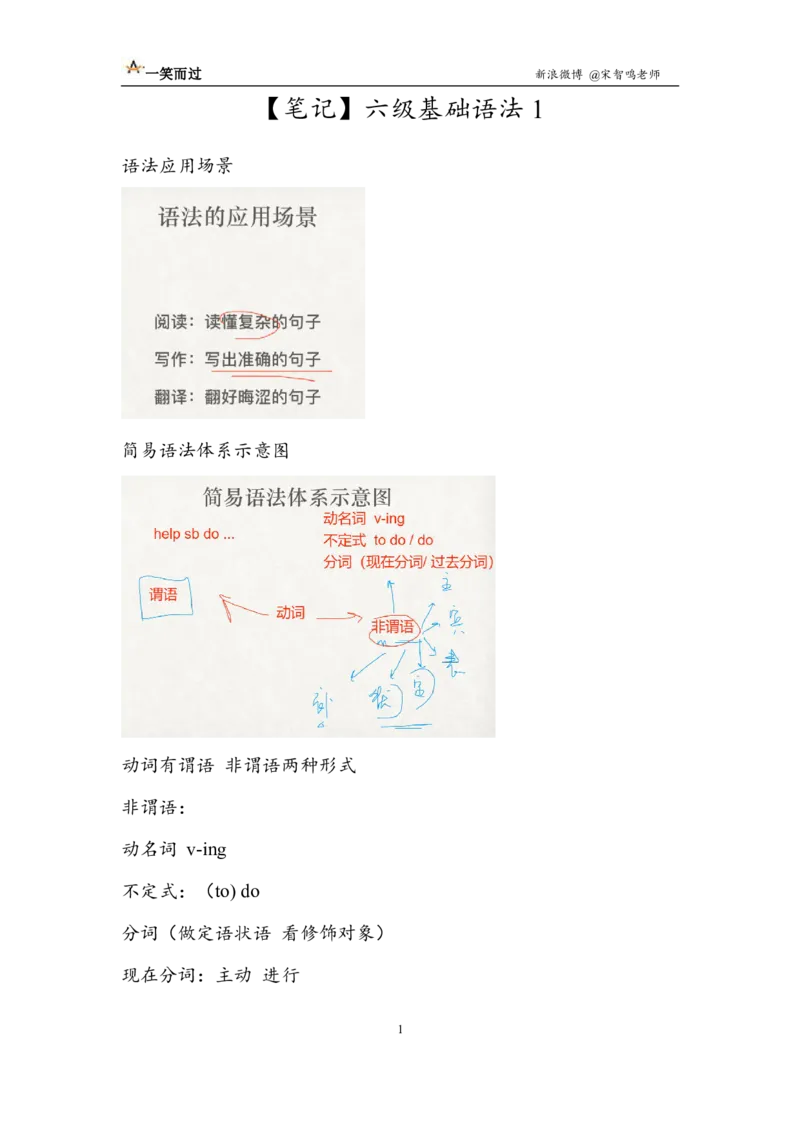
anti-表示“反对,相反”
1. antiwar/,æntɪ'wɔr/adj. 反对战争的
2. antibiotic/ˌæntibaɪˈɑːtɪk/adj. 抗生的,抗菌的 n. 抗生素
3. antitoxic/ˌæntiˈtɑːksɪk/adj.[免疫] 抗毒素的
dis-① 表示“不”
4. disclaim/dɪsˈkleɪm/vt./vi. 否认,拒绝,放弃
5. disclose/dɪsˈkloʊz/vt. 公开,揭露
6. dishonor/dɪsˈɑːnər/vt. 违背 n. 丢脸
dis-② 表示 “分开,分离 ”
7. distract/dɪˈstrækt/vt. 转移,分心
im-,in-① 表示“不,无,非”
8. impossible/ɪmˈpɑːsəbl/adj. 不可能的 n. 不可能
9. immoral/ɪˈmɔːrəl/adj. 不道德的,邪恶的
im-,in-② 表示“进入 ,使”
10. imprison/ɪmˈprɪzn/vt. 监禁,关押,使…下狱
11. immerge/ɪ'mɜːrdʒ/v. 浸入,隐没
il-,ir-① 放在同辅音词根前表示“不,无”
12. illegal/ɪˈliːɡl/adj. 非法的,违法的
13. illiterate/ɪˈlɪtərət/adj. 文盲的,不识字的
un-① 表示“不、无、没有”
14. unequal/ʌnˈiːkwəl/adj. 不平等的,不规则的 n. 不等同的事物
15. unprecedented/ʌnˈpresɪdentɪd/adj. 空前的
a-①加在单词或词根前面,表示“不,无,非”
16. asocial/eɪˈsoʊʃəl/adj. 自私的,不合群的
17. apolitical/ˌeɪpəˈlɪtɪkl/adj. 不关心政治的,无政治意义的
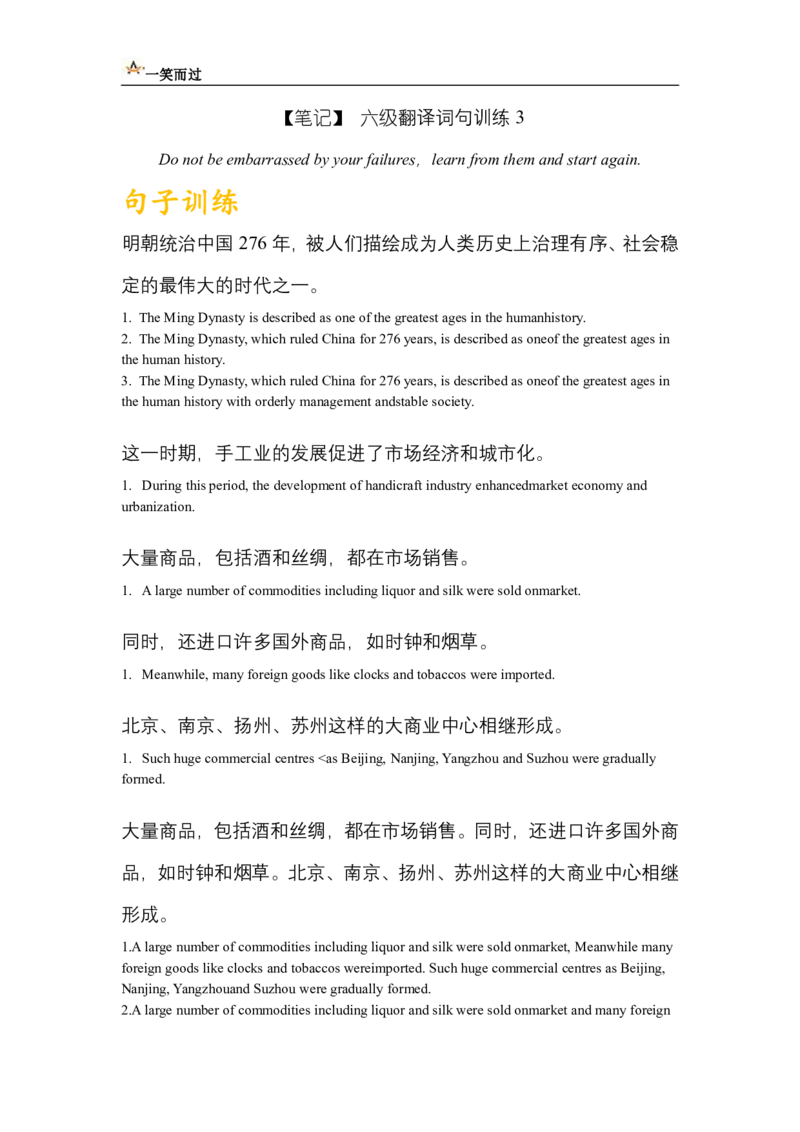
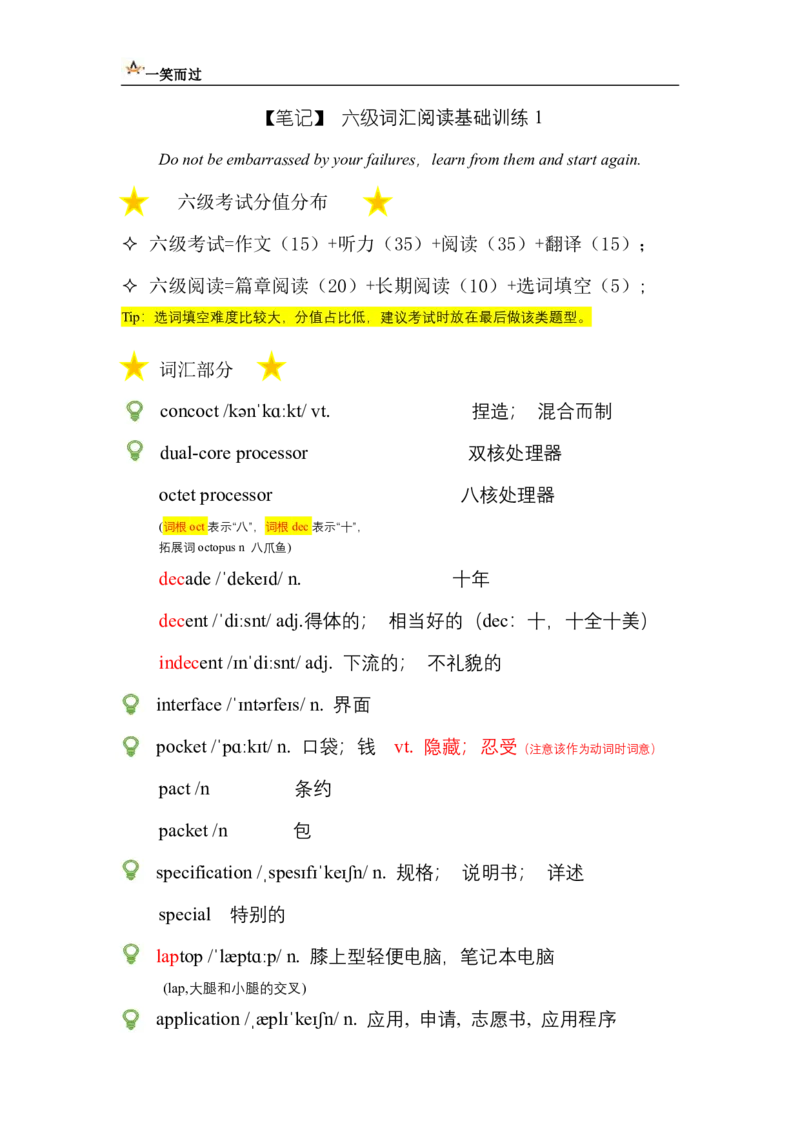
1. concoct/kənˈkɑːkt/ vt.捏造;混合而制
2. decade/ˈdekeɪd/n. 十年
3. laptop/ˈlæptɑːp/ n. 膝上型轻便电脑,笔记本电脑
4. application/ˌæplɪˈkeɪʃn/n. 应用, 申请, 志愿书, 应用程序 n.[计] 应用, 应用程序
5. device/dɪˈvaɪs/ n. 装置, 设计,设备
6. plug/plʌɡ/ n. 塞子, 栓, 插头 vt. 插入, 塞住, 接插头 vi. 被塞住
17. incident/ˈɪnsɪdənt/ n. 事件,事变
8. incidence/ˈɪnsɪdəns/ n. 发生率;影响;
9. Millennials/mɪˈleniəls/n.千禧世代;千禧一代
10. proverbial/prəˈvɜːrbiəl/ adj. 谚语的, 谚语式的, 众所周知的
11. norm/nɔːrm/ n. 基准, 模范, 标准, 准则
12. normal/ˈnɔːrml/ adj. 正常的;正规的
13. deliver/dɪˈlɪvər/vt. 递送,释放
14. sensor/ˈsensər/n.传感器
15. consent/kənˈsent/ v./n.同意
16. consensus/kənˈsensəs/n. 一致
17. dissent/dɪˈsent/ vi./n.不同意
18. resent/rɪˈzent/ vt.憎恨
19. nonsense/ˈnɑːnsens/n.胡话
20. automation/ˌɔːtəˈmeɪʃn/ n. 自动化, 自动操作
21. intelligent/ɪnˈtelɪdʒənt/adj. 聪明的, 智能的, 了解的
22. quotient/ˈkwoʊʃnt/ n.商
23. quota/ˈkwoʊtə/n. 定额;限额
24. facility/fəˈsɪləti/n. 设备
25. unprecedented/ʌnˈpresɪdentɪd/adj. 空前的
26. leverage/ˈlevərɪdʒ/ n. 杠杆作用, 杠杆装置
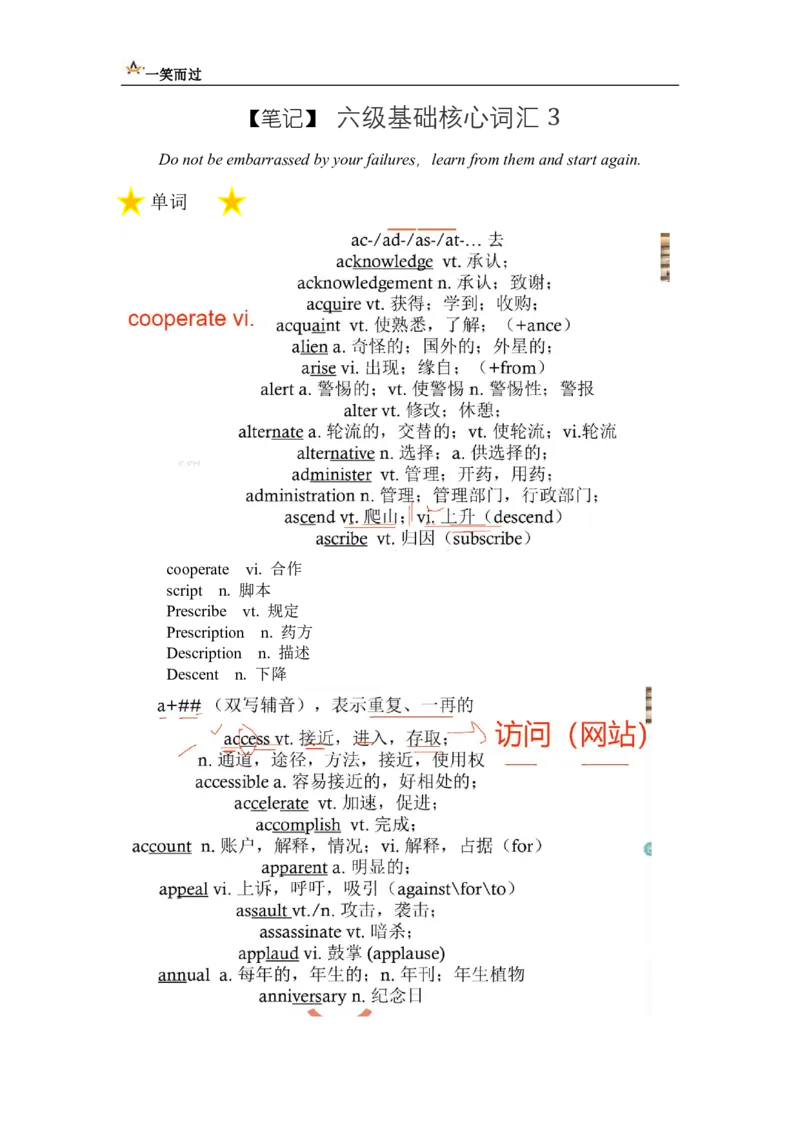
27. access/ˈækses/n. 通路, 入口, 接近, 进入, 使用权, 发作 vt. 访问, 存取, 接近, 使用
28. dramatically/drəˈmætɪkli/adv. 戏剧地, 引人注目地
29. serve/sɜːrv/ vt. 招待,供应;为…服务 vi. 服役,服务,发球 n.发球
30. capacity/kəˈpæsəti/ n. 容量, 能力, 才能, 资格
31. widespread/ˈwaɪdspred/ adj. 广布的, 普及的
32. operation/ˌɑːpəˈreɪʃn/ n. 操作, 动作, 手术
33. embrace/ɪmˈbreɪs/ n./vt./vi. 拥抱, 互相拥抱
34. profitable/ˈprɑːfɪtəbl/adj. 有利润的, 有利益的, 赚钱的
35. ordinary/ˈɔːrdneri/ adj. 平常的, 普通的, 平凡的 n. 平常的人
36. subordinate/səˈbɔːrdɪnət/ n. 部属,下属 adj.从属的
37. coordinate/koʊˈɔːrdɪneɪt/ vt.协调 adj.协调的 n.坐标
38. tango/ˈtæŋɡoʊ/ n.探戈
239. tangible/ˈtændʒəbl/adj. 可触摸的, 有实体的,有形的
40. intangible/ɪnˈtændʒəbl/adj. 无形的,难以理解的
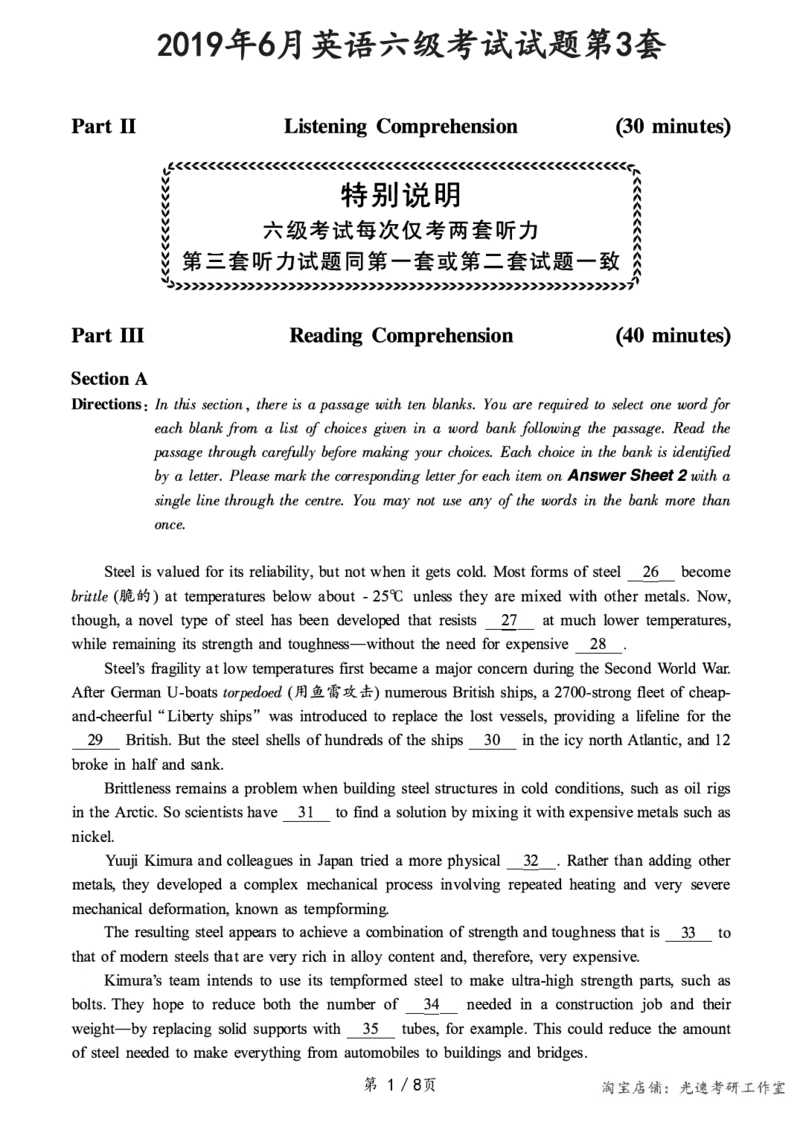
Ourworld nowmoves sofastthatweseldomstopto seejusthowfar wehave come injusta
few years. The latest iPhone 6s,for example, has a dual-core processor and fits nicely into your
pocket. By comparison, you would expect to find a technological specification like this on your
standardlaptopinanofficeanywhereintheworld.
It’s no wonder shat new applications for the Internet of Things are moving ahead fast when
almosteverynewdevicewebuyhasaplugontheendofitorawirelessconnectiontotheinternet.
Soon,ourcurrentsmartphonelifestylewillexpandtocreateourownsmarthomelifestyletoo.
All researches agree that close to 25 billion devices, things and sensors will be connected
by 2020whichincidentallyisalsothemomentthatMillennials(千禧一代)areexpectedtomake
up 75 percent of our overall workforce, and the fully connected home become a reality for large
numbersofpeopleworldwide.
However, this is just the tip of the proverbial iceberg as smart buildings and even cities
increasingly become the norm as leaders and business owners begin to wake up to the massive
savings that technology can deliver through connected sensors and new forms of automation
coupledwithintelligentenergyandfacilitiesmanagement.
Online security cameras, intelligent lighting and a wealth of sensors that control both
temperature and air quality are offering an unprecedented level of control, efficiency, and
improvements to what were once classed necessary costs when running a business or managing a
largebuilding.
We can expect that the ever-growing list of devices, systems and environments remain
connected,alwaysonlineandtalkingtoeachother.Thebigbenefitwillnotonlybeinthehousing
of this enormous and rapidly growing amount of data, but will also be in the ability to run real
timedataanalyticstoextractactionableandongoingknowledge.
The biggest andmostexciting challenge of this technology is how to creativelyleverage this
ever-growing amount of data to deliver cost savings, improvements and tangible benefits to both
businessesandcitizensofthesesmartcities.
The good news is that most of this technology is already invented. Let's face it, it wasn't too
long ago that the idea of working from anywhere and at anytime was some form of a distant
utopian(乌托邦式的) dream, andyet now we can performalmost anyoffice-based task from any
locationintheworldaslongaswehaveaccesstotheinternet.
It's time to wake up to the fact that making smart buildings, cities and homes will
dramaticallyimproveourqualityoflifeintheyearsahead.
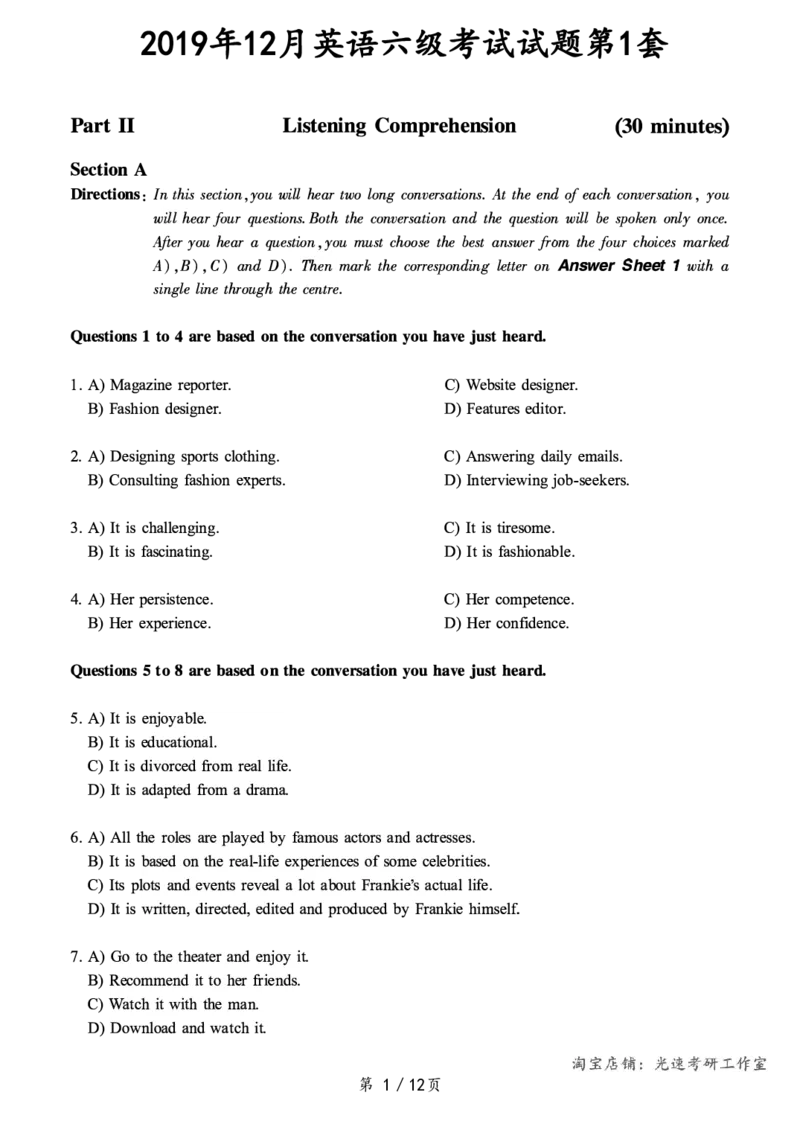
51.WhatdoestheexampleofiPhone6sservetoshow?
A)Thehugecapacityofthesmartphonespeoplenowuse.
3B)Thewidespreaduseofsmartphonesallovertheworld.
C)Thehugeimpactofnewtechnologyonpeople'severydaylife.
D)Therapidtechnologicalprogressinaveryshortperiodoftime.
52.Whatcanweexpecttoseebytheyear2020?
A)AppsfortheinternetofThings. C)TheemergenceofMillennials.
B)Thepopularizationofsmarthomes. D)Totalglobalizationoftheworld.
53. What will business owners do when they become aware of the benefits of the internet of
Things?
A)Employfewerworkersintheiroperations.
B)Gainautomaticcontroloftheirbusinesses.
C)Investinmoresmartbuildingsandcities.
D)Embracewhatevernewtechnologythereis.
54.Whatisthemostexcitingchallengewhenwepossessmoreandmoredata?
A)Howtoturnittoprofitableuse. C)Howtolinktheactionablesystems.
B)Howtodorealtimedataanalysis. D)Howtodevisenewwaystostoreit.
55.Whatdoestheauthorthinkaboutworkingfromanywhereandatanytime?
A)Itisfeasiblewithaconnectiontotheinternet.
B)Itwillthriveinsmartbuildings,citiesandhomes.
C)Itisstilladistantutopiandreamforordinaryworkers.
D)Itwilldelivertangiblebenefitstobothbossandworker.
4【六级假期精进计划:第二课】
ab-,abs- 加在词根前,表示“相反,离去”等
1. abnormal/æbˈnɔːrml/adj. 反常的,不规则的
2. abuse/əˈbjuːs/vt. 滥用,虐待,辱骂 n. 滥用,虐待,辱骂
an- 在词根前,表示“不,无”
3. anarchism/ˈænərkɪzəm/n. 无政府主义
4. anonymous/əˈnɑːnɪməs/adj. 匿名的,无名的
二:表示空间位置关系
by-表示“在旁边,副的”
5. byroad/ˈbaɪroʊd/n. 侧道,间道,小路
6. bygone/ˈbaɪɡɔːn/adj. 过去的 n. 过去的事
7. bywork/'baɪ,wɜːrk/n. 副业,业余工作
em-,en-① 表示“进入…之中,包围”
8. embrace/ɪmˈbreɪs/vt. 拥抱,欣然采纳 n. 拥抱,采纳
9. embarrass/ɪmˈbærəs/vt.使…尴尬
10. embattle/ɪmˈbætl/vt.布阵,整军备战
em-,en-② 表示“使…进入状态 ”
11. empower/ɪmˈpaʊər/vt. 授权,允许,使能够
12. embitter/ɪmˈbɪtər/vt. 使怨恨,使难受,使受苦
inter-表示“在…之间,相互”
13. international/ˌɪntərˈnæʃnəl/adj. 国际的
14. interpersonal/ˌɪntərˈpɜːrsənl/adj. 人与人之间的
pro-① 表示“向前,在前”
15. propel/prəˈpel/vt. 推进,驱使
16. provident/ˈprɑːvɪdənt/adj. 节俭的,有先见之明的
pro-② 表示“很多”
17. procreate/ˈproʊkrieɪt/vt./vi. 生育(子女),产生
18. prosperous/ˈprɑːspərəs/adj. 繁荣的,兴旺的
sub-表示“在下面,次一等,副手”
19. submerge/səbˈmɜːrdʒ/vt./vi. 淹没,把…浸入,沉浸
20. subcentral/sʌbˈsentrəl/adj. 接近中心点的,位于中心点下的
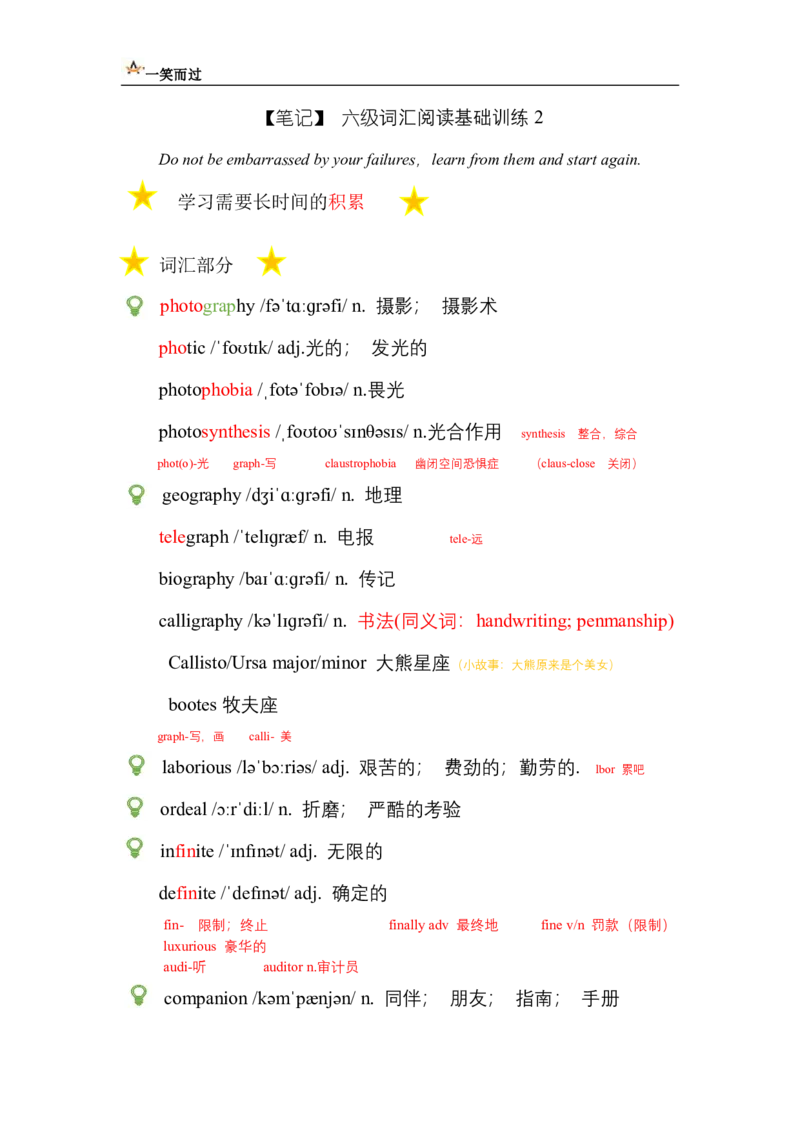
1. photography/fəˈtɑːɡrəfi/n. 摄影;摄影术
52. photophobia/ˌfotəˈfobɪə/n.畏光
3. photosynthesis/ˌfoʊtoʊˈsɪnθəsɪs/n.光合作用
4. geography/dʒiˈɑːɡrəfi/n. 地理
5. telegraph/ˈtelɪɡræf/n. 电报
6. laborious/ləˈbɔːriəs/adj. 艰苦的;费劲的;勤劳的
7. ordeal/ɔːrˈdiːl/n. 折磨;严酷的考验
8. infinite/ˈɪnfɪnət/adj. 无限的
9. definite/ˈdefɪnət/adj.确定的
10. interrupt/ˌɪntəˈrʌpt/vt./vi. 中断;打断
11. associate/əˈsoʊʃieɪt/vt. 联想,联系
12. fellow/ˈfeloʊ/adj. 同类的,同伴的 n. 同事,朋友
13. slight/slaɪt/adj. 轻微的,少量的
14. blight/blaɪt/vi. 枯萎 n.枯萎
15. forbade/fərˈbeɪd/vt. 禁止(forbid的过去式)
16. digital/ˈdɪdʒɪtl/ adj. 数字的
17. heighten/ˈhaɪtn/vt./vi. 提高;增高
18. receive/rɪˈsiːv/vt. 接收
19. reception/rɪˈsepʃn/n. 接待;接收
20. recipient/rɪˈsɪpiənt/n. 接受者
21. immerse/ɪˈmɜːrs/vt. 沉浸
22. emerge/ɪˈmɜːrdʒ/vi.出现
23. emergencyn.出现,急诊
24. satisfy/ˈsætɪsfaɪ/vt./vi. 令人满意;令人满足
25. Jupiter/ˈdʒuːpɪtər/n.木星
26. Mercury/ˈmɜːrkjəri/n.水银,水星
27. merchant/ˈmɜːrtʃənt/n. 商人
28. Pluto/ˈpluːtoʊ/n. 冥王;冥王星
29. plutocrat/ˈpluːtəkræt/n. 财阀;富豪
30. Venus/ˈviːnəs/n.金星
31. erode/ɪˈroʊd/vt. 腐蚀
32. Mars/mɑːrz/n. 火星;战神
33. march/mɑːrtʃ/vt./n.行军
634. painstaking/ˈpeɪnzteɪkɪŋ/adj. 艰苦的;勤勉的;小心的n. 辛苦;勤勉
35. luxury/ˈlʌkʃəri/n. 奢侈,奢华;奢侈品;享受adj. 奢侈的
36. master/ˈmæstər/n. 主人;大师 vt. 精通;控制
37. absorb/əbˈsɔːrb/vt. 吸收;吸引;理解
38. derive/dɪˈraɪv/vt./vi. 源于
Photography was once an expensive, laborious ordeal reserved for life's greatest milestones.
Now, the only apparent cost to taking infinite photos of something as common as a meal is the
spaceonyourharddriveandyourdiningcompanion'spatience.
But is there another cost, a deeper cost, to documenting a life experience instead of simply
enjoyingit?"Youhearthatyoushouldn'ttakeallthesephotosandinterrupttheexperience,andit's
badforyou,andwe'renotlivinginthepresentmoment,"saysKristinDiehl,associateprofessorof
marketingattheUniversityofSouthernCaliforniaMarshallSchoolofBusiness.
Diehl and her fellow researchers wanted to find out if that was true, so they embarked on a
series of nine experiments in the lab and inthe field testing people's enjoymentin the presenceor
absence of a camera. The results, published in the Journal of Personality and Social Psychology,
surprisedthem.Takingphotosactuallymakespeopleenjoywhatthey'redoingmore,notless.
"What we find is you actually look at the world slightly differently, because you're looking
forthingsyouwanttocapture,thatyoumaywanttohangonto,"Diehlexplains."Thatgetspeople
moreengagedintheexperience,andtheytendtoenjoyitmore."
Takesightseeing. Inoneexperiment,nearly200participantsboardedadouble-deckerbusfor
a tour ofPhiladelphia. Both bustours forbadethe use of cellphones but one tour provided digital
cameras and encouraged people to take photos. The people who took photos enjoyed the
experiencesignificantlymore,andsaidtheyweremoreengaged,thanthosewhodidn't.
Snapping a photo directs attention, which heightens the pleasure you get from whatever
you're looking at, Diehl says. It works for things as boring as archaeological (考古的) museums,
where people were given eye-tracking glasses and instructed either to take photos or not. "People
look longer at things they want to photograph," Diehl says. They report liking the exhibits more,
too.
To the relief of Instagrammers (Instagram 用户) everywhere, it can even make meals more
enjoyable. When people were encouraged to take at least three photos while they ate lunch, they
weremoreimmersedintheirmealsthanthosewhoweren'ttoldtotakephotos.
Was it the satisfying click of the camera? The physical act of the snap? No, they found; just
the act of planning to take a photo—and notactually taking it—had the same joy-boosting effect.
"If you want to take mental photos, that works the same way," Diehl says. "Thinking about what
youwouldwanttophotographalsogetsyoumoreengaged."
51.Whatdoestheauthorsayaboutphoto-takinginthepast?
7A)Itwasapainstakingeffortforrecordinglife'smajorevents.
B)Itwasaluxurythatonlyafewwealthypeoplecouldenjoy.
C)Itwasagoodwaytopreserveone'spreciousimages.
D)Itwasaskillthatrequiredlotsofpracticetomaster
52.KristinDiehlconductedaseriesofexperimentsonphoto-takingtofindout_______.
A)whatkindofpleasureitwouldactuallybringtophoto-takers
B)whetherpeopleenjoyeditwhentheydidsightseeing
C)howitcouldhelptoenrichpeople'slifeexperiences
D)whetheritpreventedpeopleenjoyingwhattheyweredoing
53.WhatdotheresultsofDiehl'sexperimentsshowaboutpeopletakingpictures?
A)Theyaredistractedfromwhattheyaredoing.
B)Theycanbetterrememberwhattheyseeordo.
C)Theyaremoreabsorbedinwhatcatchestheireye.
D)Theycanhaveabetterunderstandingoftheworld.
54.Whatisfoundaboutmuseumvisitorswiththeaidofeye-trackingglasses?
A)Theycomeoutwithbetterphotographsoftheexhibits.
B)Theyfocusmoreontheexhibitswhentakingpictures.
C)Theyhaveabetterviewofwhatareondisplay.
D)Theyfollowthehistoricaleventsmoreeasily.
55.Whatdowelearnfromthelastparagraph?
A)Itisbettertomakeplansbeforetakingphotos.
B)Mentalphotoscanbeasbeautifulassnapshots.
C)Photographerscanderivegreatjoyfromtheclickofthecamera.
D)Eventheverythoughtoftakingaphotocanhaveapositiveeffect.
8【六级假期精进计划:第三课】
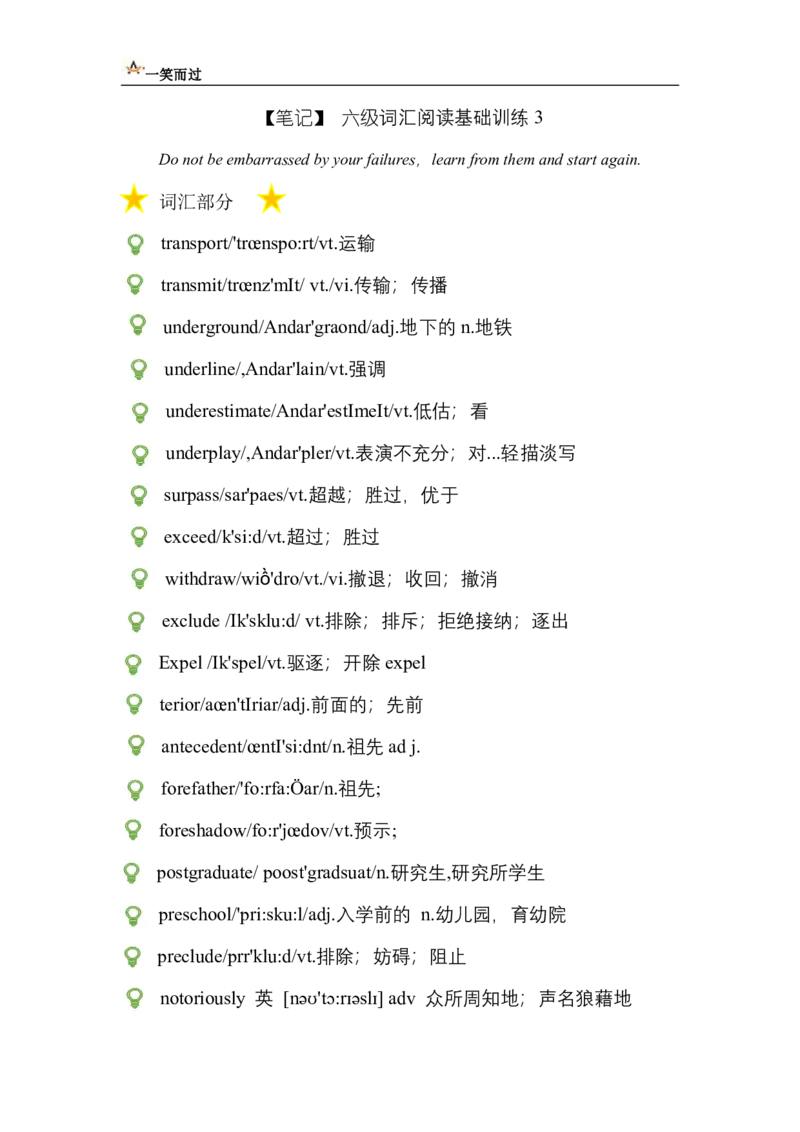
trans-① 表示“横过,越过”
1. transgress/trænzˈɡres/vt./vi. 违反,侵犯,犯罪
2. transmit/trænzˈmɪt/vt./vi. 传输,传播,发射
under-① 表示“在…下”
3. underground/ˌʌndərˈɡraʊnd/adj. 地下的 n. 地铁
4. underline/ˌʌndərˈlaɪn/vt. 强调
under-② 表示“不足,不够”
5. underestimate/ˌʌndərˈestɪmeɪt/vt. 低估,看轻
6. underplay/ˌʌndərˈpleɪ/vt. 表演不充分,对...轻描淡写
sur-表示“超过,在上面”
7. surface/ˈsɜːrfɪs/n. 表面,表层,外观 vt./vi.浮出水面
8. surpass/sərˈpæs/vt. 超越,胜过,优于
with-表示“向后,相反”
9. withdraw/wɪðˈdrɔ/vt./vi. 撤退,收回,撤消
10. withhold/wɪðˈhoʊld/vt./vi. 保留,不给,隐瞒,抑制
ex-① 表示“出,出去”
11. exclude/ɪkˈskluːd/vt. 排除,排斥,拒绝接纳,逐出
12. expel/ɪkˈspel/vt. 驱逐,开除
三:表示时间顺序
ante-表示“前面,先”
13. anterior/ænˈtɪriər/adj. 前面的,先前的
14. antecedent/ˌæntɪˈsiːdnt/n. 祖先 adj. 先前的
fore-表示“前面,预先”
15. forefather/ˈfɔːrfɑːðər/n. 祖先,前辈
16. foreshadow/fɔːrˈʃædoʊ/vt. 预示,成为…的前兆
post-① 表示“在后”
17. postpone/poʊˈspoʊn/vt. 使……延期 vi. 延缓,延迟
18. postgraduate/ˌpoʊstˈɡrædʒuət/n. 研究生,研究所学生
pre-表示“前…的,预先”
19. preschool/ˈpriːskuːl/adj. 入学前的 n. 幼儿园,育幼院
20. preclude/prɪˈkluːd/vt. 排除,妨碍,阻止
921. notoriously/noʊˈtɔːriəsli/adv.众所周知地;声名狼藉地
22. inedible/ɪnˈedəbl/adj. 不能吃的
23. unreliable/ˌʌnrɪˈlaɪəbl/adj. 不可靠的
24. liable/ˈlaɪəbl/ adj.有责任的,有义务的
25. hover/ˈhʌvər/ vi./n. 盘旋,徘徊
26. acquaintance/əˈkweɪntəns/n.熟人;相识;了解
27. accquire/əˈkwaɪər/ vt. 获得;取得
28. overestimate/ˌoʊvərˈestɪmətvt. 对……评价过高
29. underestimate/ˌʌndərˈestɪmeɪt/ vt. 低估
30. overvalue/ˌoʊvərˈvæljuː/ vt. 对…估价过高
31. undervalue/ˌʌndərˈvæljuː/ v. 低估……的价值
32. massive/ˈmæsɪv/ adj.大量的
33. outweigh/ˌaʊtˈweɪ/ vt. 比……重
34. remarkable/rɪˈmɑːrkəbl/adj. 卓越的,非凡的
35. vigilance/ˈvɪdʒɪləns/n.警戒,警觉
36. invigilator/ɪnˈvɪdʒɪleɪtər/ n.监考人
37. surveillance/sɜːrˈveɪləns/ n.监督,监视
38. constrain/kənˈstreɪn/vt. 束缚
39. constraint/kənˈstreɪnt/ n. 约束
40. digital/ˈdɪdʒɪtl/ adj. 数字的
41. digitalliteracy 数字素养
42. formula/ˈfɔːrmjələ/ n.公式,准则
43. transform/trænsˈfɔːrm/ vt.改变,变化
44. contain/kənˈteɪn/ vt.包含;控制;容纳
45. retain/rɪˈteɪn/ vt.保持
46. detain/dɪˈteɪn/ vt.拘留;耽搁
47. tough/tʌf/ adj.牢固的;强壮的,困难的
48. rough/rʌf/ adj. 粗糙的;粗略的;粗野的
49. recall/rɪˈkɔːl/ vt. 召回;回想起,记起;取消n. 召回;回忆;撤消
50. address/əˈdres/ n. 演讲,致辞 vt.设法解决;演说
1051. contemporary/kənˈtempəreri/ adj.当代的
52. scary/ˈskeri/ adj. 可怕的;恐怖的;吓人的
53. invisible/ɪnˈvɪzəbl/ adj. 无形的;无形的;不显眼的
Human memory is notoriously unreliable.Even people with the sharpestfacial-recognition
skillscanonlyremembersomuch.
It's tough to quantify how good a person is at remembering. No one really knows how
manydifferentfacessomeonecanrecall,forexample,butvariousestimatestendtohoverinthe
thousands-basedonthenumberofacquaintancesapersonmighthave.
Machines aren't limited this way.Give the right computer a massive database of faces, and
it can process what it sees-then recognize a face it's told to find-with remarkable speed and
precision.Thisskilliswhatsupportstheenormouspromiseoffacial-recognitionsoftwareinthe
2lstcentury.It'salsowhatmakescontemporarysurveillancesystemssoscary.
The thing is, machines still have limitations when it comes to facial recognition. And
scientists are only just beginning to understand what those constraints are. To begin to
figure out howcomputersarestruggling,researchersattheUniversityofWashingtoncreateda
massive database of faces---they call it MegaFace and tested a variety of facial-recognition
algorithms (算法) as they scaled up in complexity. The idea was to test the machines on a
databasethatincludedupto1milliondifferentimages ofnearly700,000differentpeople---and
not just a large database featuring a relatively small number of different faces, more consistent
withwhat'sbeenusedinotherresearch.
As the databases grew, machine accuracy dipped across the board. Algorithms that were
right 95%ofthe time whentheywere dealingwith a 13,000-image database, forexample, were
accurate about 70% of the time when confronted with 1 million images. That's still pretty good,
says one of the researchers, Ira Kemelmacher-Shlizerman."Much better than we expected, "she
said.
Machines also had difficulty adjusting for people who look a lot alike-either
doppelgangers(长相极相似的人),whom the machine would have trouble identifying as two
separate people, or the same person who appeared in different photos at different ages or in
different lighting, whom themachinewouldincorrectlyviewasseparatepeople.
"Once we scale up, algorithms must be sensitive to tiny changes in identities and at the
sametimeinvarianttolighting,pose,age,"Kemelmacher-Shlizermansaid.
The trouble is, for many of the researchers who'd like to design systems to address these
challenges,massivedatasetsforexperimentationjustdon'texist--atleast,notinformatsthatare
accessible to academic researchers. Training sets like the ones Google and Facebook have are
private. There are no public databases that contain millions of faces. MegaFace's creators say
it'sthelargestpubliclyavailablefacial-recognitiondatasetoutthere.
11“An ultimate face recognition algorithm should perform with billions of people in a
dataset,”theresearcherswrote
46.Comparedwithhumanmemory,machinescan .
A)identifyhumanfacesmoreefficiently
B)tellafriendfromamereacquaintance
C)storeanunlimitednumberofhumanfaces
D)perceiveimagesinvisibletothehumaneye
47.WhydidresearcherscreateMegaFace?
A)Toenlargethevolumeofthefacial-recognitiondatabase
B)Toincreasethevarietyoffacial-recognitionsoftware
C)Tounderstandcomputers'problemswithfacialrecognition
D)Toreducethecomplexityoffacial-recognitionalgorithms
48.Whatdoesthepassagesayaboutmachineaccuracy?
A)Itfallsshortofresearchers'expectations.
B)Itimproveswithaddedcomputingpower.
C)Itvariesgreatlywithdifferentalgorithms.
D)Itdecreasesasthedatabasesizeincreases.
49.Whatissaidtobeashortcomingoffacial-recognitionmachines?
A)Theycannoteasilytellapartpeoplewithnear-identicalappearances.
B)Theyhavedifficultyidentifyingchangesinfacialexpressions
C)Theyarenotsensitivetominutechangesinpeople'smood
D)Theyhaveproblemsdistinguishingpeopleofthesameage
50.Whatisthedifficultyconfrontingresearchersoffacial-recognitionmachines?
A)Nocomputerisyetabletohandlehugedatasetsofhumanfaces
B)Theredonotexistpublicdatabaseswithsufficientfacesampler
C)Therearenoappropriatealgorithmstoprocessthefacesamples
D)Theyhavetroubleconvertingfacedatasetsintotherightformat.
12【六级假期精进计划:第四课】
四: 表示程度
out-① 表示“超过”
1. outdo/ˌaʊtˈduː/vt. 超过,胜过
2. outweigh/ˌaʊtˈweɪ/vt.比……重要,比……有价值
out-② 表示“出去”
3. outside/ˌaʊtˈsaɪd/adj. 外面的,外部的
4. outrage/ˈaʊtreɪdʒ/vt. 激起愤怒 n. 愤怒
over-① 表示“过度,过分”
5. overwork/ˌoʊvərˈwɜːrk/vt./vi.使工作过度
6. overreact/ˌoʊvəriˈækt/vi. 反应过度,反作用过强
over-② 表示“在…之上”
7. overlook/ˌoʊvərˈlʊk/vt. 忽略,俯瞰
8. oversee/ˌoʊvərˈsiː/vt. 监督,审查
over-③ 表示“翻转”
9. overturn/ˌoʊvərˈtɜːrn/vt. 推翻,倾覆,破坏
10. overthrow/ˌoʊvərˈθroʊ/vt.推翻,倾覆,瓦解
extra-表示“以外的,超过的”
11. extraordinary/ɪkˈstrɔːrdəneri/adj. 非凡的,卓越的
12. extravagant/ɪkˈstrævəɡənt/adj. 奢侈的,豪华的
hyper-表示“超过,太多”
13. hyperactive/ˌhaɪpərˈæktɪv/adj. 极度活跃的,活动过度的
14. hypersensitive/ˌhaɪpərˈsensətɪv/adj. 过敏的,高灵敏度的
multi-表示“很多”
15. multilingual/ˌmʌltiˈlɪŋɡwəl/adj. 使用多种语言的
16. multidirectional/mʌltidaɪˈrekʃənl/adj. 多方向的
pan-表示“广泛的”
17. pandemicadj. (疾病)大规模流行的 n.<正式>大流行病
18. panorama/ˌpænəˈræmə/n. 全景,全貌
bene-表示“善,好”
19. benevolent/bəˈnevələnt/adj. 仁慈的,乐善好施的
20. benefaction/ˌbenɪˈfækʃn/n. 善行,捐赠
1321. plunge/plʌndʒ/vi./vt. 使陷入 n. 突然跌落
22. rescue/ˈreskjuː/ vt.营救
23. vivid/ˈvɪvɪd/adj.生动的
24. survive/sərˈvaɪv/vt./vi. 幸存
25. revival/rɪˈvaɪvl/n.复活
26. approach/əˈproʊtʃ/ n./vt./vi.接近 vt.处理
27. scream/skriːm/ vt./vi.尖叫
28. calculate/ˈkælkjuleɪt/ v.计算;打算
29. count/kaʊnt/ v.重要,数数
30. cultivate/ˈkʌltɪveɪt/ vt.培养
31. culture/ˈkʌltʃər/ n. 文化,文明 vt. 培养
32. evade/ɪˈveɪd/ vt/vi.逃脱;逃避
33. invade/ɪnˈveɪd/vt./vi.侵略
34. counterpart/ˈkaʊntərpɑːrt/ n.极相似的人或物
35. encounter/ɪnˈkaʊntər/ vt. 遭遇
36. counterbalance/ˌkaʊntərˈbæləns/ vt. 抵消
37. morality/məˈræləti/ n. 道德,品行
38. conflict/ˈkɑːnflɪkt/ vi./n.冲突
39. inflict/ɪnˈflɪkt/ vt. 造成
40. affliction/əˈflɪkʃn/ n.痛苦
41. loophole/ˈluːphoʊl/ n. 漏洞
42. peril/ˈperəl/ n. 危险;冒险
43. imperil/ɪmˈperəl/ vt. 危及;使陷于危险
44. choke/tʃoʊk/ vt. 呛;使窒息 vi. 窒息;阻塞
45. divorce/dɪˈvɔːrs/ n. 离婚;分离
46. soldier/ˈsoʊldʒər/ n.军人
47. solid/ˈsɑːlɪd/ adj. 固体的;可靠的
48. consolidate/kənˈsɑːlɪdeɪt/ vt./vi. 巩固
49. customs/ˈkʌstəmz/ n. 海关;风俗
50. assess/əˈses/ vt. 评定;估价
1451. highlight/ˈhaɪlaɪt/ vt.突出;强调
52. emphasize/ˈemfəsaɪz/ vt. 强调
53. underline/ˌʌndərˈlaɪn/ vt. 强调
54. odds/ɑːdz/ n.机率
55. probability/ˌprɑːbəˈbɪləti/n.机率
56. complication/ˌkɑːmplɪˈkeɪʃn/ n.复杂
57. sophisticated/səˈfɪstɪkeɪtɪd/ adj. 复杂的
In the beginning of the movie l, Robot, a robot has to decide whom to save after two cars
plungeintothe water-DelSpooneror achild. Even thoughSpoonerscreams “Saveher Save her!”
therobotrescueshimbecauseitcalculatesthathehasa45percentchanceofsurvivalcomparedto
Sarah's 11 percent. The robot's decision and its calculated approach raise an important question:
would humans make the same choice?Andwhich choicewould we want ourrobotic counterparts
tomake?
Isaac Asimov evaded the whole notion of morality in devising his three laws of robotics,
whichholdthat1.Robotscannotharmhumans orallow humanstocome toharm;2.Robotsmust
obey humans, except where the order would conflict with law 1; and 3. Robots must act in
self-preservation, unless doing so conflicts with laws 1 or 2. These laws are programmed into
Asimov's robots-they don' t have to think, judge, or value. They don't have to like humans or
believethathurtingthemiswrongorbad.Theysimplydon'tdoit.
The robot who rescues Spooner’s life in I, Robot followsAsimov's zeroth law: robots cannot
harm humanity(as opposed to individual humans)or allow humanity to come to harm--an
expansion of the first law that allows robots to determine what's in the greater good. Under the
first law, a robot could not harm a dangerous gunman, but under the zeroth law, a robot could kill
thegunmantosaveothers.
Whether it's possible to program a robot with safeguards such asAsimov's laws is debatable
A word such as "harm" is vague (what about emotional harm? Is replacing a human employ
harm?), and abstract concepts present coding problems. The robots in Asimov's fiction expose
complications and loopholes in the three laws, and even when the laws work, robots still have to
assesssituations.
Assessing situations can be complicated.Arobot has to identify the players, conditions, and
possibleoutcomesforvariousscenarios,It’sdoubtfulthatacomputerprogramcandothat-atleast,
notwithout some undesirable results.Aroboticist atthe Bristol Robotics Laboratory programmed
a robot to save human proxies(替身) called "H-bots" from danger. When one H-bot headed for
danger, the robot successfully pushed it out of the way. But when two H-bots became imperiled,
therobotchoked42percentofthetime,unabletodecidewhichtosaveandlettingthemboth"die.
15"The experiment highlights the importance of morality: without it, how can a robot decide whom
tosaveorwhat'sbestforhumanity,especiallyifitcan'tcalculatesurvivalodds?
46.Whatquestiondoestheexampleinthemovieraise?
A)Whetherrobotscanreachbetterdecisions.
B)WhetherrobotsfollowAsimov'szero"law.
C)Howrobotsmaymakebadjudgments.
D)Howrobotsshouldbeprogrammed.
47.WhatdoestheauthorthinkofAsimov’sthreelawsofrobotics?
A)Theyareapparentlydivorcedfromreality.
B)Theydidnotfollowthecodingsystemofrobotics.
C)Theylaidasolidfoundationforrobotics.
D)Theydidnottakemoralissuesintoconsideration.
48.WhatdoestheauthorsayaboutAsimov'srobots?
A)Theyknowwhatisgoodorbadforhumanbeings.
B)Theyareprogrammednottohurthumanbeings.
C)Theyperformdutiesintheirowners'bestinterest.
D)Theystopworkingwhenamoralissueisinvolved.
49.Whatdoestheauthorwanttosaybymentioningtheword"harm"inAsimov'slaws?
A)Abstractconceptsarehardtoprogram.
B)Itishardforrobotstomakedecisions.
C)Robotsmaydoharmincertainsituations.
D)Asimov'slawsusetoomanyvagueterms.
50.WhathastheroboticistattheBristolRoboticsLaboratoryfoundinhisexperiment?
A)Robotscanbemadeasintelligentashumanbeingssomeday.
B)Robotscanhavemoralissuesencodedintotheirprogram.
C)Robotscanhavetroublemakingdecisionsincomplexscenarios.
D)Robotscanbeprogrammedtoperceivepotentialperils.
16