文档文本内容
Unit 5  Feeling Excited
词句精讲精练
责编:刘燕
【词汇精讲】
1. seem
seem 作系动词,意为“好像,似乎,看来”,后常接形容词。例如:
   He seems very angry. 他好像非常生气。
【拓展】
 seem 的用法归纳:
(1)seem + 名词,意为“看起来……”。例如:
     He seems a nice man. 他看起来是个好人。
(2)seem like… 意为“好像,似乎……”。例如:
     It seemed like not a bad idea at that time. 那时这主意好像不错。
(3)seem to do sth. 意为“似乎、看来、好像做某事”。例如:
    I seem to have left my book at home. 我好像把书忘在家里了。
(4)It seems that…或It seemed that… 意为“看起来好像……,似乎……”。例如:
     It seemed that he was very happy. 他看上去好像很高兴。
(5)seem to be + 形容词或名词,意为“看起来……”。例如:
    She seems to be happy. 她看起来很高兴。
2. lonely
(1)lonely 表示“寂寞的,孤单的,孤独的,孤寂的”,带有较强感情色彩,可用作表语
或定语。例如:
When his wife died, he was very lonely.
太太死后他非常孤独。
I needed something to do during those long, lonely nights.
在那些漫长、孤单的夜晚,我需要找点事做。
(2)表示“荒凉的,偏僻的”,用来说明地方,多用作定语。例如:
The old man lived in the lonely mountain village.
那个老人住在荒凉的山村。
【拓展】lonely 与alone 的辨析:
  lonely 作形容词,意为“(人)孤单的,寂寞的”,它更强调一种主观的感觉;alone 作
形容词和副词,意为“独自的(地),单独的(地)”,它更强调一种客观情况。alone 作
形容词,在句中只用作表语;lonely 可用作表语或定语。例如:
  Don’t leave me alone. I will feel lonely.
别留下我一个人,我会觉得孤单的。
3. lively
lively 作形容词,意为“充满活力的,活泼的,有生气的”,常用作定语或表语。例如:
She was a lively young woman with patience and imagination.
她是个充满活力的年轻女性,富有忍耐力和想象力。
He had a strange way of making his classes lively and interesting.
他有一种奇妙的方法,使他的课堂生动有趣。
【拓展】
辨析:lively, alive, live 与living
这四个词都可用作形容词,异同点如下:
(1)lively 常用作定语或表语,“充满活力的,活泼的,有生气的”。例如:
She had a sweet, lively personality.
她的性格可爱活泼。
(2)alive 常作表语或后置定语,“有生命的,活的”。例如:
He was alive when they took him to the hospital.
人们把他送到医院时他还活着。
(3)live 作定语,“活的,有生命的(主要用来指鸟或其他动物);现场的,直播的”。
例如:
Look! There is a live fish in the pool.
看!池子里有一条活鱼。
We watched a live television show.
我们观看了一场电视现场直播的表演。
(4)living 意为“活的,健在的”。例如:
His grandpa is still living at the age of 96.
他爷爷96 岁了,仍然健在。
4. either
(1)either 作副词,意为“也不”,用在否定句中。例如:
     He can’t play the violin. I can’t, either.
他不会拉小提琴,我也不会。
【拓展】either; too 和also 的辨析:
1)either 表示“也不”,用在否定和疑问句句末,常用逗号隔开。例如:
      I don’t like the food, he doesn’t, either.
我不喜欢这种食物,他也不喜欢。
  2)too 表示“也”,用在肯定句末,常用逗号隔开。例如:
      He has a lot of pen pals, too.
他也有很多笔友。
  3)also 表示“也”,用在肯定句中间,位于be 动词、助动词或情态动词后,行为动词前。
例如:
      We also like playing football.
我们也喜欢踢足球。
【注意】区别这三个词,关键取决于该词在句中的位置和肯定句、否定句的判断。
  (2)either 作代词,表示“(两者中)任意一个”。例如:
      There are many trees on either side of the street.
在街道的每一边都有很多树。
  (3)either…or… 为连词短语,连接两个相同的句子成分,意为“要么……要么……;
或者……或者……;不是……就是……”。例如:
      He either stays at home or visits friends on the weekend.
在周末,他要么待在家里,要么拜访朋友。
They will come either tomorrow or the day after tomorrow.
他们不是明天来,就是后天来。
【注意】either…or…连接两个主语时,谓语动词的形式与紧靠谓语的那个主语的形式保
持一致,即遵循就近原则。例如:
Either I or he is on duty today.
今天不是我值日,就是他值日。
5. deal with
(1)deal with 意为“处理,解决”,with 为介词,其后常接trouble,problem 等词。例如:
I am good at dealing with pressure.
我善于应付压力。
(2)deal with 还可意为“与……打交道,与……做买卖”,此时,主语通常是表示人、公
司、商店等的名词。例如:
They have learned to deal with various persons.
他们学会了和各种人打交道。
【拓展】
deal with 与do with 二者都有“处理,对付”之意。
(1)deal with 侧重“方式、方法”,常与how 连用。例如:
How are you going to deal with the TV set?
你打算怎么处理这台电视机?
(2)do with 侧重“对象”,往往与what 搭配使用。例如:
What are you going to do with the camera you found?
你打算怎么处理你找到的那部照相机?
6. elder
elder 为形容词old 的比较级形式,意为“年长的”。同时old 还对应有一个比较级形式
older,注意二者之间的区别。
【注意】
older, elder 的区别:
(1)older 通常用于比较两个人的年龄大小或者两个物体之间的新旧程度。例如:
He is older than his brother. 他比他的兄弟年长。
  This book is older than that one. 这本书比那一本旧一些。
(2)elder 专用于同一个家庭成员之间的长幼对比,也有时指职位、身份较高的人,且只能
用于形容人。例如:
Tom is my elder brother.汤姆是我的哥哥。
You are all elder statesmen.你们都是政治元老/资深政客。
7. though
(1)though 可以作连词,意为“虽然;即使;纵然”,放在从句的开头和中间均可。例如:
     Though it was raining, we were still working.
虽然下着雨,但我们仍然坚持工作。
(2)though 还可以作副词,意为“然而;但是”,一般放在句末。例如:
     It was impossible for him to do so much homework. He finished it though.
他不可能完成这么多作业,然而他做完了。
【拓展】
(1)though 和although 的辨析:
1) 两者都可用作连词,意义相同,但although 常放在从句开头的位置,不用于从句中间;
而though 放在从句的开头和中间均可。例如:
Although they are poor, they are happy.
= Though they are poor, they are happy. = Poor though they are, they are happy.
虽然他们很穷,但很快乐。
2) although 只能作连词,但though 既可以作连词,也可以作副词。
(2)常用搭配:
     as though 好像   even though 即使
【注意】although 和though 不能和but 连用,二者只能用其一。
8. sick
     sick 是形容词,意为“病的;恶心的;厌倦的”。例如:
     Her mother was sick. 她妈妈病了。
【拓展】sick 和ill 的辨析:
     sick 和ill 都意为“生病的”,但用法不同:
    ill 作“生病的”讲时,只能作表语;sick 意为“生病的,恶心的”时,既可作定语,又可作
表语。例如:
    The boy doesn’t like to eat anything. He may be ill.
这个男孩不愿意吃东西,他可能病了。
    Lucy’s mother is sick/ill in hospital.
Lucy 的妈妈生病住院了。
    She’ll visit her sick mother after school.
放学后她要去看望生病的妈妈。
9. proud
(1)proud 是形容词,意为“自豪的,骄傲的”。常用结构:be proud of sth. 意为“以……而
骄傲”。例如:
I am very proud of being a Chinese.
作为一名中国人我很自豪。
(2)be proud to do sth 意为“为做某事而骄傲”。例如:
We are proud to be a league member.
我们为成为团员而骄傲。
【拓展】
(1)pride 是名词,意为“骄傲,自豪”。例如:
He is the pride of our city. 他是我们城市的骄傲。
(2)常用的结构:take pride in sth. 意为“为某事骄傲”。例如:
They take great pride in their daughter who is now a famous scientist.
他们为女儿成为著名的科学家而感到自豪。
10. ready
(1)ready 作形容词,意为“准备好的”。例如:
    Is everything ready?  一切都准备好了吗?
Are you ready? 你准备好了吗?
(2)be ready for 意为“准备去……”,后接名词或动名词,同义短语为get ready for。例
如:
I’m ready for bed. 我正准备睡觉。
The chicken will soon be ready for the pot.
这些鸡肉很快就可以准备下锅了。
【拓展】
be/get ready to + 动词原形,意为“准备做……”。例如:
I’m getting ready to travel. 我正准备去旅行。
11. fill
fill 表示“装满,填满”,可用作及物和不及物动词,通常与介词 with 连用。例如:
Everything is filled with new life.   万物充满了生气。
He filled the glass with water.  他把杯子装满了水。
【拓展】
(1)full 作为形容词,意为“充满的,全部的”。例如:
  Please tell me the full story.
  请将全部情况告诉我。
 The train was traveling at full speed.
火车正全速前进。
(2)be full of  意为“充满……的”。例如:
  The room is full of young people.
房间里全是年轻人。
12. loud
loud 作形容词,意为“高声的,喧哗的”。作副词,表示“喧哗地,高声地”,常用于
talk,speak,laugh 等动词之后,强调声音响亮。比较级为louder,最高级为loudest。例如:
   His voice is very loud. 他的声音很大。
   He speaks loud and clear. 他说话响亮清楚。
【拓展】
(1)aloud 是副词,意为“出声地,高声地”,常与read,call 等动词连用,强调发出的声
音不是很大但能听见。例如:
Can you read aloud? 你能读出声来吗?
(2)loudly 是副词,意为“高声地,喧哗地”,可以与loud 互换,但含有喧闹的意思,强
调声音高,不悦耳。例如:
Someone knocked loudly at the door. 有人大声敲门。
【词汇精练】
I. 根据句意及首字母提示补全单词。
1. Our teachers taught us to sing l____ songs before class.
2. At first, the mother a       went mad because she lost her daughter.
3. Mr. Smith s_____ to be pleased with the new student called John.
4. My teacher will be more s      with me from now on.
5. I study hard, so that I may not f     in the examinations.
6. E      you accept decisions or you get out.
7. His s       touched us to the heart.
8. He was p      to be elected chairman of the Students’ Union.
9. Please f      in the arrival card.
10. Don’t argue with me, my d       is final.
II.根据句意及汉语提示填空。
1.                 (最后), the Japanese agreed to change the machine.
2.           (振作点), man. Things are not as bad as you think.
3.                (顺便问一下), have you been to Beijing?
4. She had bread and egg for breakfast            (像往常一样).
5. She must                 (为……骄傲,自豪)herself.
6. Since Peter ____ ____ ____(不严格要求)himself, in the end he lost the game.
7. It’s hard to ____ ____ ____(做决定)without knowing all the facts.
8. ____ ____ ____(别着急). You’ll be OK.
9. She is ____ ____(处理)her father’s business very well.
10. I’ll help you, ____ ____(即使)I don’t sleep for a night.
III. 根据句意, 用括号内所给词的适当形式填空。
1. Mary happened to meet one of her old friends and invited him ____ (go) to her new house.
2. Although the meal was cold, it tasted _____ (well).
3. You will feel happy when someone____ (smile) at you in a strange place.
4. She was ____ (worry) about her missing son.
5. Henry is my ____ (old) brother; he is two years older than I.
6. He has given me a ____ (help) suggestion.
7. It is far better to read ____ (loud) than to read in silence.
8. “How are you ____ (feel) now, sir?” he asked.
9. Mary said with great ____ (sad). “I know. It’s hopeless.”
10. I take ____ (proud) in what I learn. I find it very interesting.
IV. 填写单词补全对话,每空一词。
Mother: Get up, Xiaoping. It’s time to get up. Why are you still in
  1
  ? You should get up and

  2
   for school. If you don’t hurry up, you’ll be late.
Xiaoping: I’m not   3   well.
Mother: Oh, dear! What’s wrong
  4
   you?
Xiaoping: I don’t know. I have a headache.
Mother: Oh, your head feels so hot. You must have a
  5
  . How long have you been like this?
Xiaoping: About five hours.
Mother: Really? I think you should go to the hospital at once.
Xiaoping: But I am afraid of
  6
   the doctor and I hate to
  7
   bitter medicine.
Mother: Be brave, dear! Follow the doctor’s
  8
  . You will   9
     10

   soon.
Xiaoping: OK, mom. Let’s go to the hospital.
1. ______    2. ______    3. ______    4. ______     5. ______
6. ______    7. ______    8. ______    9.______     10. ______
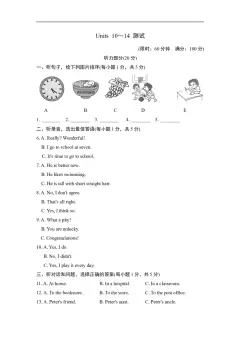
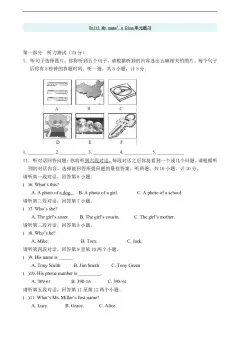
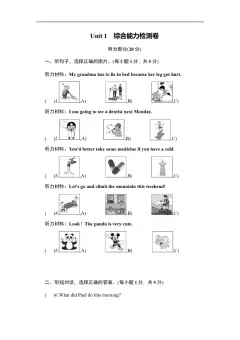
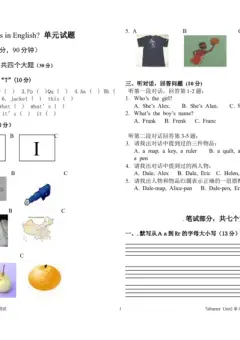
V. 听力链接。
(2015 年兰州中考)
听句子,选择与所听内容相符的图片。每个句子读两遍。
A.
       B.
      C.
D.
E.
1._______  2.________  3.________  4.________  5.________
【参考答案】
I. 根据汉语提示完成下列句子。
1. lively     2. almost     3. seemed/seems  4. strict   5. fail
6. Either     7. speech     8. proud        9. fill     10. decision
II.根据句意及汉语提示填空。
1. In the end           2. Cheer up                  3. By the way               4. as usual
5. be proud of     6. wasn’t strict with         7. make a decision          8. Take it easy
9. dealing with     10. even though/if
III. 根据句意, 用括号内所给词的适当形式填空。
1. to go         2. good                3. smiles             4. worried              5. elder
6. helpful   7. aloud        8. feeling      9. sadness       10. pride
IV. 填写单词补全对话,每空一词。
1. bed    2. prepare    3. feeling              4. with      5. fever/temperature
6. seeing  7.take       8.advice/suggestions     9.get         10.well
V. 听力链接。
1-5 CDABE
听力材料:
第一节  听句子,选择与所听内容相符的图片。每个句子读两遍。
1.It was rainy last night.
2.Look at the baby monkeys.They’re very cute.
3.There is something wrong with his heart.
4.My cousin likes playing the piano.
5.The girl crossed her arms,so it seemed that she wasn’t interested in the conversation.