Lesson 9 Chinese Painting国画
The tools used in traditional Chinese painting are paintbrush, ink, traditional paint and special paper or silk.
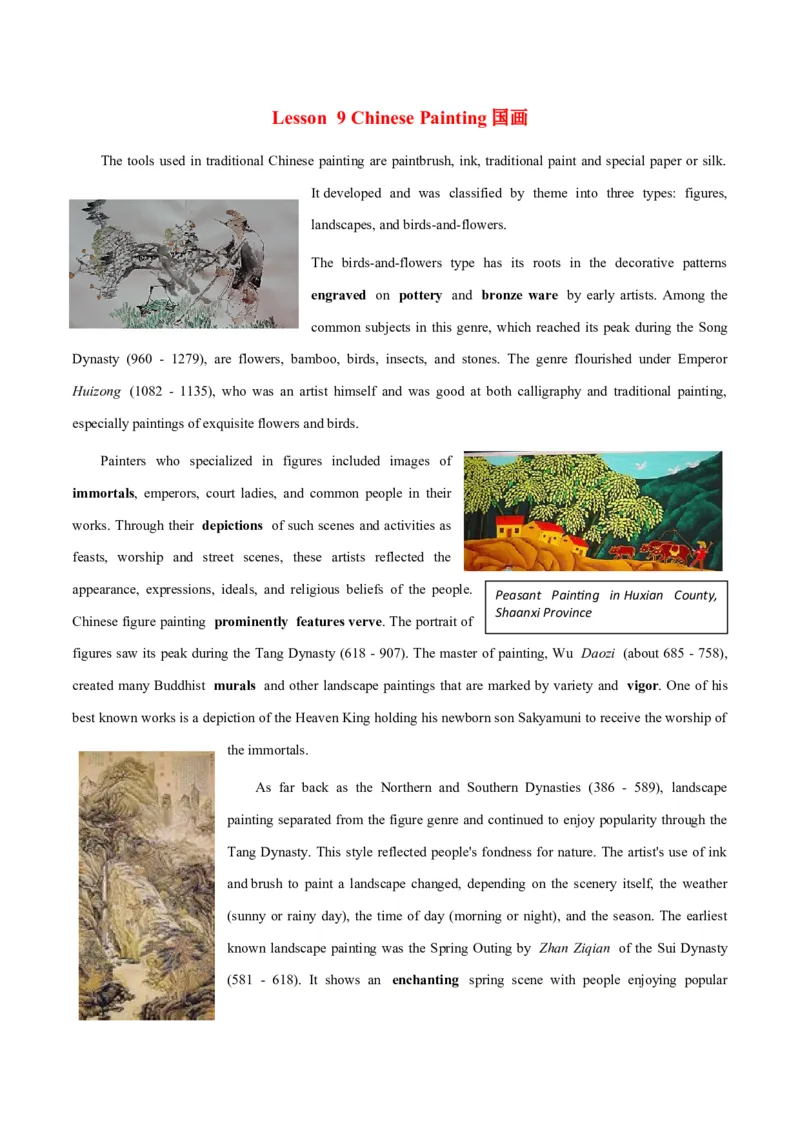
It developed and was classified by theme into three types: figures,
landscapes, and birds-and-flowers.
The birds-and-flowers type has its roots in the decorative patterns
engraved on pottery and bronze ware by early artists. Among the
common subjects in this genre, which reached its peak during the Song
Dynasty (960 - 1279), are flowers, bamboo, birds, insects, and stones. The genre flourished under Emperor
Huizong (1082 - 1135), who was an artist himself and was good at both calligraphy and traditional painting,
especially paintings of exquisite flowers and birds.
Painters who specialized in figures included images of
immortals, emperors, court ladies, and common people in their
works. Through their depictions of such scenes and activities as
feasts, worship and street scenes, these artists reflected the
appearance, expressions, ideals, and religious beliefs of the people.
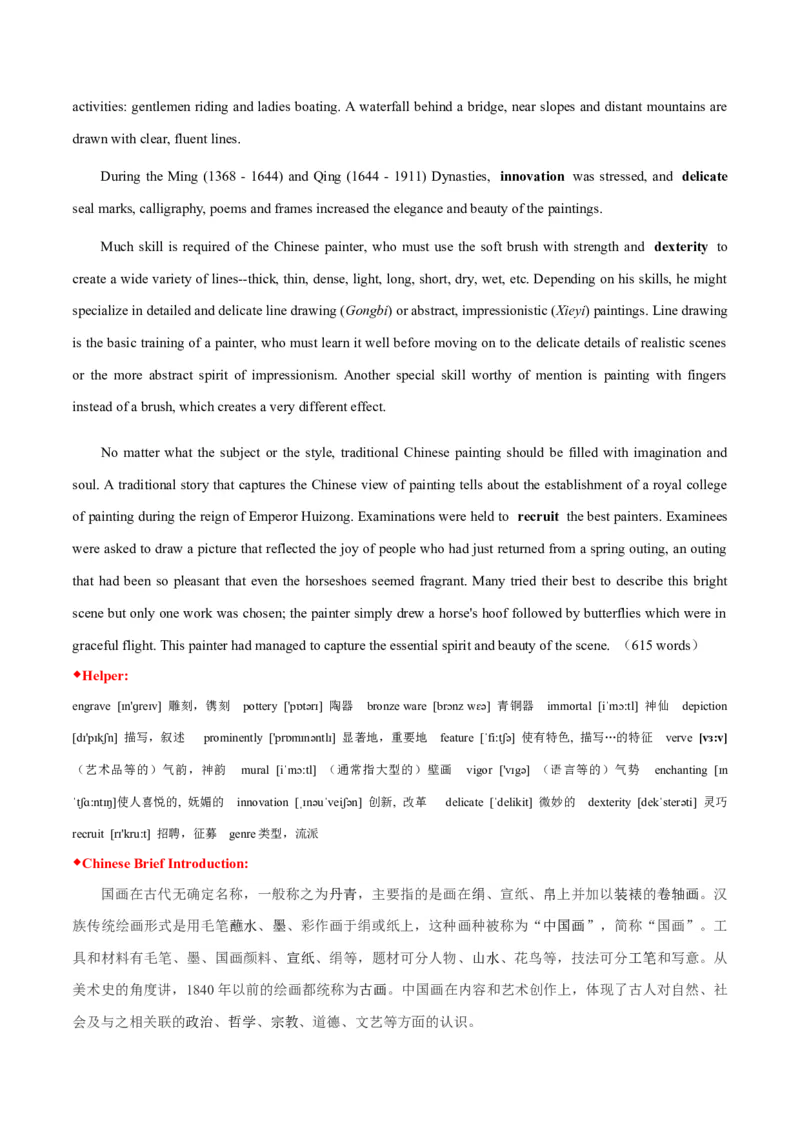
Peasant Painting in Huxian County,
Shaanxi Province
Chinese figure painting prominently features verve. The portrait of
figures saw its peak during the Tang Dynasty (618 - 907). The master of painting, Wu Daozi (about 685 - 758),
created many Buddhist murals and other landscape paintings that are marked by variety and vigor. One of his
best known works is a depiction of the Heaven King holding his newborn son Sakyamuni to receive the worship of
the immortals.
As far back as the Northern and Southern Dynasties (386 - 589), landscape
painting separated from the figure genre and continued to enjoy popularity through the
Tang Dynasty. This style reflected people's fondness for nature. The artist's use of ink
and brush to paint a landscape changed, depending on the scenery itself, the weather
(sunny or rainy day), the time of day (morning or night), and the season. The earliest
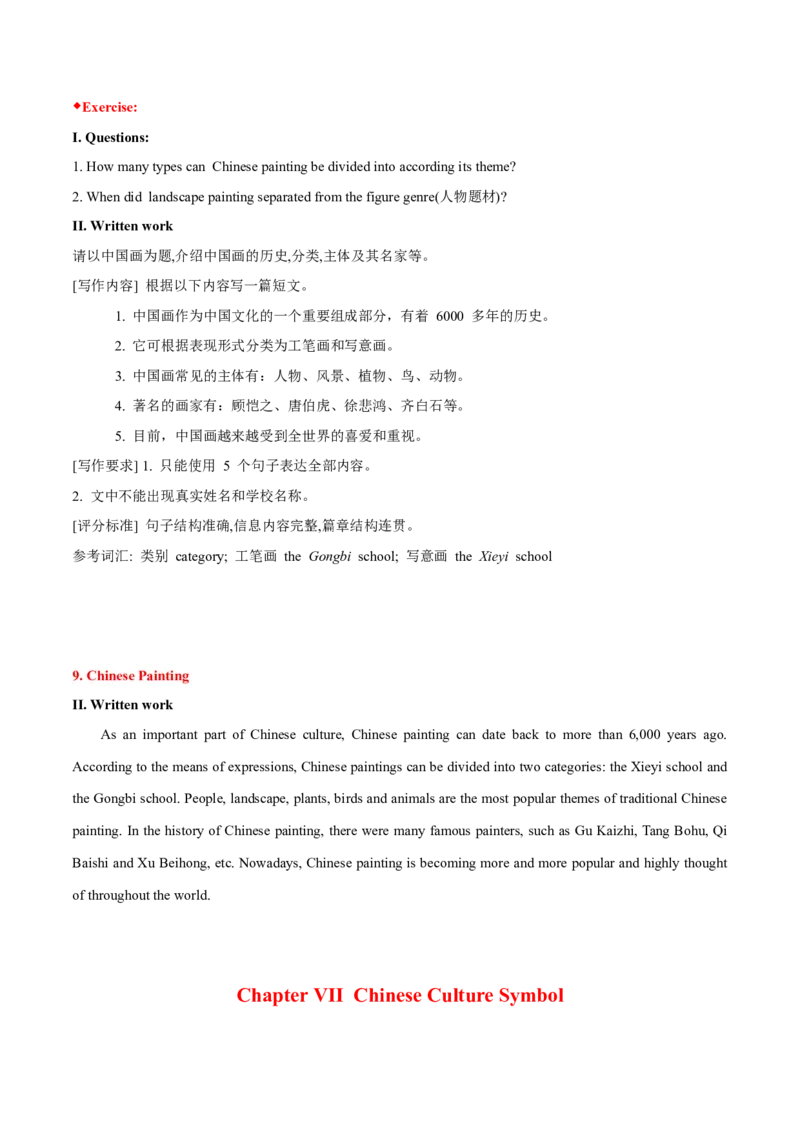
known landscape painting was the Spring Outing by Zhan Ziqian of the Sui Dynasty
(581 - 618). It shows an enchanting spring scene with people enjoying popularactivities: gentlemen riding and ladies boating. A waterfall behind a bridge, near slopes and distant mountains are
drawn with clear, fluent lines.
During the Ming (1368 - 1644) and Qing (1644 - 1911) Dynasties, innovation was stressed, and delicate
seal marks, calligraphy, poems and frames increased the elegance and beauty of the paintings.
Much skill is required of the Chinese painter, who must use the soft brush with strength and dexterity to
create a wide variety of lines--thick, thin, dense, light, long, short, dry, wet, etc. Depending on his skills, he might
specialize in detailed and delicate line drawing (Gongbi) or abstract, impressionistic (Xieyi) paintings. Line drawing
is the basic training of a painter, who must learn it well before moving on to the delicate details of realistic scenes
or the more abstract spirit of impressionism. Another special skill worthy of mention is painting with fingers
instead of a brush, which creates a very different effect.
No matter what the subject or the style, traditional Chinese painting should be filled with imagination and
soul. A traditional story that captures the Chinese view of painting tells about the establishment of a royal college
of painting during the reign of Emperor Huizong. Examinations were held to recruit the best painters. Examinees
were asked to draw a picture that reflected the joy of people who had just returned from a spring outing, an outing
that had been so pleasant that even the horseshoes seemed fragrant. Many tried their best to describe this bright
scene but only one work was chosen; the painter simply drew a horse's hoof followed by butterflies which were in
graceful flight. This painter had managed to capture the essential spirit and beauty of the scene. (615 words)
◆Helper:
engrave [ɪn'ɡreɪv] 雕刻,镌刻 pottery ['pɒtərɪ] 陶器 bronze ware [brɔnz wɛə] 青铜器 immortal [iˈmɔ:tl] 神仙 depiction
[dɪ'pɪkʃn] 描写,叙述 prominently ['prɒmɪnəntlɪ] 显著地,重要地 feature [ˈfi:tʃə] 使有特色, 描写…的特征 verve [vɜ:v]
(艺术品等的)气韵,神韵 mural [iˈmɔ:tl] (通常指大型的)壁画 vigor ['vɪgə] (语言等的)气势 enchanting [ɪn
ˈtʃɑ:ntɪŋ]使人喜悦的, 妩媚的 innovation [ˌɪnəuˈveiʃən] 创新, 改革 delicate [ˈdelikit] 微妙的 dexterity [dekˈsterəti] 灵巧
recruit [rɪ'kru:t] 招聘,征募 genre类型,流派
◆Chinese Brief Introduction:
国画在古代无确定名称,一般称之为丹青,主要指的是画在绢、宣纸、帛上并加以装裱的卷轴画。汉
族传统绘画形式是用毛笔蘸水、墨、彩作画于绢或纸上,这种画种被称为“中国画”,简称“国画”。工
具和材料有毛笔、墨、国画颜料、宣纸、绢等,题材可分人物、山水、花鸟等,技法可分工笔和写意。从
美术史的角度讲,1840年以前的绘画都统称为古画。中国画在内容和艺术创作上,体现了古人对自然、社
会及与之相关联的政治、哲学、宗教、道德、文艺等方面的认识。◆Exercise:
I. Questions:
1. How many types can Chinese painting be divided into according its theme?
2. When did landscape painting separated from the figure genre(人物题材)?
II. Written work
请以中国画为题,介绍中国画的历史,分类,主体及其名家等。
[写作内容] 根据以下内容写一篇短文。
1. 中国画作为中国文化的一个重要组成部分,有着 6000 多年的历史。
2. 它可根据表现形式分类为工笔画和写意画。
3. 中国画常见的主体有:人物、风景、植物、鸟、动物。
4. 著名的画家有:顾恺之、唐伯虎、徐悲鸿、齐白石等。
5. 目前,中国画越来越受到全世界的喜爱和重视。
[写作要求] 1. 只能使用 5 个句子表达全部内容。
2. 文中不能出现真实姓名和学校名称。
[评分标准] 句子结构准确,信息内容完整,篇章结构连贯。
参考词汇: 类别 category; 工笔画 the Gongbi school; 写意画 the Xieyi school
9. Chinese Painting
II. Written work
As an important part of Chinese culture, Chinese painting can date back to more than 6,000 years ago.
According to the means of expressions, Chinese paintings can be divided into two categories: the Xieyi school and
the Gongbi school. People, landscape, plants, birds and animals are the most popular themes of traditional Chinese
painting. In the history of Chinese painting, there were many famous painters, such as Gu Kaizhi, Tang Bohu, Qi
Baishi and Xu Beihong, etc. Nowadays, Chinese painting is becoming more and more popular and highly thought
of throughout the world.
Chapter VII Chinese Culture Symbol中国文化符号
Lesson 1 Chinese Dragon Culture 中国龙文化
Dragon culture exists in both the Eastern world and the Western world.
However, dragons have different reputation in western culture and in Chinese
culture. The Western dragons are evil animals from hell. They usually have
wings and can send out fire from their mouths.
▲Offspring of the Dragon
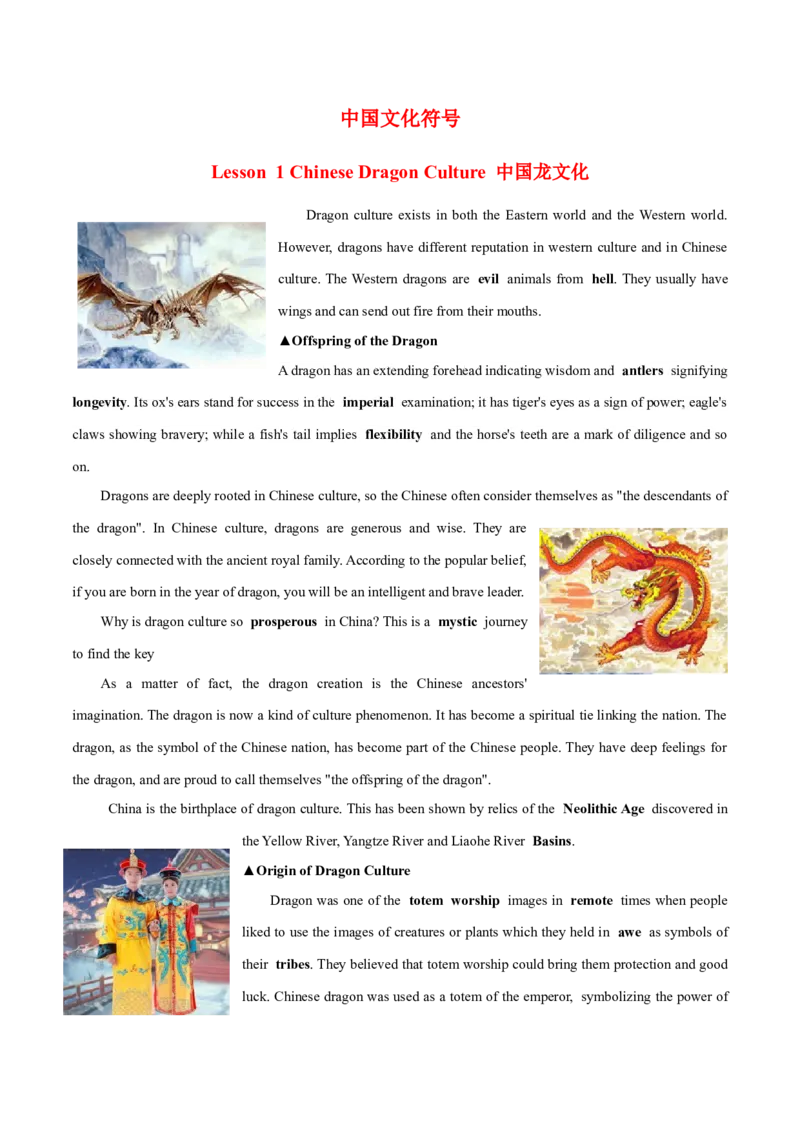
A dragon has an extending forehead indicating wisdom and antlers signifying
longevity. Its ox's ears stand for success in the imperial examination; it has tiger's eyes as a sign of power; eagle's
claws showing bravery; while a fish's tail implies flexibility and the horse's teeth are a mark of diligence and so
on.
Dragons are deeply rooted in Chinese culture, so the Chinese often consider themselves as "the descendants of
the dragon". In Chinese culture, dragons are generous and wise. They are
closely connected with the ancient royal family. According to the popular belief,
if you are born in the year of dragon, you will be an intelligent and brave leader.
Why is dragon culture so prosperous in China? This is a mystic journey
to find the key
As a matter of fact, the dragon creation is the Chinese ancestors'
imagination. The dragon is now a kind of culture phenomenon. It has become a spiritual tie linking the nation. The
dragon, as the symbol of the Chinese nation, has become part of the Chinese people. They have deep feelings for
the dragon, and are proud to call themselves "the offspring of the dragon".
China is the birthplace of dragon culture. This has been shown by relics of the Neolithic Age discovered in
the Yellow River, Yangtze River and Liaohe River Basins.
▲Origin of Dragon Culture
Dragon was one of the totem worship images in remote times when people
liked to use the images of creatures or plants which they held in awe as symbols of
their tribes. They believed that totem worship could bring them protection and good
luck. Chinese dragon was used as a totem of the emperor, symbolizing the power ofthe emperor. Only emperor can use the things which were decorated with dragon pattern.
Chinese dragon is of magic power. It can change the length of its body as it wishes; it can either fly or swim.
It is believed to control the weather, being responsible for causing snowstorm, lightning, and tornadoes.
People in ancient China often offered sacrifices to Dragon for favorable weather and good harvest. In the
Warring States Period (475-221BC), dragon was often drawn in the painting on silk. Dragons often appear in
Chinese idioms and tales. (323 words).
◆Helper:
evil [ˈi:vəl] 邪恶的 hell [hel] 地狱 offspring [ˈɔfspriŋ] 后代 descendant [diˈsendənt] 后代;后裔 antler ['æntlə(r)] 鹿角
longevity [lɒn'dʒevətɪ] 寿命 imperial [ɪm'pɪərɪəl] 帝国的,皇帝的 flexibility [ˌfleksə'bɪlətɪ] 灵活性 prosperous [ˈprɔspərəs]
繁荣的 mystic ['mɪstɪk] 神秘的 Neolithic Age [ˌni:əˈliθik eidʒ] [美] [ˌniəˈlɪθɪk edʒ]新石器时代 basin [ˈbeisn] 盆, 盆地
totem [ˈtəʊtəm]图腾, 崇拜物worship [ˈwə:ʃip]崇拜 remote [riˈməut] (时间上)遥远的 awe [ɔ:] 敬畏 tribe [traib] 部落
sacrifice [ˈsækrifais]献祭, 牺牲
◆Chinese Brief Introduction:
在中国古代的神话与传说中,龙是一种神异动物,集狮头、鹿角、虾腿、鳄鱼嘴、乌龟颈、蛇身、鱼
鳞、蜃腹、鱼脊、虎掌、鹰爪、金鱼尾于一身的动物。在早期,古人对大多自然现象无法做出合理解释,
于是便希望自己民族的图腾具备风雨雷电那样的力量,群山那样的雄姿,像鱼一样在水中游,像鸟一样可
以在天上飞翔,像蛇一样灵活多变、游刃有余......因此,许多动物的特点都集中在龙身上,渐渐形成了这
种复合结构。意味着龙是万兽之首,万能之神,古时候是皇权的象征。龙是中国人的独特文化创造、观念
创造、符号创造。所有的炎黄子孙、华夏儿女,都领受过龙的福祉,都可称为“龙的传人”。 “龙的精
神”是中华民族的象征,是中国五千年伟大历史的象征,是崛起的伟大中国人们勤劳、勇敢、不屈不挠、
大胆创造、诚信和谐的立于世界民族之林的精神。。
◆Exercise:
I. Questions:
1. What’s the difference between western dragon and Chinese dragon?
2. Why do Chinese say they are offspring of the dragon?
3. What’s Chinese dragon like? Describe it.
4. In ancient times, were common people allowed to wear clothes with dragons decorated? If not, why?
II. Match the following pictures with their English names:(A) (B) (C) (D)
(1) The Dragon has Nine Sons
(2) Flying Dragon and Dancing Phoenix
(3) Lively Dragon and Active Tiger
(4) Fish Jumped over Dragon Gate Sons
III. Explain each idiom:
(1)The Dragon has Nine Sons
(2) Flying Dragon and Dancing Phoenix
(3)Lively Dragon and Active Tiger
(4) Fish Jumped over Dragon Gate
1. Chinese Dragon Culture
II. Match the following pictures with their English names:(1) D (2)B (3) A (4)C
III. Explain each idiom:
(1) The dragon has nine sons
The idiom means each person has his strong points just like the dragon king’s sons all have different abilities.
(2) Flying Dragon and Dancing Phoenix
The idiom is used to describe the words or calligraphy written by someone are very beautiful and elegant, and
energetic, just like dragons flying or phoenixes dancing.
(3) Lively dragon and active tiger
The idiom is used to describe an energetic man.
(4) Fish jumped over Dragon Gate
According to a Chinese legend, there is a place called Dragon Gate (Long Men). If a fish could swim upstream
and jump over there, then the fish, would transform into a dragon and fly away.So the idiom is used to describe a
man, after working very hard, gets lots of success and reputation in business or studies.