文档文本内容
新六年级英语暑假衔接讲义
(PEP 版 三年级起点)
━━━━━━━━━━━━━━━━━━━━━━━━━
第 1 讲 一般现在时·三单复习
适用年级:新六年级(五升六)
教材版本:PEP 版(三年级起点)
内容说明:本讲复习一般现在时的基本用法和第三人称单数变化规
则
第 1 讲 一般现在时·三单复习
Part 1 知识讲解
一、什么是一般现在时?
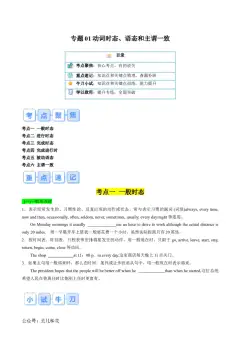
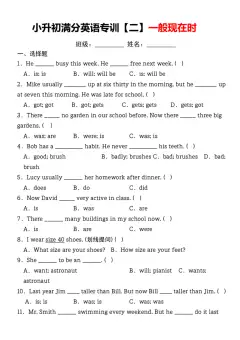
一般现在时(Simple Present Tense)表示经常发生的动作、习惯或客观
事实。
常见的标志词:
• always(总是) • usually(通常) • often(经常) • sometimes
(有时) • every day / every week
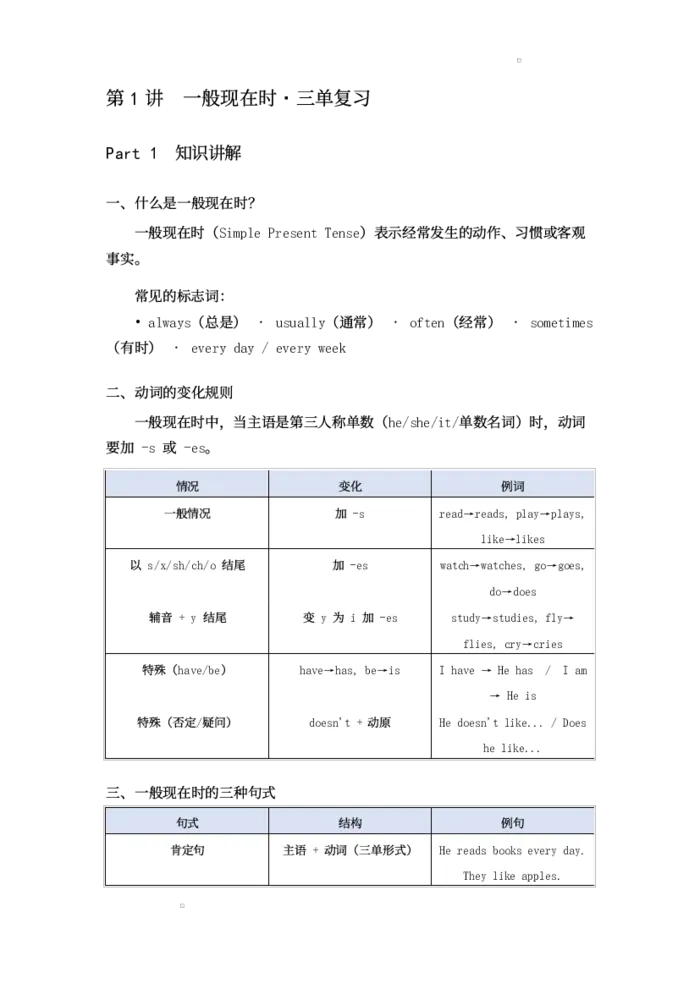
二、动词的变化规则
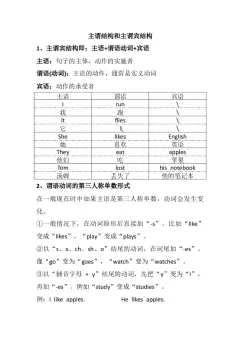
一般现在时中,当主语是第三人称单数(he/she/it/单数名词)时,动词
要加 -s 或 -es。
情况
变化
例词
一般情况
加 -s
read→reads, play→plays,
like→likes
以 s/x/sh/ch/o 结尾
加 -es
watch→watches, go→goes,
do→does
辅音 + y 结尾
变 y 为 i 加 -es
study→studies, fly→
flies, cry→cries
特殊(have/be)
have→has, be→is
I have → He has / I am
→ He is
特殊(否定/疑问)
doesn't + 动原
He doesn't like... / Does
he like...
三、一般现在时的三种句式
句式
结构
例句
肯定句
主语 + 动词(三单形式)
He reads books every day.
They like apples.
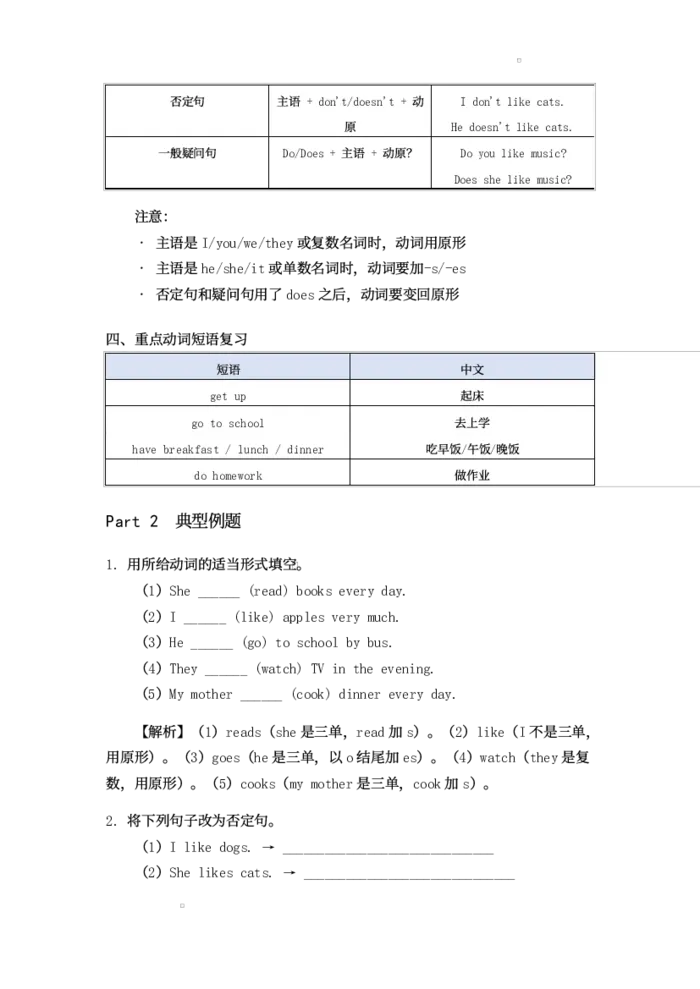
否定句
主语 + don't/doesn't + 动
I don't like cats.
原
He doesn't like cats.
一般疑问句
Do/Does + 主语 + 动原?
Do you like music?
Does she like music?
注意:
• 主语是 I/you/we/they 或复数名词时,动词用原形
• 主语是 he/she/it 或单数名词时,动词要加-s/-es
• 否定句和疑问句用了 does 之后,动词要变回原形
四、重点动词短语复习
短语
中文
get up
起床
go to school
去上学
have breakfast / lunch / dinner
吃早饭/午饭/晚饭
do homework
做作业
Part 2 典型例题
1. 用所给动词的适当形式填空。
(1)She ______ (read) books every day.
(2)I ______ (like) apples very much.
(3)He ______ (go) to school by bus.
(4)They ______ (watch) TV in the evening.
(5)My mother ______ (cook) dinner every day.
【解析】(1)reads(she 是三单,read 加 s)。(2)like(I 不是三单,
用原形)。(3)goes(he 是三单,以 o 结尾加 es)。(4)watch(they 是复
数,用原形)。(5)cooks(my mother 是三单,cook 加 s)。
2. 将下列句子改为否定句。
(1)I like dogs. → ______________________________
(2)She likes cats. → ______________________________
【解析】(1)I don't like dogs.(主语非三单,用 don't)(2)She
doesn't like cats.(主语三单,用 doesn't,likes 恢复原形 like)
3. 将下列句子改为一般疑问句。
(1)You like English. → ______________________________
(2)He plays football. → ______________________________
【解析】(1)Do you like English?(主语非三单,用 Do)(2)Does
he play football?(主语三单,用 Does,plays 恢复 play)
Part 3 基础练习
1. 写出下列动词的第三人称单数形式。
(1)read → ______
(2)play → ______
(3)go → ______
(4)watch → ______
(5)study → ______
(6)fly → ______
(7)have → ______
(8)do → ______
(9)like → ______
(10)cook → ______
2. 用所给动词的正确形式填空。
(1)I ______ (get) up at 7:00 every morning.
(2)She ______ (go) to school by bike.
(3)My father ______ (work) in a hospital.
(4)They ______ (play) football on Sundays.
(5)He ______ (study) English every evening.
(6)We ______ (have) lunch at school.
(7)Tom ______ (like) swimming.
(8)The cat ______ (sleep) on the sofa.
3. 用 do 或 does 填空。
(1)______ you like apples?
(2)______ he go to school by bus?
(3)______ they play football?
(4)______ she read books every day?
(5)______ your mother cook dinner?
Part 4 提高练习
1. 改错:找出下列句子中的错误并改正。
(1)She like apples. → ______________________________
(2)He don't like dogs. → ______________________________
(3)Does he likes music? → ______________________________
(4)They goes to school by bus. →
______________________________
(5)She study English every day. →
______________________________
2. 连词成句。
(1)every, reads, she, day, books →
______________________________
(2)doesn't, he, like, swimming →
______________________________
(3)you, do, to, go, school, how →
______________________________
(4)does, what, she, like, for, breakfast →
______________________________
3. 阅读短文,判断正(T)误(F)。
My name is Mike. I get up at 7:00 every morning. I go to school
by bus. My mother gets up at 6:30. She cooks breakfast for us. My
father goes to work by car. He works in a hospital. I have lunch at
school. I like my school.
( )(1)Mike gets up at 6:30.
( )(2)Mike goes to school by bus.
( )(3)Mike's mother cooks breakfast.
( )(4)Mike's father works in a school.
( )(5)Mike has lunch at home.
Part 5 本讲总结
一般现在时记忆口诀
一般现在时,经常习惯或事实;
三单主语要小心,动词加-s 或-es。
否定用 don't/doesn't,疑问用 Do/Does 来开头;
用了 does 后面动原回,这个规则要记牢。
go/do/watch 要加 es,辅音+y 变 i 加 es;
have 变 has 特殊记,多读多练就熟悉。
本讲重点回顾
✓一般现在时表示经常性动作或习惯,标志词有
always/usually/often/every day 等
✓三单变化规则:一般加-s,s/x/sh/ch/o 加-es,辅音+y→ies,have→
has
✓否定句:don't(非三单)/ doesn't(三单)+ 动词原形
✓一般疑问句:Do/Does + 主语 + 动词原形?
✓注意:用了 does 之后,动词一定要恢复原形
参考答案
Part 2 典型例题
1. (1)reads(2)like(3)goes(4)watch(5)cooks
2. (1)I don't like dogs.(2)She doesn't like cats.
3. (1)Do you like English?(2)Does he play football?
Part 3 基础练习
1. (1)reads(2)plays(3)goes(4)watches(5)studies(6)flies(7)
has(8)does(9)likes(10)cooks
2. (1)get(2)goes(3)works(4)play(5)studies(6)have(7)likes
(8)sleeps
3. (1)Do(2)Does(3)Do(4)Does(5)Does
Part 4 提高练习
1. (1)like→likes(2)don't→doesn't(3)likes→like(4)goes→go(5)
study→studies
2. (1)She reads books every day.
(2)He doesn't like swimming.
(3)How do you go to school?
(4)What does she like for breakfast?
3. (1)F(2)T(3)T(4)F(5)F