ARTICLE · 1073952
教学研究:AI赋能高中写作教学
AI Empowers High School Writing Teaching
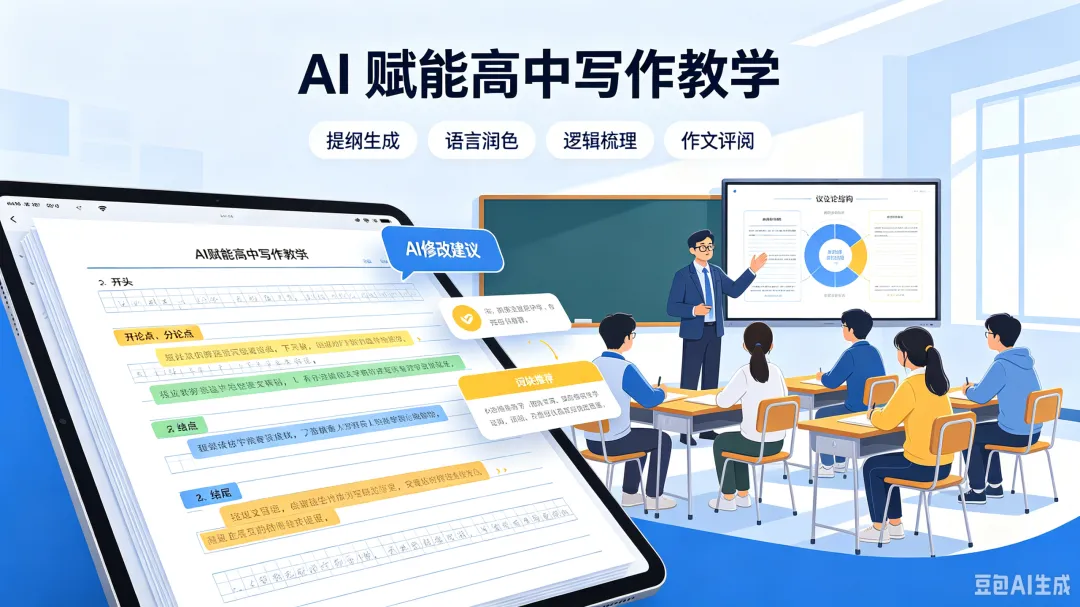
写作是高中语文与英语学科的核心素养载体,是学生思维表达、语言建构、逻辑输出的综合体现,也是高中教学的重点与难点。传统高中写作教学长期存在诸多痛点:教师批改工作量大、反馈周期长,难以兼顾每位学生的个性化问题;教学模式同质化,分层指导不足,学困生无从下笔、优等生难以突破;写作评价侧重结果、忽视过程,学生修改复盘效率低下,写作能力提升缓慢。在人工智能技术深度融入教育的当下,AI以即时性、个性化、数据化的独特优势,重构高中写作教学模式,破解传统教学困境,成为赋能写作教学提质增效的重要助力。
Writing is the core carrier of key competencies in senior high school Chinese and English teaching, reflecting students’ comprehensive abilities of thinking expression, language construction and logical output, and it is also a key and difficult point in high school teaching. Traditional high school writing teaching has long been plagued by many problems. Teachers face heavy grading workload and long feedback cycles, making it difficult to address individual students’ personalized problems. The homogeneous teaching model lacks hierarchical guidance, leaving underachievers unsure how to start writing and top students unable to make further progress. Writing evaluation focuses on results rather than processes, resulting in low efficiency of students’ revision and review, and slow improvement in writing ability. With the in-depth integration of artificial intelligence technology in education, AI reconstructs the high school writing teaching model with unique advantages of immediacy, personalization and digitization, solves the dilemmas of traditional teaching, and becomes an important boost to improve the quality and efficiency of writing teaching.
AI赋能高中写作教学,核心优势在于实现全过程、个性化、精准化教学赋能,贯穿写前指导、写中辅助、写后评价全流程。在写前准备阶段,传统教学多依赖教师范文讲解、素材罗列,形式单一、吸引力不足。而AI可根据学生的年级水平、写作主题、能力短板,智能推送分层素材、经典句式、优质范文,同时结合时事热点、考情趋势定制写作素材库。针对立意薄弱的学生,AI可通过多角度提问、思路拆解、框架梳理,引导学生搭建写作逻辑;针对素材匮乏的学生,AI可精准匹配适配主题的案例、名言与时事素材,打破学生写作无话可写的困境,激发写作主动性与创造性。
The core advantage of AI empowering high school writing teaching lies in realizing full-process, personalized and accurate teaching empowerment, covering the whole process of pre-writing guidance, in-writing assistance and post-writing evaluation. In the pre-writing stage, traditional teaching mostly relies on teachers’ model essay explanation and material listing with a single form and low attractiveness. However, AI can intelligently push hierarchical materials, classic sentence patterns and high-quality model essays according to students’ grade levels, writing themes and ability weaknesses, and customize writing material databases combined with current hot topics and examination trends. For students with weak thesis establishment ability, AI guides them to build writing logic through multi-angle questioning, idea decomposition and framework sorting. For students lacking materials, AI accurately matches cases, famous quotes and current event materials suitable for the theme, solving the problem of empty writing and stimulating students’ initiative and creativity in writing.
在写作过程中,AI承担实时辅助与动态纠错的角色,成为学生的随身写作导师。高中学生写作常出现句式单一、逻辑混乱、语言语病、结构失衡等问题,传统课堂中教师无法实时逐一指导。依托AI智能写作工具,学生写作过程中可实时获得语法纠错、用词优化、句式升级、逻辑梳理等动态指导。语文写作中,AI可辅助优化语句表达、调整段落结构、修正立意偏差;英语写作中,AI可精准纠正语法错误、搭配失误,替换低级词汇、优化句式结构,帮助学生养成规范的表达习惯。同时,AI能够实时监测学生写作进度,针对卡顿、逻辑断层等问题即时提示,帮助学生稳步完善文本,提升写作流畅度。
In the writing process, AI acts as a real-time assistant and dynamic error corrector, serving as students’ portable writing tutor. High school students often have problems such as single sentence patterns, confused logic, language errors and unbalanced structure in writing, and teachers cannot provide one-on-one real-time guidance in traditional classrooms. Relying on AI intelligent writing tools, students can obtain dynamic guidance such as grammar error correction, word optimization, sentence pattern upgrading and logic sorting in real time during writing. In Chinese writing, AI assists in optimizing sentence expression, adjusting paragraph structure and correcting thesis deviation. In English writing, AI accurately corrects grammatical errors and collocation mistakes, replaces simple vocabulary, optimizes sentence structures, and helps students develop standardized expression habits. Meanwhile, AI can monitor students’ writing progress in real time and give instant prompts for stagnation and logical faults, helping students steadily polish texts and improve writing fluency.
写后评价与复盘是写作能力提升的关键环节,也是传统教学的薄弱点。传统教师批改耗时耗力,评价多为笼统的分数与评语,难以细化问题、追踪短板,学生反复犯错、进步缓慢。而AI具备高效批量批改、多维度数据分析的能力,可从立意、结构、逻辑、语言、素材、文采等多个维度对作文进行全面量化评分,精准标注语病、漏洞、亮点,生成详细的批改报告与优化方案。同时,AI能够长期记录学生写作数据,梳理学生高频错误、能力短板,形成个人成长档案,为教师分层教学、精准辅导提供数据支撑。教师可依托AI数据分析结果,聚焦共性问题开展课堂精讲,针对个性问题进行单独指导,实现“以评促写、精准提质”。
Post-writing evaluation and review are key links in improving writing ability and also weak points of traditional teaching. Traditional manual grading is time-consuming and labor-intensive, with general scores and comments that cannot refine problems or track weaknesses, leading to repeated mistakes and slow progress of students. In contrast, AI has the capabilities of efficient batch grading and multi-dimensional data analysis. It can conduct comprehensive quantitative scoring on compositions from multiple dimensions including thesis, structure, logic, language, materials and literary grace, accurately mark errors, loopholes and highlights, and generate detailed grading reports and optimization schemes. At the same time, AI can record students’ writing data for a long time, sort out their frequent errors and ability weaknesses, and form personal growth files, providing data support for teachers’ hierarchical teaching and targeted guidance. Based on AI data analysis results, teachers can focus on common problems for classroom intensive teaching and provide individual guidance for personalized problems, realizing targeted improvement through evaluation.
当然,AI赋能写作教学并非技术替代教师,而是构建“人机协同”的新型教学模式。人工智能擅长数据批改、即时反馈、素材供给,却无法替代教师的思维引导、情感浸润、价值引领。写作教学的核心是培养学生的思辨能力、人文素养与创新思维,这些需要教师通过课堂互动、范文精讲、思维碰撞、个性化点拨实现。教学过程中,需坚守“以人为本、技术为辅”的原则,规避学生过度依赖AI、照搬AI文本、丧失独立思考能力的问题,引导学生以AI为工具自主修改、主动思考、创新表达。
Of course, AI empowering writing teaching is not to replace teachers with technology, but to build a new human-machine collaborative teaching model. Artificial intelligence is good at data grading, instant feedback and material supply, but it cannot replace teachers’ thinking guidance, emotional infiltration and value guidance. The core of writing teaching is to cultivate students’ critical thinking, humanistic literacy and innovative thinking, which rely on teachers’ classroom interaction, model essay explanation, thinking collision and personalized guidance. In the teaching process, we should adhere to the principle of people-oriented and technology-assisted teaching, avoid students’ over-reliance on AI, blind copying of AI texts and loss of independent thinking ability, and guide students to take AI as a tool for independent revision, active thinking and innovative expression.
综上所述,AI技术为高中写作教学注入了全新活力,有效破解了传统教学效率低、针对性弱、反馈滞后的难题,构建了全覆盖、精准化、个性化的写作教学体系。在智慧教育背景下,高中写作教学应合理借力AI技术,优化教学流程、创新教学模式,坚守教学本质与育人初心,实现技术赋能与人文教学的深度融合,助力学生夯实写作基础、提升思维品质、发展核心素养,全面提升高中写作教学的育人质量。
In conclusion, AI technology injects new vitality into high school writing teaching, effectively solves the problems of low efficiency, poor pertinence and delayed feedback in traditional teaching, and builds a full-coverage, accurate and personalized writing teaching system. Under the background of smart education, high school writing teaching should reasonably leverage AI technology to optimize teaching processes and innovate teaching models, adhere to the essence of teaching and the original intention of education, realize the in-depth integration of technological empowerment and humanistic teaching, help students consolidate writing foundation, improve thinking quality and develop core competencies, and comprehensively improve the educational quality of high school writing teaching.